Anatomy LAB Practical 1
 Call Kai
 Learn
Learn Practice Test
 Spaced Repetition
 Match
Match Flashcards
 Knowt Play
1/56

There's no tags or description
Looks like no tags are added yet.
Name | Mastery | Learn | Test | Matching | Spaced | Call with Kai | Chat |
|---|
No analytics yet
Send a link to your students to track their progress
57 Terms
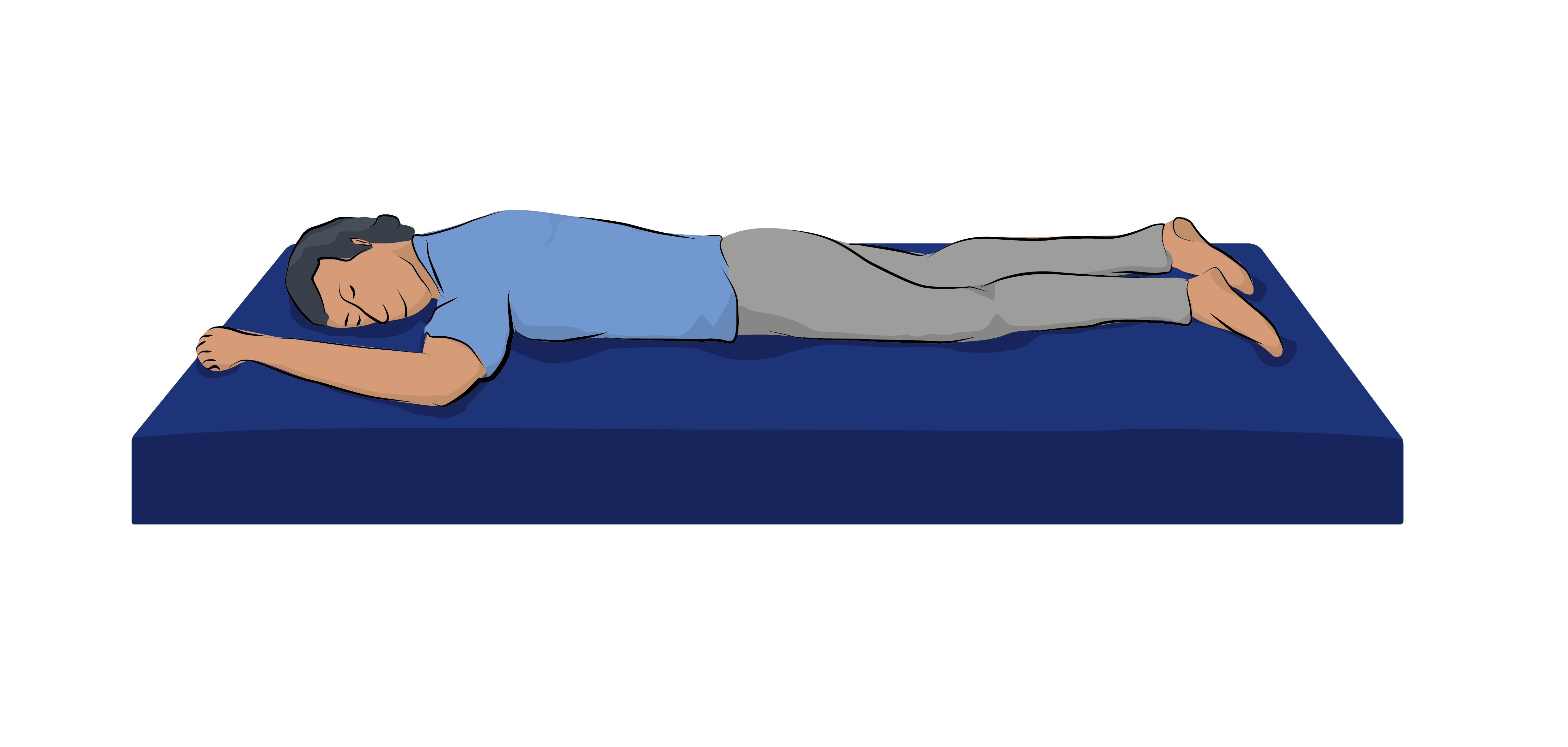
Prone
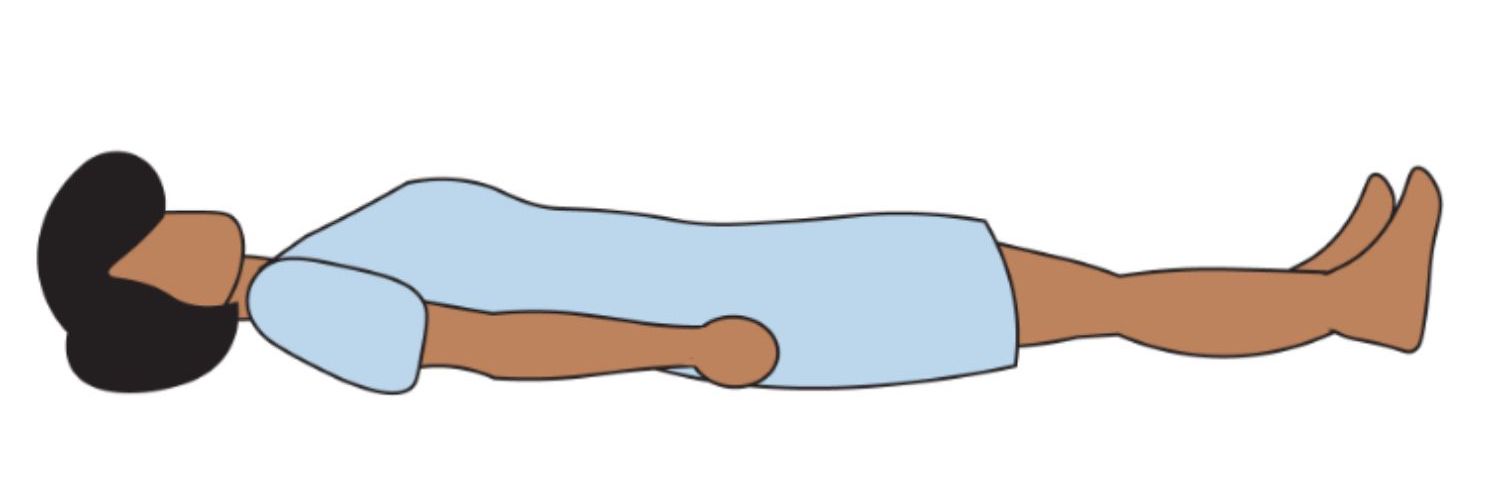
Supine
Anatomical position is when the body is upright, feet face ___, and palms are ___.
Forward, supinated (up)
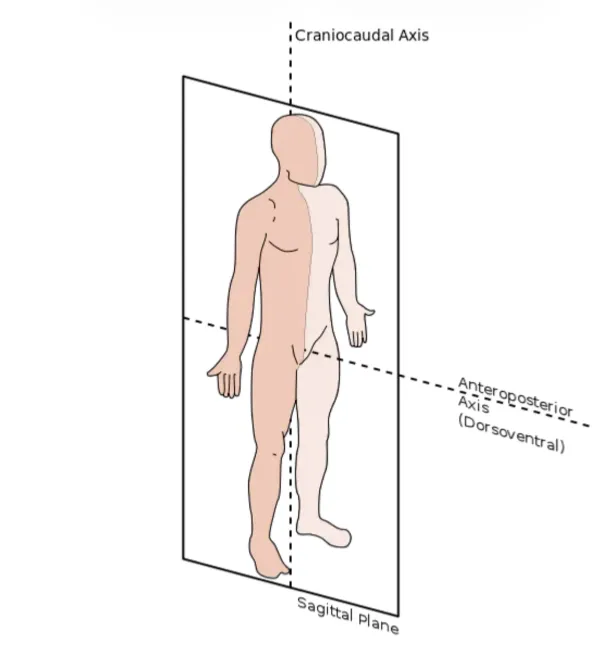
What plane and actions?
Sagittal; flexion of bicep, extension of knee and hip when squatting
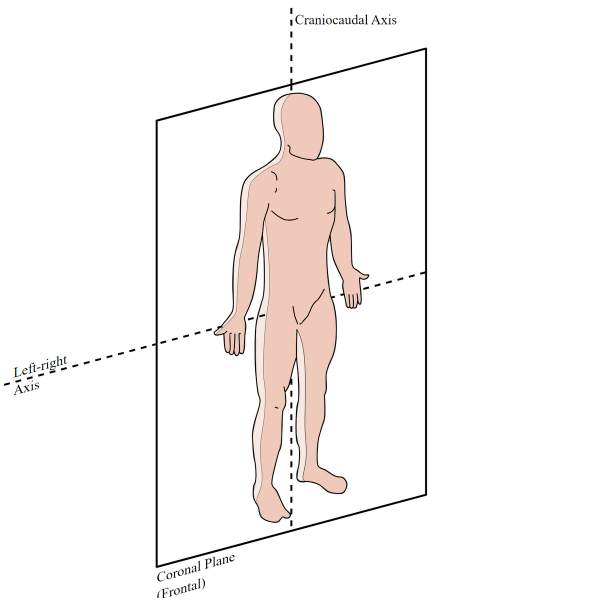
What plane and actions?
Frontal/coronal; ab/adduction of shoulders and hips during jumping jacks
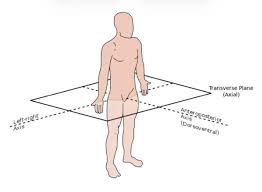
What plane and actions?
Transverse/axial; medial and lateral rotation
Decrease vs. increase of joint angle
Flexion/extension
Close vs. far from origin
Proximal/distal
The elbow is ___ to the shoulder, but ___ to the wrist.
Distal, proximal
Baseball player scenario
Static, external rotation, abduction
The heart is ___ to the ribs, since the ribs are __ to the heart.
Deep, superficial
Axial vs. appendicular
Axial: Individual, at central axis
Appendicular: Set
The function of flat bones are to …
Protect
The function of long bones are to…
Facilitate movement, support weight
The shape of short bones are __. Examples include…
Cube shaped, carpals and tarsals
Examples of irregular bones include…
Vertebrae, pelvis
The function of sesamoid bones are to __. The main example is the…
Reinforce tendons, patella
How many cervical, thoracic, and lumbar vertebrae are there?
7, 12, 5
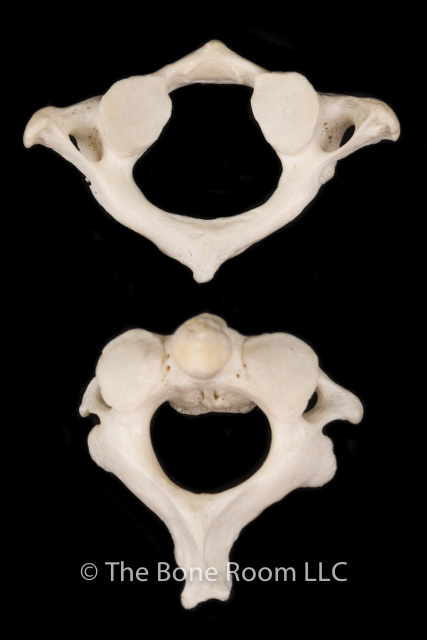
Identify the atlas and axis. What type of joint do they create, what bony landmark allows this?
C1 and C2; pivot joint (synovial - 1 plane); dens @ axis
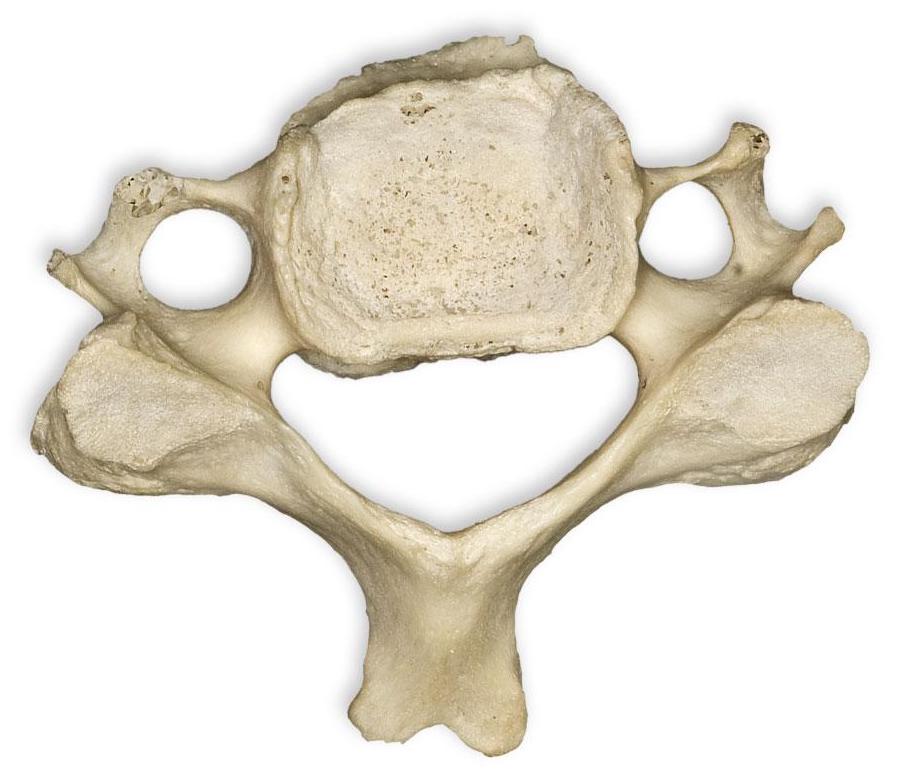
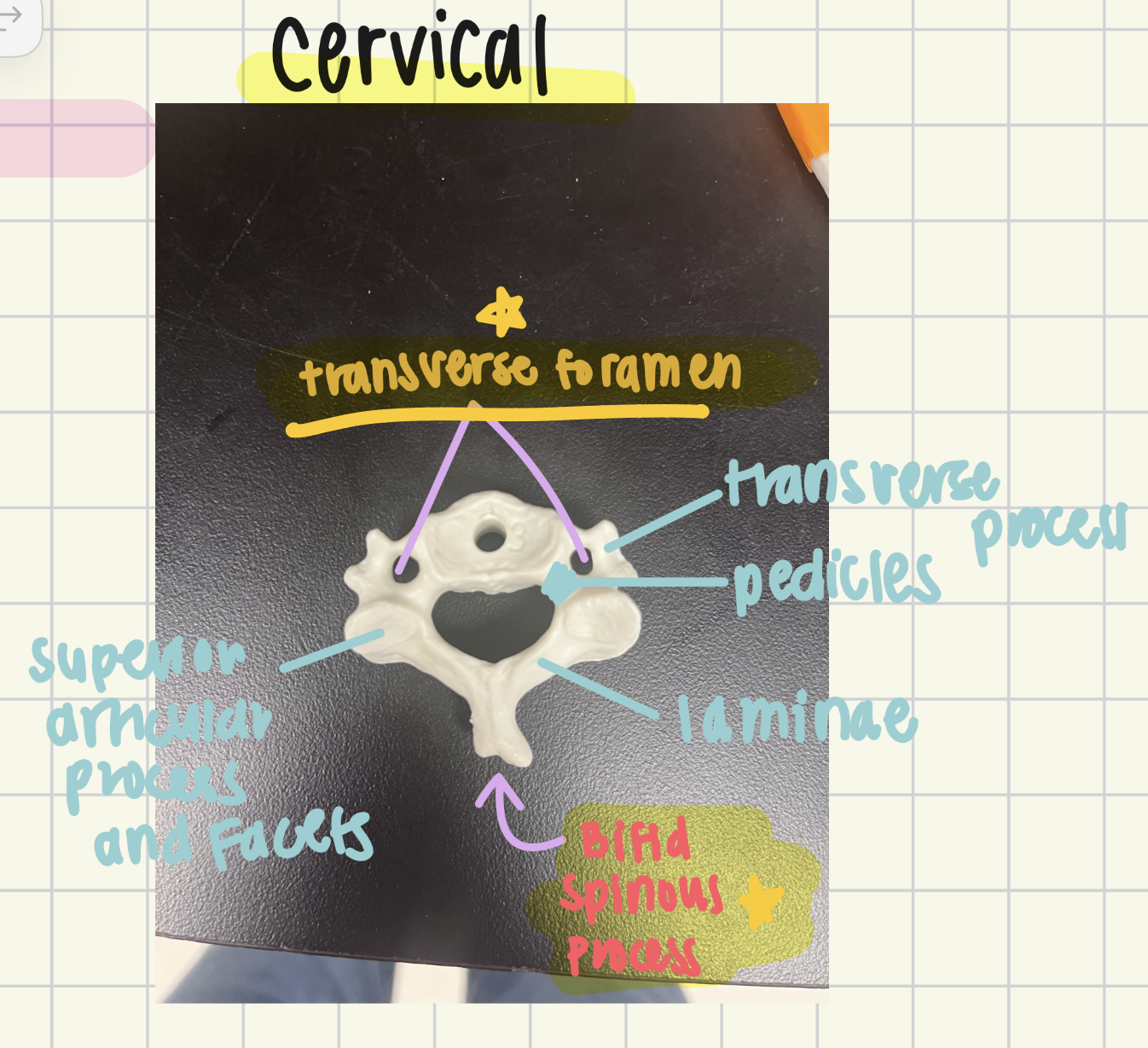
What vertebrae? Identify 2 key processes
Cervical; transverse foramen and bifid spinous process
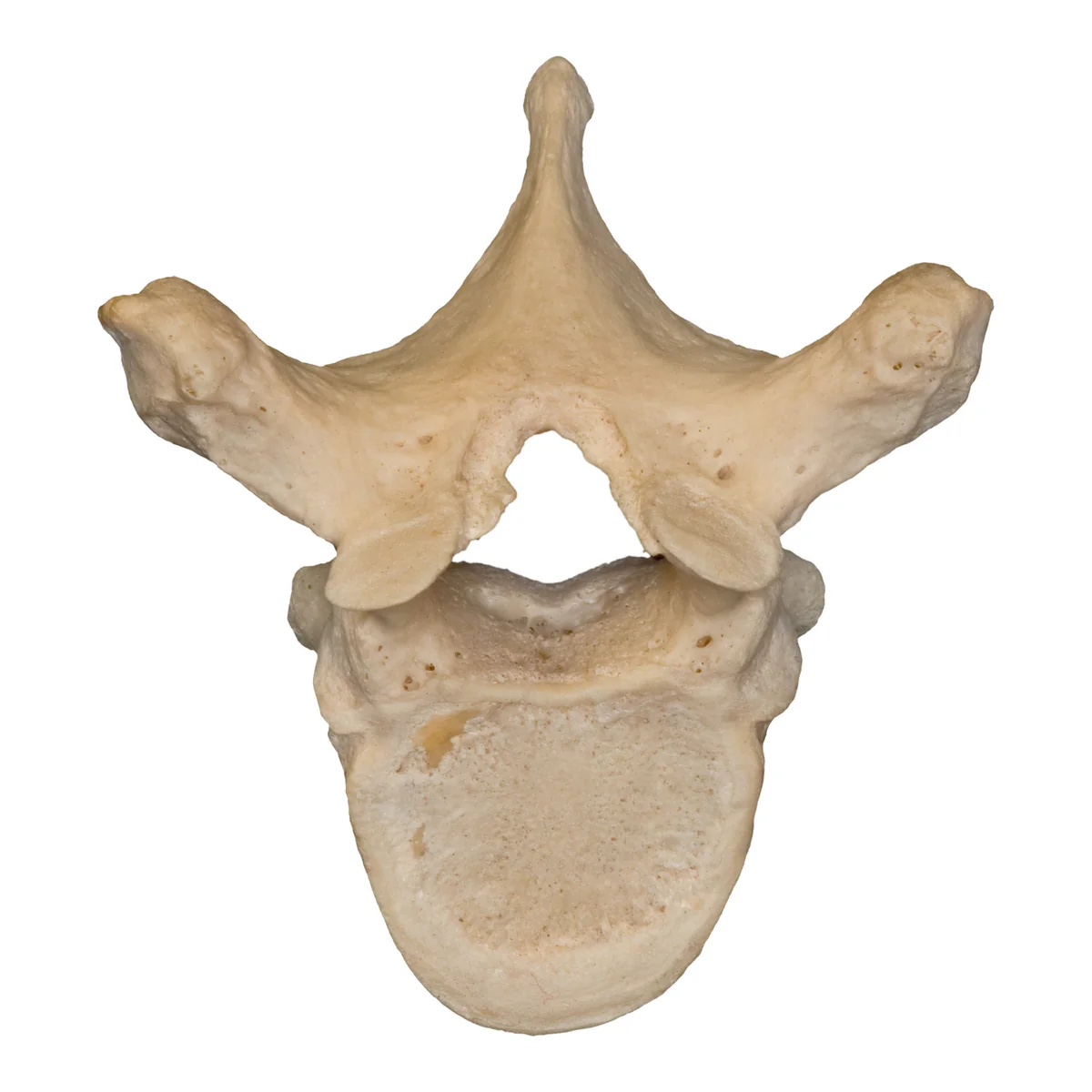
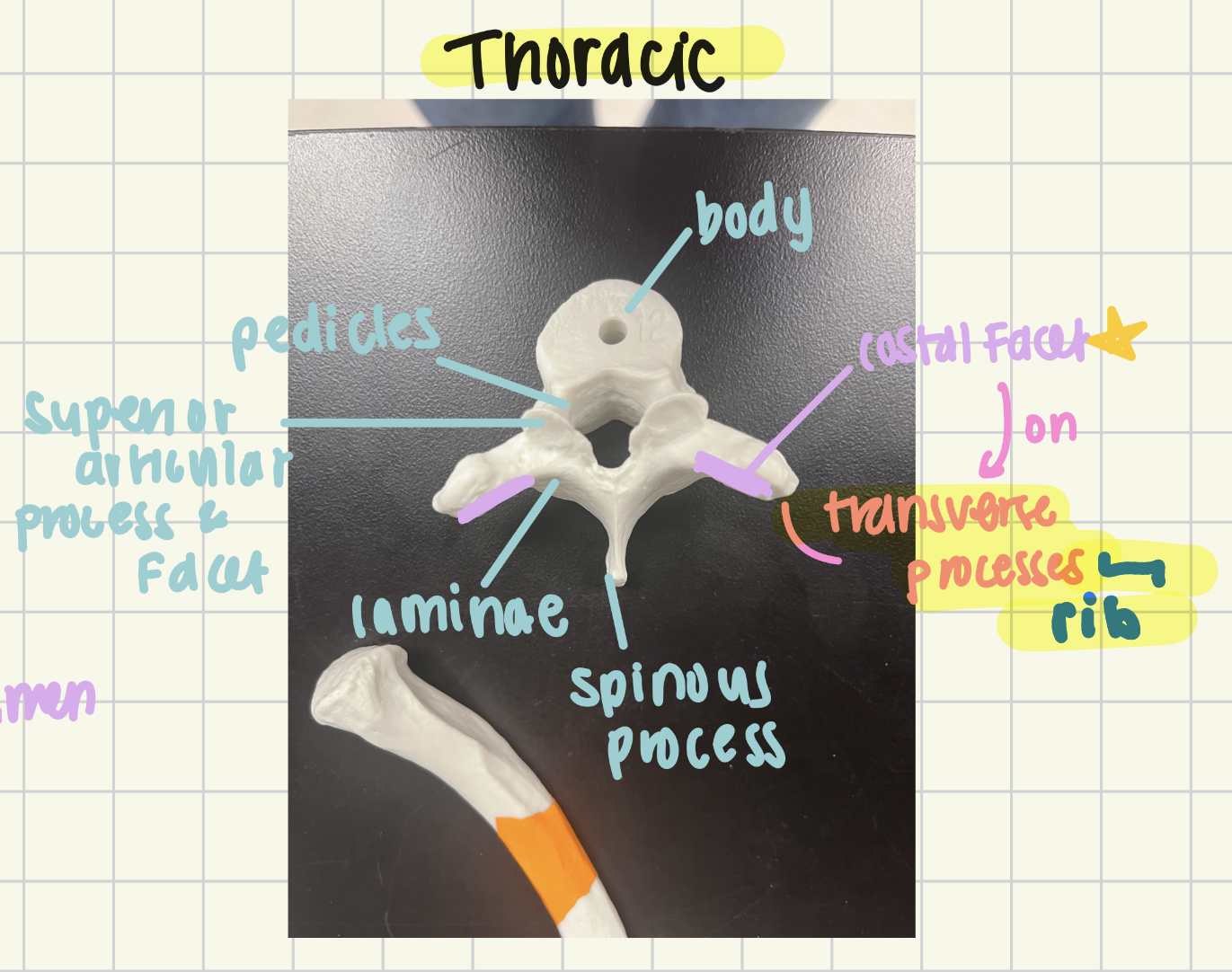
What vertebrae? Identify key process
Thoracic; transverse process (articulates with rib)
__ ribs articulate with sternum through individual _
True (1-7), costal cartilages
Ribs that share costal cartilages
False (8-12)
False ribs that don’t articulate with sternum at all
Floating (11-12)
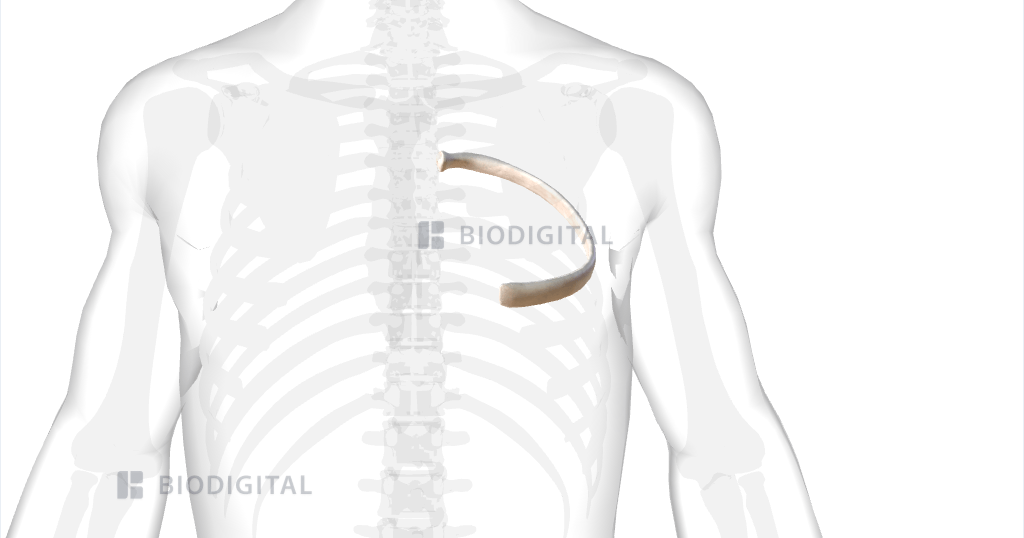
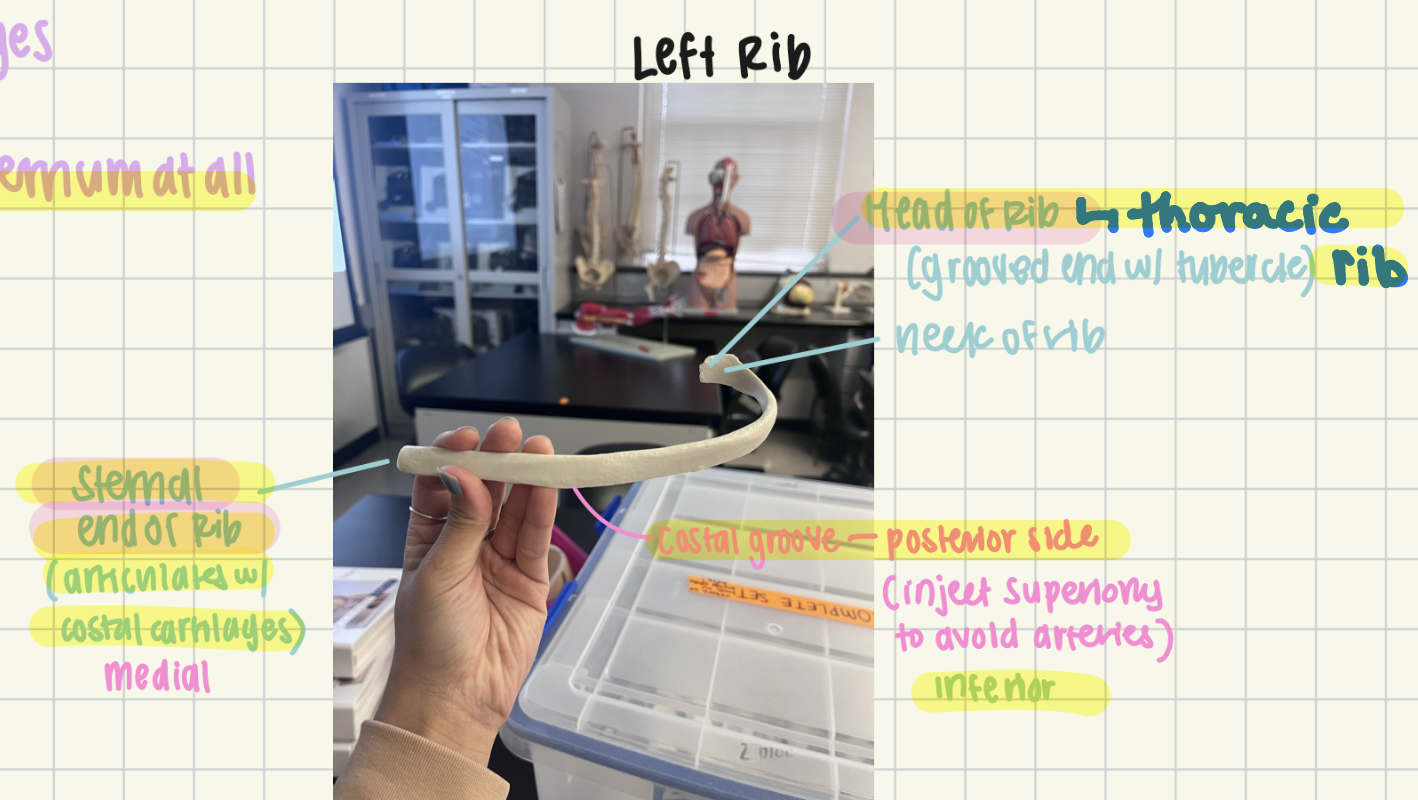
Identify bony landmarks of this rib
Sternal end (→ costal cartilage, medial); head of rib —> thoracic lumbar, costal groove (posterior inferior)
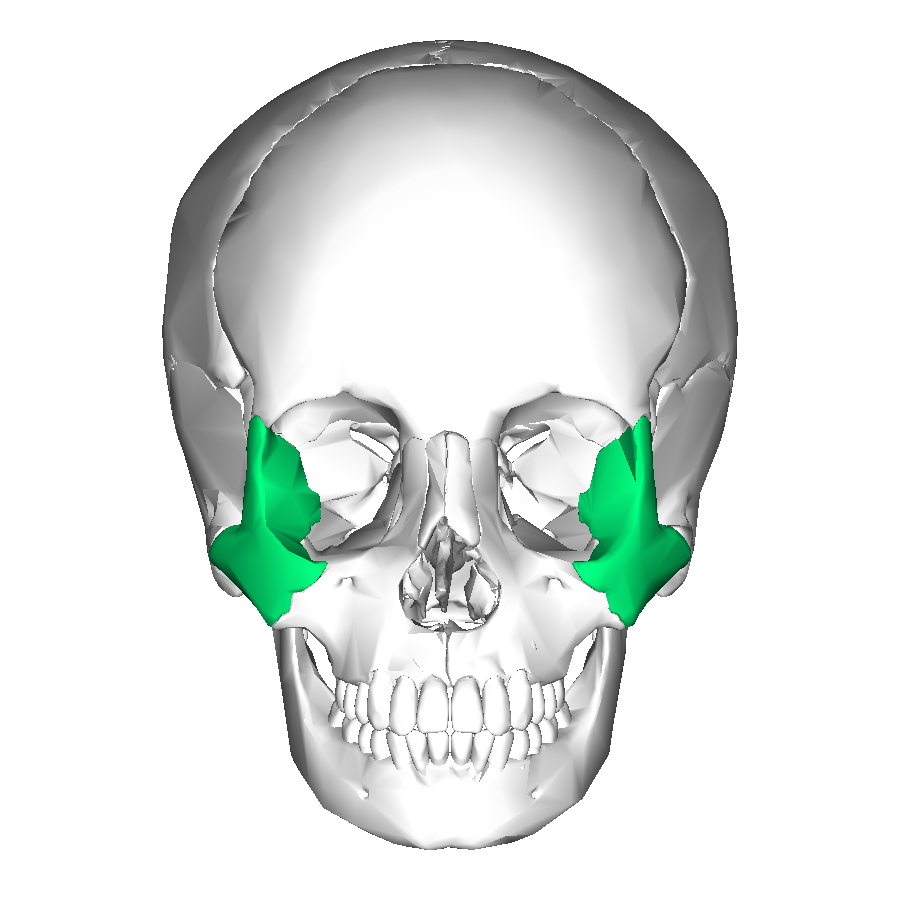
Zygomatic bone
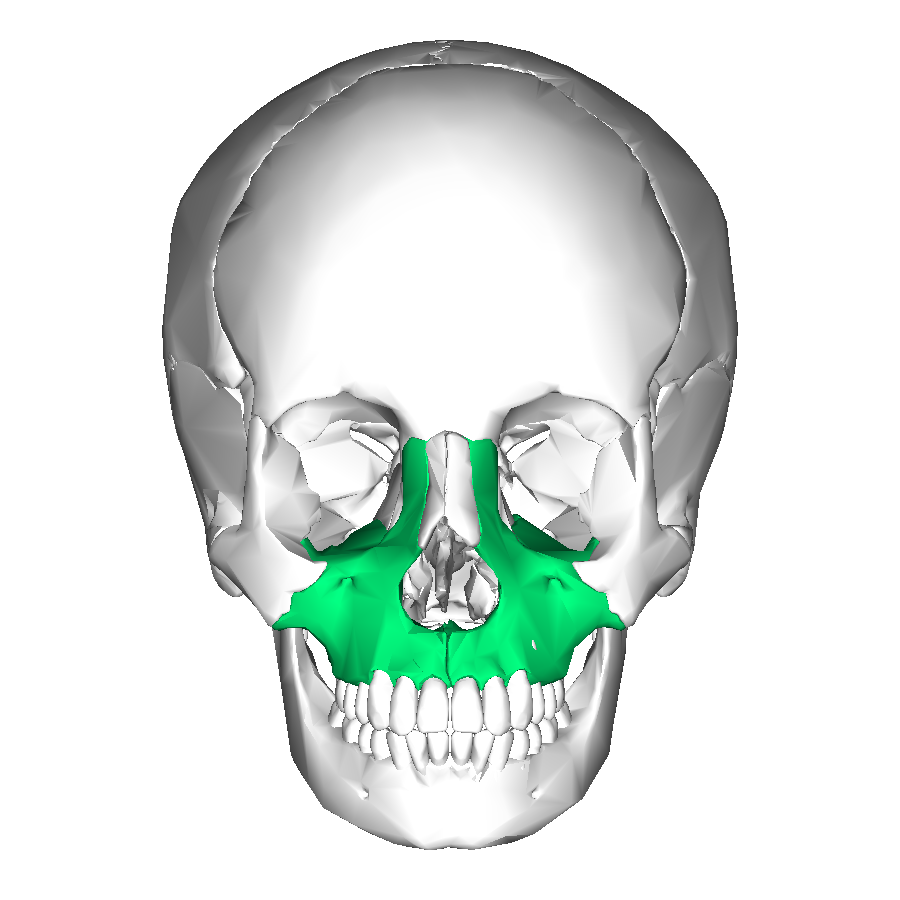
Maxilla
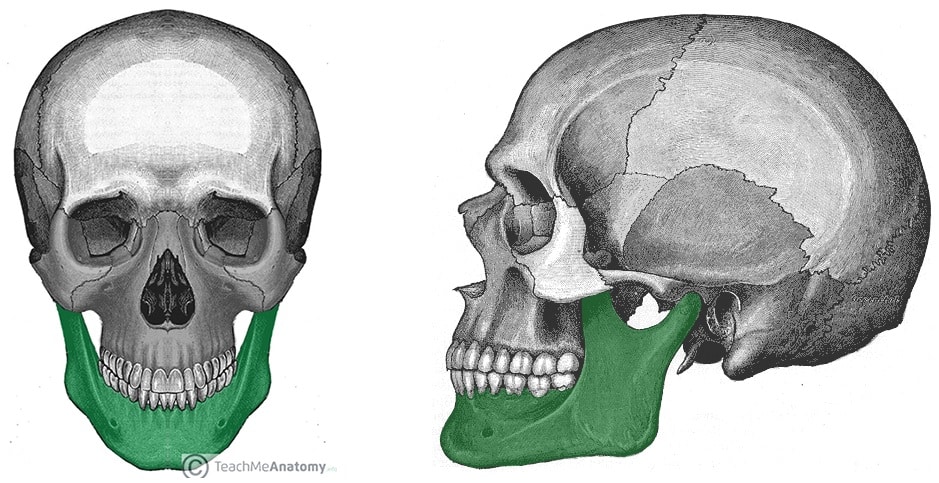
Mandible
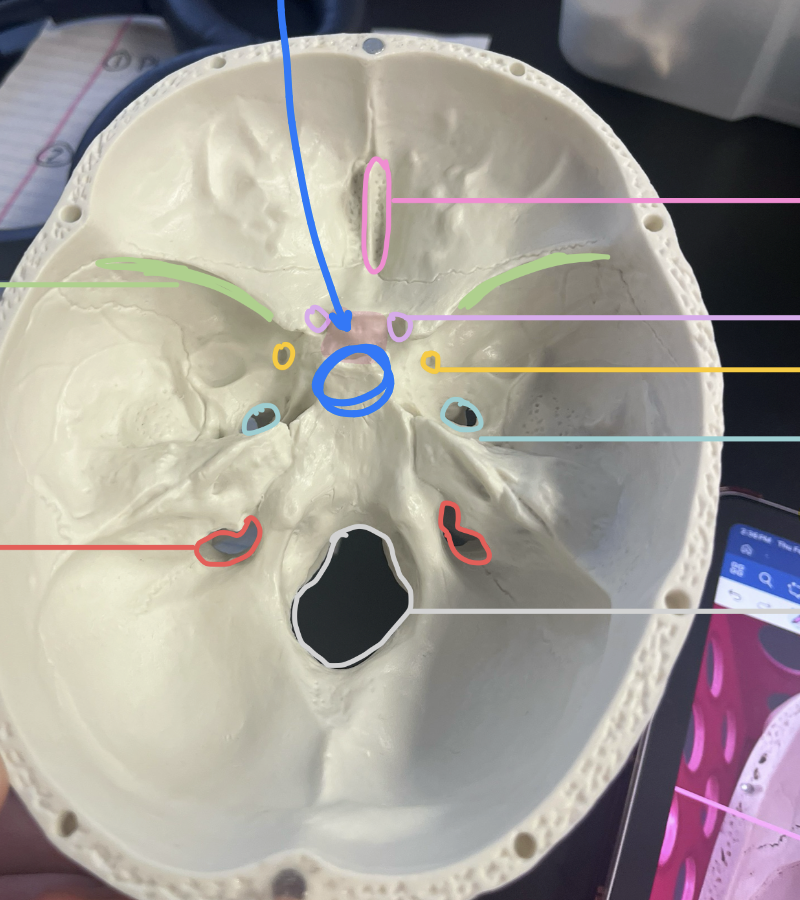
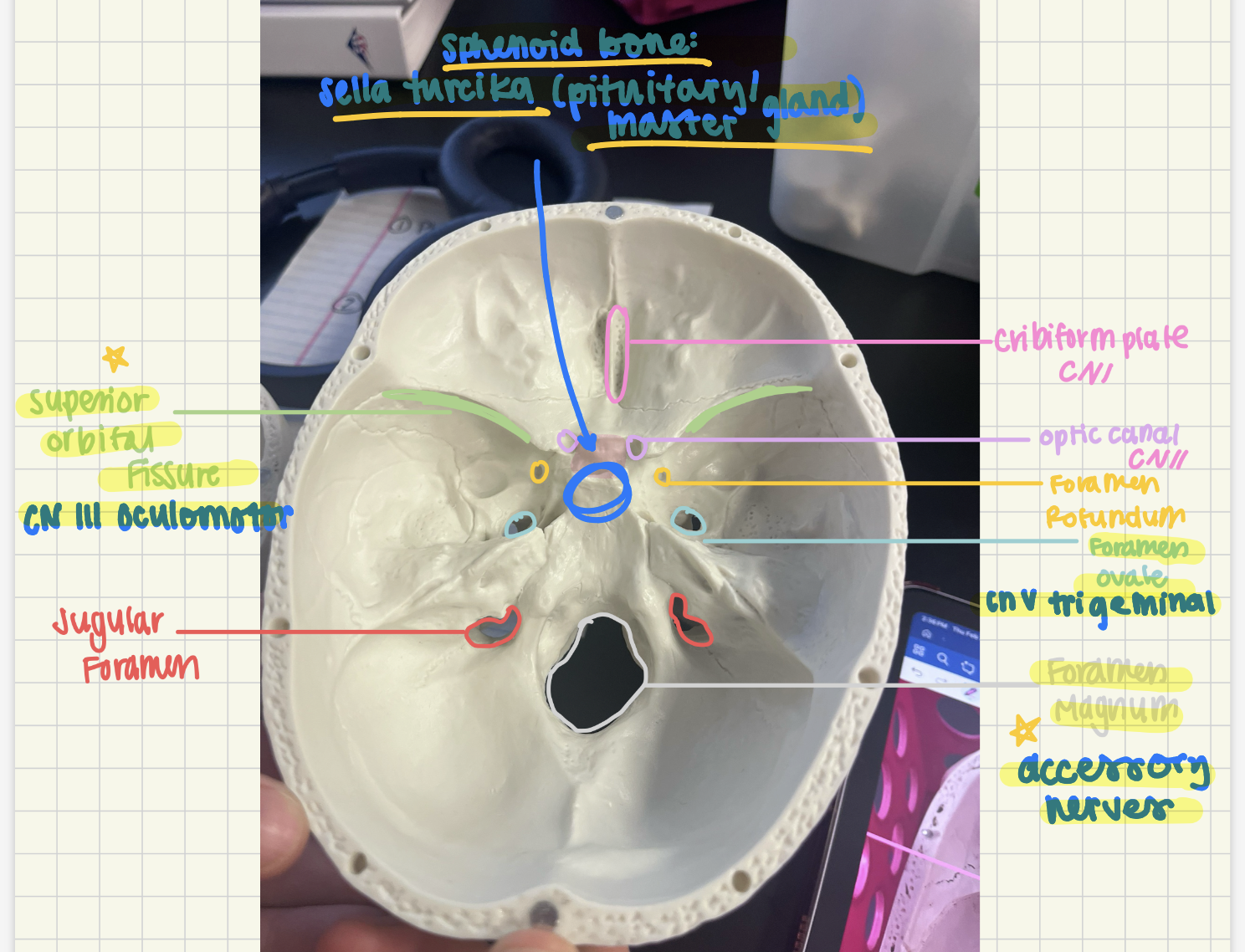
Identify superior orbital fissure, foramen ovale, foramen magnum. What nerves run through them? Also the sphenoid bone and what it contains.
Superior orbital fissure (CN3 Oculomotor); foramen ovale (CN5 trigeminal); foramen magnum (accessory nerves). Sphenoid bone holds sella turcika (pituitary/master gland).
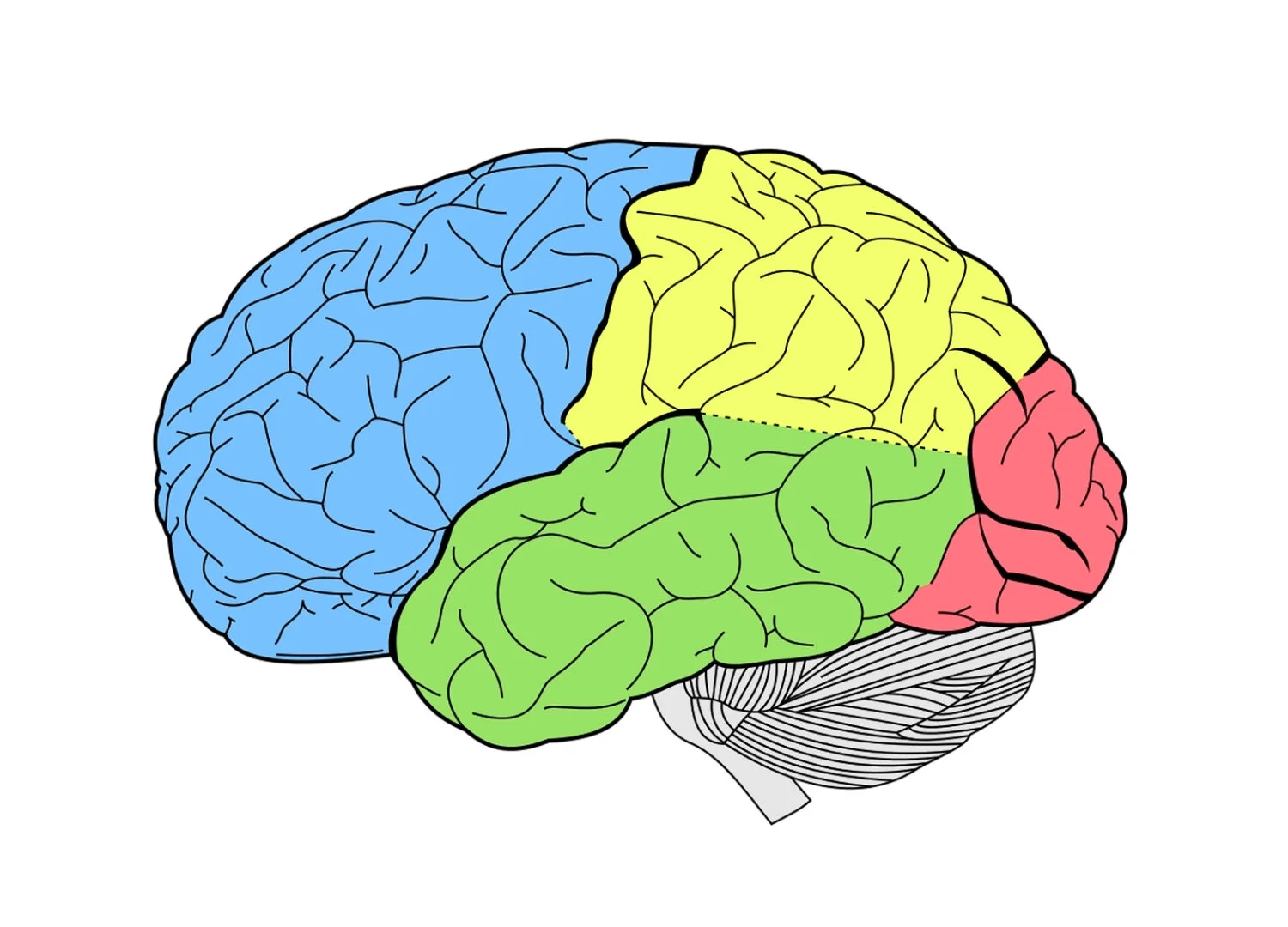
Identify the lobes and what they do.
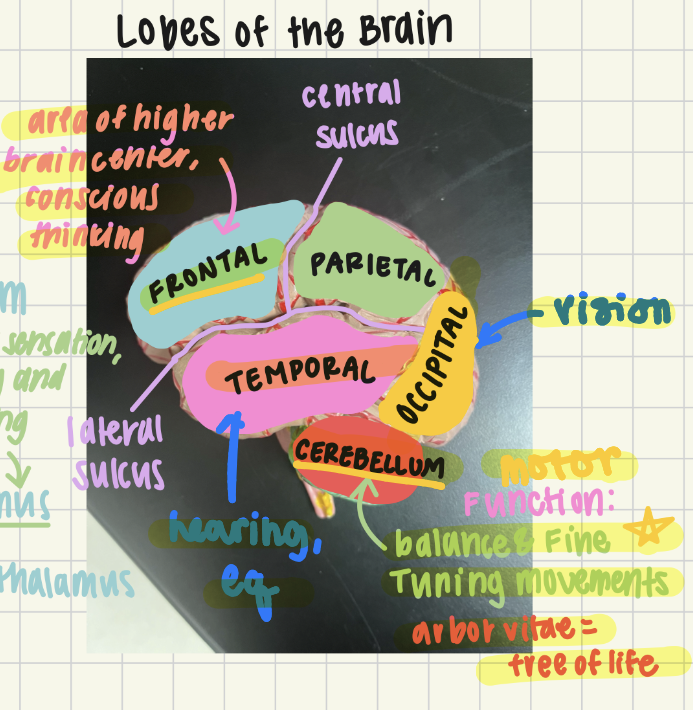
In the cerebellum “little brain,” there is __ matter called the…
White, arbor vitae (tree of life)
Meninge order
Dura (strongest) + subdural space w CSF —> arachnoid + subarachnoid —> pia (covers brain)
Pathway of light entering the eye
Cornea
Pupil/iris
Lens
Retina
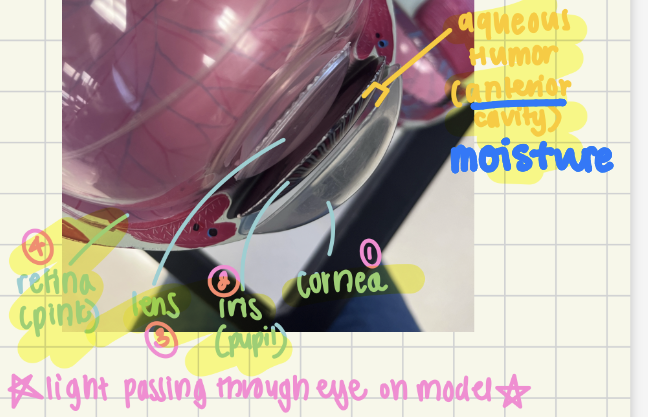
Which eye cavities are aqueous and vitreous humors located in? What are the functions?
Aqueous (anterior, moisture), vitreous (posterior, shape)
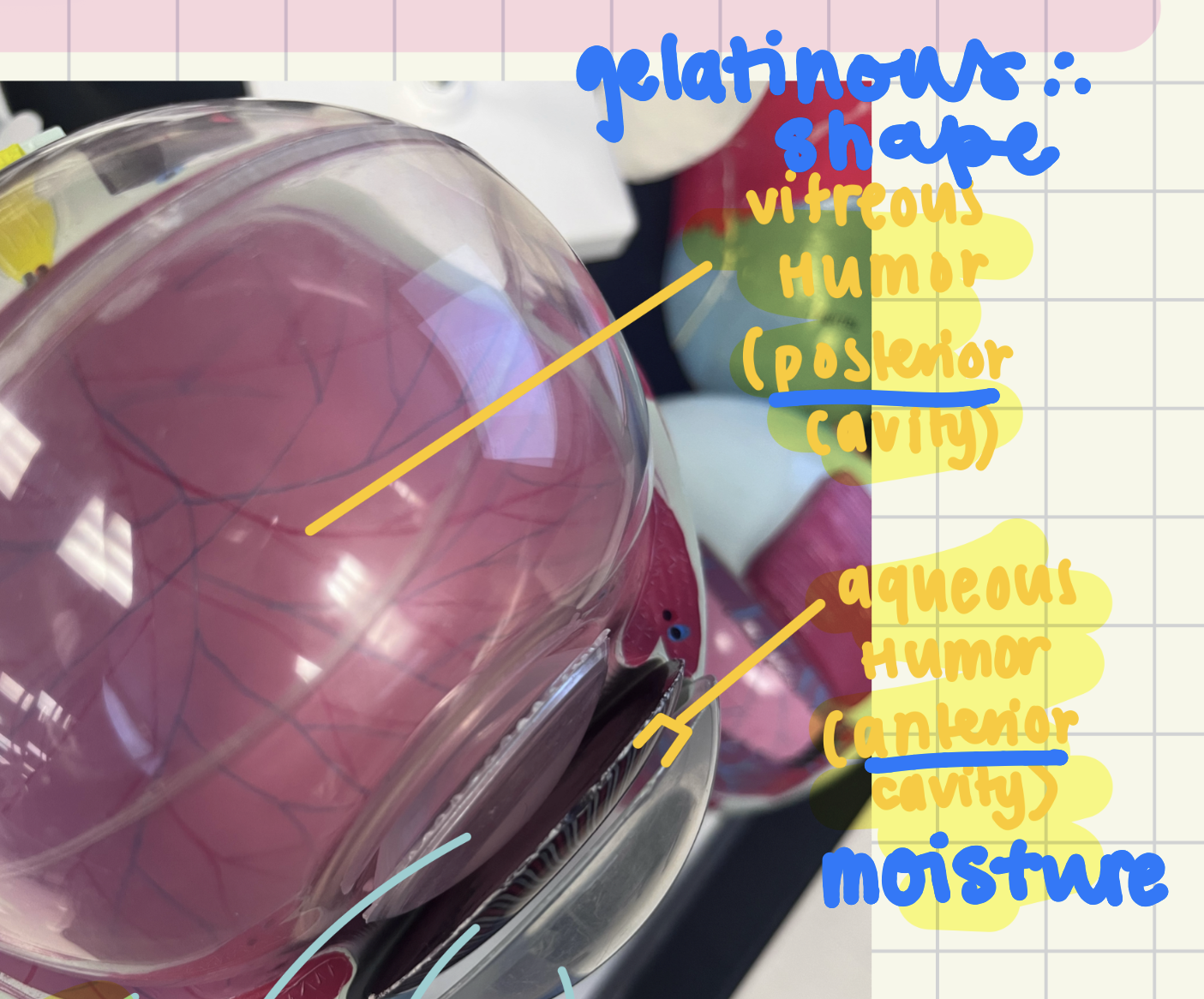
What is the function of the iris in the eye?
Pigmentation
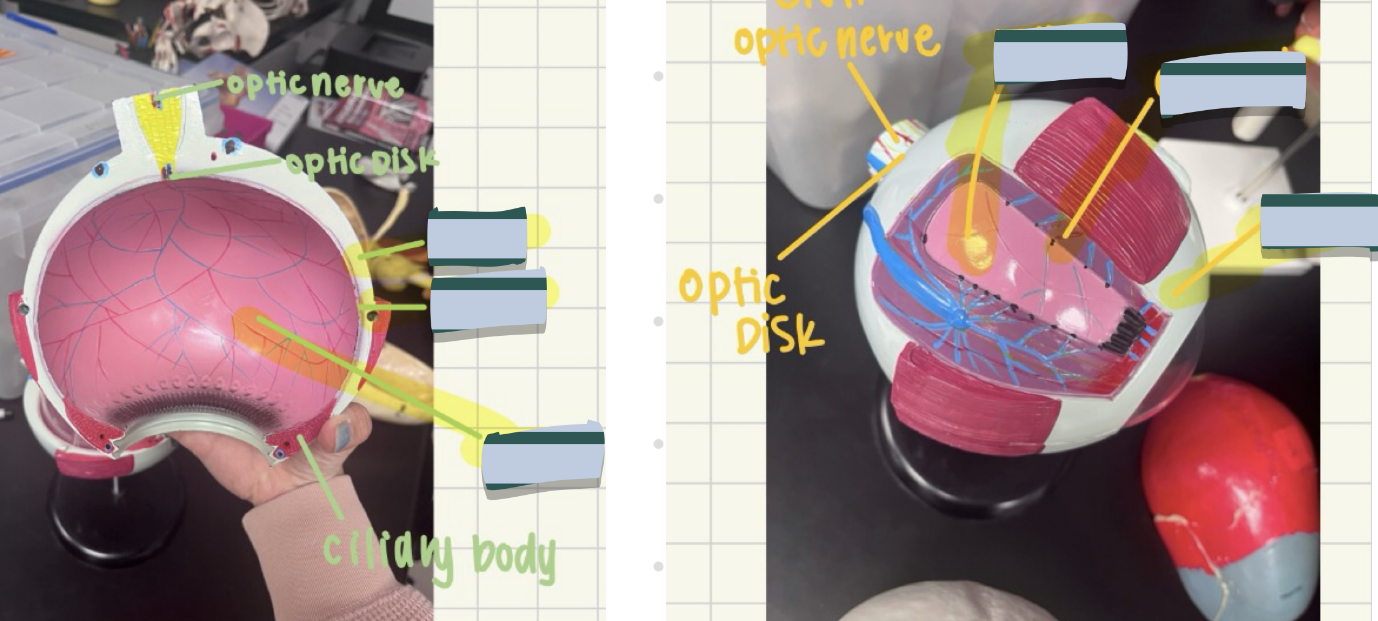
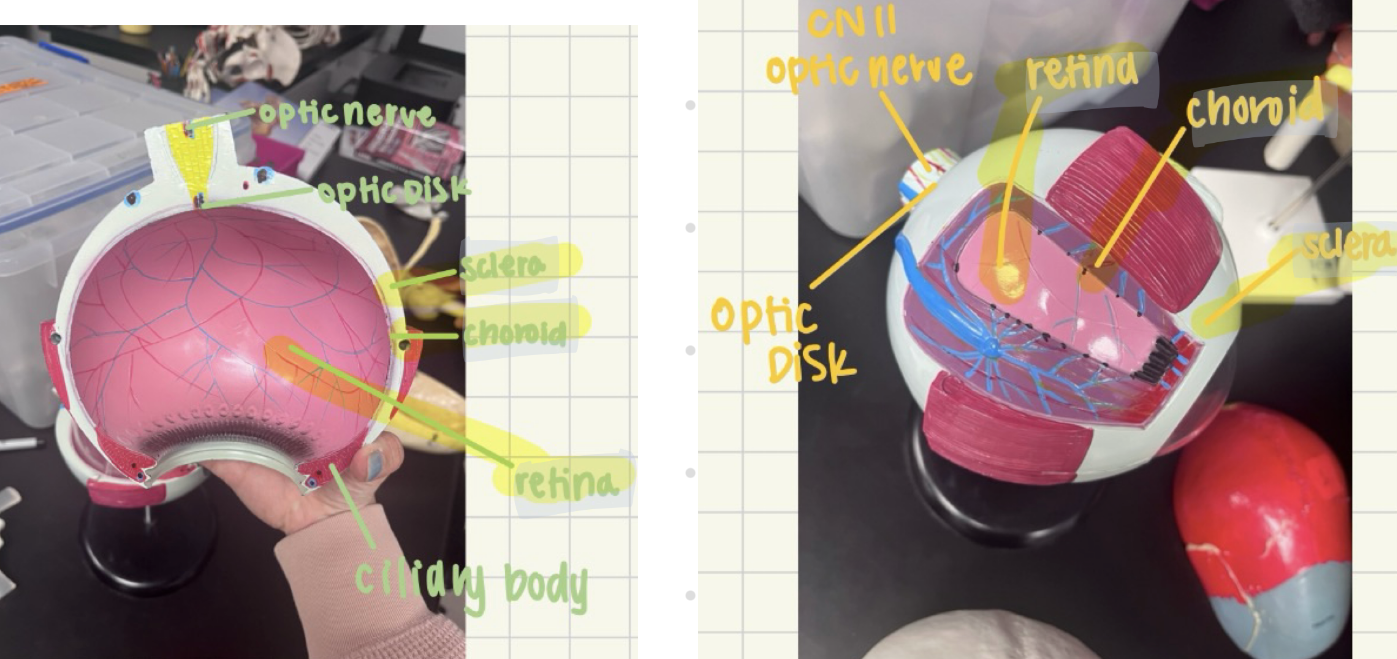
Identify the retina, choroid, and sclera.
Cranial nerves of the tongue
Anterior 2/3: CN5 Trigeminal (sense), CN7 facial (taste)
Posterior 1/3: CN9 Glossopharyngeal
CN12 Hypoglossal (movement)
“Oh oh oh, to touch and feel very good velvet, ah!”
Olfactory
Optic
Oculomotor
Trochlear
Trigeminal
Abducens
Facial
Vestibulocochlear
Glossopharyngeal
Vagus
Accessory
Hypoglossal
S/M/B function of cranial nerves mnemonic
"Some Say Marry Money, But My Brother Says Big Brains Matter More"
Parasympathetic nervous system cranial nerves
CN3 occulomotor, CN7 facial, CN9 glossopharyngeal, CN10 vagus
If right eye doesn’t CONSTRICT, that indicates damage of the __.
RIGHT CN3 (Oculomotor)
Less R. face SENSATION indicates damage to what CN?
CN5 Trigeminal
Less R. face EXPRESSION indicates damage to what CN?
CN7 Facial
Name the eye, face, mouth functions of CN5 Trigeminal.
Opthalmic - superior orbital fissure
Maxillary - facial sensation
Mandibular - anterior 2/3 tongue sense, chewing
Gag reflex SENSATION is caused by…
CN9 Glossopharyngeal
Gag reflex ACTION is done by…
CN10 Vagus
Innervates trapezius and sternocleidomastoid (SCM) muscles
CN11 Accessory
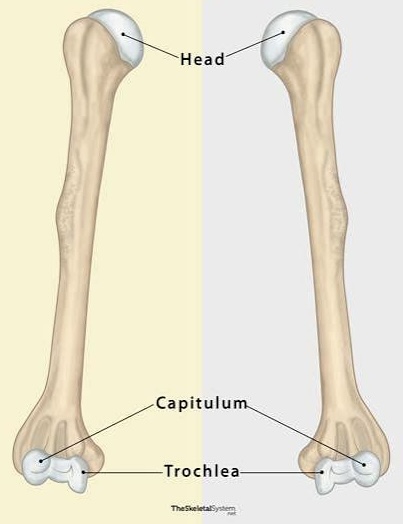
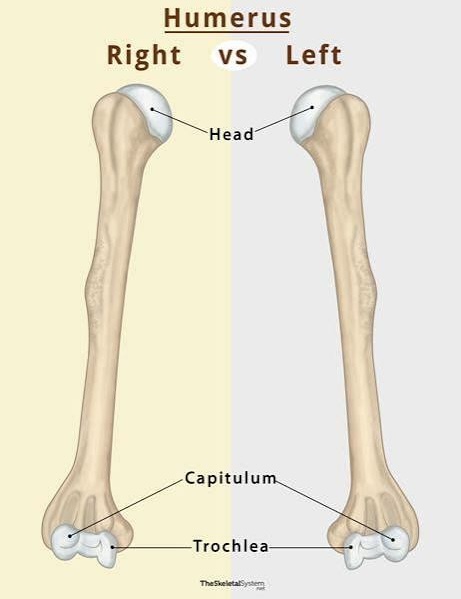
Identify the right/left humerus!
The subscapularis is innervated by ___ and assists with __
Subscapular nerve, internal rotation
The supraspinatus is innervated by ___ and assists with __
Superscapular nerve, abduction
The infraspinatous is innervated by ___ and assists with __
Superscapular nerve, external rotation
The teres minor is innervated by ___ and assists with __
Axillary nerve, external rotation
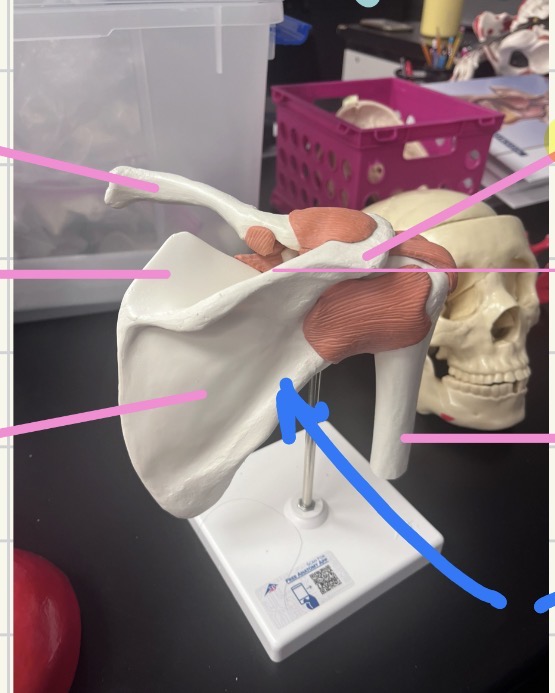
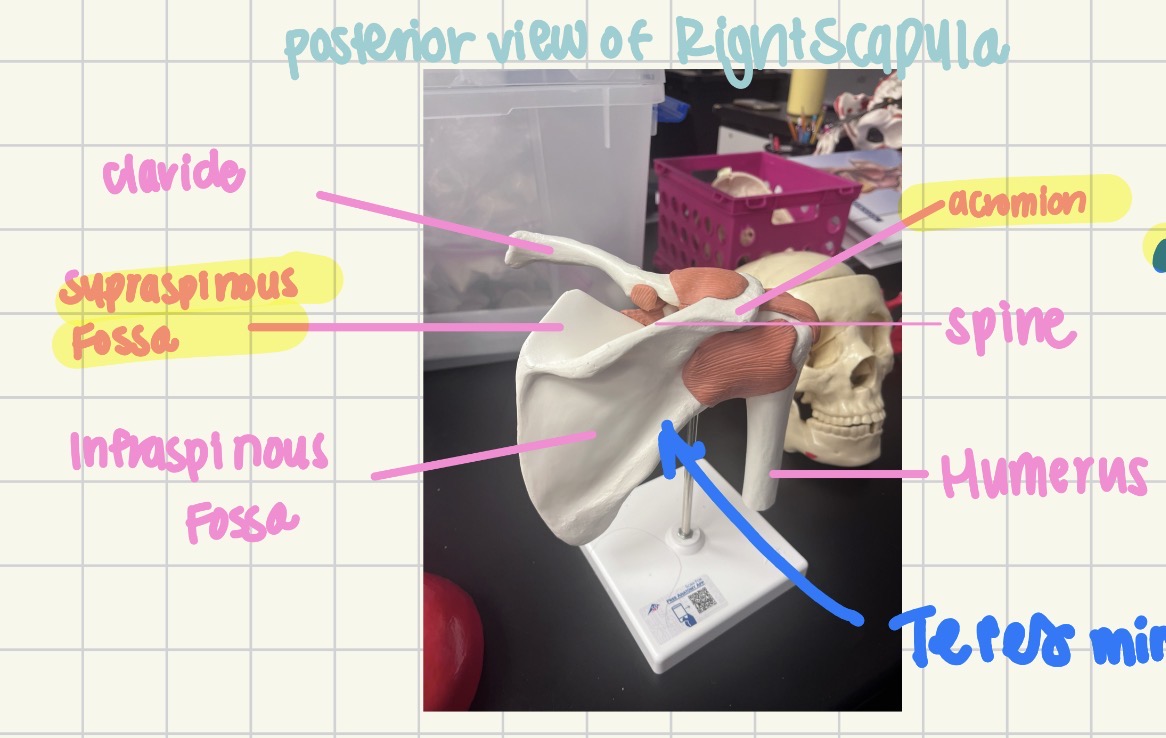
Identify the acromion, infraspinous, teres minor, supraspinous fossa on the POSTERIOR of the right scapula.
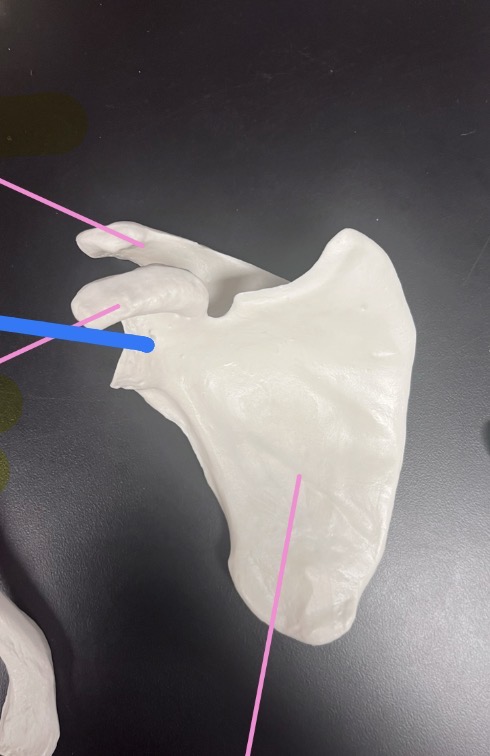
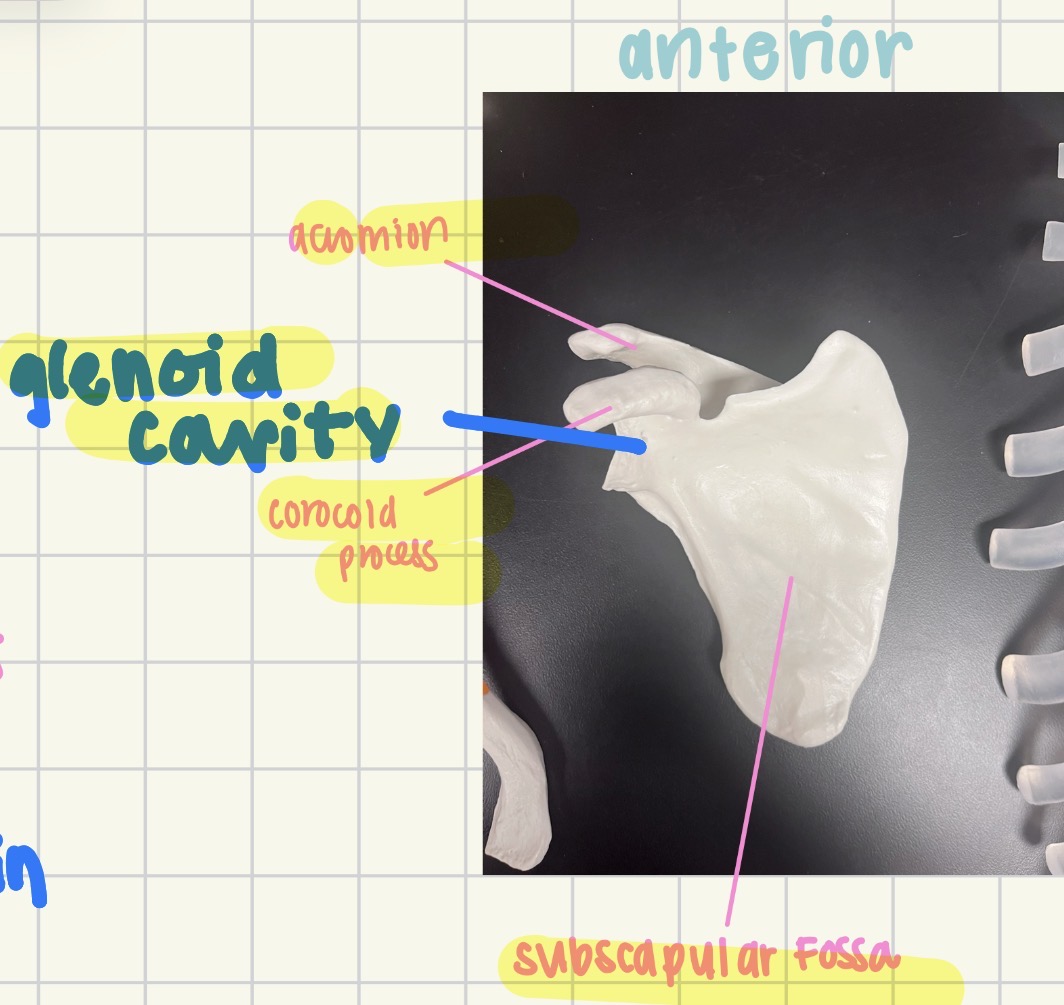
Identify the acromion, glenoid cavity, corocoid process, and subscapular fossa on the ANTERIOR of the right scapula.
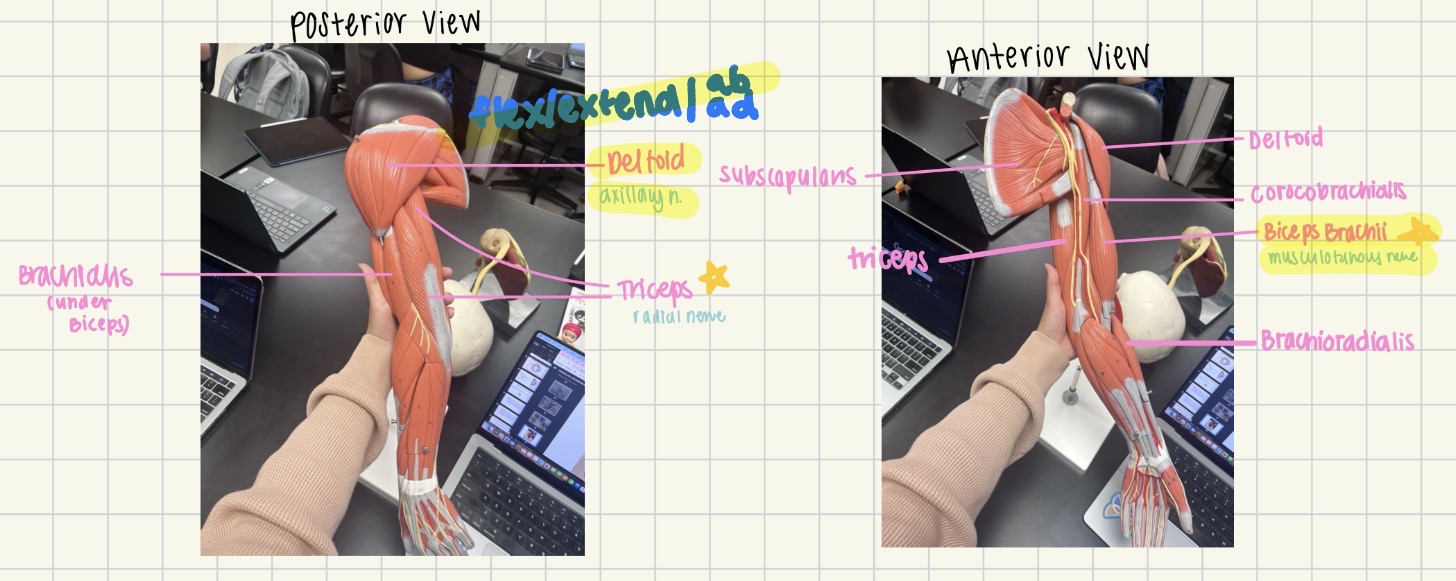
The deltoid muscle is innervated by ___ and assists with __
Axillary nerve, shoulder movement
The bicep brachi musle is innervated by ___ and assists with __
Muculocutaneous nerve, elbow flexion
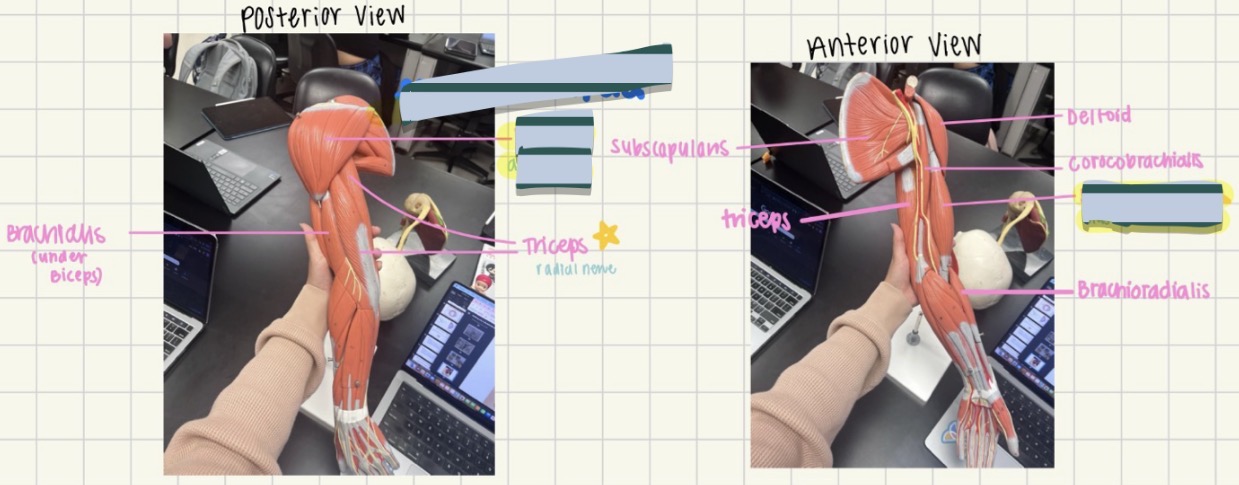
Identify the deltoid and biceps brachii muscles.