bio chapter 7
 Call Kai
 Learn
Learn Practice Test
 Spaced Repetition
 Match
Match Flashcards
 Knowt Play
1/71

There's no tags or description
Looks like no tags are added yet.
Name | Mastery | Learn | Test | Matching | Spaced | Call with Kai | Chat |
|---|
No analytics yet
Send a link to your students to track their progress
72 Terms
why do we need food?
-for growth
-source of energy
-replacement of worn and damaged tissues
how does food help with growth?
-provides substances needed for making new cells and tissues
how does food act as a source of energy?
-energy is needed for chemical reactions that take place in living organisms to keep them alive
-food is broken down during respiration to provide energy
how does food help to replace worn and damaged tissues
-substances from food are used to replace worn away skin, dead red blood cells and repair wounds
what is the meaning of a balanced diet
-contains all essential nutrients in the correct proportion to maintain good health.
-carbohydrate, fat, protein, vitamin, minerals, fiber and water
7 food classes
-fats, oils and confectionery
-meat, fish and alternatives
-milk, cheese and dairy
-fruit and vegetables
-bread, cereals and potatoes
uses of carbohydrates
-source of energy
source of carbohydrates
-rice, potato, sweet potato, cassava, bread, millet, sugary foods
uses of fats/oils
-source of energy
-heat insulation
-part of hormones
-in cell membranes
-insulation of nerve fibres
sources of fats/oils
-butter, milk, cheese, egg yolk, animal fat, groundnuts
uses of protein
-growth
-tissue repair
-helps body make enzymes
-some hormones
-hair, nails
-can be broken down to release energy
sources of protein
meat, fish, eggs, soya, ground nuts, milk, cowpeas
what are the uses of fibre
-is cellulose
-adds bulk to undigested food passing through the intestines to maintain peristalsis (muscle contractions that move food through the digestive tract)
sources of fibre
-vegetables, fruit, wholemeal bread
what is the use of water in the body?
-formation of blood, cytoplasm
-solvent for transport of nutrients and removal of wastes (urine)
-enzymes only work in a solution (water helps move substrates to enzymes)
source of water in the body
drinks, fruit, vegetables
what is the use of vitamin c?
prevents scurvy
what are sources of vitamin c?
-oranges, lemons, grapefruit, tomato, green vegetables
vitamin c deficiency effects
-scurvy: fibres in connective tissue of skin and blood vessels do not form properly.
leads to:
-bleeding gums
-bleeding under the skin
-poor healing of wounds
what are the uses of vitamin d?
-prevents rickets
-helps absorb calcium from intestine and deposition of calcium in bones
good source of calcium
-butter, milk, cheese, egg yolk, liver, fish-liver oil
what are vitamin d deficiency effects
-rickets: bones become soft and deformed
-osteo-malacia: fractures are likely
what are vitamins?
-not digested or broken down for energy
-mostly not built into body structures
-essential in small quantities for health
-needed for chemical reactions in cells
what is the use of calcium?
-form healthy bones and teeth
-normal blood clotting
-help in muscle contraction and nerve impulse transmission
good sources of calcium
milk, cheese, fish
calcium deficiency effects
osteoporosis in older people (inner structure of the bone becomes spongy and loses mass, making it brittle and break easily)
what is the use of iron?
-formation of haemoglobin in the red blood cells
-needed by muscles and enzyme systems in cells
what are good sources of iron
-red meat, liver, kidney, eggs, green vegetables (spinach, cabbage) and chocolate
what are iron deficiency effects
-it is the decrease in red blood cells
symptoms: feeling weak, tired and irritable
(red blood cells break down in the liver after about 3 months)
what is ingestion
-taking of substances (eg: food and drink) into the body through the mouth
what is mechanical digestion
-breakdown of food into smaller pieces without chemical change to the food molecules
what is chemical digestion
-breakdown of large, insoluble molecules into small, soluble molecules
what is absorption
-the movement of digested food molecules through the wall of the intestine into the blood
what is assimilation?
uptake and use of nutrients by cells
what is egestion
passing out of food that has not been digested or absorbed as faeces passing through the anus
what is mastication?
-a form of mechanical digestion in the mouth, chewing.
-done by the teeth
memorise this diagram:
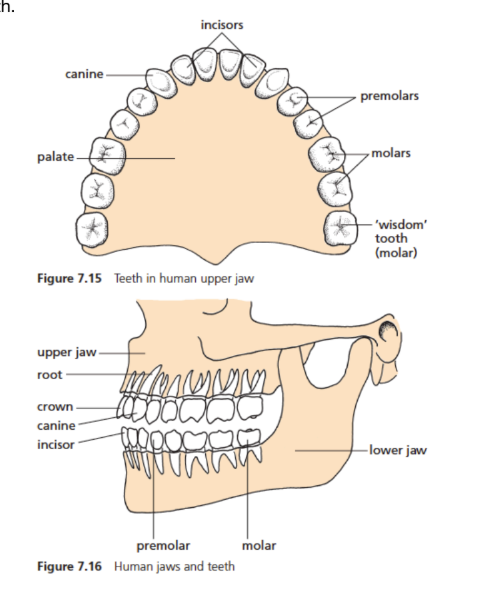
features of the incisor
-at the front
-chisel-shaped (sharp edge)
-bite off pieces of food
features of the canine
-either side of incisors
-slightly more pointed than incisors
-bite off pieces of food
features of the premolar
-behind canines
-have to points (cusps0 and one or two roots
-tears off and grinds food
features of the molar
-at the back
-have 4 or 5 cusps, have 2-3 roots
-chewing and grinding food
memorise the tooth structure
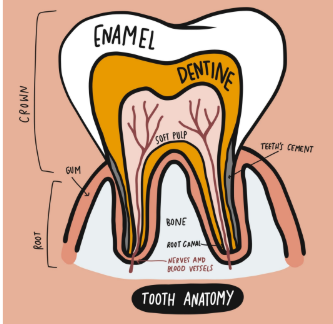
features of the crown
-the part visible above the gum line
features of the gum
-tissue that overlays the jaws and anchor your teeth
features of the root
-other structures that are embedded in the jaw bone
features of the enamel
-covers the surface of the crown, very hard
features of the cement
-in the root, cement replaces enamel
-enables tooth to grip its bony socket in the jaw
features of the dentine
-below enamel
-softer than enamel
-contains pulp cavity
features of the pulp cavity
-contains nerves and blood vessels which enters the tooth through a small hole at the base of the root

alimentary canal: memorise this
what is the function of the mouth?
ingesting food, mechanical digestion by teeth and chemical digestion of starch by amylase, formation of a bolus for swallowng
what is the function of salivary glands?
contains amylase for chemical digestion of starch in food, and liquid to lubricate food and make small pieces stick together
what is the function of the oesophagus?
transfers food from the mouth to the stomach by peristalsis
what is the use of the stomach
-produces gastric juice containing pepsin for chemical digestion of protein
-has hydrochloric acid to kill bacteria
-peristalsis churns up food into liquid
what is the use of duodenum
-first part of the small intenstine, receives pancreatic juice for chemical digestion of proteins, fats and starch and neutralising acid from the stomach
-receives bile to emulsify fats (physical digestion)
what is the use of the ileum
-second part of the small intestine
-enzymes in the epithelial lining carry out chemical digesting of peptides and maltose
-very long and has villi to increase surface area to absorb digested food molecules
what is the use of the pancreas
secrets pancreatic juice into the duodenum via pancreatic duct for chemical digesting of protein, fat and starch
what is the use of the liver
-makes bile containing salts to emulsify fats (physical digestion)
-assimilation of digested food such as glucose
-deamination of excess amino acids
what is the use of the gallbladder
-stores bile made in the liver
-secrets bile into the duodenum via bile ducts
what is the use of colon?
-first part of the large intenstine
-absorption of water from undigested food
-absorption of bile salts to pass back into the liver
what is the use of the rectum?
-second part of the large intestine that stores faeces
what is the use of the anus?
-egestion of faeces
process of chemical digestion
-chemical digestion functions to break down large molecules into smaller, soluble molecules.
process that takes place in the mouth
-food in the mouth stimulates the salivary glands to secrete saliva
-mucus in saliva helps to soften food.
-enzyme called salivary amylase, which digest starch to maltose
-tongue rolls food into bolus (slippery round masses)
-boli is pushed down the oesophagus into the stomach from peristalsis
-presence of food stimulates gastric glands to secrete gastric juice.
-peristalsis churns, mixes and breaks up the food
-
chemical digestion in the mouth
-digested by salivary glands
-secrest saliva
-ph7
-salivary amylase
-starch → maltose
chemical digestion in the stomach
-digested by gastric glands
-secretes gastric juice
-enzyme: pepsin
-ph1-2
-proteins → peptides
chemical digestion in the small intestine (duodenum)
-digested by pancreas
-secretes pancreatic
-ph8-9
-enzyme: trypsin, pancreatic amylase and lipase
-proteins → amino acids, starch → maltose, fats → fatty acids & glycerol
chemical digestion in the small intestine (ileum)
-digested by the epithelial cells of intestine
-secrets intestinal enzymes
-ph8-9
-enzyme: protease, maltase, lipase
-proteins→amino acids, maltose→ glucose, fats → fatty acids and glycerol