Drivers Permit Test 2026
 Call Kai
 Learn
Learn Practice Test
 Spaced Repetition
 Match
Match Flashcards
 Knowt Play
1/26

Earn XP
Description and Tags
Cumulative
Name | Mastery | Learn | Test | Matching | Spaced | Call with Kai | Chat |
|---|
No analytics yet
Send a link to your students to track their progress
27 Terms
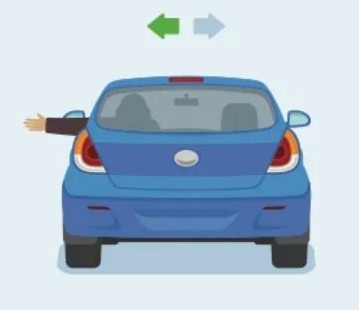
Left turn hand signal
Straight left
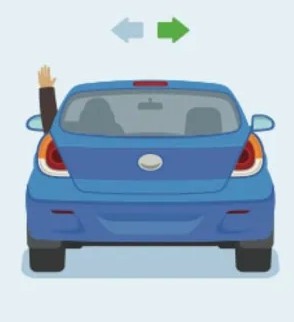
Right turn hand signal
Up
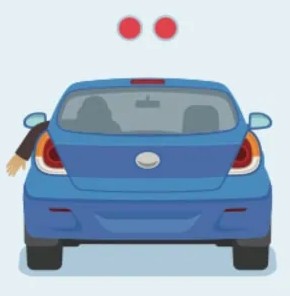
Slow or stop hand signal
Down
Signal at least ___ feet before turning
100 feet
When to signal?
Turning, changing lanes, slowing down, and stopping
Signal at least ___ seconds before changing lanes on a freeway
5 seconds
When do you signal in an intersection?
When you are almost through if you plan to turn after crossing the intersection
You should use your horn to alert oncoming traffic on ___ where you cannot see ___ feet ahead
narrow mountain roads; 200 feet
What do headlights do?
Help see what is in front of you and make it easier for others to see you
Dim headlights when within ___ feet of a vehicle coming toward you and ___ feet of a vehicle you are following.
500 feet; 300 feet
How many minutes after sunset and until sunrise can it before you to use your headlights
30 minutes
In adverse weather when using windshield wipers, you must
Turn on low-beam headlights
What must you do when on mountain roads and tunnels (even on sunny days)
Use your headlights
What should you do when seeing a collision or hazard ahead to warn drivers behind you?
Turn on your emergency flashers and use hand signals when slowing or stopping
If you need to stop because of vehicle trouble you should
Call for roadside assistance, pull off the road away from traffic, turn on emergency flashers
Single Solid Yellow Line
Marks the center of a road with two-way traffic
Double Solid Yellow Lines
Barriers that cannot be crossed unless making a turn or being instructed to cross
Broken Yellow Line
You may pass if the broken line is next to your driving lane
Single Solid White Line
Traffic lanes going in the same direction
Double Solid White Lines
Lane barrier between a regular use and preferential use lane
Broken White Lines
Separate traffic lanes on roads with two or more lanes in the same direction
End of Lane Markings
Be prepared to exit or merge
Yield Line
Solid white triangles that shows vehicles where to stop
Before you change lanes you should
Signal, check mirrors, check traffic beside and behind you, check blind spots for vehicles
When checking traffic you should
Look over your shoulder in the direction you plan to move to make sure the lane is clear
Passing Lane
Far left lane used to pass other vehicles
Carpool/HOV Lane
High Occupancy Vehicle lane reserved for carpools, buses, and motorcycles