3.3.13 - Amino acids, proteins & DNA
 Call Kai
 Learn
Learn Practice Test
 Spaced Repetition
 Match
Match Flashcards
 Knowt Play
1/38

There's no tags or description
Looks like no tags are added yet.
Name | Mastery | Learn | Test | Matching | Spaced | Call with Kai | Chat |
|---|
No analytics yet
Send a link to your students to track their progress
39 Terms
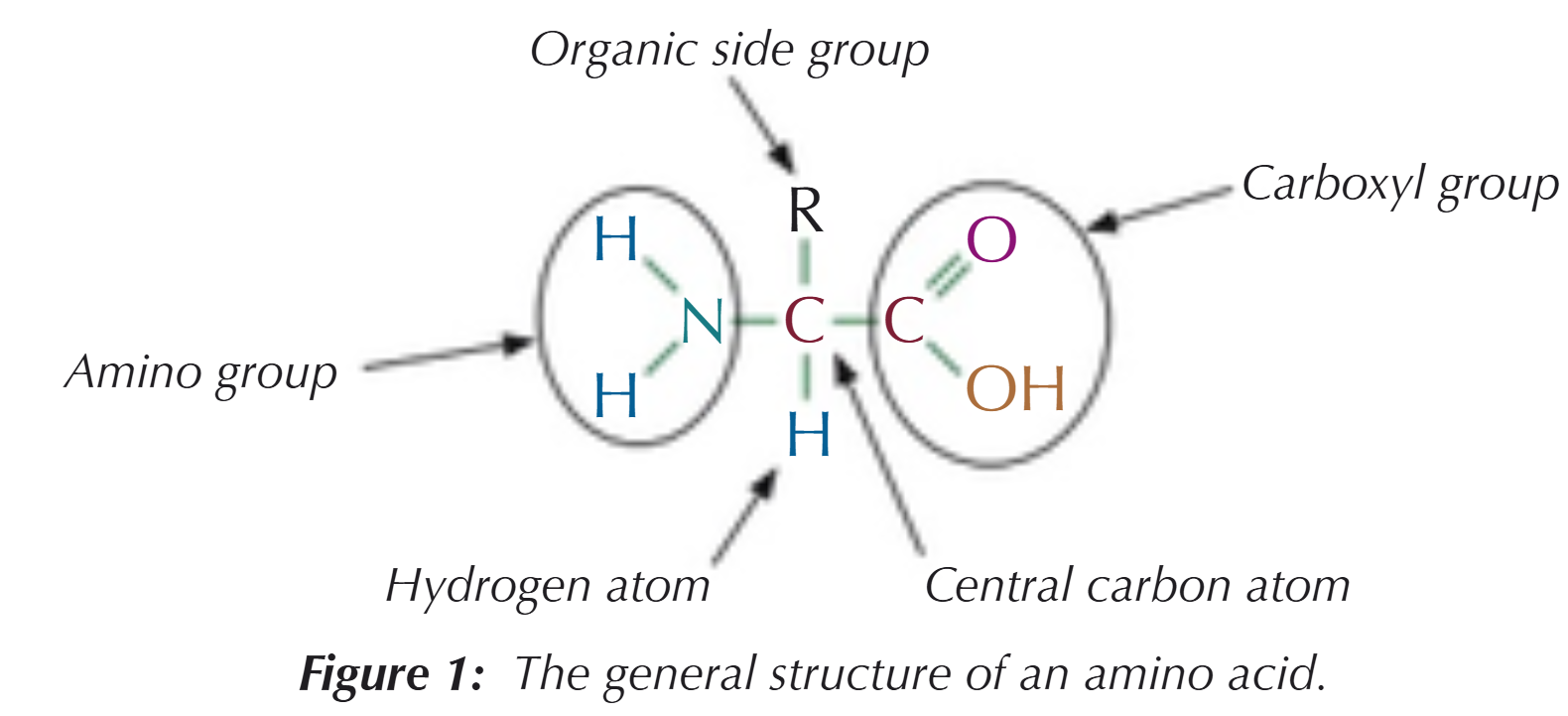
What functional groups do amino acids have?
An amino group (NH2) & a carboxyl group (COOH)
Why are amino acids amphoteric?
They have got both acidic & basic properties:
they can act as acids as the carboxyl group is acidic (can donate a proton)
-COOH ⇌ -COO- + H+
they can act as bases as the amino group is basic (can accept a proton)
-NH2 + H+ ⇌ -NH3+
Why are amino acids chiral molecules?
The carbon has four different atoms/groups of atoms attached (a solution of a single amino acid enantiomer will rotate plane polarised light)

What are the steps to naming an amino acid?
Find the longest carbon chain that includes the carboxyl group
Number the carbons in the chain starting with the carbon in the carboxyl group as number 1
Write down the positions of any NH2 groups with the word ‘amino’
Write down the names of any other functional groups & say which carbon they are on
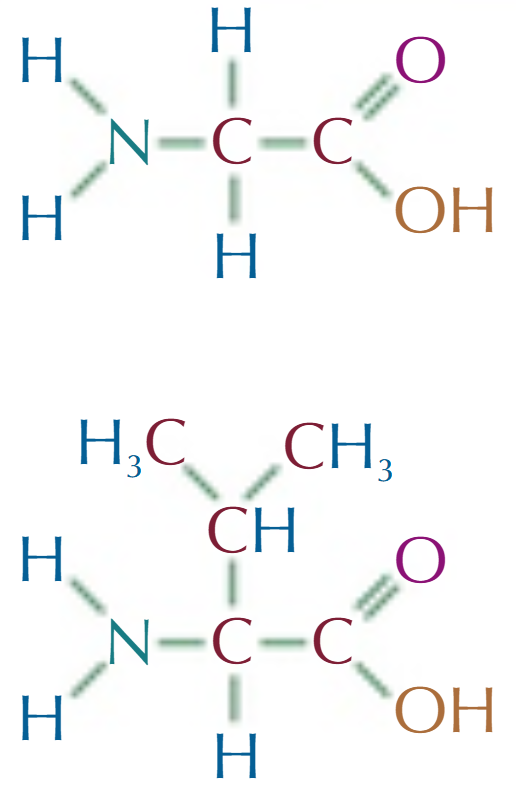
What are the names of these two amino acid molecules?
2-aminoethanoic acid
2-amino-3-methylbutanoic acid
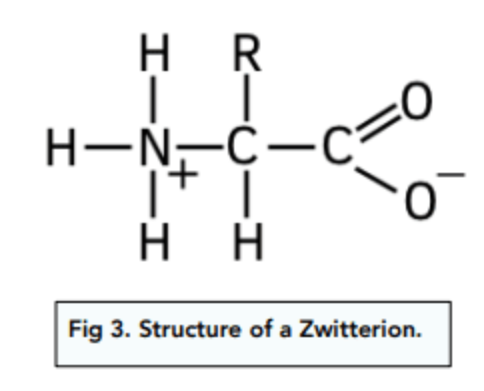
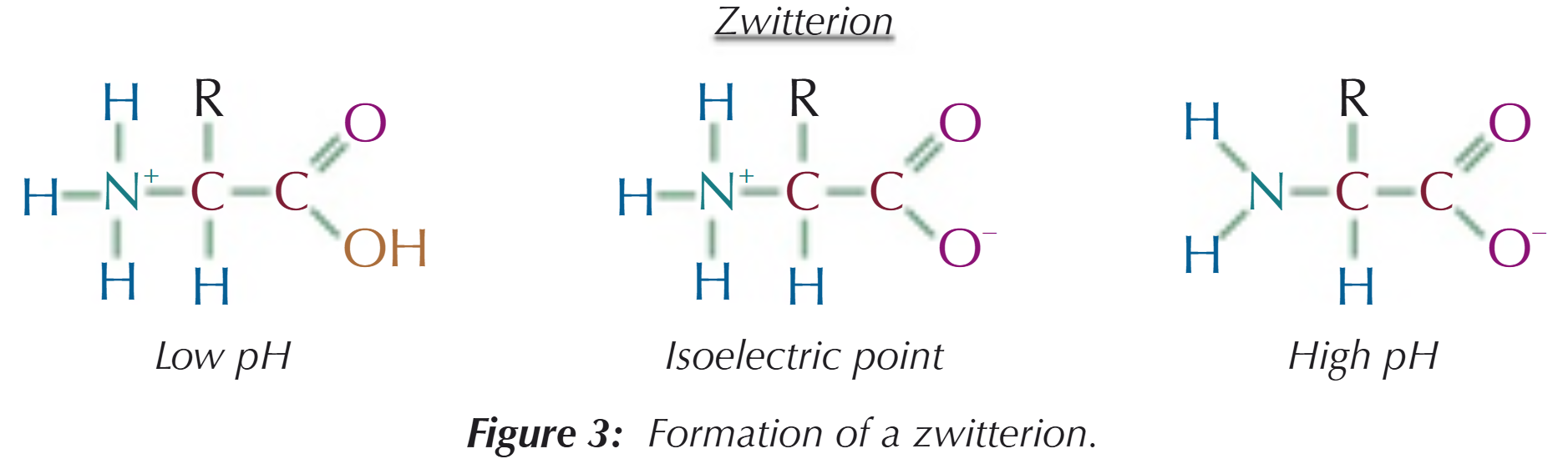
Amino acids can exist as zwitterions. What it a zwitterion?
A dipolar ion, which has both a positive & negative charge in different parts of the molecule
What is the isoelectric point?
The pH where the overall charge on an amino acid is zero:
this is different for different amino acids, as it depends on their variable R-group
When does an amino acid become a zwitterion?
When its amino group is protonated to NH3+ & its carboxyl group is deprotonated to COO-
What happens to an amino acid in conditions more acidic (low pH) than the isoelectric point?
The NH2 group will be protonated but the COOH group will be unchanged
The amino acid will carry a positive charge but not a negative charge
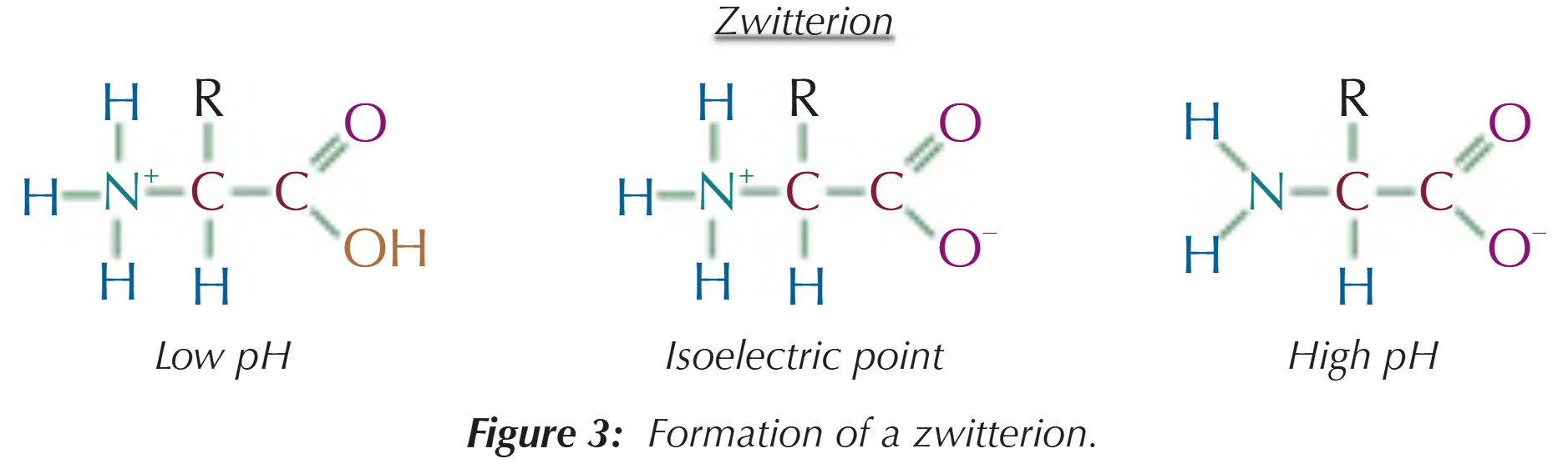
What happens to an amino acid in conditions more basic (high pH) than the isoelectric point?
The COOH group will lose its proton but the NH2 group will be unchanged
The amino acid will carry a negative charge but not a positive charge
In what conditions are zwitterions only formed?
Only at or near an amino acid’s isoelectric point where both the carboxyl & the amino acid group are likely to be ionised

How are mixtures of amino acids separated & why?
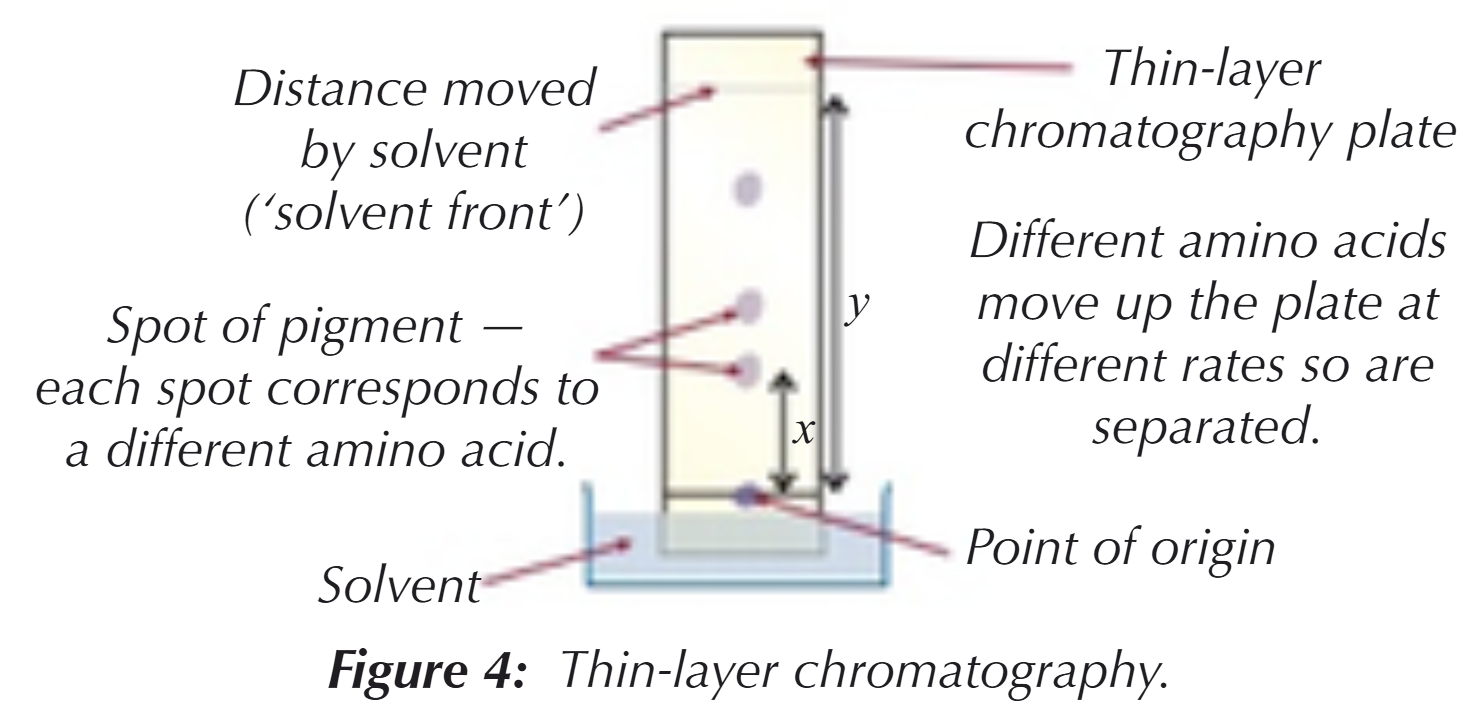
Different amino acids in a mixture are easily separated & identified using thin-layer chromatography (TLC):
different amino acids have different variable ‘R’ groups, so they will all have different solubilities in the same solvent
Since amino acids aren’t coloured, what could be done to make them visible?
Spray ninhydrin solution on the plate, which causes the amino acids to turn purple
Use a special plate that has a fluorescent dye added to it → the dye glows when UV light shines on it
where there are spots of chemical on the plate, they cover the fluorescent dye, so the spots appear dark
the plate could be put under a UV lamp & the dark patches could be drawn around to show where the spots are
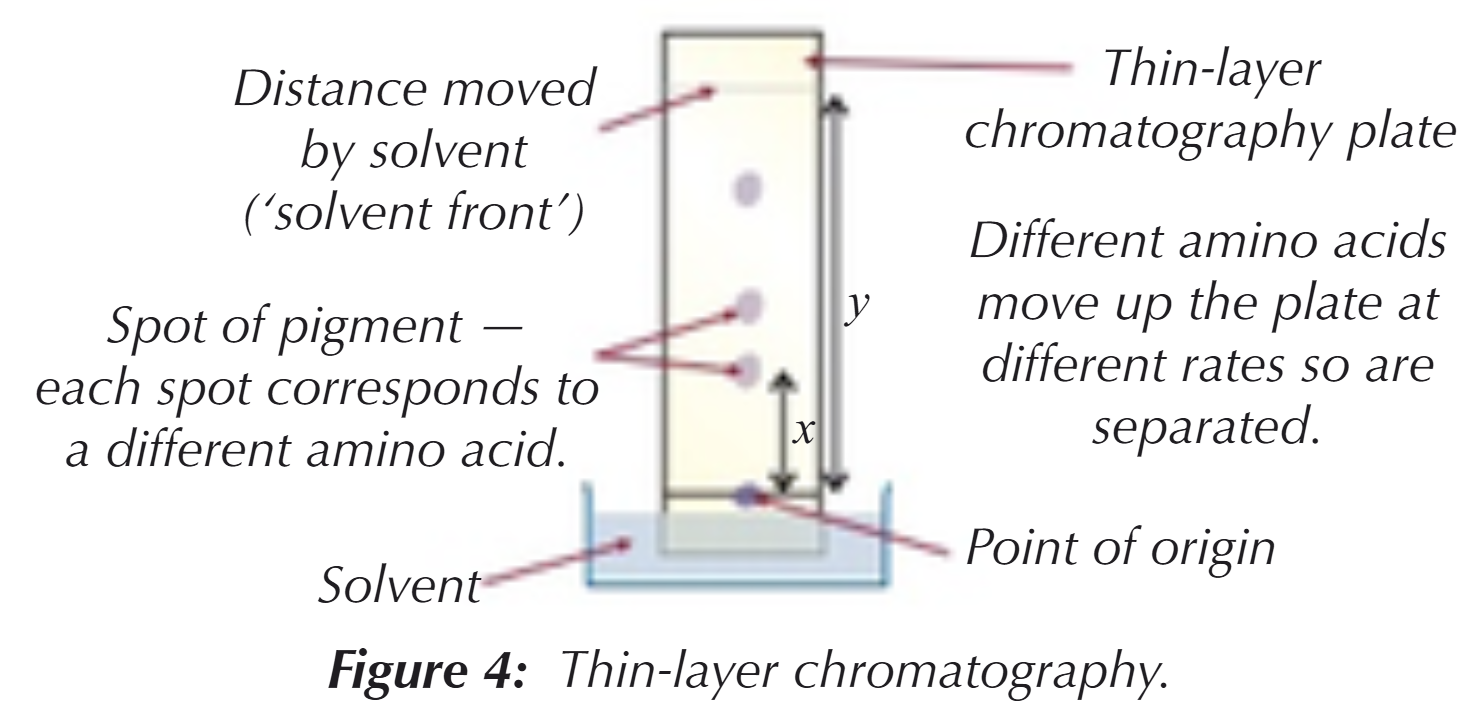
What is the equation to calculate the Rf value?
Rf = distance travelled by solute / distance travelled by solvent
What are proteins?
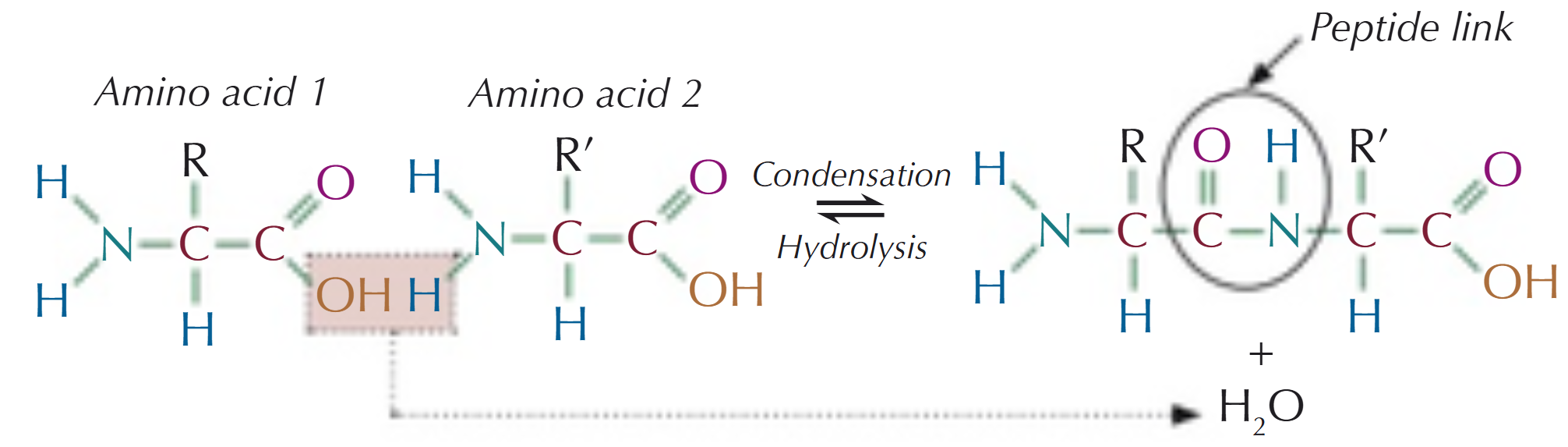
Condensation polymers of amino acids (lots of amino acids joined together by peptide links):
the chain is put together by condensation reactions & broken apart by hydrolysis reactions
What happens if the two amino acids that are combining together in a condensation reaction are different?
Two different dipeptides will be formed as the amino acids can join either way around:
the dipeptide still has an NH2 group at one end & a COOH group at the other
it can undergo further condensation reactions with amino acids or other peptides to make longer peptide chains

What are the conditions required to hydrolyse proteins into its individual amino acids?
Add aqueous 6.00 moldm-3 of HCl & then heat the mixture under reflux for 24 hours
How to work out the amino acids that a protein chain is made from?
Break each of the peptide links down the middle
Add either an hydrogen atom or an OH group to each of the broken ends
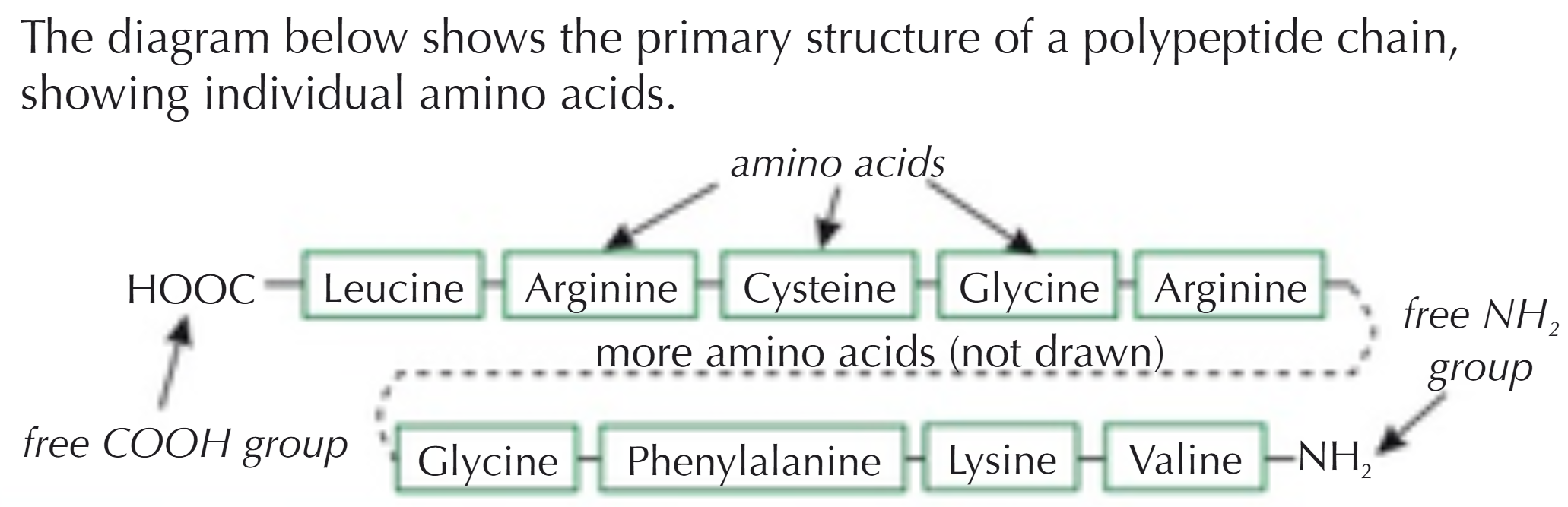
What is the primary structure of a protein?
The specific sequence of amino acids in the long chain that makes up the protein (polypeptide chain)
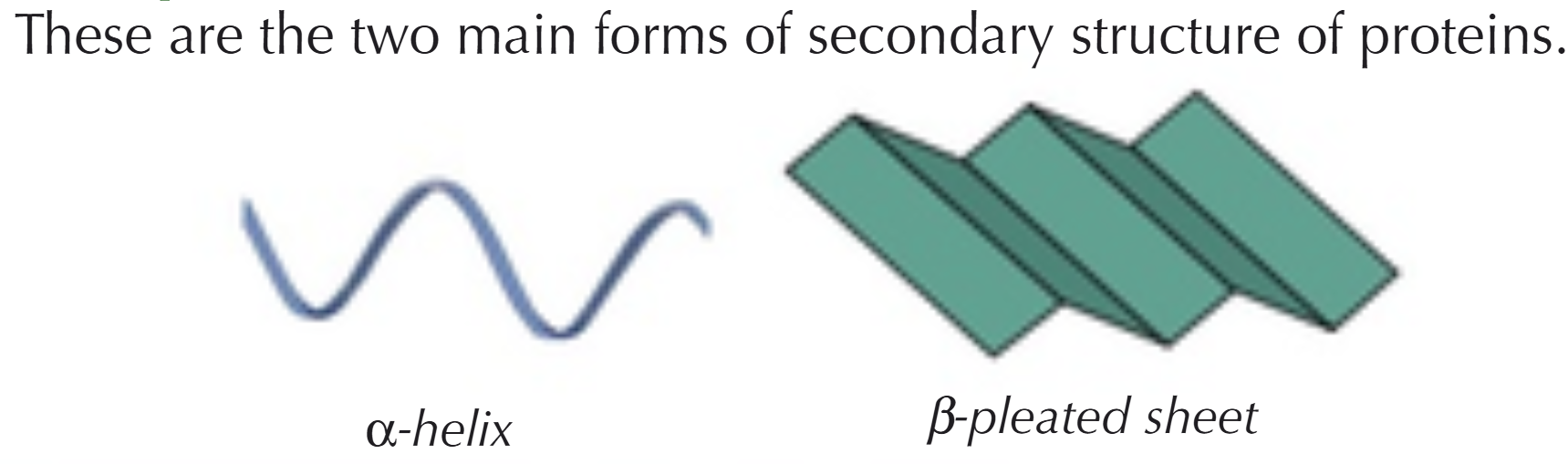
What is the secondary structure of a protein?
The folding of the primary structure into an alpha-helix or beta-pleated sheet due to formation of hydrogen bonds
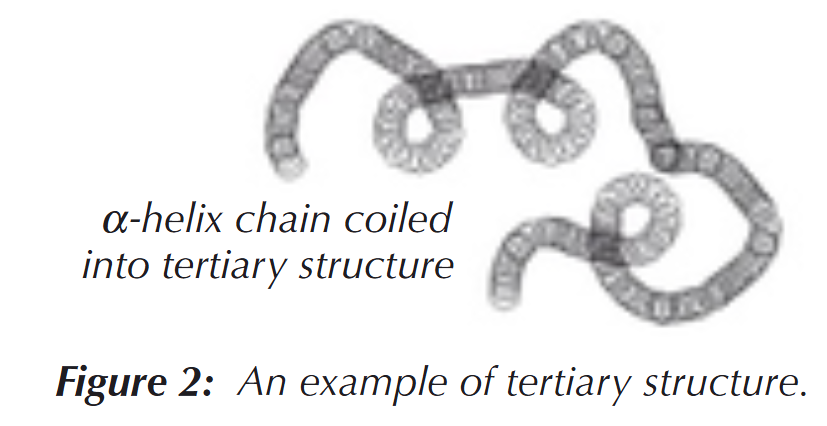
What is the tertiary structure of a protein?
The 3D folding of a protein, held together by hydrogen bonds, ionic bonds & disulphide bridges (S-S) between R groups
Why does hydrogen bonding occur in proteins?
Nitrogen & oxygen are very electronegative, therefore C=O & N-H are polar
This results in the formation of a hydrogen bond between oxygen & hydrogen, in which a lone pair of electrons on an oxygen atom are strongly attracted to the Hδ+

What is duslfide bonding in proteins?
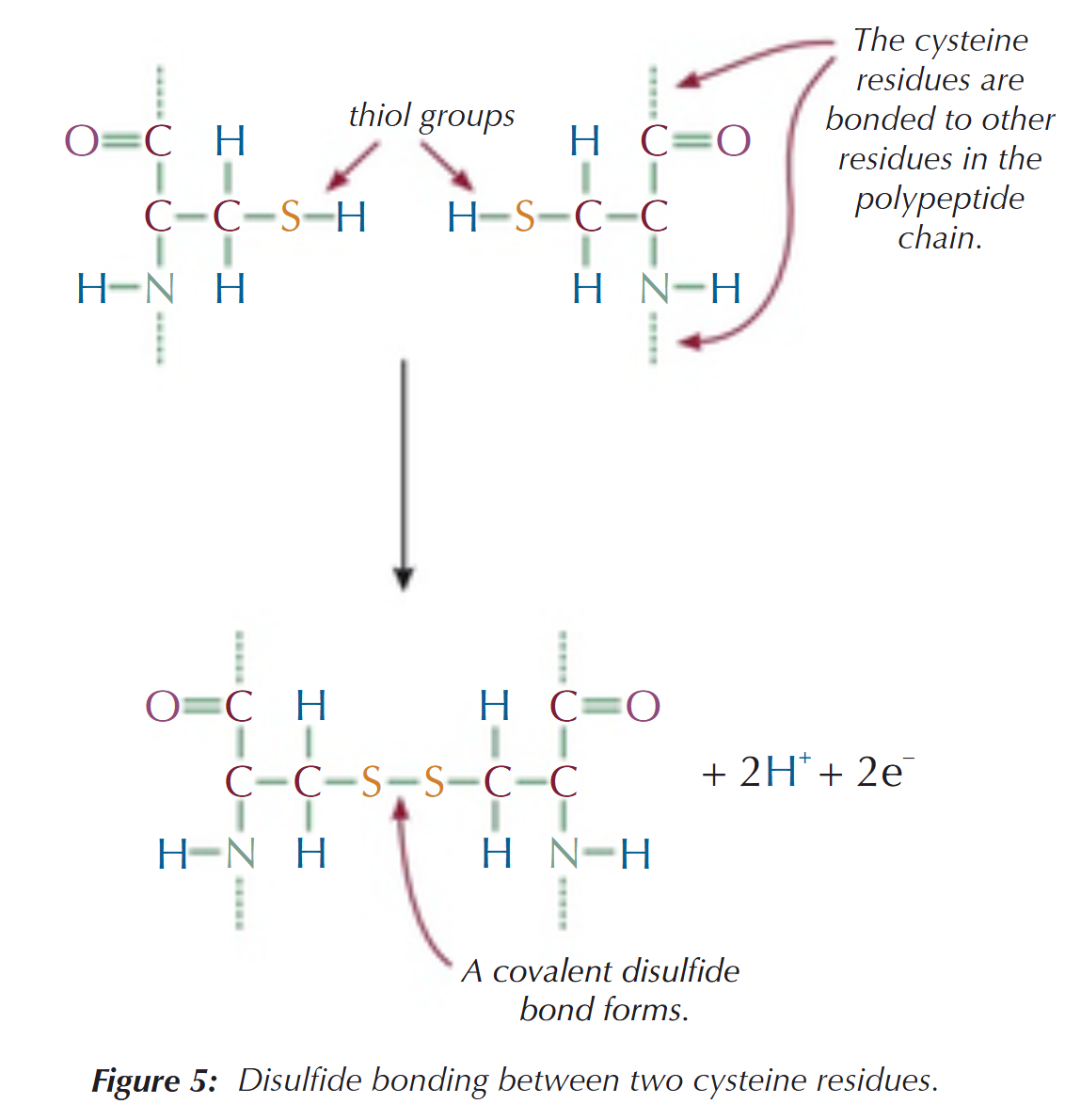
An amino acid that’s part of a protein is called a residue → disulfide (sulfur-sulfur) bonding occurs between residues of the amino acid, cysteine:
cysteine contains a thiol group (-SH) which can lose its H atom & join together to form a disulfide -S-S- bond with another thiol group
these disulfide bonds link together different parts of the protein chain & help to stabilise the tertiary structure
What factors can affect hydrogen bonds & the formation of disulfide bridges in proteins?
Temperature & pH → can change the shape of proteins
What are enzymes?
Biological catalysts that speed up chemical reactions (they are proteins, but some also have non-protein components)
Enzymes act upon are substrates, which bind to the enzyme’s active site (3D & part of the tertiary structure) → forms an enzyme-substrate complex
Describe the specificity of enzymes
Enzymes only work with specific, complementary substrates (usually only one):
the lock & key model states that, for an enzyme to work, the substrate has to fit into the active site
if the substrate’s shape doesn’t match the active site’s shape, then the reaction won’t be catalysed
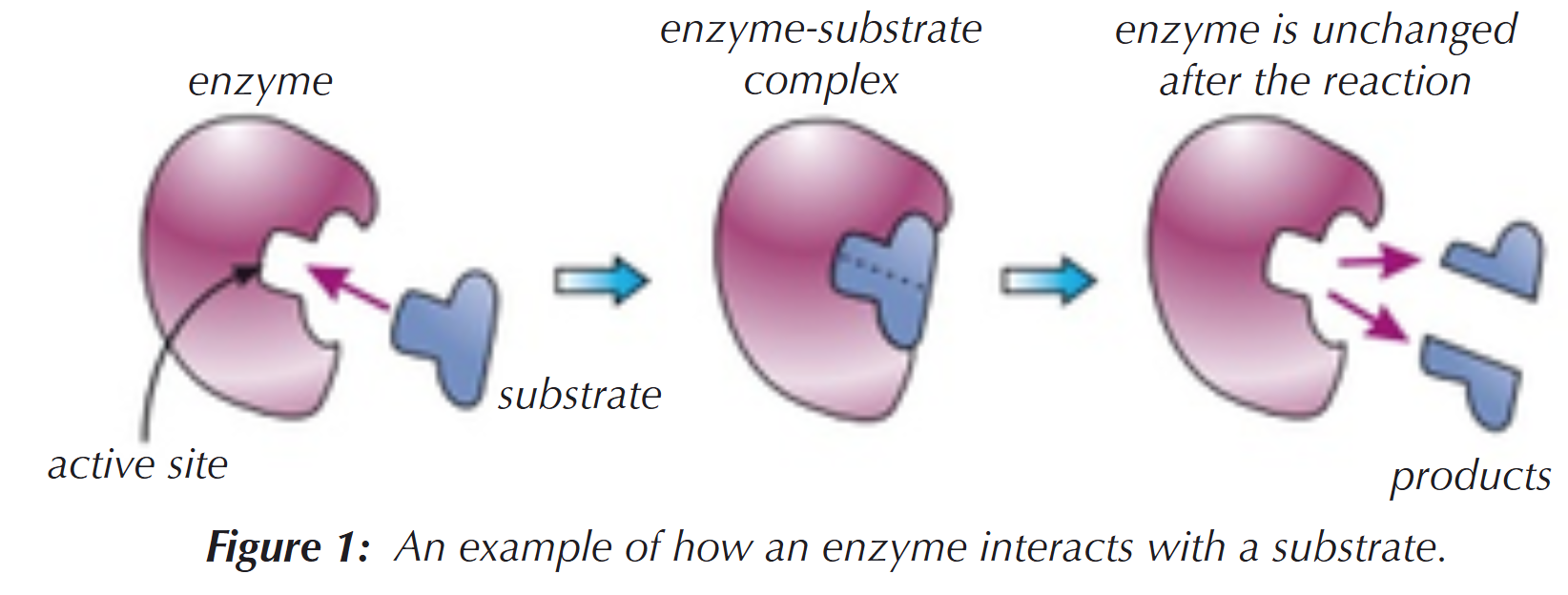
The active sites of enzymes are stereospecific. What does this mean?
Enzymes only work on one enantiomer of a substrate → the other enantiomer won’t fit properly in the active site, so the enzyme can’t work on it
What is the role of inhibitors?
They have a similar shape to the substrate (competitive inhibitors), compete with the substrate to bind to the active site
No reaction occurs; they simply block the active site so no substrate can bind
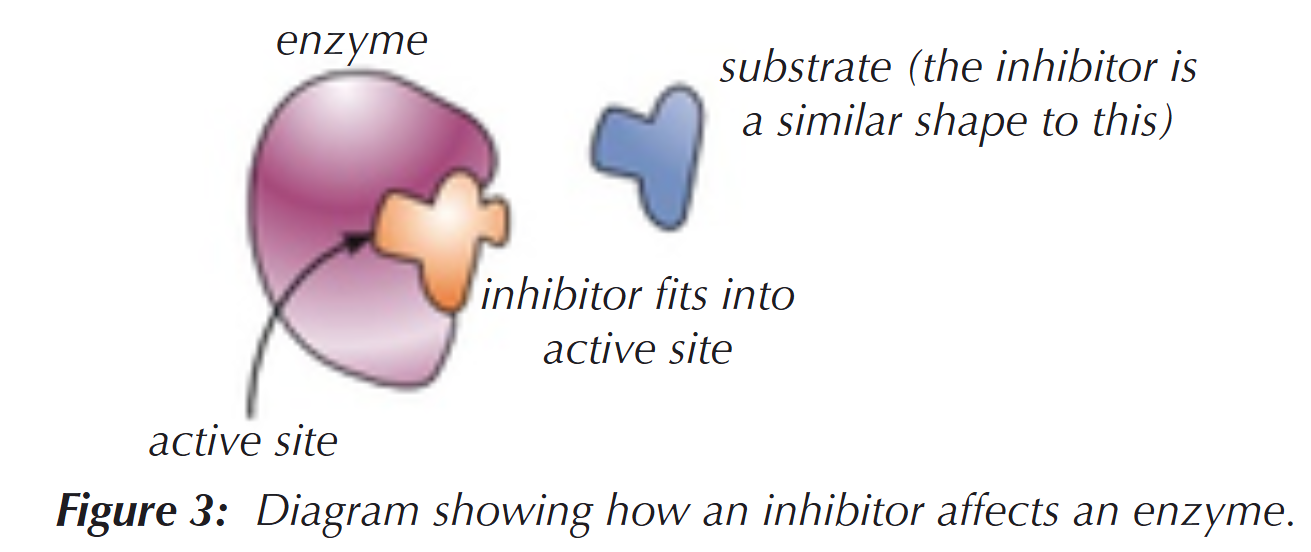
What does the amount of inhibition that occurs depend on?
The relative concentrations of inhibitor & substrate
a greater concentration of inhibitor means they’ll take up most of the active sites, so very little substrate will bind
How strongly the inhibitor binds to the active site
What is an example of how some drugs work as inhibitors?
Some antibiotics block the active site of an enzyme in bacteria that helps make their cell walls
This causes the bacterial cell wall to weaken over time, so the bacteria eventually bursts
Why can it be difficult to find drugs that fit into the active site of enzymes?
Active sites are stereospecific, so if the drug molecule is chiral, then only one of the enantiomers will work
Developing new drugs requires a trial & error method → scientists try different inhibitors to see which work & refine the molecules that work (this takes a lot of time)
How are scientists speeding up the process of drug development?
Using computers to model the shape of the enzyme’s active site & predict how well potential drug molecules will interact with it
They can quickly test hundreds of molecules to look for ones that might be the right shape before they start testing anything in the laboratory
What is DNA?
Contains all the genetic information of an organism:
made up of lots of monomers called nucleotides, which are in turn made up of three components
phosphate group
pentose sugar (deoxyribose)
nitrogenous base (A, T, G or C)
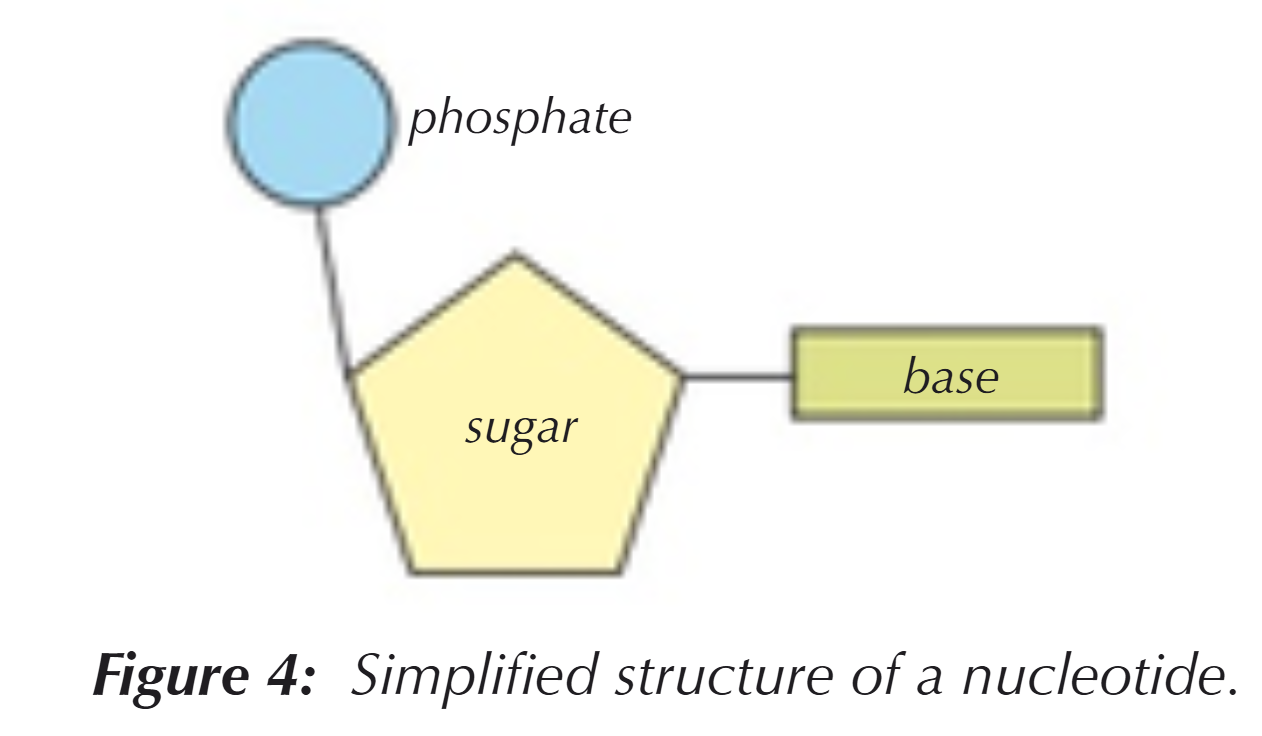
What are polynucleotides?
The nucleotides in DNA join together to form a polynucleotide chain:
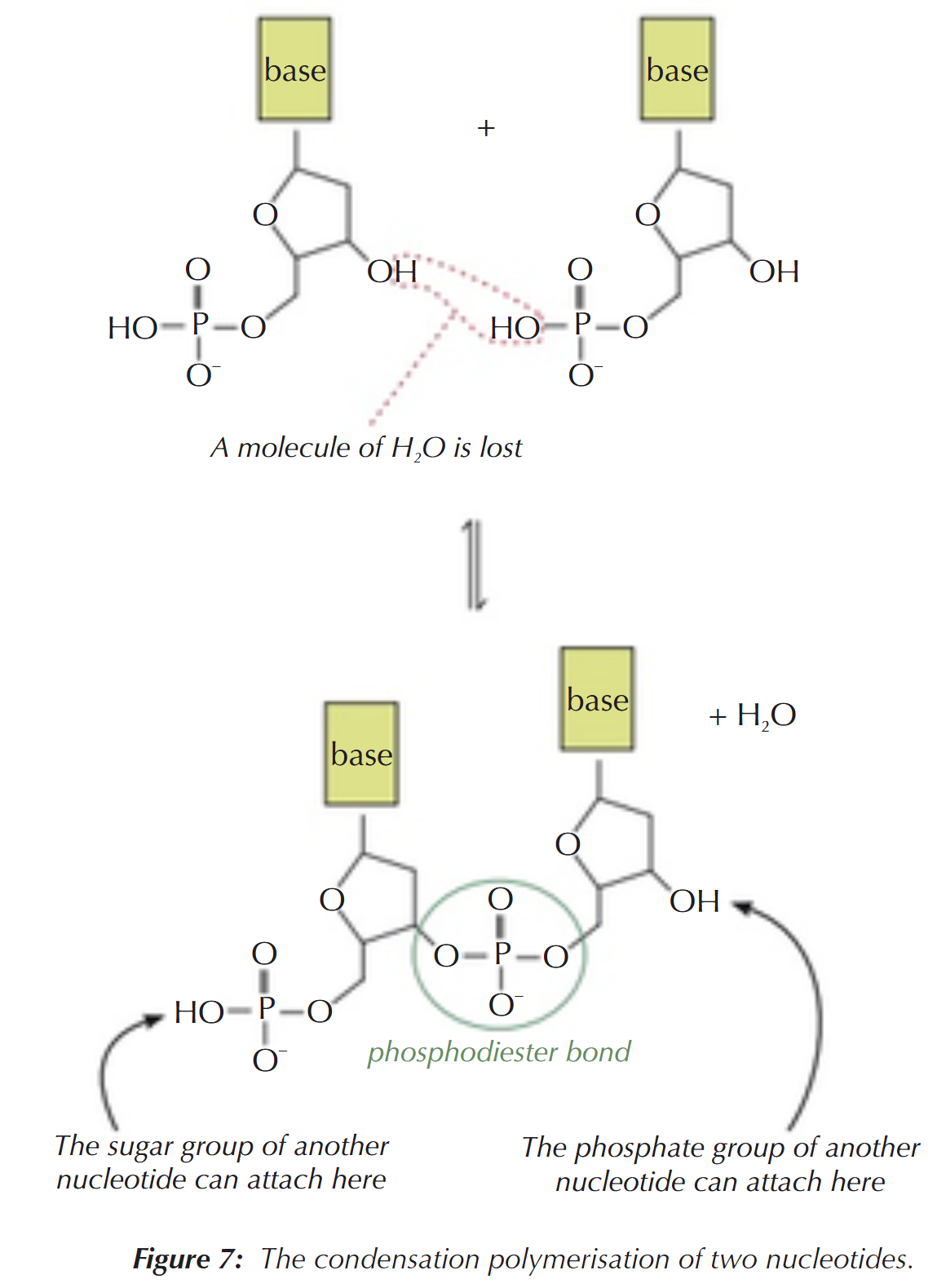
covalent bonds form between the phosphate group of one nucleotide & the sugar of another (sugar-phosphate backbone)
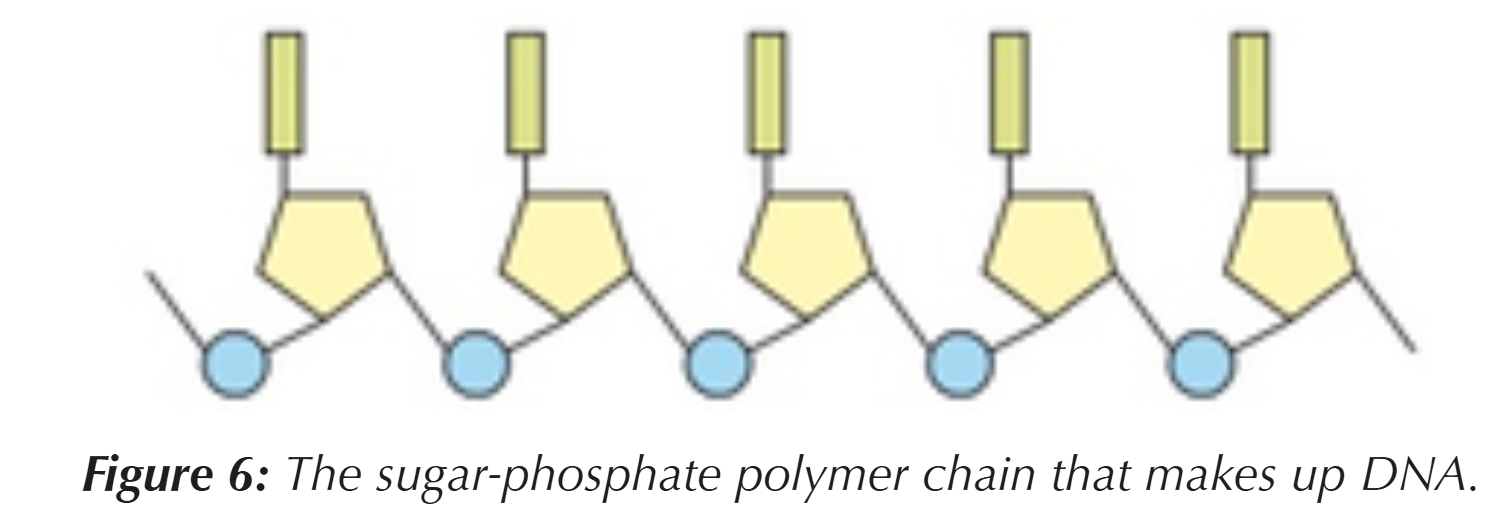
How is the sugar-phosphate backbone of DNA formed?
Condensation polymerisation:
a molecule of water is lost & a covalent phosphodiester bond is formed
there are still OH groups at either end of the chain, so further links can be made → allows the nucleotides to form a polymer made up of an alternating sugar-phosphate-sugar-phosphate chain
What is the structure of DNA?
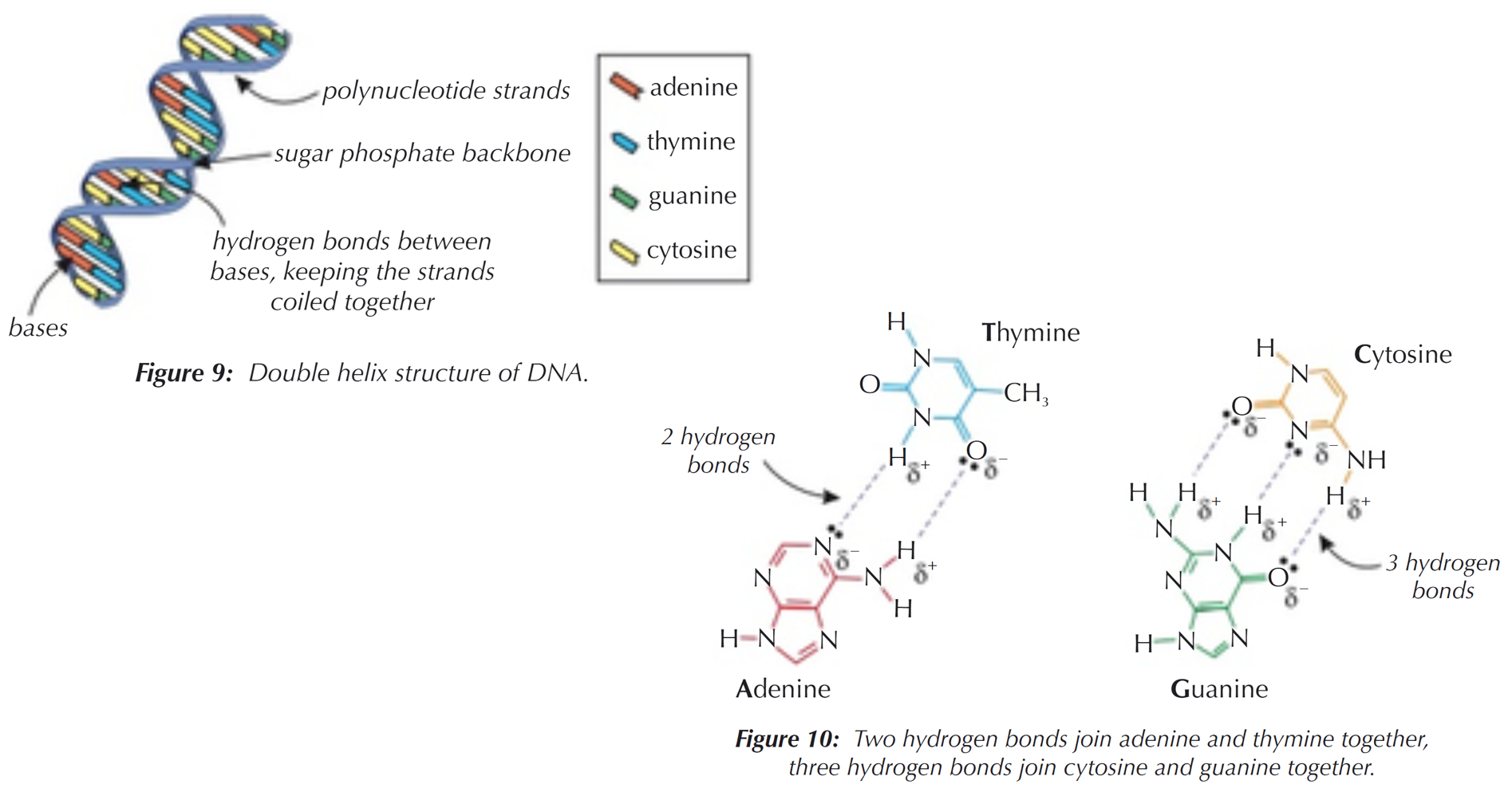
Formed by two polynucleotide strands, which spiral together to form a double helix structure, held together by hydrogen bonds between the complementary bases:
adenine always pairs with thymine (2 hydrogen bonds)
guanine always pairs with cytosine (3 hydrogen bonds)
What is cisplatin?
A complex of platinum(II) with two chloride ion ligands & two ammonia ligands in a square planar shape:
the two chloride ions are next to each other, making it cisplatin
if they were opposite each other, that would be transplatin (has different biological effects)

How does cisplatin work as an anticancer drug?
Cancer occurs when cells mutate & divide uncontrollably to form tumours → since cell division requires the DNA double helix to unwind & replicate, cisplatin disrupts this process:
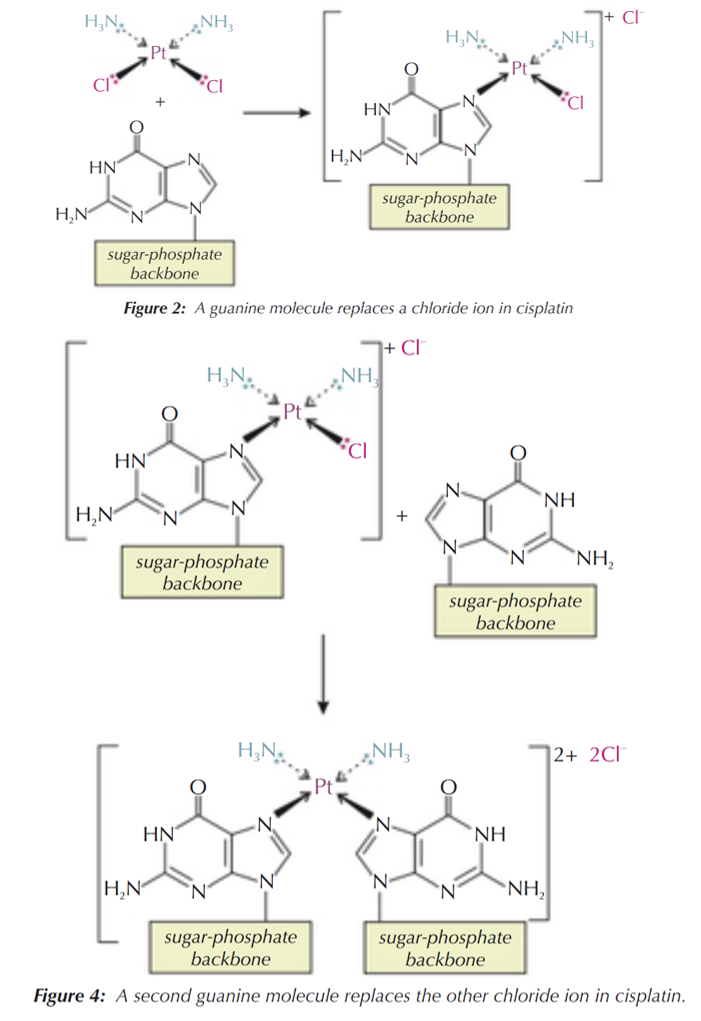
a nitrogen atom on a guanine base in DNA forms a co-ordinate bond with cisplatin’s platinum ion, replacing one of the chloride ion ligands
a second nitrogen atom from a nearby guanine molecule (either on the same strand of the DNA or opposite) can bind to the platinum & replace the second chloride ion too
this causes the strands to kink, meaning they can’t unwind & the cell can’t replicate properly
What are the side effects of cisplatin?
Cisplatin can bind to DNA in normal cells, as well as cancer cells → problematic for any healthy cells that replicate frequently (e.g. hair & blood cells):
cisplatin can cause hair loss & suppress the immune system (controlled by white blood cells) & also cause kidney damage
side effects can be reduced by giving patients very low dosages & targeting the tumour directly
despite the side effects, it is still used as a chemotherapy drug as the long-term positive effects (curing cancer) outweigh the short-term negative effects