Neuro Differential Diagnosis & Interventions Overview
 Call Kai
 Learn
Learn Practice Test
 Spaced Repetition
 Match
Match Flashcards
 Knowt Play
1/87

There's no tags or description
Looks like no tags are added yet.
Name | Mastery | Learn | Test | Matching | Spaced | Call with Kai | Chat |
|---|
No analytics yet
Send a link to your students to track their progress
88 Terms
Differential Diagnosis
Process of distinguishing between diseases.
Upper Motor Neuron (UMN)
Nerve cells in the brain that control voluntary movement.
Lower Motor Neuron (LMN)
Nerve cells that directly innervate muscles.
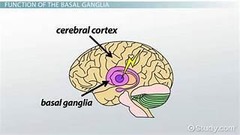
Basal Ganglia
Group of nuclei involved in movement regulation.
Cerebellum
Brain region coordinating voluntary movements and balance.
Hypotonia
Decreased muscle tone, leading to floppiness.
Hypertonia
Increased muscle tone, often rigid.
Hyporeflexia
Decreased or absent reflex responses.
Hyperreflexia
Exaggerated reflex responses, often seen in UMN lesions.
Clonus
Involuntary muscle contractions and relaxations.
Babinski Sign
Reflex indicating UMN dysfunction when positive.
Resting Tremors
Tremors occurring when muscles are relaxed.
Bradykinesia
Slowness of movement, common in Parkinson's.
Akinesia
Inability to initiate movement.
Postural Instability
Difficulty maintaining balance and posture.
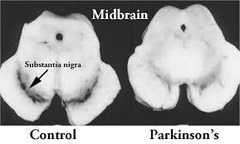
Parkinson's Disease
Progressive disorder from dopamine depletion in substantia nigra.
Hoehn and Yahr Classification
Stages of disability in Parkinson's disease.
Stage I
Minimal symptoms, unilateral involvement.
Stage II
Bilateral symptoms, balance not impaired.
Stage III
Impaired balance, some activity restrictions.
Stage IV
Severe symptoms, assistance needed for mobility.
Stage V
Confined to bed or wheelchair.
Loss of smell
Early symptom of Parkinson's disease.
Constipation
Common early symptom in Parkinson's disease.
Sleep disorders
Sleep-related issues in Parkinson's patients.
Hypophonia
Soft speech characteristic of Parkinson's disease.
Mask-like face
Reduced facial expression in Parkinson's patients.
Micrographia
Small handwriting associated with Parkinson's disease.
Orthostatic hypotension
Blood pressure drop upon standing.
Restrictive lung disease
Reduced lung expansion in Parkinson's.
Dual tasking difficulty
Cognitive challenge in Parkinson's patients.
Freezing of Gait
Sudden inability to initiate movement.
Festinating Gait
Shuffling gait with increasing speed.
En bloc turning
Turning without trunk rotation.
Levodopa/Carbidopa
Gold standard pharmacological treatment for PD.
On/off phenomenon
Fluctuations in motor performance with medication.
Dyskinesia
Involuntary smooth muscle movements during ON phase.
Dystonia
Muscle contractions causing spasms during OFF phase.
Multiple Sclerosis
Autoimmune disease causing CNS demyelination.

Nystagmus
Involuntary eye movement associated with MS.
Charcot's Triad
Combination of symptoms in Multiple Sclerosis.
Lhermitte's Sign
Electric shock sensation down the spine.
Uhthoff's Phenomenon
Worsening of symptoms with heat exposure.
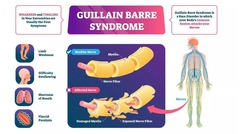
Guillain Barre Syndrome
Autoimmune disorder causing rapid nerve demyelination.
Progressive Relapsing MS
Steady disability increase with superimposed attacks.
Secondary Progressive MS
Initially RR, then continuous symptom increase.
Primary Progressive MS
Continuous disability increase without attacks.
Relapse-Remitting MS
Short attacks with full or partial recovery.
Most common MS type
Relapse-Remitting MS, affecting about 80%.
MS Exercise Frequency
3-5 times per week, alternating days.
MS Exercise Intensity
Low intensity, 50-70% VO2, 3-5 METS.
MS Exercise Duration
30 minutes per session recommended.
ALS
Progressive neurological disorder affecting motor neurons.
ALS Symptoms
Muscle atrophy, spasticity, dysphagia, and dysarthria.
UMN and LMN
Upper and lower motor neuron presentations.
Pseudobulbar affect
Emotional lability seen in ALS patients.
Cervical spine extensor weakness
Common in ALS, affecting neck stability.
Respiratory muscle weakness
Can lead to death in ALS patients.
GBS Signs
Rapid motor loss, sensory loss, decreased reflexes.
GBS Recovery Time
Typically 6-12 months, possible full recovery.
GBS Intervention
Focus on respiratory care and energy conservation.
Fatigue in ALS
Patients experience easy fatigue during ADLs.
Medical Management of ALS
No effective treatment; focus on functional activities.
Energy Conservation Techniques
Recommended to avoid over-fatigue in ALS.
Cranial Nerve Involvement in GBS
Includes nerves VII, IX, X, XI, XII.
Sensory Loss Pattern in GBS
Glove and stocking distribution of numbness.
Presenting Problem
Weird sensations, frequent falls, urination difficulty.
Family History
Mother has migraines.
AROM
Active range of motion; grossly intact.
PROM
Passive range of motion; grossly intact.
Gait
Slightly wide base of support.
Tone
Increased tone in biceps, hamstrings, PF.
Cranial Nerves
Involvement of CN II, III, V, VII.
Coordination
Impaired coordination observed during evaluation.
Amyotrophic Lateral Sclerosis
Progressive neurodegenerative disease affecting motor neurons.
Guillain Barre Syndrome
Autoimmune disorder causing rapid muscle weakness.
Multiple Sclerosis
Chronic disease affecting central nervous system.
Cerebellar Tumor
Tumor affecting cerebellum, impacting coordination.
Pupillary Reflex
Response of pupils to light stimulus.
Marcus Gunn Pupil
Pupil dilates when light is shone in affected eye.
Cataract
Clouding of the lens affecting vision.
Balance Training
Exercises to improve stability and prevent falls.
Proprioceptive Training
Exercises to enhance body awareness and position.
Activity Pacing
Adjusting activity levels based on symptoms.
Pool Therapy Temperature
Recommended water temperature is 87 degrees Fahrenheit.
Neuro Stroke Class
Scheduled for March 7th at 5 pm PST.
Non-Systems Classes
Scheduled for March 9th and 12th.
APC Neuro Masterclass
Free for FLC, 50% off for bundle students.