6.4 Classification of Living Organisms
 Call Kai
 Learn
Learn Practice Test
 Spaced Repetition
 Match
Match Flashcards
 Knowt Play
1/10

There's no tags or description
Looks like no tags are added yet.
Name | Mastery | Learn | Test | Matching | Spaced | Call with Kai | Chat |
|---|
No analytics yet
Send a link to your students to track their progress
11 Terms
Traditionally living things have been classified into groups depending on their ___________ and ____________ in a system developed by Carl Linnaeus.
structure
characteristics
What did Linnaeus classify living things into?
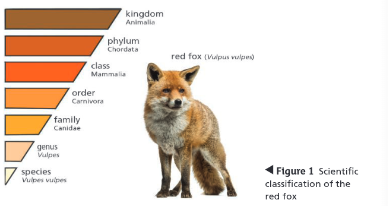
kingdom → phylum → class → order → family → genus → species
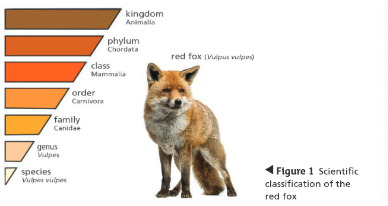
What is the mneumonic for classification?
Kids — kingdom
Play — phylum
Chess — class
On — order
Fancy — family
Glass — genus
Stairs — species
What system are organisms named by?
Binomial system — genus and species
As evidence of ___________ ___________ became more developed due to improvements in ___________, and the understanding of _____________ __________ progressed, new models of ______________ were proposed.
Due to evidence available from chemical analysis there is now a ‘_______ _________ system’ developed by Carl Woese.
internal structures
microscopes
biochemical processes
classification
three domain
What are the three domains?
Archaea
Bacteria
Eukaryota
What are archaea?
Primitive bacteria — includes extremophiles
What are extremophiles?
Organisms that live in extreme environments.
What does eukaryota include?
Protists
Fungi
Plants
Animals
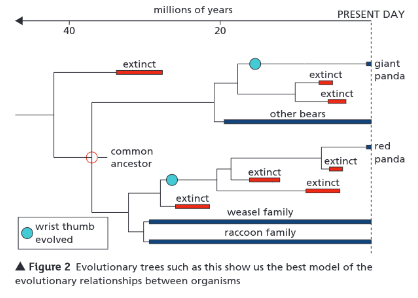
What are evolutionary trees?
A method used by scientists to show how they believe organisms are related.
They use current classification data for living organisms and fossil data for extinct organisms.
Table 2 gives the classification of four plant species.
Group | Species 1 | Species 2 | Species 3 | Species 4 |
Kingdom | Plantae | Plantae | Plantae | Plantae |
Phylum | Spermatophyta | Spermatophyta | Spermatophyta | Spermatophyta |
Class | Monocotyledonae | Dicotyledonae | Monocotyledonae | Dicotyledonae |
Order | Poales | Fabales | Poales | Scrophulariales |
Family | Cyperaceae | Fabaceae | Poaceae | Scrophulariaceae |
Genus | Eriophorum | Pisum | Poa | Antirrhinum |
Species | angustifolium | sativum | annua | majus |
Species 1 and 3 are the most closely related.
What information in Table 2 gives evidence for this? [1 mark]
Same order
