2 - Abnormal CBC and Applications
 Call Kai
 Learn
Learn Practice Test
 Spaced Repetition
 Match
Match Flashcards
 Knowt Play
1/33

There's no tags or description
Looks like no tags are added yet.
Name | Mastery | Learn | Test | Matching | Spaced | Call with Kai | Chat |
|---|
No analytics yet
Send a link to your students to track their progress
34 Terms
How to determine normochromic and normocytic RBC?
Normochromic: Central pallor not more or less than 1/3 of RBC(Literally the whitest white part, since the gradient can cover up to like, ½ or 2/3 ngl)
Normocytic: RBC the same size as the nucleus of a small lymphocyte
Define hyper and hypochromic
Hyperchromic: Central pallor <1/3 of RBC
Hypochromic: Central pallor >1/3 of RBC
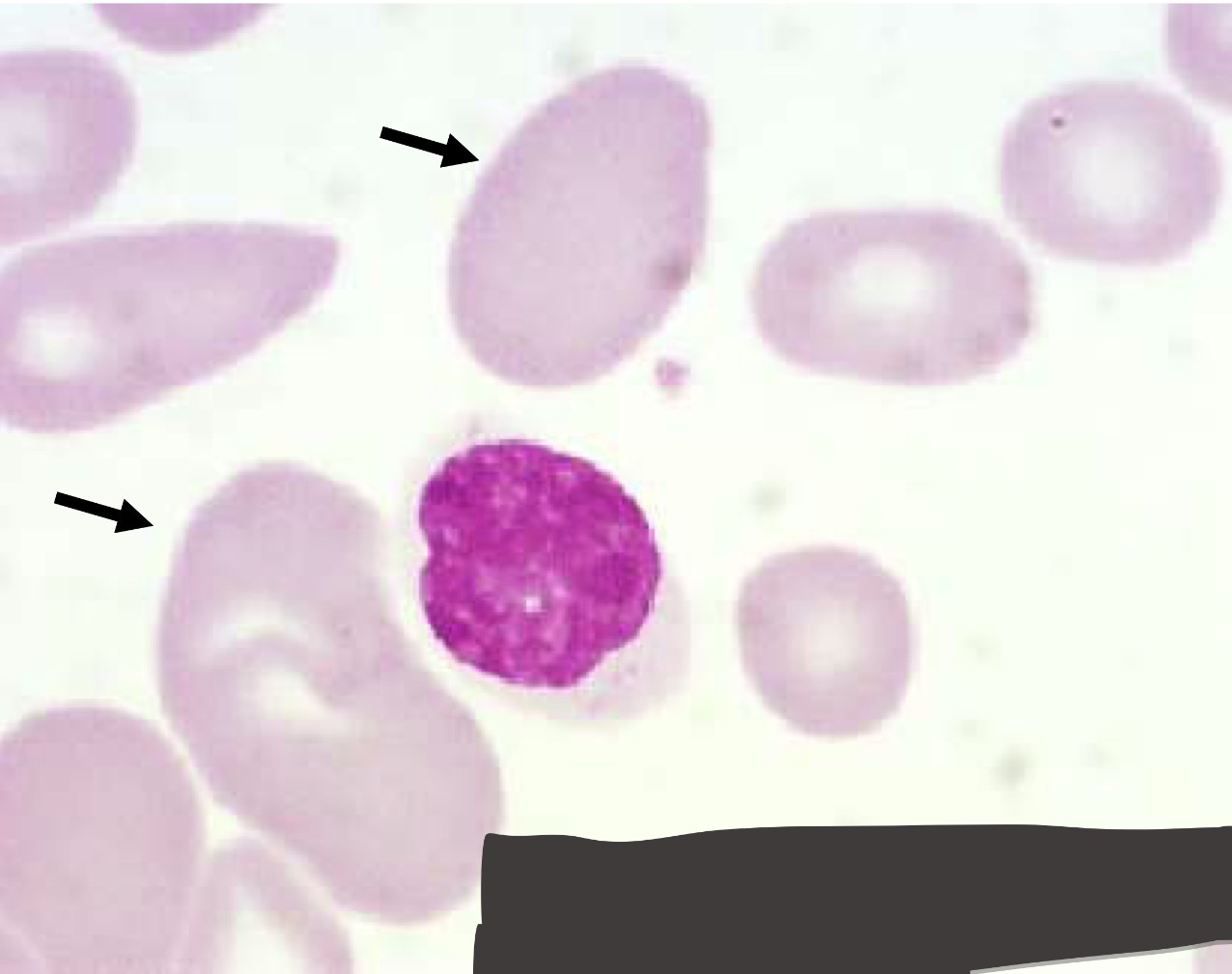
Name this type of RBC
Macro-ovalocyte(Hyperchromic macrocytic)
What is the correct name for a hyperchromic macrocytic RBC, and why?
Macro-ovalocyte, since normally they’ll be oval shape
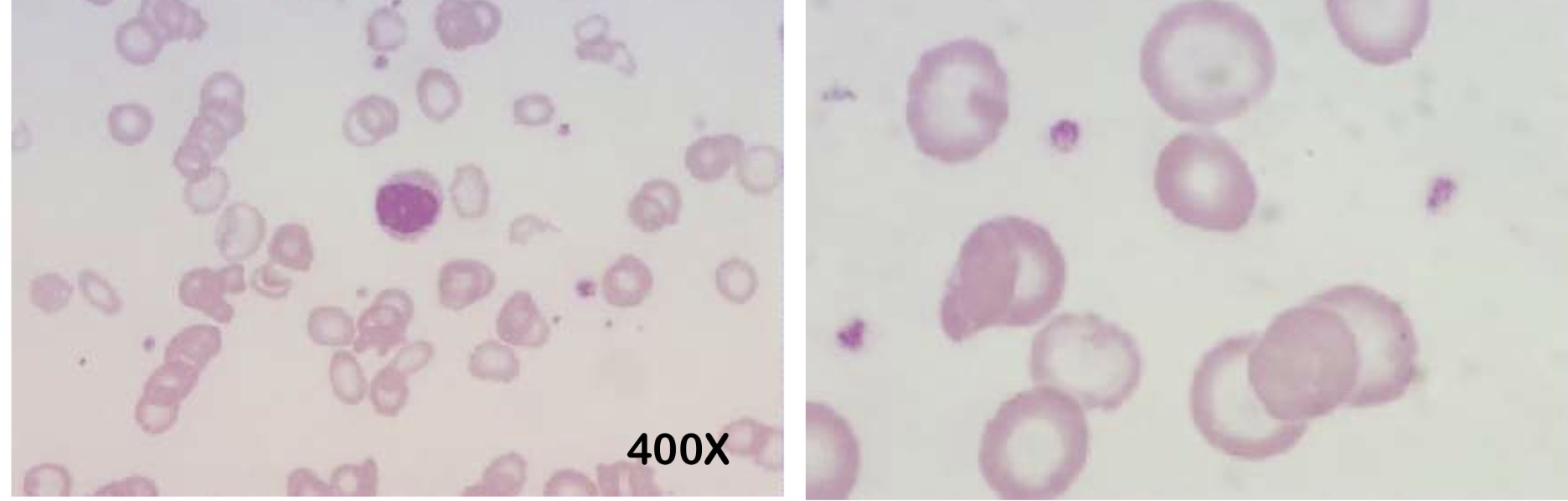
Name this RBC
Hypochromic microcytic
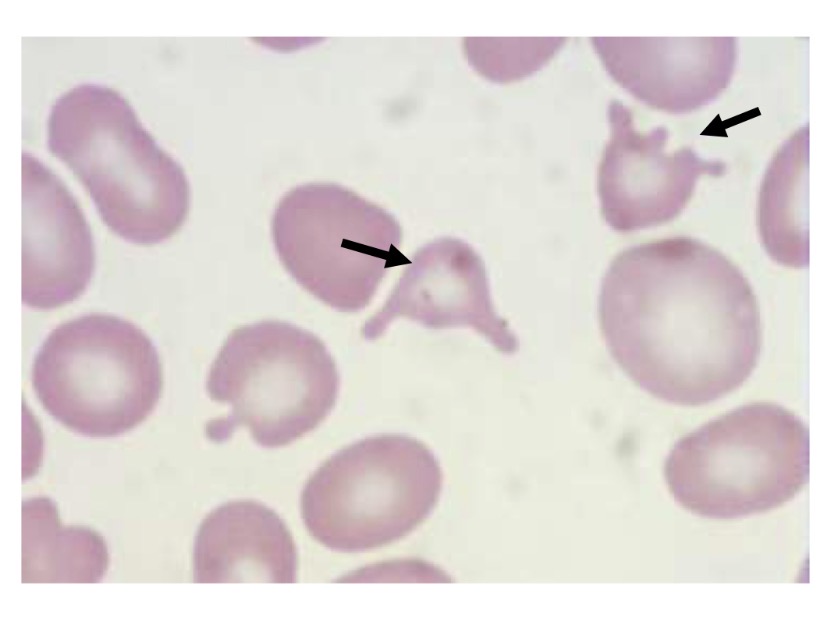
Name this type of RBC
Schistocyte/Fragmented RBC
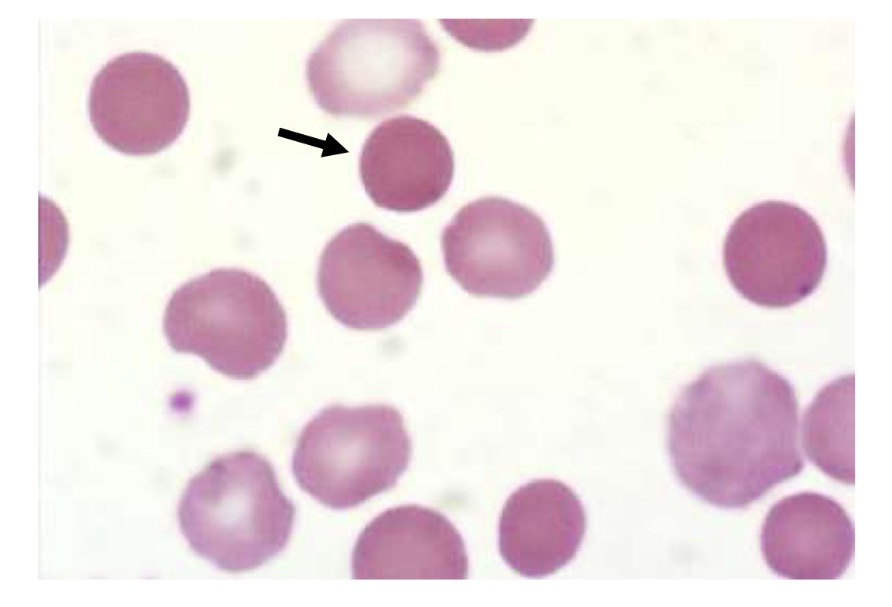
Name this RBC
Spherocyte
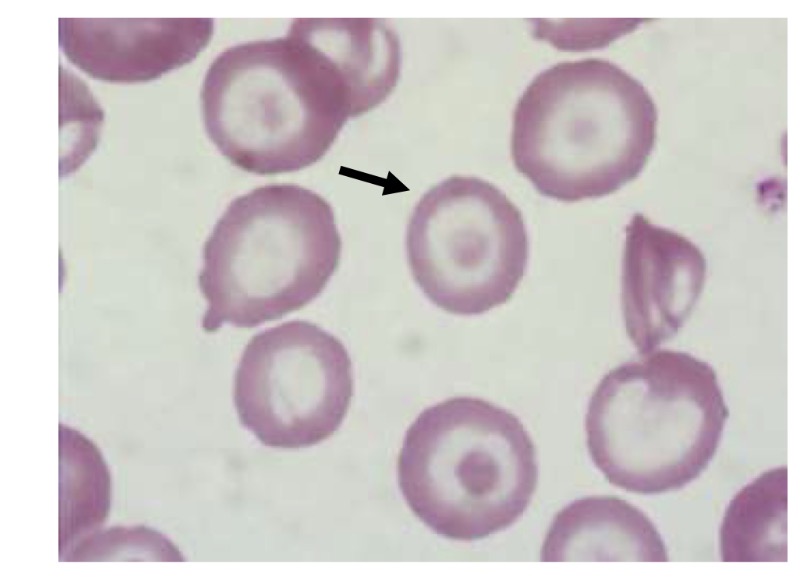
Name this RBC
Codocyte/Target Cell
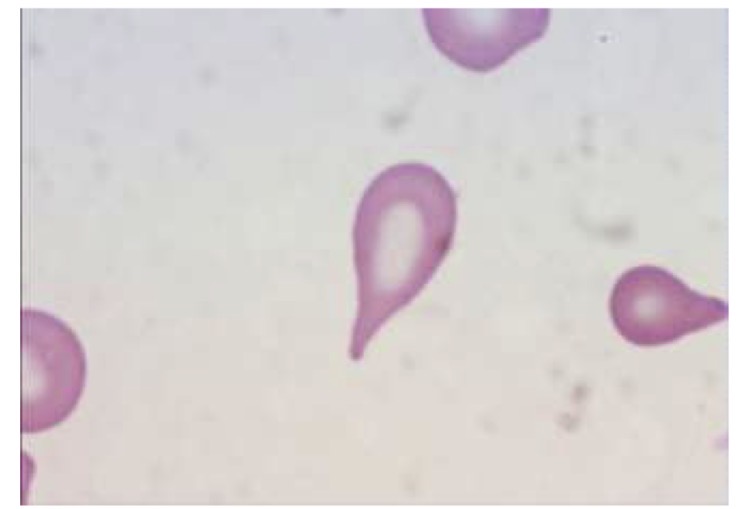
Name this RBC
Dacrocyte/Teardrop cell
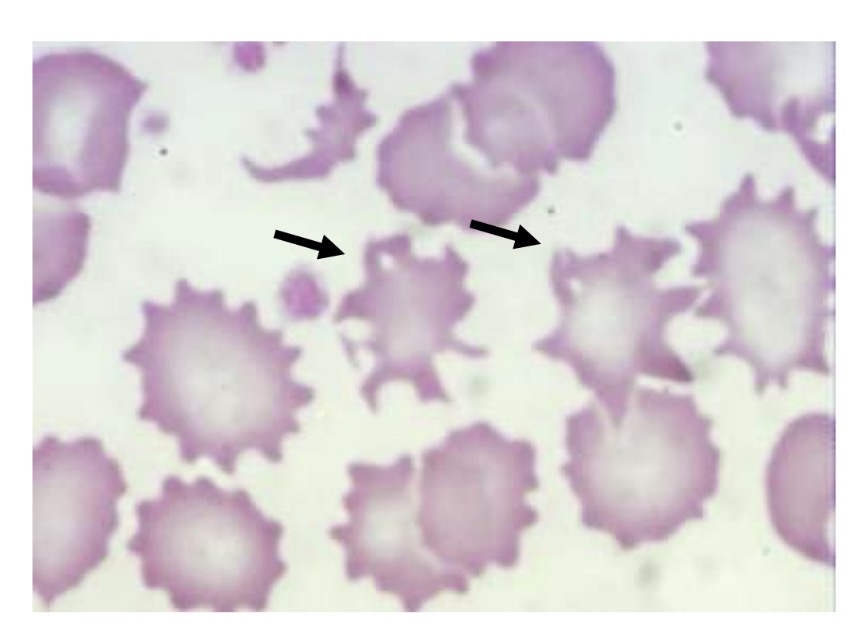
What is an acanthocyte, what’s the other name, and what are the characteristics?
Spur cell, a RBC with sharp, irregular spikes
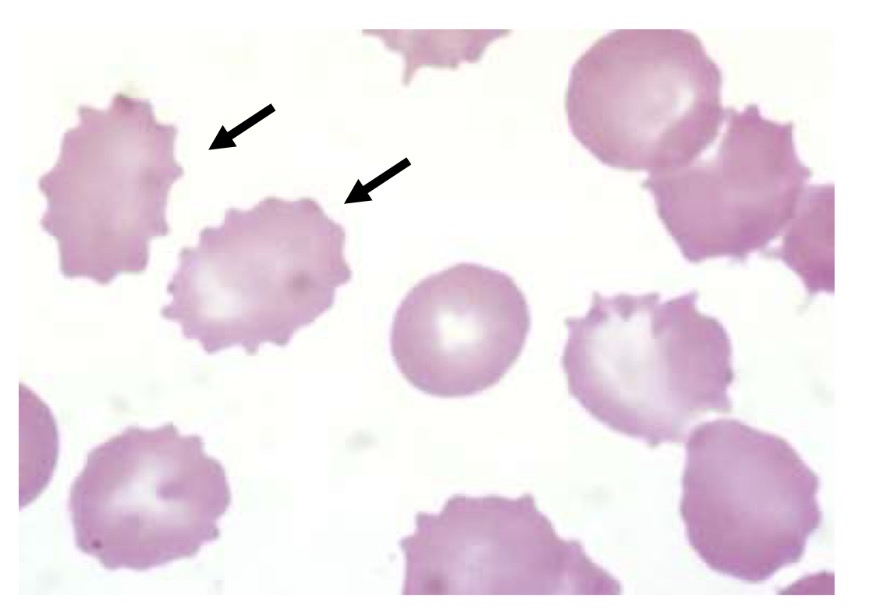
What is an echinocyte, what are the other 2 names, and what are the characteristics?
Burr cell or cremated cell, an RBC with blunt, regular spikes
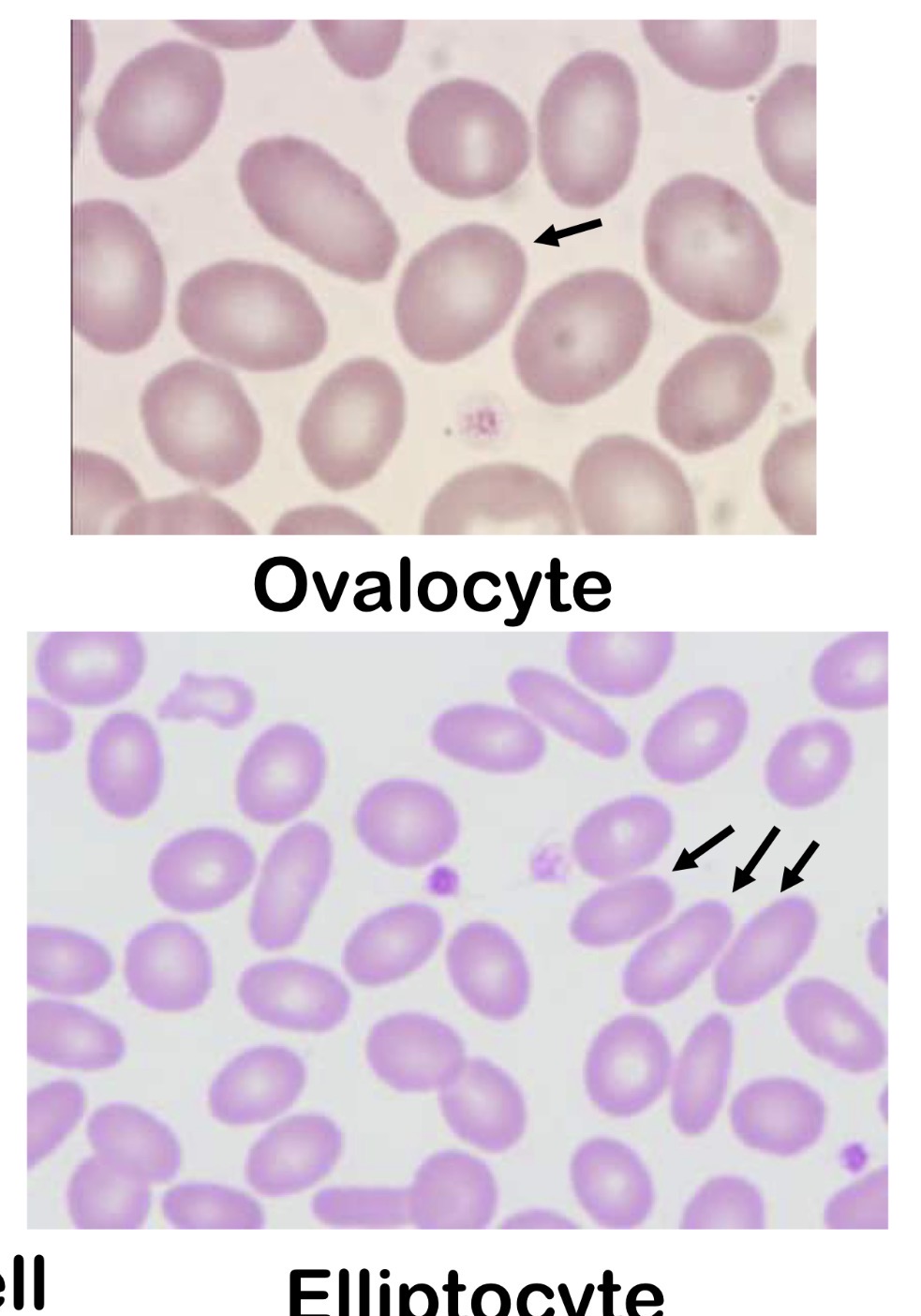
Compare an ovalocyte and elliptocyte
Elliptocytes are longer
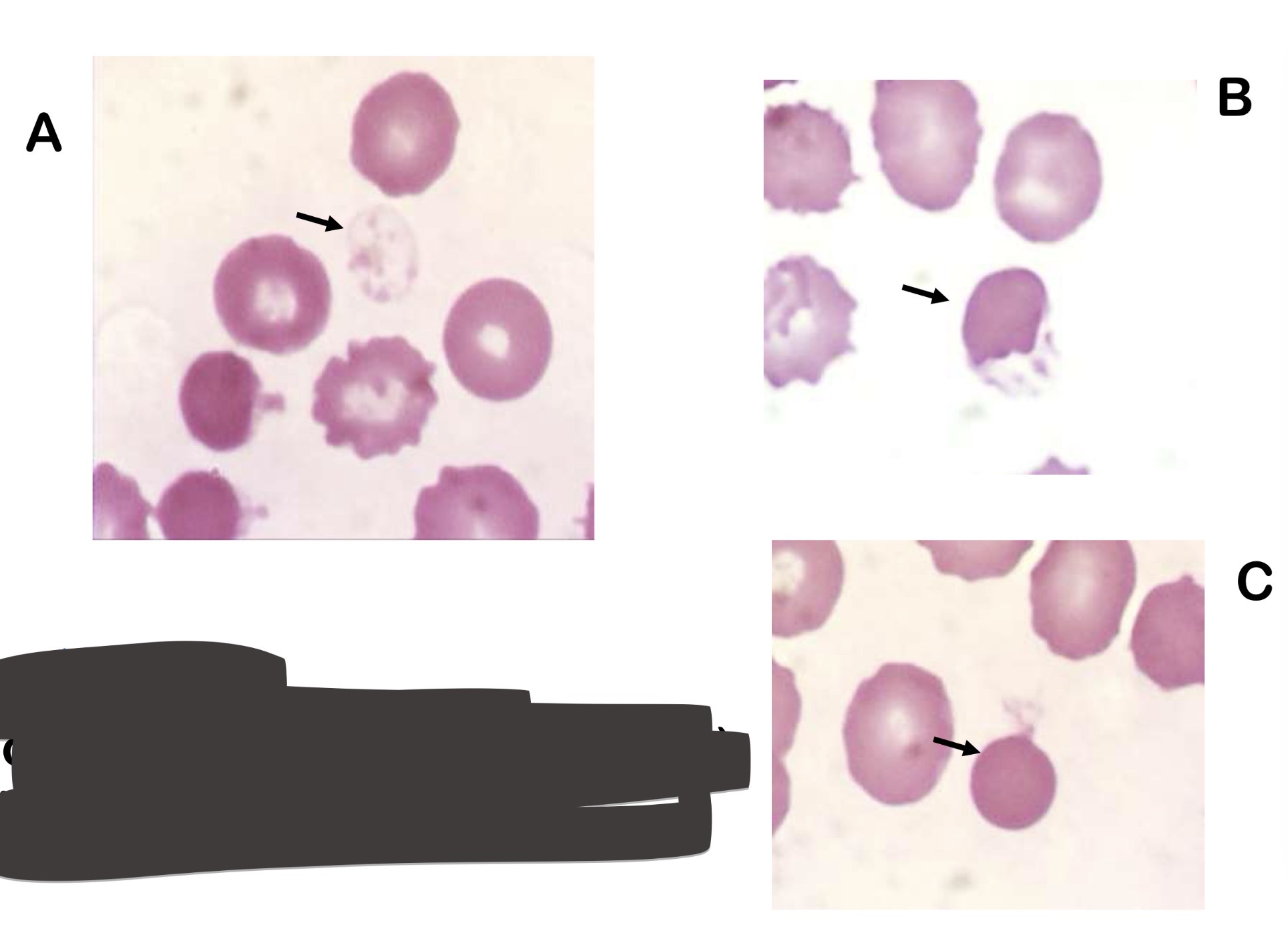
Name these 3 RBCs
A - Ghost cell(No Hb content)
B - Eccentrocyte(Hb contracted/pushed)
C - RBC with Hb leakage
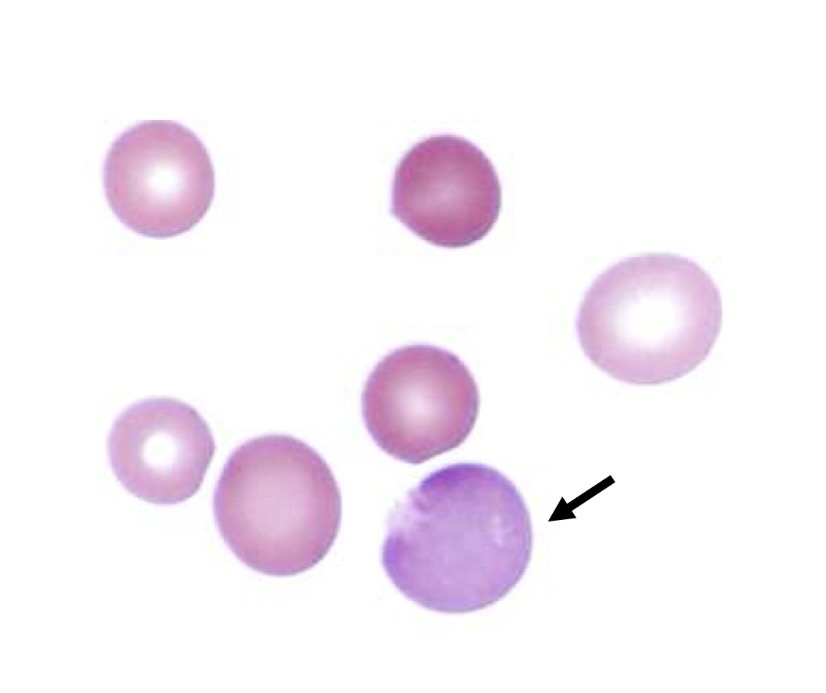
What is this RBC, and what are the 2 main characteristics
Polychromasia → ใหญ่ + ม่วง
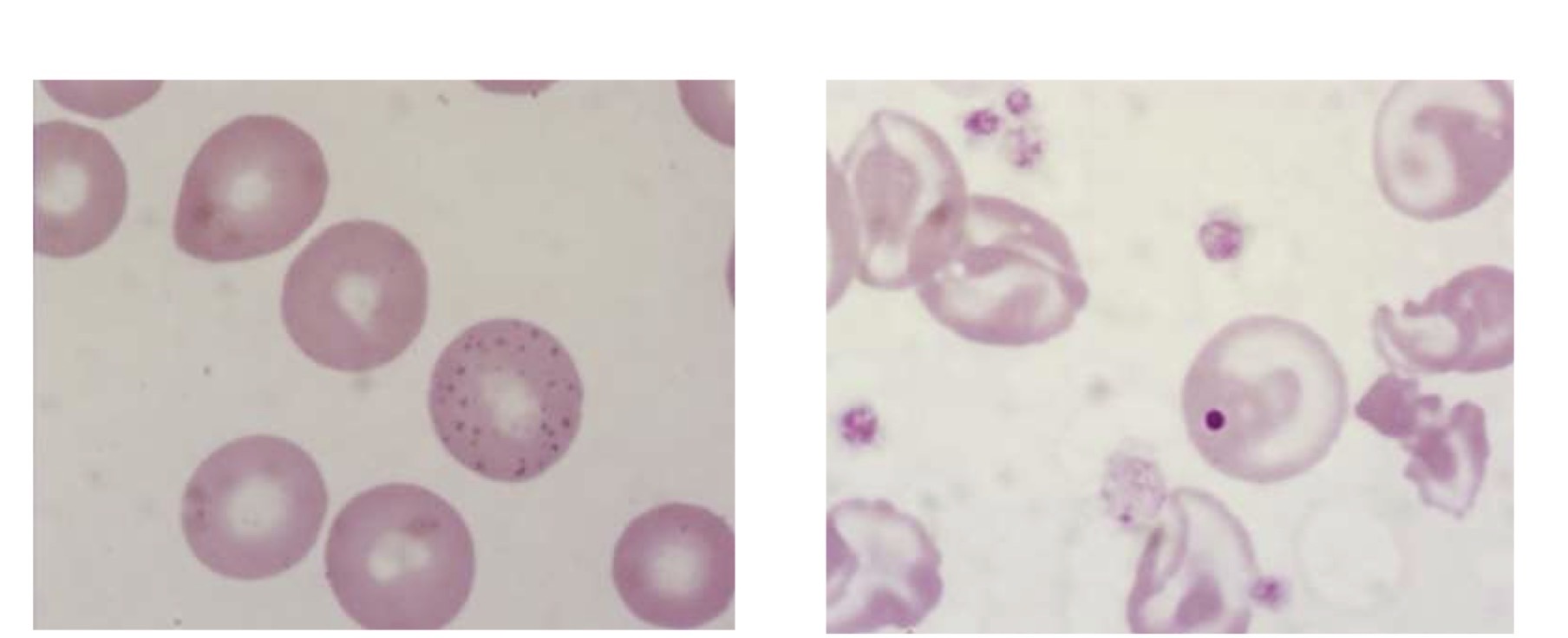
Name these 2 inclusion types
Basophilic stippling
Howell Jolly body
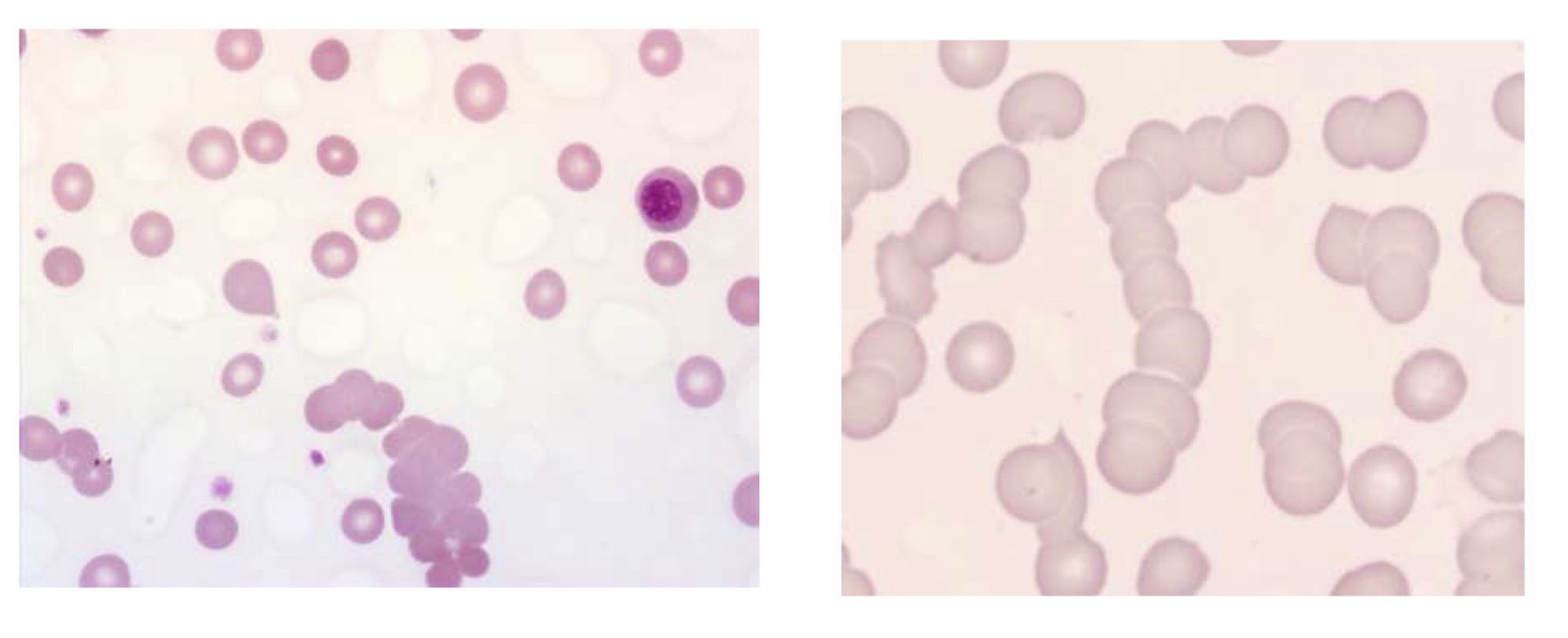
Name these 2 types of abnormal RBC distribution
Auto-agglutination
Roleux formation
Define anisocytosis and poikilocytosis
RBCs of varying size and shape
What system does Siriraj use to grade severity of abnormalities?
4 lvl system + inclusion found
So for example, if 10-25% cells are polychromatic, it’s +, if 26-50%, then ++, 51-75% +++, and 76%-100 ++++
Exception: NRCs, reported using NRC per 100 WBC
In signficant pathological RBCs and polychromasia, degree of severity is…
Upped by one, so if we calculate 1+, we up it to 2+
What comes first in naming a blood smear for RBCs?
-chromatic + -cytic
anisocytosis, poikilocytosis
everything else
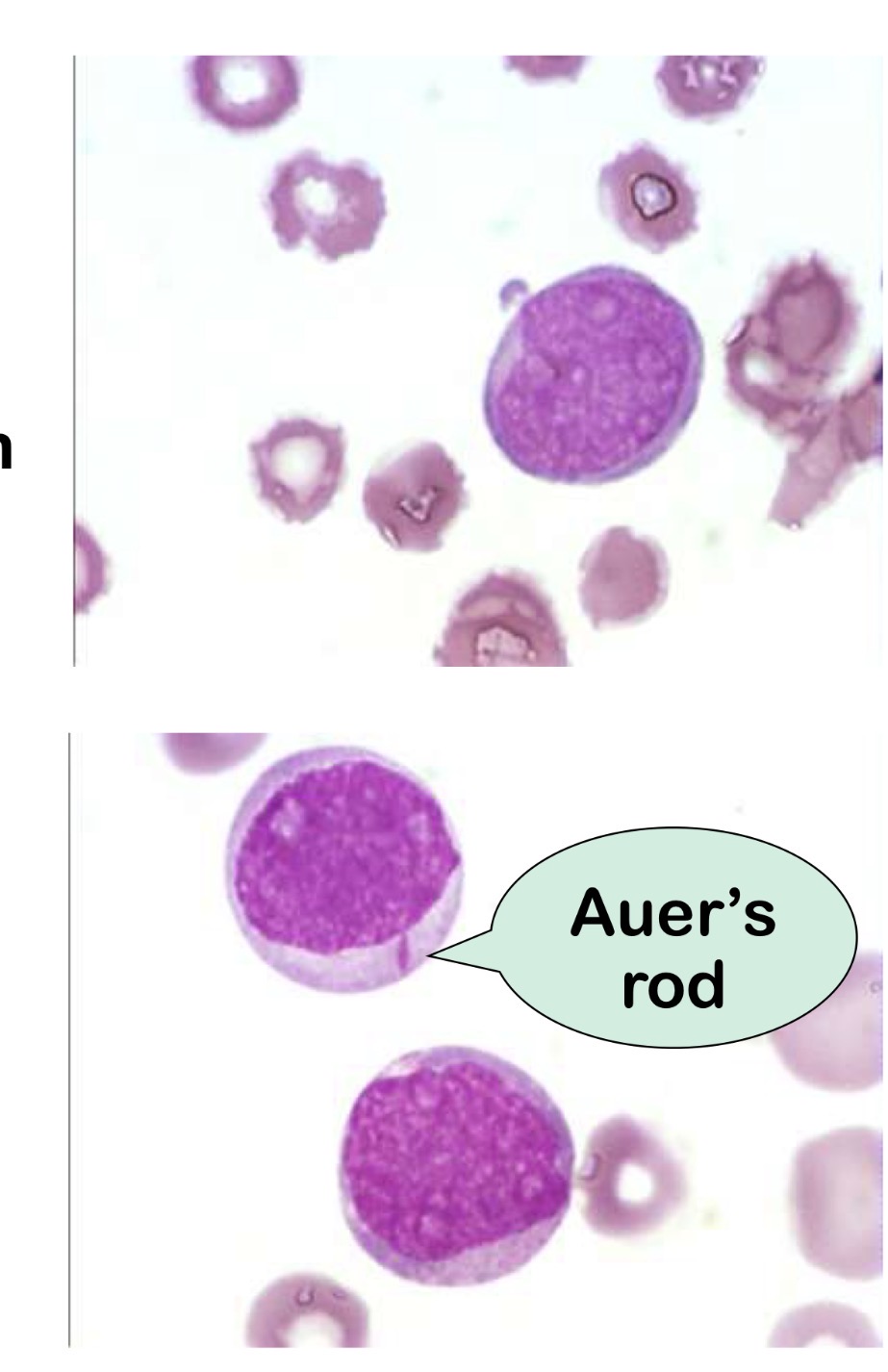
Name this cell and the main points for identification
Myeloblast: Nucleolus, large size and N:C ratio
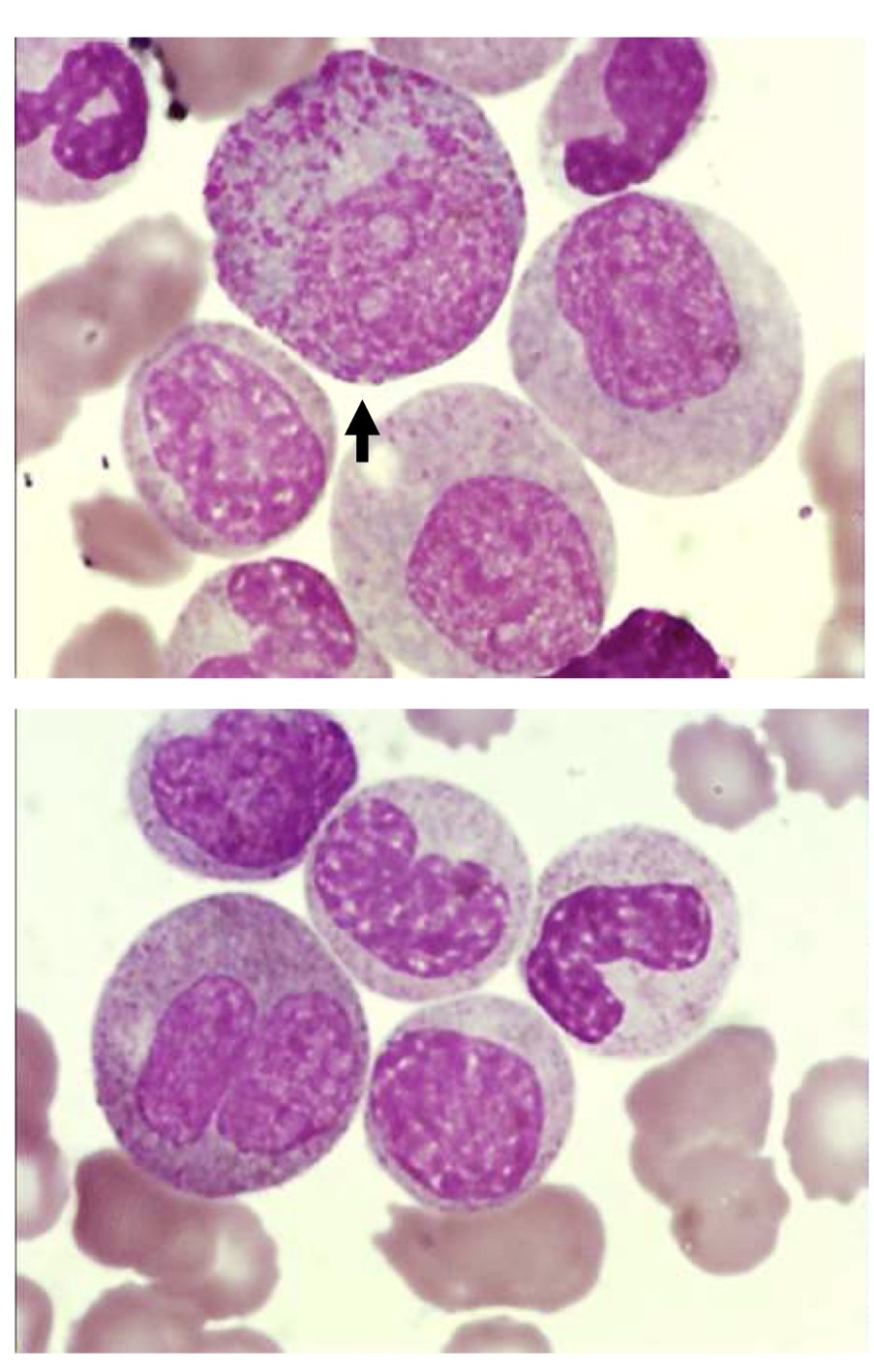
Name this cell and the main points for identification
Promyelocyte: Similar to myeloblasts but smaller and slightly less N:C ratio, appearance of non-specific granules
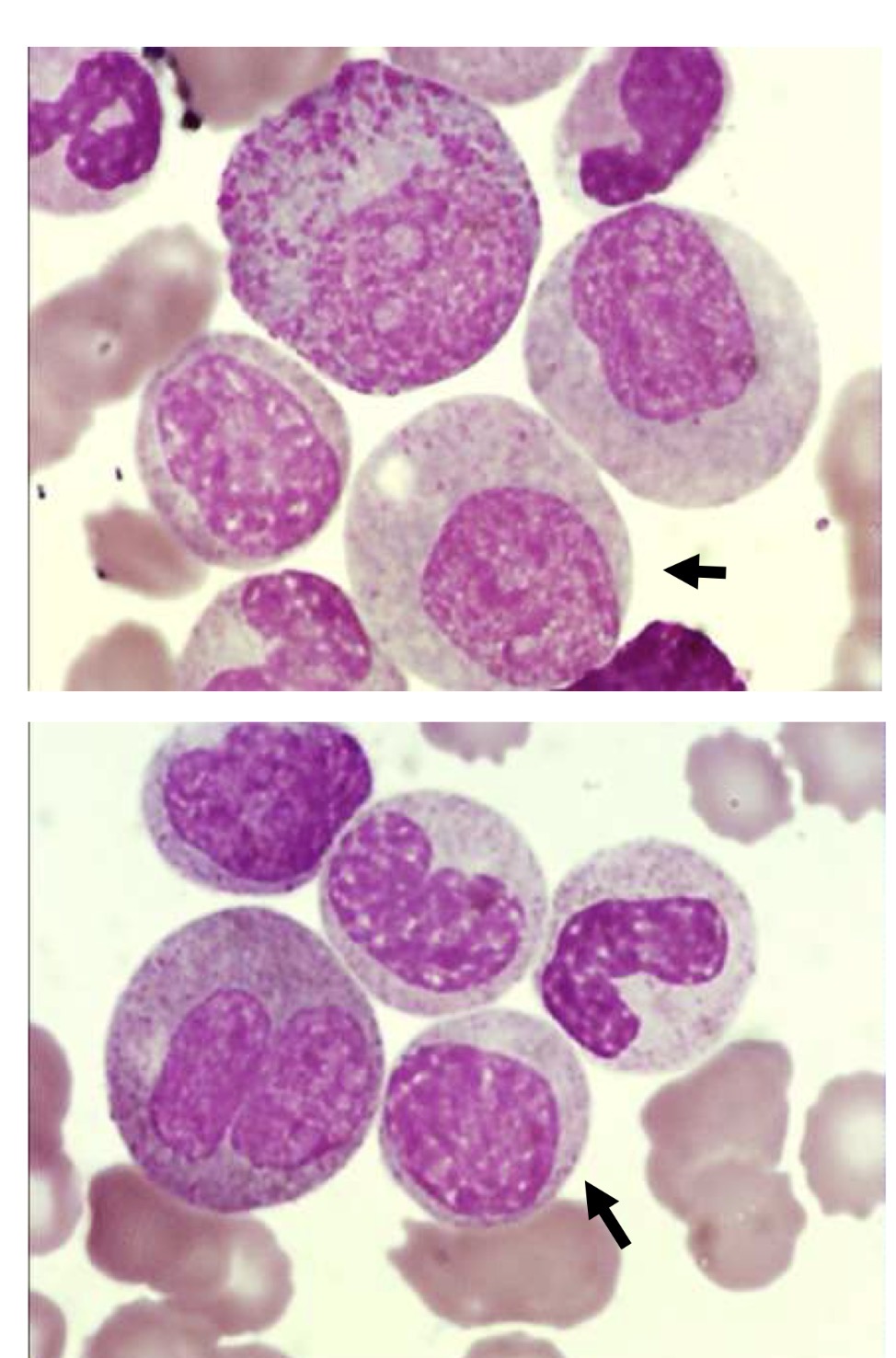
Name this cell and the main points for identification
Myelocyte: Smaller than promyelocytes now, less N:C ratio, appearance of specific granules(neu, baso, eosino)
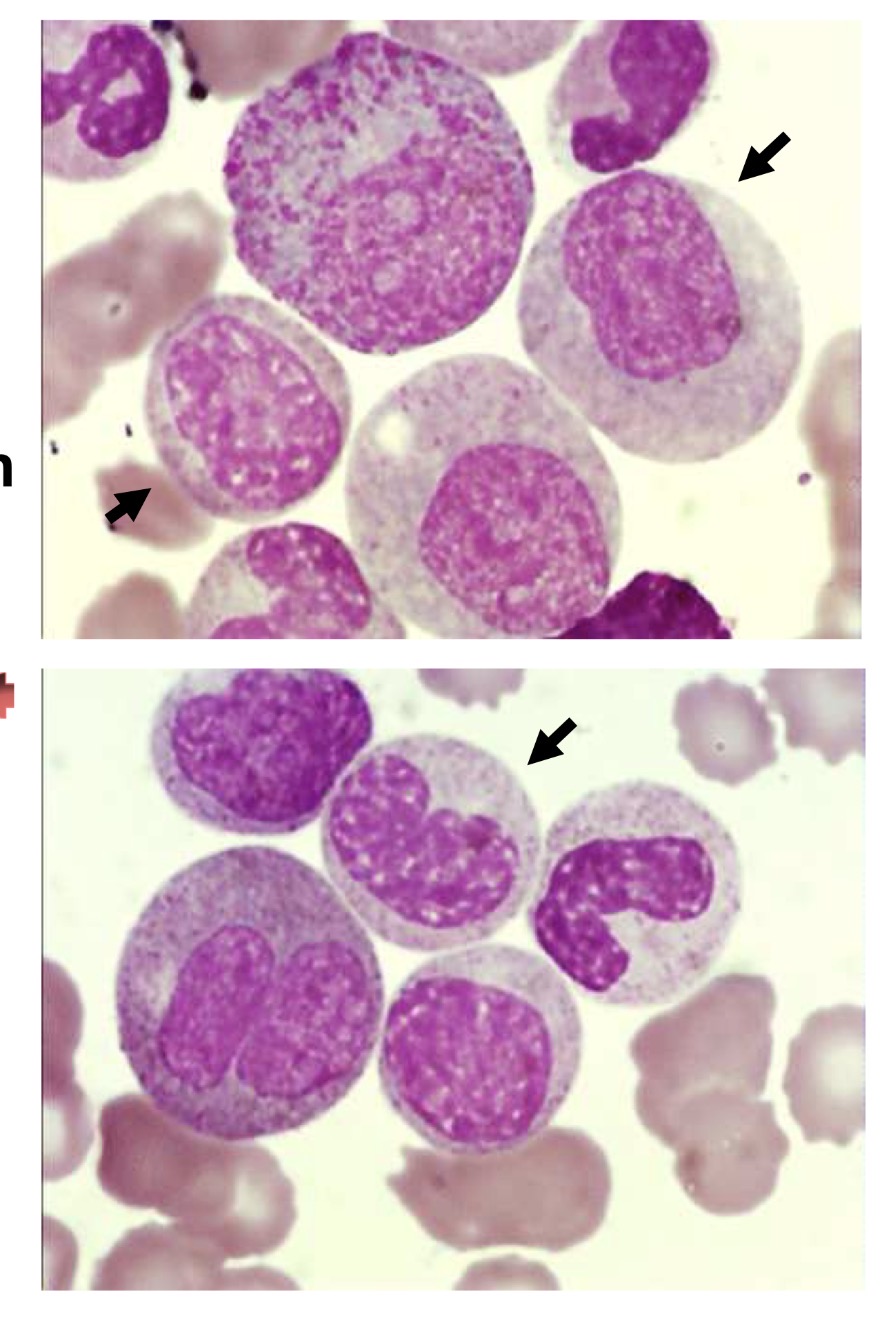
Name this cell and the main points for identification
Metamyelocyte: Kidney bean nucleus
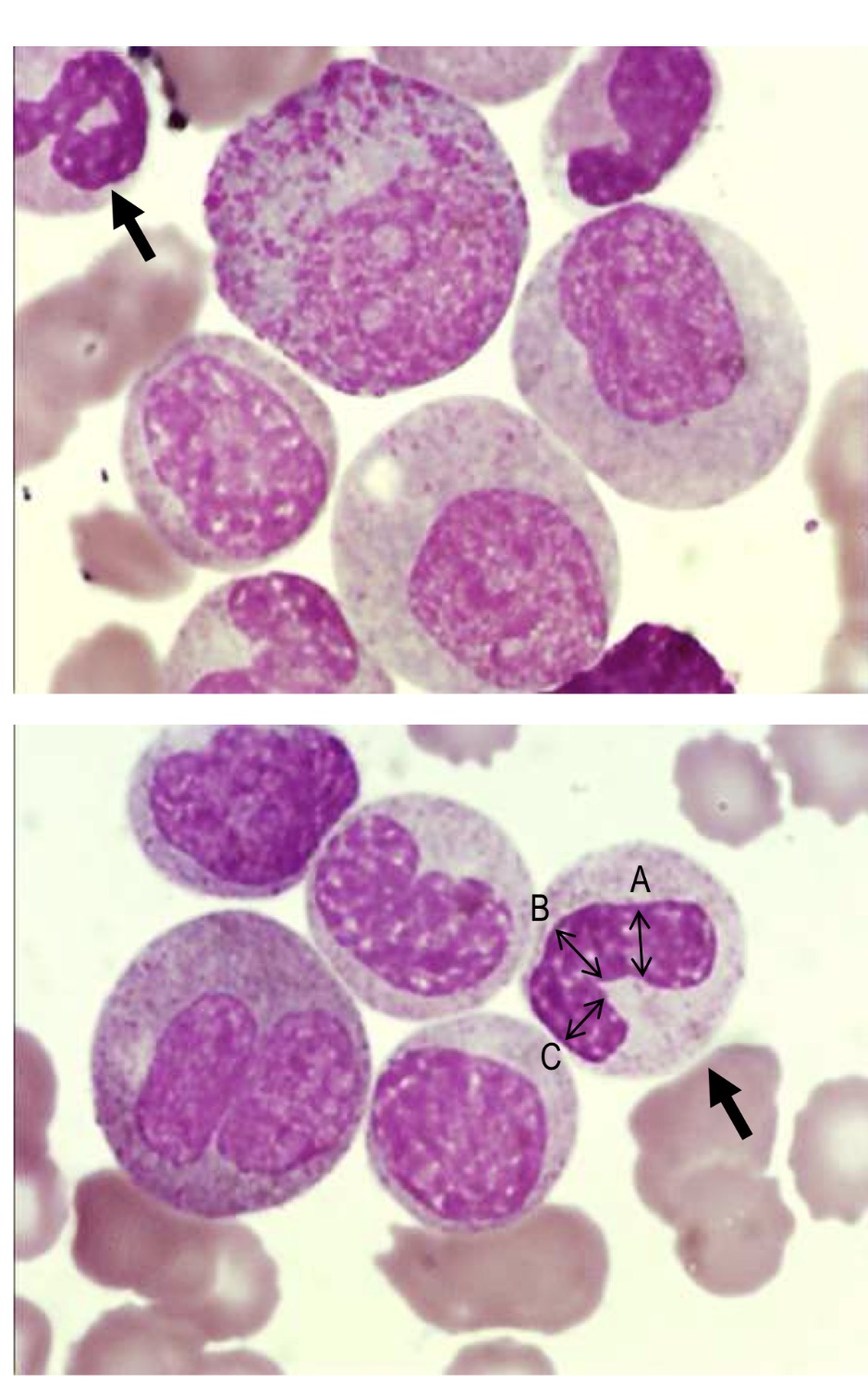
Name this cell and the main points for identification
Band/stab form: Horseshoe
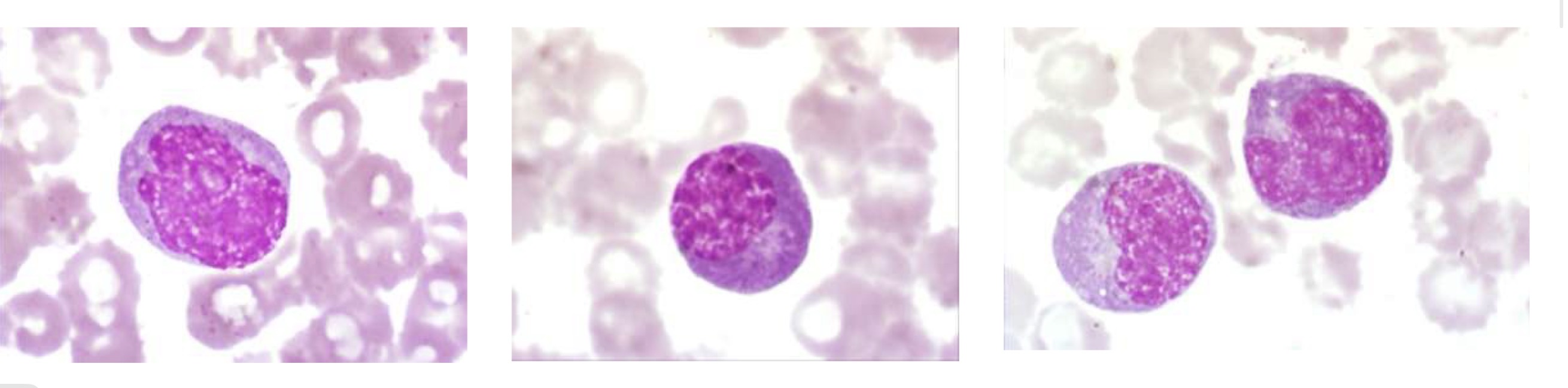
Name this cell and the main points for identification
Atypical/Transformed/Reactive lymphocyte: Large size, deep blue cytoplasm, clumped chromatin
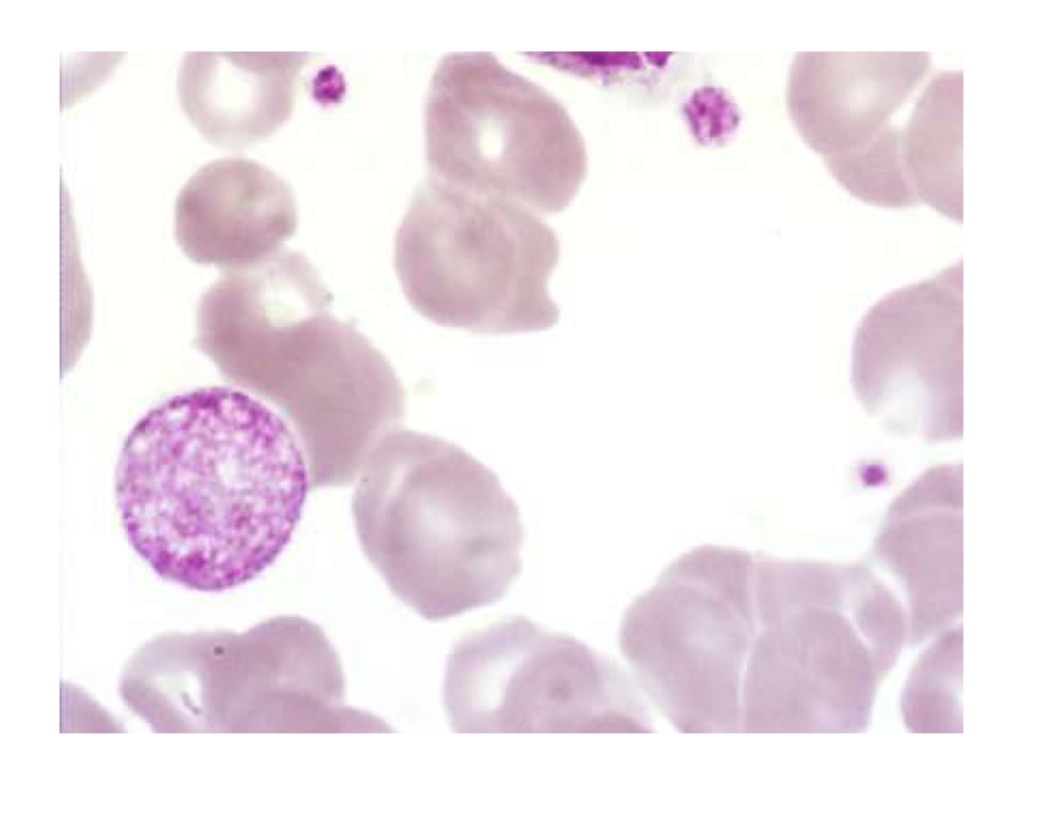
Name this abnormality, and how can we tell?
Giant platelet, it’s bigger or equal to in size than an RBC
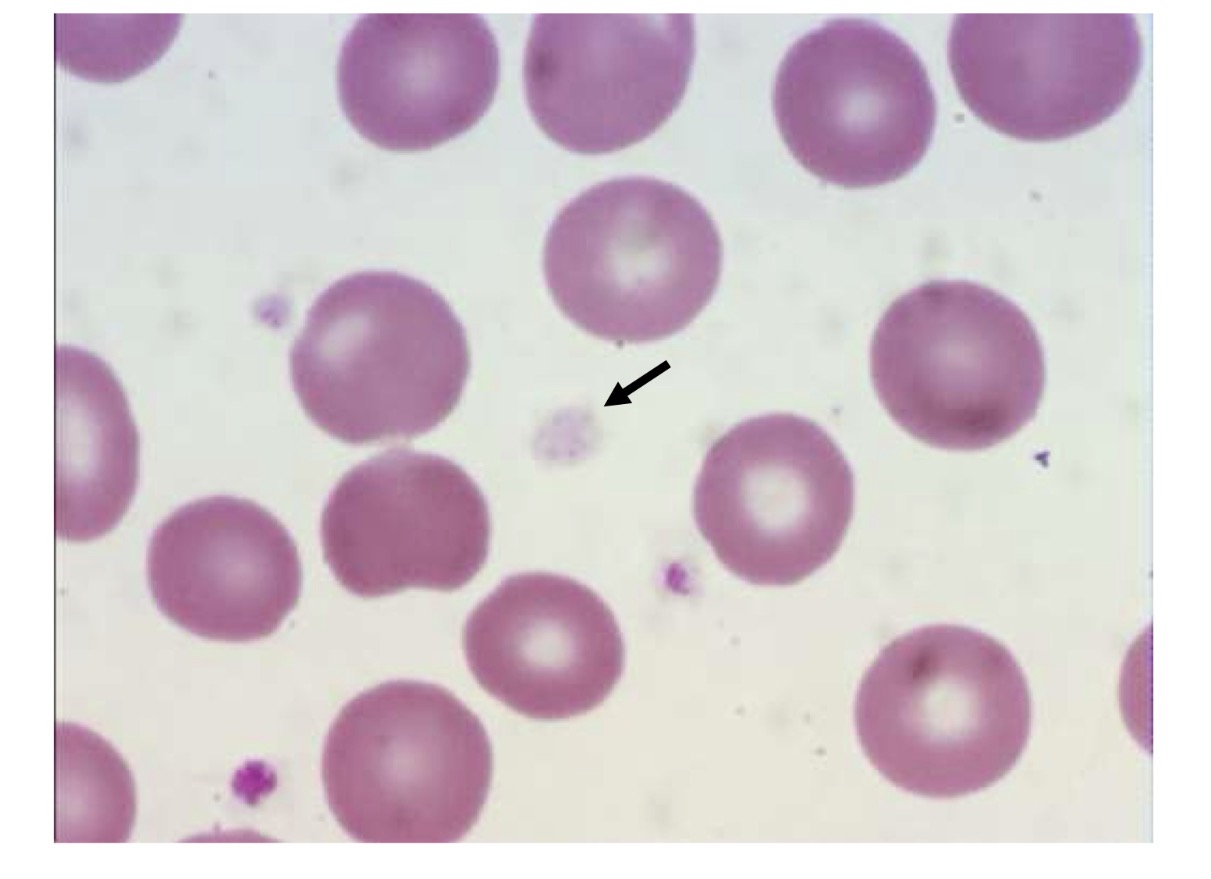
Name this abnormality, and how can we tell?
Pale staining or agranular platelet, just look at it
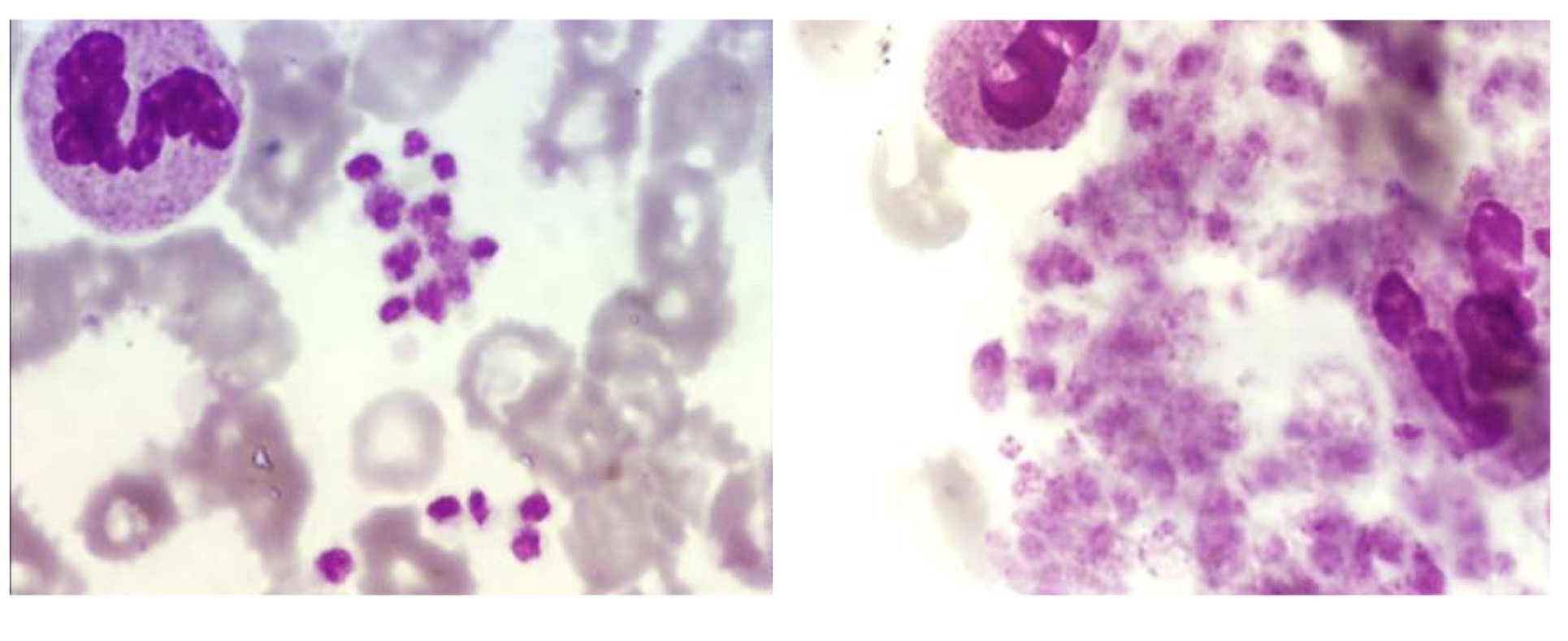
Name this abnormality, and how can we tell?
Platelet clumping, they’re all tgt
Low vs high Hb and Hct indicates…
Low: Anemia
High: Polycythemia/erythrocytosis
What is red cell distribution width?
Determines how variable the size of the RBCs are, high = anisocytosis
Why can MCV value on paper not tell us RBC size in smear?
Because a smear with RBCs all medium size will give a normal MCV BUT a smear with high and low RBC sizes would also give a normal MCV because it averages out
How can NRCs affect WBC count if we use an outdated machine?
When we count for WBCs, we remove the RBCs(No nucleus), but an outdated system won’t remove the NRCs due to them having nuclei, and they’ll think they are WBCs, so the final WBC count will be higher than truth
2 Blood Smear Review types, and what is recommended?
Extensive BS review
BS overview
Overview is recommended but combine it with a CBC