Pediatrics Exam 2 - Neuro, Respiratory,
 Call Kai
 Learn
Learn Practice Test
 Spaced Repetition
 Match
Match Flashcards
 Knowt Play
1/73

There's no tags or description
Looks like no tags are added yet.
Name | Mastery | Learn | Test | Matching | Spaced | Call with Kai | Chat |
|---|
No analytics yet
Send a link to your students to track their progress
74 Terms
What is meningitis
Inflammation of the meninges, the connective tissues that cover the brain and spinal cord
What are the meninges
Tissues that cover the brain…
1.) Dura Mater - closest to skull
2:) Arachnoid - middle
3.) Pia Mater - closest to brain
Viral Meningitis (w/ differentiates it from bacterial)
• Usually requires supportive care for recovery
• Many viral illnesses (cytomegalovirus, herpes simplex virus, enterovirus, HIV
Viral is most common form, has milder sx’s, and is not usually life threatening
Bacterial meningitis (W/ Differentiates it from viral)
Contagious infection
• Prognosis depends on how quickly care is initiated
• Infections caused by bacterial agents: Neisseria meningitidis (meningococcal), Streptococcus pneumoniae (pneumococcal), Haemophilus influenzae type B (Hib), Escherichia coli
• Incidence of bacterial meningitis has decreased in all age groups except infants under the age of 2 months since the introduction of the Hib and pneumococcal conjugate vaccines (PCV)
Expected findings w/ meningitis (for those more than 2 yrs old)
Meningitis looks different in babies than in children
• Children more than two years old
• People who are more than two years old usually have the following symptoms of meningitis:
• High fever
• Headache
• Stiff neck
• Other symptoms of meningitis may include the following:
• feeling sick to the stomach (nausea)
• vomiting
• discomfort looking into bright lights - PHOTOPHOBIA
• confusion
• Sleepiness
• Positive Brudzinski’s sign
• Positive Kernig’s sign
Expected findings for Meningitis (babies and children up to 2 yrs old)
Babies and children up to two years old. In babies, meningitis looks different. Babies with meningitis may have the following symptoms:
• not moving much or doing much
• being irritable or cranky
• throwing up (vomiting)
• not feeding well
• fever
* Tense or bulging soft spot
pin prick rash/marks or purple bruises anywhere on the body
sometimes diarhhea
cold hands and feet
unusual grunting or sounds
stuff body with jerky movements or else floppy and lifeless
• Babies may not have the symptoms older children get, such as headache and a stiff neck. Symptoms are vague and difficult to diagnose in infants.
• As the infection goes on without being treated, patients of any age may have seizures.
W/ is Brudzinski sign
1.) Lay patient supine
2.) Place one hand behind individuals head and other behind chest to prevent raising
3.) Positive: flexion of neck causes flexion of hips and knees
* often performed w/ Kernig sign
positive sign can be an indication of meningitis - lumbar puncture would still need to be performed to dx.

W/ is Kernig’s Sign
1.) Lay patient supine
2.) Raise one leg w/ knee flexed to 90 degrees.
3.) Slowly straighten leg at the knee
Positive = resistance, pain, or inability to extend knee.
positive sign can be an indication of meningitis - lumbar puncture would still need to be performed to dx.

Diagnostic Test for Meningitis —> Lumbar Puncture
A needle is inserted between two vertebrae in the lower(lumbar) spine area. This is below the point where the
spinal cord ends. A sample of CSF is taken and is sent to a lab for testing
Nursing Actions for Lumbar Puncture
• Have the client void prior to the procedure.
• A topical anesthetic cream (lidocaine and prilocaine) can be applied over the biopsy area 45 min to 1 hr prior to the procedure.
• Place the client in the side-lying position with the head flexed and knees drawn up toward the chest, and assist in maintaining
the position. Use distraction methods as necessary.
• The client can be sedated with fentanyl and midazolam.
• Pressure and an elastic bandage are applied to the puncture site after the needle is removed.
• Monitor the site for leaking of clear fluid, bleeding, hematoma, or infection.
• Client should remain in bed in a flat position to prevent leakage and a resulting spinal headache
The presence of _________ or a __________ rash requires ____________
The presence of petechiae or a purpuric-type rash requires immediate medical attention
Nursing Care: Isolation and Precautions for those w/ meningitis
• Isolate the client as soon as meningitis is suspected and maintain droplet precautions per facility protocol.
• Droplet precautions require a private room or a room with clients who have an infection from the same microorganism,
ensuring that each client has his or her own designated equipment. You would wear a surgical mask and goggles
• Providers and visitors should wear a mask.
• Maintain respiratory isolation for a minimum of 24 hr after initiation of antibiotic therapy.
Nursing care for those w/ Meningitis
Monitor neurologic status, vital signs, urine output, fluid status, and pain level.
• Monitor for symptoms of increased intracranial pressure (ICP)-- see next slide.
• For newborns and infants, monitor head circumference and fontanels for presence of or changes in bulging.
• Correct fluid volume deficits and then restrict fluids until no evidence of increased ICP and blood sodium levels are within the expected range.
• Maintain NPO status if the client has a decreased level of consciousness. As the client’s condition improves, advance to clear liquids and then a diet the client can tolerate.
• Position the client without a pillow and slightly elevate the head of the bed. The client can also be positioned side-lying to reduce neck discomfort.
• Maintain safety (keep the bed in a low position, implement seizure precautions)
Complication of Meningitis - Increased Intracranial Preassure
• Complication of Meningitis, Reye syndrome
• Can lead to neurologic dysfunction
NURSING ACTIONS
• Monitor for manifestations of increased ICP.
• Newborns and infants: bulging or tense fontanels, increased head circumference, high-pitched cry, distended scalp veins, irritability, bradycardia, and respiratory changes
• Children: increased irritability, headache, nausea, vomiting, diplopia, seizures, bradycardia, and respiratory changes
• Provide interventions to reduce ICP (positioning; avoidance of coughing, straining, and bright lights; minimizing environmental stimuli).
Medications for Meningitis —> Antibiotics (for bacterial meningitis)
• Bacterial Meningitis: Antibiotics
• Administer IV antibiotics for bacterial infections. Length of therapy is determined by the client’s condition and CSF results (normal blood glucose levels, negative culture). Therapy can last up to 10 days.
• Nursing actions:
• Assess for allergies
• Educate the family about the need to complete the entire course of medication.
Medications for meningitis → Corticosteroid Dexamethasone (for bacterial meningitis)
• Not indicated for viral meningitis.
• Assists with initial management of increased ICP
• Most effective for reducing neurologic complications in children who have infections caused by Hib.
• Nursing actions:
• Educate on administration and possible adverse effects of the medication.
Bacterial and Viral Meningitis —> Acetaminophen w/ Codeine
can be used to decrease/relieve discomfort
Reye Syndrome
• Reye syndrome primarily affects the liver and brain, causing liver dysfunction and cerebral edema.
• The cause of Reye syndrome is not understood.
• Peak incidence of Reye syndrome occurs when influenza is most common.
• The prognosis for the client who has Reye syndrome is best with early recognition and treatment which includes ruling out other illnesses that have manifestations similar to Reye syndrome.
• Risk Factors:
• There is a potential association between using aspirin (salicylate) products for treating fevers caused by viral infections and
the development of Reye syndrome.
• Reye syndrome typically follows a viral illness (influenza, gastroenteritis, varicella).
• Symptoms
• Neurological: irritability, combativeness, confusion, delirium, seizures, loss of consciousness
• Profuse vomiting
Meds and Client Ed: Reyes Syndrome
• Mannitol to reduce ICP
• Client Education
• Children should not receive aspirin (salicylates) for pain or fever.
• Caregiver should read labels of over-the-counter medications to check for the presence of salicylates.
• The number of cases of Reye syndrome has dropped greatly since health professionals began advising against giving
aspirin to kids and teens, especially during viral illnesses.
• Liver function is usually regained but neurologic deficits might persist. These may include developmental delays or speech or hearing impairment
W/ is a seizure
• Seizures are abnormal, involuntary, excessive electrical discharges of neurons within the brain.
• Seizures are classified according to their type and etiology. Partial (focal) seizures involve one area of the brain. Generalized seizures involve the entire brain.
• Symptoms during a seizure depend on where in the brain the seizure occurs and how much of the brain is being affected
Absence seizure (generalized seizure) - describe it
categorized by a brief loss of awareness and an abrupt pause in activity - may also include eyelid fluttering and/or lip chewing
• Onset between ages of 4 to 12 years and ceases by the teenage years
• Loss of consciousness lasting 5 to 10 seconds
• Motionless, blank stare
Tonic Clonic Seizure (generalized seizure) - describe it
categorized by a loss of consciousness, the stiffening of the body and convulsions, which is the rhythmic jerking of the body. Previously known as grand mal seizure.
• Stiffening (tonic) and jerking(clonic) of whole body
• Usually lasts 30 seconds to 2-3 minutes
• Postictal state
• Remains semiconscious but arouses with difficulty
• Confused for several hours
Atonic Seizure- Generalized seizure
Categorized by a sudden loss of muscle tone - head may nod forwards, person may drop things and fall to the ground. “drop attacks,” muscle tone lost, person falls
Myoclonic Seizure (generalized seizure) - describe it
individual stays conscious and has a brief, rapid, jerking of a muscle or group of muscles usually involving the neck, shoulders, and arms.
• Brief contractions of muscle or groups of muscle
• Can involve only the face and trunk or one or more extremities
• No postictal state
• Might not lose consciousness
Focal Aware Seizure (Focal Class) - describe it
There is no impaired consciousness during this seizure but the individual will experience distorted senses.
Typically includes sensory symptoms (tingling, sounds, smells), psychic symptoms (hallucinations, fear, etc), and rhythmic movements (twitching)
Focal Impaired Awareness Seizure - describe it (focal class)
The person has impaired consciousness and does purposeless and repetitive actions.
May include wandering, picking at clothes, lip smacking
Simple Febrile Seizure - describe it
● Associated with a sudden spike in temperature as high as 38.9° to 40° C. (102° to 104° F)
● May last from a few seconds to less than 15 minutes, affect whole body
● Does not recur within 24 hours
● Most febrile seizures are simple (rather than complex)
● Not thought to cause neurological damage
● Risk of developing an afebrile seizure disorder after having ≥ 1 simple febrile seizures is approximately 2 to 6%
Treating febrile seizures
● Administer acetaminophen or ibuprofen when the child has a fever
● Dress the child in light clothing
● Administer a tepid sponge baths (warm water - not hot or cold)
Diagnostic procedures for Seizures (EEG) - describe it
• Records electrical activity and can identify the origin of seizure activity.
• Can be monitored during sleep, when awake, and with stimulation and hyperventilation.
• Test can last 1 hr to multiple periods and days of monitoring.
• A normal EEG does not rule out seizures.
Client Ed. w/ EEG (electroencephalogram)
• Remain quiet during the procedure.
• If prescribed, withhold sleep from child prior to the test.
• Strobe lights or hyperventilation may be used to induce a seizure.
• The test will not be painful.
• Abstain from caffeine for several hours prior to the procedure.
• Wash hair (no oils or sprays) before and after the procedure to remove electrode gel.
Other diagnostic procedures for seizures ( MRI, lumbar puncture, and CT scan) - describe
Magnetic resonance imaging (MRI)
• More detailed and used to detect malformations, cortical dysplasia, or tumors.
Lumbar puncture
• Measures spinal fluid pressure and detects infection (meningitis).
Computed tomography (CT) scan
• Detects hemorrhage, infarction or malformations
Nursing Care - seizure precautions
• Initiate seizure precautions for any child at risk.
• Pad side rails of bed, crib, and wheelchair.
• Keep bed free of objects that could cause injury.
• Have suction and oxygen equipment available
Nursing Care: During a seizure
• Protect from injury. If child is on the floor, place blanket under head.
• Maintain a position to provide a patent airway.
• Be prepared to suction oral secretions. (DO NOT PUT ANYTHING INTO CHILDS MOUTH - SCTION W/ YOU CAN OUTSIDE)
• Turn child to a side-lying position (decreases risk of aspiration).
• Loosen restrictive clothing.
• Do not attempt to restrain the child.
• Do not put anything in the child’s mouth.
• Remove the child’s glasses.
• Prepare to administer oxygen
• Remain with the child.
• Note onset, time, and characteristics of seizure.
• Remain calm and reassure caregivers
Nursing Care: After a seizure
• Maintain the child in a side-lying position to prevent aspiration and to facilitate drainage of oral secretions.
• Check breathing, vital signs, and position of head and tongue.
• Assess the head and body for injuries, including the mouth (tongue, teeth).
• Perform neurologic checks.
• Allow for rest if necessary.
• Reorient and calm the client (due to agitation or confusion).
• Maintain seizure precautions, including placing the bed in the lowest position and padding the side rails to prevent future injury.
• Note the time of the postictal period.
• Remain with the client.
• Do not offer food or liquids until completely awake and swallowing reflex has returned.
• Encourage client to describe the period before, during, and after the seizure activity.
• Try to determine the possible trigger (fatigue or stress).
• Document the onset and duration of seizure and client findings/observations prior to, during, and following the seizure (level of consciousness, apnea, cyanosis, motor activity, incontinence).
Medications: Antiepileptic drugs (AEDs)
• EXPECTED EFFECT: Decrease incidence and severity of seizures.
• Diazepam, phenytoin, carbamazepine, valproic acid, and fosphenytoin sodium, topiramate, lamotrigine, clonazepam
• Medication selection is based on the client’s age, type of seizure, and other medical factors.
CLIENT EDUCATION
• Dosage can need to be increased as the child grows.
• Blood cell counts, urinalysis, and liver function tests will need to be obtained at frequent intervals to determine effect on organ function.
• It is important to undergo periodic laboratory testing to monitor AED levels
Education for those w/ seizures + loved ones
• Ensure the child wears a medical alert bracelet or necklace at all times.
• Refer to the state’s Department of Motor Vehicles to determine laws regarding driving for adolescents who have seizure
disorders.
• Children should wear safety devices (helmets) while participating in sport (biking, skiing, horseback riding).
• Do not leave the child unattended in water or permit climbing on objects taller than the child.
• Older children should be encouraged to use a shower, rather than a bathtub, and leave the bathroom door unlocked while
showering.
• Avoid triggering factors (emotional stress, sleep deprivation, bright lights, fatigue, physical abuse)
Client Ed - when to call emergency services for seizures
• Seizure lasts more than 5 minutes
• Apnea (breathing stops)
• Status epilepticus
• Pupils are not equal after seizure
• Vomiting continuously for 30 minutes after the seizure
• Unresponsive to pain or difficult to arouse
• Seizure occurs in water
• First seizure episode
W/ Is status epilepticus
• Involves either: Tonic-clonic seizure activity lasting > 5 minutes OR 2 or more seizures
between which patients do not fully regain consciousness
• An older definition of > 30-minute duration was revised to encourage more prompt identification and
treatment. Untreated generalized seizures lasting > 60 minutes may result in permanent brain damage.
This acute condition requires immediate emergent treatment to prevent loss of brain function, which can
become permanent.
NURSING ACTIONS
• Maintain airway, administer oxygen, establish IV access, perform ECG monitoring, and monitor pulse oximetry and ABG results.
• Administer a loading dose of diazepam or lorazepam. Buccal, rectal or nasal medications can be given until intravenous access is established. If seizures continue after the loading dose is given, fosphenytoin followed by phenobarbital should be administered.
Reye Syndrome - Diagnostic Procedures
• Liver biopsy
NURSING ACTIONS
• Maintain NPO status prior to the procedure.
• Monitor for hemorrhage post procedure.
• Assess vital signs frequently post procedure.
CLIENT EDUCATION
• Limit the client’s post procedure activities to decrease the risk of hemorrhage.
• Lumbar puncture
• CSF is collected and tested to rule out meningitis
Reye Syndrome: Nursing Care
• Maintain hydration while preventing cerebral edema.
• Administer IV fluids as prescribed.
• Maintain accurate I&O.
• Insert indwelling urinary catheter as ordered.
• Position the client.
• Avoid extreme flexion, extension, or rotation.
• Maintain the head in a midline neutral position.
• Keep the head of the bed elevated 30°.
• Monitor coagulation and prevent hemorrhage. (Coagulation times can be extended).
• Note unexplained or prolonged bleeding.
• Apply pressure after procedures that cause bleeding.
• Implement seizure precautions.
• Provide private time for the family to be with the client if death is imminent.
Main Pt’s for Sensory and Cognitive Impairment
• Sensory impairments in children most commonly affect the eyes and ears. Adequate vision and hearing are
necessary for normal growth and development. Therefore, it is important to identify any impairments early in life.
• Health Promotion: Screen children for visual impairments yearly.
Visual Impairments - general
Health Promotion: Screen children for visual impairments yearly.
Risk Factors
• Prenatal or postnatal conditions (retinopathy of prematurity, trauma, meningitis, and postnatal infections)
• Perinatal infections (herpes, rubella, syphilis, chlamydia, gonorrhea, and toxoplasmosis)
• Chronic illness (sickle cell disease, rheumatoid arthritis, retinoblastoma, albinism, and Tay-Sachs disease)
*Important milestone- at 6-8 weeks, a baby should be able to look at their parents’ eyes and face and start to smile

Types of Visual Impairments - 3 common types of eye problems in babies
(1) Nasal lacrimal duct obstruction- tear duct is not open and tears just spill out of the eye (parents can massage the eye gently over time to help the duct open over time)
(2) Blurry vision (High prescriptions)- babies may need glasses to correct their vision
(3) Crossing of eyes
• If eyes cross only occasionally, the issue may self-correct (tracking skills develop in the first year of life)
• Permanent crossing of the eyes is called strabismus
Parents should bring their baby to the doctor if (eye related)
• The baby’s eyes frequently are not aligned properly
• The baby doesn’t make eye contact with caregivers
• The baby’s eyes shake or quiver side to side (nystagmus)
• The baby gazes aimlessly at lights and doesn’t seem to be engaged with the world
• These behaviors may be related to problems with vision or other neurological conditions
Nearsightedness and Farsightedness
*Cause: eyeball, cornea, or lens is not the right shape
Myopia (nearsightedness)
• Sees close objects clearly, but not objects in the distance
• Headaches and vertigo
• Eye rubbing
• Difficulty reading
• Clumsiness (frequently walking into objects)
• Poor school performance
Hyperopia (farsightedness)
• Sees distant objects clearly, but not objects that are close
• Because of accommodation, not usually detected until age 7
*Treatment for both conditions is corrective lenses or laser surgery
Astigmatism
• The cornea should be spherically shaped like the top of a soccer ball. Astigmatism occurs when the cornea is shaped
more like a football.
• Can cause blurry/distorted vision when at a distance and when near
• Can cause headache and vertigo
• Child may tilt head to see better
treatment = corrective lenses or laser eye surgery
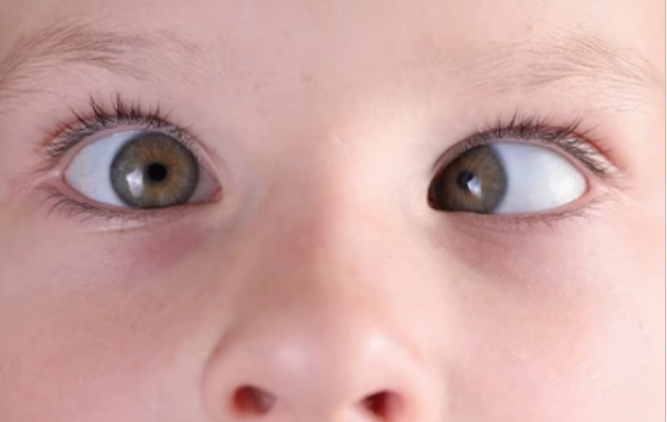
Strabismus
• Strabismus is misaligned eyes- one eye is turned in a direction different than the other eye
• Treatment may include glasses, use of eye patch, eye exercises, medication, or surgery
• Usually appears by age 3 years
• Usually happens because of a problem with the area of the brain or cranial nerves controlling eye movement
Symptoms
● Frowning or squinting
● Difficulty seeing print clearly
● One eye closed to enable better vision
● Head tilted to one side
● Headache, dizziness, diplopia (double vision), photophobia

Amblyopia (Also called “lazy eye” (inaccurate term))
• Blurry vision in one eye, clear vision in the other eye
• The brain starts ignoring the blurry eye and only uses the eye with clear vision to see. As the brain relies more on their stronger eye, the weaker eye’s vision becomes even worse over time.
• Amblyopia is the most common reason kids lose their vision.
• Misaligned eyes (strabismus) is one cause of amblyopia. When the eyes aren’t properly aligned, it can cause amblyopia or permanent poor vision in the turned eye. When your eyes look in different directions, your brain receives two images. To avoid double vision, your brain may ignore the image from the turned eye, resulting in poor vision development in that eye.
Cataracts
• The lens of the eye should be perfectly clear. Cataracts are a cloudiness or gray opacity of the lens which blurs the light or
prevents light from entering into the eye
• Decreased ability to see clearly
• Can limit a child’s visual development in the brain and may cause permanent vision loss
• Possible loss of peripheral vision
• Absence of red reflex
• Infant: inability to reach and grab objects (a rattle toy)
• Treatment is surgery
How are vision screenings performed
This is completed using the Snellen letter, tumbling E, or picture chart (HOTV test) useful for preschoolers.
• Place the child 10-20 feet from the chart, depending on child’s age and chart used.
• The child should be wearing glasses, if appropriate, and keep both eyes open during the screening.
• While covering one eye, the child reads each line on the chart, starting at the bottom of the chart, until he can pass a line. The child needs to identify four of the six characters in the line correctly to pass.
• The child is then asked to start at the top and move down until he can no longer pass a line.
• The procedure is repeated with the other eye.
Partial visual impairment is classified as
Partial visual impairment is classified as visual acuity of
20/70 to 20/200.
Legal blindness is classified as
Legal blindness is classified as visual acuity of 20/200 or
worse or a visual field of 20 degrees or less in the child’s
better eye. This is a legal definition not diagnosis.
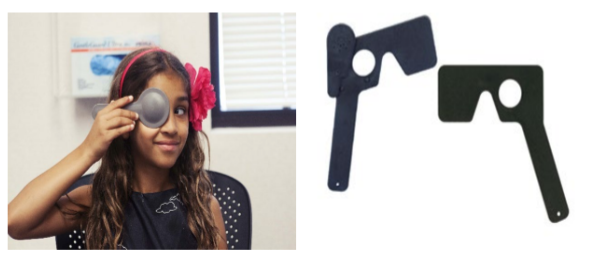
Age appropriate Occluder for ages 3-9
occluder glasses - kids should never use their hand to cover their eyes as they tend to peek.

Ages 10+ - appropriate occluders
plastic occluders with lips and spectacle occluders - never have a child use their hand.
Nursing care for visual impairments
• Maintain normal to bright lighting for the child when reading, writing, or participating in any activity that requires close vision.
• Assess infants and children for visual impairments and identify children that are high-risk.
• Observe for behaviors that suggest a decrease or loss of vision.
• Identify safety hazards, and prevent injury to the eyes (helmets, safety glasses).
Client ed for visual impairments
• Orient the child to the surroundings and provide a safe environment.
• Use activities that stimulate and develop the child’s other senses (ie. Hearing and touch) to promote independence and meeting developmental milestones
• Refer to educational services for visual impairment (Braille, audio tapes, special computers).
Expected findings for hearing impairments
• Child is not babbling or developing words
• Not responding to a caregiver’s voice
• Not responding to softer sounds
• Not reaching language developmental milestones
• Most cases of hearing loss in young children are due to ear infections
• Having fluid behind their eardrum (due to an ear infection) can make it sound like they are underwater
• Caregivers with concerns should obtain a hearing test for their child
• If a child has chronic ear infections that are not treated, it may lead to permanent hearing loss
• Signs of hearing problem in older children include problems with speech or proper pronunciation of words, turning the volume way up on devices, not turning when a caregiver calls them, problems paying attention or following directions in school
Importance of screenings a newborns hearing
• Earlier identification of hearing loss leads to better educational and social-emotional outcomes
• About 4 of every 1,000 newborns in the U.S. have some degree of hearing loss
• There are 2 noninvasive and painless screening tests
Nursing care for those with hearing impairments
• Exposure to sign language should begin as close to birth as
possible.
• American Sign Language (ASL) is the only complete language that deaf and hard of hearing children have total access to all the time. providing early exposure to accessible language can help prevent language deprivation in deaf and hard of hearing
children.
• Permanent brain changes occur when spoken language is not fully accessible to the deaf child and sign language exposure is delayed (as has been standard practice).
• Use sign language or an interpreter if appropriate when working with a child who has hearing loss. Always talk to the child, not the interpreter.
• Hearing parents will need timely and extensive support; thus, we propose that, upon the birth of a deaf child and through the
preschool years, among other things, the family needs an adult deaf presence in the home for several hours every day to be a linguistic model, to guide the family in taking sign language lessons, to show the family how to make spoken language accessible to their deaf child, and to be an encouraging liaison to deaf communities. While such a support program will be complicated and challenging to implement, it is far less costly than the harm of linguistic deprivation.
Therapeutic Procedures for Hearing loss
Cochlear implants: Used for extensive hearing loss. Send impulses to the auditory nerve. Surgically implanted under skin
or worn externally.
• A cochlear implant is an electronic device that improves hearing. It can be an option for people who have severe
hearing loss from inner-ear damage who are not able to hear well with hearing aids.
• Unlike hearing aids, which amplify sound, a cochlear implant bypasses damaged portions of the ear to deliver sound
signals to the hearing (auditory) nerve.
Complications for deaf children
Visual and hearing impairments can affect the child’s speech and motor development. Identifying the impairment early can minimize this.
NURSING ACTIONS
● Encourage self-care and optimal independence.
● Make interprofessional referrals as needed (social services, sign language instruction, speech therapy, physical therapy, occupational therapy, teachers)
Communicating with deaf or hard of hearing patients
• Say their name or signal to get their attention prior to speaking to them
• Restating something if the patient doesn’t understand
• Please don’t shout
• Speak clearly, a little more loudly, and not too fast
• Write things down on paper or whiteboard
• Use speech to text function on cell phones or iPads
• Learn some basic sign language
How Doctors Can Help Deaf Patients
1. Learn sign language
2. Look at deaf patients when speaking to them
3. Tell the patient what you are doing (such as listening to their heartbeat) before you do it
4. Ask how they deaf patients how they prefer to communicate (through an interpreter, writing everything down, lip reading)
5. Write down all instructions and important information
6. Learn deaf culture- the terms “deaf” and “hard of hearing” are preferred over “hearing impaired”
There are 3 main types of hearing impairments: what are they
• Conductive losses involve interference of sound transmission, which can result from otitis media, external ear infection, foreign bodies, or excessive ear wax.
• In other words, problem with physical structures of the ear
• Sensorineural losses involve interference of the transmission along the nerve pathways, which can result from congenital defects or secondary to acquired conditions (infection, ototoxic medication, exposure to constant noise [as in a NICU]).
• In other words, problems with nerves that transmit messages from ear to auditory processing part of the brain
• Central auditory imperception involves all other hearing losses related to natural causes (aphasia, agnosia [inability to interpret sounds]).
• Problem with brain’s ability to process and interpret sounds
What’s glaucoma
• Increase in pressure inside the eye
• Can cause loss of peripheral vision (trouble seeing things off to the side)
Diagnostic procedures for ocular alignment
Corneal light reflex test:
• A flashlight is shone directly into the client’s eye, from a distance of 16 inches.
• Reflected light should be observed in the same location on both pupils.
Cover test:
• Client is asked to cover each eye and observe an object at a distance of 13 inches.
• The cover is removed and the eye is observed for movement, which should not occur.
Down Syndrome
• Most common chromosomal abnormality of a generalized syndrome. Trisomy 21 is seen in 97% of cases of Down syndrome.
• Many medical conditions accompany Down syndrome (congenital heart malformation, hypotonicity, dysfunction of the immune system, thyroid dysfunction, leukemia).
• Mental capacity varies typically from mild to moderate cognitive impairment
• About 40% to 45% have congenital heart disease.
Expected findings include:
• Short stature
• Hyperflexibility, muscle weakness, and hypotonia
• Dry skin that cracks easily
Down Syndrome: risk factors and diagnostic procedures
RISK FACTORS
• Maternal age greater than 35 years or paternal age greater than 55 years
DIAGNOSTIC PROCEDURES
PRENATAL: Testing for alpha-fetoprotein in maternal blood
INFANT: Chromosome analysis and echocardiography
CHILD: Neck x-rays prior to participation in sports (ligaments in the neck are “floppy”- the spinal cord can be pressed by the vertebrae bones in the neck and cause nerve damage
Nursing care for those with Down’s Syndrome
• Swaddle the infant to prevent heat loss due to limp, extended body position.
• Assist family with feeding difficulties, and monitor dietary intake.
• Promote good skin care.
• Assess developmental progress at regular intervals.
• Support family at the time of diagnosis.
• Make appropriate referrals.
• Assist the parents in holding and bonding with the infant.
Therapeutic
Procedures/Interprofessional Care for those w/ Down’s
Surgical interventions depend on the associated congenital anomalies.
These can include cardiac defects or strabismus.
Growth hormone: To increase height
Interprofessional care: Social work, home health, school early intervention, genetic counseling, speech therapy, physical therapy, occupational therapy
Client Ed. For Down’s Syndrome
• Aspirate nasal secretions.
• Change the infant’s position frequently.
• Perform strategies to accommodate for the protruding tongue. A
long handled spoon can be used for feeding to decrease tongue
protrusion during feeding.
• Care for skin using moisturizing creams daily.
• Report manifestations of spinal cord compression: neck pain, loss
of motor function, bladder incontinence, impaired sensations.
• Evaluate eyesight and hearing frequently.
• Perform frequent thyroid functioning tests.
• Assess for atlantoaxial instability (neck pain, weakness, and torticollis).
Sensory + Physical issues for those w/ Down’s Syndrome
Ocular problems include strabismus, nystagmus, astigmatism, myopia, hyperopia, head tilt,excessive tearing, and cataracts.
Hearing loss can occur due to shorter ear canals, otitis media, and impacted cerumen.
Frequent otitis media, narrow canals, and impacted cerumen can contribute to the hearing problems.
OTHER PHYSICAL DISORDERS
• Frequent respiratory tract infections
• Increased incidence of leukemia
• Thyroid dysfunctions.
• Cardiac deficiencies
GROWTH: Both height and weight are reduced. Weight gain is more rapid than growth in
height and can result in excessive weight by 36 months.
SEXUAL DEVELOPMENT: Male (lower fertility rates) and female genitalia can be underdeveloped and delayed
Down’s Syndrome and Respiratory Infections
Respiratory infections are common due to decreased muscle tone and impaired drainage of mucus associated underdeveloped nasal bone.
NURSING ACTIONS
Rinse the child’s mouth with water after feeding and at other times of the day when it is dry. Mucous membranes are dry due to constant mouth breathing, which also increases the risk for respiratory infection.
Clear nasal passages with a bulb syringe as needed
Provide cool mist humidification to moisten secretions. Practice good hand hygiene. Dispose of contaminated tissues properly
Increase the oral intake of fluids.
Frequently reposition the child to promote resp. function
Keep UTD w/ routine immunizations
Seek health care as early as possible