Chem 14 Section 1
 Call Kai
 Learn
Learn Practice Test
 Spaced Repetition
 Match
Match Flashcards
 Knowt Play
1/16

There's no tags or description
Looks like no tags are added yet.
Name | Mastery | Learn | Test | Matching | Spaced | Call with Kai | Chat |
|---|
No analytics yet
Send a link to your students to track their progress
17 Terms
Gas phase properties
-Atoms are far apart and disorganized
-No fixed volume or shape

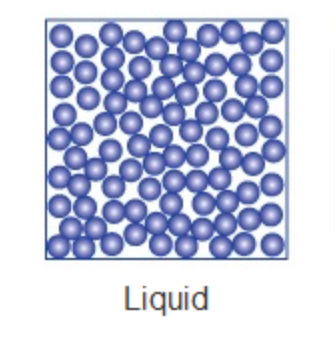
Liquid phase properties
-Atoms are close together and disorganized
-Fixed volume but no fixed shape
Solid phase properties
-Atoms are close together and organized
-Fixed volume and shape

Law of conservation of matter
There is no change in total quanity of matter during physical or chemical changes
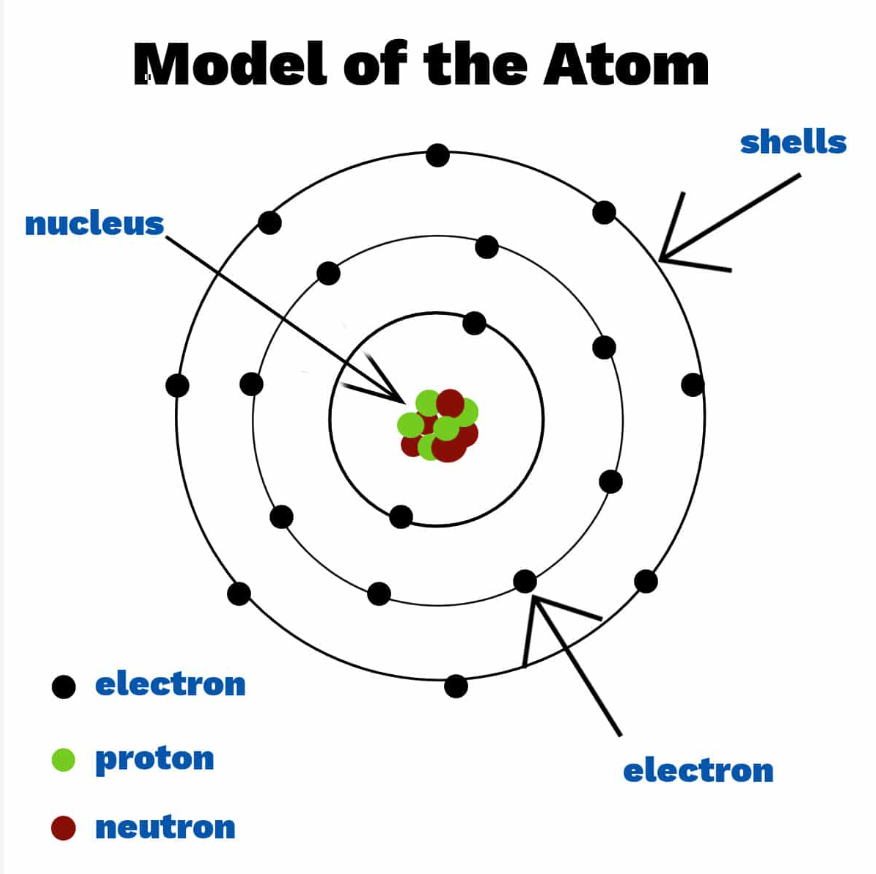
Atom
A fundamental unit of matter, the smallest particle of an element that can enter into a chemical combination. Consisting of a nucleus (protons and neutrons) and electrons.
Molecule
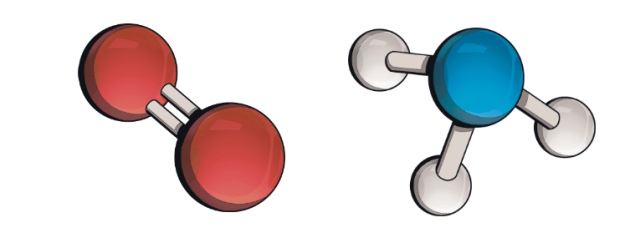
Two or more atoms chemically bonded together as a single unit. They can be made of the same element (O2) or different elements (H2O)
Compound
A pure substance formed when two or more different elements are chemically bonded together in a fixed ratio (like H2O or NaCi)

Are all compounds molecules?
Yes. All compounds are molecules because they consist of bonded atoms. However, not all molecules are compounds (e.g., O2 is a molecule, but NOT a compound because it only has one element type)
Pure substance
Matter with a fixed chemical composition and uniform properties throughout. It can be an elemental substance (made of 1 element type, like Au or O2) or a compound (made of 2+ element types, like H2O)—never a mixture.

Mixture
A physical combination of two or more pure substances that are not chemically bonded. They can be homogeneous (evenly mixed throughout, like salt water or air) or heterogeneous (unevenly mixed with visible parts, like oil and water or trail mix)

Physical Property
A characteristic observed or measured without changing the substance's chemical identity (e.g., color, density, melting point, mass, volume)
Physical Change
A change in shape, size, or state of matter that does not alter the chemical composition (e.g., melting ice, cutting paper, dissolving sugar in water)
Chemical property
A characteristic observed or measured by changing the substance's chemical identity (e.g., flammability, reactivity with acid, ability to rust)
Chemical change
A process where chemical bonds break or form to create new substances with different properties (e.g., wood burning, iron rusting, baking a cake)
Intensive property
A physical property that depends only on the type of matter, not the amount (e.g., density, boiling point, color, temperature, hardness)
Extensive property
A physical property that depends on the amount of matter in a sample (e.g., mass, volume, length, total energy/heat content)