BIO W12: Animal form and the immune system I
 Call Kai
 Learn
Learn Practice Test
 Spaced Repetition
 Match
Match Flashcards
 Knowt Play
1/46

There's no tags or description
Looks like no tags are added yet.
Name | Mastery | Learn | Test | Matching | Spaced | Call with Kai | Chat |
|---|
No analytics yet
Send a link to your students to track their progress
47 Terms
three principles of physiology
form
function
regulation
physiology
study of processes and function of an organism and connections between:
form
function
regulation
form
anatomy
function
contributions to survival
regulation
coordination and control
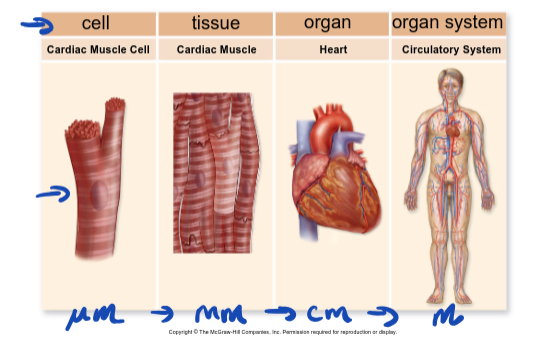
four levels of organization of the vertebrate body
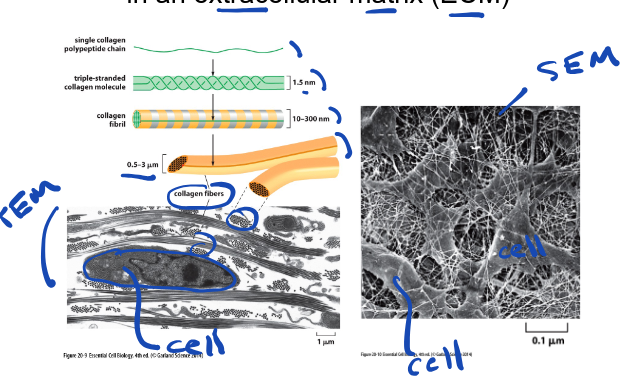
cells in tissues are embedded in an extracellular matrix
cells in tissues are connected by different types of junctions
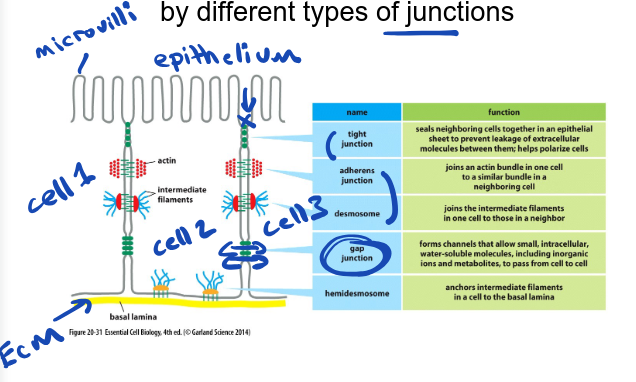
tight junction
seals neighboring cells together in an epithelial sheet to prevent leakage of extracellular molecules between them; helps polarize cells
adherens junction
joins an actin bundle in one cell to a similar bundle in a neighboring cell
desmosome
joins the intermediate filaments in one cell to those is a neighbor
gap junction
forms channels that allow small, intracellular, water-soluable molecules, including inorganic ions and metabolites, to pass from cell to cell
hemidesmosome
anchors intermediate filaments in a cell to the basal lamina
organs are composed of different tissues
epithelial
connective
muscle
nervous
regulation
coordination and control
endocrine system
hormones move in circulation
slower acting
can have long-lasting effects
nervous system
neurons transmit information
faster acting
more transient effects
coordination and control often act to maintain homeostasis
cell function requires that internal body conditions be relatively constant
homeostasis
ex: body temp, blood pH, and glucose concentration
homeostasis
steady state physiological conditions of the body
negative feedback
change triggered response that counteracts change
maintain homeostasis
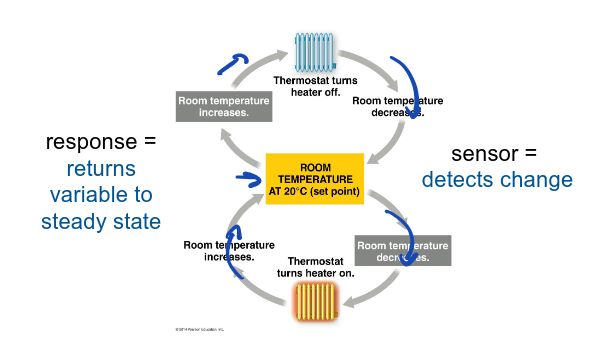
positive feedback
change triggers response that enhances change
promotes rapid change
regulating body temperature
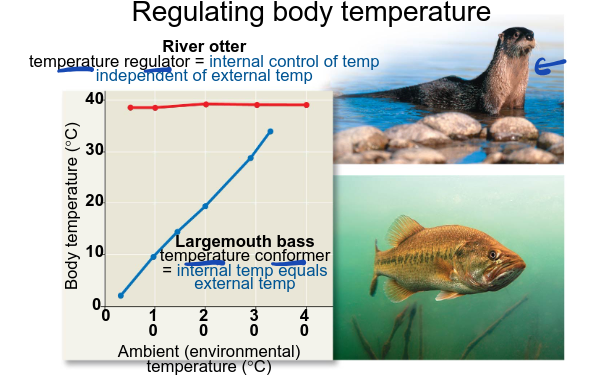
temperature regulator
internal control of temp independent of external
temperature conformer
internal temp equals external temp
temperature sensor in humans
in hypothalamus
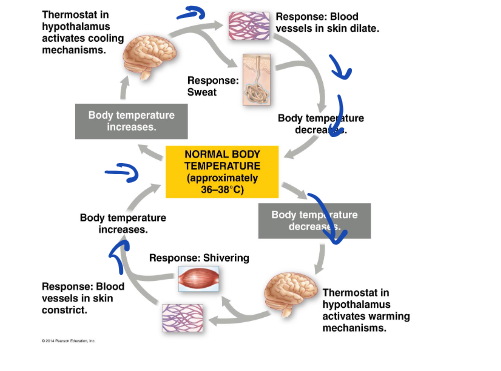
temperature regulation
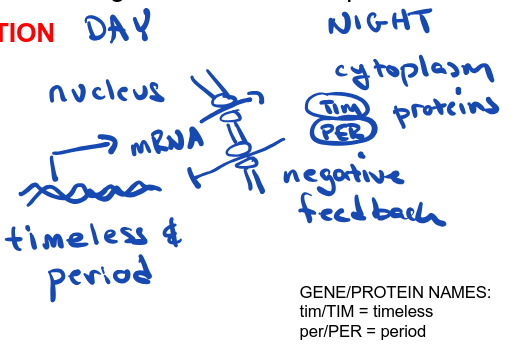
regulated by the circadian clock
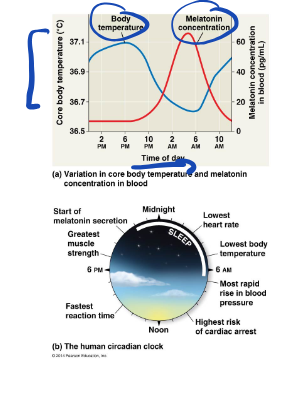
circadian clock
cycle of ~24 hrs that persists without external cues
regulated by a negative feedback loop
first demonstration of the power of vaccination
administration of antigenic material to stimulate innate and adaptive immunity to protect against subsequent infection
pathogens
microbes that cause disease in healthy people
immune system
recognizes pathogens and responds with immune cells and proteins
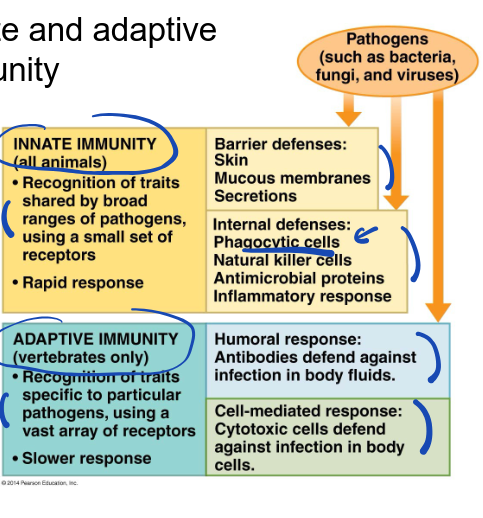
innate immunity
earlier response
adaptive immunity
later response
innate and adaptive immunity
phagocytosis
the process of cellular “eating”
neutrophil
a phagocytic cells that is a component of the body’s first cellular line of defense. Attracted to tissues during inflammation
killing microbes by phagocytosis
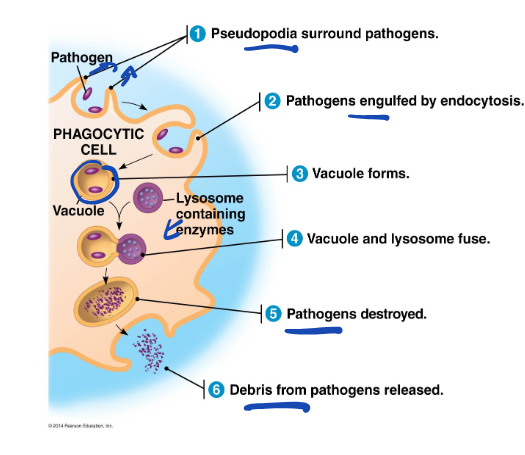
contributors to the microbial killing in phagocytes
enzymes that degrade microbial components
toxic variants of oxygen and nitrogen
antimicrobial peptides that lyse microbes
deprivation of key minerals such as iron
local response to infection step 1
histamines and cytokines released. capillaries dilate
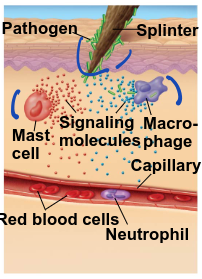
local response to infection step 2
antimicrobial peptides enter tissue. neutrophils are recruited
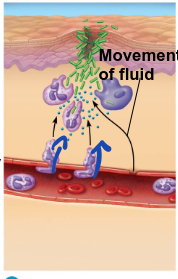
local response to infection step 3
nuetrophils digest pathogens and cell debris. Tissue heals
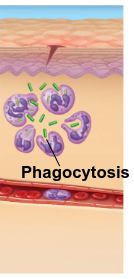
innate immune recognition
each of a small set of receptors recognizes a molecule absent from animals, but common to a type of pathogen
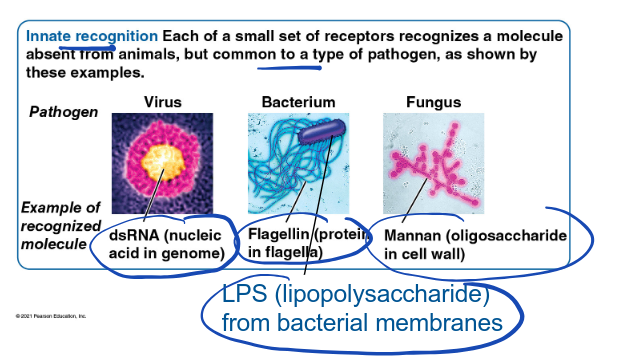
toll-like receptors (TLR) recognise PAMPs to stimulate the overall immune response
PAMPS → cytokines production → fever and adaptive immune response
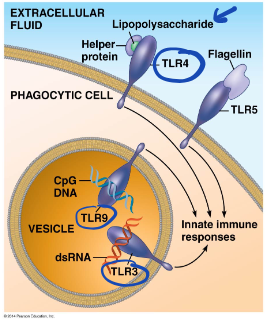
PAMPS(pathogen associated molecular patterns)
conserved molecules of pathogens
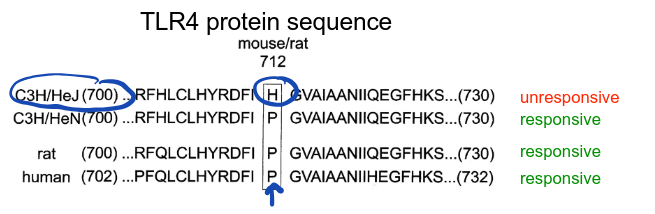
tests to determine whether TLRs function in the innate immune response to pathogens
test whetehr a mutation in a TLR gene in the fruit fly causes susceptibility to fungal infections
test whether a mutation in a TLR gene in mice causes susceptibility to bacterial infections
examine the innate immune response in humans carrying mutations in TLR genes
mutation in TLR4 gene confer reduced responsiveness to the bacterial product LPS
lymphatic system
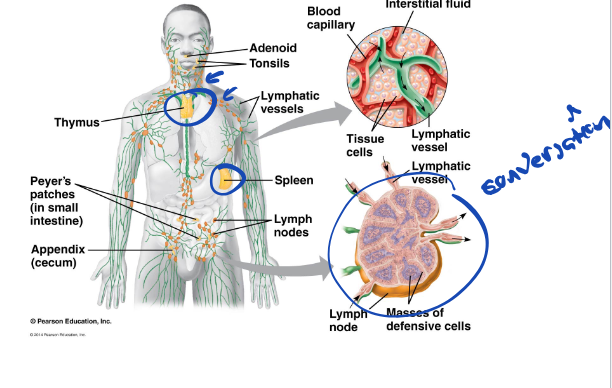
global response to an infection