drrm cycle, early warning system, & emergency response (mod #6)
 Call Kai
 Learn
Learn Practice Test
 Spaced Repetition
 Match
Match Flashcards
 Knowt Play
1/48

Earn XP
Description and Tags
🍂
Name | Mastery | Learn | Test | Matching | Spaced | Call with Kai | Chat |
|---|
No analytics yet
Send a link to your students to track their progress
49 Terms
China, USA, India, Philippines (15), Indonesia
top 5 countries that were hit by disasters in 2015
True
TRUE OR FALSE:
An absolute reality of our present time is that striking inequalities persist, with global disaster risk disproportionately concentreated in poorer countries with weaker governance (Clark, 2012).
False; should be disaster risk reduction
TRUE OR FALSE:
Emergency response is vital for building a more equitable and sustainable future.
Making investments in prevention and preparedness, including civil defense exercises, is a necessary part of systematic efforts to increase resilience to disaster
disaster risk management
disaster risk reduction
prevention, mitigation, adaptation
disaster management
preparedness, relief, recovery
elements of DRRM
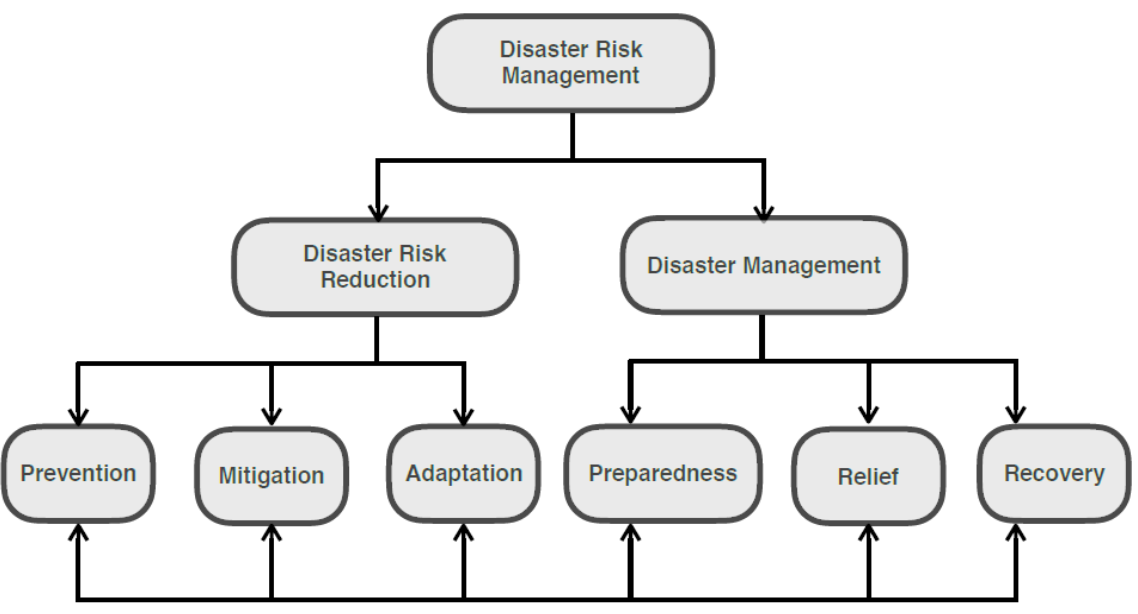
disaster risk reduction
2 MAJOR ELEMENTS OF DRRM:
this aims to decrease or manage the risk through the implementation of measures to ensure that hazards will not result in disasters
disaster management
2 MAJOR ELEMENTS OF DRRM:
building capacities needed to efficiently ______ emergencies and to effectively transition from response to early and sustained recovery
everyone
who is responsible for DRRM?
from citizens who must be empowered to make decisions which reduce risk, to political leaders, government institutions, private sector, civil society organizations, professional bodies, and scientific and technical institutions
pre-disaster: risk reduction
post-disaster: emergency response
post-disaster: recovery
3 stages in disaster management/DRRM cycle
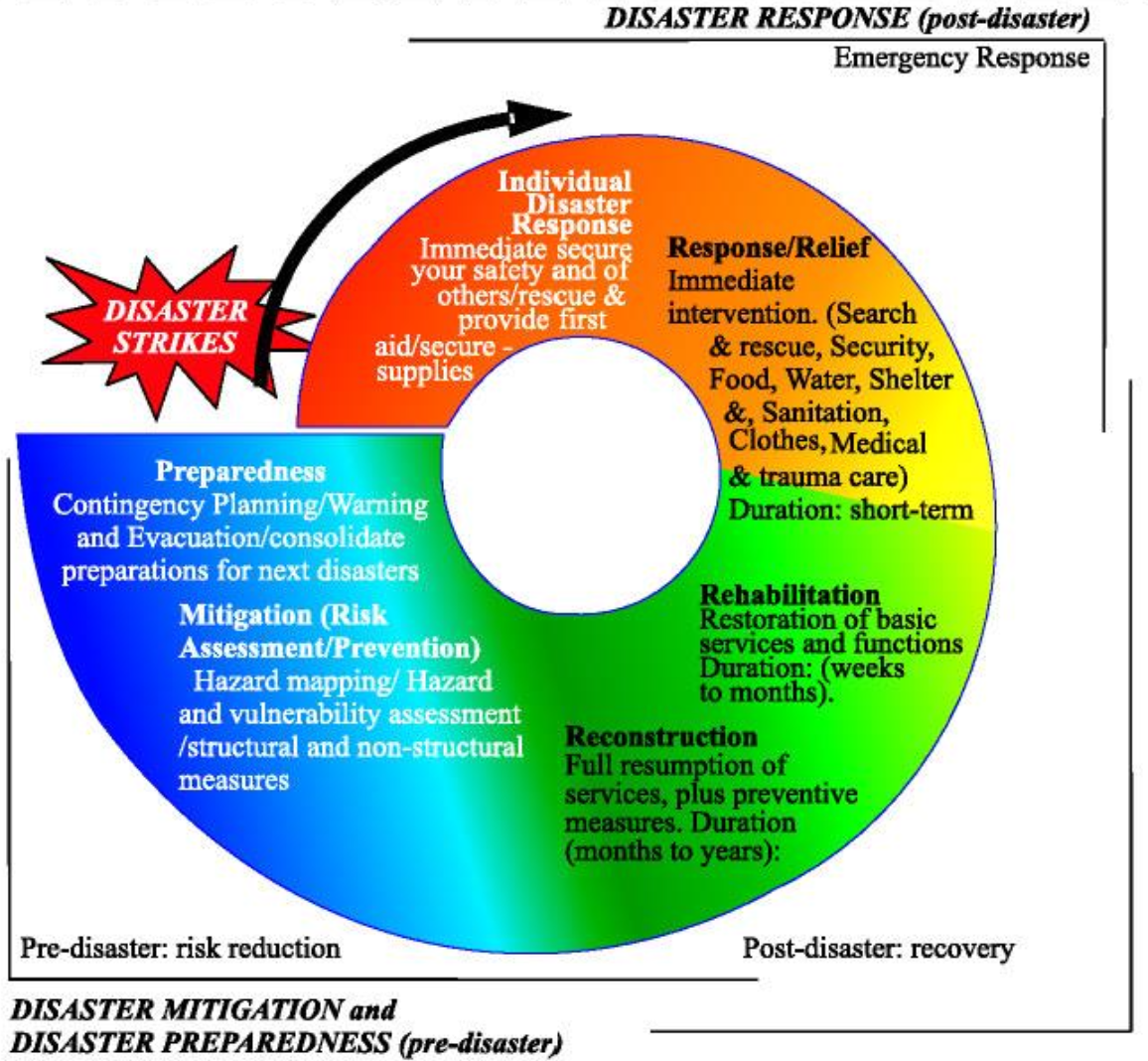
pre-disaster activities
DRRM CYCLE:
taken to reduce human & property losses caused by a potential hazard
prevention, mitigation, preparedness
prevention
UNDER PRE-DISASTER STAGE:
avoidance of adverse impacts of hazards;
ex. proper land use, suitable engineering design of structures
mitigation
UNDER PRE-DISASTER STAGE:
measures that reduce vulnerability to certain hazards;
in anticipation
ex. improved building practices and standard designs
structural/hard mitigation: dikes, windbreaks, ripraps, break waters
non-structural/soft mitigation: safety measures (hazard mapping), legislation, economic mitigation, advocacies/policy studies
adaptation
UNDER PRE-DISASTER STAGE:
adjustment made by people or communities in response to actual or expected hazard stimuli or their impacts to reduce harm and make use of opportunities;
may be sponty or planned
ex. stilt houses
preparedness
UNDER PRE-DISASTER STAGE:
measures taken in anticipation of a disaster to ensure that appropriate and effective actions are taken in the aftermath
Training, Education and Drills
Public Awareness
Early Warning System
Strengthening organizations
Strengthening inter-agency arrangements
Increasing Logistic Support and Stockpile
emergency response
DRRM CYCLE:
refer to activities under disaster stage (during a disaster);
include initiatives taken to ensure that the needs and provisions of victims are met, & suffering is minimized.
evacuation, rescue, relief
post disaster stage, recovery activities
DRRM CYCLE:
initiatives done during this stage are to achieve early recovery and rehabilitation of affected communities, immediately after a disaster strikes & are referred to as ______ activities.
recovery
UNDER POST-DISASTER STAGE:
restoration, and improvement of facilities (if possible), livelihoods and living conditions of disaster-affected communities, including efforts to reduce disaster risk factors;
may be done either by rehabilitation or reconstruction
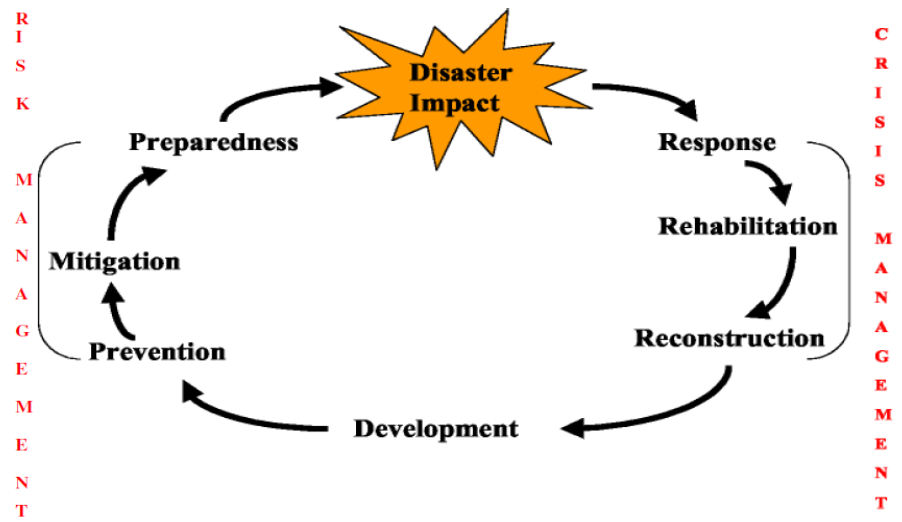
rehabilitation
UNDER POST-DISASTER STAGE (RECOVERY):
restoration of basic services & functions;
lasts weeks to months (short-term)
reconstruction
UNDER POST-DISASTER STAGE (RECOVERY):
full resumption of services + preventive measures;
lasts months to years (long-term)
early warning systems (EWS)
means by which people receive relevant and timely information in a systematic way prior to a disaster in order to make informed decisions and take necessary action
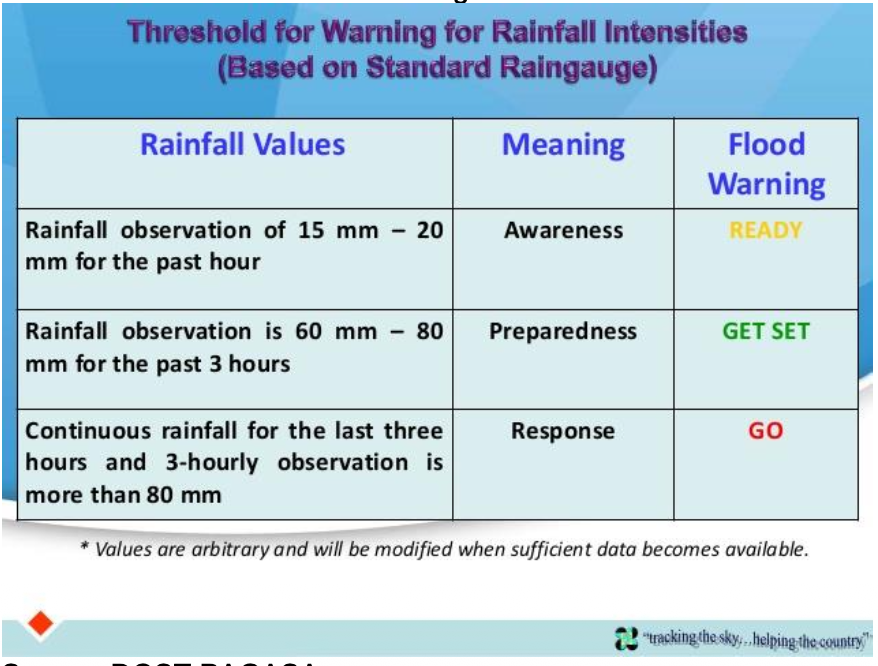
timely, clear & understood by everyone
2 conditions for an EWS to be effective
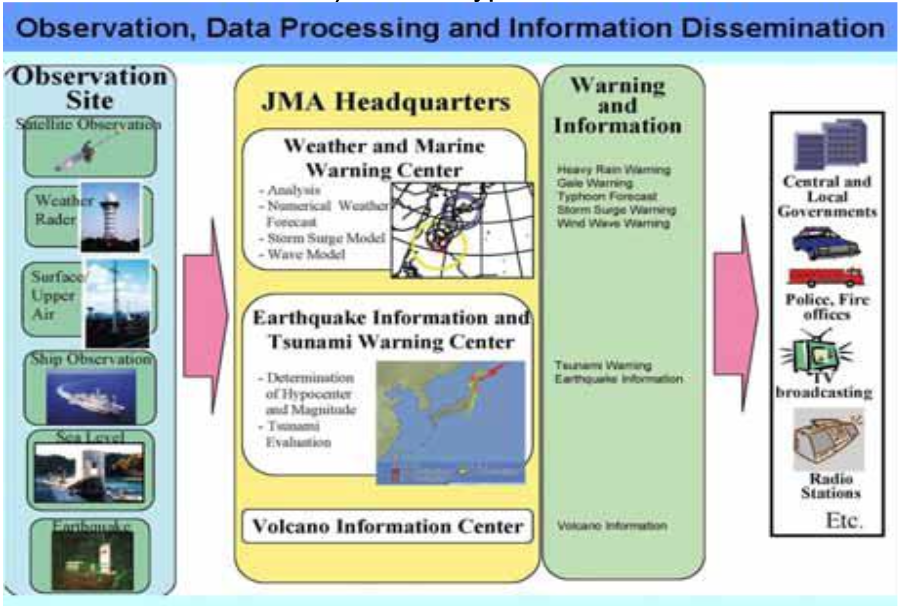
True
TRUE OR FALSE:
The following are common ways of giving warning to a community:
community meeting
signs and indicators agreed upon that can be seen or heard
posters and signs
through radio
by megaphone or loudspeaker
house to house announcements
text messaging (SMS)
Evacuation (in Churches, Schools, Government Buildings)
Setting up Temporary Refuge/Tent Cities for prolonged evacuation (fires, floods, earthquakes)
Search and Rescue
First aid
Repair of critical facilities/services (electricity, water, public transport, hospitals)
Relief operation
Provision of: food, clean water, clothing, water containers, candle, matches, soap, canvas, tents (trapal), plastic sheets for temporary shelters.
5 appropriate services during emergency
basic protocol for management of evacuation during an emergency
know & understand the EWS
determine safe areas for evacuation
Know the shortest and safest route and identify alternative route/s
Know the designated pick-up points
Put road signs for the evacuation route
Organize the groups in each pickup point and schedule the trip and the vehicle t be used.
Prioritize the sick, differently abled, elderly, children and pregnant women
Prepare pre-list of evacuees (if available) and check if the group per pick up point is complete
Prepare the needed materials and supplies in an evacuation center
Provide for rescue of those that were not evacuated and accounted for
if possible, provide for the evacuation of animals (pets, livestock) and household belongings
Provide for security for the community
Form committees for the management of the evacuation center from the members of the community
warning
order to evacuate
evacuation proper
management of evacuation center
return to respective houses or relocation
5 stages of evacuation
5 STAGES OF EVACUATION:
Warning on incoming hazard;
Advisories on keeping safe and alert;
Preparations and needed actions;
Monitoring and updating of the situation
5 STAGES OF EVACUATION:
order to immediately evacuate from the head of community or organization
5 STAGES OF EVACUATION:
Timely, safe and organized evacuation based on plans and preparations;
Check the list of registered evacuees with the actual number of evacuees
Management of the Evacuation Center
5 STAGES OF EVACUATION:
Register, monitor & orient households;
Arrange for food, clean water & other needs;
Assign appropriate area for families;
Ensure health, safety, security, cleanliness and hygiene & overall order;
Ensure continuity of basic services and information;
Organize committees for cooperative management
Return to respective houses or relocation
5 STAGES OF EVACUATION:
Fixing of damaged houses;
Fixing and restoration of evacuation center;
Coordinating with proper authorities for the putting up of new houses for relocates
COMMITTEES NEED FOR EVACUATION:
distribution of relief
giving special attention to needs of children, elderly, pregnant & breastfeeding mother
management of kitchen and needed supplies
organizing and storing the supply of food
COMMITTEES NEED FOR EVACUATION:
maintenance of cleanliness and overall hygiene
administering first-aid
referral of patients to hospitals, if needed
making herbal medicines
organizing and storage of needed medicines
Committee on Information & Coordination
COMMITTEES NEED FOR EVACUATION:
registration of evacuees/survivors and personal belongings
tracing/tracking of unaccounted family members
coordination and monitoring with outside help organizations/institutions
continuous monitoring and updating of conditions to evacuees
soliciting/gathering resources needed
Committee on Education
COMMITTEES NEED FOR EVACUATION:
arrange for the continuation of classes for school children and day care
orientation on disaster preparedness measures
organizing physical fitness activities, games and sports
giving seminars on alternative livelihood, child health and issues like human rights
COMMITTEES NEED FOR EVACUATION:
ensure safety of evacuees
guard the evacuation center day and night
settle quarrels and disputes during evacuation
negotiate with police and armed forces
secure and monitor the houses and belongings left behind
Damage, Needs, Capacity Assessment (DNCA)
this identifies the appropriate services and emergency response;
provides sufficient information and update regarding the situation in the affected area;
gathers the needed information on the resources (financial, materials, equipment, manpower, etc.) needed
True
TRUE OR FALSE:
These are information covered under DNCA:
Damage to personnel, houses, livelihood and critical facilities
Response measures done by the community
Assistance provided by local government and NGOs
Response and recovery plans of households, organizations and the community
Prevention and preparedness to other hazards
Needs (food, clean water, temporary refuge, health, security, management of evacuation center, etc.)
True
TRUE OR FALSE:
These are methods of gathering data for DNCA:
observation
interview
community meeting
small group discussion
coordination with diff. gov’t agencies & other orgs
what, when, where, how
FORMAT OF DNCA:
Disaster: ______, _____, ______, _____
damaged, still to be damaged
FORMAT OF DNCA:
Damages: ________, ________
response of households & community, community & organizational plans, primary needs
other 3 components part of DNCA (response, plans, needs)
timely, appropriate, adequate
RELIEF OPERATIONS:
Relief assistance must be _____, _____, & ______.
False; NOT overindependet
TRUE OR FALSE:
Communities affected by disasters are overdependent on outside help.
False; it must be organized
TRUE OR FALSE:
Relief must be immediately provided.
False
TRUE OR FALSE:
Massive influxes of relief goods are always good.
True
TRUE OR FALSE:
People will not eat anything when hungry as they still value quality.
False; different
TRUE OR FALSE:
Families have the same needs and must be given same amount of assistance.
False; not always
TRUE OR FALSE:
Aid is used to gain political favors, bolster popularity, or discriminate against specific, unaligned groups.
Assessment of Damage, Needs and Capacity
Planning
Resource Generation
Purchasing
Warehousing
Repacking
Distribution
Assessment
Reporting
procedure to relief operations (APRPWRDAR)
True
TRUE OR FALSE:
Other emergency services that need to be provided are emergency health services & psychological first aid.