Exercise Testing + prescription
 Call Kai
 Learn
Learn Practice Test
 Spaced Repetition
 Match
Match Flashcards
 Knowt Play
1/18

There's no tags or description
Looks like no tags are added yet.
Name | Mastery | Learn | Test | Matching | Spaced | Call with Kai | Chat |
|---|
No analytics yet
Send a link to your students to track their progress
19 Terms
Physical activity
General movement that results in energy expenditure
energy expenditure (Kcals, MET, O2 consumption)
Bowling or walking
Exercise
Body movement (specific type of physical activity that have defined parameters.
energy expenditure (Kcals, MET, O2 consumption)
bench press
Physical fitness
levels of ability
VO2 max
HR max
Physical activity and exercise are behaviors. Physical fitness is a measurable outcome of these behaviors…
need health realted fitness before sport related fitness…
What are the major components of health fitness
Body composition
Muscular endurance - how long for prolonged period of time
Muscular strength - 1 rep max (cannot use that safely for general pop)
flexibility
balance
cardio respiratory fitness (most indicative of health related fitness)
What is Exercise Tests
measure components of health fitness
determine baseline function so you can identify deficits and adequacies to provide focus areas for improvement.
What is Exercise Prescriptions
utilize standards to design safe exercise programming
used to prevent or minimize complications of exercise.
prevent progression of disease
improve quality of life
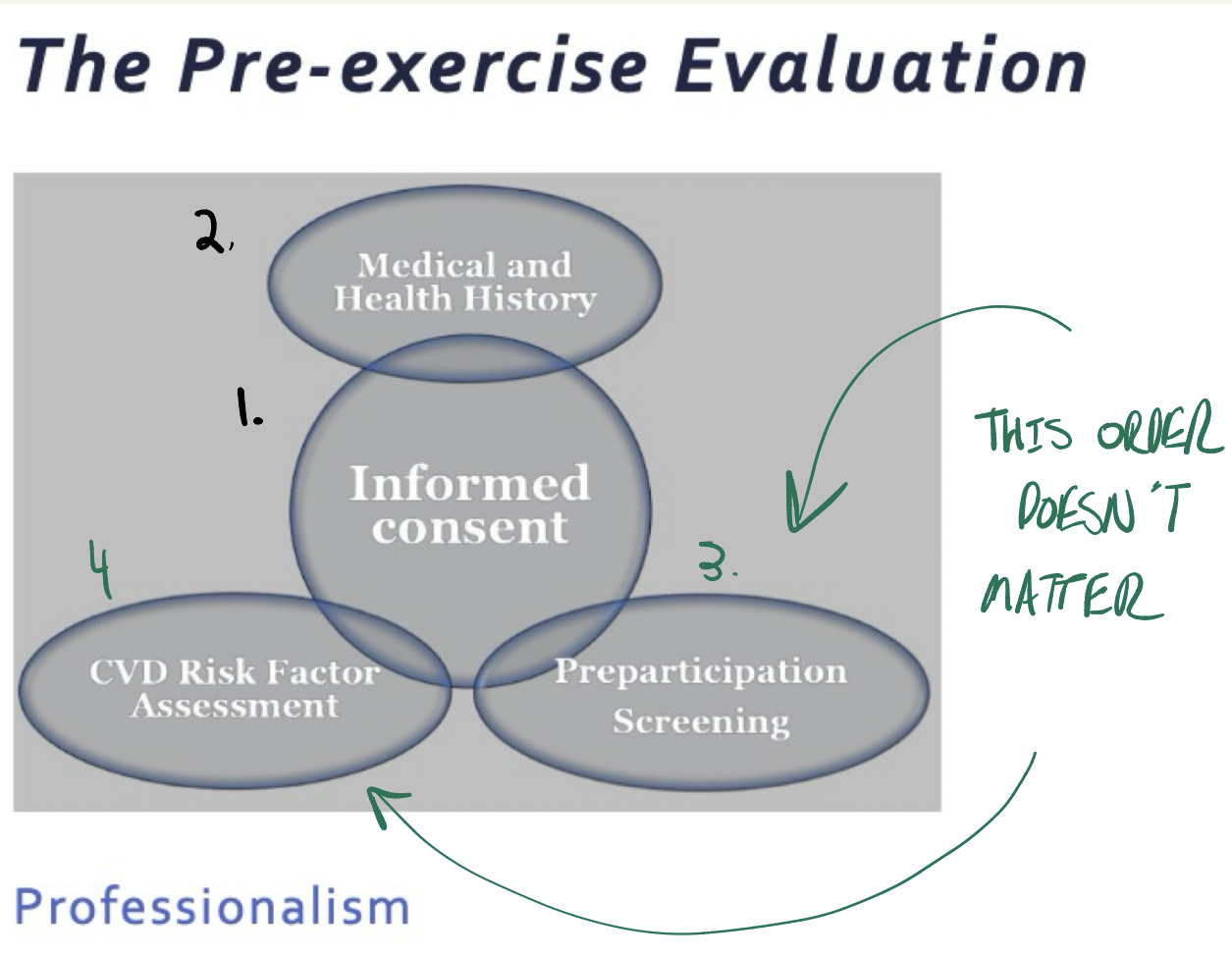
Pre exercise evaluation…
what is the steps of preexercise evaluation
Informed consent (MUST COME FIRST)
medical and health history
pre-participation screening
CVD Risk Factor
What are key components of professionalism when working with a client/patient?
Treat patients how you would want your family treated
Introduce yourself and your position
Explain assessments/exercises in simple but accurate terms
Maintain professional language
Allow opportunities for questions
Explain results when applicable
Assent vs. Consent:
Assent = agreement from someone who cannot legally consent (e.g., a minor); they should understand and agree to participate
Consent = legally binding permission from someone able to provide consent
purpose of taking a detailed health history (NEED to get the notes for this)
What is the purpose of preparticipation screening?
To identify individuals who should seek medical clearance before beginning a vigorous exercise program.
Screening considers:
High-risk physical signs/symptoms
Current level of physical activity
High-risk medical conditions
Desired physical activity level
Sign vs. Symptom:
Sign = objective; something you can observe/measure
Symptom = subjective; something the patient feels/reports
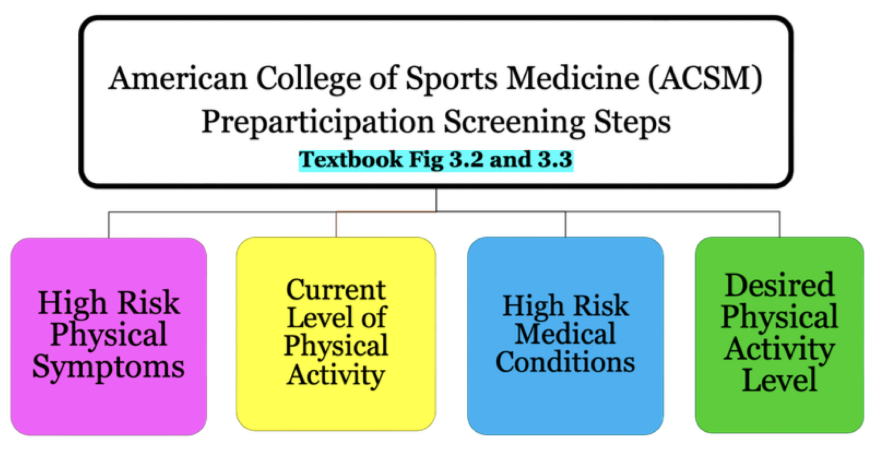
Step 1: identify high risk signs + symptoms…
What are the characteristics of angina pectoris?
Angina pectoris = chest pain of cardiac origin
Character:
Crushing, heavy, tight, or vice-like
Often accompanied by sweating
Location:
Substernal chest
May radiate to shoulders, arms, neck, or jaw
Presentation may be more variable in women
Triggers:
Exercise/exertion
Excitement/emotional stress
New/unaccustomed exertion
When assessing symptoms, ask what triggers them and the situations in which they occur.
What are the 3 types of unreasonable breathlessness?
Dyspnea:
Shortness of breath at rest or with mild exertion
Orthopnea:
Shortness of breath while lying flat
Relieved by sitting up
Paroxysmal nocturnal dyspnea (PND):
Shortness of breath after 2–5 hours of sleep
Relieved by sitting up
What are other high-risk signs/symptoms during preparticipation screening?
Dizziness or fainting (syncope) at rest or during exercise
Bilateral ankle swelling (edema) — ask about triggers and duration
Palpitations/tachycardia — unpleasant awareness of a forceful or rapid heartbeat
Intermittent claudication — reproducible buttock, thigh, or calf pain triggered by exercise; not present with standing/sitting; associated with peripheral vascular disease
Ongoing heart murmur
Step 2: Current Activity Level
What qualifies as exercising regularly when assessing current activity level?
Exercise must be:
Planned and structured
At least moderate intensity → noticeable increase in heart rate and respiratory rate
At least 3 days/week
At least 30 minutes/session
Maintained for at least 3 months