Biology U4 AOS 2
 Call Kai
 Learn
Learn Practice Test
 Spaced Repetition
 Match
Match Flashcards
 Knowt Play
1/111

There's no tags or description
Looks like no tags are added yet.
Name | Mastery | Learn | Test | Matching | Spaced | Call with Kai | Chat |
|---|
No analytics yet
Send a link to your students to track their progress
112 Terms
Gene pool
Alleles
Allele frequencies + how to calculate?
Genetic diversity
Gene pool all alleles present within a particular population or species
Alleles are alternate forms of a gene
Allele frequencies refer to the proportion of a particular allele appearing at a certain gene locus in a gene pool
Which can be calculated by totalling the number of a particular allele divided by the total number of alleles present in the population
A larger and more diverse gene pool will contain a greater variety of genes and alleles, leading to a greater number of genotypes and phenotypes, and thereby resulting in increased genetic diversity - variation in genetic makeup or alleles within a population
Genotype
Phenotype
Genotype the genetic composition of an organism at a particular gene locus/combination of alleles for a specific trait
Phenotype the observable physical or biochemical characteristics of an organism that are influenced by gene expression and the environment
Mutations
How can they occur?
Depending on the mutation’s overall effect on the survivability of the individual affected, the mutation can be classified as —--, —— or —-
Mutations involve permanent changes to the DNA sequence of an individual
They create new alleles
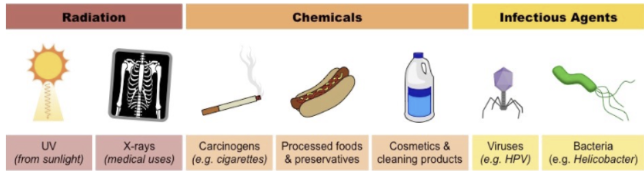
They can occur either spontaneously or be induced by agents known as mutagens (e.g. UV radiation)
Depending on the mutation’s overall effect on the survivability of the individual affected, the mutation can be classified as advantageous, neutral, or deleterious
For these mutations are they heritable
Germline cell mutation
Somatic cell mutation
For the mutation to be heritable (passed down from parent to offspring), it must occur in an individual’s germline cells (involved in the generation of gametes)
If the mutation occurs in a somatic cell, then it is not heritable
Point mutations
Describe changes to a single nucleotide in a gene
Silent mutation
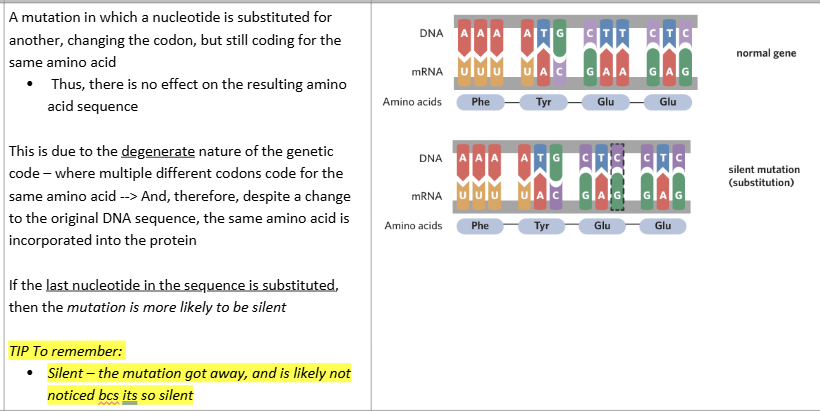
Why is it this way (Hint: nature of genetic code)
T or F? f the last nucleotide in the sequence is substituted, then the mutation is less likely to be silent
Missense mutation
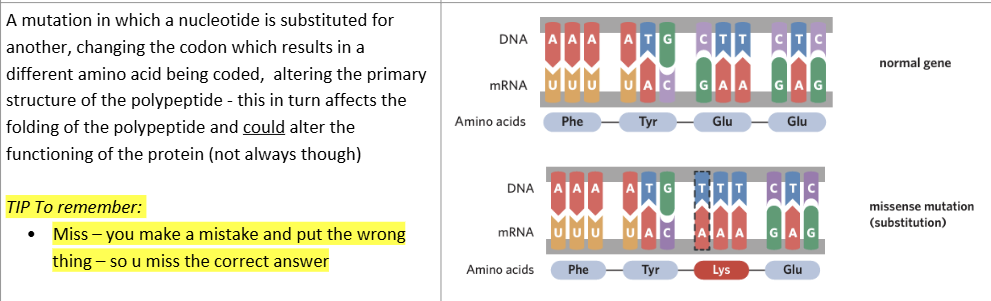
Does it always alter the functioning of the protein?
Nonsense mutation
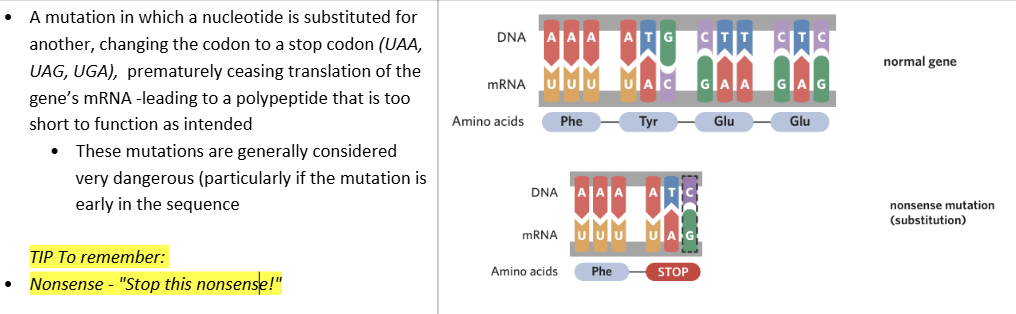
T or F? These mutations are generally considered the most dangerous when they are early in the sequence
Frameshift mutation + does it just alter one codon?

Block mutations + list the different types
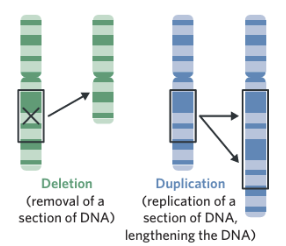
Deletion
Duplication
Involve changes to larger sections of DNA or an entire gene
These mutations usually occur during the process of meiosis
Different types include:
Deletion
Duplication
Inversion
Translocation
Inversion
Translocation + what can it be further classified as? Explain
In inversion – the section breaks off, rotates 180°, and reattaches to the same chromosome
In translocation, it could classified as balanced (No extra/missing DNA (fertility may be reduced) or unbalanced net extra/missing DNA, less functional organism

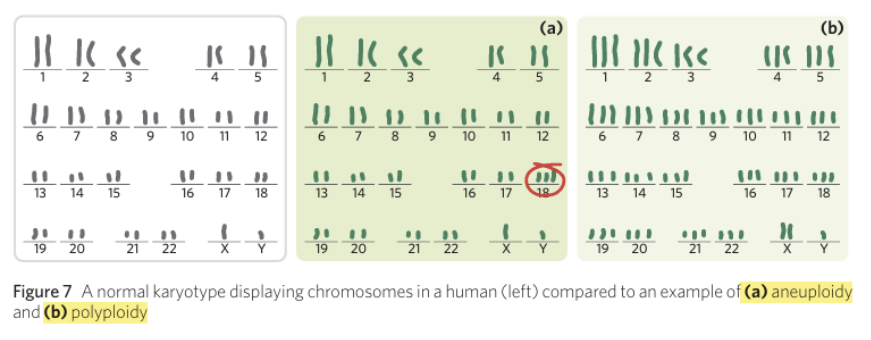
Aneuploidy
Polyploidy
Draw a image of an example of the above on a karyotype
Aneuploidy refers to a chromosomal abnormality in which an organism possesses an incorrect number of total chromosomes caused by the addition or loss of an individual chromosome
Polyploidy refers to a chromosomal abnormality in which an organism has an incorrect number of sets of each chromosome
Environmental selection pressures
Give examples
Environmental selection pressures are factors within the environment that influence an organism’s ability to survive and reproduce, hence influencing allele frequency in a population
Examples – don't need to memorise just know
Physical agents | Biological agents | Chemical agents |
Climate conditions
Competition Food Water Shelter Mates | Infectious disease Predation | Pollutant in soil or water Pesticides |
Natural selection
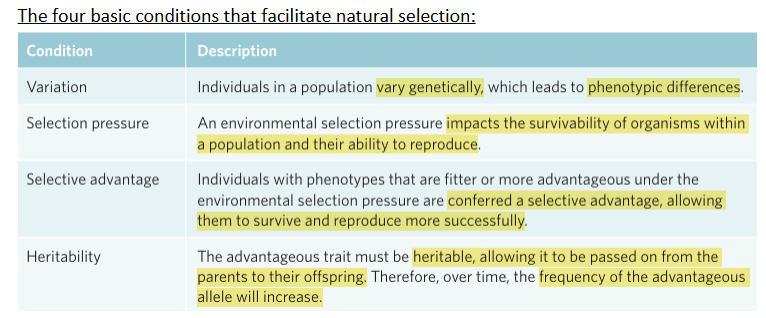
What are the 4 basic conditions that facilitate natural selection
Natural selection a mechanism for evolution in which organisms that are better adapted to their environment have an increased chance of surviving and passing on their alleles
Evolution
Evolution the change in the genetic composition/allele frequencies of a population over consecutive generations
Natural selection is a mechanism of evolution
The survivability of a species relies upon a population having large genetic diversity. Explain why:
--> This is because a population with a greater variation in alleles has a higher chance of possessing a favourable allele that will help them survive if a new selection pressure arises
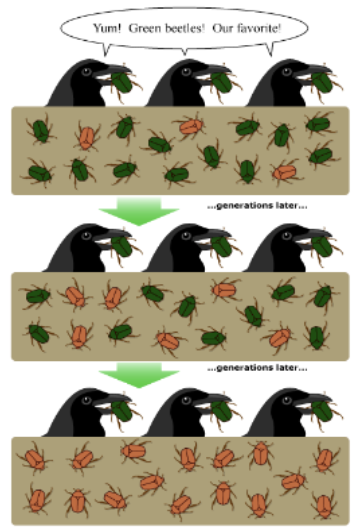
Describe evolution with this:
There is heritable, pre-existing variation of colour between green and brown beetles
Predation of the crows acts as a selective pressure against the green beetles
The brown beetles camouflage better with the environment. Their colour confers a selective advantage.
Brown beetles are more likely to survive, reproduce and pass on their favourable traits The allele frequency changes over time where the frequency of the alleles specific to the brown phenotype increase, whereas alleles specific to green beetles decrease over generations.
Interbreeding
Inbreeding
Interbreeding | Mating between individuals. |
Inbreeding | Closely related individuals in a population mating and producing offspring. |
Genetic drift + identify some of its forms
Genetic drift a random event that results in the removal of alleles from the gene pool which reduces a population's genetic diversity
This occurs through either the bottleneck effect or the founder effect
Bottleneck effect
Bottleneck effect the reduction in genetic diversity that occurs when a large proportion of a population is removed due to a chance event (e.g. natural disaster)
Due to the severe reduction in population size, many individuals carrying unique alleles can be lost --> Therefore, the new population has lower genetic diversity than the pre-disaster population
TIP to remember:
Bottle – some liquid (members of the population) has leaked out of the bottle – resulting in lower content within the population
Founder effect
Founder effect the reduction in genetic diversity that occurs through the establishment of a new population that is derived from a small unrepresentative sample of the original population
So:
Small group of individuals from a larger population
Move to a new location and establish an isolated population
TIP to remember:
Founder – they found/establish a new population
Outline which of these are founder effect and bottleneck effect:
A) In a multicolored population of beetles:
Due to a random event, the original population size is dramatically decreased, leading to the loss of various alleles
This significantly decreases the genetic diversity of the beetle population, leaving only green and yellow beetles
B) There is a population of green beetles
Ten green beetles left their original multicolored population to form a new population
C) There is a population of beetles of many different colors
If ten green beetles left their original multicolored population to form a new population - it would not mirror the initial gene pool and would therefore be considered an unrepresentative sample
This means that the genetic diversity of the new population is significantly lower than the original
Bottleneck effect
Neither
Founder effect
What are major risks associated with reduction in genetic diversity:
Inbreeding sexual reproduction between two related individuals
--> this keeps harmful alleles in the gene pool
Lower adaptive potential (the ability for a population to adjust to new environmental selection pressures)
--> populations become vulnerable to new selection pressures as there is a lower possibility that they have the advantageous allele that could protect against the pressure – this could challenge and potentially wipe out the entire population
Gene flow
T or F? It only decreases genetic diversity
Immigration
Emigration
Gene flow the exchange of alleles between populations due to the migration or interbreeding of individuals between two populations – this can either increase or decrease the genetic diversity
Immigration movement into a population
Emigration movement out of a population
Explain whether it is immigration or emigration that
Increases genetic diversity
Decreases genetic diversity
When individuals enter a population via immigration, their alleles are added to the gene pool of that particular population + when individuals temporarily enter a population and interbreed with local individuals, they contribute to the gene pool of that particular population – this increases the genetic diversity of that population
Conversely, when individuals exit a population via emigration, their alleles are removed from the gene pool, decreasing genetic diversity
Speciation
T or F? It is a slow and gradual process
Speciation process by which new species arise from pre-existing/ancestral species
T. Speciation is a slow and gradual process
When are two populations recognised as different species?
Individuals are recognised as different species if they can no longer interbreed with one another to produce viable (able to survive) and fertile (able to reproduce) offspring
List of genetic evidence techniques to see if populations are different species (bcs u can't always force them to try make babies with each other):
Comparing DNA sequences:
Differences in nucleotide sequences within DNA molecules (or DNA hybridisation techniques)
Comparing mitochondrial DNA
Comparative genomics:
Comparing whole genome sequences (differences between the two populations)
Speciation requires two things. What are they?
A division that prevents sub-populations from interbreeding successfully
--> Division could include geographical barrier or reproductive barrier
No gene flow between populations (isolated gene pools)
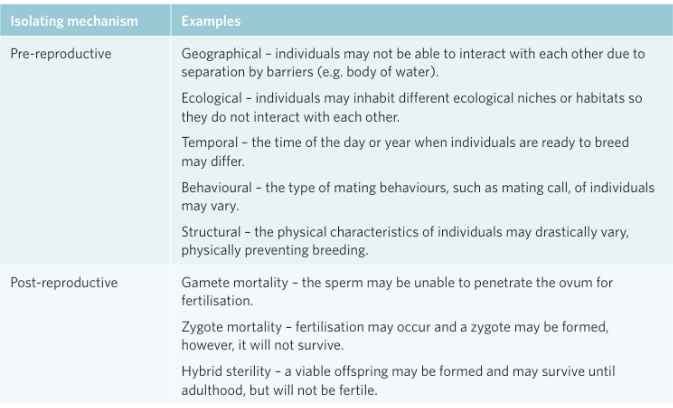
The mechanisms which prevent species from interbreeding to produce fertile and viable offspring can be categorised into pre- and post-reproductive isolating mechanisms (also known as pre-zygotic and post-zygotic isolating mechanisms)
Give examples in each:
(However these mechanisms are unlikely to be assessed by the VCAA)
Allopatric speciation + explain the process using an example
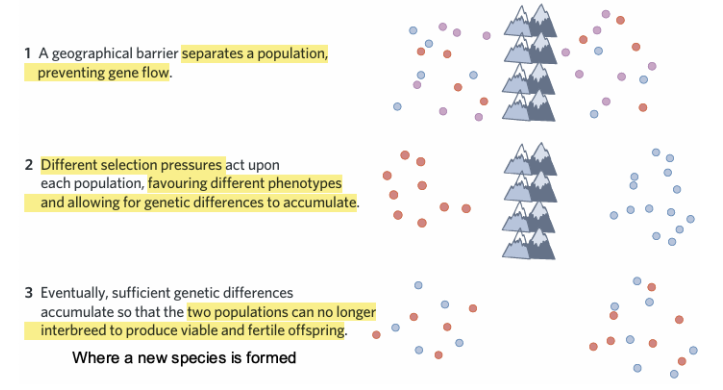
Allopatric speciation when populations are divided by a geographical/spatial barrier, preventing gene flow and hence resulting in the formation of a new species
Geographic barriers which is are physical factors that prevents gene flow, and thereby stops two populations from interbreeding – this includes the presence of a mountain range or the development of a river
Note:
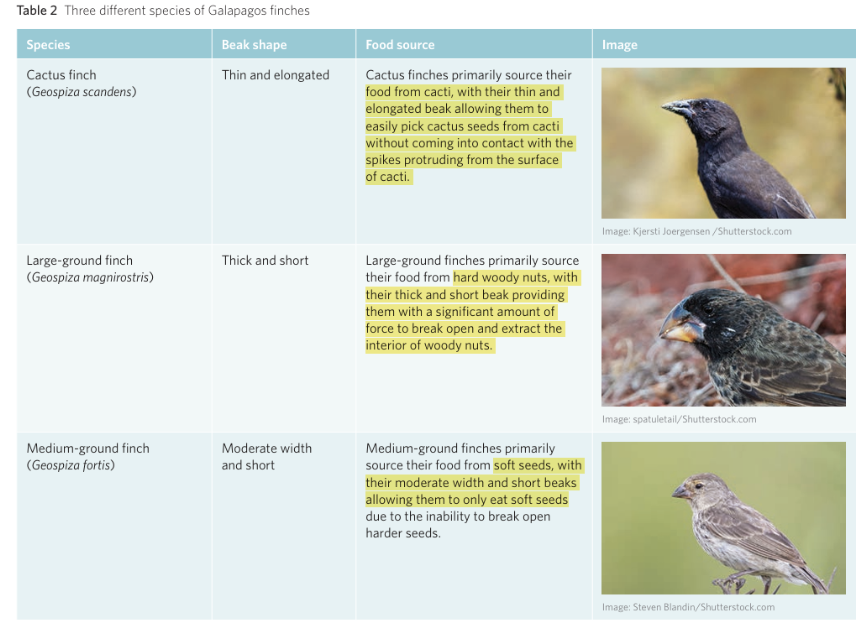
The Galápagos Islands are a collection of 19 islands situated in the Pacific Ocean west of Ecuador – where each of the 19 islands represents a specific ecological niche, each with its own different selection pressures and species
These islands are separated by the ocean, which serves as a geographical barrier, preventing gene flow between them
Organisms that inhabit these islands include the Galápagos finches, which are also known as Darwin’s finches – they all originated from one finch ancestral species (a ground dwelling, seed eating finch)
--> Currently, there are 18 known species of Galápagos finches
--> It has been hypothesised that the formation of these different species of Galápagos finches has largely been a result of allopatric speciation
--> It has been hypothesised that the formation of these different species of Galápagos finches has largely been a result of allopatric speciation
Sympatric speciation
Sympatric speciation the divergence of a species from an original species without the presence of a geographical barrier
Sympatric speciation occurs within populations sharing the same geographical location, where different selection pressures act on different phenotypes within a population, causing individuals with certain phenotypes to diverge from others and form a new species
Note:
Howea palms
Location: Lord Howe Island, a small island off eastern Australia.
Species involved: Howea belmoreana and Howea forsteriana.
Possible cause of speciation: Different soil pH acted as a selection pressure.
H. belmoreana grows in neutral and acidic soils.
H. forsteriana grows in alkaline (calcarenite) soils.
Researchers think that a population of palms colonised the alkaline soil and gradually adapted to it.
As adaptations accumulated, physiological differences developed between the populations.
One important difference was flowering time.
The two groups flowered at different times - The H. forsteriana flowered roughly SIX weeks before H. belmoreana.
This reduced interbreeding and acted as a reproductive isolation mechanism.
Over many generations, the differences became so great that they could no longer interbreed to produce viable, fertile offspring.
Because Lord Howe Island is small, the palms were unlikely to have been geographically isolated, supporting the idea of sympatric speciation
Selective breeding/artificial selection
What are humans in this process?
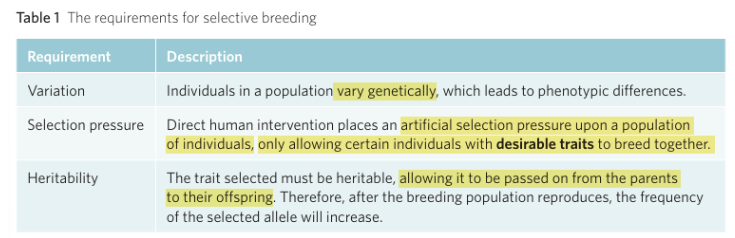
What are the requirements for selective breeding
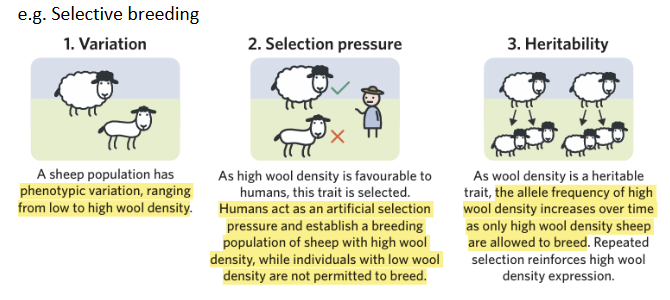
Selective breeding/artificial selection process of changing a population’s gene pool due to humans altering the breeding behaviour of animals and plants to develop a selected trait
Humans act as selective agents
Compare selective breeding and natural selection

What are some examples of selective breeding?
Examples include: sheep that produce high quality wool; chickens that lay large eggs; domestic dogs that are good at herding; horses that are strong for pulling ploughs; cows that produce lots of milk
Note:
While the primary method of selective breeding is to simply select for and breed individuals with a desirable trait together, it is also possible to select against an unwanted trait to remove it from the population
Antimicrobial agent + give examples
Compare antiseptics and disinfectants
Antimicrobial agent an agent that kills or slows the growth of microorganisms
E.g. antiseptics, disinfectants, antifungals, antivirals and antibacterial agents

Antimicrobial resistance + is it an example of natural selection?
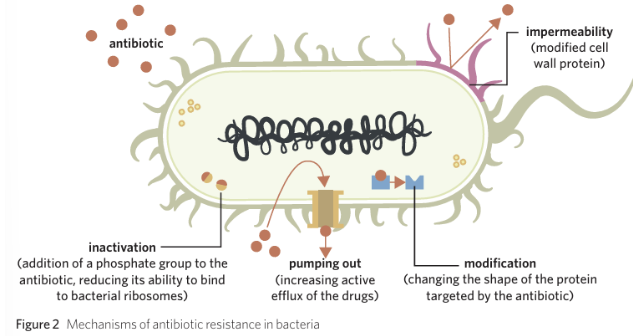
Antimicrobial resistance the ability of a microorganism to survive exposure to an antimicrobial agent, causing existing antimicrobials to be no longer effective
This is an example of natural selection
Note that antibiotics do not cause bacteria to evolve resistance - rather, resistance to certain antibiotics already exists within the population
Explain the process of antibiotic resistance:

Outline some mechanisms of antibiotic resistance
What are some factors which contribute to the formation of antibiotic-resistant bacteria?
Inappropriate compliance with a treatment plan
--> where a course of antibiotics is prematurely stopped (e.g. when a patient feels better and believes that continued use of their prescribed antibiotics is no longer required)
An incomplete course may not sufficiently eliminate all the pathogenic bacteria present - which allows them to continue replicating within the body and provides them with a greater time to accumulate mutations which may confer antibiotic resistance
Inappropriate use of antibiotics, where antibiotics are prescribed when they are not required
e.g. the prescription of antibiotics for treating viral infections (e.g. the common cold or the flu) can expose the normal flora inhabiting the body to antibiotics, which can select for antibiotic resistance (encourage growth of antibiotic-resistant bacteria)
Widespread use of antibiotics
--> where the general increased use of antibiotics can increase the probability that an individual prescribed antibiotics will be inhabited by antibiotic-resistant bacteria – so when antibiotics are prescribed, these resistant bacteria have a survival advantage over susceptible bacteria and are therefore more likely to survive and reproduce
Note:
Doctors often use a combination of various different antibiotics with differing mechanisms of action, increasing the chances of destroying the bacteria
This ensures that even if some of the bacteria were resistant against one of the antibiotics, the other would be able to destroy them
The surface antigens of viruses frequently undergo changes in an effort to avoid detection by immunological memory cells developed from past infection or vaccination
--> In doing so, any medications targeting specific surface antigens on the virus are also rendered ineffective
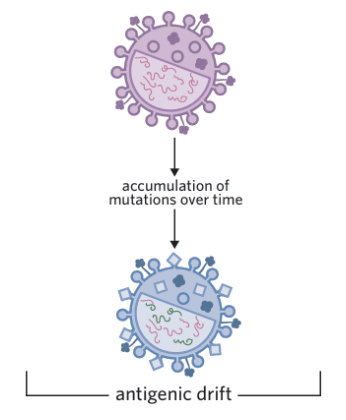
Explain what antigenic drift is
T or F? They form a new viral strain
Draw a diagram to show it
Antigenic drift
Which involves small and gradual changes in the genes encoding for viral surface antigens
Where initially previous memory cells generated will be capable of recognising these mutated surface antigens
However as the mutations continue to accumulate, a new subtype of virus can form, which will no longer be recognised by memory cells
True
Antigenic shift + draw diagram
How does it typically occur? What is process called
T or F? They form a new viral strain
Involves sudden and significant changes in the genes encoding for viral surface antigens
This commonly occurs when two or more different strains (specific variants) of a virus combine when coinfecting the same host to form a completely new subtype through a process known as viral recombination
False. They form a new subtype

Note:
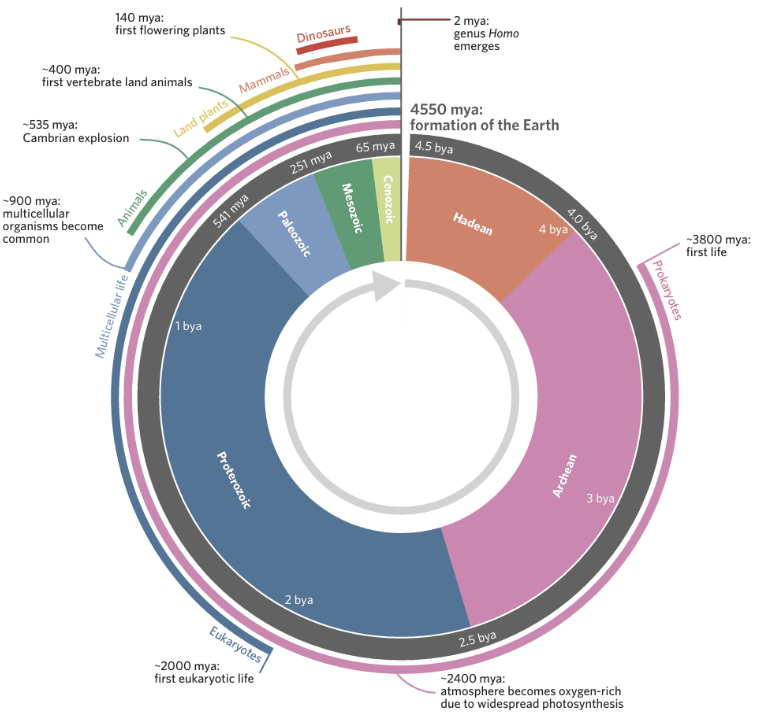
the emergence of prokaryotes (3.8 bya)
widespread photosynthesis (2.4 bya)
the first eukaryotes (2 bya)
the first multicellular organisms (900 mya)
the Cambrian explosion (535 mya)
animals on land (530–400 mya)
mammals (251 mya)
flowering plants (140 mya)
All living things on Earth evolved from a single-celled prokaryote that existed around 3.8 bya
This prokaryote had generations of offspring, some of which evolved the ability to photosynthesise --> In turn, the ability to photosynthesise oxygenated the atmosphere, which allowed for organisms that respire aerobically (such as simple eukaryotes) to survive
From here, multicellularity arose and the Cambrian explosion occurred, marking a massive rise in the diversity of living things --> it is during this period that almost all of the major animal groups began appearing, including those with hard shells and skeletons
Palaeontology
Palaeontology: “Study of ancient life represented by fossils”
Fossils
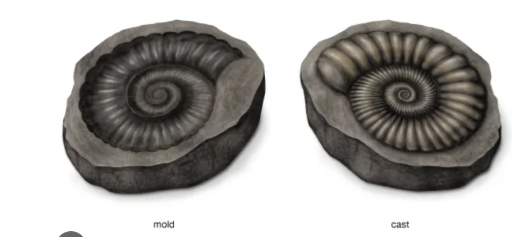
Mould fossil
Cast fossil
Fossils: the preserved remains/body, impressions or traces (RIT) of a dead organism
Mould fossil formed when a living thing decomposes underneath sediment, creating a cavity in the shape of the dead organism
Cast fossil formed when a mould fossil is filled with sediment
Fossilisation
Fossil record
Is fossilisation common?
Fossilisation: the preservation of hardened remains/traces of organisms
Fossil record the collection of all fossils and the information they provide about the history of life on Earth
The fossil record is arranged in chronological order and helps us map the history of life on Earth, placing species in the appropriate geologic time frame
No. Usually, when an animal dies, it is either consumed or its body decomposes completely, leaving no evidence that it ever really existed --> but sometimes, given the right set of conditions, the remains of the body can be preserved and form a fossil
Soft bodied organisms are unlikely to be preserved. Why is this?
Soft-body parts decay readily
Subject to predation/scavenging
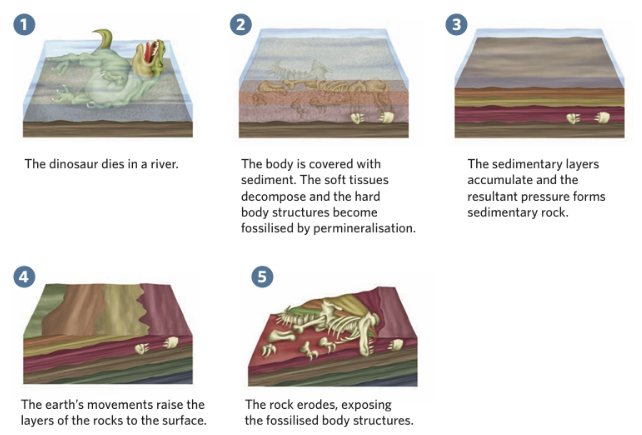
Describe process of fossilisation:
Remnants of an organism are rapidly buried by sediment (naturally-occurring solid material such as rock, silt, mud) --> meaning that the dead organism is not exposed to oxygen, microorganisms and other disturbances that would increase its rate of decomposition
Lack of oxygen for decomposer microorganisms
Hides the organism from scavengers - keeps them intact, undisturbed
protected from erosion by wind/rain
Over time, sediment layers build upon each other and compact, layer by layer, until pressure cements them together to form sedimentary rock
Within this rock, the fossilised remains can take many forms, including a permineralised, mould, or cast fossil
Trace fossils + give examples
Permineralised fossils
Give examples of fossils that still contain soft tissue yet to decompose
Trace fossils, which are indirect evidence of an organism’s existence, rather than the organisms themselves (e.g. their footprints, nests, burrows)
There are examples of fossils that still contain soft tissue yet to decompose (e.g. human mummies, mammoths frozen in ice, and insects stuck in amber)

The conditions that increase the likelihood of fossilisation include + explain why:
Rapid burial by sediment that quickly covers dead remains to [provide physical protection to ensure scavengers do not interfere (or decomposers) (e.g. fungi, bacteria)
Low oxygen levels thus it is not a suitable environment for some decomposers, and scavengers leading to a low decomposition rate.
Lack of scavengers
Lots of pressure from layers of sediment (hardening the fossil, less likely to decompose)
Alkaline soil as acidity damages tissues.
Dry climate promotes water leaving remains and reduces decay.
Extreme cold climates lead to low decomposition rate.
Hardened remains do not readily decompose
Low light exposure
(Note that fossilisation is more likely to occur in aquatic systems – due to less oxygen, lower temp and more sediment accumulation)
Relative dating
The law of fossil/faunal succession
Geographical time scale
Relative dating a dating technique used to determine the relative age of a fossil by comparing its position to other fossils or rock in surrounding rock strata (layers)
The law of fossil/faunal succession states that because sedimentary rock is formed by the accumulation of sedimentary layers on top of each other, the fossils closer to the surface must be younger than those that are found below them
We can be able to determine the age of the rock stratum (layer of sedimentary rock) in which the fossil is found
--> Where the aging of rock strata is called a geological time scale
Index fossils
What are they used for?
What are they’re qualities?
Researchers can also use particular fossils known as index fossils to help them determine the relative age of a new fossil --> They are useful because they enable researchers to quickly and easily define the relative age of a target fossil
--> these are a group of widespread, highly abundant fossils which existed for a short period and have a precisely known age
For the best index fossils, the species must be:
physically distinctive
have had a large population
have existed in many geographical areas
only lived within a known short period of time
Transitional fossils
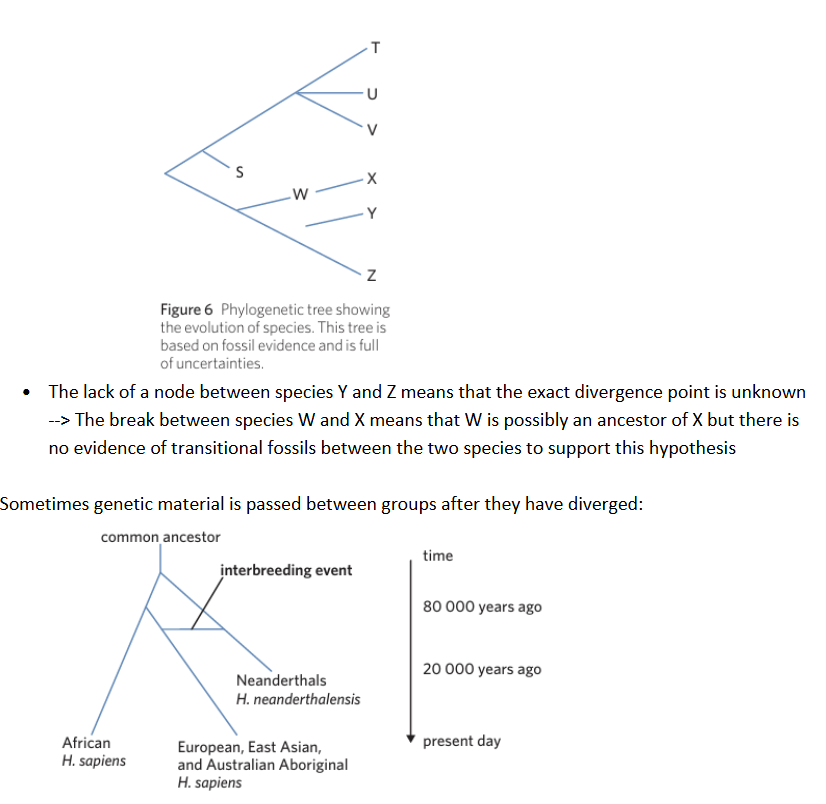
Are fossils that shows traits that are common to both its ancestral group and its descendant group
--> they are particularly important/useful when the descendant species is physically very distinct from the ancestral species
Help relate an ancestral group with its descendants (contains shared characteristics)
e.g.
Assume you have a known species – Species X – and another species – Species Z – and you hypothesise that the two species are related --> However the two species look very different
--> In this case, a transitional fossil – Species Y – is needed, as it can show the link between both of the species due to the fact that it shares similarities to both and shows how certain features might have evolved progressively over time
Absolute dating/radiometric dating
Radioisotopes
Half-life
Absolute dating/radiometric dating a dating technique used to determine the absolute age (age in years) of a fossil by measuring the relative amounts of radioisotopes to their products/stable forms
Radioisotopes are unstable elements that will break down over time into a more stable product (e.g. carbon-14 (a radioisotope) will break down into nitrogen-14)
--> While these radioisotopes can break down at any point, on average the rate of breakdown is constant
--> one of the ways in which we model this breakdown is by calculating the half-life of that radioisotope (which is the time taken for half the mass of a radioisotope sample to break down into its predictable and stable products)
Dating period
What is the dating period for these:
Carbon-14
Uranium 235
Uranium 238
Potassium 40
The range of time since fossilisation in which a particular radioisotope series can be used - beyond this period, most of the radioisotope will have broken down into its products, where it would be too difficult to estimate the fossil’s age

Radiocarbon dating/carbon dating/radioactive carbon dating
Radiocarbon dating/carbon dating/radioactive carbon dating: a form of absolute dating used to determine the age of a fossil by measuring the proportion (%) of C-14 to C-12 in a sample
So it uses the radioisotope series carbon-14 (14C) to nitrogen-14 (14N)
What is radioactive carbon’s half-life? How many half-lives does it usually have?
Note that radioactive carbon half-life is 5730 years --> it has around 10 half-lives and thus could only be used for modern species and objects less than 57300 years old
Explain the process/principles of radiocarbon dating:
All living things contain carbon --> this carbon exists as a ratio of two isotopes – 12C (a stable isotope) and 14C (a radioactive isotope)
The ratio of these two isotopes will be the same as the ratio in the atmosphere, given that carbon is constantly being cycled between the organism and its environment while it is alive
When the organism dies, its 14C will begin to decay where it breaks down into 14N (a stable isotope)
--> While this decay occurs, the carbon in the dead organism will not be replaced by existing carbon in the atmosphere - as such, levels of 12C (a stable isotope) will remain the same, while 14C decays at a known rate – causing the ratio between the two isotopes to change
Scientists can measure the amount of 14C present in the fossil and determine how long ago it died --> This is done by comparing the 14C : 12C ratio in the fossil to the ratio of 14C : 12C in the atmosphere
The longer ago the organism died, the less 14C will be present (having broken down into 14N)
Limitations of Radiocarbon Dating
Carbon-14 isotope has a relatively short half-life and can only be used to date fossils less than 57000 years old (<10 half lives).
There may be too little Carbon-14 isotope left in the fossil to accurately date.
Structural morphology
Structural morphology the study of physical structures (e.g. skeletal structures) to establish relatedness
Homologous structures
What type of evolution are they physical evidence of? Explain this evolution type
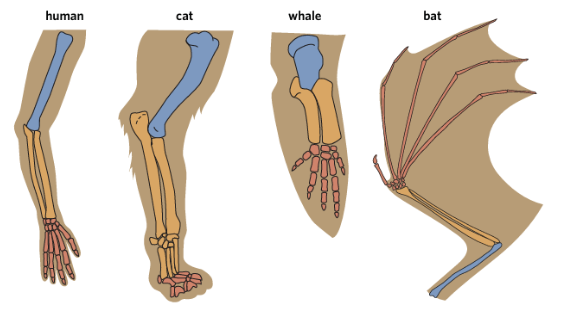
Homologous structures are features found in different species that may look and function very differently in different species but are derived from a common ancestor
e.g.
The upper limb of humans, cats, whales, and bats
They have different shapes and functions – humans carry things with their arms, cats walk with their legs, whales swim with their flippers, and bats fly with their wings
Yet they all share a similar bone structure --> suggests that they diverged from a common ancestor which had this limb structure
Homologous structures are physical evidence of divergent evolution, which is the process in which a common ancestor evolves into two or more descendant species
This process typically occurs as a result of individual populations adapting to different selection pressures or genetic drift which alters population genomes over extended periods of time
Analogous structures
What type of evolution are they physical evidence of? Explain this evolution type
Analogous structures are structures present in multiple species that serve similar biological functions but are not derived from a common ancestor
Analogous structures are evidence of convergent evolution, which is the process in distantly related or unrelated species (without a recent common ancestor) independently evolve similar traits to adapt to similar environments and selection pressures over time
e.g.
The wings of birds and insects are analogous structures because they are used to fly
They are very different structures, however, as birds and insects evolved independently from one another
Vestigial structures
Vestigial structures are structures found within organisms that once served a purpose for an organism’s ancestors but, as a result of evolution by natural selection, have lost their original function and are no longer required for survival
Despite having no function, these structures often remain in a species as they are not selected against
e.g.
The human coccyx (also known as the tailbone) does not serve a significant function in modern humans
It is a vestigial structure which was used to balance our ancestors' bodies when they lived in trees
Over time, more advanced features such as the cerebellum and inner ear evolved in humans to help with balance, meaning that the tail was no longer necessary for survival
e.g.
Snakes and whales have pelvic bones despite them not having legs --> this is because snakes are descendants of reptiles that had legs, while whales are descendants of earlier mammals that had legs
Molecular homology
Which genes do we analyse proteins from? Explain them.
Molecular homology the study of the similarities in the nucleotide sequences of DNA or amino acid sequences in proteins between organisms to establish relatedness
When studying amino acid sequence similarities, we analyse proteins from conserved genes – which are genes that have remained largely unchanged throughout evolution, and are found across the genome’s of many different species
Haemoglobin (Hb)
A protein found in red blood cells that is responsible for the transport of oxygen in the body
It is composed of up to 4 polypeptide chains: 2 alpha chains consisting of 41 amino acids and 2 beta chains consisting of 146 amino acids
--> Researchers can assess the number of amino acid differences between the chains of different organisms to observe their degree of relatedness
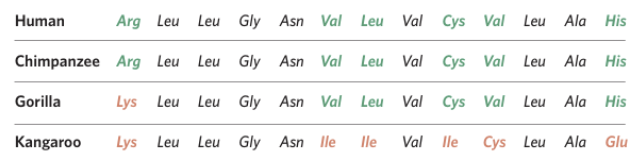
Using this, explain:
Outline which species is closest/most related to humans in their amino acid sequence for haemoglobin (go from descending order)
Where compared to humans, chimpanzees have the highest level of similarity in their amino acid sequence for haemoglobin (no difference), followed by gorillas, and finally kangaroos
--> This suggests that chimpanzees are the most closely related to humans (and, by extension, share the most recent common ancestor) and kangaroos are the most distantly related
Cytochrome c
An enzyme present in mitochondria that consists of 104 amino acids which are encoded by a conserved gene in mitochondrial DNA (mtDNA)
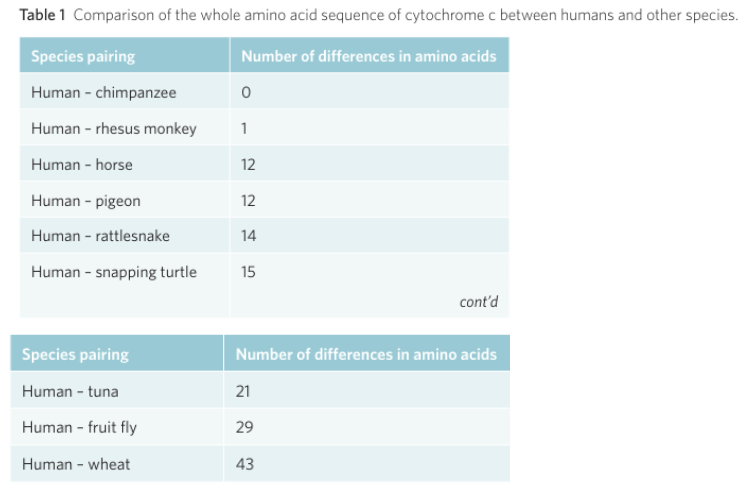
Using this, explain:
Outline which species is closest/most related to humans in their amino acid sequence of cytochrome c (go from descending order up to 5th most related don’t do all)
The top 5 species in the table
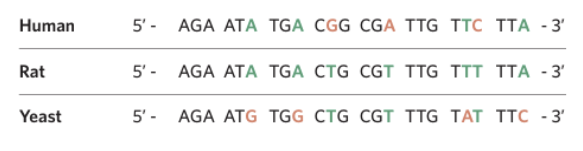
Using this, explain:
Outline which species is closest/most related to humans in their DNA sequence (go from descending order)
Humans and rats have three nucleotide differences, whereas humans and yeast have seven nucleotide differences
--> Indicating that rats are more closely related to humans than yeast
What is a limitation of analysing amino acid sequences?
What are their benefits?
A limitation to analysing amino acid sequences is that closely related species are likely to share very similar amino acid sequences for certain proteins
--> In these instances, scientists determine relatedness by comparing nucleotide sequences, looking for silent mutations that, due to the redundancy (where multiple codons code for an amino acid) of the genetic code, may have accumulated without altering the amino acid sequence
Amino acid sequences, however, are easier to interpret and are therefore used to determine relatedness in more distantly related species
Phylogenetics
the study of the relatedness between organisms
PHYLO = family/lineage
GENETICS = genes
Note:
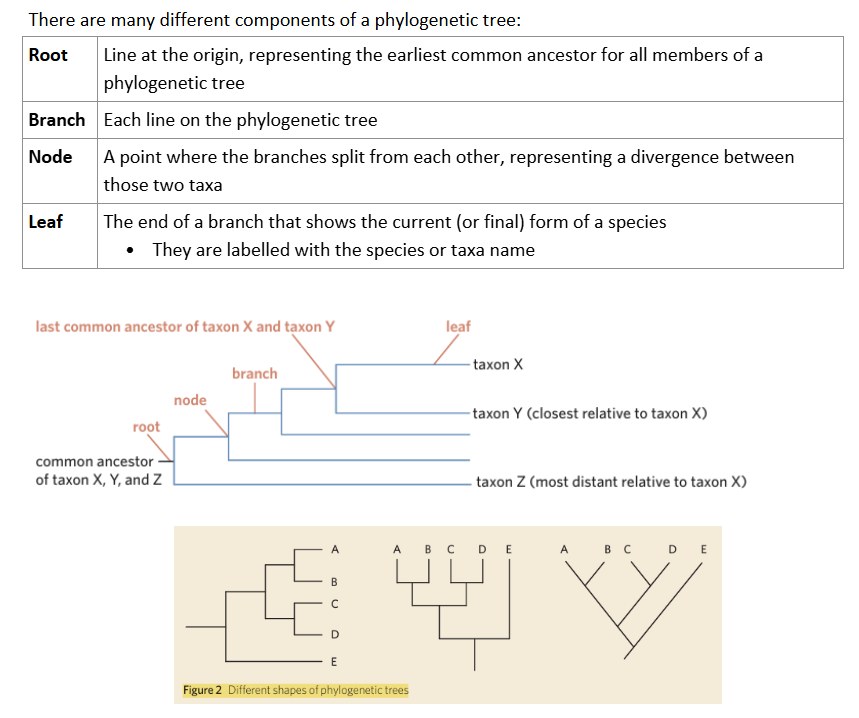
Information regarding the relatedness of different species can be represented in a phylogenetic tree, which is a diagram used to illustrate evolutionary relationships between species
They can be useful in displaying:
the timeline of lineages - descendants
relatedness between taxa
shared characteristics of different taxa
There are many different components of a phylogenetic tree + label them on the tree
Think of it as a tree:
Roots —> beginning
Branches
Node
Leaf —> end
Note:
Fitness
Adaptive potential
Fitness is an organism's ability to survive and reproduce in its environment, passing its alleles on to the next generation
Adaptive potential is the ability of a population to respond to selection pressures due to the presence of genetic variation.
Taxon (pl. taxa)
Taxon (pl. taxa) a unit of biological classification into which related organisms are classified --> taxa (multiple different categories) are arranged in a hierarchical rank from kingdom down to species
Taxon = one classification group/rank → e.g. Kingdom Animalia
Taxa = multiple classification groups → e.g. Kingdom Animalia + Phylum Chordata + Class Mammalia
T or F? Modern humans are members of the species Homo neanderthalensis, which are the last remaining member of the tribe Hominini
F.
Modern humans are members of the species Homo sapiens, which are the last remaining member of the tribe Hominini
What taxons are human part of:
Kingdom
Phylum
Subphylum
Class
Order
Family
Genus
Species

Mammals
Examples
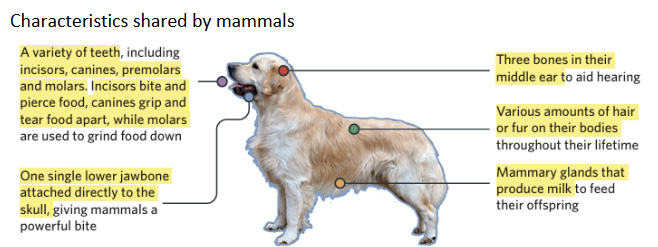
Characteristics shared by mammals
Warm-blooded vertebrates belonging to the taxonomic class Mammalia
Examples of mammals include humans, cats and dogs, farm animals like sheep, pigs, and horses, and whales and bears
Examples of primates
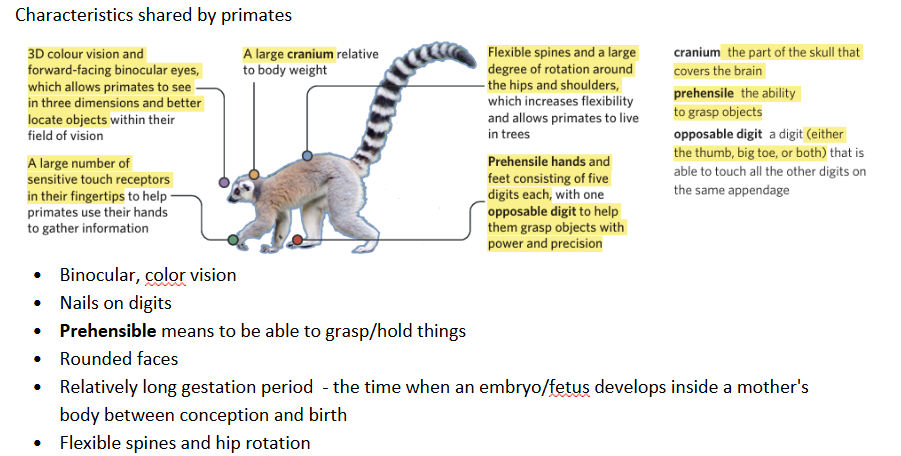
Characteristics shared by primates
--> Within the class Mammalia, humans are further classified into primates
Primates are often referred to as ‘the highest order of mammals’, given their large brain size (in relation to body size) relative to other mammals and their increased reliance on visual acuity (meaning sharpness/clarity of vision)
Examples of primates include:
Humans, chimpanzees, gorillas, orangutans, gibbons, monkeys, tarsiers, lemurs
What are species belonging to the superfamily Hominoidea called
Examples of great apes
Examples of lesser apes
The key characteristics shared by hominoids
Species belonging to this superfamily are called hominoids/apes and include:
Great apes – orangutans, chimpanzees, gorillas, and humans
Lesser apes – many different species of gibbons

Humans are a species within the genus Homo which is within the tribe Hominini - what are key characteristics of hominins
A key characteristic of the hominins is the ability to walk erect on our hind legs over a sustained period of time --> this is known as bipedalism (using 2 legs to walk upright)
--> This separates us from our closest primate relatives such as the chimps and gorillas, who typically walk on four limbs with their knuckles on the ground
There are also many other non–structural differences between hominins and other taxa:
Hominins have the ability to speak and communicate with one another and tend to form large, complex societies/groups
They also have increased cognitive abilities, meaning they can think about abstract concepts and create language as well as tools in order to pass knowledge on from generation to generation
Humans have smaller teeth with reduced enamel, arms shorter than legs, less hair but more sweat glands
Bipedal adaptations
Centralised foramen magnum - oval shaped opening in the occipital lobe
S-shaped spine
broader rib cage
bowl-shaped pelvis
increased carrying angle of the femur
Note
What are some general patterns of changes that occurred in hominins?
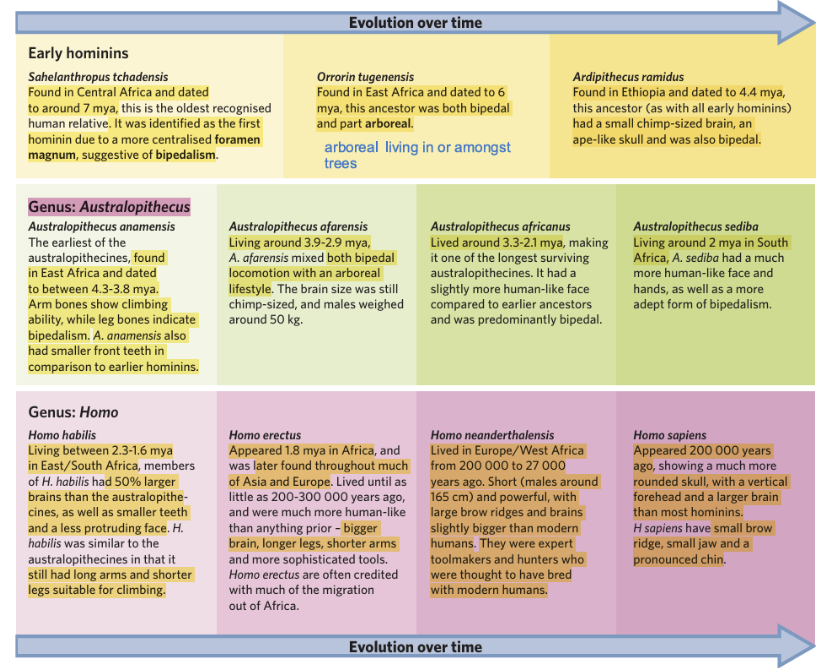
Our ancestors gradually moved from an arboreal lifestyle to one of complete bipedalism --> this was facilitated by the shortening of our arms and the lengthening of our legs
Our faces gradually became flatter and our skulls rounder and smaller
From studying the fossil record, it is known that cranium volume (and therefore brain size) increased more than threefold (3x) from the earliest australopithecines to modern day human beings
(note that brains themselves are comprised of soft tissue and therefore do not fossilise, hence the volume of an extinct hominin’s cranium (skull) can be estimated)
Explain some reasons why this occured
One of the most commonly accepted drivers of the change was the improved diet of hominin species over time, from earlier leaf-eating primates to more recent hominins who incorporated more fruit and animal products into their diet
This was further facilitated by the onset of the controlled use of fire which enabled hominin ancestors to fuel brain growth through cooking and increased nutrition
The cerebrum of hominin brains became more folded, increasing the total surface area of the brain --> resulting in more neurons and an increase in the number of connections between brain cells, leading to enhanced cognitive ability
--> With this increase in folding + brain connections came the ability to do many unique activities, including speech, feeling complex emotions, higher-order decision making, enhanced self-control, abstract thinking
Explain the expensive brain hypothesis:
The expensive brain hypothesis explains the evolution of advanced cognitive abilities by considering the benefits of a large brain, such as reduced predation risk and improved food acquisition, against its costs, including high energy requirements and increased difficulty/complexity during childbirth

Other changes in hominins include:

Another major evolutionary change that has occurred to the hominins over time was a decreasing arm to leg ratio
Where tree-dwelling hominids have longer arms and shorter legs/a larger arm to leg ratio
Explain why hominins have evolved to have shorter arms:
Arboreal ancestors used all four limbs for climbing and moving through trees
As hominins increasingly moved on the ground using bipedalism, their forelimbs were no longer needed for locomotion (moving from one place to another)
Which reduced the need for long arms, resulting in relatively shorter arms over time and less of a need of available contact points on forelimbs (less need of hands/arms to touch branches/ground to move around)
Their arms became free for other tasks, such as carrying infants, preparing food and using tools
Their hands also became better suited to manipulation, including a stronger thumb and shorter fingers
Explain why hominins have evolved to have longer arms:
Longer legs made walking on 2 legs more efficient and hence those with longer legs were more likely to survive + reproduce
Longer legs means a longer stride --> which means each step covers more distance
Therefore, less steps are needed to travel the same distance.
This makes walking more energy efficient.
Longer legs also lessen the intensity of the rising and falling motion that the body’s centre of mass experiences each time a step is taken, reducing the volume of muscles activated during walking
Shorter toes with the big toe being in line with the other toes were selected for, as well as feet with two arches and a wide heel, as these features make bipedalism more energy efficient
Explain why and how hominins’ pelvis shape has changed
Pelvis became shorter and more bowl-shaped → better support for the upper body during upright standing and walking
Later hominins: legs attached to the pelvis at an angle which is better for upright walking
Earlier hominins: legs attached more straight → had to swing legs outward when walking which was lower and less energy efficient
Larger brains/cranial capacity in hominin babies --> pelvis became narrower with a more circular birth canal to accommodate childbirth
Culture
A culture is the collective knowledge, ideas, beliefs and customs of a society
It is passed on from generation to generation, changing over time
The structural, functional and cognitive changes that took place in hominin evolution allowed hominins to create sophisticated culture and transmit them to their offspring
Interpreting the human fossil record is so difficult because the record itself is not complete --> hence inferences/conclusions made are often incomplete or can be challenged/refined due to new evidence
This may be due to:
Not all individuals die in conditions that promote fossilisation
Rock layers and the fossils they contain might erode and disappear over time
Many rock layers are still inaccessible to paleontologists, so not all fossils have been found
Note
The hominin fossil record demonstrates that human evolution was not a simple linear progression form one species to the next towards modern humans
Instead multiple species existed at one time
There is this idea that early humans interbred with the Neanderthals (a different species) around 50,000 years ago
Homo neanderthalensis/Neanderthals existed in Europe and Asia between 200,000 and 300 000 years ago
What features do they contain?
They contain these features:
a wider nose
shorter limbs
a stockier build
a flared (wider) rib cage
a sloping forehead
an enlarged brow ridge
a larger cranial capacity
better resistance to colder climates

What is some evidence that supports Human-Neanderthal interbreeding
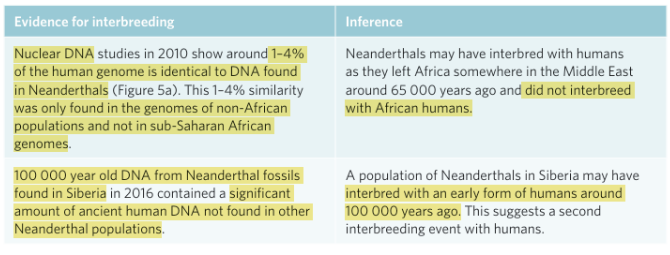
In 2010, scientists reported the discovery of bone fragments of a new hominin species in Denisova Cave in Siberia - the bones were dated to around 40 000 years ago
Nuclear DNA from the bone was found to be very closely related to Neanderthals, but different enough to be a new distinct species – which are the hominin species Denisovans/Homo denisova
Who have they thought to have interbreed with? What evidence is there for this
T or F? They existed at the same time as modern humans and Neanderthals
T or F? They are more closely related to homo sapiens then Neanderthals
They are thought to have interbred with a particular group of ancient humans from Melanesia, a subregion of Oceania that includes modern-day countries of Fiji, Vanuatu, Solomon Islands, and Papua New Guinea around 15,000 – 44,000 years ago --> this is due to shared 4-6% of the DNA of Melanesian Homo sapiens with Denisovans
True. They existed at the same time as modern humans and Neanderthals
Denisovans interbred with Neanderthals
False. They are more closely related to Neanderthals