4.3
 Call Kai
 Learn
Learn Practice Test
 Spaced Repetition
 Match
Match Flashcards
 Knowt Play
1/55

There's no tags or description
Looks like no tags are added yet.
Name | Mastery | Learn | Test | Matching | Spaced | Call with Kai | Chat |
|---|
No analytics yet
Send a link to your students to track their progress
56 Terms
What is a community?
All the living individuals inhabiting the same area at any given time
What is a population?
When a group of individuals belonging to the same species occupy the same space and interbreed
What is the relationship between populations and communities?
One, a few, or many populations may be present in a community
Populations are the units of the community
What is a species?
Those individuals that are able to interbreed to produce fertile offspring
Members of the same species generally have similar characteristics (therefore share sequences of DNA and are recognizably similar to one another
What can make defining a species difficult?
Defining a species becomes difficult when the organism reproduces asexually or variation in characteristics exists between individuals of the same species
How do you define a species?
Species are groups of similar organisms within a particular genus
A species is defined as a population or group of populations where members have:
Similar characteristics (biochemical, morphological, and genetic)
Capacity to interbreed to produce fertile offspring
What is the most accurate method of classifying species?
Comparing DNA nucleotide sequences and amino acid sequences of the organisms
How to define a species using biochemical similarity?
Members of the same species are similar biochemically; evident in their DNA base sequences and amino acid sequences
How to define a species using morphological similarity?
Often members of the same species have characteristics in common (DNA)
Defining a species is very difficult if we only use features like structure, colour, or behaviour - there is a great deal of variation between individuals in a species
How to define a species using a common gene pool?
Members of the same species share a common gene pool. Species is the largest unit of population where genetic exchange is possible
Each species has its own gene pool and is therefore reproductively isolated from all other species
What is a gene pool?
The sum of all genes (alleles) of all the individuals in a population - from which, future generations of individuals will be created
A limitation of the morphological species concept is:
J. Individuals from the same species can look very different
K. It can only be used with fossilised organisms
L. It cannot be applied to sexually reproducing species
M. Individuals from different species can sometimes look similar
M
Identify the statement that mentions one species:
J. Panthera tigris and Panthera pardus
K. Mangifica indica and Rosa indica plants
L. Two populations of Panthera pardus and cougars
M. Three different populations of Gorilla gorilla
M
What is a species? (Yes, again)
A species is a group of similar organisms that have certain features in common
Organisms of the same species have similar genes, so they are similar anatomically and bio-chemically
Only members of the same species are capable of interbreeding (naturally) to produce fertile offspring
What is phylogenetic classification?
Biological classification groups living organisms according to how closely related they are
What is taxonomy?
The study of classification, or the classification of living and extinct organisms
Naming stuff
What do Linnaean classification methods use?
Physical evidence (appearance)
Genetic evidence (DNA)
What is the Linnaean dichotomous key?
Dear Kevin, Please Come Over For Gay Sex
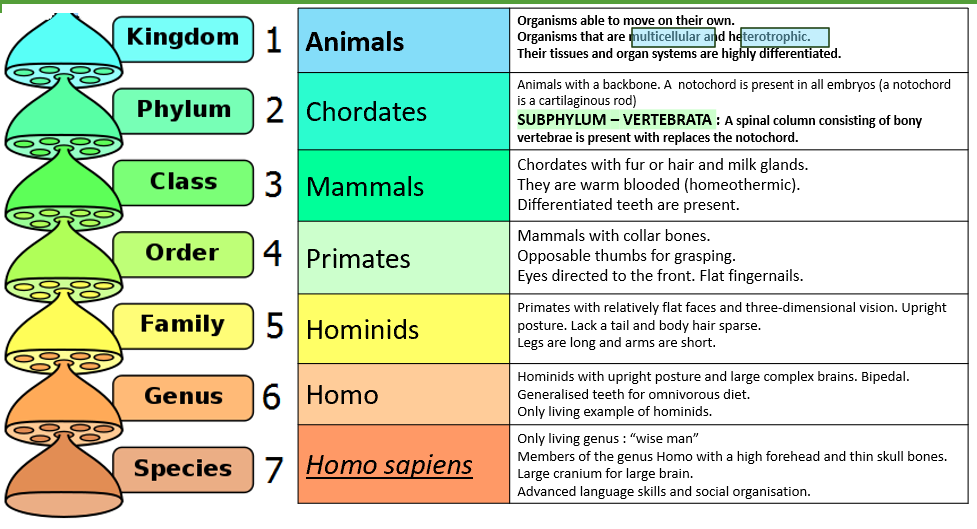
Domain
Kingdom - Large groupings called kingdoms (Animalia, Plantae, Fungi, Monera, Protista)
Phylum - Kingdoms are divided into smaller groups called phylum
Class - Each phylum has several classes
Order - The classes have orders
Family - The orders are separated into families
Genus - Living things in the group share a name
Species - Specific species name
How are organisms classified?
In a system known as phylogenetic hierarchy
Organisms are placed into groups (taxon - pl. taxa) based on their increasing similarities
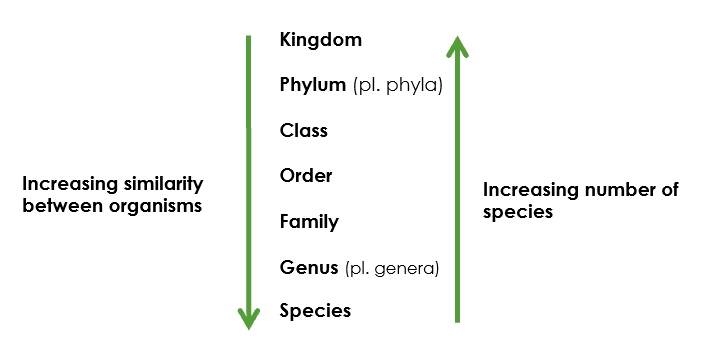
How are organisms named?
The last two groups of the Linnaeus dichotomous key (Genus and Species)
When writing organisms names both the Genius (Capital) and species (small) names should be in italics or underlined
E.g. Felis catus
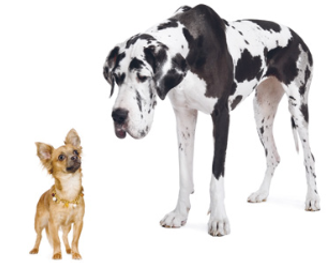
Starting from a single wild canine species, humans have developed hundreds of breeds of domestic dogs
The two dogs shown are:
J. Members of the same species
K. Members of the same breed
L. Not members of the same species
M. Not members of the same species or the same breed
J.
What are limitations to defining species?
Asexual reproduction, overlap populations, and hybrids don’t easily fit into species definition
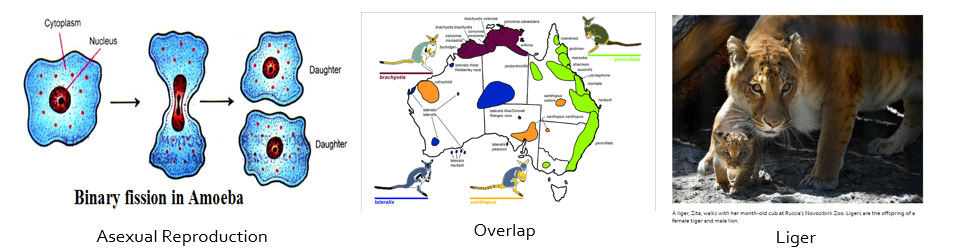
How is asexual reproduction a limitation to defining species?
Asexual reproducing organisms = Organisms that produce offspring that do not involve sperm and eggs
Therefore, using ‘the capacity to interbreed’ to define species can’t be applied here
Examples of asexual reproduction in complex organisms include some insects (bees), salamanders, some lizards, and many plants
What helps define asexually reproducing species?
Due to asexual reproduction being a limitation, biochemical comparison now plays an important role in species identification
How are overlap populations a limitation to defining species?
Sometime it is difficult to examine the EXTENT of interbreeding
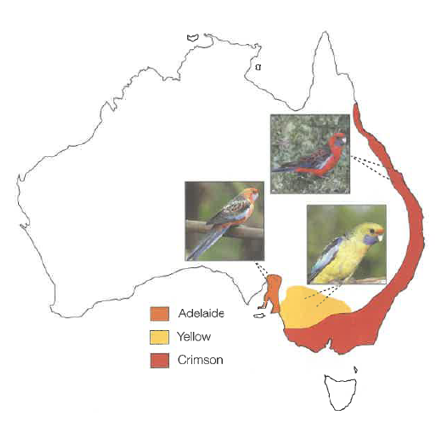
E.g. Crimson, Adelaide, and Yellow rosella appear to be different species based on appearance (morphology)
There is some overlap in where they are disturbed but they are able to interbreed, creating hybrids
Scientists have hypothesized that populations in this situation may be in the process of gradual divergence into difference species
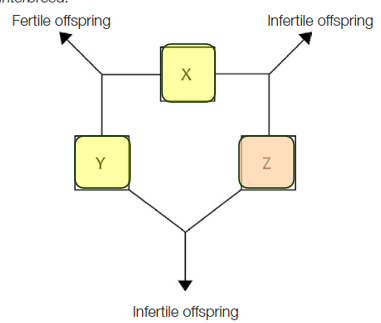
Refer to the diagram which shows the fertility of offspring produced when 3 population of rosellas, X, Y, and Z interbreed
How many species of rosella are there?
J. 0
K. 1
L. 2
M. 3
L
Which of the following options is NOT a limitation of the biological species concept?
The biological species concept:
J. Cannot be applied to asexually reproducing species
K. Requires geographical barriers between species
L. Cannot be applied to fossils
M. Is limited when complex patterns of reproductive connectivity is encountered
K
What evidence is used to define a species?
Behavioural
Anatomical
Biochemical
Immunological
Embryological
BABIE
What is anatomical evidence when defining a species?
When anatomical structures are similar, they are called homologies
This shows structures which were present in a common ancestor (not always doing the same job)
Organisms that have homologous structures are thought to be closely related
The higher the number of homologous structures between two species, the closer they are in the phylogenetic tree
What are examples of homologous structures?
Birds’ wings and human arms
Pentadactyl limb (5 digits)
Opposable thumbs
Brain size and organisation

What is the different between homologies and analogies?
Analogies are UNRELATED organisms which develop similar structures INDEPENDENTLY which perform the SAME job
Homologies are RELATED species which develop similar structures from a COMMON ANCESTOR which perform DIFFERENT jobs
What is biochemical evidence when defining a species?
Usually uses proteins and DNA
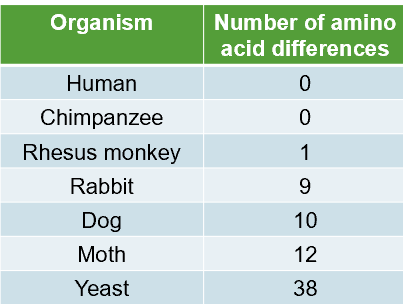
E.g. comparing the number of amino acids in Cytochrome C (protein found in the mitochondrion)
OR
DNA-DNA hybridisation
Extraction and comparison of DNA samples of two species. Sequences of proteins in DNA strands are compared
Degree of similarities in DNA sequence determines evolutionary relationships
What is the formation of new species and what does it mean?
Speciation
This provides evidence for natural selection
Can occur in many ways, including species isolation
What are reproductive isolating mechanisms?
An important feature of individual species is that individuals in the species can INTERBREED with other individuals of the SAME species but cannot interbreed with individuals of other species
This genetic isolation of population of one species from other species is achieved through reproductive isolation mechanisms
What are the 2 types of reproductive isolating mechanisms?
Pre-zygotic
Post-zygotic
What role does reproductive isolation play as a mechanism that leads to speciation?
Reproductive isolation is an important driver of speciation
Reproductive isolation also maintains the integrity of a species by preventing interbreeding and resultant production of hybrid species
What is the difference between pre-zygotic and post-zygotic isolation mechanisms?
Pre-zygotic - Prevent the formation of a viable zygote (offspring) by preventing fertilisation from taking place
Post-zygotic - Prevent offspring of two species from producing fertile offspring. Fertilisation occurs, but the offspring may be infertile or not viable

A pre-zygotic barrier prevents which of the following?
J. A zygote from developing into viable offspring
K. An egg from being fertilized
L. Animals from interacting with one another
M. All the above options
K.
Which one of the following is NOT a pre-zygotic reproductive isolating mechanism between two species?
J. species-specific female preferences for male plumage colour
K. The production of pollen at different times of the year
L. The failure of hybrid offspring to develop into adults
M. Incompatible morphological structures required for reproduction
L
What are the 5 pre-zygotic isolation mechanisms?
Ecological Isolation
Temporal Isolation
Mechanical Isolation
Behavioural Isolation
Gametic Isolation
What is Ecological Isolation? (pre-zygotic)
Ecological isolation (habitat isolation) is a form of reproductive isolation, wherein habitat preferences of species lowers the probability of mating

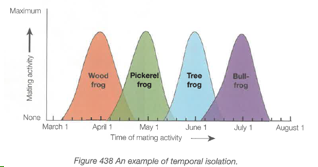
What is Temporal Isolation? (pre-zygotic)
Interbreeding is prevented by the fact that the two species in question reproduce at different TIMES of the day, season, or year
E.g. plants that pollinate in winter cannot reproduce with plants that pollinate in summer
Mammals that are nocturnal are unlikely to mate with species that are active during the day
What is Mechanical Isolation? (pre-zygotic)
Occurs when physical differences prevent copulation or pollination
E.g. Some breeds of dogs are morphologically incapable of mating due to size

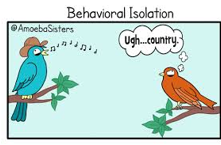
What is Behavioural Isolation? (pre-zygotic)
Occurs in animals that exhibit species-specific courtship patterns which fail to impress members of different species
This can be an issue even when two population of different species are both mechanically and temporally compatible
If the mating ritual is rejected or not recognized, then no mating will occur, and the species will be reproductively isolated from each other
What is Gametic Isolation? (pre-zygotic)
This occurs when a species produces gametes that are incompatible with those of a different species (sperm and egg are not compatible)
E.g., the sperm cannot penetrate the membrane of the egg. Gametic isolation is the ONLY form of pre-zygotic reproductive isolation, wherein mating ACTUALLY happens, though unsuccessfully
Select the option representing the prevention of gene flow
J. The production of sterile offspring between two populations
K. Populations breed at different times of the year
L. Different number of chromosomes between individuals of two populations
M. All of the above
M
What are post-zygotic mechanisms?
Prevent a zygote from developing into a viable, fertile adult
What are the 2 post-zygotic mechanisms:
Hybrid inviability
Hybrid sterility
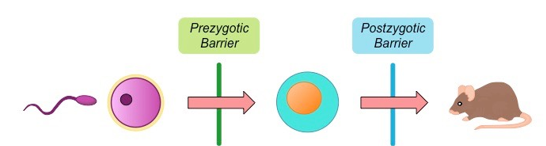
Which one of the following statements describes an examples of a mechanism that would best help to maintain reproductive isolation?
J. The production of similar mating cells by two species of frog
K. The production of gametes during the same season by two species of pine tree
L. The mating and production of infertile offspring by two individuals
M. The separation of two populations of the same species by a geographical
L
What is hybrid inviability?
hybrids are produced but fail to develop to reproductive maturity
E.g. Certain frogs from hybrid tadpoles that die before they can become a frog
What is hybrid infertility?
Hybrids fail to produce functional gametes (sterile)
E.g. Mules are sterile hybrids resulting from mating between a horse and donkey due to having an odd number of chromosomes, unable to do meisosis
What is hybrid breakdown?
First gen hybrids are fertile
Second gen hybrids fail to develop properly
E.g. the offspring of hybrid copepods have less potential for survival or reproduction
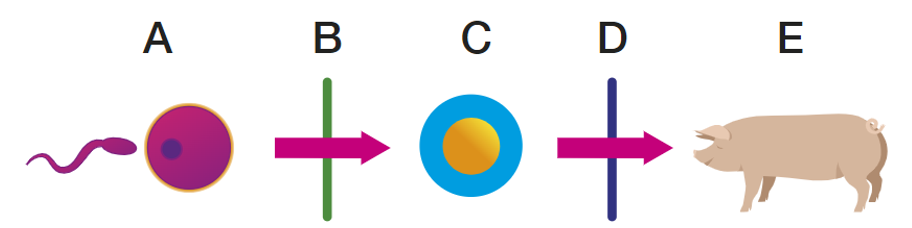
Which of the following options does not represent stages where post-zygotic mechanisms can occur?
J. B and C
K. C and D
L. C and E
M. D and E
J
What is hybrid sterility?
A hybrid offspring (offspring produced by parents of different species) reaches sexual maturity but is infertile (sterile) because meiosis falls to produce gametes
Difference in chromosome number and structure prevent successful pairing of homologous chromosomes during meiosis (odd number of chromosomes)

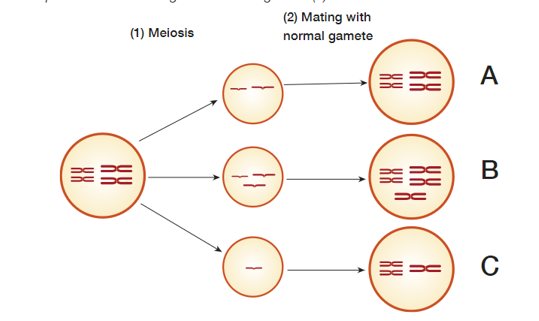
Which of the following zygotes is most likely not to grow into a sterile adult?
J. A
K. B
L. C
M. None of the above
J