Organic Macromolecules - Carbohydrates and Nucleic Acids
 Call Kai
 Learn
Learn Practice Test
 Spaced Repetition
 Match
Match Flashcards
 Knowt Play
1/19

Earn XP
Description and Tags
Vocabulary flashcards covering organic chemistry concepts, carbohydrates, nucleic acids, monomers, polymers, and chemical reactions from Chapter 2.
Name | Mastery | Learn | Test | Matching | Spaced | Call with Kai | Chat |
|---|
No analytics yet
Send a link to your students to track their progress
20 Terms
Organic Molecules
Molecules that contain carbon atoms covalently bonded to hydrogen atoms, mostly associated with living or once-living organisms.

Building Blocks of Macromolecules
The sub-unit monomers of the four primary organic macromolecules: monosaccharides for carbohydrates, amino acids for proteins, fatty acids and glycerol for lipids, and nucleotides for nucleic acids.

Monomer
A small organic molecule (subunit or building block) that can join together with other similar subunits to form a polymer chain.
Polymer
A large organic molecule composed of many repeating monomer subunits linked together.

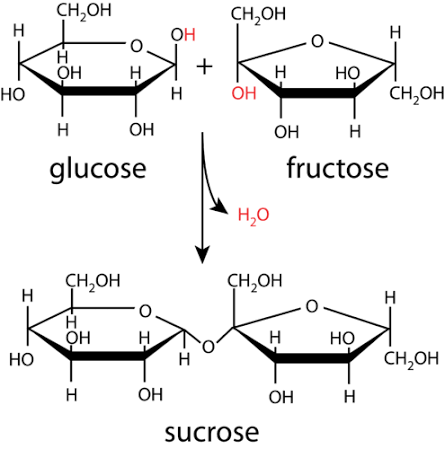
Dehydration Reaction
A chemical reaction that links monomers together into a polymer by forming a covalent bond and releasing a H2O molecule.

Hydrolysis Reaction
A chemical reaction that breaks a polymer into smaller monomer subunits by cleaving covalent bonds with the addition of a H2O molecule.
Carbohydrates
Organic macromolecules containing carbon, hydrogen, and oxygen with the general molecular formula Cn(H2O)n, composed of one or more carbon rings.

Monosaccharide
A carbohydrate monomer consisting of one ring of 5 or 6 carbon atoms (e.g., glucose, fructose) that functions as an immediate energy source or structural component.

Disaccharide
A carbohydrate composed of two monosaccharide units (two carbon rings) joined by a covalent bond, such as sucrose, lactose, and maltose.
Polysaccharide
A carbohydrate polymer composed of many monosaccharide sugar units linked together in a chain.
Glycogen
A highly branched short-term energy storage polysaccharide used by animal cells to store and rapidly release glucose.
Starch
A moderately branched short-term energy storage polysaccharide used by plant cells to store glucose.

Cellulose
A long, unbranched structural polysaccharide that packs tightly to form rigid cell walls in plants.
Chitin
A structural polysaccharide that forms the rigid exoskeleton of insects and crustaceans.

Deoxyribonucleic Acid (DNA)
A double-stranded nucleic acid organized into a double helix structure that acts as the genetic material encoding instructions to make polypeptides.
Ribonucleic Acid (RNA)
A nucleic acid containing ribose sugar and uracil base, present in various functional forms (e.g., tRNA, rRNA, miRNA) that assist in synthesizing polypeptides from DNA.

Gene
A segment of DNA that contains the specific genetic instructions to code for a polypeptide.

Nucleotide
The monomer of nucleic acids, consisting of a phosphate group, a monosaccharide sugar (ribose or deoxyribose), and a nitrogenous base.

Adenosine Triphosphate (ATP)
A specialized nucleotide composed of adenine, ribose sugar, and three phosphate groups that functions as the primary immediate energy source for cells.

GDP / GTP Regulation
Nucleotide-mediated signaling system involving Guanosine Diphosphate (GDP) and Guanosine Triphosphate (GTP) to regulate cellular communication pathways.