Art Elements and Principles: A Comprehensive Art Theory Guide
 Call Kai
 Learn
Learn Practice Test
 Spaced Repetition
 Match
Match Flashcards
 Knowt Play
1/84

There's no tags or description
Looks like no tags are added yet.
Name | Mastery | Learn | Test | Matching | Spaced | Call with Kai | Chat |
|---|
No analytics yet
Send a link to your students to track their progress
85 Terms
What is a line in art?
A mark with greater length than width, which can be 2D or 3D.
What do zig-zag lines convey?
They are active and energetic.
What feeling do horizontal lines create?
They create a feeling of rest and calm.
What is the effect of diagonal lines in art?
They create a sensation of movement and drama.
What do curved lines represent?
They create a sensation of softness and gentleness.
What are implied lines?
Lines that are not actually drawn but exist through gesture or other objects.
What defines a shape in art?
A shape is comprised of lines and is two-dimensional.
What are the two types of shapes?
Geometric (like squares and circles) and organic/biomorphic (like blobs).
What is form in art?
A three-dimensional element that encloses volume, having height, width, and depth.
What does value indicate in art?
Value indicates differences between light and dark.
What is the lightest value on the Denman Ross value scale?
White.
How can light and shadow create the illusion of volume?
By accurately placing shadows, an artist can transform a 2D surface into a 3D appearance.
What is the difference between deep and shallow space in art?
Deep space has a high horizon line, while shallow space has a low horizon line.
What is one-point perspective?
A perspective system that uses a single vanishing point.
What is two-point perspective?
A perspective system that uses two vanishing points.
What are primary colors?
Red, yellow, and blue; they cannot be mixed from other colors.
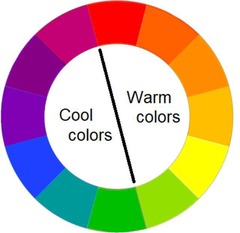
What are warm colors?
Colors like yellow, orange, and red.
What is monochromatic color in art?
Art that utilizes a singular color and its tints, tones, and shades.
What is texture in art?
The visual or tactile surface quality of an object.
What does balance refer to in art?
The arrangement of elements like line, shape, and color.
What is emphasis in design?
The part of the design that catches the viewer's attention.
What does contrast create in art?
Visual interest, excitement, and drama through the arrangement of opposite elements.
What are the principles of design?
Balance, emphasis, contrast, movement, pattern, repetition, proportion, rhythm, variety, and unity.
What is movement in art?
The path the viewer's eye takes through the work of art, often directed along lines, edges, shapes, and colors.
What does repetition mean in art?
An element that appears repeatedly in a composition, helping to create unity, but is not always a pattern.
Define pattern in art.
The repeating of an object or symbol throughout the work of art, which always implies repetition.
What is rhythm in art?
A predictable pattern created when one or more elements of design are used repeatedly to create organized movement.
What does proportion refer to in art?
The feeling of unity created when all parts relate well with each other in terms of size, amount, or number.
What is scale in relation to proportion?
The size of an element as it relates to its usual physical size.
Explain elongation in art.
Lengthening or continuation of an element, sometimes beyond the point of naturalism.
What is variety in art?
The use of several elements of art and principles of design to hold the viewer's attention and guide their eye.
Define unity in art.
The feeling of harmony between all parts of a work of art, creating a sense of completeness.
What is a work of art?
Created by the artist's deliberate manipulation of materials and techniques to produce a purposeful form and content.
What does composition mean in art?
The arrangement of formal elements (elements of art + principles of design) in a work of art.
What is technique/process in art?
Includes art-making processes, tools, and technologies that change materials into an artwork.
What are materials or medium in art?
The raw ingredients used to create a work of art, which have inherent properties and cultural value.
What does form refer to in art?
How an artist uses the Elements of Art and Principles of Design to create physical and visual elements.
What is function in art?
The intended use for the work and/or its actual use, which may change according to context.
Define content in art.
The themes or ideas in a work of art, which differ from form or style.
What is context in art?
The original and subsequent historical and cultural milieu of a work of art, including time, place, and culture.
What does commissioning mean in art?
Giving an order or purchasing the production of an artwork.
Who is a patron in the context of art?
The art buyer who commissions (gives the order to produce) artwork.
What is attribution in art?
Determining the authorship of an artwork.
Define style in art.
A combination of unique and defining features that reflect the historical period, geographic location, and cultural context.
What does representational mean in art?
Artwork that is clearly derived from real sources, revealing realistic depictions of things.
What is formalism in art?
Examining or creating a work of art based solely on its formal elements and its aesthetic effects on the viewer.
Define abstract art.
Having a generalized or essential form with only symbolic reference to natural objects, often broken down into geometric forms.
What is nonrepresentational art?
Art that does not represent any known object in nature.
Define symbolism in art.
A technique using objects that represent, stand for, or suggest an idea, visual image, belief, action, or material entity.
What does iconography study?
The identification, description, and interpretation of symbols in a piece of art.
What characterizes gestural painting?
Vigorous application of paint and expressive brushwork.
What is portraiture?
An artistic representation of a specific person.
What are the types of portraiture?
Profile, frontal, and three-quarter.
What is a still life in art?
A work depicting inanimate subject matter, typically man-made or natural objects.
Define sculpture in the round.
A sculpture that is completely detached so that it can be seen from all sides.
What is relief sculpture?
Sculpture that is attached to the material it was carved from.
What is high relief in sculpture?
An image that is carved out far from the background plane.
What is low or bas relief?
An image that is carved out slightly from the background.
What does it mean to commemorate in art?
To show respect for, or create a memorial to, someone or something.
Define homage in the context of art.
Special honor, dedication, or respect shown publicly.
What is a program in art?
The arrangement or theme of a group of images into a whole.
What does innovative mean in art?
Advanced; original; creative in thinking.
What does avant-garde refer to?
Artworks that are experimental or innovative.
Define presentation in art.
The display, enactment, and/or appearance of a work of art.
Who are audiences or viewers in the context of art?
Those who interact with the work as participants, facilitators, and/or observers.
What is perception in art?
A way of regarding, understanding, or interpreting something.
What is a response to art?
The reaction of a person or population to the experience generated by a work of art.
What is a triptych?
A piece of art that is comprised of three panels.
What is a diptych?
A piece of art that is comprised of two panels meant to be viewed together.
Define allegory in art.
Characters or events that represent or symbolize ideas and concepts.
What is illusionism in art?
The technique by which artistic representations resemble real objects or give an appearance of space.
What is trompe l'oeil?
Extremely realistic imagery that creates the optical illusion that depicted objects are three-dimensional.
What does appropriation mean in art?
The use of pre-existing objects with little to no transformation applied to them.
Define allusion in art.
A reference to another work of art, work of literature, or a real event.
What does idealized mean in art?
The representation of objects and figures according to ideal standards of beauty rather than real life.
What is the picture plane in art?
The flat surface of a drawing or painting.
What is narrative in art?
Represents events taking place over time, which may be compressed into a single image.
What does expressive mean in art?
Artwork that easily conveys meaning, emotion, or sensation.
Define sublime in art.
A quality of intensity or grandeur that inspires awe and wonder.
What does romanticized mean in art?
To dramatize, glamorize, or portray in a romantic manner.
What is site-specific art?
Artwork created to exist in a certain place.
What is satire in art?
A genre of art that holds vices, follies, abuses, and shortcomings up to humorous ridicule.
What does classical refer to in art?
Artworks that aim to recreate the idealization of the classical manner.
What are artistic traditions?
Norms of artistic production and products demonstrated through art-making processes.
What are artistic changes?
Divergences from tradition in artistic choices demonstrated through art-making processes.