FlashCards from Study Guide (Summer 26)
 Call Kai
 Learn
Learn Practice Test
 Spaced Repetition
 Match
Match Flashcards
 Knowt Play
1/305

There's no tags or description
Looks like no tags are added yet.
Name | Mastery | Learn | Test | Matching | Spaced | Call with Kai | Chat |
|---|
No analytics yet
Send a link to your students to track their progress
306 Terms
What is the purpose of a classification system for psychiatric disorders?
To improve reliability of diagnosis, clarify history taking, and assist in differential diagnosis.
What is one advantage of using the DSM-5-TR?
It increases reliability and communication with other clinicians.
What is a disadvantage of using a classification system like the DSM-5-TR?
It can prevent providers from considering all possible options, leading to a false sense of certainty.
Define 'syndrome' in the context of psychiatric disorders.
A collection of symptoms.
What differentiates a 'disorder' from a 'disease'?
A disorder is a disturbance in physical or mental function, while a disease is a disorder of structure or function affecting part or all of an organism.
What does DSM-5 provide for mental disorders?
Criteria for diagnosis.
What is transference in a psychiatric context?
When a patient carries over feelings from a person in their past to their current provider.
What is countertransference?
The provider's unconscious emotional reaction to the patient.
What components are included in a psychiatric evaluation?
Past medical history, hospitalizations, social history, and family history.
What is the role of building rapport in a psychiatric interview?
To establish trust and understanding with the patient.
What is subjective history in psychiatric evaluation?
Information provided by the patient that needs to be assessed for reliability.
Why is family history important in psychiatric evaluations?
Many mental illnesses are heritable, making it crucial for diagnosis.
What does 'affect' refer to in a psychiatric context?
How a person's mood expresses itself.
What is the difference between mood and affect?
Mood is the state or feeling at a certain time, while affect is how that mood is expressed.
What is the significance of the mental status exam?
To assess a patient's mental state through various components like appearance, attitude, and thought process.
What are the types of consciousness assessed in a mental status exam?
Vigilant, lucid, conscious of self, and disorders of consciousness (enhanced, decreased, altered).
What does 'judgment' refer to in psychiatric evaluations?
The patient's understanding of their disorder.
What is the purpose of assessing a patient's memory in a psychiatric evaluation?
To evaluate both short-term and long-term recall abilities.
What is executive functioning?
The ability to plan and set goals.
What is the role of the left hemisphere in language processing?
It houses Broca's area (production of speech) and Wernicke's area (understanding of speech).
What is the importance of understanding a patient's social history?
To identify environmental factors that may impact their mental health.
What is the significance of assessing a patient's thought process?
To determine how their thoughts are formulated, organized, and expressed.
What is a formal thought disorder?
A disruption in the organization and expression of thoughts, such as flight of ideas.
What does 'perception' refer to in psychiatric evaluations?
Conscious awareness of environmental stimuli, with abnormalities indicating hallucinations or illusions.
What is the purpose of the final stage of a psychiatric exam?
To summarize findings, discuss diagnosis, and recommend treatment.
What are the four main lobes of the brain?
Frontal, parietal, temporal, and occipital.
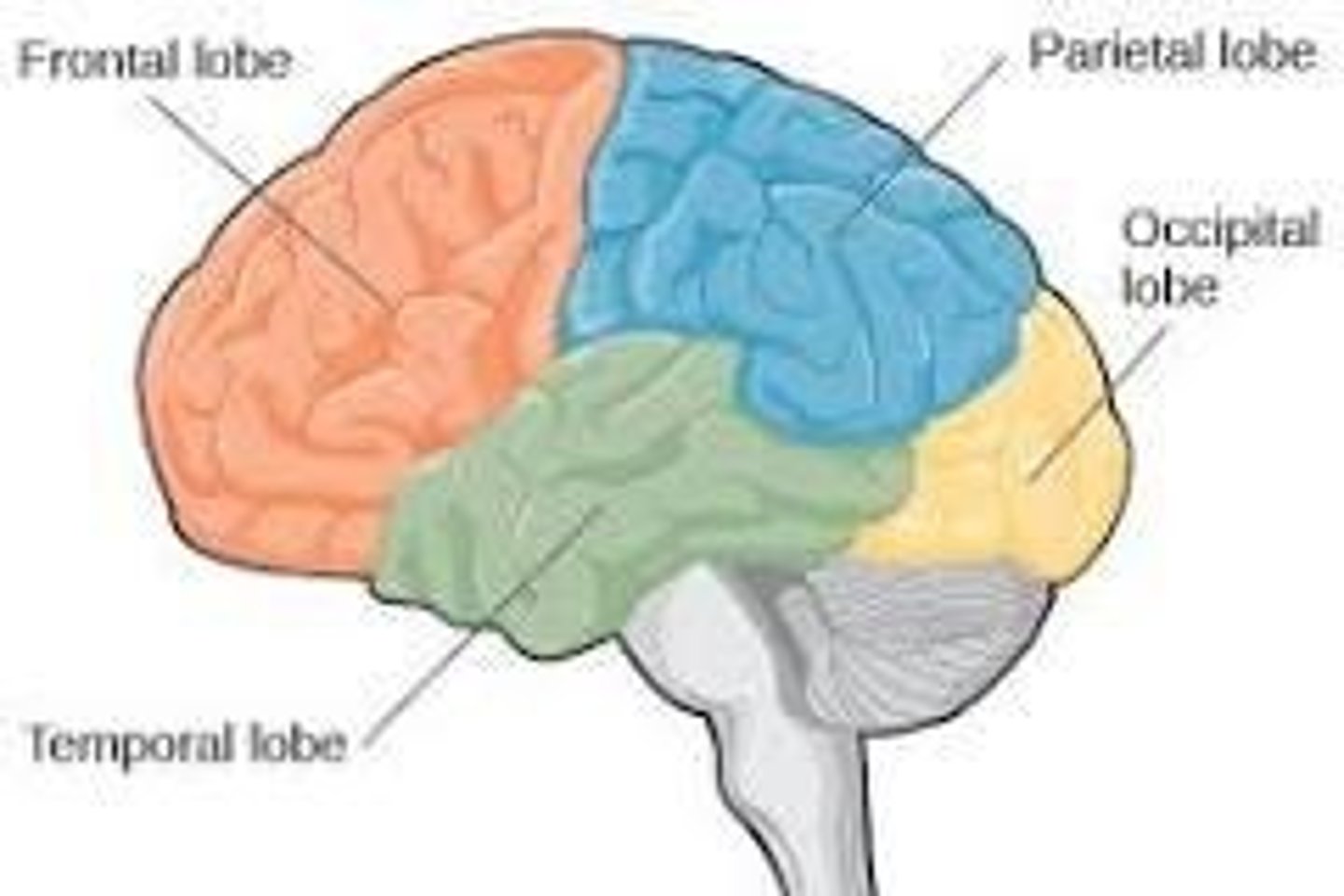
What functions are associated with the frontal lobe?
Movement, thinking initiation, reasoning, behavior, memory, and speaking.
What functions are associated with the parietal lobe?
Knowing left from right, sensation, reading, and understanding spatial relationships.
What functions are associated with the temporal lobe?
Understanding language, behavior, memory, and hearing.
What functions are associated with the occipital lobe?
Vision and color perception.
What role does the RAS (Reticular Activating System) play?
It provides input and the thalamus gates/filters sensory information.
What neurotransmitter is primarily involved in the reward system?
Dopamine.
What is the function of serotonin?
Regulates mood, memory processing, sleep, and cognition.
What is glutamate's role in the brain?
It is an excitatory neurotransmitter involved in learning and memory.
What are the strengths of family studies in genetic research?
Easier to conduct, more relatives/common.
What is a weakness of family studies?
Genetic relationship is low.
What is the significance of twin studies?
Monozygotic twins show a stronger genetic component than dizygotic twins.
What is a key advantage of adoption studies?
They show how nurture/environment can affect genes (epigenetics).
What is the DSM-V diagnostic criteria for Major Depressive Disorder?
Persistently depressed mood or loss of interest in activities, causing significant impairment in daily life (5+ symptoms for 2 weeks).
What mnemonic is used to remember the symptoms of Major Depressive Disorder?
SIGEMCAPS: Sleep change, Interest decreased, Guilt increase, Energy decrease, Mood, Concentration decrease, Appetite change, Psychomotor slowing, Suicide/Self-harm.
What characterizes Persistent Depressive Disorder?
Chronic, persistent, and milder mood disturbance (2+ symptoms for 2 years).
What is the difference between Bipolar I and Bipolar II disorders?
Bipolar I involves only mania, while Bipolar II includes hypomanic and depressive episodes, but no full mania.
What neurotransmitter disturbances are involved in Bipolar disorders?
Excess dopamine and glutamate.
What is the role of NMDA receptors?
They mediate learning and memory and are involved in the effects of psychoactive drugs.
What are the effects of SSRIs on serotonin?
SSRIs increase serotonin by targeting the 5HT-2 receptors.
What is epigenetics?
Processes that can turn genes on and off without altering the genetic sequence.
What is the function of endorphins?
They induce euphoria.
What is the significance of dopamine in psychiatric disorders?
It is involved in the reward system and affects pleasure, motor movement, and compulsion.
What are the symptoms of serotonin syndrome?
Symptoms can include confusion, rapid heart rate, and high blood pressure.
What is the primary function of GABA?
It acts as a calming neurotransmitter.
What are some medical conditions that can mimic mood disorders?
Hypothyroidism, systemic lupus erythematosus (SLE), and substance abuse.
What is the relationship between genes and environmental factors in psychiatric disorders?
Genes can predispose individuals to illness, but environmental factors can trigger the actual disease.
What is the role of the limbic system?
It integrates visceral sensations and experiences of the environment and is the emotional center of the brain.
What is the primary output of the basal ganglia?
It is primarily inhibitory and has a high concentration of dopamine receptors.
What characterizes manic episodes?
Abrupt onset and end, lasting days to months, often requiring hospitalization, associated with bipolar 1.
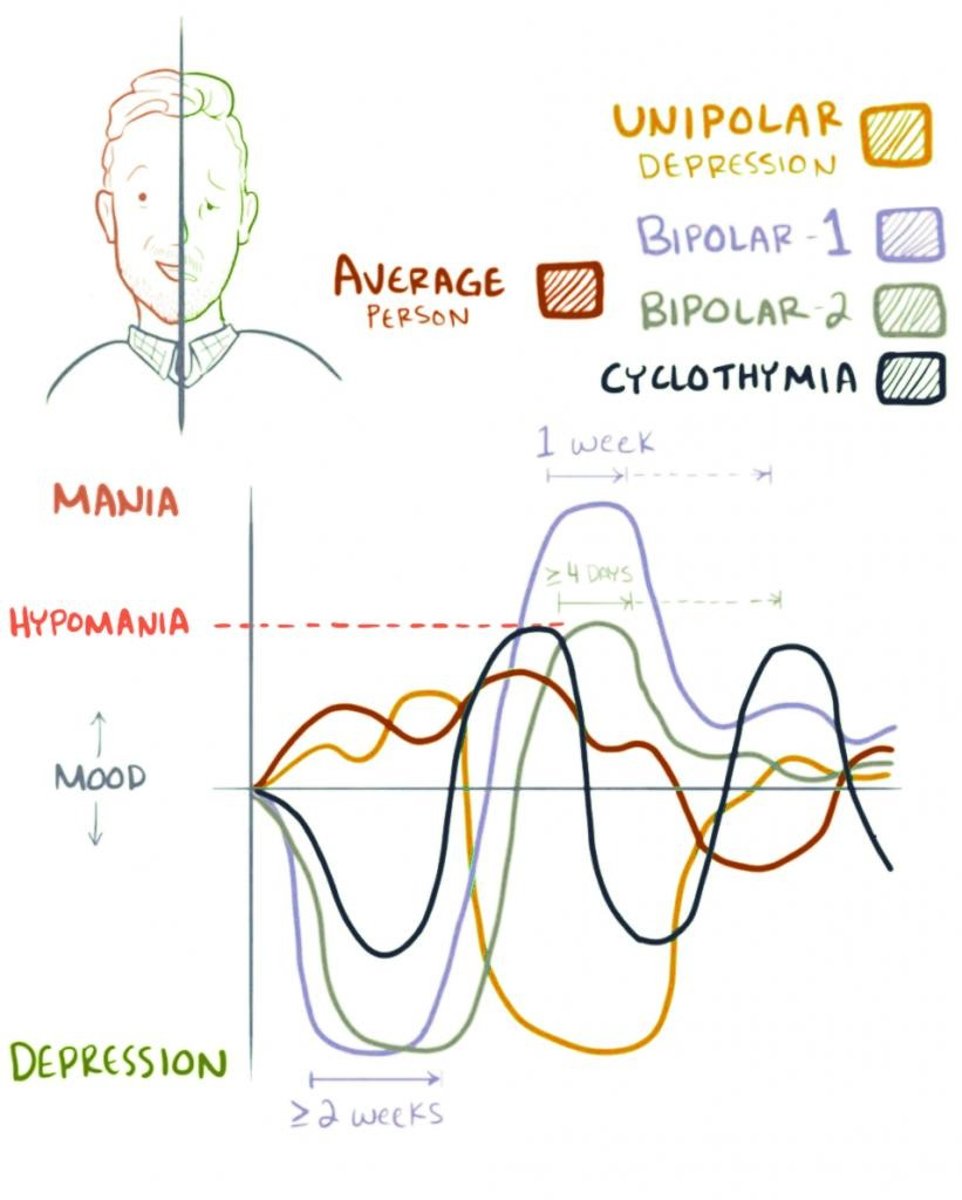
What is hypomania?
A milder form of mania without delusional beliefs, typically does not require hospitalization, associated with bipolar 2.
What are some conditions that can present with manic or hypomanic symptoms?
Major Depressive Disorder (MDD), schizophrenia, anxiety disorders, hypothyroidism, ADHD, and other medical conditions.
What are common side effects of mood disorder medications?
Insomnia, fatigue, gastrointestinal upset, and decreased libido.
What is the mechanism of action for SSRIs?
They increase serotonin levels in the brain by inhibiting its reuptake.
What are some examples of SSRIs?
Fluoxetine (Prozac), Paroxetine (Paxil), Sertraline (Zoloft), Citalopram (Celexa), Escitalopram (Lexapro).
What is the risk associated with St. John's Wort when taken with SSRIs?
Increases the risk for serotonin syndrome.
What is the role of MAOIs in treatment?
They increase serotonin, norepinephrine, and dopamine levels by inhibiting the enzyme monoamine oxidase.
What are common side effects of MAOIs?
Anxiety, agitation, orthostatic hypotension, and risk for hypertensive crisis.
What dietary restrictions are associated with MAOIs?
Avoid tyramine-rich foods like aged cheeses, cured meats, and certain alcoholic beverages to prevent hypertensive crisis.
What is lithium used for?
It is used as a mood stabilizer in bipolar disorder.
What are signs of lithium toxicity?
Anything above 1.5 mEq/L is considered toxic.
What is the relationship between sodium levels and lithium?
Sodium and lithium have an inverse relationship; low sodium can increase lithium toxicity.
What are the side effects of valproic acid?
Neurotoxicity, polyuria, increased thirst, fine hand tremors, hypothyroidism, and weight gain.
What is the mechanism of action for bupropion?
It acts as a dopamine reuptake inhibitor.
What is electroconvulsive therapy (ECT) used for?
Chronic unresponsive depression, high suicide potential, and during pregnancy.
What is the purpose of repetitive transcranial magnetic stimulation (rTMS)?
To use magnetic pulses to depolarize neurons, typically for mild depression.
What is vagal nerve stimulation (VNS)?
An implant connected to the vagus nerve delivering pulses to the brain, used for treatment-resistant depression.
What is the importance of follow-up appointments in mood disorder treatment?
To monitor therapeutic levels and side effects of medications.
What is the significance of titration in medication management?
Starting small and increasing dosage over time to reach therapeutic levels.
What are common side effects of tricyclic antidepressants?
Sedation, orthostatic hypotension, and anticholinergic effects.
What is the role of anticonvulsants in mood disorder treatment?
They are used as mood stabilizers in the management of mood disorders.
What is the mood pendulum concept?
It describes normal mood fluctuations, with baseline mood being euthymic.
What indicates a mood disorder?
When mood does not respond to external stimuli, such as crying in a normal environment.
What is the significance of monitoring blood dyscrasias in mood disorder treatments?
To watch for anemia, leukopenia, and thrombocytopenia as potential side effects.
What is the leading cause of ill health and disability worldwide according to WHO?
Major depressive disorder/episode
Which age group has the highest prevalence of major depressive disorder?
Ages 18-25
What demographic has a higher incidence of major depressive disorder?
Females, transgender individuals, and multiracial individuals
What percentage of individuals with depression seek help?
Less than ⅓
What are some common challenges providers face when treating mood disorders?
Patients may disagree with diagnosis, misunderstand treatment, fear stigma, or be frustrated with medication effects.
What is the monoamine theory in relation to depression?
It suggests that deficient levels of serotonin, norepinephrine, and dopamine contribute to mood disorders.
What is the significance of cortisol in mood disorders?
Increased cortisol release can lead to oversensitivity to stress.
What are the diagnostic criteria for a major depressive episode?
Need 5 out of 9 symptoms present nearly every day for at least 2 weeks.
What does SIGECAPS stand for in the context of depression symptoms?
Sleep, Interest, Guilt, Energy, Concentration, Appetite, Psychomotor agitation/retardation, Suicidal thoughts.
What is Persistent Depressive Disorder (PDD)?
A chronic form of depression lasting at least 2 years with a baseline of sad mood.
What is the PHQ-9?
A quick depression assessment tool that ranks severity.
What are the symptoms of Bipolar I disorder?
At least one manic episode and recurrent episodes of mania and depression.
What differentiates Bipolar I from Bipolar II disorder?
Bipolar I includes manic episodes, while Bipolar II includes hypomanic episodes without full manic episodes.
What is Cyclothymic Disorder?
A mild form of bipolar disorder with numerous periods of hypomanic symptoms and depressive symptoms.
What are some common treatment options for mood disorders?
SSRIs, mood stabilizers, psychotherapy, and atypical antidepressants.
What are some specific SSRIs used to treat depression?
Citalopram, Escitalopram, Fluoxetine, Paroxetine, Sertraline, Vilazodone, Vortioxetine.
What are some risk factors for developing major depressive disorder?
Family history, stressful life events, and early childhood trauma.
What is the role of environmental factors in mood disorders?
Environmental factors can trigger or exacerbate mood disorders.
What is the importance of assessing a patient's support system?
It helps in evaluating suicide risk and overall treatment effectiveness.
What is the impact of mood disorders on life expectancy?
Mood disorders are associated with lower life expectancy.
What is the significance of the term 'mood' in psychiatry?
Mood refers to how the patient feels, which can be influenced by various factors.