Lab 7 KINGDOM ANIMALIA: PORIFERA, CNIDARIA
 Call Kai
 Learn
Learn Practice Test
 Spaced Repetition
 Match
Match Flashcards
 Knowt Play
1/24

There's no tags or description
Looks like no tags are added yet.
Name | Mastery | Learn | Test | Matching | Spaced | Call with Kai | Chat |
|---|
No analytics yet
Send a link to your students to track their progress
25 Terms
Heterotroph
A living thing that must eat other organisms for its energy and food. (A consumer)
Asymmetrical
Having no body symmetry or regular shape. (Like most sponges)
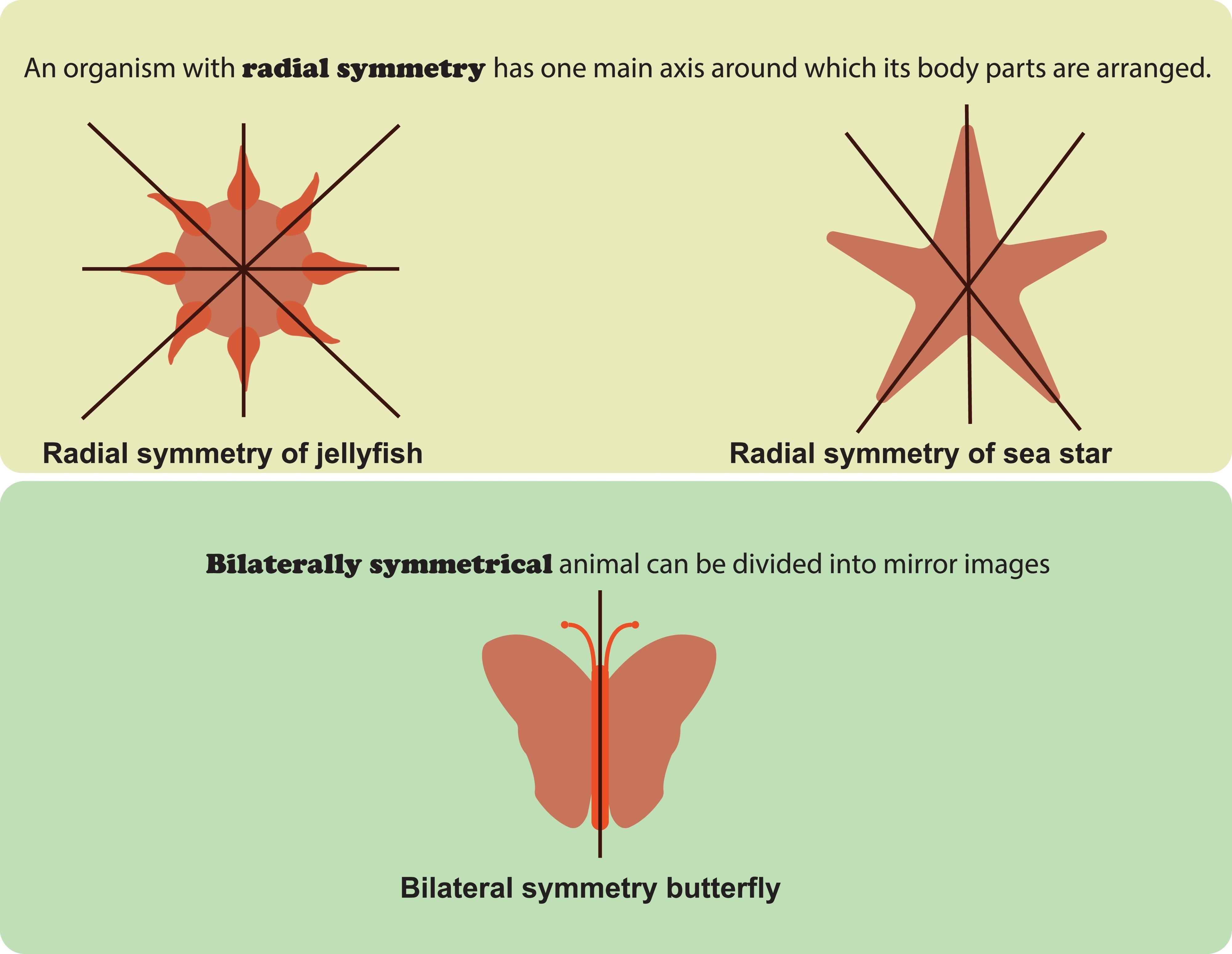
Radial Symmetry
A body plan where similar parts are arranged around a central point, like spokes on a wheel. (Like jellyfish)
Sessile
An animal that stays attached to one place and does not move around.
Filter Feeding
The method of eating by straining food particles out of the water. (Used by sponges)
Endoderm
The inner layer of cells in an animal embryo that becomes the digestive tract.
Ectoderm
The outer layer of cells in an animal embryo that becomes the skin and nervous system.
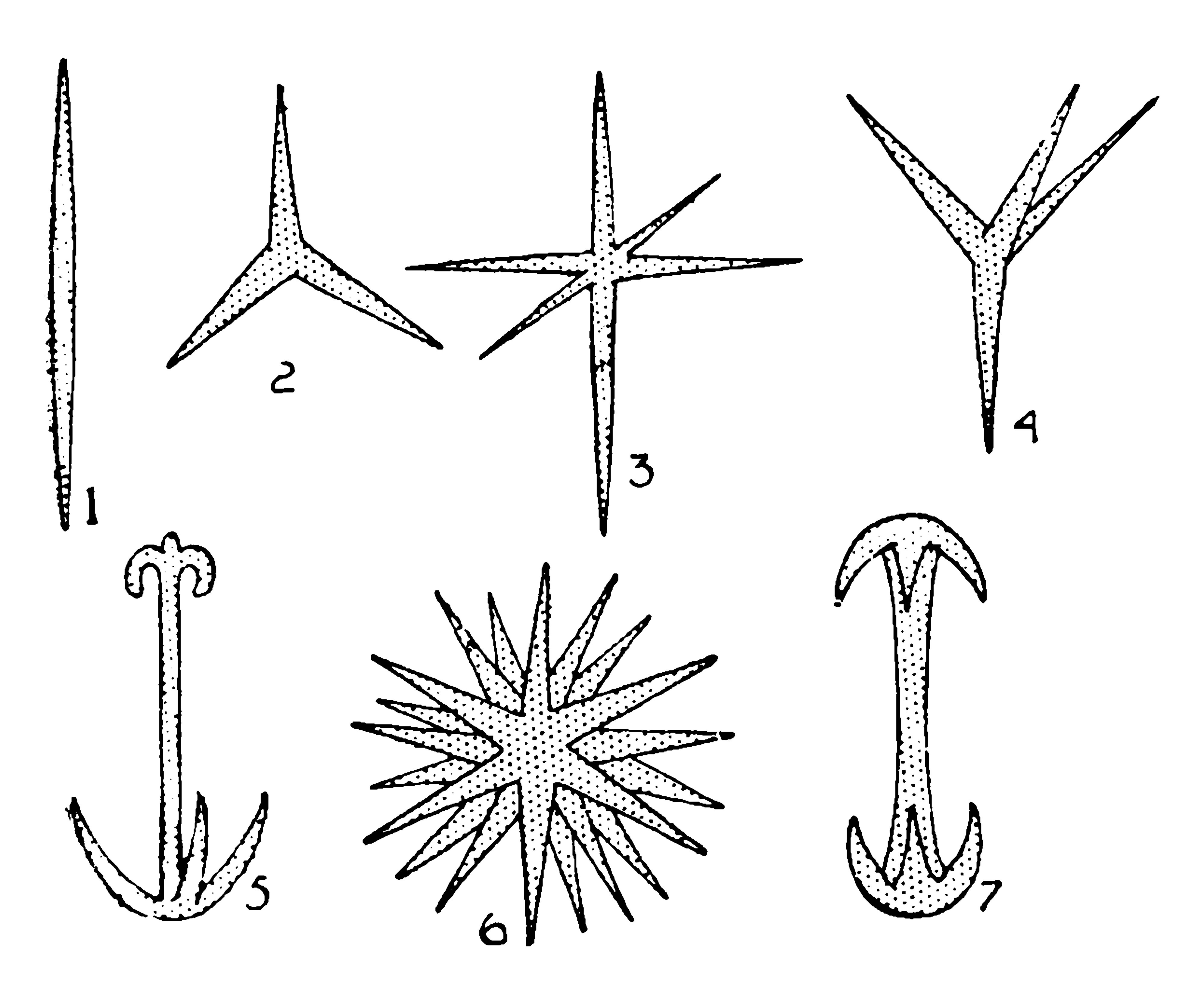
Spicules
The tiny, needle-like structures made of silica or calcium carbonate that act as the sponge's skeleton.
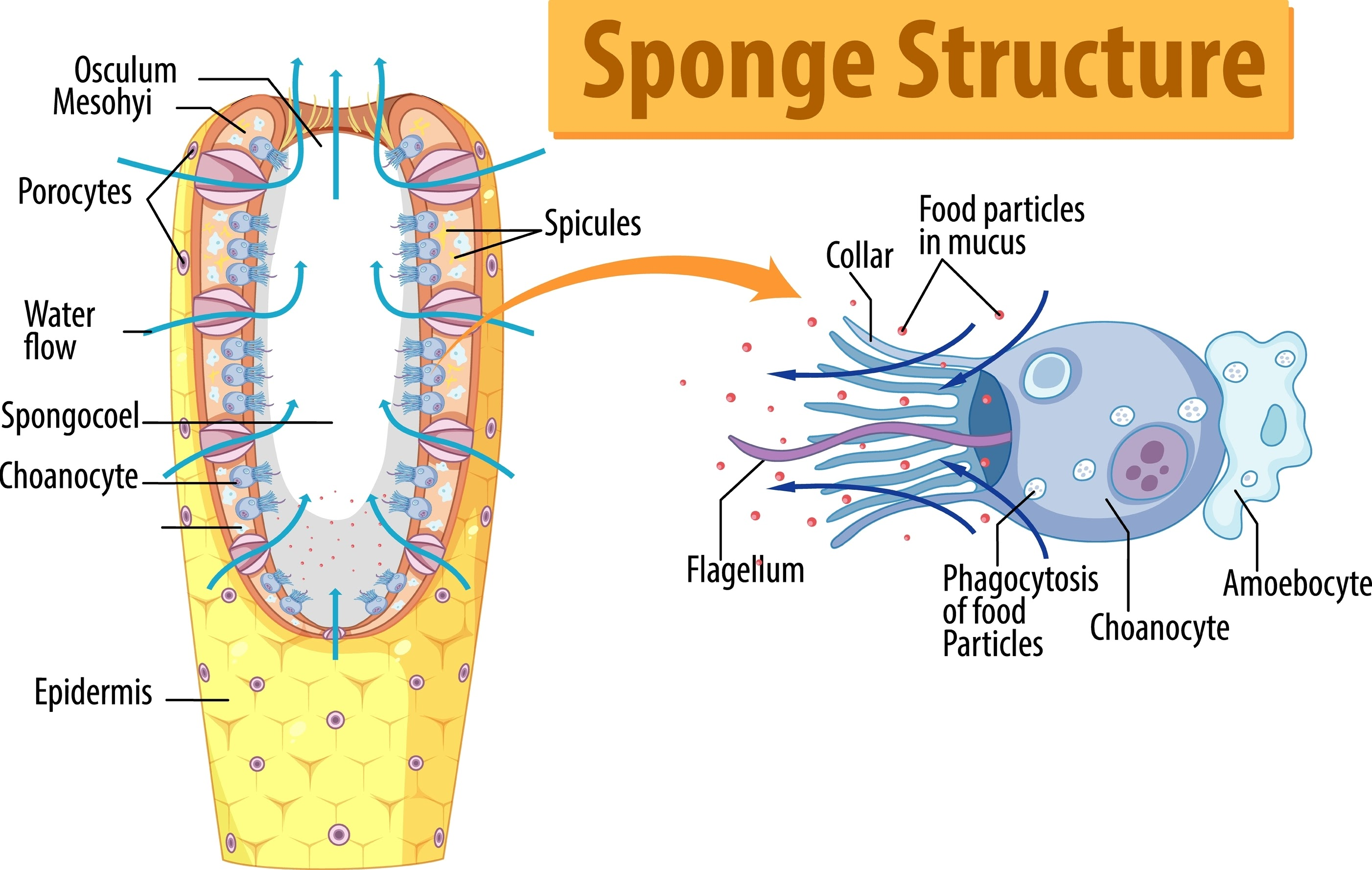
Choanocyte
The sponge's special "collar cell" with a flagellum (tail) that beats to create water current and capture food.
Amoebocyte
A mobile cell inside the sponge that moves around to carry food.
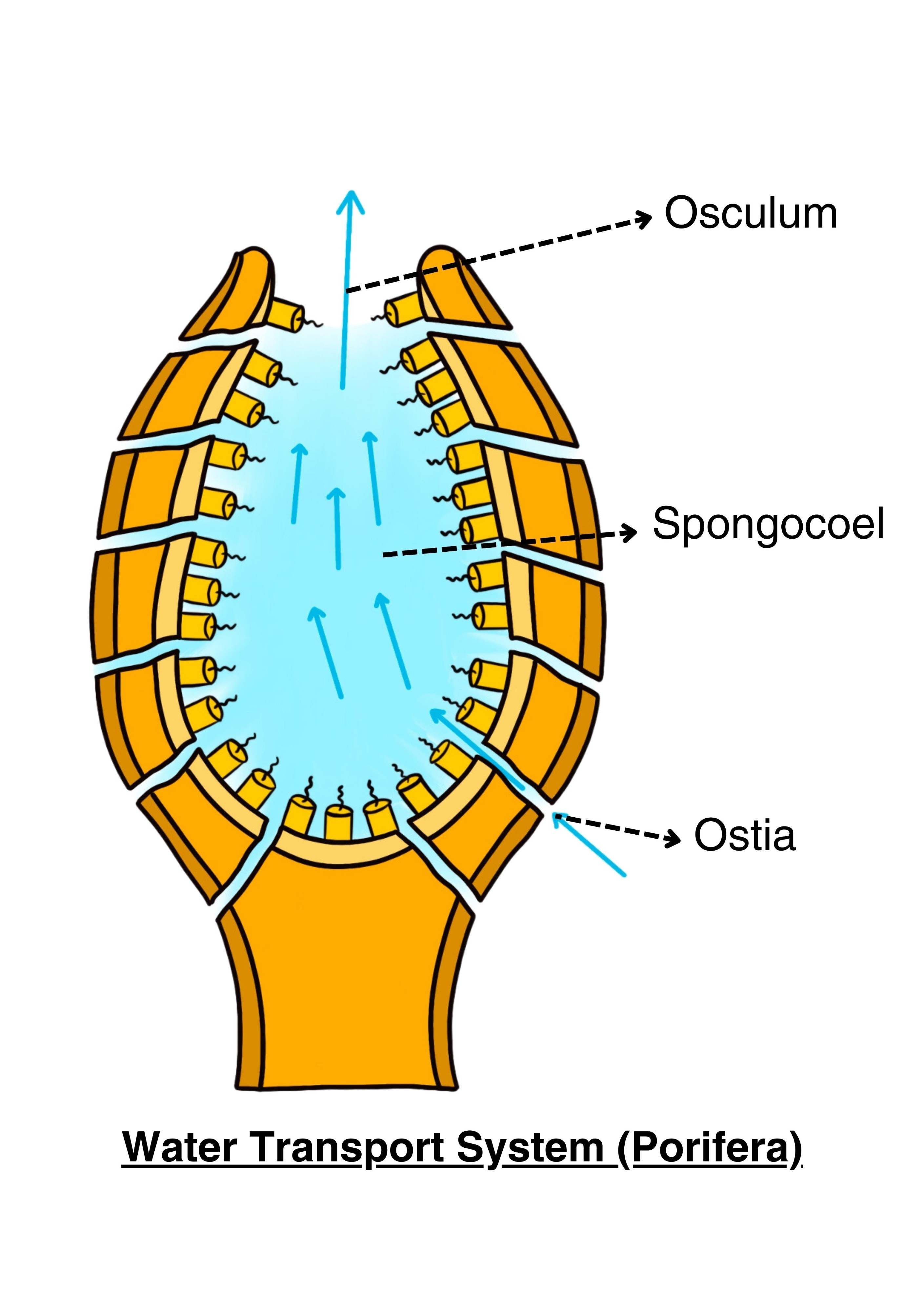
Osculum
The large opening at the top of the sponge where water that has been filtered flows out.
Spongocoel
The large, central cavity or open space inside the body of a simple sponge
Spongin
A soft, flexible protein fiber that makes up the skeleton of some sponges (like a natural bath sponge).
Mesenchyme / Mesohyl
The gelatin-like layer in a sponge's body that holds all the different cells and spicules.
Ostia
The tiny, small pores (holes) on the side of a sponge where water flows in.
Gemmules
A hard, protected ball of cells that some freshwater sponges make to survive harsh conditions (like a "survival pod").
Epithelial Layer
The outer layer of cells that forms the skin and covers the body of an animal (or lines an inner surface).
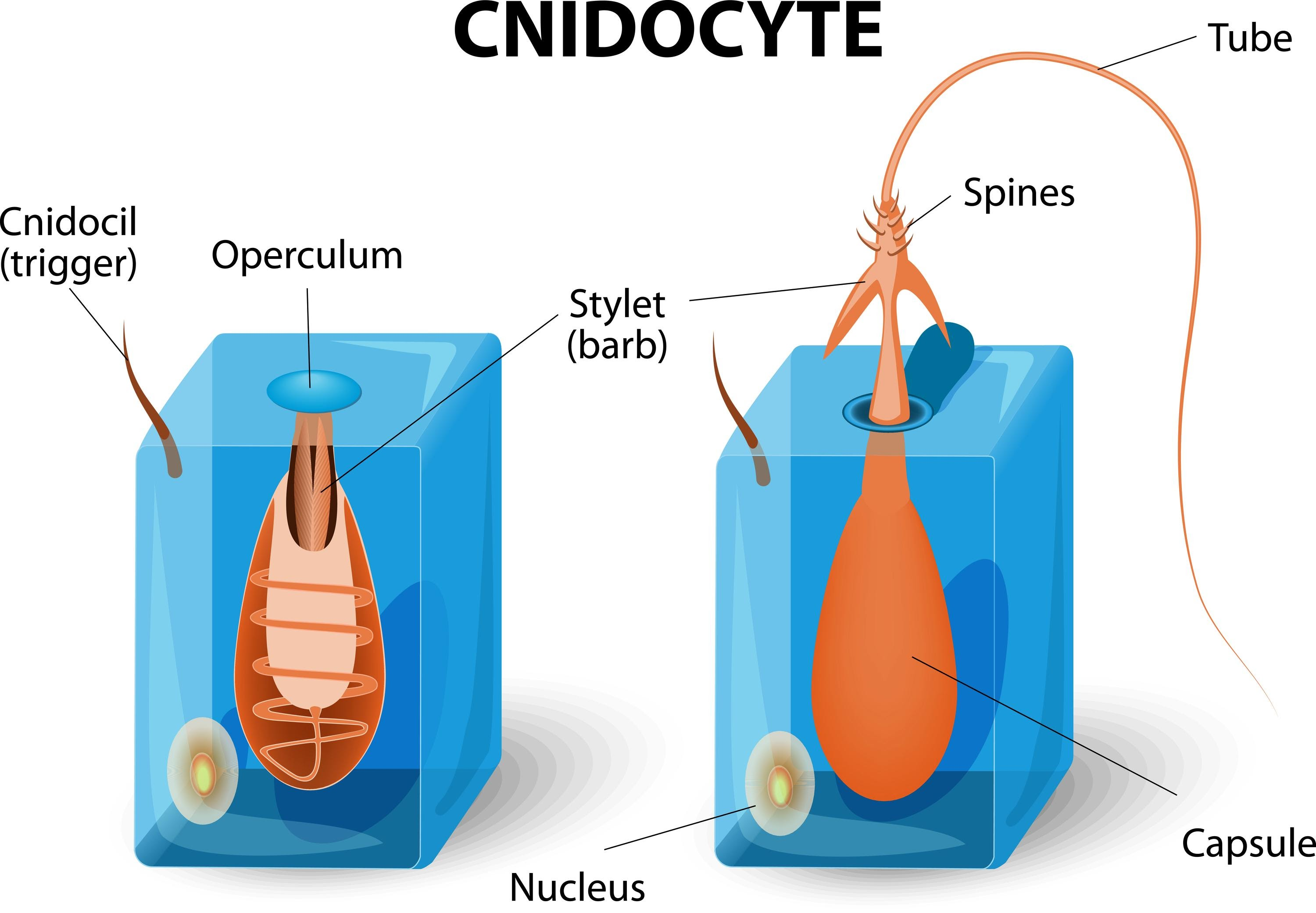
Cnidocytes
The stinging cell
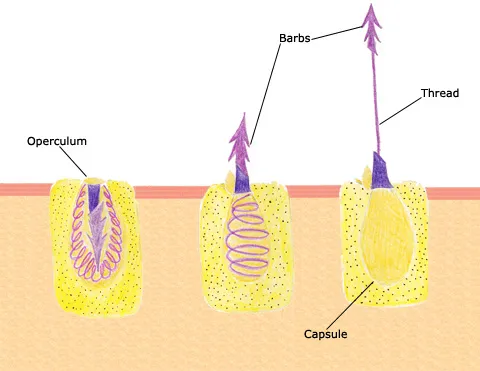
Nematocysts
The actual tiny, coiled harpoon inside that cell that fires out.
Gastrovascular cavity
The central stomach-like cavity in cnidarians where food is digested; it has only one opening (mouth/anus).
Tentacles
The whip-like or arm-like parts around the mouth used to capture food and move it into the mouth.
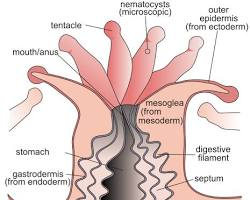
Polyps
The sessile body form of a cnidarian (like a sea anemone or coral); a tube shape with the mouth facing up.
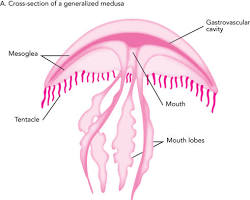
Medusae
The motile (free-swimming) body form of a cnidarian (like a jellyfish); a bell shape with the mouth facing down.
Mesoglea
The thick, jelly-like layer between the two cell layers in a cnidarian (the "jelly" part of a jellyfish).
Basal disk
The flat, sticky bottom part of a polyp (like a sea anemone) that attaches it firmly to a surface.