Literary Elements and Plot Devices in Short Stories
 Call Kai
 Learn
Learn Practice Test
 Spaced Repetition
 Match
Match Flashcards
 Knowt Play
1/55

There's no tags or description
Looks like no tags are added yet.
Name | Mastery | Learn | Test | Matching | Spaced | Call with Kai | Chat |
|---|
No analytics yet
Send a link to your students to track their progress
56 Terms
Element
a part or component of the whole - pieces that make the whole 'better.'
Point of View
the perspective - or vantage point - from which a story is told.
Conflict
Struggle or clash between two opposing characters or forces.
Setting
Time and Place - creates mood and provides a background for the action.
Foreshadowing
a literary device used to give an indication or hint of what is to come later in the story.
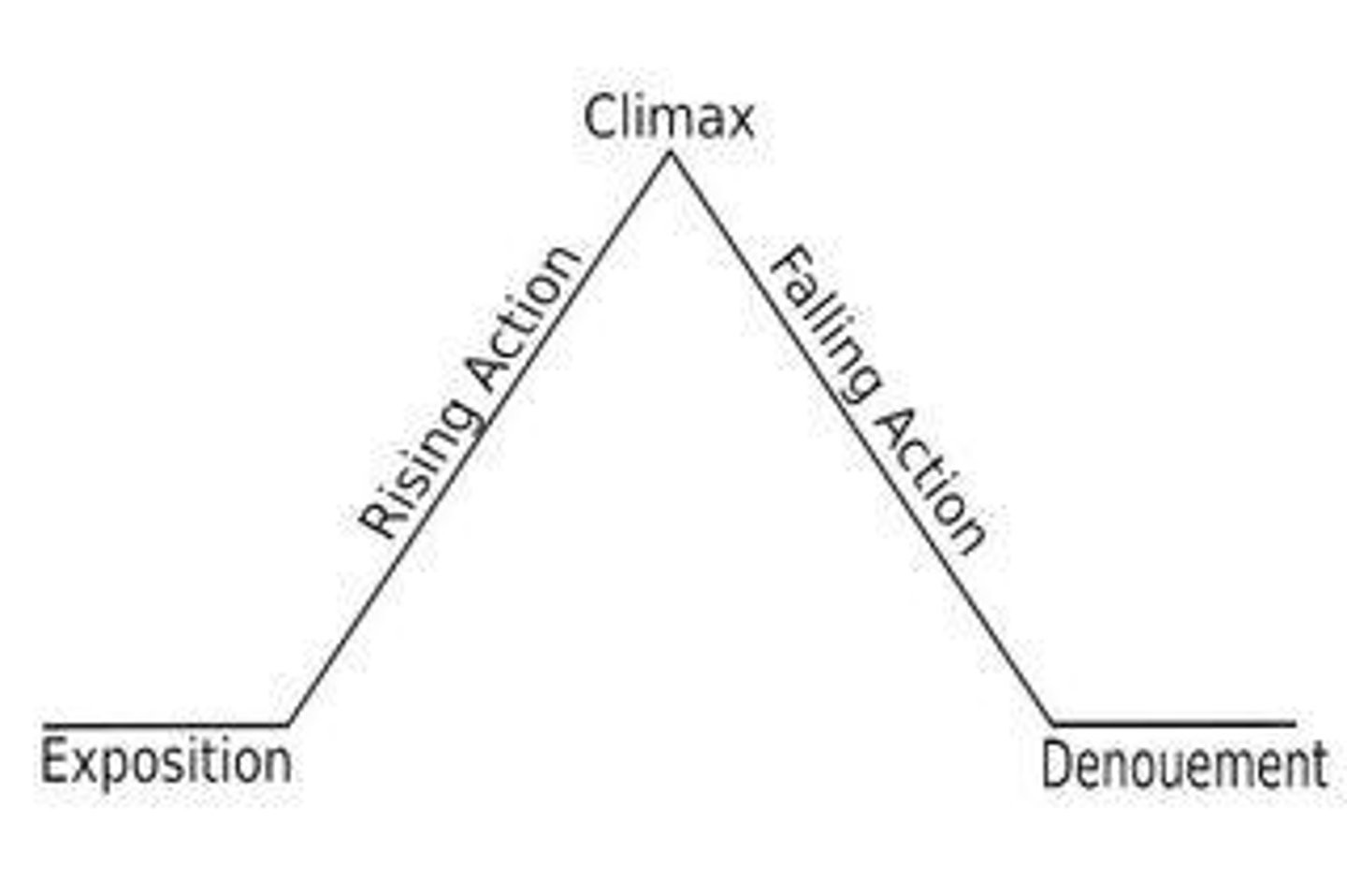
Plot
the sequence of events in a story.
Flashback
a scene set in a time earlier than the main story.
Irony
a literary technique where the intended meaning is different from the actual meaning.
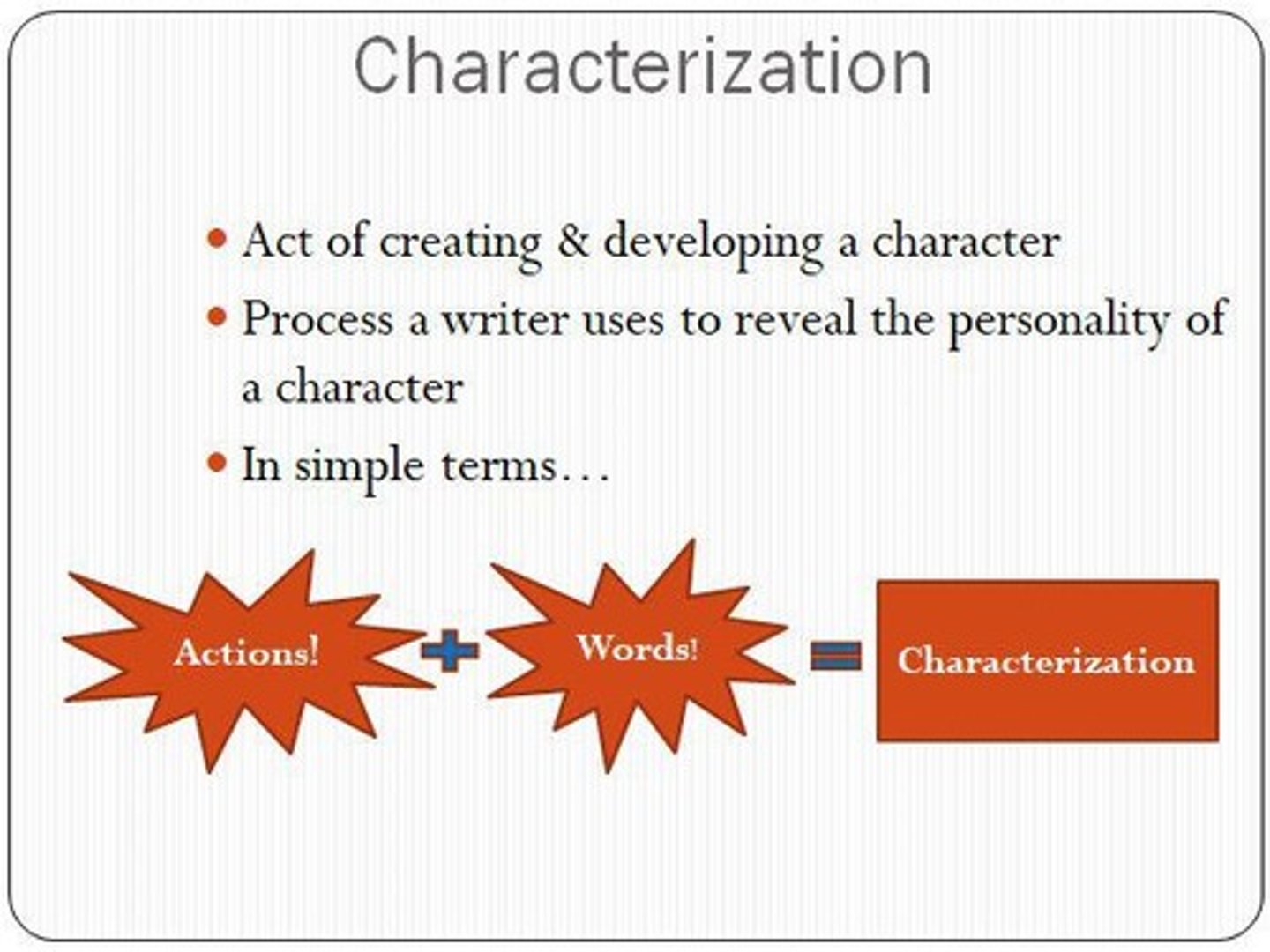
Characterization
the act of creating & developing a character.
Symbolism
the use of symbols to represent ideas or qualities.
Theme
the central topic, subject, or message within a narrative.
Language & Tone
the choice of words and the attitude of the writer towards the subject.
Mood
the atmosphere the reader feels as he/she reads the story.
Antagonist
the character who opposes the protagonist (main character).
Protagonist
the main character in a story, often facing a conflict.
External Conflict
a struggle between a character and an outside force.
Internal Conflict
a struggle within a character's mind.
Character vs. Nature
a conflict where a character faces natural forces.
Character vs. Self
a conflict where a character struggles with their own beliefs or emotions.
Character vs. Society
a conflict where a character stands against societal norms or values.
Character vs. Supernatural
a conflict where a character faces supernatural forces.
Indirect Characterization
the process a writer uses to reveal the personality and psyche of a character.
Third-Person Omniscient
Narrator is not a character and knows and tells what more than one character is thinking and feeling.
Third-Person Limited
Narrator is not a character and zooms in on thoughts and feelings of one character.
First Person
Narrator is a character in the story and we learn only what this character chooses to tell us; may be an unreliable narrator.
Second Person
Narrator addresses the reader as 'you'; less common, often found in 'how-to' books or novels in diary or letter format.
Climax
The turning point of a story.
Symbol
Something that stands for something else; using an object to represent a belief, idea, superstition, or institution.
Situational Irony
When something unexpected happens.
Verbal Irony
When a person means the opposite of what he/she says.
Dramatic Irony
When the reader/audience knows something the characters do not.
Imagery
Descriptive/sensory language that involves any of the five senses.
Visual Imagery
Imagery that appeals to the sense of sight.
Gustatory Imagery
Imagery that appeals to the sense of taste.
Olfactory Imagery
Imagery that appeals to the sense of smell.
Auditory Imagery
Imagery that appeals to the sense of hearing.
Tactile Imagery
Imagery that appeals to the sense of touch.
Simile
A comparison between two unlike things using words 'like' or 'as'.
Metaphor
A comparison between two words but without using 'like' or 'as'.
Personification
Giving human qualities to non-living things.
Hyperbole
An extreme exaggeration.
Pride
A wonderful, terrible thing, a seed that bears two vines, life and death.
Infallibility
The belief in one's own inability to make mistakes or be wrong.
Mercy
Compassion or forgiveness shown towards someone whom it is within one's power to punish or harm.
Solder cracked pride
A metaphor for repairing or mending one's damaged sense of pride.
Development program
A plan to teach Doodle to run, swim, climb trees, and fight.
Doodle's failure
The moment when Doodle collapsed onto the mud, indicating his exhaustion and inability to meet expectations.
Sign of mercy
A gesture or indication that shows compassion towards Doodle from his brother.
Theme of pride
The central idea that pride can lead to both positive and negative outcomes.
Symbolism in the story
The use of symbols to convey deeper meanings and themes.
Crippled brother
Refers to Doodle's physical limitations and the impact on his brother's pride.
Ashamed
The feeling experienced by the narrator due to Doodle's condition.
Tired and frightened
Describes Doodle's emotional and physical state during the story.
Important themes
Key messages or ideas that are significant in the narrative.
Prominent constructed symbol
An original symbol created within the story that holds significant meaning.
Watching for a sign
Doodle's anticipation of his brother's compassion during a moment of vulnerability.