Summer Grass Weeds
 Call Kai
 Learn
Learn Practice Test
 Spaced Repetition
 Match
Match Flashcards
 Knowt Play
1/15

There's no tags or description
Looks like no tags are added yet.
Name | Mastery | Learn | Test | Matching | Spaced | Call with Kai | Chat |
|---|
No analytics yet
Send a link to your students to track their progress
16 Terms
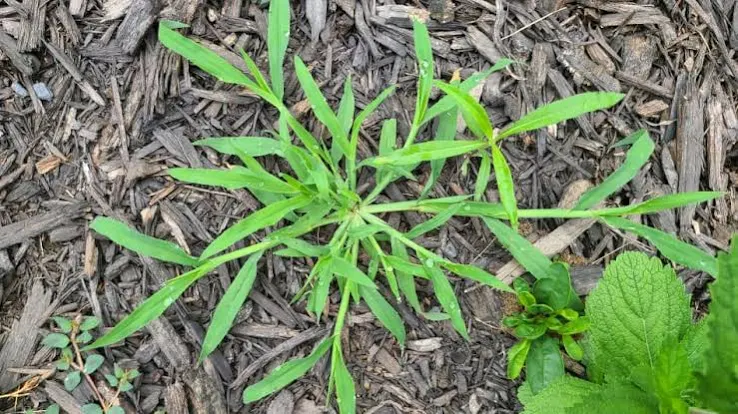
Crabgrass
Finger-grasses are a group of plants in the genus Digitaria, known for their distinctive, finger-like flower spikes that radiate from the stem, resembling spokes on a wheel or an open hand. Common examples include various crabgrasses (D. ischaemum, D. sanguinalis) and other species like Smuts finger grass (D. eriantha), which are found in warm climates and often grow in disturbed soils, lawns, and pastures. They are annuals or perennials, and while some are considered weeds, others are valuable forage grasses.
Key Characteristics
Appearance:
Slender, with flat, narrow leaves and flower spikes (inflorescences) that have tiny spikelets arranged along one side.
Growth Habit:
Many species, like crabgrass, spread by rooting at the nodes where stems touch the ground, forming dense mats.
Habitat:
Common in warm, temperate, and tropical regions, often in disturbed areas like lawns, fields, and wastelands.
Examples:
Smooth Crabgrass (D. ischaemum): Smooth leaves, often a lawn pest.
Hairy Crabgrass (D. sanguinalis): Hairy foliage, also a common weed.
Smuts Finger Grass (D. eriantha): A palatable pasture grass in Southern Africa.
Slender Fingergrass (D. filiformis): Grows in sandy soils, often with hairy leaf sheaths.
Uses and Significance
Forage:
Some varieties, like Smuts finger grass, are highly palatable and used as livestock feed.
Weeds:
Many crabgrass species are considered lawn weeds due to their aggressive spreading and ability to form thick patches.
Ecological Role:
They can be important ground cover in certain ecosystems, though some are invasive.
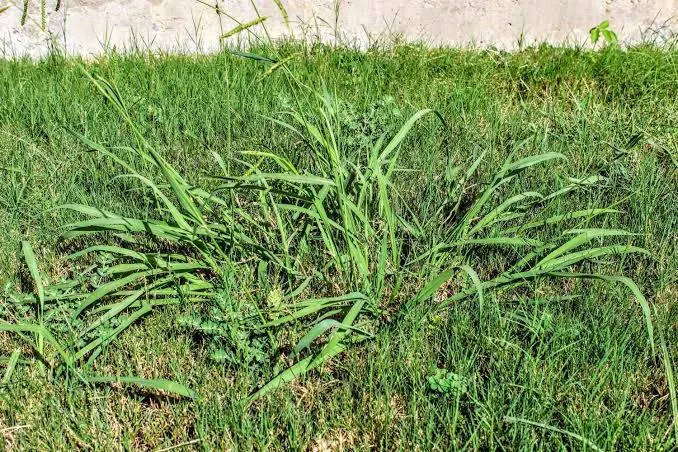
Crabgrass
Finger-grasses are a group of plants in the genus Digitaria, known for their distinctive, finger-like flower spikes that radiate from the stem, resembling spokes on a wheel or an open hand. Common examples include various crabgrasses (D. ischaemum, D. sanguinalis) and other species like Smuts finger grass (D. eriantha), which are found in warm climates and often grow in disturbed soils, lawns, and pastures. They are annuals or perennials, and while some are considered weeds, others are valuable forage grasses.
Key Characteristics
Appearance:
Slender, with flat, narrow leaves and flower spikes (inflorescences) that have tiny spikelets arranged along one side.
Growth Habit:
Many species, like crabgrass, spread by rooting at the nodes where stems touch the ground, forming dense mats.
Habitat:
Common in warm, temperate, and tropical regions, often in disturbed areas like lawns, fields, and wastelands.
Examples:
Smooth Crabgrass (D. ischaemum): Smooth leaves, often a lawn pest.
Hairy Crabgrass (D. sanguinalis): Hairy foliage, also a common weed.
Smuts Finger Grass (D. eriantha): A palatable pasture grass in Southern Africa.
Slender Fingergrass (D. filiformis): Grows in sandy soils, often with hairy leaf sheaths.
Uses and Significance
Forage:
Some varieties, like Smuts finger grass, are highly palatable and used as livestock feed.
Weeds:
Many crabgrass species are considered lawn weeds due to their aggressive spreading and ability to form thick patches.
Ecological Role:
They can be important ground cover in certain ecosystems, though some are invasive.
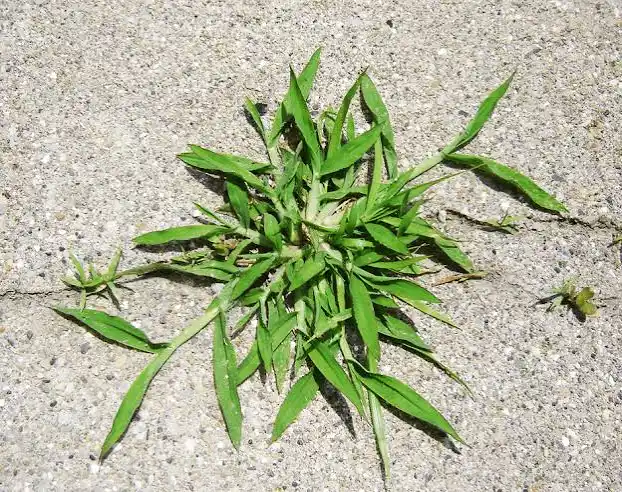
Crabgrass
Finger-grasses are a group of plants in the genus Digitaria, known for their distinctive, finger-like flower spikes that radiate from the stem, resembling spokes on a wheel or an open hand. Common examples include various crabgrasses (D. ischaemum, D. sanguinalis) and other species like Smuts finger grass (D. eriantha), which are found in warm climates and often grow in disturbed soils, lawns, and pastures. They are annuals or perennials, and while some are considered weeds, others are valuable forage grasses.
Key Characteristics
Appearance:
Slender, with flat, narrow leaves and flower spikes (inflorescences) that have tiny spikelets arranged along one side.
Growth Habit:
Many species, like crabgrass, spread by rooting at the nodes where stems touch the ground, forming dense mats.
Habitat:
Common in warm, temperate, and tropical regions, often in disturbed areas like lawns, fields, and wastelands.
Examples:
Smooth Crabgrass (D. ischaemum): Smooth leaves, often a lawn pest.
Hairy Crabgrass (D. sanguinalis): Hairy foliage, also a common weed.
Smuts Finger Grass (D. eriantha): A palatable pasture grass in Southern Africa.
Slender Fingergrass (D. filiformis): Grows in sandy soils, often with hairy leaf sheaths.
Uses and Significance
Forage:
Some varieties, like Smuts finger grass, are highly palatable and used as livestock feed.
Weeds:
Many crabgrass species are considered lawn weeds due to their aggressive spreading and ability to form thick patches.
Ecological Role:
They can be important ground cover in certain ecosystems, though some are invasive.
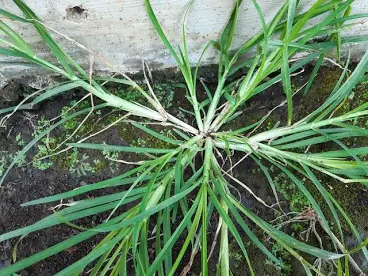
Goose grass
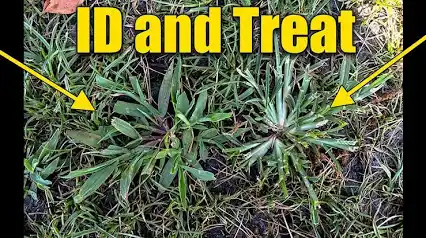
Eleusine is a genus of grasses, commonly known as goosegrass, that includes species like Eleusine indica (Indian goosegrass) and Eleusine coracana (finger millet). E. indica is a widespread, fast-growing weed in disturbed areas, characterized by flattened stems and finger-like seed spikes, while E. coracana is an important cereal crop cultivated in Africa and India. Both species are members of the grass family (Poaceae) and have traditional medicinal uses.
Key Species
Eleusine indica (Indian Goosegrass):
Description: A summer annual weed with flattened, pale-green stems and leaves, often with white midveins. It produces multiple finger-like spikes of seeds.
Habitat: Found in lawns, roadsides, fields, and other disturbed soils.
Common Names: Crowfootgrass, wiregrass, silver crabgrass.
Significance: Considered a common agricultural and environmental weed globally.
Eleusine coracana (Finger Millet):
Description: A cereal crop with finger-like spikes, similar in appearance to E. indica but cultivated for food.
Habitat: Cultivated in Africa and India; wild forms grow in African grasslands.
Significance: An ancient and important domesticated cereal crop.
Characteristics of the Genus
Family: Poaceae (Grass Family).
Growth: Rapid growth rate, especially E. indica.
Reproduction: Wind-pollinated; E. indica is self-pollinating.
Uses: E. indica is used in traditional medicine for various ailments, and its fibers are used industrially. E. coracana is a food crop.
Goose grass
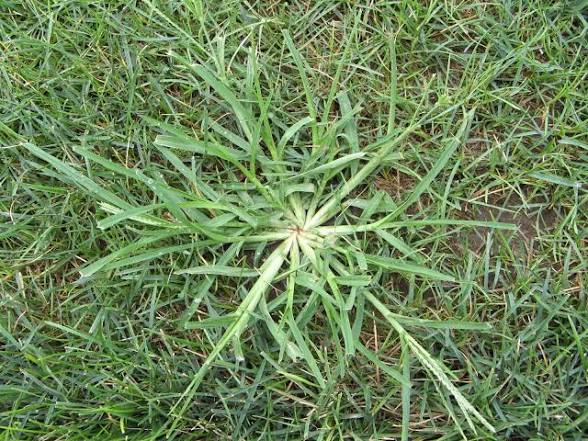
Eleusine is a genus of grasses, commonly known as goosegrass, that includes species like Eleusine indica (Indian goosegrass) and Eleusine coracana (finger millet). E. indica is a widespread, fast-growing weed in disturbed areas, characterized by flattened stems and finger-like seed spikes, while E. coracana is an important cereal crop cultivated in Africa and India. Both species are members of the grass family (Poaceae) and have traditional medicinal uses.
Key Species
Eleusine indica (Indian Goosegrass):
Description: A summer annual weed with flattened, pale-green stems and leaves, often with white midveins. It produces multiple finger-like spikes of seeds.
Habitat: Found in lawns, roadsides, fields, and other disturbed soils.
Common Names: Crowfootgrass, wiregrass, silver crabgrass.
Significance: Considered a common agricultural and environmental weed globally.
Eleusine coracana (Finger Millet):
Description: A cereal crop with finger-like spikes, similar in appearance to E. indica but cultivated for food.
Habitat: Cultivated in Africa and India; wild forms grow in African grasslands.
Significance: An ancient and important domesticated cereal crop.
Characteristics of the Genus
Family: Poaceae (Grass Family).
Growth: Rapid growth rate, especially E. indica.
Reproduction: Wind-pollinated; E. indica is self-pollinating.
Uses: E. indica is used in traditional medicine for various ailments, and its fibers are used industrially. E. coracana is a food crop.
Goose grass
Eleusine is a genus of grasses, commonly known as goosegrass, that includes species like Eleusine indica (Indian goosegrass) and Eleusine coracana (finger millet). E. indica is a widespread, fast-growing weed in disturbed areas, characterized by flattened stems and finger-like seed spikes, while E. coracana is an important cereal crop cultivated in Africa and India. Both species are members of the grass family (Poaceae) and have traditional medicinal uses.
Key Species
Eleusine indica (Indian Goosegrass):
Description: A summer annual weed with flattened, pale-green stems and leaves, often with white midveins. It produces multiple finger-like spikes of seeds.
Habitat: Found in lawns, roadsides, fields, and other disturbed soils.
Common Names: Crowfootgrass, wiregrass, silver crabgrass.
Significance: Considered a common agricultural and environmental weed globally.
Eleusine coracana (Finger Millet):
Description: A cereal crop with finger-like spikes, similar in appearance to E. indica but cultivated for food.
Habitat: Cultivated in Africa and India; wild forms grow in African grasslands.
Significance: An ancient and important domesticated cereal crop.
Characteristics of the Genus
Family: Poaceae (Grass Family).
Growth: Rapid growth rate, especially E. indica.
Reproduction: Wind-pollinated; E. indica is self-pollinating.
Uses: E. indica is used in traditional medicine for various ailments, and its fibers are used industrially. E. coracana is a food crop.
Dallisgrass
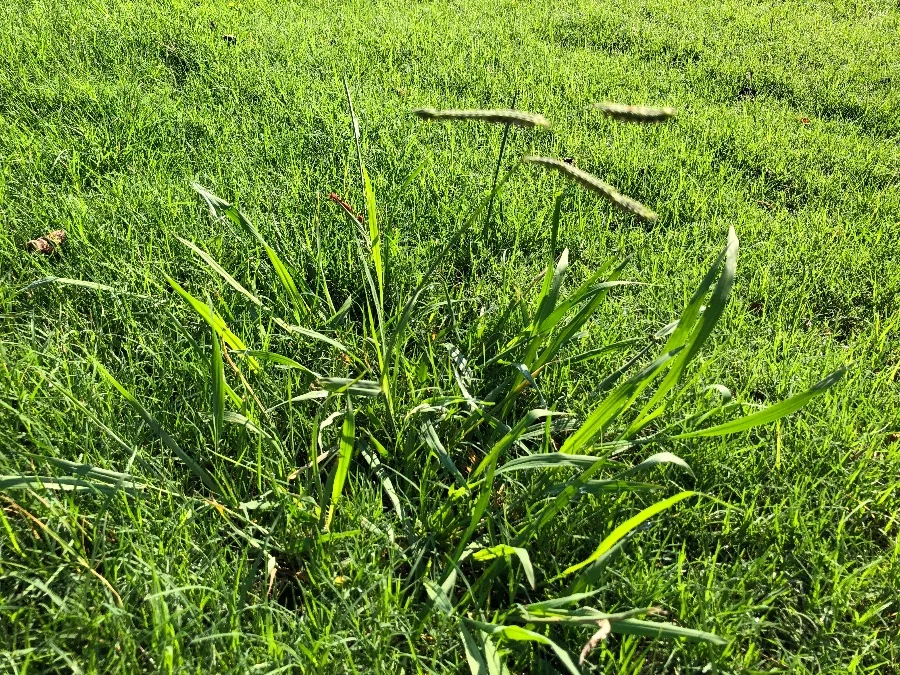
Paspalum dilatatum, commonly known as Dallisgrass, is a coarse, perennial grass native to South America that is often considered a weed in lawns and turf but is also used as a forage crop. It forms dense clumps, has wide, flat leaves, and produces distinctive seed heads with 2-10 drooping spikes, each with seeds in rows. It thrives in warm, moist conditions, spreads via seeds and rhizomes, and can be difficult to control in managed turf due to its vigorous growth and prolific seeding.
Identification
Growth Habit: Forms loose clumps, can grow 1-4 feet tall, with short, thick rhizomes.
Leaves: Wide (up to 1/2 inch), flat, and light green, with hairs near the base where the leaf meets the stem. The base of the stem is often reddish-purple.
Ligule: Tall, pointed, and membranous, with hairs on the margin.
Seed Head: 2-10 finger-like spikes that arise from different points on the stalk and often droop; spikes have seeds in rows on one side.
Habitat and Behavior
Prefers: Moist, heavier soils, and warm, humid conditions.
Invades: Lawns, roadsides, fields, and riparian areas.
Life Cycle: A summer-active perennial that goes dormant in winter; flowers from May to November.
Spread: By seed (over 250,000 per plant) and rhizomes.
Management
In Lawns:
Can be dug out (including roots) or treated with specific herbicides, depending on the surrounding turf type.
Prevention:
Pre-emergence herbicides are effective for preventing new seedlings.
Control:
Post-emergence herbicides can be used, timing application for spring/early summer.
Forage:
A palatable and grazing-tolerant fodder, but can be affected by ergot fungus, which is toxic to livestock.
Dallisgrass
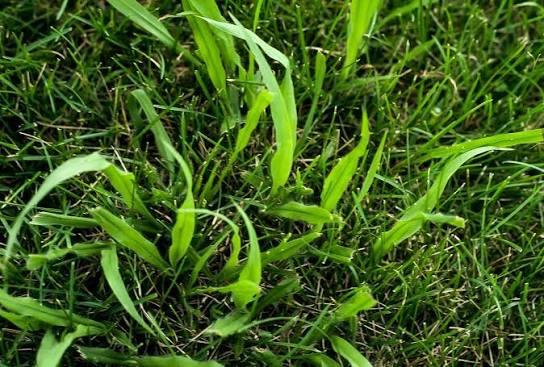
Paspalum dilatatum, commonly known as Dallisgrass, is a coarse, perennial grass native to South America that is often considered a weed in lawns and turf but is also used as a forage crop. It forms dense clumps, has wide, flat leaves, and produces distinctive seed heads with 2-10 drooping spikes, each with seeds in rows. It thrives in warm, moist conditions, spreads via seeds and rhizomes, and can be difficult to control in managed turf due to its vigorous growth and prolific seeding.
Identification
Growth Habit: Forms loose clumps, can grow 1-4 feet tall, with short, thick rhizomes.
Leaves: Wide (up to 1/2 inch), flat, and light green, with hairs near the base where the leaf meets the stem. The base of the stem is often reddish-purple.
Ligule: Tall, pointed, and membranous, with hairs on the margin.
Seed Head: 2-10 finger-like spikes that arise from different points on the stalk and often droop; spikes have seeds in rows on one side.
Habitat and Behavior
Prefers: Moist, heavier soils, and warm, humid conditions.
Invades: Lawns, roadsides, fields, and riparian areas.
Life Cycle: A summer-active perennial that goes dormant in winter; flowers from May to November.
Spread: By seed (over 250,000 per plant) and rhizomes.
Management
In Lawns:
Can be dug out (including roots) or treated with specific herbicides, depending on the surrounding turf type.
Prevention:
Pre-emergence herbicides are effective for preventing new seedlings.
Control:
Post-emergence herbicides can be used, timing application for spring/early summer.
Forage:
A palatable and grazing-tolerant fodder, but can be affected by ergot fungus, which is toxic to livestock.
Dallisgrass
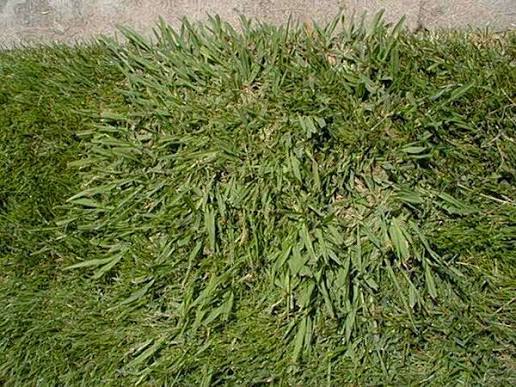
Paspalum dilatatum, commonly known as Dallisgrass, is a coarse, perennial grass native to South America that is often considered a weed in lawns and turf but is also used as a forage crop. It forms dense clumps, has wide, flat leaves, and produces distinctive seed heads with 2-10 drooping spikes, each with seeds in rows. It thrives in warm, moist conditions, spreads via seeds and rhizomes, and can be difficult to control in managed turf due to its vigorous growth and prolific seeding.
Identification
Growth Habit: Forms loose clumps, can grow 1-4 feet tall, with short, thick rhizomes.
Leaves: Wide (up to 1/2 inch), flat, and light green, with hairs near the base where the leaf meets the stem. The base of the stem is often reddish-purple.
Ligule: Tall, pointed, and membranous, with hairs on the margin.
Seed Head: 2-10 finger-like spikes that arise from different points on the stalk and often droop; spikes have seeds in rows on one side.
Habitat and Behavior
Prefers: Moist, heavier soils, and warm, humid conditions.
Invades: Lawns, roadsides, fields, and riparian areas.
Life Cycle: A summer-active perennial that goes dormant in winter; flowers from May to November.
Spread: By seed (over 250,000 per plant) and rhizomes.
Management
In Lawns:
Can be dug out (including roots) or treated with specific herbicides, depending on the surrounding turf type.
Prevention:
Pre-emergence herbicides are effective for preventing new seedlings.
Control:
Post-emergence herbicides can be used, timing application for spring/early summer.
Forage:
A palatable and grazing-tolerant fodder, but can be affected by ergot fungus, which is toxic to livestock.
Yellow nutsedge
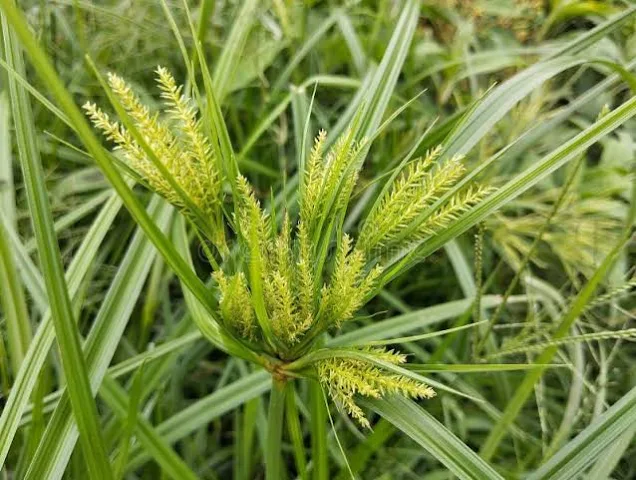
Yellow nutsedge (Cyperus esculentus) is a grass-like perennial weed known for its shiny, yellowish-green leaves, triangular stems, and golden-brown flower heads, spreading aggressively via underground rhizomes and nut-like tubers (nutlets). It thrives in moist, disturbed soils and is a common problem in lawns, gardens, and croplands, though its edible tubers are used to make a sweet, milk-like drink called horchata de chufa. Key identifiers include its triangular stem (felt by rolling it between fingers) and leaves that all emerge from the base.
Identification
Leaves: Shiny, yellowish-green, narrow, and grass-like, with a pointed tip.
Stem: Solid and distinctly triangular in cross-section.
Flowers: Golden-brown to straw-colored spikelets in clusters.
Reproduction: Primarily through tubers (nutlets) and rhizomes, but also by seed.
Habitat and Growth
Prefers moist, poorly drained soils but is adaptable.
Thrives in full sun and disturbed areas like lawns, gardens, and crop fields.
Can tolerate frequent mowing and tilling better than many plants.
Other Names
Chufa, earth almond, tiger nut, yellow nutgrass.
Management
Cultural: Correcting drainage issues, aerating compacted soil, and using mulch sparingly can help.
Mechanical: Tillage can bring tubers to the surface to dry out or freeze.
Chemical: Specific herbicides are needed, as it's a sedge, not a grass.
Edible Use
The starchy tubers are edible and used to make horchata de chufa in Spain
Yellow Nutsedge
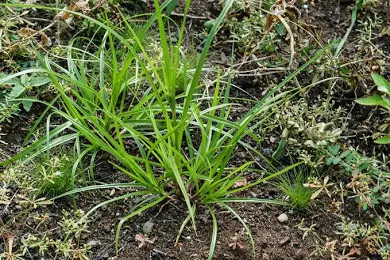
Yellow nutsedge (Cyperus esculentus) is a grass-like perennial weed known for its shiny, yellowish-green leaves, triangular stems, and golden-brown flower heads, spreading aggressively via underground rhizomes and nut-like tubers (nutlets). It thrives in moist, disturbed soils and is a common problem in lawns, gardens, and croplands, though its edible tubers are used to make a sweet, milk-like drink called horchata de chufa. Key identifiers include its triangular stem (felt by rolling it between fingers) and leaves that all emerge from the base.
Identification
Leaves: Shiny, yellowish-green, narrow, and grass-like, with a pointed tip.
Stem: Solid and distinctly triangular in cross-section.
Flowers: Golden-brown to straw-colored spikelets in clusters.
Reproduction: Primarily through tubers (nutlets) and rhizomes, but also by seed.
Habitat and Growth
Prefers moist, poorly drained soils but is adaptable.
Thrives in full sun and disturbed areas like lawns, gardens, and crop fields.
Can tolerate frequent mowing and tilling better than many plants.
Other Names
Chufa, earth almond, tiger nut, yellow nutgrass.
Management
Cultural: Correcting drainage issues, aerating compacted soil, and using mulch sparingly can help.
Mechanical: Tillage can bring tubers to the surface to dry out or freeze.
Chemical: Specific herbicides are needed, as it's a sedge, not a grass.
Edible Use
The starchy tubers are edible and used to make horchata de chufa in Spain
Yellow Nutsedge
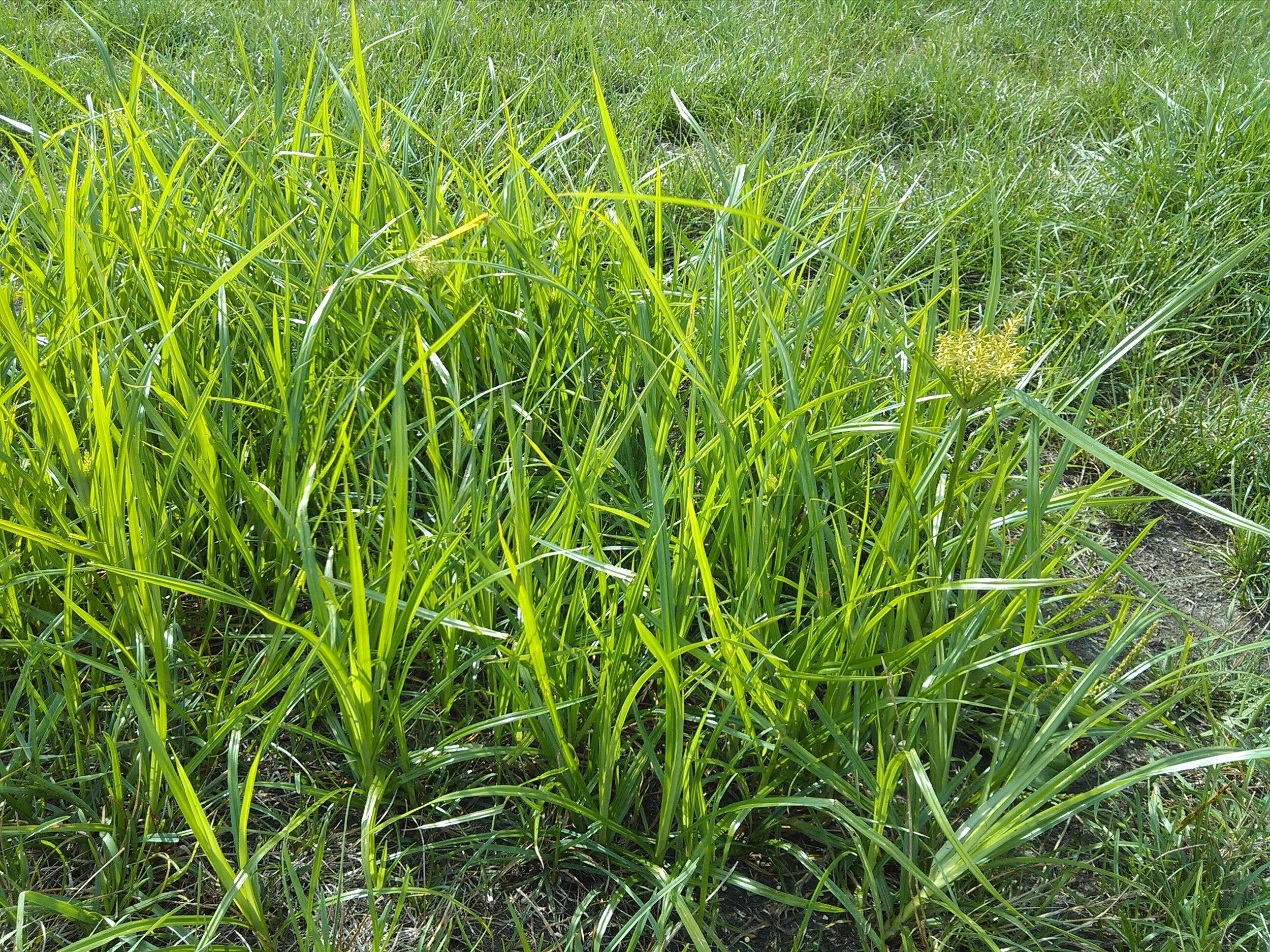
Yellow nutsedge (Cyperus esculentus) is a grass-like perennial weed known for its shiny, yellowish-green leaves, triangular stems, and golden-brown flower heads, spreading aggressively via underground rhizomes and nut-like tubers (nutlets). It thrives in moist, disturbed soils and is a common problem in lawns, gardens, and croplands, though its edible tubers are used to make a sweet, milk-like drink called horchata de chufa. Key identifiers include its triangular stem (felt by rolling it between fingers) and leaves that all emerge from the base.
Identification
Leaves: Shiny, yellowish-green, narrow, and grass-like, with a pointed tip.
Stem: Solid and distinctly triangular in cross-section.
Flowers: Golden-brown to straw-colored spikelets in clusters.
Reproduction: Primarily through tubers (nutlets) and rhizomes, but also by seed.
Habitat and Growth
Prefers moist, poorly drained soils but is adaptable.
Thrives in full sun and disturbed areas like lawns, gardens, and crop fields.
Can tolerate frequent mowing and tilling better than many plants.
Other Names
Chufa, earth almond, tiger nut, yellow nutgrass.
Management
Cultural: Correcting drainage issues, aerating compacted soil, and using mulch sparingly can help.
Mechanical: Tillage can bring tubers to the surface to dry out or freeze.
Chemical: Specific herbicides are needed, as it's a sedge, not a grass.
Edible Use
The starchy tubers are edible and used to make horchata de chufa in Spain
Purple Nutsedge
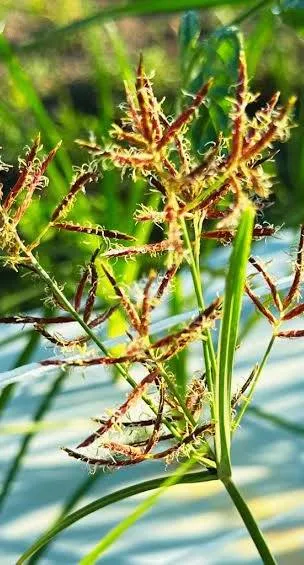
Nutgrass, or nutsedge, is a tenacious, grass-like perennial weed known for its triangular stems and ability to spread aggressively via underground tubers (nutlets) and rhizomes, making it difficult to control. It thrives in moist, poorly drained soils and is a major pest in lawns, gardens, and agriculture, often indicating overwatering. Key identification features include its glossy, bright green color, faster growth than turfgrass, and the presence of nut-like tubers at the root base, which must be removed for effective control.
Identification
Stems: Triangular (sedges have edges).
Leaves: Glossy, bright green, and grow in groups of three from the base.
Growth: Grows faster and taller than turfgrass, often appearing as light green clumps.
Roots: Features a network of underground rhizomes and small, nut-like tubers (nutlets).
Why it's difficult to control
Tubers: The underground tubers store energy and can sprout new plants, even if the top is pulled off.
Regeneration: Pulling it can sometimes stimulate more growth from dormant buds.
Persistence: Tubers can remain dormant in the soil for years.
Control methods
Manual Removal (Small Areas):
Consistently pull new shoots as soon as they appear to deplete the plant's energy reserves. This can take a long time.
Exhaustive Control:
For small areas, regularly pulling new growth can eventually exhaust the plant's resources.
Chemical Control:
Specific herbicides are available for larger areas, as standard weed killers are often ineffective.
Cultural Practices:
Improve drainage and avoid overwatering, as nutsedge thrives in wet conditions.
Purple Nutsedge
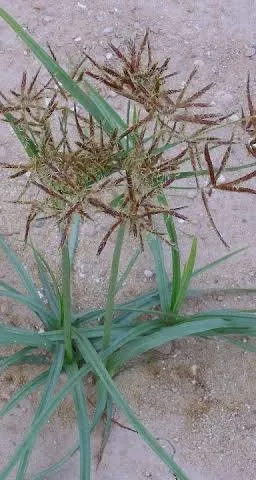
Nutgrass, or nutsedge, is a tenacious, grass-like perennial weed known for its triangular stems and ability to spread aggressively via underground tubers (nutlets) and rhizomes, making it difficult to control. It thrives in moist, poorly drained soils and is a major pest in lawns, gardens, and agriculture, often indicating overwatering. Key identification features include its glossy, bright green color, faster growth than turfgrass, and the presence of nut-like tubers at the root base, which must be removed for effective control.
Identification
Stems: Triangular (sedges have edges).
Leaves: Glossy, bright green, and grow in groups of three from the base.
Growth: Grows faster and taller than turfgrass, often appearing as light green clumps.
Roots: Features a network of underground rhizomes and small, nut-like tubers (nutlets).
Why it's difficult to control
Tubers: The underground tubers store energy and can sprout new plants, even if the top is pulled off.
Regeneration: Pulling it can sometimes stimulate more growth from dormant buds.
Persistence: Tubers can remain dormant in the soil for years.
Control methods
Manual Removal (Small Areas):
Consistently pull new shoots as soon as they appear to deplete the plant's energy reserves. This can take a long time.
Exhaustive Control:
For small areas, regularly pulling new growth can eventually exhaust the plant's resources.
Chemical Control:
Specific herbicides are available for larger areas, as standard weed killers are often ineffective.
Cultural Practices:
Improve drainage and avoid overwatering, as nutsedge thrives in wet conditions.
Purple Nutsedge
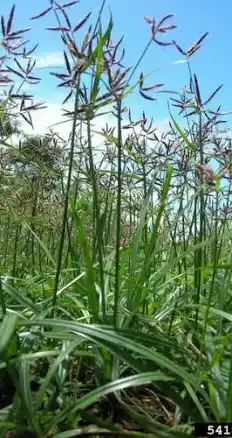
Nutgrass, or nutsedge, is a tenacious, grass-like perennial weed known for its triangular stems and ability to spread aggressively via underground tubers (nutlets) and rhizomes, making it difficult to control. It thrives in moist, poorly drained soils and is a major pest in lawns, gardens, and agriculture, often indicating overwatering. Key identification features include its glossy, bright green color, faster growth than turfgrass, and the presence of nut-like tubers at the root base, which must be removed for effective control.
Identification
Stems: Triangular (sedges have edges).
Leaves: Glossy, bright green, and grow in groups of three from the base.
Growth: Grows faster and taller than turfgrass, often appearing as light green clumps.
Roots: Features a network of underground rhizomes and small, nut-like tubers (nutlets).
Why it's difficult to control
Tubers: The underground tubers store energy and can sprout new plants, even if the top is pulled off.
Regeneration: Pulling it can sometimes stimulate more growth from dormant buds.
Persistence: Tubers can remain dormant in the soil for years.
Control methods
Manual Removal (Small Areas):
Consistently pull new shoots as soon as they appear to deplete the plant's energy reserves. This can take a long time.
Exhaustive Control:
For small areas, regularly pulling new growth can eventually exhaust the plant's resources.
Chemical Control:
Specific herbicides are available for larger areas, as standard weed killers are often ineffective.
Cultural Practices:
Improve drainage and avoid overwatering, as nutsedge thrives in wet conditions.