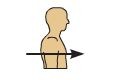
Body Positions and Planes
 Call Kai
 Learn
Learn Practice Test
 Spaced Repetition
 Match
Match Flashcards
 Knowt Play
1/19

There's no tags or description
Looks like no tags are added yet.
Name | Mastery | Learn | Test | Matching | Spaced | Call with Kai | Chat |
|---|
No analytics yet
Send a link to your students to track their progress
20 Terms
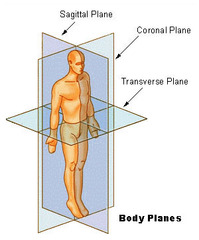
Anatomical planes
Planes used to transect the human body
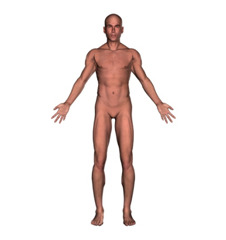
Anatomical position
The erect position of the body with the face directed forward, the arms at the side, and the palms of the hands facing forward, used as a reference in describing the relation of body parts to one another.
Anterior
Pertaining to the front of the human body and its parts.
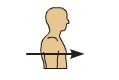
Cephalic
pertaining to the head
Distal
Pertaining to away from the point of origin of an arm or leg.
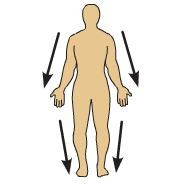
Dorsal
Pertaining to the posterior of the body, particularly the back. Lying on the back is being in the dorsal or dorsal supine position.
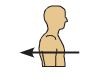
Erect
the patient is held upright standing on its hind legs.
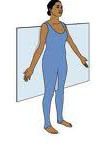
Frontal plane
Divides body into anterior and posterior
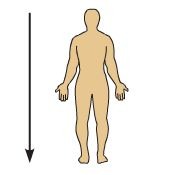
Inferior
Pertaining to the lower part of the body, an organ, or a structure.
Lateral
Away from midline.
Pertaining to the side of the body, an organ or a structure.
Medial
Toward the midline.
Pertaining to the middle of the body, an organ or a structure.
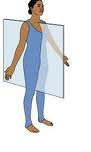
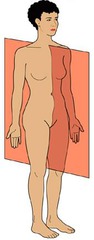
Midsagittal plane
Plane divides the body into equal right and left sides
Posterior
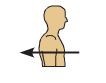
Pertaining to the back of the body, an organ, or a structure.
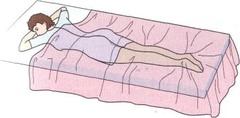
Prone
Position of lying on the anterior surface of the body.
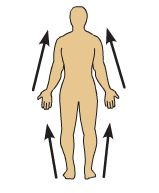
Proximal
Pertaining to near the point of origin of an arm or leg.
Sagittal plane
Plane the divides the body into right and left sections
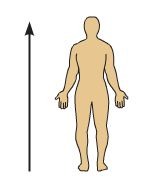
Superior
Pertaining to the higher part of the body, an organ or a structure.
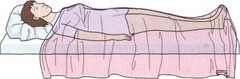
Supine
Lying on the back.
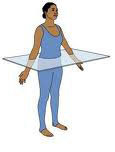
Transverse plane
Planes the divides the body into top and bottom sections, superior and inferior.
Ventral
Pertaining to the anterior of the body, particularly the abdomen.