Psychology all year
 Call Kai
 Learn
Learn Practice Test
 Spaced Repetition
 Match
Match Flashcards
 Knowt Play
1/47

There's no tags or description
Looks like no tags are added yet.
Name | Mastery | Learn | Test | Matching | Spaced | Call with Kai | Chat |
|---|
No analytics yet
Send a link to your students to track their progress
48 Terms
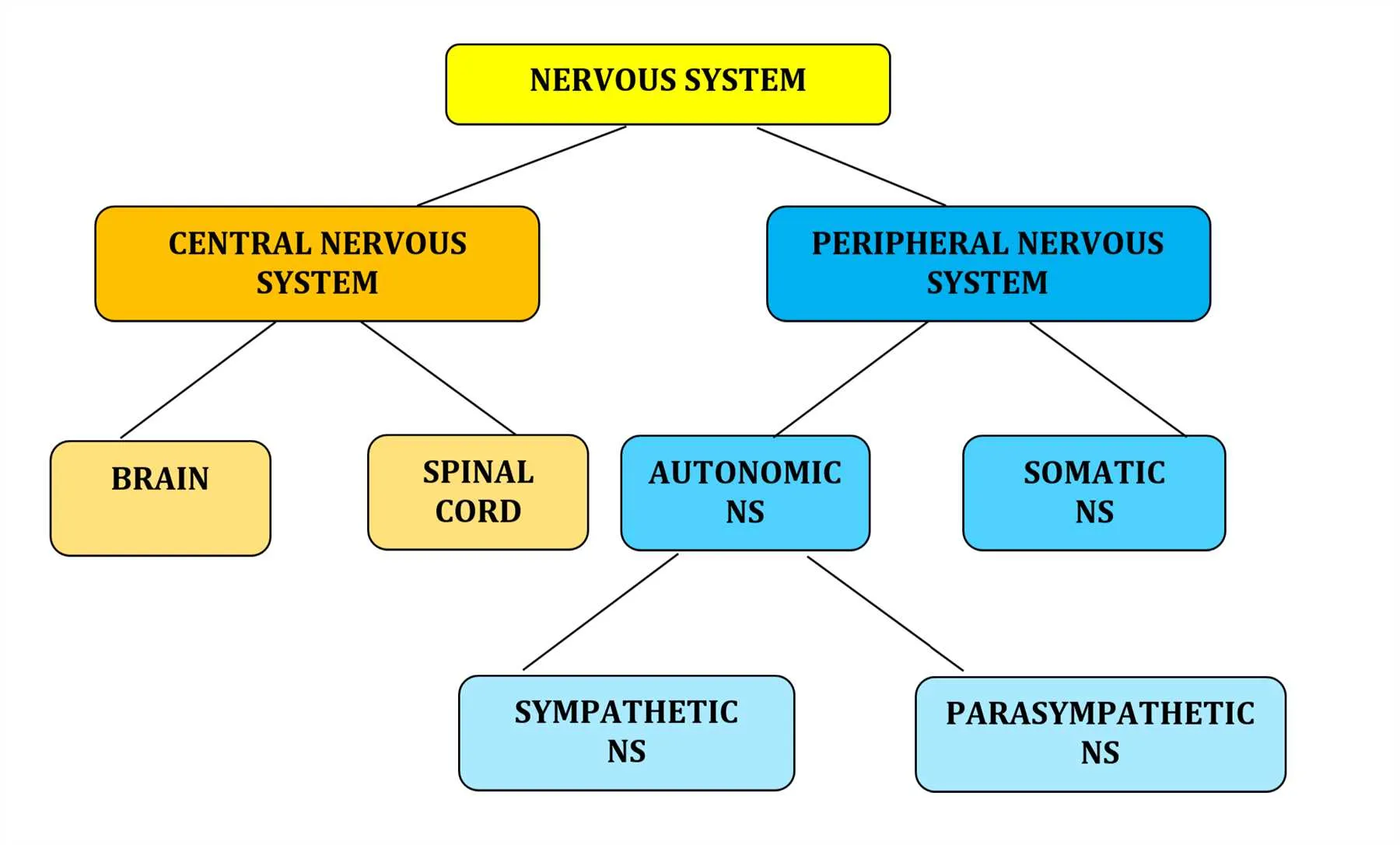
Describe the Nervous System
What are the parts of a neuron
Cell body, nucleus, dendrites, Axon, Myelin and Axon terminal
What is the central nervous system and what does it have?
Brain + spinal cord
Main control centre of the body
Processes information and coordinates responses
What is the peripheral nervous system and what does it comprise
All nerves outside the brain and spinal cord
Connects the CNS to the rest of the body
Carries information to and from the CNS
What is the somatic Nervous system?
Part of the PNS
Controls voluntary movements
Carries sensory information to the CNS
What is the autonomic Nervous system
Part of the PNS
Controls involuntary/automatic functions
E.g. heart rate, digestion, breathing
What is the Sympathetic Nervous system?
Part of the ANS
Activates the fight-or-flight response
Prepares the body for action/stress
What is the parasympathetic nervous system
Part of the ANS
Activates rest-and-digest
Calms the body after stress
What are the three types of neurons
Sensory neuron, interneuron and motor neuron
Whats the function of the sesnory neuron?
Carry information from sensory receptors → CNS
E.g. touch, pain, temperature
Whats the function of the Interneuron?
Found mainly in the CNS
Connect and process information between neurons
Whats the function of motor neurons?
Carry information from CNS → muscles/glands
Cause a response, such as movement
Whats the role of the dendrites?
Receive signals from other neurons.
Carry information towards the cell body.
👉 Think: Dendrites = receive
Whats the role of the axon?
A long, thin part of the neuron.
Carries the electrical signal away from the cell body towards the axon terminals.
👉 Think: Axon = carries the message
Whats the role of the myelin?
A fatty protective layer surrounding the axon.
Insulates the axon and makes electrical signals travel faster.
👉 Think: Myelin = insulation/speed
Whats the role of the axon terminals
Found at the end of the axon.
Release neurotransmitters into the space between neurons.
👉 Think: Axon terminals = send the message
How do neurons communicate?
Connects a axon terminal (Pre synaptic neuron) to a dendrite (Post Synaptic neuron)
The gap between them is called the synpatic cleft
Sacs of neurotransmitters are transmitted from the axon terminal to the dendrites
Its call a neural pathway when they connect.
What are the 6 approaches to normality
sociocultural, historical, functional, situational, medical and statistical.
What is adaptive behaviour?
using internal strength and knowledge to adapt to different situations
What is maladaptive behaviour?
having coping skills to relieve anxiety that can be dysfunctional, self harm or avoidance.
between the two diagnostic manuals which one is all diseases and which is just mental health disorders
DSM-5= mental health disorders, ICD= All diseases.
What are the 4 groups of mental health disorders
Psychotic (Schizophrenia) , personality (Borderline personality), anxiety (GAD and OCD) and mood (Depression and bipolar)
Explain psychosis and neurosis
Psychosis: STATE of loss of contact with reality. Neurosis: Non psychotic illness, is a STATE of being unable to control thoughts and behaviours but you are still in contact with reality.
What are the parts of the limbic system
Amygdala, Hippocampus, Hypothalamus, Thalamus, Cingulate Gyrus and Basal Ganglia
What does each part of the limbic system refer to based on emotion
Amygdala: fear, Hippocampus: Emotional memory, Hypothalamus: body response, Thalamus: Sensory relay, Cingulate gyrus: emotional regulation, Basal ganglia: reward and motivation.
What are the three theories of motivation?
Achievement goal theory of motivation, Cognitive evaluation theory of motivation and Self efficacy theory of motivation
Explain the two parts of the achievement goal theory of motivation.
Task oriented when you focus on self improvement and Ego oriented when you focus on becoming the best
Explain the two parts of the cognitive evaluation theory of motivation
Intrinsic motivation: When people are motivated by internal factors. Extrinsic motivation: When people are motivated by external factors.
Explain the two parts of the self efficacy theory of motivation.
Outcome expectation: what actions you take to achieve a goal. Efficacy expectations: the belief that you can achieve a goal.
Explain the two factor theory (Schacter and Singer)
Suggests that emotion arises from the interaction of two factors: the physiological arousal and cognitive assessment that come from an event.
List and explain the 5 study things with the names for emotion and motivation.
1. Two-Factor Theory (Schachter & Singer)
Emotions = Physical arousal + Cognitive label.
Example: Heart races → Brain labels it → “I’m scared!”
2. Appraisal Theory (Lazarus)
Emotions depend on how you interpret events.
Example: Fail a test → “I’ll never pass!” (sad) vs. “I’ll learn!” (determined).
3. Goal Setting (Locke)
Clear, challenging goals = more motivation.
Example: “Study 1 hour” vs. “Study 1 hour and learn 10 concepts.”
4. Psychological Wellbeing (Ryff)
6 parts: Self-acceptance, growth, purpose, relationships, environmental mastery, autonomy.
5. Broaden-and-Build (Fredrickson)
Positive emotions open your mind and help you grow.
Example: Joy → Try new things → Learn skills.
What is flow and mindfulness
Mindfulness: A practise of attending to ones present enviroment without judgement (Acceptance). Flow: A psychological state where a person is deeply focused and involved in what they are doing and ignore basic needs.
Explain the biological natuer of appraisal (Ochsner and gross)
Short route: Fast and thoughtless response. Long route: Slower but thoughtful response

What are the psychological wellbeing factors (Ryff)
Autonomy, Enviromental mastery, personal growth, positive relations with others, purpose in life and self acceptance.
What are the three parts of the brain. what are in them and what are their functions?
Hindbrain (Medulla, Pons, the cerebellum and the brain stem): Movement and balance. Midbrain (Reticular formation): Regulation of sleep, motor movement and arousal. Forebrain (Cerebrum, hypothalamus and thalamus): Higher level structures.
Whats the difference between Broca’s, Wernickes area and Geschwinds territory?
Brocas: Responcible for speech. Wernickes: Language reception and interpretation. Geschwinds: connects the two and label words.
whats the function and four lobes of the cerebral cortex?
The cerebral cortex is the outer layer of the brain responsible for higher brain functions like thought, memory, voluntary movement, language, and perception.
Four Lobes of the Cerebral Cortex:
Frontal Lobe – Controls decision-making, problem-solving, movement, and personality.
Parietal Lobe – Processes sensory information like touch, temperature, and spatial awareness.
Temporal Lobe – Manages hearing, memory, and language comprehension.
Occipital Lobe – Primarily responsible for visual processing.
What is intelligence?
Intelligence can be defined in many ways, including one capacity for learning, problem solving and apply knowledge to skills to adapt to unfamiliar situations.
describe the three factors influencing intelligence?
Nature: Biological and genetic factors.
Nuture: Enviromental factors
Interaction: Both nature and nuture effect intelligence.
How is IQ measured
Standardized score for an individuals intelligence as measure by a specific intelligence test.
explain emotional and multiple intelligence
Emotional intelligence is the ability to understand your own and others emotions. Multiple intelligences are that there are 8 ir possibly more intelligences.
What is the biopsychosocial approach
a holistic approach to treating psychological disorders by looking at biological, psychological and sociocultural factors.
What are is the definition and symptoms of Generalized Anxiety disorder?
Definition: excessive worrying about events. Symptoms: difficult sleeping, difficulty concentrating and irritability.
Define phobias
an irrational fear if a specific object or situation.
explain the placebo effect
A beneficial effect produced by a placebo drug or treatment, which cannot be attributed to the properties of the placebo itself, but rather to the patient’s belief in its effectiveness.
explain the four treatments of disorders
Psychotherapies: Talk-based treatments (e.g., CBT) that help people change thought and behavior patterns.
Pharmacotherapies: Medications (e.g., antidepressants) that alter brain chemistry to relieve symptoms.
ECT (Electroconvulsive Therapy): A procedure where controlled electric currents are passed through the brain to induce a brief seizure, used for severe depression or other conditions.
Psychosurgery: Brain surgery (e.g., lesioning or deep brain stimulation) to treat psychiatric disorders, used only in extreme cases when other treatments fail.
explain stigma and its two types.
Stigma: a negitive mark that applies to an individuals and seperates them from others. Social stigma: discriminizaed individuals with psychological disorders by the general public Self stigma: Internalized negitive stereotypes by someones self that effects self esteem.