S1, W1: Electricity Essentials Current Voltage and Resistance
 Call Kai
 Learn
Learn Practice Test
 Spaced Repetition
 Match
Match Flashcards
 Knowt Play
1/20

There's no tags or description
Looks like no tags are added yet.
Name | Mastery | Learn | Test | Matching | Spaced | Call with Kai | Chat |
|---|
No analytics yet
Send a link to your students to track their progress
21 Terms
Electrostatics
the study of stationary electric charges
Electrified
when an object has too few or too many electrons
Electrification
the action of charging something with electricity
electric ground
an object that can always accept electrical charges
Four Electrostatic Laws
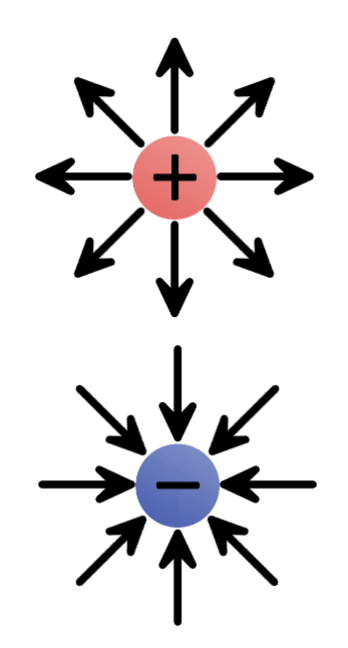
The electric field points outward from a positive charge and inward to a negative charge
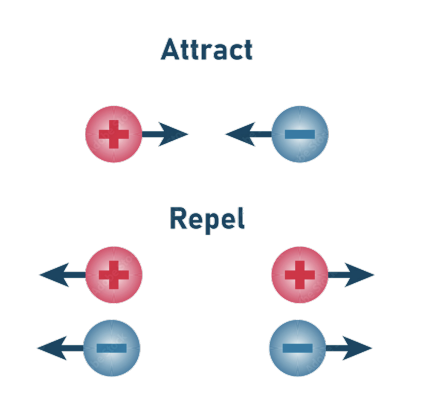
Unlike charges attract and like charges repe
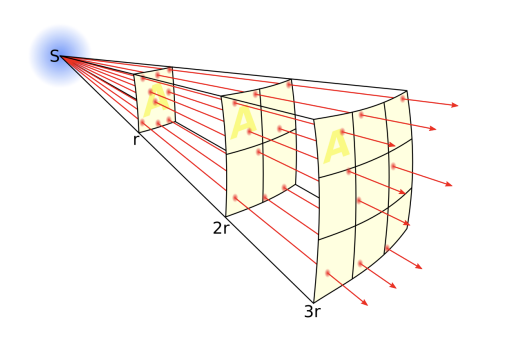
Electrostatic force is strong when objects are close but rapidly decrease when separated
Electrical charges are distributed evenly throughout or on an object except areas of high curvature where they are concentrated

Electrodynamics
the study of electric charges in motion
What kind of energy do electric charges have?
Does a battery have potential energy?
Electric charges have potential energy (electric potential)
A battery has stored electric charges, which means a battery has stored potential energy
A unit of electric potential
volt (V)
Conductor
material that allows electrons to flow
Insulator
material that prohibit the flow of electrons
Resistance
opposes electron flow (but does not fully inhibit flow)
measured in Ohms
Semiconductor
material that can serve as a conductor and an insulator
Superconductor
material that exhibits no resistance below a critical temperature
If a conductor is applied to an electric potential, then
electrons (e-) will move along the wire
Current
What units?
Current is the flow of electrons through a conductor
A unit of current is amperes/amp (A)
Electric power
Units?
work that is being done per second
Electric power is measured in watts (W)
What are the units for the following
electric potential (V)
current (I)
resistance (R)
Voltage (V) is a unit of electric potential (V)
Amperes (A) is a unit of current (I)
Amperes can also be (I)
Ohms (Ω) is unit of resistance (R)
Lab flashcards
Dynamic Range
Range of exposure values that our digital detector can capture and create an image off off
DR can include both optimal and suboptimal exposure values
How does mAs and kVp affect dynamic range?
Insufficient mAs and kVp creates quantum mottle (noise), which is caused by insufficient digital detector exposure = lose radiographic detail
Excessive mAs and kVp creates burnout, which is caused by excessive digital detector exposure = lose radiographic detail
Dose creep
techs taking images on higher end of optimal dynamic range because technology can fix overexposed images.
bad, not ALARA