Unit 1 Organismal Bio
 Call Kai
 Learn
Learn Practice Test
 Spaced Repetition
 Match
Match Flashcards
 Knowt Play
1/54

There's no tags or description
Looks like no tags are added yet.
Name | Mastery | Learn | Test | Matching | Spaced | Call with Kai | Chat |
|---|
No analytics yet
Send a link to your students to track their progress
55 Terms
organismal Biology
ecological and evolutionary relationships between organisms (not just naming them)
Taxonomic groupings
groups based on similar characteristics that share evolutionary ancestry (domain, kingdom, phylum, class, order, family, genus, species)
Carl Linaeus
created binomial Latin-based system; “Linaeus System”a method for classifying and naming organisms using two names, genus and species (specific epithet)
rules for naming species Linaeus System
capitalize genus
lowercase epithet
underline both, if type italicized
we use latin bc dead language
can name things in honor of someone “latinized”, but have to use actual name
can’t name something after yourself
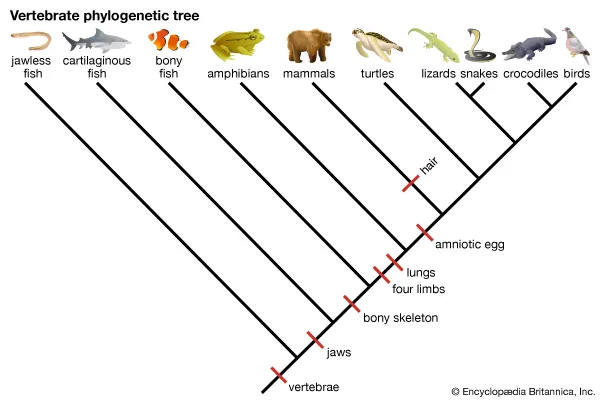
phylogenetic tree
takes evolutionary relationships and makes diagram to see where relationships are
paraphaletic group
grouping that does not include all of the descendants of a common ancestor (reptilia)
monophyletic group
includes common ancestor and all descendants of common ancestor
sister taxa
branches on phylogenetic tree right next to each other; considered to be closely related
basal taxa
unchanged, “prehistoric”, branched off early and doesn’t change
ancestral characteristics
similarity because of a shared common ancestry (like bones in whale, bat, human arm)
derived traits/characteristics
same characteristics but not from a common ancestor, from similar environments (evolution)
how old is the earth?
roughly 4.6 billion years old
when was the first sign of life on Earth?
3.5 billion years ago
what did the first living organisms look like
very simple, unicellular organisms
anaerobic (doesn’t need oxygen)
prokaryotic (no nucleus/membrane bound organelles)
we see this in chemical fossils
stromatolytes
layered rocks, some of the prokaryotic cells stick together and from layers
rocks are chemicals that cells metabolized, water added and sediment formed
living cells are still present in some top layers with fossilized bottom
when did eukaryotic organisms begin to show up
about 2.1 billion years ago
membrane bound organelles
how did aerobic respiration begin
cyanide organisms began to use sunlight to produce sugar and oxygen
allowed for aerobic organisms (Still Prokaryotic)
Endosymbiosis
membrane folds inward, encounters DNA, folds around it to make nucleus, ER
- can engulf photosynthesis cell
one cell engulfs another and helps the cell work; one cell process sugars, make atp, one cell engulfs this
Endosymbiotic Theory
small ancestral cells engulfed another; this cell helps the other cell, becoming a eukaryotic organism
chloroplast and mitochondria have individual DNA
When did multicellular organisms appear
1.4 billion years ago
how did multicellular organisms form
unicellular grouped together in colonies, worked together
portions of colony specialized in specific activities
some cells stopped doing other functions, focused on one particular job- specialization
cells can’t survive on their own
ex. Portuguese man-o-war is colonial organism
first animal evidence of multicellular organisms
1 billion years ago- 650 million years ago
1 BYA trace evidence of burrows, tracks (small soft-bodied organisms)
650 MYA fossilized ex of jellyfish, coral relatives
When did land plants show up
as recently as 500 million years ago
When was the first evidence of air breathing land animals
430 million years ago (defenitive fossil)
Plant characteristics
organisms that are (mostly) multicellular
(mostly) autotrophic
have a cellulose wall
store their food as a starch
contain pigments chlorophyll A,B and carotenoids
have a life cycle that alternates between a haploid (gametophyte) and diploid (sporophyte)
how many species of plants are there
roughly 400,000 species of characteristics
150 are important food plants
11 species provide 75% of human diet (most are grasses)
plant uses
medicines (aspirin comes from bark of specific type of willow tree)
caffeine
plants make oxygen
raw materials
erosion control with plants
Plant Domain, Kingdom
all plants on domain Eukarya
most plants are in Supergroup Archaeplastida and Kingdom Plantae
Green algaes
Phylum Chlorophyta
2 classes; Chloropsida and charopsida
cloropsida- some unicellular, some filamentous; colonial and multicellular
charopsida- multicellular
unicellular (class chloropsida)
Genus chlamydomonas
can produce asexually and sexually
asexual split in half, sexual gametes are + and - not distinct male/female; fuse together and form a zygote
ex
micrasterias (desmids)
acetabularia- single- celled algae that can grow up to 10 cm long
filamentous (class chloropsida)
can be unbranched or branched
unbranched: Spirogyra- spiral shaped chloroplast
branched: Cladophora
goes through conjugation- 2 filaments next to each other, outgrowth will form and fuse 2 cells together, 2 nuclei become 1, forms zygote
Colonial (class chloropsida)
ex- volvox
volvox- spherical algae
all cells grouped together, flagella work together to move
asexual reproduction if conditions are favorable; parent cells break out of adult colonies, go to middle and make new colonies
multicellular (class chloropsida)
more than one cell, fused together and can’t live on own
ex
ulva (sea lettuce)
utilizes both forms of reproduction no matter the conditions- alternation of generations (2 modes rep. always both part of cycle)
class charopsida
still green algae
chara- “stone wart”; closest extant relative to plants
multicellular
charophytes basal taxon
nonvascular vs vascular
nonvascular- plants do not have tissues that carry water and other materials, instead use osmosis and diffusion
vascular- plants have tubes that are used for transportation
plant reproduction gamete types (3)
isogamy- plants with isogameous gametes, not distinctive male/female; same size/identical, just +/-
anisogamy- not the same gametes; small and large gametes; generally small male, large female; both have flagellum, may or may not be mobile
oogamy- small but mobile male, large immobile female
Alternation of Generations
2 separate phases of reproduction; 2 distinct body forms in those plants
sporophyte vs gametophyte
sporophyte- diploid part of cycle (2n); produces spores through meiosis
gametophyte- haploid part of cycle (n); spores grow into gametophytes, produces gametes through mitosis, fertilization occurs, forms zygote, sporophyte
-in mosses gametophyte portion of life cycle is dominant; sporophyte part of the cycle becomes more dominant as things become more evolutionary advanced
homosporous vs heterosporous
homosporous- single gamete will produce male and female parts
heterosporous- 2 types of gametes, each will produce male/female parts
spores vs seeds
spores are single cells; can only grow into gametophyte
seeds formed from gametes infused together; seed is embryonic plant w/ nutrients to survive (zygote as seed is forming)
non vascular plants
3 phyla- hepaticophyta (liverworts), anthocerotophyta (hornworts), and bryophyta (mosses)
all homosporous alternation of generations
terrestrial, but need water for sexual reproduction
uses: peat moss important fuel, animals use mosses and other plants as nests, stabilize soil and prevent erosion
Phylum Hepaticophyta
liverworts
most primitive type of nonvascular plant (flattened leafy structure)
Thalos Liverwort- stringy/mossy looking liverwort
genus Marchantia- trees on it with gametophyte structures, female gametophyte houses archegonia, male houses antheridium, Gemma cup
Gemma cup- produces Gemma, indep. structures used for asex. rep. (can be thrown out of plant and make new plant)
phylum Anthocerotophyta
hornworts
sporophyte grows out of gametophyte like horns
homosporous
ex: genus Anthoceros
Phylum Bryophyta
mosses
can look like vascular plant
rhizoids used for anchoring plant (root-like) but doesn’t draw water
dioecious (separate male/female plants)
use homosporous alternation of generations
sporophyte grows out of female gametophyte, produces spores, operculum pops off to release spores; disperses spores and grows into new gametophyte
male sperm must blow into female archegonia to form sporophyte
mitosis vs meiosis is plants
mitosis makes gametes
meiosis makes spores
Vascular plants
showed up around 420 mya
vascular tissues- xylem and phloem
xylem- conductive tissue that moves h2o and minerals up
phloem- conductive material that takes glucose and moves it down from leaves into other areas of plant
glucose can be immediately oxidized for energy (cell resp), transported as sucrose (dissach), store glucose in amyloplasts (starch, energy for later; cellulose, structure)
cooksonia
earliest known vascular plant
stems with sporangia
dichotomas branching- branches breaking off that look similar
extinct
evolution of leaves
prophylls- primitive leaves
Enation theory
-began to see small branching that didn’t grow into other stems on a plant like cooksonia: PROPHYLL
-over time, prophyll structure starts to open up, begin to see tiny strands of vascular tissue: MICROPHYLL
-one branch begins to dominate the stem system, the side branches begin to flatten out into a single plane, tissue grows between branches on the same plane creating a leaf : MEGAPHYLL
-branched vascular tissue
Seedless Vascular Plants
only spores
phylums lycophyta and pteridiophyta (subphylum psilophyta, equisetophyta, and polypodiophyta)
still need some water for sexual rep.
homosporous and heterosporous alt. of gen.
Phylum Lycophyta
club mosses and quillworts
hom. and heterosporous alt. of gen.
rhizome- horizontal underground stem
true roots branch off rhizome
seedless vascular
3 Genera
Lycopodium (club moss); homosporous, strobilis (elongated top portion), microphylls (texture on stem), lycopodium spores very flammable, used to be used for flash photography still used for theatrical fireworks
Selaginella; heterosporous alt. of gen.
Isoetes (quillwort); longer microphylls, sporangia at bottom, not all on stem, heterosporous
Phylum Pteridiophyta Subphylum Psilophyta
whisk ferns (not true fern)
homosporous alt. of gen.
only group of vascular plants w/out true roots (only rhizoids)
small prophylls
sporangia at base of some prophylls
Phylum Pteridiophyta Subphylum Equisetophyta
genus Equisetum
homosporous alt. of gen.
strobilus on equisetum not formed by mini prophylls
reduced microphylls (nonfunctional)
types: Horsetails (floofy, without floof structure would look similar to scouring rushes, except whorls); Scouring rushes (have silica deposits SiO2, bits of sand inside cells, used to scrub pans long ago
Equisetum Strobilis- composed of multiple sporagiophores
—spores wrapped in strands of protein called elaters (elaters and spore dry out, elater becomes rigid to fling spore out and help it grow away from parent)
Phylum Pteridiophyta Subphylum Polypodiophyta
ex:
-marsilea: four leaf clover
-azolla: aquatic form
-cyathera: looks like fern palm tree
ferns very diverse
sori- clusters of sporangia on underside of plant leaves, some plants grow separate stalk, some grow little stem with clusters of sporangia
typical woodland ferns
fiddleheads- new fern frond, wrapped in ball that unwinds as it grows
indusium- covers spores to keep safe, some will shrivel and dry when sporangia mature so they can fling spores into environment
fern gametophyte
homosporous alt. of gen.
both stages won’t be visible together b/c goal is to increase genetic diversity so fern won’t self-fertilize
new sporophyte grows in cleavage area where archegonia are
heart-shaped prothallus is fern gametophyte
parts of sporangia
annulus- thick walled, heavily structured cell
lip cells- thin cells that will burst open to allow sporangia to release spores
strobilis vs sporangriophores vs sporangia vs spore
strobilis- multiple sporangiophores
sporangiophore- multiple sporangia
spores located in sporangia