Deciduous Conifers and Broadleaf Trees: Taxodium, Metasequoia, Platanus, Ulmus, Celtis, Ginkgo, Fraxinus, Koelreuteria, Pistacia, Firmiana
 Studied by 0 people
 Call Kai
 Learn
Learn Practice Test
 Spaced Repetition
 Match
Match Flashcards
 Knowt Play
1/144

There's no tags or description
Looks like no tags are added yet.
Name | Mastery | Learn | Test | Matching | Spaced |
|---|
No study sessions yet.
145 Terms
Taxodium
A genus of 3 species, all of which are deciduous.
Baldcypress
Common names for Taxodium distichum, also known as Swamp Cypress.
Deciduous
Referring to trees/shrubs that shed their leaves annually.
Taxodium distichum
A species of Taxodium, commonly known as Baldcypress or Swamp Cypress.
Trunks
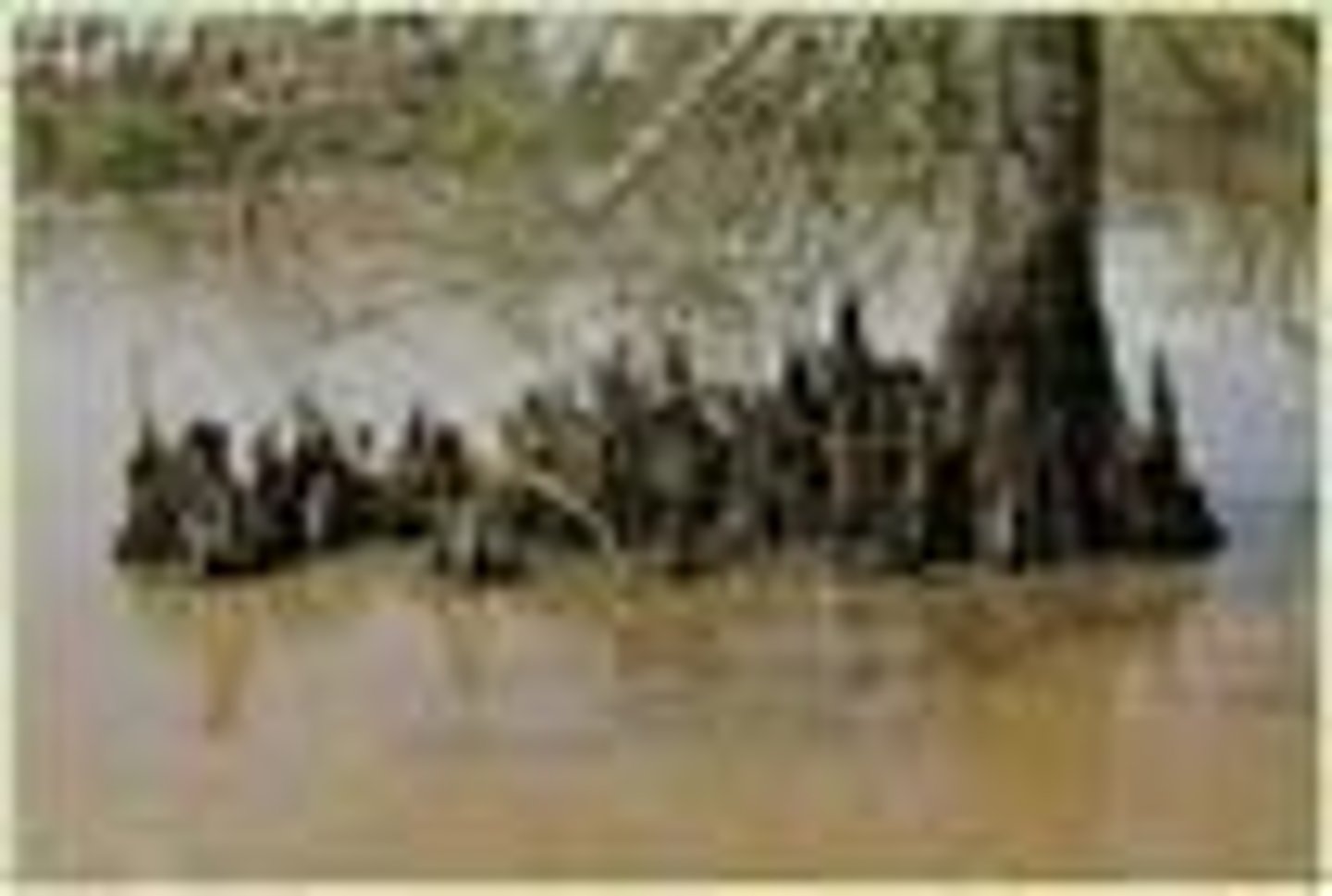
Often buttressed, and in wet situations, surrounded by aerial, conical roots (pneumatophores).
Bark
Light brown, furrowed and scaly.
Branchlets
Of two kinds; those near the end of shoots with axillary buds are persistent, while those lower on the shoots without axillary buds are deciduous.
Leaves
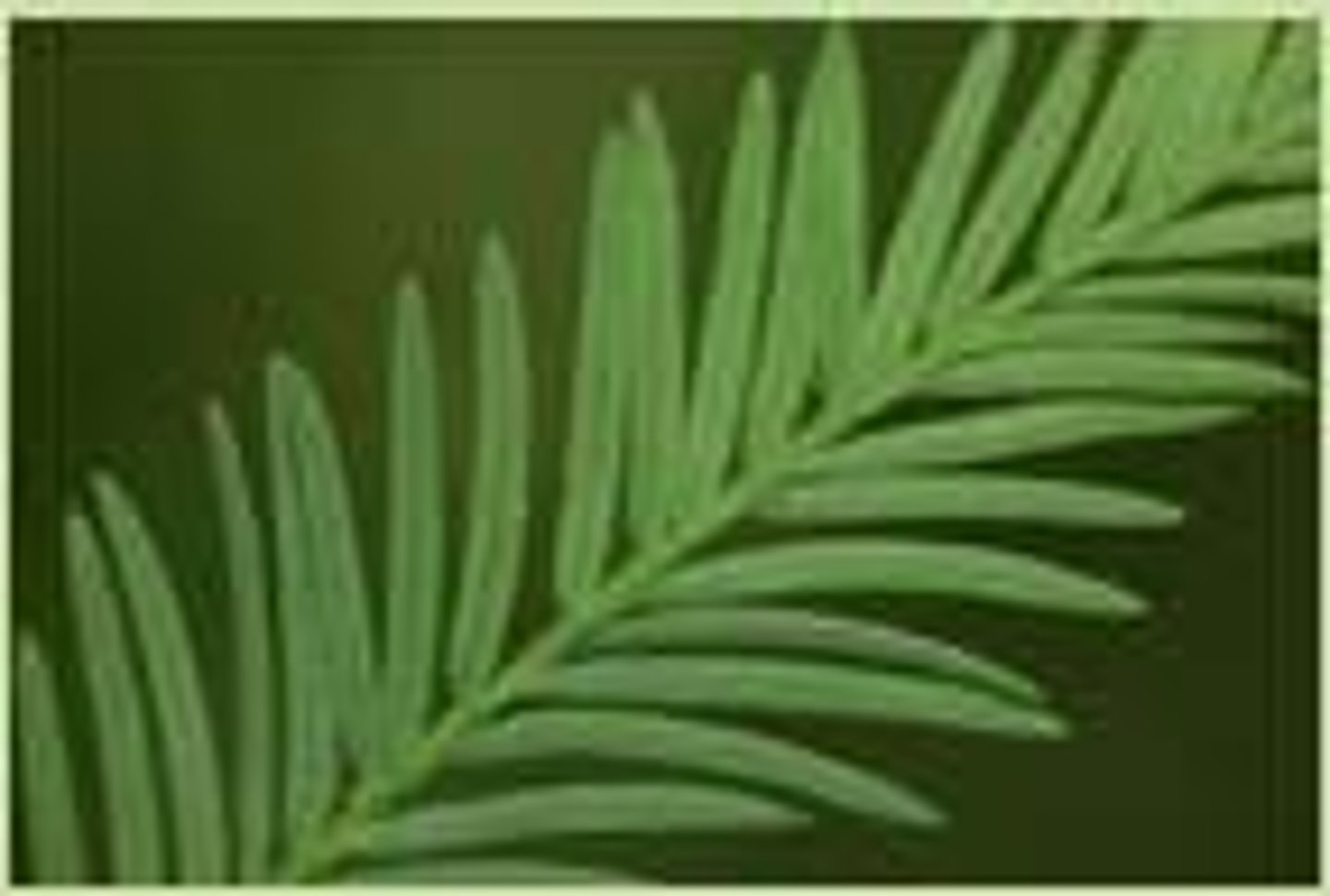
Needle-like, radially arranged, flat, thin, with stomatal lines below.
Hardiness Zones
4 to 11.
Size
Height: 50-70(100)ft; Width: 20-30ft.
Habit
Deciduous conifer, usually columnar to pyramidal without great variation, but can develop broad-spreading canopies.
Growth Rate
Medium.
Native Range
From Delaware to Florida, west to Illinois, Missouri, Arkansas, and Louisiana.
distichum
Means 'two-ranked', referring to the leaves being in two rows.
Culture
Grows well on deep, fine, sandy loam, acid soil; adaptable to wet, dry and well-drained soil.
Diseases and insects
Includes twig blight, cankers, wood decay, cypress moth, fruit tree leafroller.
Landscape value
A stately tree, a decided accent of texture and form; good for wet areas; possible highway plant or street tree.
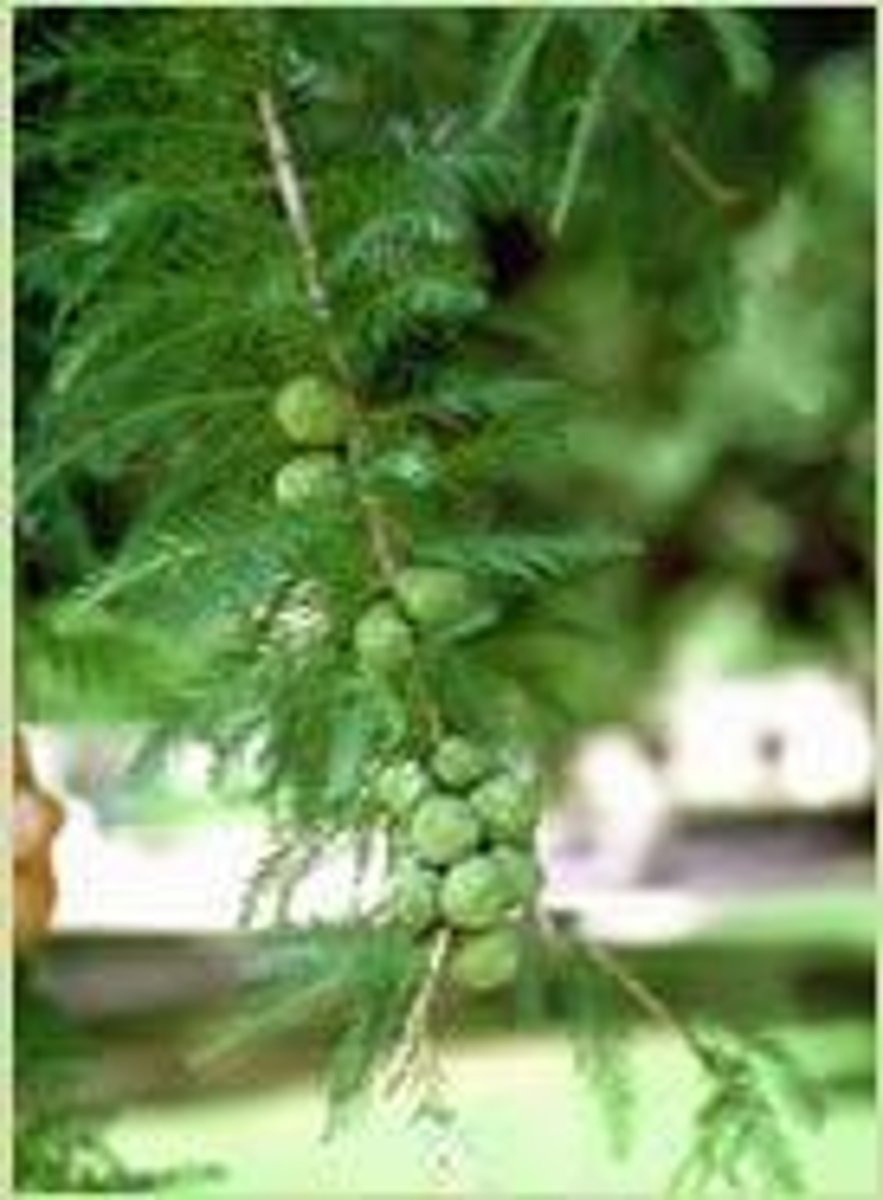
Fruits
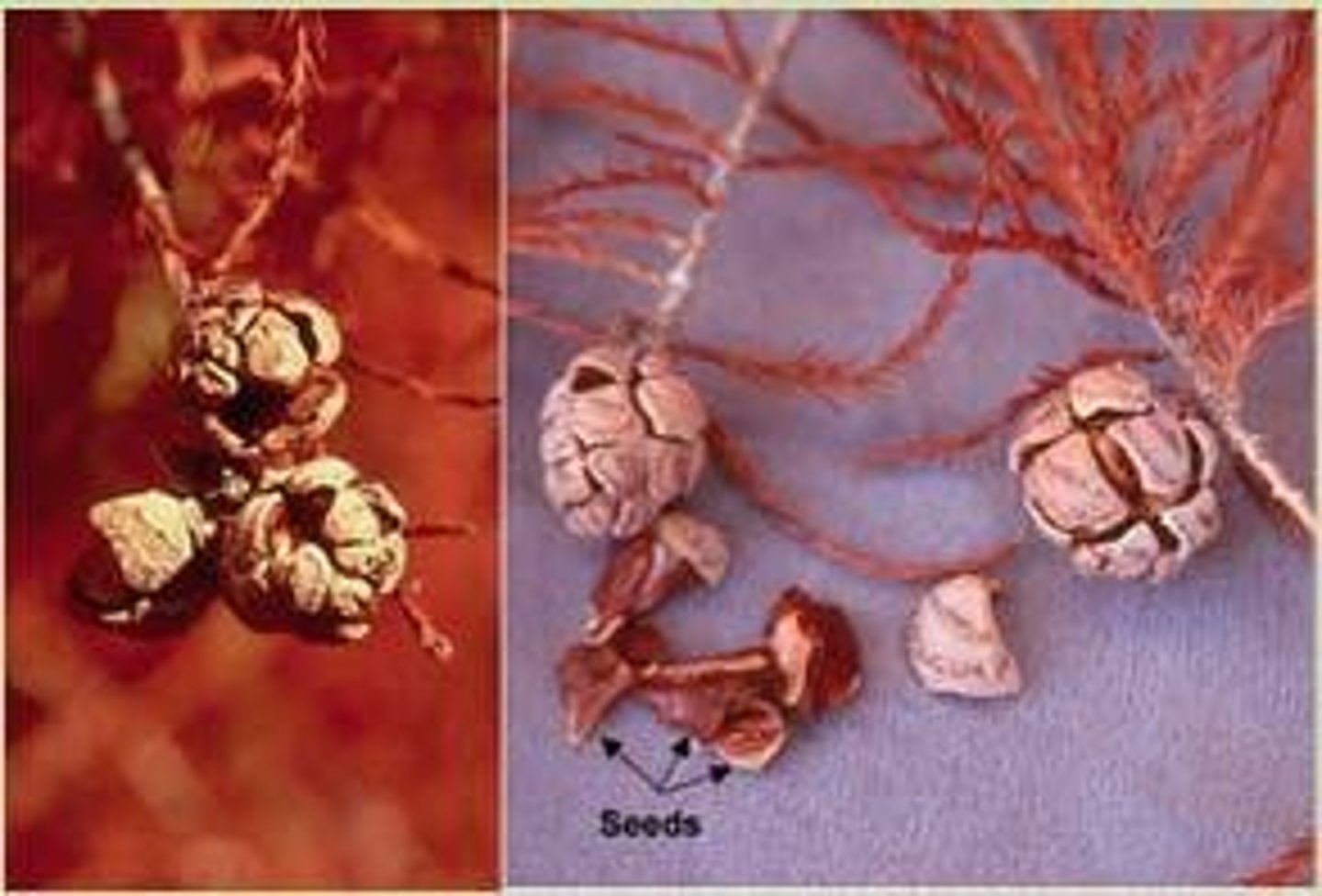
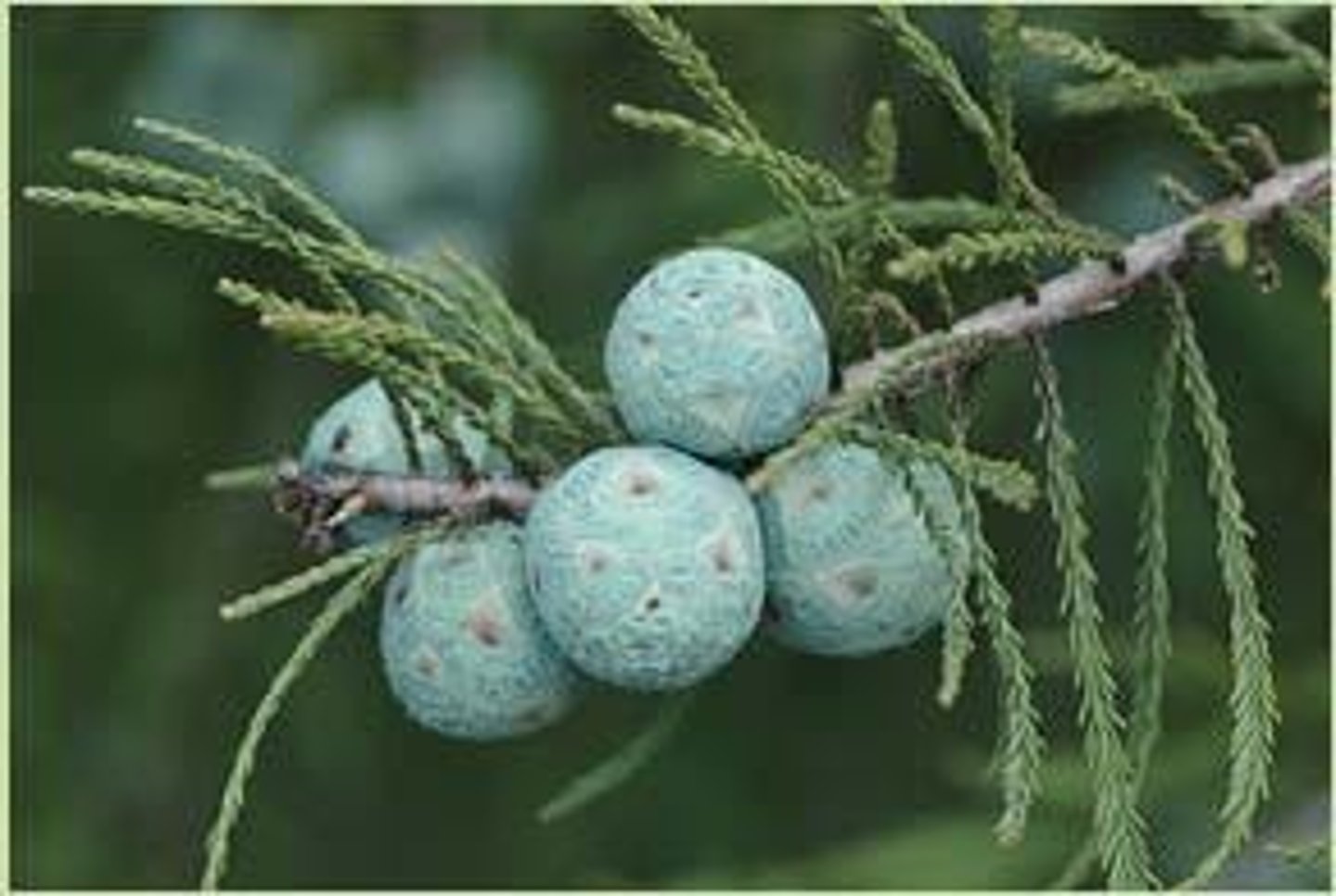
Cones globular or obovoid, composed of peltate scales forming a woody sphere.
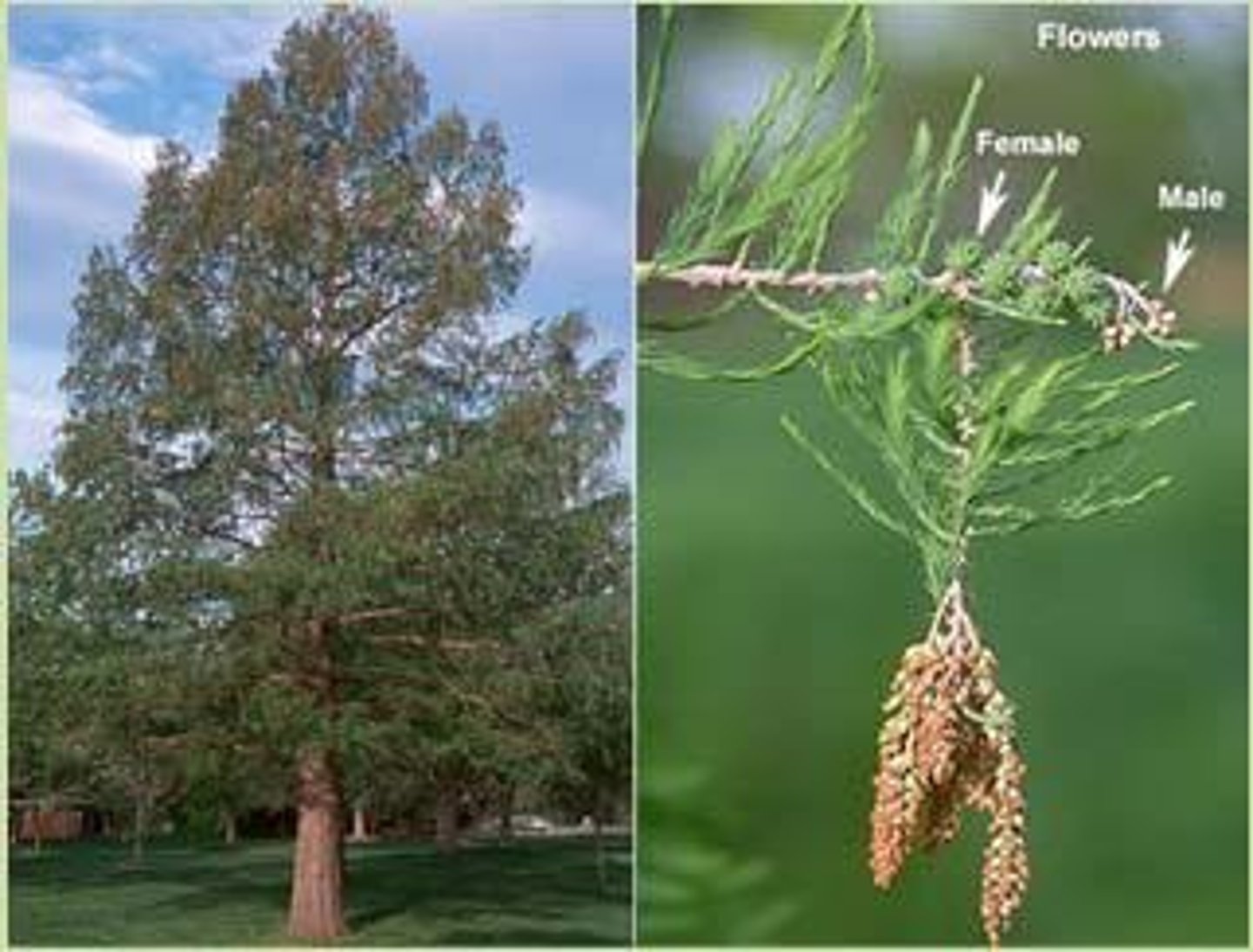
Flowers
Monoecious; males in drooping, long panicles; females are subglobose.
Buds
Alternate, near tip of stem rounded, with overlapping, sharp-pointed scales.
Stem
Bark is reddish brown or gray, fibrous; trunk becomes strongly buttressed in wet areas.
Cypress knees
Develops large flares at the base of the trunk in swamps or moist soils.
Metasequoia
A genus with only 1 species: Metasequoia glyptostroboides, known as Dawn Redwood.
Metasequoia glyptostroboides
Commonly known as Dawn Redwood, referred to as 'the 100 million year old tree'.
Hardiness Zones (Metasequoia)
(4)5-8.
Size (Metasequoia)
Height: 70-100ft; Width: 25ft.
Habit (Metasequoia)
Deciduous conifer, excurrent, pyramidal, conical, with a single straight trunk in youth.
Size of Dawn Redwood
Height: 70-100ft; Width: 25ft
Habit of Dawn Redwood
Deciduous conifer, excurrent, pyramidal, conical, with a single straight trunk in youth; supposedly developing a broad-rounded crown with age.
Growth Rate of Dawn Redwood
Fast
Native Range of Dawn Redwood
Native to Sichuan, China. Only introduced in 1948.
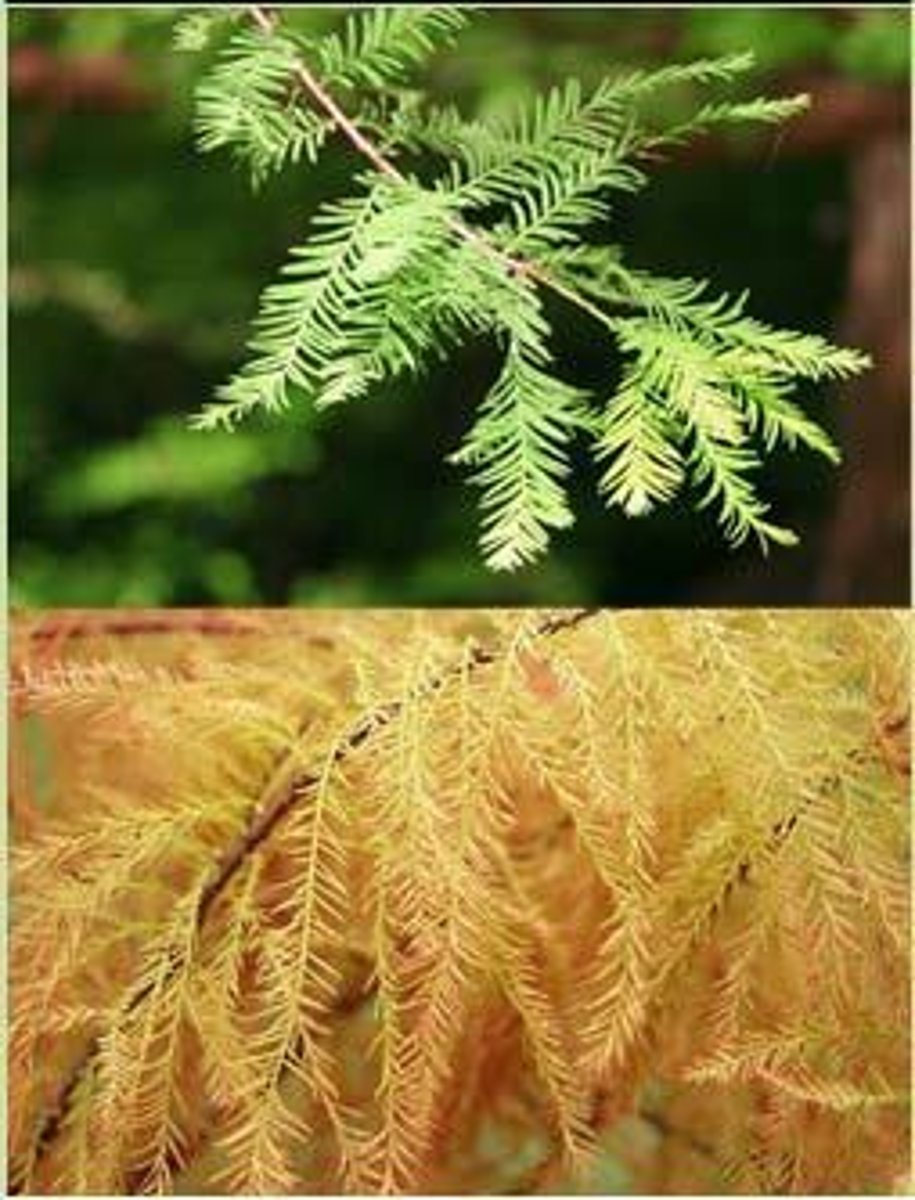
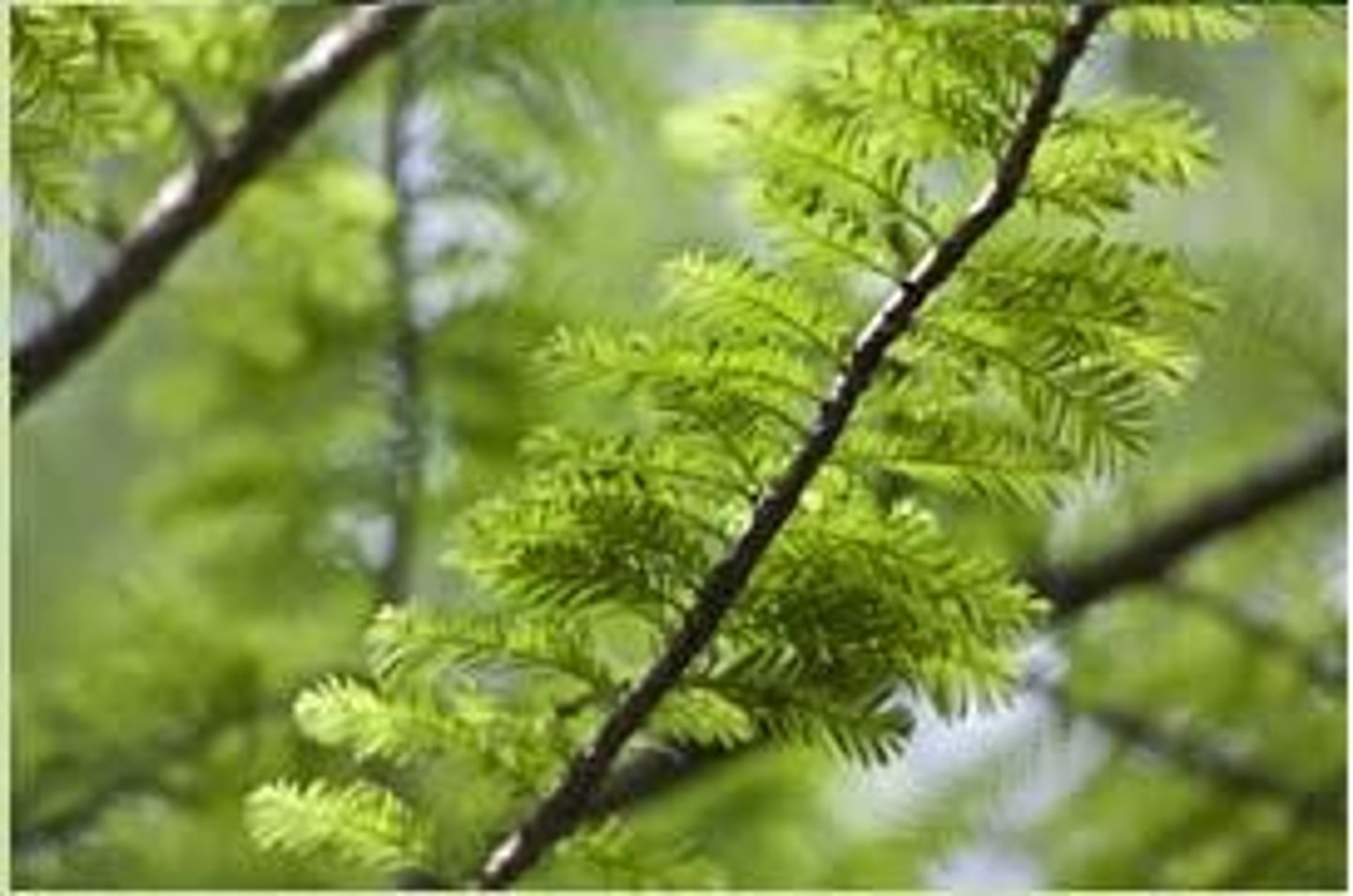
Leaves of Dawn Redwood
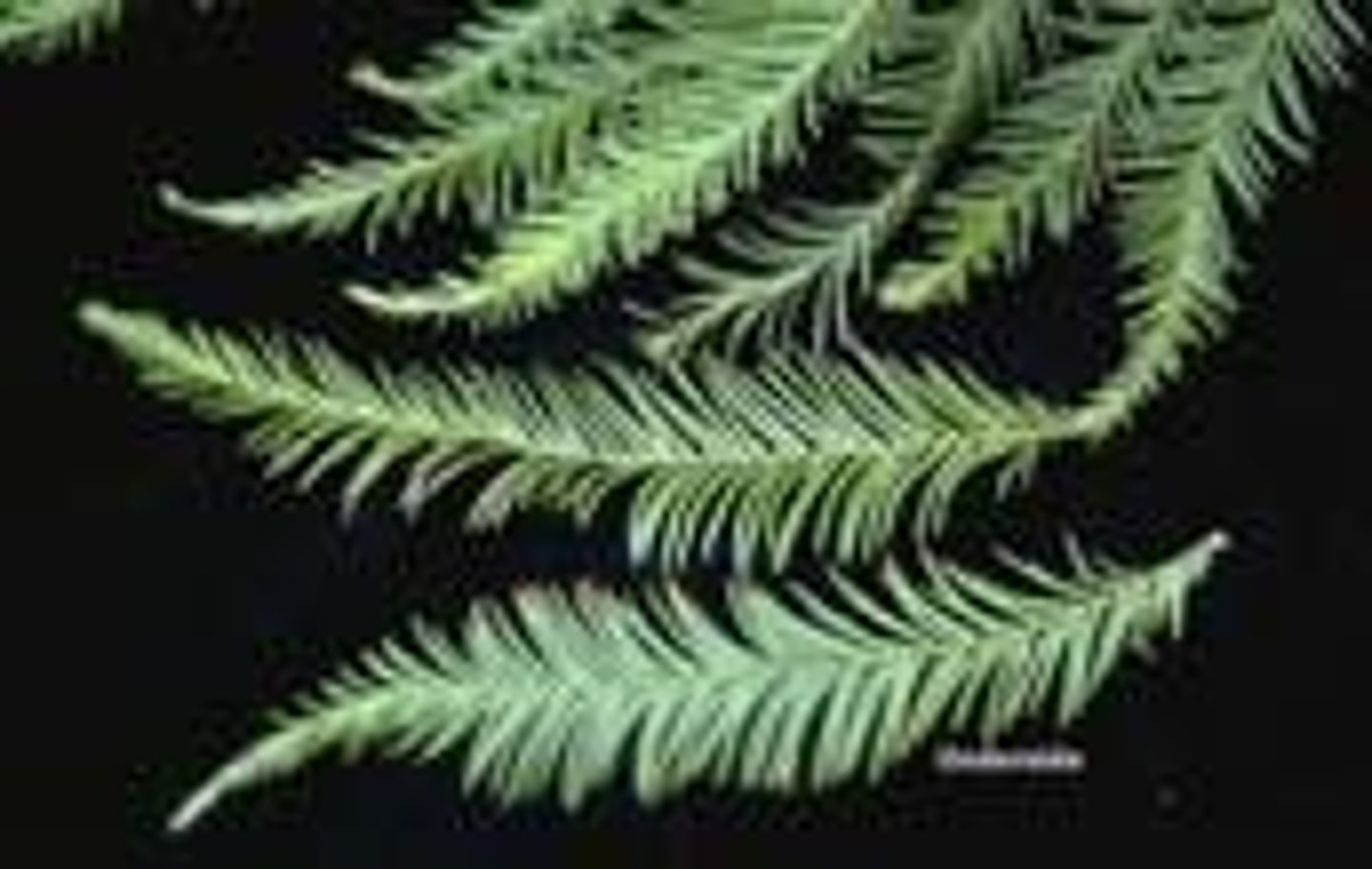
Deciduous needles, ½'' long, opposite, linear, flattened, straight or slightly curved, pectinately arranged.
Leaf Color of Dawn Redwood
Bright green above with a narrowly grooved mid-vein, light green below. Change to brown in fall, can be an excellent orange-brown to red-brown.
Flowers of Dawn Redwood
Monoecious, male flowers in racemes or panicles up to 12'' long; female solitary.
Fruits of Dawn Redwood
Cones pendulous, solitary, ¾ to 1 ¼'' long, 3/5 to ¾'' wide; mature cones globose to ovid, dark brown.
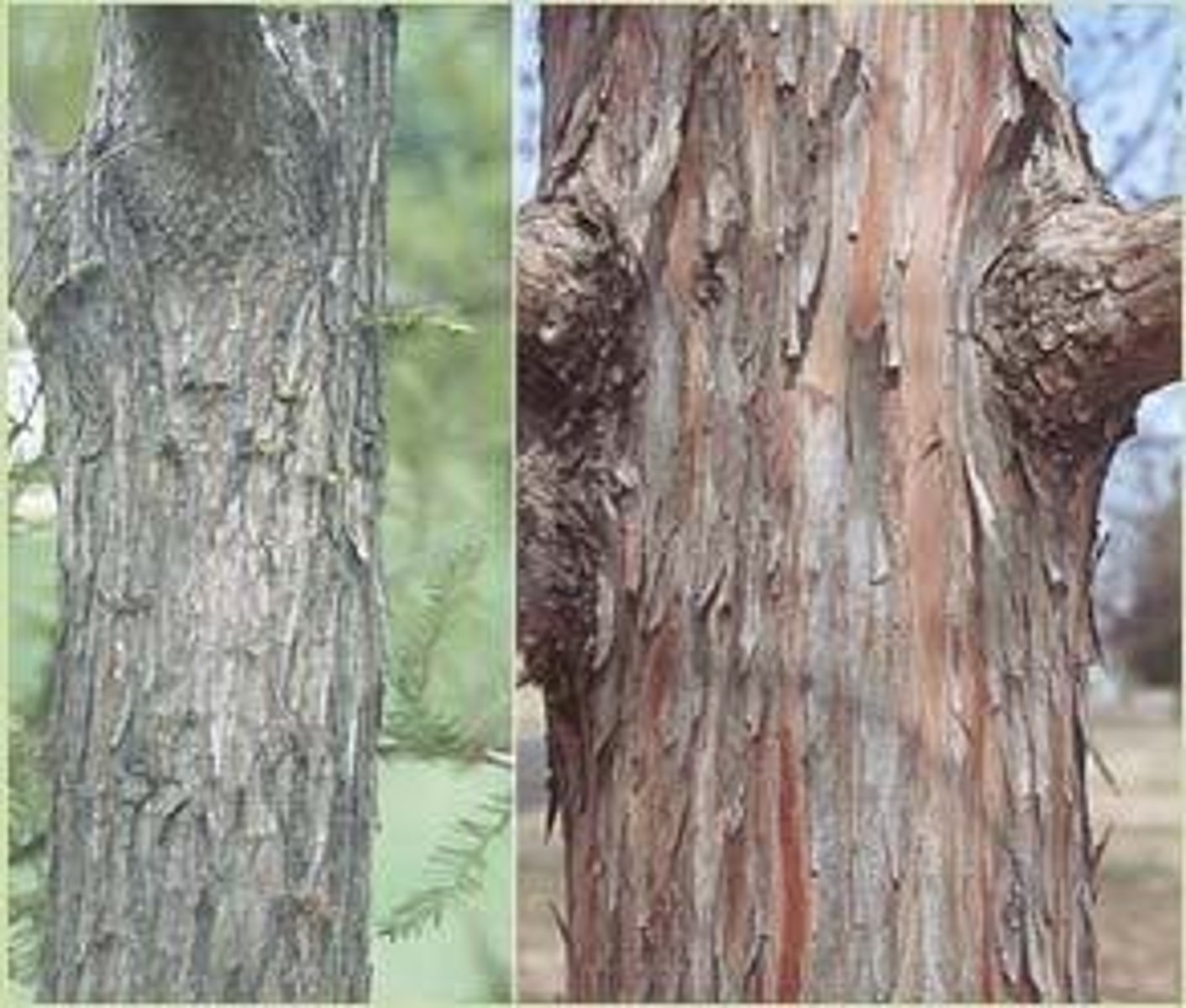
Bark of Dawn Redwood
Reddish brown when young, darker, fissured, and exfoliating in strips when mature.
Buds of Dawn Redwood
Non-resinous, usually in pairs at the base of deciduous branchlets but sometimes solitary between the branchlets; ovoid or ellipsoid.
Platanus
Family: Platanaceae; Sycamore, Plane, Plane Tree.
Species of Platanus
Some 6-7 species of deciduous trees with thin, plate-like, exfoliating bark.
Native Range of Platanus
Native to North America and southeast Europe and southwest Asia.
Platanus etymology
Platanus: Greek 'platanos' (broad or flat), a reference to the wide leaves of this tree.
Platanus occidentalis
American Planetree, Sycamore, Buttonwood, Buttonball-tree.
Buds of Platanus
Buds enclosed by the base of the petiole in summer.
Leaves of Platanus
Alternate, simple, mostly 5-7 palmately-lobed, pubescent at first, then glabrous and glossy.
Flowers of Platanus
Flowers in dense, globose clusters on a long, pendulous stalk; individual male and female flowers are inconspicuous.
Fruit of Platanus
A 2 mm achene, packed in a 2-3 cm globose fruit-ball.
Hardiness Zones for Platanus
4-9
Size of Platanus
Height: 75-100ft; Width: 75-100ft
Habit of Platanus
Broadleaf deciduous tree, with a large, massive trunk and a wide-spreading open crown of massive, crooked branches.
Culture of Platanus
Sun or light shade. Prefers deep, rich, moist, well-drained soil, but will grow in about anything.
Moon Sycamore
Platanus occidentalis
Fruit
Syncarp (multiple fruit) of elongated, obovoid achenes, 4/5 to 1 1/3'' diameter, on a 3-6'' long penduncle, single, remain on the tree through winter.
Ulmus
About 45 species of deciduous, rarely semi-evergreen, trees, occasionally shrubs.
Ulmus americana
American Elm
Dutch elm disease
Caused by the fungus Ophiostoma novo-ulmi through its transmission by the elm bark beetle.
Dutch Elm Disease Resistant cultivars
New Harmony, Valley Forge, Delaware, Brandon
Ulmus parvifolia
Chinese Elm, Lacebark Elm; Native to northern and central China, Japan, and Korea.
Size of Ulmus parvifolia
Height: 40-50ft; Width: 40-50ft
Habit of Ulmus parvifolia
Broadleaf deciduous tree; dense habit, round-headed often with pendulous branchlets.
Growth Rate of Ulmus parvifolia
Medium to fast.
Leaves of Ulmus parvifolia
Simple, alternate, ¾ to 2 ½'' long, 1/3 to 1 1/3'' wide, elliptic to ovate or obovate.
Fall color of Ulmus parvifolia leaves
Varies from green, yellow (usual), to red.
Culture of Ulmus parvifolia
Sun; adaptable to soil and acidity, best in moist, well-drained, fertile soil.
Diseases and insects affecting Ulmus parvifolia
Resistant to Dutch elm disease and also the elm leaf and Japanese beetles.
Landscape value of Ulmus parvifolia
Excellent, tough, durable tree for about any situation.
Celtis
Family: Ulmaceae; Hackberry; About 70, mostly evergreen species in the tropics.
Celtis laevigata
Sugar Hackberry, Sugarberry, Southern Hackberry or Mississippi Hackberry; Leaves alternate, 3-veined at the base.
Size of Celtis laevigata
Height: 60-80ft; Width: 60-80ft
Growth Rate of Celtis laevigata
Medium to fast.
Hackberry nipplegall makers
Pachypsylla celtidismamma, Psyllidae; Adult insects lay their eggs on new hackberry leaves in the spring.
Culture of Celtis laevigata
Sun, easily transplanted, prefer rich, moist soils, but grows in dry, heavy or sandy, rocky soils.
Diseases and insects affecting Celtis laevigata
Leaf spots, powdery mildew, aphid, scales, good resistant to hackberry galls and witches' brooms.
Landscape value of Celtis laevigata
Good for park and large area use, has the innate ability to grow in dry soils and under windy conditions.
Fruit of Celtis laevigata
Fruits berry-like drupes, orange-red to blue-black, very sweet and juicy, and relished by birds.
Leaves of Celtis laevigata
Alternate, simple, oblong-lanceolate, sometimes ovate, 2-4'' long, 1 ¼'' wide.
Bark of Celtis laevigata
Smooth between raised, corky warts.
Ginkgoaceae
The Maidenhair Tree family.
Ginkgo biloba
A single species, a deciduous tree that has existed almost unchanged for over 200 million years.
Ginkgo
Derived from the Chinese yin-kuo, meaning silver apricot, from the Japanese pronunciation, ginko.
biloba
Refers to the two lobed leaves, which may be incised or divided.
Size of Ginkgo biloba
Height: 50-80 (100) ft; Width: 30-40 ft or more.
Habit of Ginkgo biloba
Broadleaf deciduous tree, usually pyramidal when young, becoming wide-spreading with age.
Growth Rate of Ginkgo biloba
Slow to medium.
Leaves of Ginkgo biloba
Alternate, simple, fan-shaped, 2-3'' long, bright green in summer and yellow to gold in fall.
Flowers of Ginkgo biloba
Dioecious - male and female trees; male flowers are green, catkin-like, while female flowers are long stalked.
Fruit of Ginkgo biloba
Not a true fruit but a naked seed with a fleshy covering, foul smelling when ripe.
Fraxinus
A genus of some 65 species of shrubs and trees, mostly deciduous, belonging to the Olive Family.
Fraxinus pennsylvanica
Commonly known as Green Ash.
Leaves of Fraxinus
Opposite and compound (pinnate).
Flowers of Fraxinus
Small, bisexual or unisexual, not ornamental, and appear before the leaves.
Fruit of Fraxinus
A 1-seeded samara ('key') with a flattened, thin wing.
Hardiness Zones for Fraxinus
(2)3-9.
Size of Fraxinus pennsylvanica
Height: 50-60 ft; Width: 25-40 ft.
Habit of Fraxinus pennsylvanica
Broadleaf deciduous tree, pyramidal in youth, developing a spreading habit at maturity.
Landscape Use
One of the most widely planted ornamental trees, used in streets, lawns, commercial areas, parks, and golf courses.
Emerald Ash Borer
An exotic beetle (Agrilus planipennis) that threatens Fraxinus species native to North America.
Emerald Ash Borer Discovery
First discovered in the U.S. in southeastern Michigan near Detroit in the summer of 2002.
Emerald Ash Borer Damage
Adult beetles nibble on ash foliage but cause little damage; larvae feed on the inner bark, disrupting the tree's ability to transport water and nutrients.
Emerald Ash Borer Arrival
Probably arrived in the U.S. on solid wood packing material carried in cargo ships or airplanes originating in its native Asia.
Emerald Ash Borer Range
Established in a large portion of North America, bordered by Ontario and Quebec on the north, Tennessee and North Carolina on the south, and from the Atlantic Coast west to Minnesota and Kansas.