ALLERGY AND RESPIRATORY SYSTEM DRUG THERAPY UNIT 2 pt.1
 Call Kai
 Learn
Learn Practice Test
 Spaced Repetition
 Match
Match Flashcards
 Knowt Play
1/66

There's no tags or description
Looks like no tags are added yet.
Name | Mastery | Learn | Test | Matching | Spaced | Call with Kai |
|---|
No analytics yet
Send a link to your students to track their progress
67 Terms
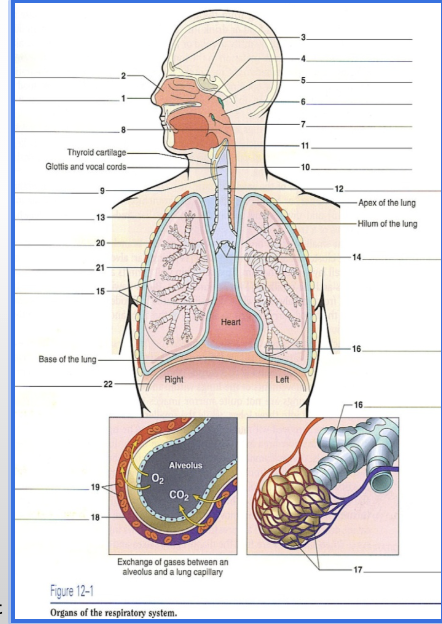
STRUCTURES OF THE RESPIRATORY SYSTEM
Nostrils (nares)
Nasal cavity; sinuses
Mouth
Pharynx
Larynx
Trachea
Lungs
Bronchi (R & L)
Bronchioles
Alveoli
FUNCTIONS OF THE RESPIRATORY SYSTEM
Gas exchange
O2 in, CO2 out
Smooth muscle in respiratory passages
Sympathetic stimulation
beta-2 receptors
bronchodilation
Parasympathetic stimulation
muscarinic receptors
bronchoconstriction
System | Receptor | What Happens to Smooth Muscle? | Airway Effect |
|---|---|---|---|
Sympathetic (Fight or Flight) | Beta-2 | Relaxes | Bronchodilation (OPEN) |
Parasympathetic (Rest and Digest) | Muscarinic | Contracts | Bronchoconstriction (NARROW) |
FUNCTIONS OF THE RESPIRATORY SYSTEM
Sympathetic vs Parasympathetic
Sympathetic (β2)
😨 Running from danger
⬇
β₂ stimulated
⬇
Smooth muscle relaxes
⬇
🫁 Airway OPENS
⬇
More O₂ gets in
Parasympathetic (Muscarinic)
😌 Relaxing
⬇
Muscarinic stimulated
⬇
Smooth muscle contractions
⬇
🫁 NARROWS Airway
⬇
Less airflow needed
Exam Cheat Sheet
🫁 Gas exchange = O₂ in, CO₂ out
⚡ Sympathetic → Beta-2 → Bronchodilation → Airways OPEN
🌿 Parasympathetic → Muscarinic → Bronchoconstriction → Airways NARROW
One-Line Memory Trick
"Beta-2 Breathing Opens Airways, Muscarinic Makes Airways Smaller."
Super Simple COPD Cheat Sheet
COPD: Chronic Obstructive Pulmonary Disease
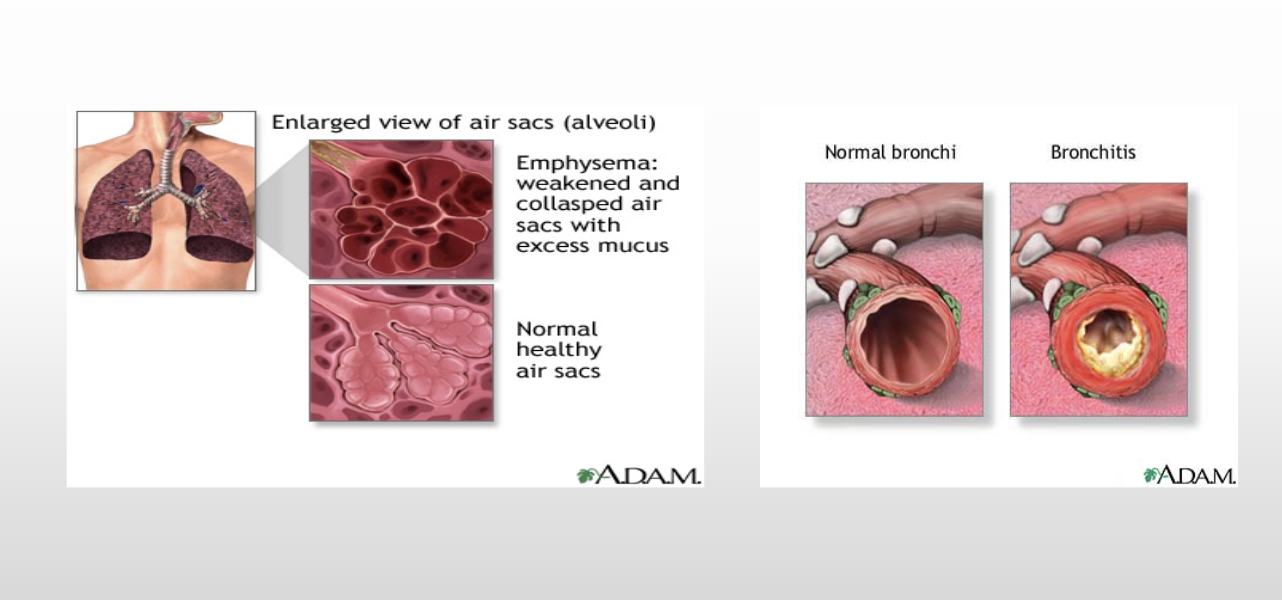
Chronic Bronchitis
Problem: Too much mucus
Cause: Smoking, pollutants
Symptoms:
Productive cough
Difficulty breathing
Frequent infections
increased respiratory infections
Memory: 🟢 "Mucus Problem"
Emphysema
Problem: Destroyed alveoli
Cause: Smoking
Symptoms:
Shortness of breath
Activity intolerance
Memory: 💥 "Air Sac Problem"
Chronic Bronchitis = Mucus blocks airways
Emphysema = Alveoli destroyed, air trapped
COPD = Hard to get air in and out of the lungs 😮💨🫁
COPD (Chronic Obstructive Pulmonary Disease) What is COPD?
COPD is a long-term lung disease that makes it hard to breathe.
Think of COPD as having two major problems :
Chronic Bronchitis = Airways are clogged with mucus
Emphysema = Air sacs are damaged
Both problems make it difficult for oxygen to get into the body and carbon dioxide to get out.
1. Chronic Bronchitis What's Happening?
The breathing tubes (bronchi) become:
🔥 Inflamed (swollen)
🟢 Full of thick mucus
🚫 Partially blocked
Because of this, air has trouble moving through the lungs.
2. Emphysema What's Happening?
The alveoli (tiny air sacs) are damaged and destroyed.
Normal Alveoli
🫧 Small stretchy air sacs
They:
Fill with oxygen
Release carbon dioxide
COPD: Chronic Obstructive Pulmonary Disease
Treatment
1. Bronchodilators What do they do?
They relax airway smooth muscle.
⬇
Airways open wider
⬇
More air can move in and out
Remember
Bronchodilator = Dilates (opens) bronchi
2. Steroids What do they do?
They decrease inflammation (swelling).
⬇
Less airway swelling
⬇
Improved airflow
Remember
Steroids = Stop Swelling
1. chronic bronchitis:
2. emphysema:
Asthma vs COPD
Asthma | COPD |
|---|---|
Reversible | Usually not fully reversible |
Airways narrow suddenly | Long-term lung damage |
Often triggered by allergens/exercise | Often caused by smoking |
Bronchoconstriction is major problem | Mucus and alveolar damage are major problems |
Super Simple Exam Cheat Sheet
Asthma:
Asthma
🫁 Airways become inflamed
⬇
🤏 Bronchoconstriction (airway tightens)
⬇
🔥 Edema (swelling)
⬇
🟢 Increased mucus
⬇
😮💨 Difficulty breathing
Triggers
🌸 Allergens
🤧 URI (cold/flu)
🏃 Exercise
😨 Stress
❄ Cold air
🧹 Dust/fragrances/chemicals
💊 Certain drugs
One-Sentence Memory
Asthma = Tight muscles + swollen airways + extra mucus = narrowed airways and trouble breathing. 🫁😮💨
Asthma is …
… = "Tight, Swollen, and Sticky"
Tight
➡ Bronchoconstriction
Swollen
➡ Mucosal edema
Even less room for air.
Sticky
➡ Increased mucus
The airway becomes clogged.
Why Is Breathing Hard?
The airway becomes narrow because of:
✅ Tight muscles
✅ Swollen lining
✅ Extra mucus
All three reduce airflow.
Inflammation of the bronchioles causing bronchoconstriction
Mucosal edema, increased production of bronchial mucus
ASTHMA SYMPTOMS
Wheezing
Chest tightness
Coughing
Tachypnea- fast breathing
Dyspnea
Tachycardia= fast HB
Respiratory Weakness (fatigue)/shortness of breath
Treat with bronchodilator-widen the lungs, steroids-less swelling , and possibly allergy meds
Allergies (Super Easy Version)
Step 1: Allergen Enters the Body
An allergen is something that triggers an allergy.
Examples:
🌸 Pollen 🧹 Dust
Step 2: Immune System Thinks It's Dangerous
Your immune system mistakes the allergen for an enemy.
⬇
It starts an immune response
⬇
The body makes antibodies .
🛡 Antibodies = proteins that help fight things the body thinks are harmful
Step 3: Antigen-Antibody Reaction What's an Antigen?
An antigen is the substance that enters the body (the allergen).
Examples:
🌸 Pollen 🧹 Dust
When the allergen (antigen) meets the antibody:
⬇
Antigen + Antibody Reaction
⬇
The body thinks it must defend itself.
Step 4: Mast Cells Release Chemicals
Special cells called mast cells release chemicals.
The two important chemicals are: Histamine and Leukotrienes
Step 5: Allergy Symptoms Appear
The released histamine and leukotrienes cause symptoms.
Histamine Causes:
🤧 Sneezing👃 Runny nose
ALLERGIES 1
meaning
Allergy Process
🌸 Allergen enters
⬇
🛡 Antibodies react
⬇
💥 Mast cells release histamine & leukotrienes
⬇
🤧 Allergy symptoms
⬇
🫁 Bronchoconstriction can occur
Drugs
💊 Antihistamines → Block histamine
💊 Antiallergics → Prevent histamine/leukotriene release
💊 Steroids → Reduce inflammation
One-Line Memory
Allergen → Antibodies react → Mast cells release histamine & leukotrienes → Allergy symptoms and bronchoconstriction. 🤧🫁
Seasonal vs Perennial
ALLERGIES 2
Seasonal Allergic Rhinitis | Perennial Allergic Rhinitis |
|---|---|
Happens during certain seasons | Happens all year |
Spring, summer, early fall | Any time of year |
Pollen, grasses, weeds, mold spores | Dust mites, pets, mold |
Usually outdoor allergens | Usually indoor allergens |
Allergic Rhinitis
Exam Cheat Sheet
= Immune system overreacts to allergens
⬇
Histamine released
⬇
🤧 Sneezing
👃 Runny nose
👃 Stuffy nose
👀 Itchy eyes
😴 Fatigue
Seasonal allergic rhinitis
🌸 Spring/Summer/Fall
Caused by:
🌳 Trees
🌾 Grass
🌿 Weeds
🍄 Mold spores
Perennial allergic rhinitis
📅 Year-round
Caused by:
🧹 Dust mites
🐱 Pet dander
🍄 Mold
….=Allergens trigger histamine release, causing a runny nose, sneezing, itchy eyes, and congestion. Seasonal happens during certain seasons; perennial happens all year. 🤧👃🌸📅
HISTAMINE RECEPTORS
Receptor | Main Location | Main Function |
|---|---|---|
H1 | Blood vessels, airways, intestines, CNS | Allergies |
H2 | Stomach, heart, uterus, blood vessels | Stomach acid secretion |
H3 | Brain neurons | Controls neurotransmitters |
H4 | White blood cells | Inflammation and immune response |
H1 = Allergies
🤧 Sneezing
👃 Runny nose
👀 Itchy eye
🫁 Bronchoconstriction
H2 = Stomach
🍔 Stomach acid
🔥 Heartburn/ulcers if overstimulated
H3 = Brain
🧠 Controls neurotransmitter release
H4 = White Blood Cells
🦠 Immune response
🔥 Inflammation
😣 Pain
HISTAMINE RECEPTORS
notes
H-1 Receptors (associated with allergies)
Imagine pollen enters your body.
🌸 Pollen
⬇
💥 Histamine released
⬇
H1 Activated
🤧 Sneezing
👃 Runny nose
Blood vessels
Bronchial smooth muscles
Intestinal smooth muscles
CNS
H-2 Receptors: (GI Issues)
🍔 Increased stomach acid
Stomach
Heart
Uterine tissue
Blood vessels
H-3/🧠 Helps regulate brain signaling
and
H-4 receptors (pain and inflammation)
🦠 Helps control inflammation and immune responses
Neurons
Presynaptic areas of the brain
H-4-WBCs
H1 = There is Fever (Allergies) 🤧 H2 = Heartburn (Stomach Acid) 🔥 H3 = Head (Brain) 🧠 H4 = Helpers of the Immune System 🦠🔥
ALLERGIC REACTION
what happens
Histamine Effect | What You See |
|---|---|
Bronchoconstriction | 😮💨 Trouble breathing |
Increased mucus | 👃 Runny nose, congestion |
Vasodilation | ⬇ Lower BP |
Skin capillary dilation | 🔴 Red skin (erythema) |
Faster heartbeat | ❤ Tachycardia |
Capillary leakage | 👃 Congestion, 🟠 hives |
Brain vessel dilation | 🤕 Headache (cephalgia) |
Nerve irritation | 😖 Itching |
Increased peristalsis | 💩 Diarrhea |
ALLERGIC REACTION
steps
🌸 Allergen enters
⬇
💥 Mast cells release histamine
⬇
🫁 Airways tighten → Bronchoconstriction
👃 More mucus → Runny/stuffy nose
🔴 Skin redness → Erythema
💧 Leaky capillaries → Hives & congestion
❤ Fast heartbeat
🧠 Headache
😖 Itching
💩 Diarrhea
Histamine causes the body to become "red, runny, swollen, itchy, wheezy, and sometimes gives headaches and diarrhea." 🤧🔴😖🫁💩
Antiallergics (Mast Cell Stabilizers)
First, what are mast cells?
These drugs stabilize (calm down) mast cells .
Think:
🎈 Mast cell = balloon full of histamine
🔒 Mast cell stabilizer = puts a lock on the balloon
SW:
🌸 Allergen enters
⬇
🎈 Mast cell wants to release histamine
⬇
🔒 Drug prevents release
⬇
Less histamine released
⬇
Fewer allergy symptoms
"Stop Histamine Before It Starts"
Unlike antihistamines:
Antihistamines block histamine AFTER it is released.
Mast cell stabilizers stop histamine from being released in the first place.
ANTIALLERGICS (MAST CELL STABILIZERS)
what it does summary
Mast Cell Stabilizers MOA
🔒 Stabilize mast cells
⬇
Prevent histamine release
⬇
Decrease allergy symptoms
Uses
🤧 Prevent chronic allergic rhinitis
🫁 Prevent asthma attacks
Important
🛡 Prophylaxis = Prevention
❌ Not used to stop an asthma attack that's already happening
Side Effects
👃 Nasal itching/burning
👃 Nasal dryness
👀 Burning eyes
🤢 Nausea
😴 Drowsiness
🤕 Headache
👅 Bad taste
Mast cell stabilizers "lock up" mast cells so they can't release histamine, helping PREVENT allergies and asthma attacks before they start. 🔒🎈🤧🫁
Mast Cell Stabilizers/Anti-allergics
DRUG
cromolyn sodium (Nasalcrom®)
Antihistamines
MOA
💊 Block histamine from H1 receptors
⬇
Prevent histamine from causing allergy symptoms
Uses
🤧 Allergies
👃 Runny nose
👀 Itchy eyes
🌸 Hay fever
A. Generation 1 Side Effects =Generation 1 is not a drug name . It is a group (class) of antihistamine drugs .
effects
😴 Sedation (sleepiness)
👅 Xerostomia (dry mouth)
H1 = Allergy Receptor Antihistamine = Blocks H1 Generation 1 = Makes You Sleepy
Think: "Generation 1 antihistamines block allergy symptoms, but they can make you sleepy and give you a dry mouth." 😴👅🤧
Antihistamines
DRUGS
a Generation I (sedating)
brompheniramine (Dimetapp®)
chlorpheniramine (Chlor-Trimeton®)
clemastine
diphenhydramine (Benadryl®)
hydroxyzine
promethazine (Phenergan®)
azelastine (Astepro®)
ANTIHISTAMINES
B. Generation II
✅ Generation … = Non-sedating (usually not sleepy)
✅ Blocks H1 receivers
⚠ Main side effect = Xerostomia (dry mouth)
Easy Memory
Generation 1 = Sleepy 😴
Generation 2 = Not Sleepy 🙂
Xerostomia = Dry Mouth 👅
b Generation II (non-sedating)
DRUG
loratadine (Claritin®)
fexofenadine (Allegra®)
cetirizine (Zyrtec®)
USES OF ANTIHISTAMINES
Condition | What It Means |
|---|---|
Hay fever | Seasonal allergies |
Insect bite | Itching, redness, swelling |
Perennial allergic rhinitis | Year-round allergies |
Seasonal allergic rhinitis | Seasonal allergies |
Urticaria | Hives |
Pruritus | Itching |
Dermatitis | Skin inflammation/rash |
Motion sickness | Feeling sick while traveling |
Vertigo | Spinning sensation |
Nausea/Vomiting | Upset stomach |
Common cold | Helps runny nose/sneezing |
Induce sleep | Helps make you sleepy |
If histamine is causing the problem (itching, sneezing, runny nose, hives), antihistamines can help. Some older antihistamines are also used for sleep, motion sickness, and nausea because they affect the brain (CNS). 😊
USES OF ANTIHISTAMINES
Allergy Uses vs Non-Allergy Uses
Allergy Uses
🤧 Hay fever
🐱 Pet/dust allergies
🟠 Hives
😖 Itching
🔴 Dermatitis
Non-Allergy Uses
😴 Sleep
🚗 Motion sickness
🤮 Nausea/vomiting
🤧 Cold symptom relief
BRONCHODILATORS
🫁 Asthma/COPD/ URI/ bronchitis
⬇
Airways narrow
⬇
💊 Beta-2 agonist given
⬇
Beta-2 receptors stimulated
⬇
🫁 Smooth muscle relaxes
⬇
🫁 Airways open
⬇
😮💨 Easier breathing
Beta-2 agonists stimulate Beta-2 receptors, relax airway muscles, open the airways (bronchodilation), and help patients breathe easier. 🫁😮💨✨
BRONCHODILATORS
steps
MOA
💊 Stimulates Beta-2 receptors
⬇
🫁 Smooth muscle relaxes
⬇
🫁 Bronchodilation
⬇
😮💨 Easier breathing
Uses
🫁 Asthma
🫁 COPY
🤧 URI
🫁 Bronchitis
Side Effects
❤ Tachycardia
❤ Palpitations
✋ Tremors
😬 Nervousness
🤢 Nausea/Vomiting
🤕 Headache
1. Beta-2 adrenergic agonists (sympathomimetics)
DRUG
albuterol (Ventolin®)
formoterol
terbutaline
salmeterol (Serevent®)
2. Xanthine derivatives
BRONCHODILATORS 3
💊 Xanthine derivative
⬇
⬆ cAMP
⬇
🫁 Airway muscles relax
⬇
🫁 Bronchodilation
⬇
😮💨 Easier breathing
Xanthine derivatives increase cAMP, which relaxes airway muscles, opens the airways, helps clear mucus, and can make patients feel jittery like they drink too much caffeine. ☕🫁😮💨
2. Xanthine derivatives
BRONCHODILATORS 3
how it works
MOA
💊 Increases cAMP
⬇
🫁 Bronchodilation
⬇
🧹 Improves mucus clearance
Uses
🫁 Asthma
🫁 COPD
Side Effects
🤢 Nausea/Vomiting
🚽 Increased urination
🤕 Headache
🔥 Flushing
⬇ Hypotension
😬 Restlessness
😳 Insomnia
✋ Tremors
☕ Jittery feeling
⚠ Seizures (toxicity
Important Nursing Point
🩸 Monitor blood levels
Because:
⚠ Narrow Therapeutic Index = easy to become toxic
2. Xanthine derivatives
BRONCHODILATORS
side by side
Term | Easy Meaning |
|---|---|
Bronchodilation | Airways open |
cAMP | Chemical that helps relax airways |
Mucociliary clearance | Removes mucus from lungs |
N/V | Nausea and vomiting |
Vasodilation | Blood vessels widen |
Hypotension | Low blood pressure |
Restlessness | Can't relax |
Insomnia | Can't sleep |
Tremors | Shaky hands |
Narrow TI | Small difference between safe and toxic dose |
Xanthine Derivatives
These drugs help open the airways so you can breathe better.
Think:
🫁 Airway too narrow
⬇
💊 Xanthine drug
⬇
🫁 Airway opens
⬇
😮💨 Easier breathing
Xanthine Derivatives
DRUG
theophylline (Theo-Dur®)
aminophylline
MOA (How Anticholinergics Work)
Anticholinergic = Anti-ACH
Think:
🚫 ACH is blocked
⬇
🚫 Muscarinic receptors are blocked
⬇
ACH can't work
⬇
Airway muscles don't tighten
⬇
🫁 Airway muscles relax
⬇
🫁 Bronchodilation
⬇
😮💨 Easier breathing
ACH = Airways Close Anticholinergic = Stops ACH
⬇
🫁 Airways Open
Step-by-Step
BRONCHODILATORS 5
Normally:
ACH
⬇
Muscarinic receptor
⬇
🫁 Bronchoconstriction
With an Anticholinergic:
💊 Drug blocks muscarinic receptor
⬇
ACH can't attach
⬇
No bronchoconstriction
⬇
🫁 Bronchodilation
⬇
😮💨 Easier breathing
Uses
COPD
🫁 Opens airways
⬇
Improves breathing
Asthma
🫁 Helps prevent airway narrowing
URI (Upper Respiratory Infection)
🤧 Can help improve airflow when airways are irritated.
3. Anticholinergics
MOA:
side effect
Dries Mucous Membranes What does this mean?
Anticholinergics reduce secretions.
⬇
Less mucus and saliva are made.
blocks muscarinic receptors, blocks actions of ACH → bronchodilation
Examples
👅 Dry mouth
👃 Dry nose
👁 Dry eyes
Easy Memory
Anticholinergics Dry Things Out
🏜👅 🏜👃 🏜👁
ACH Working | Anticholinergic Given |
|---|---|
Airways tighten | Airways open |
Bronchoconstriction | Bronchodilation |
More secretions | Less secretions |
More mucus | Drier mucus membranes |
Exam Cheat Sheet
Anticholinergics
MOA
💊 Blocks muscarinic receptors
⬇
🚫 Blocks ACH
⬇
🫁 Bronchodilation/ widen
⬇
😮💨 Easier breathing
Uses
🫁 COPD
🫁 Asthma
🤧 URI
Side Effects
👅 Dry mouth
👃 Dry nose
👁 Dry eyes
🏜Dries mucous membranes
One-Line Memory
Anticholinergics block ACH at muscarinic receptors, preventing bronchoconstriction and causing bronchodilation, but they can dry out the mouth, nose, and eyes. 🫁✨🏜
Quick Memory Trick
"ACH Closes Airways — Anticholinergics Stop ACH and Open Airways." 🫁😮💨
Anticholinergics
DRUG
ipratropium bromide (Atrovent®)
Combination Bronchodilator (Easy Short Answer)
A combination bronchodilator contains 2 drugs in 1 inhaler :
💊 Anticholinergic + 💊 Beta-2 agonist
They work together to open the airways.
How?
🫁 Beta-2 agonist
→ Relaxes airway muscles
→ Opens airways
PLUS+
🫁 Anticholinergic
→ Blocks ACH (which normally narrows airways)
→ Opens airways
Result
✅ Better bronchodilation (airway opening)
✅ Easier breathing
Easy Memory
Two airway-opening drugs working together = stronger breathing relief. 🫁😮💨✨
Combination Bronchodilators
DRUG
ipratropium bromide + albuterol sulfate (Combivent®)
CYSTEINYL LEUKOTRIENE
RECEPTOR INHIBITOR
Leukotrienes causes
⬇
🫁 Bronchoconstriction
🟢 Mucus
🔥 Inflammation
⬇
😮💨 Breathing problems
With the Drug
💊
⬇
🚫 Blocks leukotrienes
⬇
🫁 Airways stay more open
🟢 Less mucus
🔥 Less inflammation
⬇
😮💨 Easier breathing
MOA -how it works
🚫 Blocks leukotrienes
⬇
🫁 Less bronchoconstriction
🟢 Less mucus
🔥 Less inflammation
CYSTEINYL LEUKOTRIENE
RECEPTOR INHIBITOR
easy memory
Uses
🫁 Asthma
🫁 COPD
🤧 URI
🫁 Bronchitis
Side Effects
🤕 Headache
🤢 Nausea
💩 Diarrhea
One-Line Memory
Leukotriene inhibitors block chemicals that cause airway tightening, mucus production, and inflammation, helping PREVENT asthma and breathing problems. 🫁✨🛡
Super Short Memory
Leukotrienes = Tight airways + mucus + inflammation.
Drug = Blocks all 3. 🚫🫁🟢🔥
Cysteinyl Leukotriene Receptor Antagonists/Inhibitors
DRUG
montelukast (Singulair®)
MOA = Mechanism of Action
INHALED/NASAL STEROIDS
💊 Steroid
⬇
🚫 Blocks inflammation
⬇
🔥 Less swelling
⬇
🟢 Less mucus
⬇
🫁 Airways stay more open
⬇
😮💨 Easier breathing
Steroids = Stop Swelling
🔥❌
INHALED/NASAL STEROIDS
what does steroids do? 2
What Happens Without Steroids?
🔥 Inflamed Airways
⬇
🟢 More mucus
⬇
🫁 Airways become narrow
⬇
😮💨 Trouble breathing
What Happens With Steroids?
💊 Steroid
⬇
🔥 Less inflammation
⬇
🟢 Less mucus
⬇
Airways more open
⬇
😮💨 Easier breathing
Side Effects of LONG-TERM Steroid Use
(Usually with prolonged use)
Blood Pressure Changes
🩸 BP may increase
Blood Sugar Changes
🍬 Blood glucose may increase
Important for diabetics.
Osteoporosis
🦴 Bones become weaker
⬇
Higher risk of fractures
Weight Gain
⚖ Gain weight more easily
Difficulty Sleeping
😳 Insomnia
Trouble falling asleep
Increased Risk of Infection
🦠 Steroids suppress the immune system
⬇
Higher chance of getting infections
Skin Breakdown
🩹 Skin becomes thinner and more fragile
INHALED/NASAL STEROIDS
Patient Teaching/ Side effects:
If Using an Inhaler Rinse Your Mouth After Every Use
💊 Inhaler used
⬇
🚰 Rinse mouth
⬇
Prevents thrush/ 🦠 Yeast infection in the mouth
Steroid Inhaler → Rinse Mouth
If Using a Nasal Spray Point Away From the Septum
The septum is the wall in the middle of your nose.👃
Why?
If the spray repeatedly hits the septum:
⬇
👃 Irritation
⬇
🩸 Nosebleeds
Spray toward the side of the nose, not the middle.
Steroids reduce inflammation and swelling, making breathing easier, but long-term use can cause high blood sugar, weak bones, weight gain, infection risk, and insomnia. 💊🔥❌🫁😮💨
Super Short Memory
Steroids = Stop Swelling.
Inhaler → Rinse Mouth 🚰
Nasal Spray → Aim Away From Septum 👃➡
INHALED/NASAL STEROIDS
easy summary
MOA
💊 Inhibits inflammatory response
⬇
🔥 Less inflammation
⬇
🫁 Easier breathing
Uses
🫁 Asthma
👃 Allergic rhinitis
🤧 URI, 🤒 Cold
🫁 Bronchitis
Long-Term Effects
🩸 BP changes
🍬 Increased blood sugar
🦴 Osteoporosis
⚖ Weight gain
😳 Insomnia
🦠 Increased infection risk
🩹 Skin breakdown
Patient Teaching
🚰 Rinse mouth after inhaler use → prevents thrush
👃 Point nasal spray away from septum → prevents nosebleeds
Corticosteroids (asthma or allergic rhinitis, inhaled or nasal steroids)
INHALED/NASAL STEROIDS 2
DRUG
budesonide (Rhinocort®, Pulmicort®)
mometasone (Nasonex®, Asmanex®)
fluticasone (Flonase®)
flunisolide
triamcinolone (Nasacort®)
EXPECTORANTS
An expectorant helps you cough mucus out of your lungs and airways.
Think:
🟢 Thick mucus is stuck
⬇
💊 Expectorant makes mucus thinner
⬇
🤧 Easier to cough up
⬇
Airways become clearer
MOA = Mechanism of Action
💊 Expectorant
⬇
⬆ Increases respiratory secretions (more fluid)
⬇
🟢 Mucus becomes thinner
⬇
🟢 Mucus becomes less sticky
⬇
🤧 Easier to cough out
Expectorant = EXIT Mucus
EXPECTorant helps you EXPECTorate (cough out mucus).
🟢➡🤧➡🚪
EXPECTORANTS
easy summary
Uses
Colds -🤧 Helps loosen mucus
Bronchitis -🫁 Helps clear mucus from inflamed airways
URI (Upper Respiratory Infection) -🤧 Helps thin secretions
Chest Congestion -🟢 Breaks up thick mucus
⬇
Makes coughing more productive
Patient Teaching Drink Plenty of Water 💧
This is VERY important.
Why?
💧 Water helps thin mucus
⬇
💊 Expectorant works better
⬇
🤧 Easier to cough mucus out
Easy Memory Expectorant + Water = Works Better
💊 + 💧 = 🟢 Thin mucus
Expectorants add fluid to thick mucus, making it thinner and easier to cough out of the lungs. 🟢💧🤧🫁
Expectorant = Thin mucus so you can cough it out. 🟢➡🤧✨
Expectorants
DRUG
guaifenesin (Robitussin®, Mucinex®)
What's Happening?
MUCOLYTICS
Before Drug
🟢 Thick, sticky mucus
⬇
Blocks airways
⬇
It's hard to cough up
⬇
😮💨 Trouble breathing
After Drug
💊 Mucolytic
⬇
🟢 Mucus thins out
⬇
🤧 Easier to cough up
⬇
🫁 Airways clearer
⬇
😮💨 Easier breathing
Why Are They Often Given With a Bronchodilator?
MUCOLYTICS
Bronchodilator
💊 Open airways
⬇
🫁 Bronchodilation
⬇
😮💨 Easier breathing
Together
💊 Mucolytic → Breaks up mucus
PLUS
💊 Bronchodilator → Opens airways
⬇
🫁 Mucus comes out more easily
⬇
😮💨 Better breathing
bronchospasm-usually combined with bronchodilator
Exam Cheat Sheet
MUCOLYTICS
MOA
💊 Liquefies (thins) bronchial secretions
⬇
🤧 Easier to remove mucus
Uses
🫁 Asthma
🫁 Bronchitis
🤧 Respiratory infections
Side Effects
⚠ Bronchospasm (airway tightening)
Patient Teaching
💧 Drink plenty of water/ water keeps mucus thin
💊Often used with a bronchodilator
Mucolytics break up and thin thick mucus so it can be coughed out more easily, but they can sometimes cause bronchospasm, so they are often given with a bronchodilator. 🟢💊🫁✨
Mucolytic = Breaks up thick mucus.
Bronchodilator = Opens airways.
Together = Easier breathing. 😮💨🫁
Expectorant vs Mucolytic
Expectorant | Mucolytic |
|---|---|
Adds water to mucus | Breaks up thick mucus |
Helps cough mucus out | Makes mucus thinner |
Drink water | Drink water |
Clears congestion | Clears congestion |
MUCOLYTICS
MOA:
Liquefy bronchial secretionsUses: asthma, bronchitis, respiratory infections
Patient teaching/Side effects: adequate hydration, can cause bronchospasm-usually combined with bronchodilator
EXPECTORANTS
MOA: increase respiratory secretions, lubricate and liquefy mucus
Uses: colds, bronchitis, URI, chest congestion
Patient teaching/Side effects: adequate water intake
Mucolytics
DRUG
acetylcysteine
Narcotic Antitussive vs Non-Narcotic Antitussive
ANTITUSSIVES
Narcotic Antitussive | Non-Narcotic Antitussive |
|---|---|
Suppresses cough | Suppresses cough |
May cause sedation | Usually less sedation |
May slow breathing | Does not usually cause respiratory depression |
Drink water | Drink water |
2. Non-Narcotic Antitussives
These also reduce coughing.
💊
⬇
🧠 Reduce stimulation of the cough center
⬇
🤧 Less coughing
Side Effects/Teaching
💧 Drink plenty of water
1. Narcotic (Opioid) Antitussives
Side Effect: Respiratory Depression-➡ Breathing becomes slower
Why is this important?
Too much opioid can slow breathing too much.
⚠ Breathing monitor.
Side Effect: Drowsiness/Sedation Sedation
😴 Sleepy 😴 Drowsy 😴 Less alert
Water Intake
💧 Drink plenty of water
ANTITUSSIVES
short easy memory
💊 Stop coughing
MOA
🧠 Suppress cough center
⬇
🤧 Less coughing
Use
🤧 Cough suppression
Narcotic (Opioid)
⚠ Respiratory depression
😴 Drowsiness
💧 Drink water
Non-Narcotic
💧 Drink water
Antitussives work by calming the cough center in the brain, reducing coughing. Narcotic antitussives may cause drowsiness and slow breathing, while non-narcotic antitussives mainly require adequate hydration. 🤧❌🧠💊
Antitussive = Stops cough.
Narcotic = Watch for slow breathing and sleepiness.
Non-Narcotic = Drink water. 💧🤧❌
Antitussives
Narcotic
DRUG
hydrocodone
codeine/guaifenesin
Antitussives
Non-narcotic
DRUG
dextromethorphan/guaifenesin (Robitussin DM®)
benzonatate
What are decongestants?
Decongestants help un-stuff your nose. 👃
Think:
👃 Stuffy nose
⬇
💊 Decongestant
⬇
👃 Nose opens up
⬇
😮 Easier to breathe
Alpha-1 Receptors
Decongestants stimulate Alpha-1 receptors .
⬇
🩸 Blood vessels in the nose get smaller
⬇
Vasoconstriction
(Vaso = blood vessel, constriction = squeeze)
⬇
Less swelling in the nose
⬇
Less congestion
⬇
Secretions can drain
Alpha-1 = Squeeze Blood Vessels 🩸🤏
Decongestant = Decreases Congestion 👃❌
DECONGESTANTS
What's Happening?
Before Drug
👃 Swollen nasal tissues
⬇
👃 Stuffy nose
⬇
Mucus trapped
⬇
Hard to breathe
After Drug
💊 Decongestant
⬇
🩸 Blood vessels constrict
⬇
👃 Swelling decreases
⬇
🟢 Mucus drains
⬇
😮 Easier breathing
Uses Colds
🤧 Helps stuffy nose
Sinus Infections
😖 Helps sinus drainage
URI (Upper Respiratory Infection)
🤧 Reduces nasal congestion
DECONGESTANTS
easy short summary
💊 Decongestant
⬇
Alpha-1 receptors stimulated
⬇
🩸 Vasoconstriction
⬇
👃 Less swelling
⬇
🟢 Secretions drain
⬇
😮 Easier breathing
MOA
💊 Stimulates Alpha-1 receptors
⬇
🩸 Vasoconstriction
⬇
👃 Decreased nasal swelling
⬇
😮 Easier breathing
Uses
🤧 Colds, 😖 Sinus infections, 🤧 URI
Contraindication
⚠ HTN (High Blood Pressure)
Side Effects
⬆ BP, ❤ Increased HR, 😬 Nervousness, ☕ Wired feeling
Decongestants stimulate Alpha-1 receptors, causing vasoconstriction in the nose, which decreases swelling and congestion but can increase blood pressure and heart rate. 👃🩸🤏
Decongestant = Unstuffs the nose.
Alpha-1 = Squeeze blood vessels.
Watch for ↑ BP and ↑ HR. 👃✨❤🩸
Decongestants
DRUG
oxymetazoline (Afrin®, Dristan®)
phenylephrine (Neo-Synephrine®)
pseudoephedrine (Sudafed®)