Lesson 2 - Anatomy Lab
 Call Kai
 Learn
Learn Practice Test
 Spaced Repetition
 Match
Match Flashcards
 Knowt Play
1/294

There's no tags or description
Looks like no tags are added yet.
Name | Mastery | Learn | Test | Matching | Spaced | Call with Kai | Chat |
|---|
No analytics yet
Send a link to your students to track their progress
295 Terms
Hierarchy of organization in the human body:
Cell → Tissue → Organ → Organ System → Organism
Cell
functional unit of a living organism
Tissue
group of cells with similar structure/function
Organ
formed by organization of tissues
Organ system
formed by group of related organs performing a common function
Epithelial tissue have what characteristics?
Cellularity & specialized contacts
Polarity
Supported by connective tissue
Avascularity
Regeneration
Cellularity & specialized contacts
membranes/special junctions
Polarity
apical (top) or basal (bottom)
Epithelial tissue is supported by connective tissue attached to…
basement membrane
Epithelial tissue is avascular meaning…
no blood vessels/nutrients need to diffuse to the epithelial tissue
Regeneration
replacement of cells lost due to friction
Epithelia is classified by two criteria:
Basis of arrangement
Cell shape
Basis of arrangement
number of layers; simple (1 layer) or stratified (multiple layers)
Epithelial cell shapes:
squamous (flat), cuboidal (cube-shaped), columnar (column-shaped)
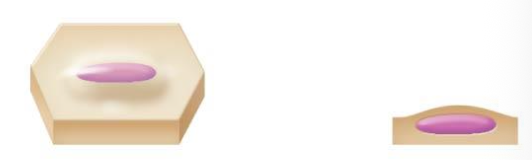
Squamous

Cuboidal

Columnar

Arrangement?
Simple
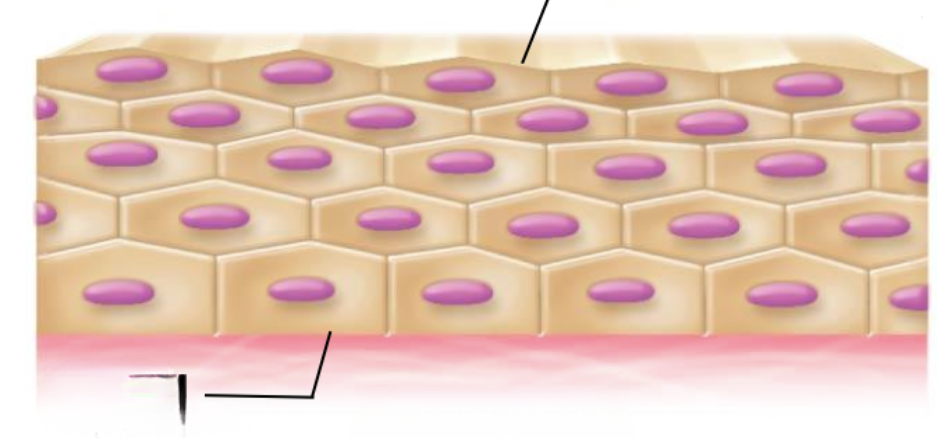
Arrangement?
Stratified

What surface?
Basal surface

What surface?
Apical surface

Gland Epithelium
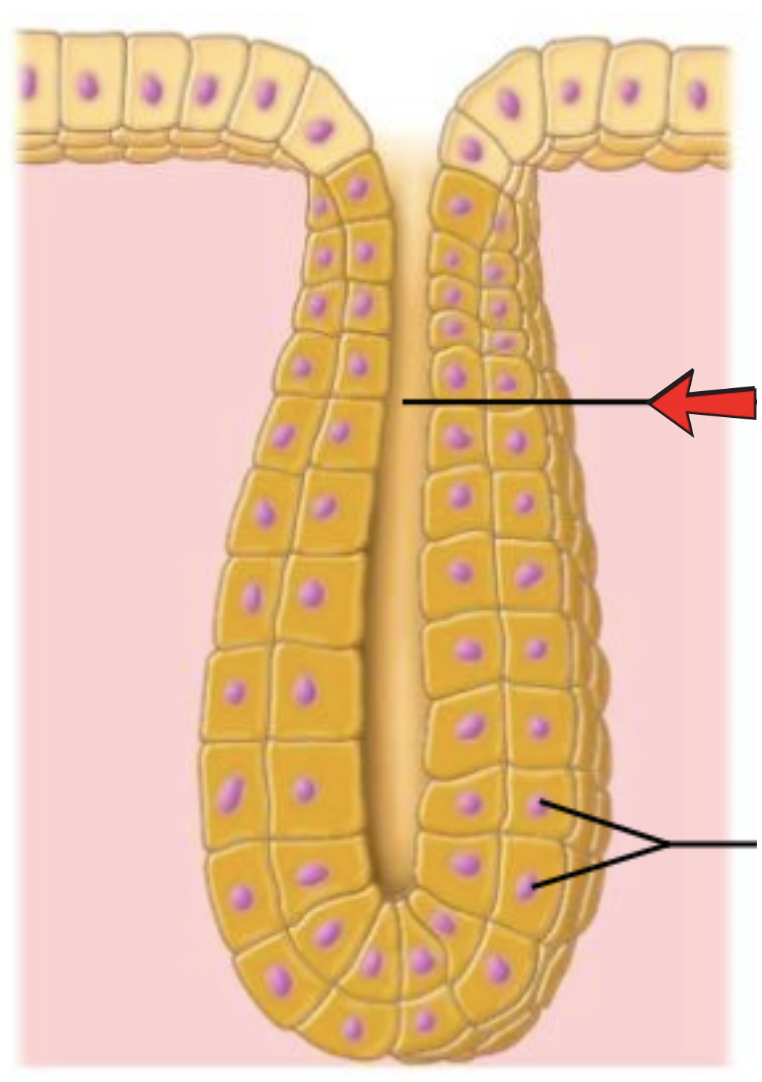
Lumen of gland

Secretory cells

What type of gland?
Exocrine gland

What type of gland?
Endocrine gland

Capillaries
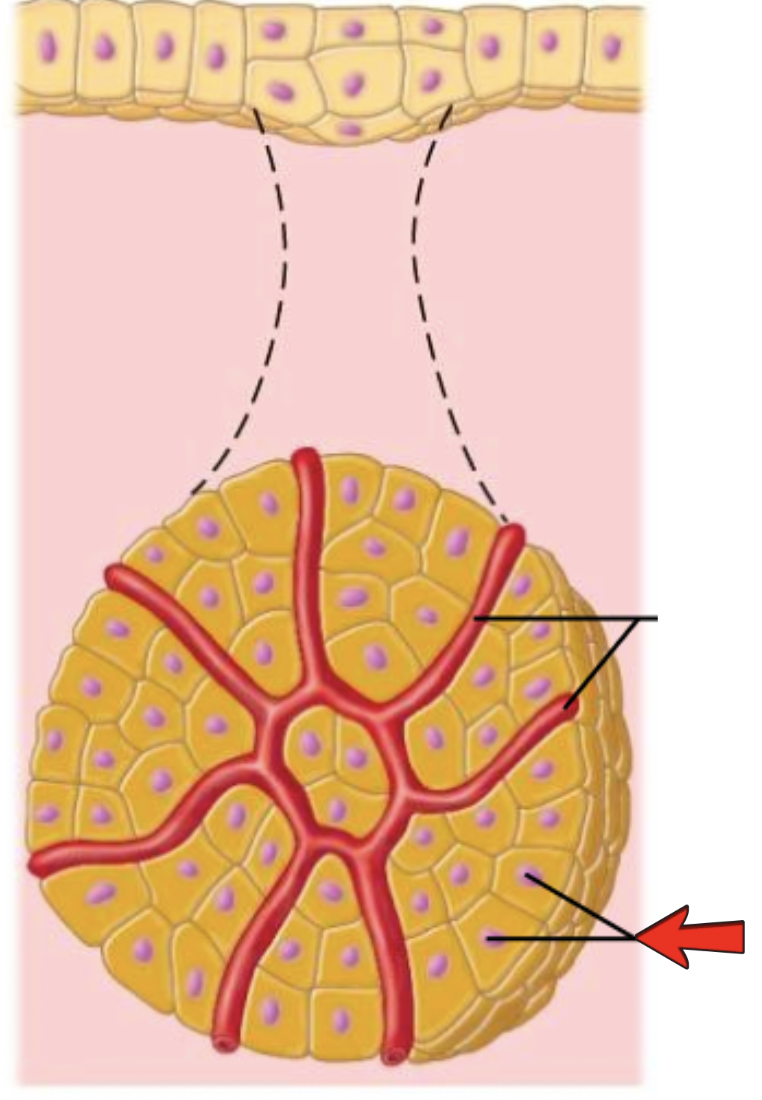
Secretory cells

What tissue type?
Simple squamous epithelium

What tissue type?
Simple squamous epithelium

Air sacs of lung tissue

Nuclei of squamous epithelial cells

Simple squamous epithelium description:
Single layer of flattened cells with disc-shaped central nuclei and sparse cytoplasm; the simplest of the epithelia

Simple squamous epithelium function:
Allows materials to pass by diffusion and filtration in sites where protection is not important; secretes lubricating substances in serosae.
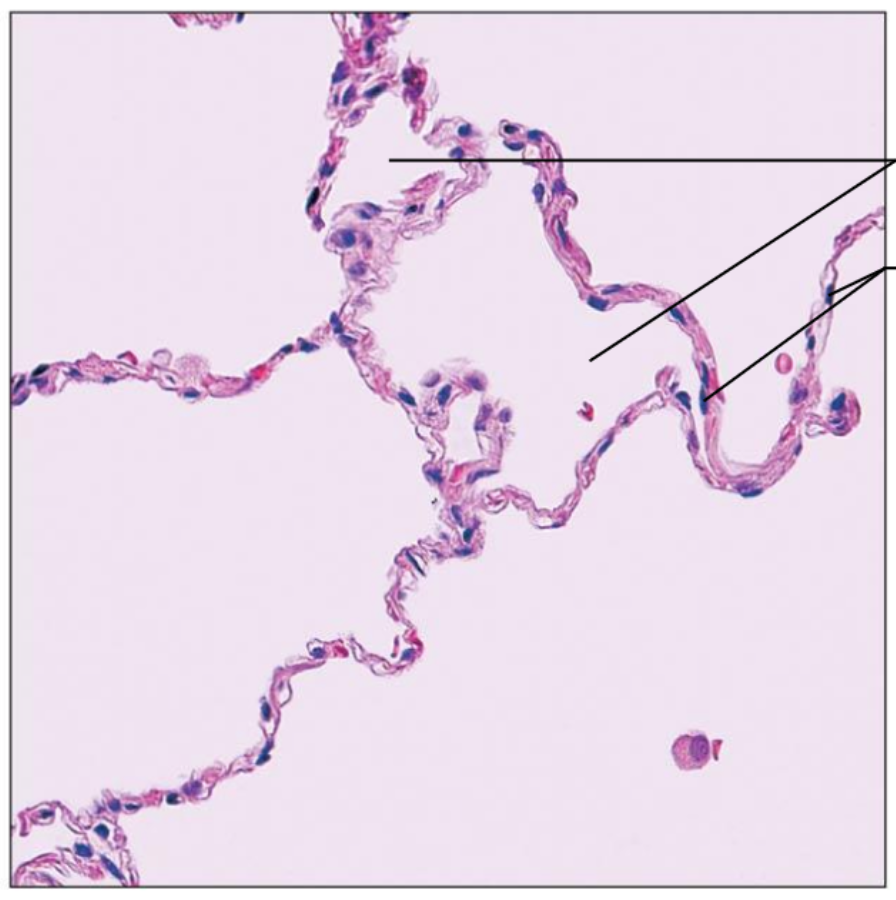
Simple squamous epithelium location:
Kidney glomeruli; air sacs of lungs; lining of heart, blood vessels, and lymphatic vessels; lining of ventral body cavity (serosae)
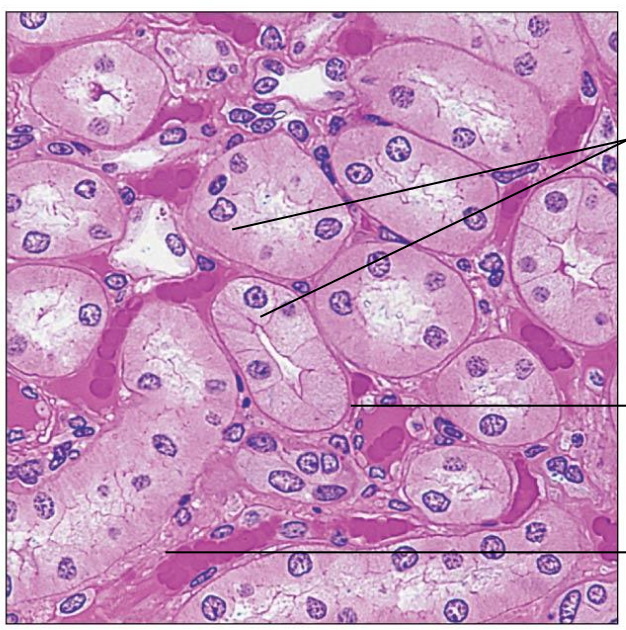
What tissue type?
Simple cuboidal epithelium

Simple cuboidal epithelium description:
Single layer of cubelike cells with large, spherical central nuclei.
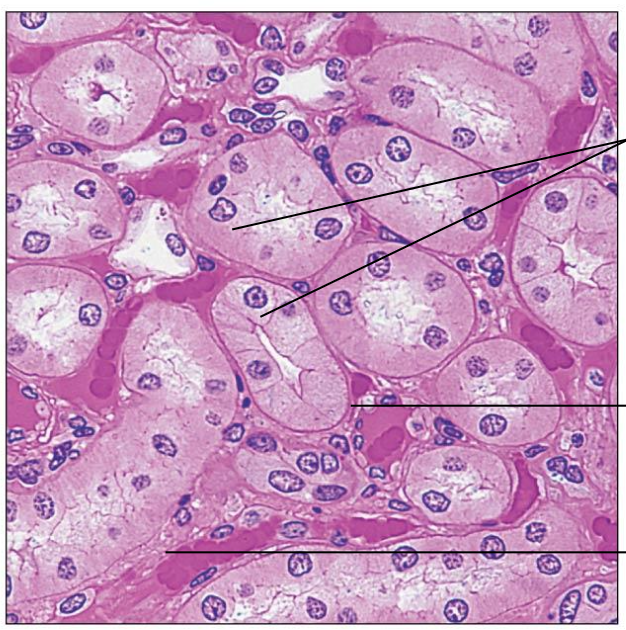
Simple cuboidal epithelium function:
Secretion and absorption.
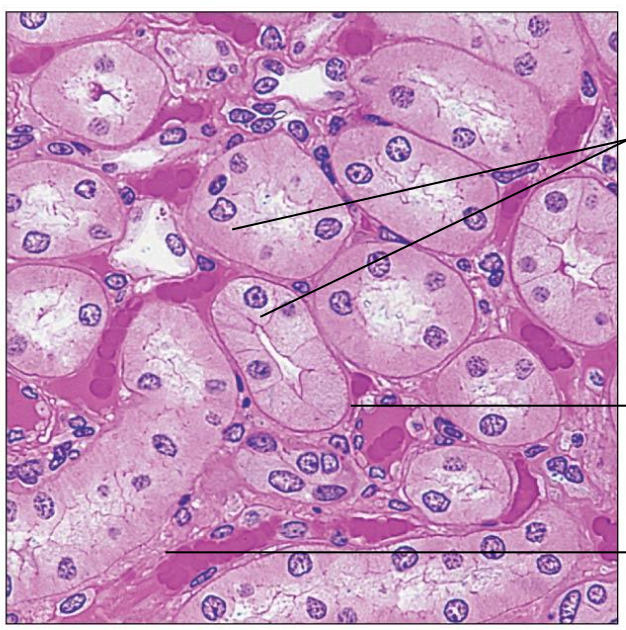
Simple cuboidal epithelium location:
Kidney tubules; ducts and secretory portions of small glands; ovary surface.

What tissue type?
Simple cuboidal epithelium
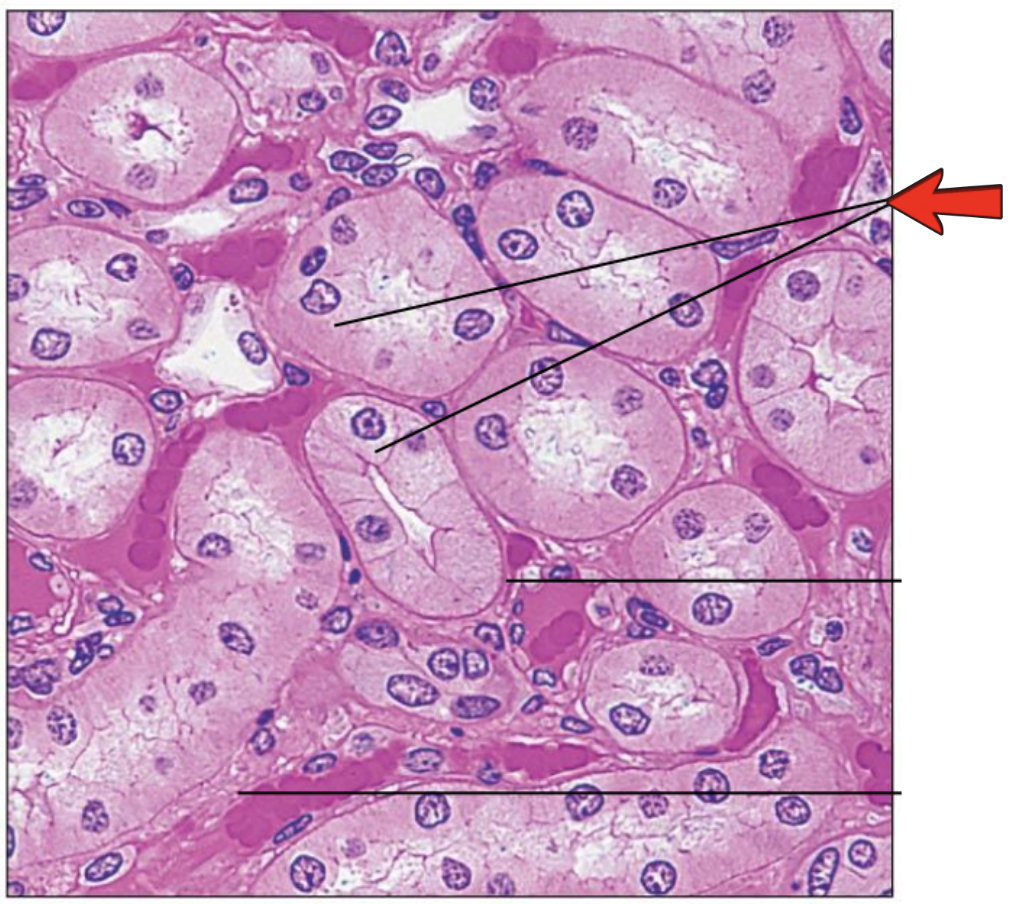
Simple cuboidal epithelial cells
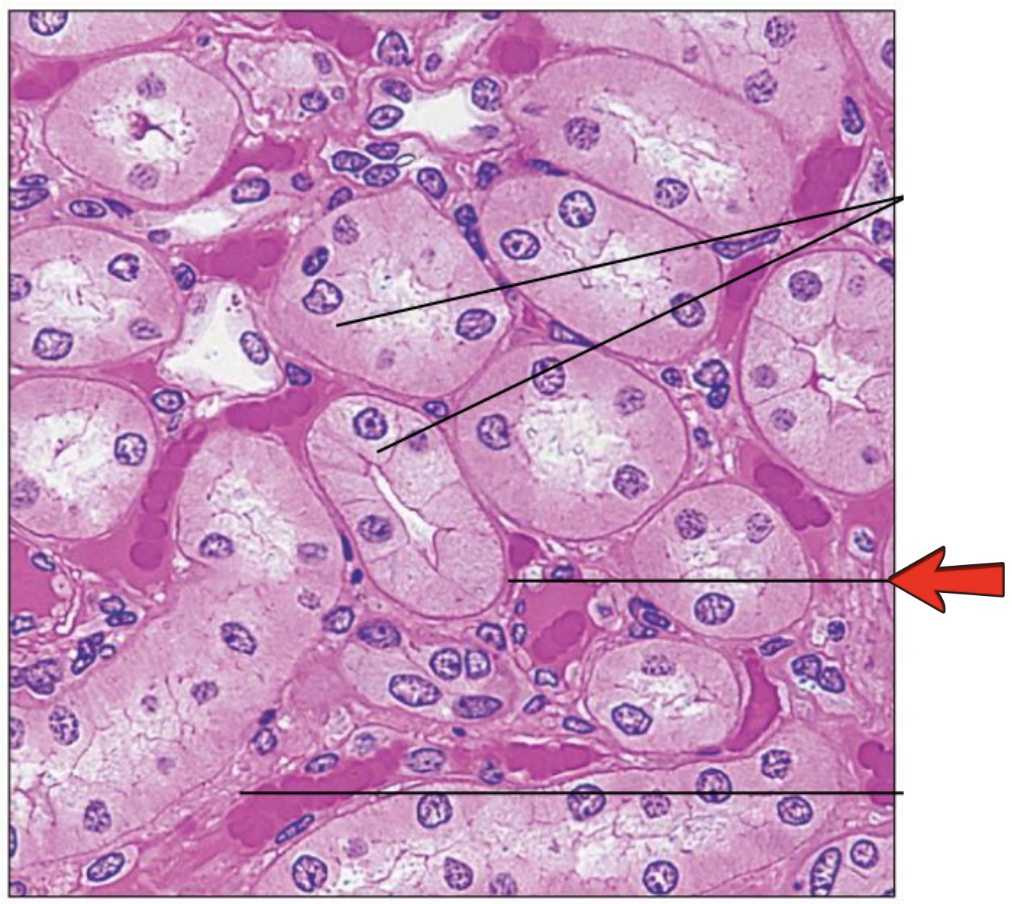
Basement membrane

Connective tissue
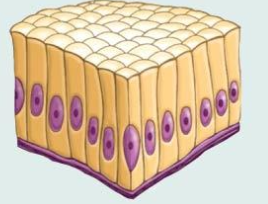
What tissue type?
Simple columnar epithelium

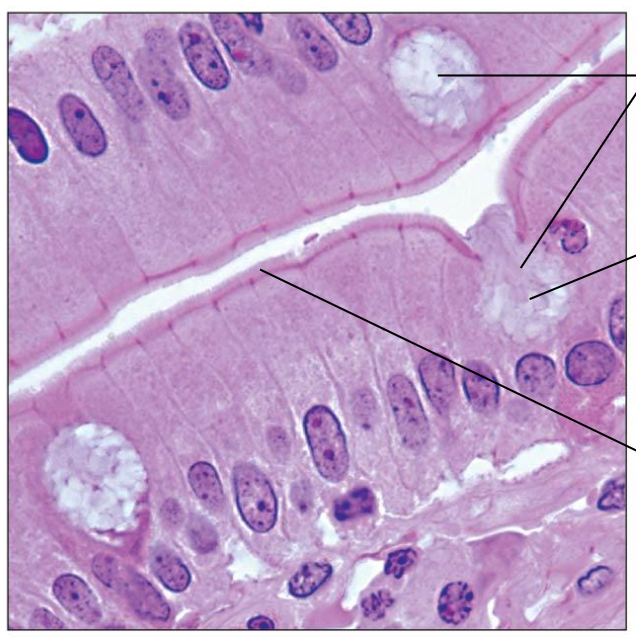
What tissue type?
Simple columnar epithelium

Simple columnar epithelium description:
Single layer of tall cells with round to oval nuclei; some cells bear cilia; layer may contain mucus-secreting unicellular glands (goblet cells).
Simple columnar epithelium function:
Absorption; secretion of mucus, enzymes, and other substances; ciliated type propels mucus (or reproductive cells) by ciliary action.
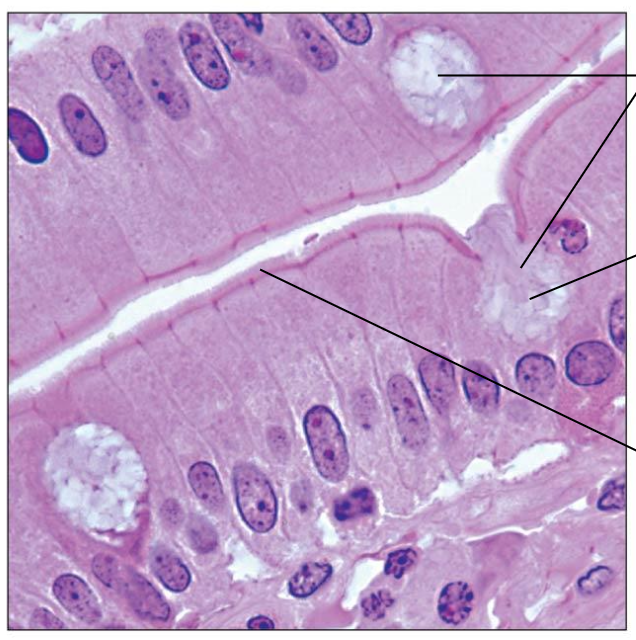
Simple columnar epithelium location:
Nonciliated type lines most of the digestive tract (stomach to rectum), gallbladder, and excretory ducts of some glands; ciliated variety lines small bronchi, uterine tubes, and some regions of the uterus.
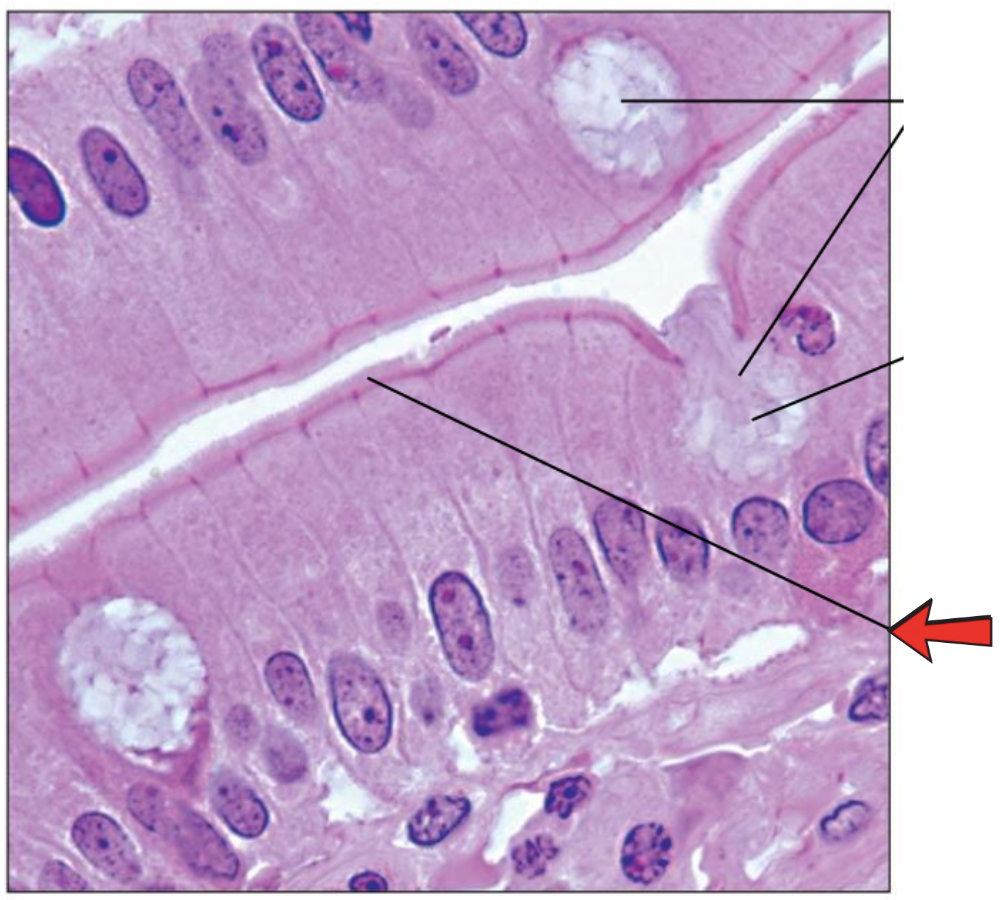
Microvilli (brush border)

Mucus secretion
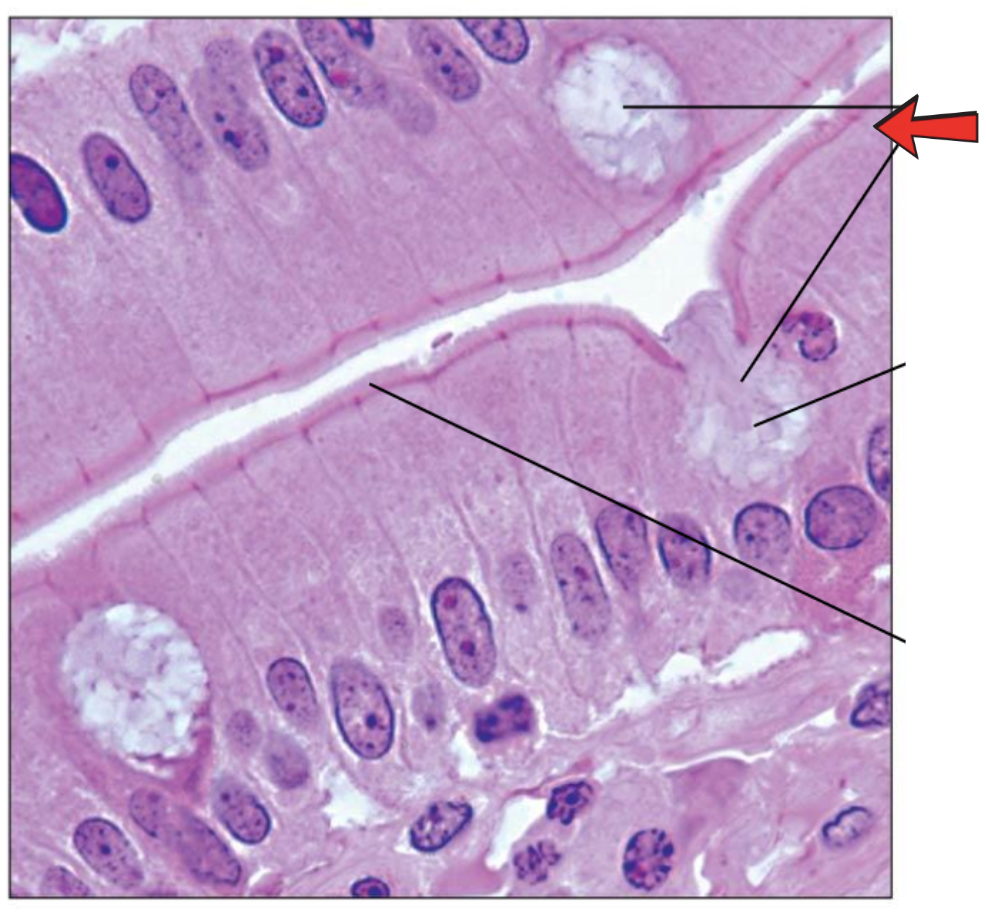
Goblet cells
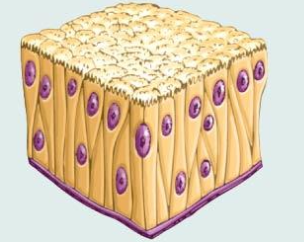
What tissue type?
Pseudostratified columnar epithelium

What tissue type?
Pseudostratified columnar epithelium

Pseudostratified columnar epithelium desciption:
Single layer of cells of differing heights, some not reaching the free surface; nuclei seen at different levels; may contain mucus-secreting goblet cells and bear cilia.

Pseudostratified columnar epithelium function:
Secretes substances, particularly mucus; propulsion of mucus by ciliary action.
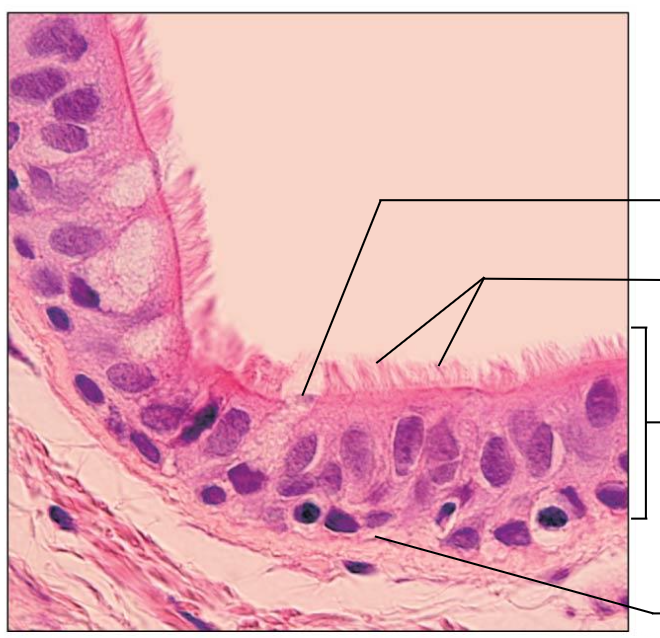
Pseudostratified columnar epithelium location:
Nonciliated type in male’s sperm-carrying ducts and ducts of large glands; ciliated variety lines the trachea, most of the upper respiratory tract.

Basement membrane

Pseudostratified epithelial layer

Cilia
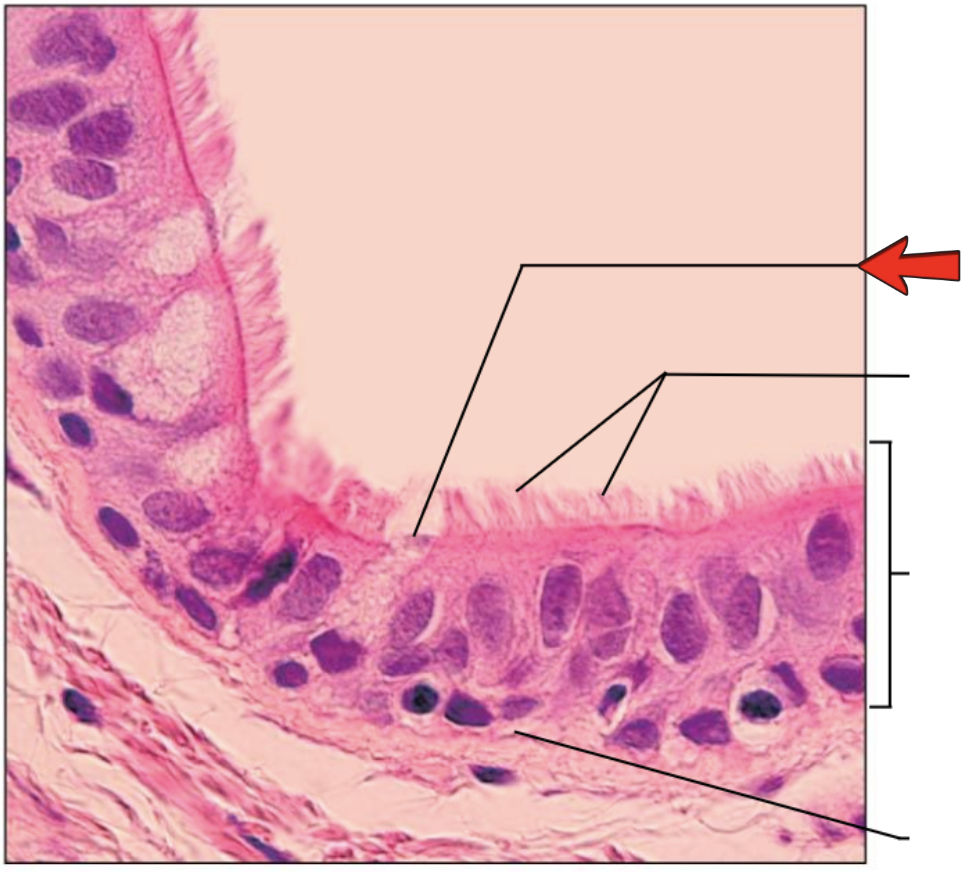
Mucus of goblet cell

What tissue type?
Stratified squamous epithelium

What tissue type?
Stratified squamous epithelium

Stratified squamous epithelium description:
Thick membrane composed of several cell layers; basal cells are cuboidal or columnar and metabolically active; surface cells are flattened (squamous); in the keratinized type, the surface cells are full of keratin and dead; basal cells are active in mitosis and produce the cells of the more superficial layers.

Stratified squamous epithelium function:
Protects underlying tissues in areas subjected to abrasion.

Stratified squamous epithelium location:
Nonkeratinized type forms the moist linings of the esophagus, mouth, and vagina; keratinized variety forms the epidermis of the skin, a dry membrane.
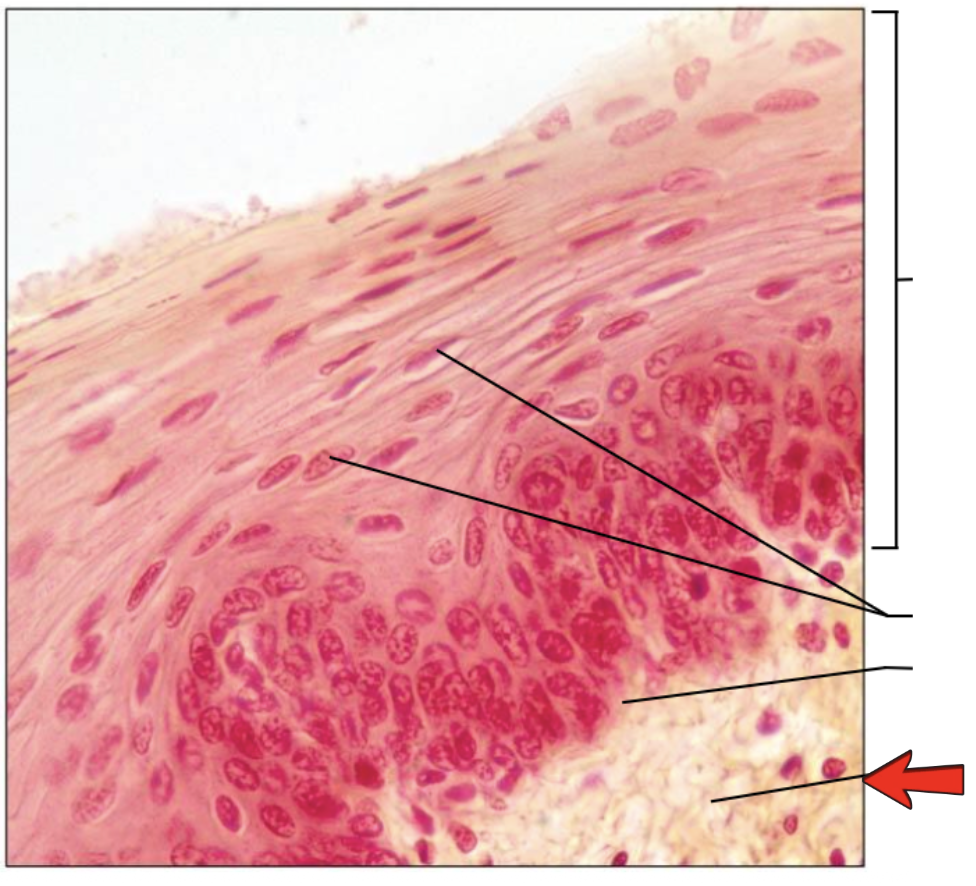
Connective tissue

Basement membrane
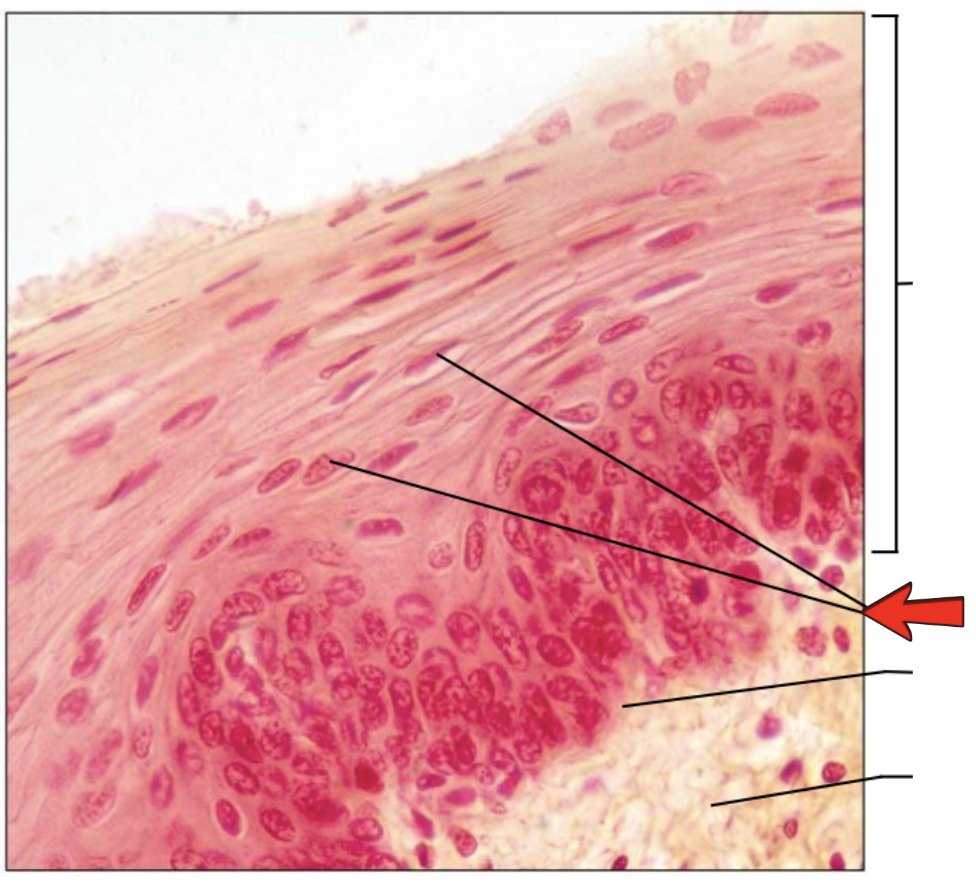
Nuclei
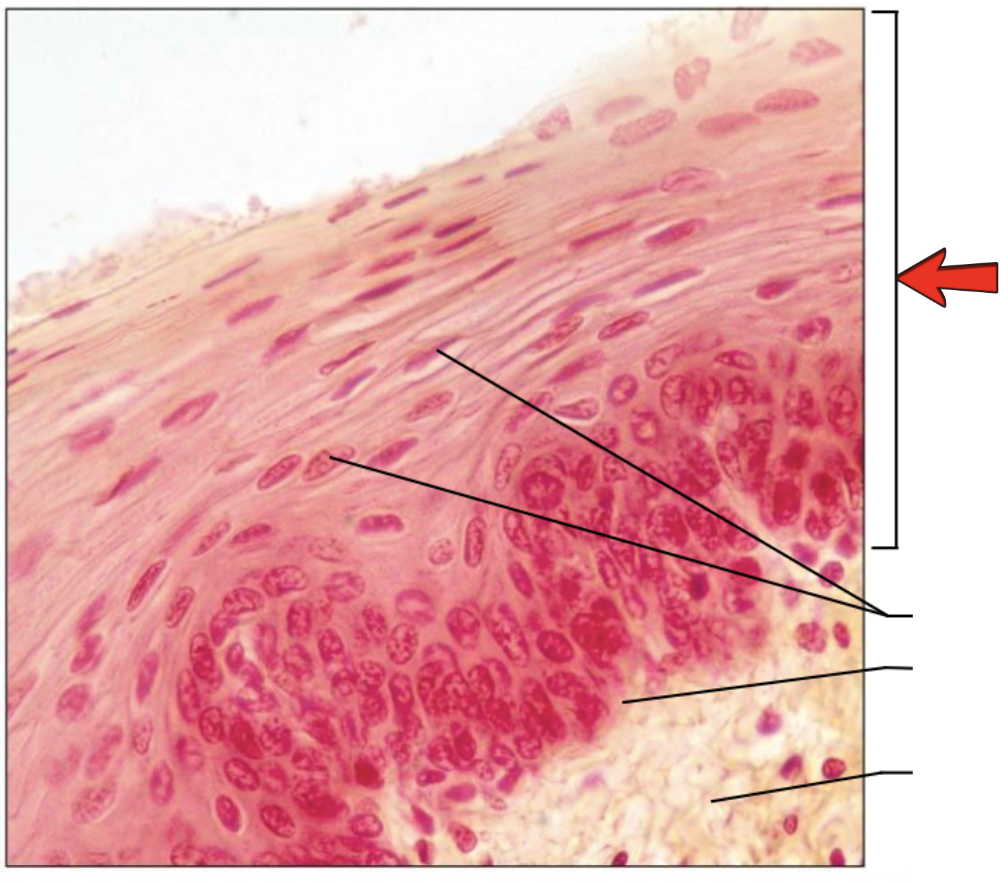
Stratified squamous epithelium

What tissue type?
Stratified cuboidal epithelium

What tissue type?
Stratified cuboidal epithelium

Stratified cuboidal epithelium description:
Generally two layers of cubelike cells.

Stratified cuboidal epithelium function:
Protection
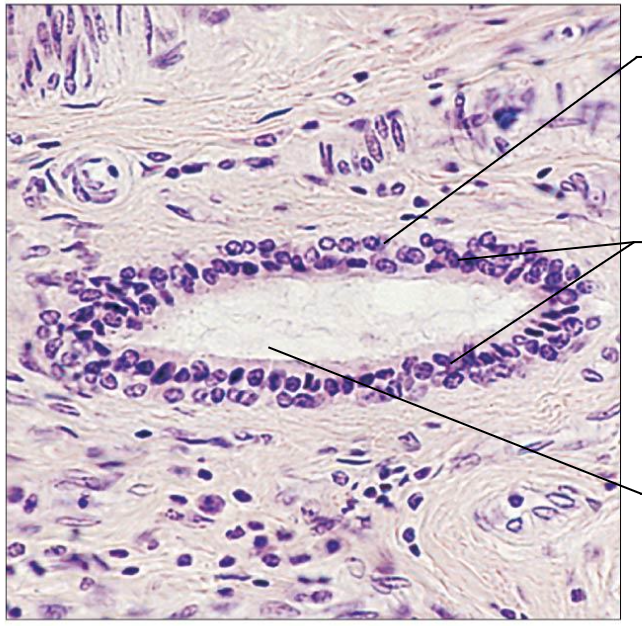
Stratified cuboidal epithelium location:
Largest ducts of sweat glands, mammary glands, and salivary glands
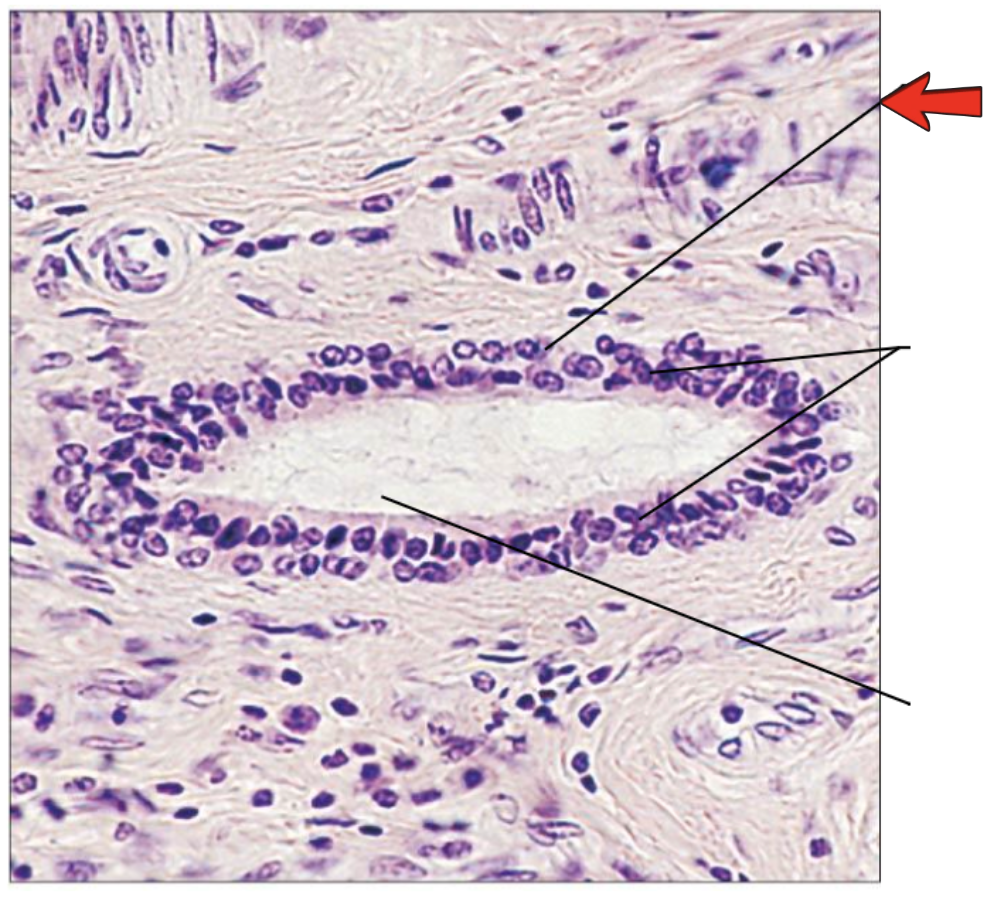
Basement membrane

Cuboidal epithelial cells
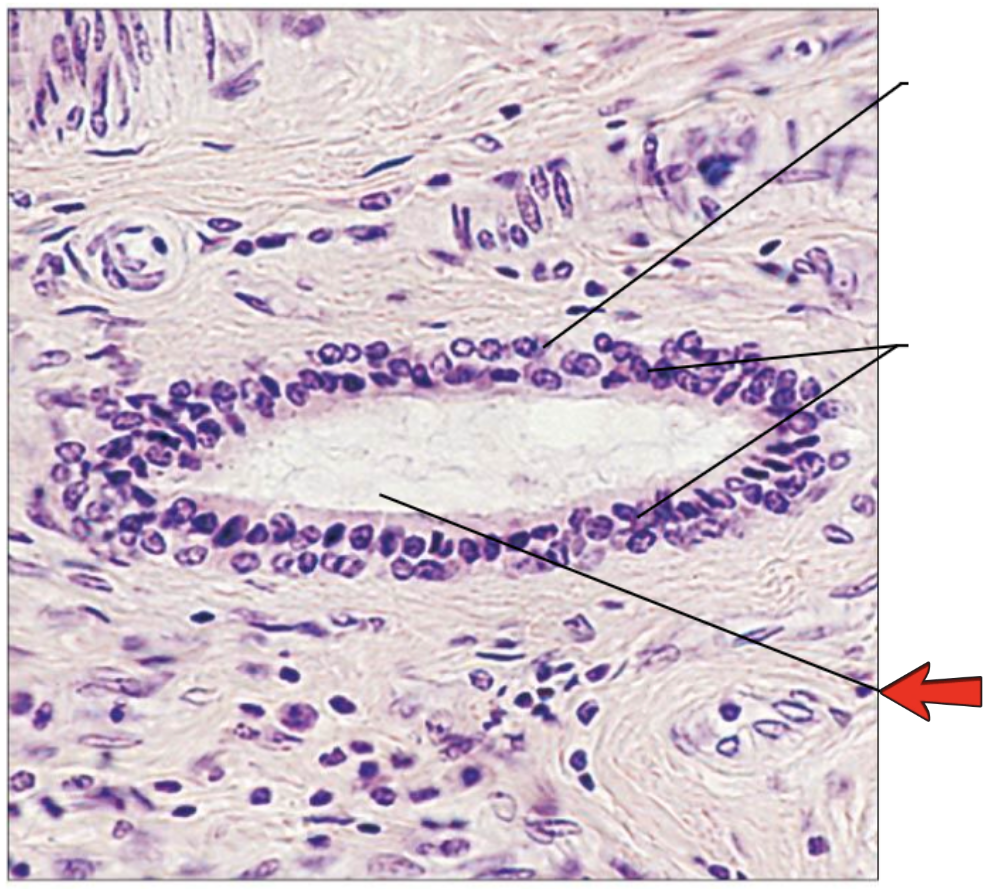
Duct lumen
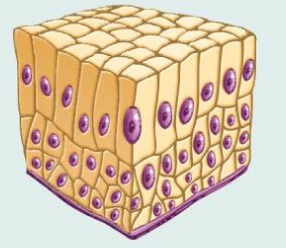
What tissue type?
Stratified columnar epithelium

What tissue type?
Stratified columnar epithelium

Stratified columnar epithelium description:
Several cell layers; basal cells usually cuboidal; superficial cells elongated and columnar.

Stratified columnar epithelium function:
Protection; secretion

Stratified columnar epithelium location:
Rare in the body; small amounts in male urethra and in large ducts of some glands.

Connective tissue

Stratified columnar epithelium

Basement membrane

What tissue type?
Transitional epithelium

What tissue type?
Transitional epithelium
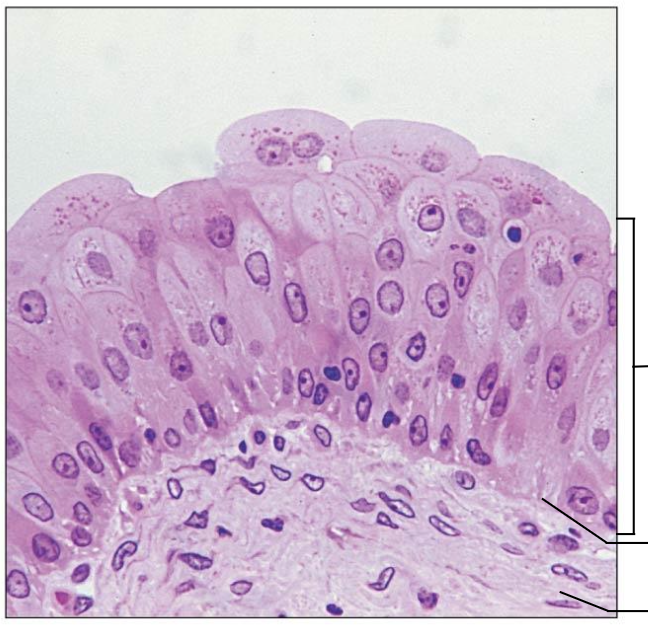
Transitional epithelium description:
Resembles both stratified squamous and stratified cuboidal; basal cells cuboidal or columnar; surface cells dome shaped or squamouslike, depending on degree of organ stretch

Transitional epithelium function:
Stretches readily and permits distension of urinary organ by contained urine.
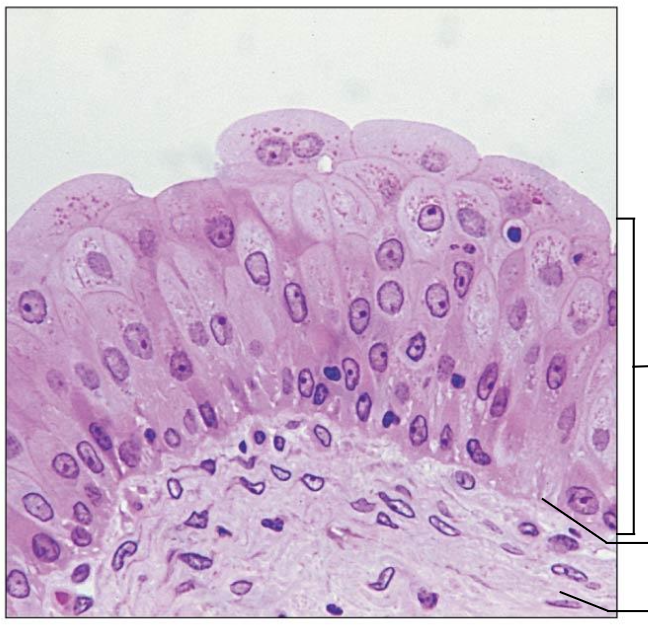
Transitional epithelium location:
Lines the ureters, urinary bladder, and part of the urethra.

Transitional epithelium
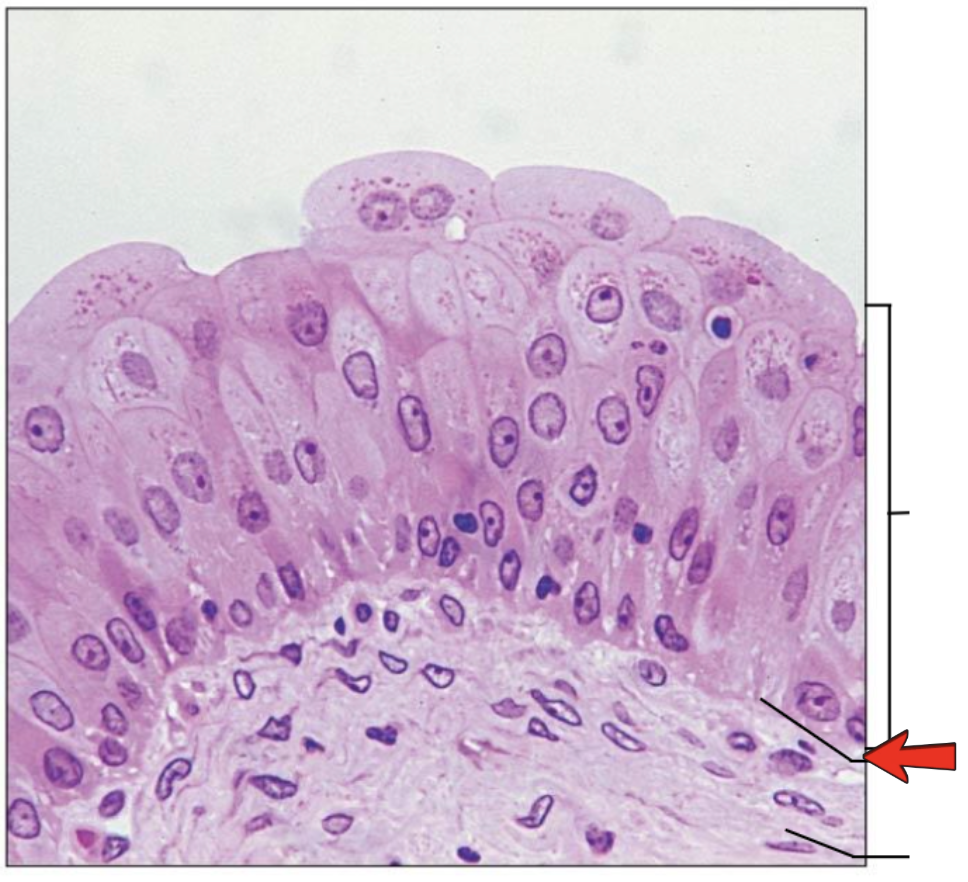
Basement membrane

Connective tissue
Connective tissue have the following characteristics:
rich blood supply
composed of many cell types
extracellular matrix found between cells
Extracellular matrix is composed of:
Ground substance and Fibers
Ground substance
Interstitial fluid, cell adhesion proteins, and proteoglycans
Fibers
collagen, elastic, and reticular fibers
Cell adhesion proteins
allow cells to stick to substrates/each other
Proteoglycans
proteins with sugar chains attached

Reticular fiber