Lab 2 - Epithelial Cells
 Call Kai
 Learn
Learn Practice Test
 Spaced Repetition
 Match
Match Flashcards
 Knowt Play
 Podcast
1/20

There's no tags or description
Looks like no tags are added yet.
Name | Mastery | Learn | Test | Matching | Spaced | Call with Kai | Chat |
|---|
No analytics yet
Send a link to your students to track their progress
21 Terms
What are the two main forms of ET cells?
Proper and Glandular
What are the characteristics of ET?
apical surface (next to open space)
basal surface (sits on basement membrane, where connective tissue connects)
avascular (no blood vessels)
many cell-to-cell junctions
What are the clinical connections?
Cancerous ET cells are not contained by the basement membrane boundry, so they invade underlying tissues resulting in spread of cancer
What are the 3 classifications?
squamous
cubodial
columnar
What are the number of layers called?
1 = simple
multiple = stratified
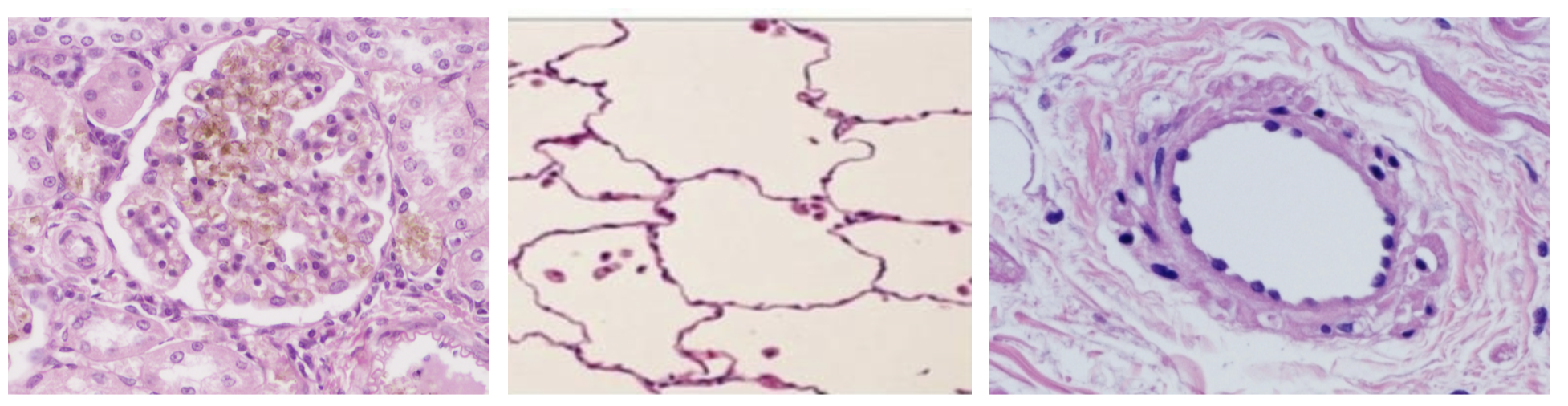
Name, Location, Function
Name: simple squamous ET
Locations: Kidney, lining the alveoli, endothelium (lining blood vessels)
Functions: filter blood, easy diffusion for gas exchange, diffusion in small vessles
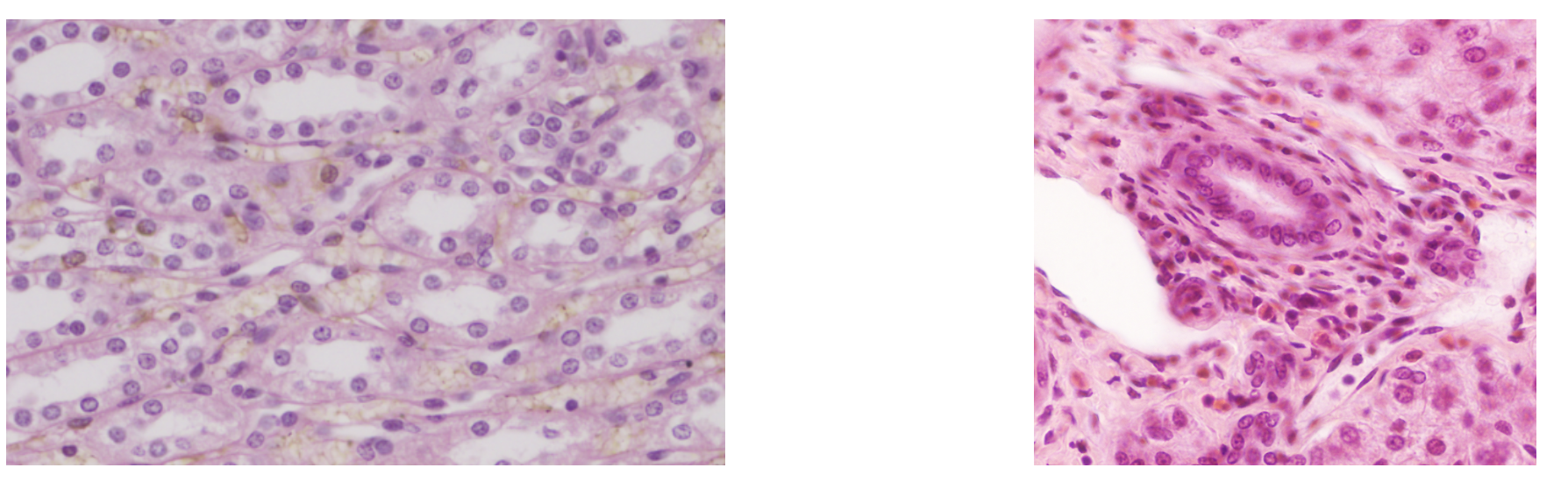
Name, Location, Function
Name: Simple cubodial ET
Locations: lining kidney tubules and lining ducts
Functions: secretion of substances into urine and reabsorption of substances into blood; lining ducts that carry a substance from a gland to a surface
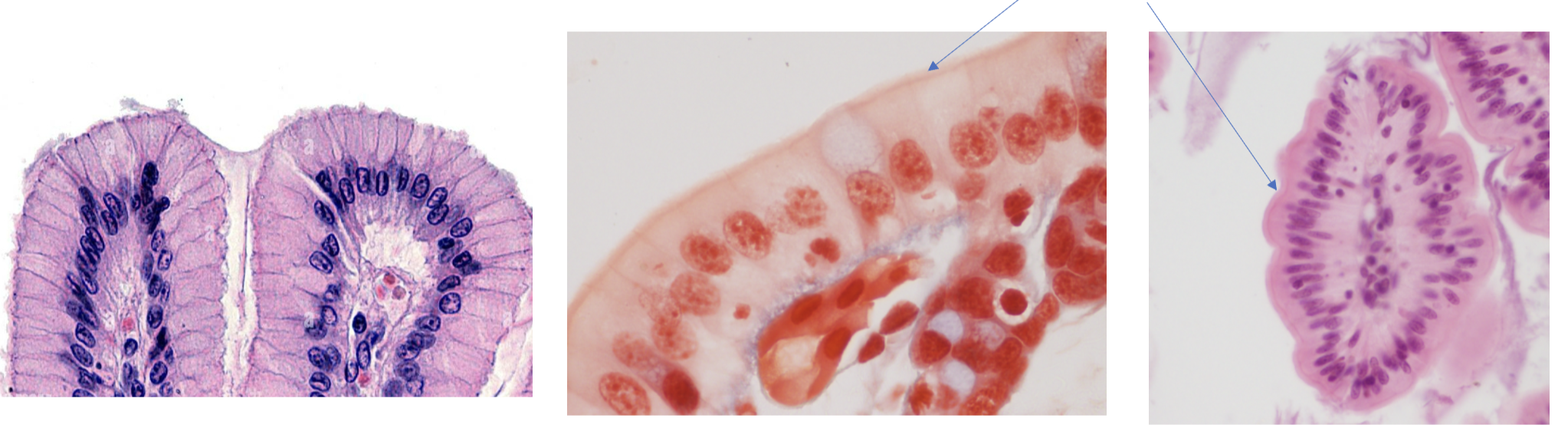
Name, Location, Function
Name: Simple columnar ET
Location: lining the stomach, small intestine (has microvilli) and large intestine
Function: Secretion of enzymes/mucus into partially digested food, absorption of nutrients from food into blood
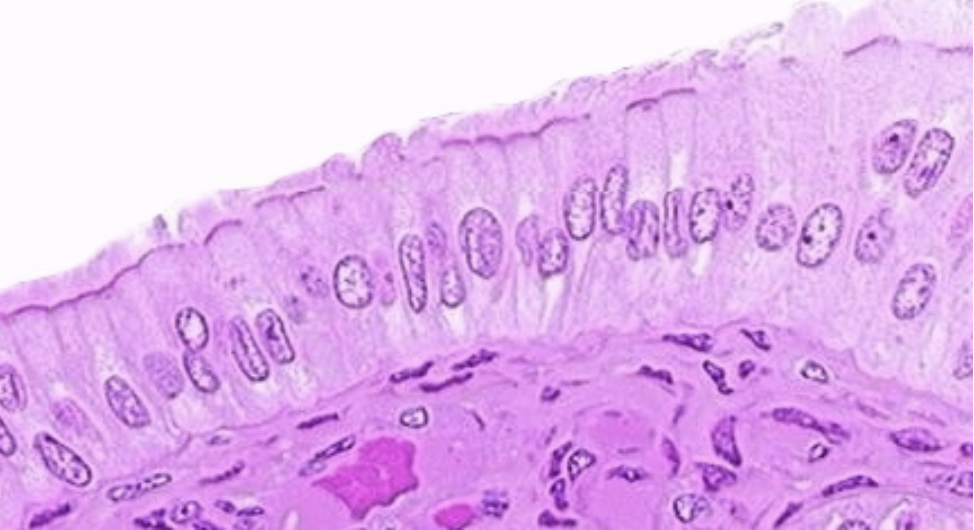
Name, Location, Function
Name: Ciliated simple columnar ET
Location: lining the fallopian tubes
Function: Cilia propel eggs across surface of the cells toward the uterus
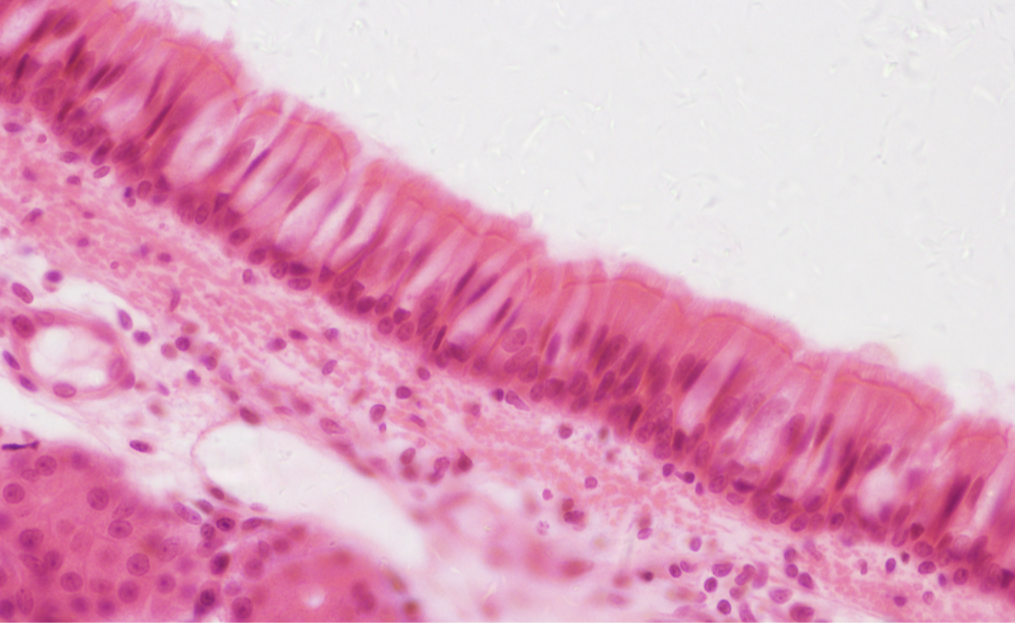
Name, Location, Function
Name: Ciliated pseudostratified columnar ET
Location: lining the trachea
Function: secretion of mucus. cilia propel mucus towards the throat and away from the lungs
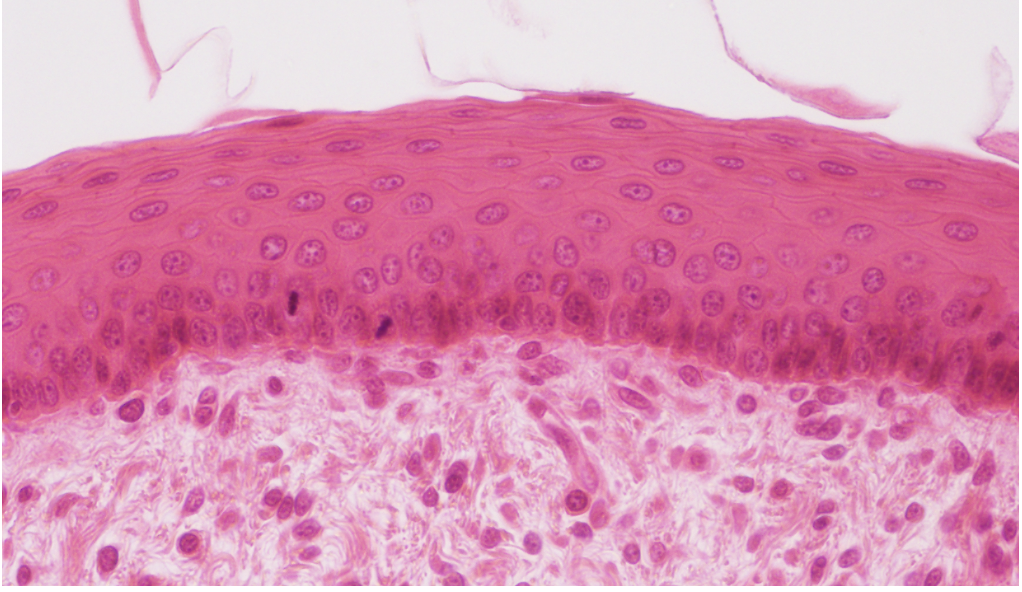
Name, Location, Function
Name: (Nonkeratinized) stratified squamous ET
Location: lining the mouth, esophogaus, vagina, and anal canal
Function: protection in areas of high abrasion
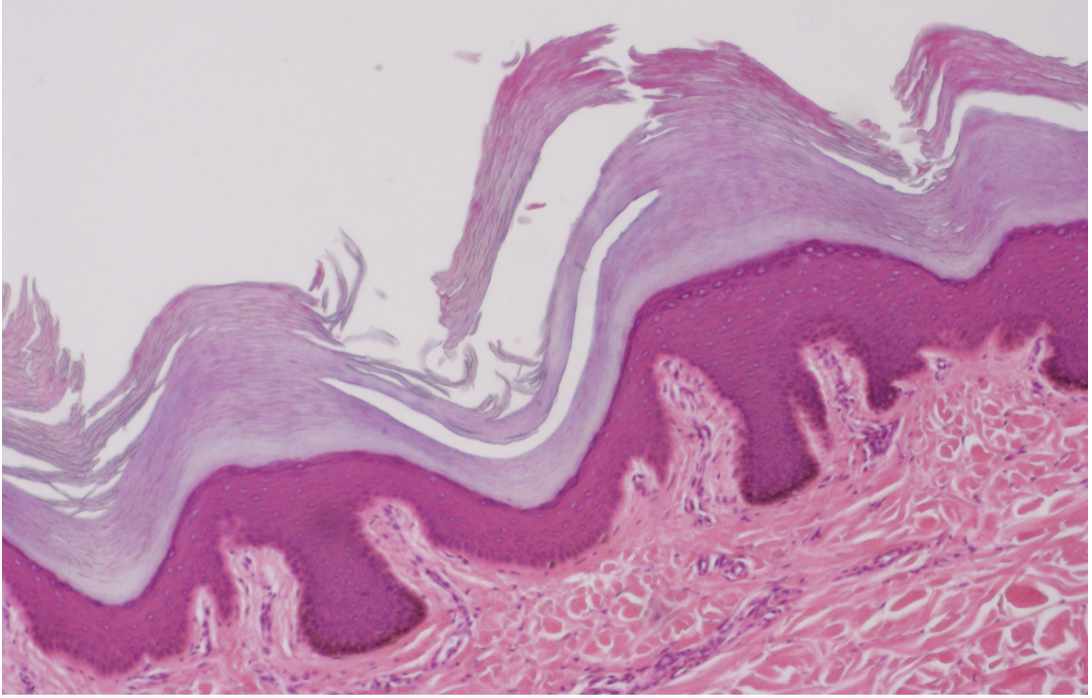
Name, Location, Function
Name: Keratinized stratified squamous ET
Location: epidermis of the skin
Function: protection from external world (trauma, infection, waterproofing)
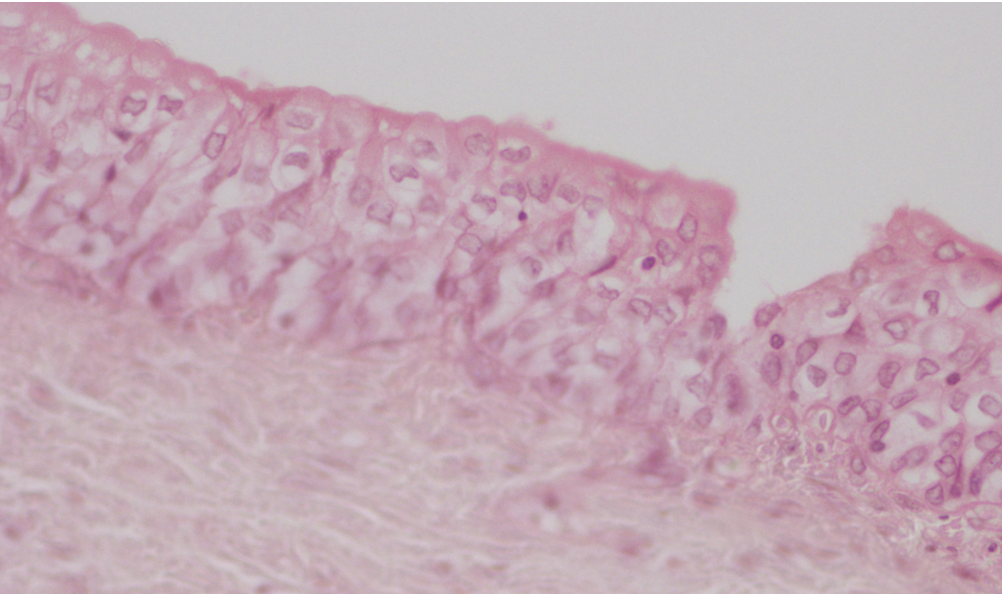
Name, Location, Function
Name: Transitional ET
Location: lining the bladder and ureters
Function: allows for stretch in urinary organs
Simple squamous
Location: Kidney, alveoli, blood vessel lining
Function: Filter blood, provide a collection bag for filtrate. Easy diffusion for gas exchange. Smooth, thin surface; diffusion in small vessel
Simple cubodial
Location: Kidney tubules, ducts
Function: secretion of substances into urine, reabsorption of substances into blood. Lining ducts that carry a substance from a gland to surface
Simple columnar
Location: Stomach/ intestines, microvilli, cilia
Function: secretion of enzymes/mucus into partially digested food, absoprtion of nutrients from food into blood
Pseudostratified ciliated columnar
Location: Trachea
Function: secretion of mucus, cilia propel mucus toward the throat and away from the lungs
Stratified squamous (nonkeratinized)
Location: Mouth, esophagus, vagina, anal canal
Function: protection in areas of high abrasion
Stratified squamous (keratinized)
Location: Epidermis of skin
Function: Protection from the external world (trauma, infection, waterproofing)
Transitional
Location: Bladder and ureters
Function: allows for stretch in urinary organs
Ciliated simple columnar
Location: Lining fallopian tubes
Function: Cilia propel egg across surface of the cells toward the uterus