Dysrhythmias and ECG Interpretation
 Call Kai
 Learn
Learn Practice Test
 Spaced Repetition
 Match
Match Flashcards
 Knowt Play
1/24

Earn XP
Description and Tags
Practice flashcards covering cardiac conduction, ECG interpretation steps, major dysrhythmias, emergency treatments, and nursing care based on lecture notes.
Name | Mastery | Learn | Test | Matching | Spaced | Call with Kai | Chat |
|---|
No analytics yet
Send a link to your students to track their progress
25 Terms

What is the sequence of impulses through the normal cardiac conduction system?
SA node → Atria → AV Node → Bundle of His → Bundle Branches → Purkinje Fibers
What does the P wave represent on an electrocardiogram?
Atrial depolarization (atria firing, accounting for 20−30% of cardiac function)
What does the QRS complex represent on an electrocardiogram?
Ventricular depolarization (ventricles firing to send blood out)
What does the T wave represent on an electrocardiogram?
Ventricular repolarization (ventricular resting phase)

What are the lead color and location mnemonics for a 5-lead ECG placement?
Snow over grass (White/RA over Green/RL on right side), Smoke over fire (Black/LA over Red/LL on left side), and Chocolate close to the heart (Brown/V at 4th ICS, right sternal border)

What are the normal duration ranges for the PR, QRS, and QT intervals?
PR interval: 0.12−0.20 seconds; QRS interval: 0.04−0.11 seconds; QT interval: 0.34−0.43 seconds
What are the five steps for interpreting an ECG rhythm?
- What is the heart rate? 2. Is the rhythm regular? 3. Is there a P wave before every QRS complex? 4. Are the T waves upright? 5. What are the PR and QRS intervals?
How is heart rate calculated using a 6-second ECG strip?
Count the number of QRS complexes in the 6-second strip and multiply by 10
What clinical conditions are indicated when T waves are inverted on an ECG?
Myocardial infarction (MI) or electrolyte imbalance

What length of time does a single small box represent on ECG grid paper?
0.04 seconds (1 mm)
What is the primary rule of nursing care when managing a patient with a dysrhythmia?
ALWAYS TREAT THE PATIENT FIRST! Intervention depends on hemodynamic stability (e.g., maintaining systolic BP ≥90 mmHg) and assessing for decreased cardiac output
What are the defining characteristics and rate threshold of Sinus Bradycardia?
Impulse originates in the SA node with normal conduction, but heart rate is <60 bpm
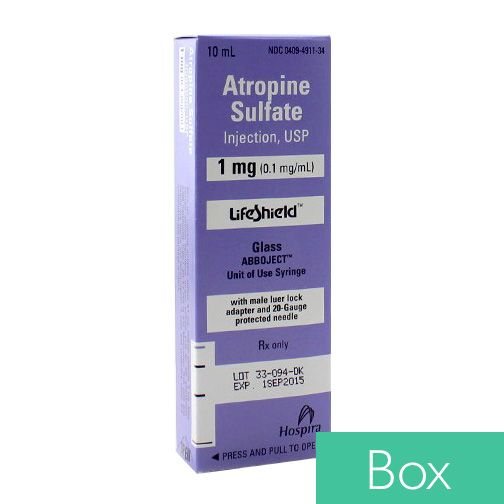
What is the first-line medication treatment for symptomatic Sinus Bradycardia?
Atropine IV push (a pacemaker is indicated if atropine is ineffective)

What ECG abnormality distinguishes First Degree AV Block?
A prolonged PR interval (>0.20 seconds) due to slowed conduction in the AV node, with a normal QRS complex
What is the heart rate range for Sinus Tachycardia and how is it managed?
Heart rate is 101−180 bpm; management involves treating the underlying cause (e.g., pain medication or acetaminophen for fever)
Where does Supraventricular Tachycardia (SVT) originate, and what is its sequence of treatment?
Originates in an ectopic focus above the Bundle of His (151−220 bpm). Treatments in order: #1 Vagal stimulation (coughing/Valsalva), #2 Rapid Adenosine IV push, #3 Synchronized cardioversion (if hemodynamically unstable)
If an amiodarone drip concentration is 450 mg/250 mL D5W, what IV pump rate in mL/hr is required to deliver 1 mg/min for the first 24 hours?
33.3 mL/hr (calculated as (60 mg/hr×250 mL)/450 mg=33.3 mL/hr)
What critical setting must be activated on the defibrillator during Synchronized Cardioversion?
The SYNC button MUST be activated so the shock is delivered on the R wave of the QRS complex

What dangerous ECG phenomenon associated with PVCs can trigger Ventricular Tachycardia?
"R on T Phenomenon" (where a premature QRS lands on the vulnerable ventricular repolarization phase/T wave)
What duration differentiates nonsustained from sustained Ventricular Tachycardia (VT)?
Nonsustained VT lasts <30 seconds; Sustained VT lasts >30 seconds
How does treatment differ for sustained Ventricular Tachycardia with a pulse versus pulseless VT?
VT with pulse: Amiodarone IV if stable, or synchronized cardioversion if unstable. Pulseless VT: CODE BLUE with immediate CPR, BLS, and rapid defibrillation

What characterizes Ventricular Fibrillation (V-Fib) on an ECG, and what is the primary intervention?
Multiple ectopic foci causing ventricles to quiver without contraction or cardiac output; treated immediately with BLS/ACLS and rapid defibrillation within 2 minutes
When performing emergency defibrillation for V-Fib or Pulseless V-Tach, should the SYNC button be ON or OFF?
The SYNC button must be OFF

What post-procedure activity restriction is required following insertion of a PPM or ICD?
Immobilize the arm on the affected side and avoid lifting it above shoulder height for at least 2-3 days until provider clearance
What patient instruction should be given regarding ICD shocks?
If the ICD fires once, contact the provider; if the ICD fires multiple times, call 911 immediately