Day 3 Diseases: Skin-Bacterial: Microbiology
 Call Kai
 Learn
Learn Practice Test
 Spaced Repetition
 Match
Match Flashcards
 Knowt Play
1/34

Earn XP
Description and Tags
8-26-26
Name | Mastery | Learn | Test | Matching | Spaced | Call with Kai | Chat |
|---|
No analytics yet
Send a link to your students to track their progress
35 Terms
How is Gas gangrene caused?
Clostridium perfringens.
How is Gas gangrene transmitted?
Spores (from soil) enter skin wound.
How is Gas gangrene prevented?
Good wound care.
How is Cutaneous Anthrax caused?
Bacillus anthracis.
How is Cutaneous Anthrax transmitted?
Spores enter a skin wound.
How is Cutaneous Anthrax prevented?
Good wound care.
How is pink eye (Conjunctivitis) caused?
Bacterial: Staphylococcus aureus (S. aureus), Streptococcus, Haemophilus influenzae, and Staphylococcus species.
Viral: Adenoviruses.
How is pink eye (Conjunctivitis) transmitted?
Extremely contagious,
direct contact,
fomites.
How is pink eye (Conjunctivitis) prevented?
Wash everything,
good hand washing.
Host-Microbe Interactions: What is mutualism?
Host and microbe benefit.
Host-Microbe Interactions: What is an example of mutualism?
Intestinal bacteria.
Host-Microbe Interactions: What is commensalism?
Microbe benefits, no effect on host.
Host-Microbe Interactions: What is an example of commensalism?
Bacteria on skin.
Host-Microbe Interactions: What is parasitism?
Microbe benefits, host is harmed.
What are biofilms?
Multiple species live together,
combo of carbs and proteins.
What are some benefits of biofilms?
Helps microbes stick to surfaces,
helps microbes NOT dry out,
protection from our immune system and antibiotics.
What are some complications of biofilms.
Very hard to remove,
urinary tract infections (catheter),
endocarditis.
What are microbiota?
Normal flora,
opportunistic pathogens,
microbes that normally live in/on body without causing disease (usually).
What are some benefits of microbiota?
Help with digestion,
make vitamin,
outcompete potential pathogens.
What are resident microbiota?
Long-term.
What are transient microbiota?
Short-term.
How are microbiota aquired?
Usually starts at birth.
What are opportunistic pathogens?
Can cause disease under certain conditions.
What are some conditions that enable opportunistic pathogens?
Antibiotic use (C. diff, yeast infections),
enters a new site in body,
hormone changes,
decrease in immune system function.
What is bioremediation?
Bacteria can break down oil,
bacteria can break down plastic.
What are some uses of microbiota?
Bioremediation,
make food/drinks (alcohol, bread, fermented foods),
make medications (hormone medications),
thickeners (ice cream, agar).
(Chapter 3: Introduction into Prokaryotic Cells) What are prokaryotes?
Unicellular,
no membrane-bound organelles,
have nucleoid.
What is a nucleoid?
Area of cell with DNA.
Cell Shapes: What does “coccus” mean?
Round.
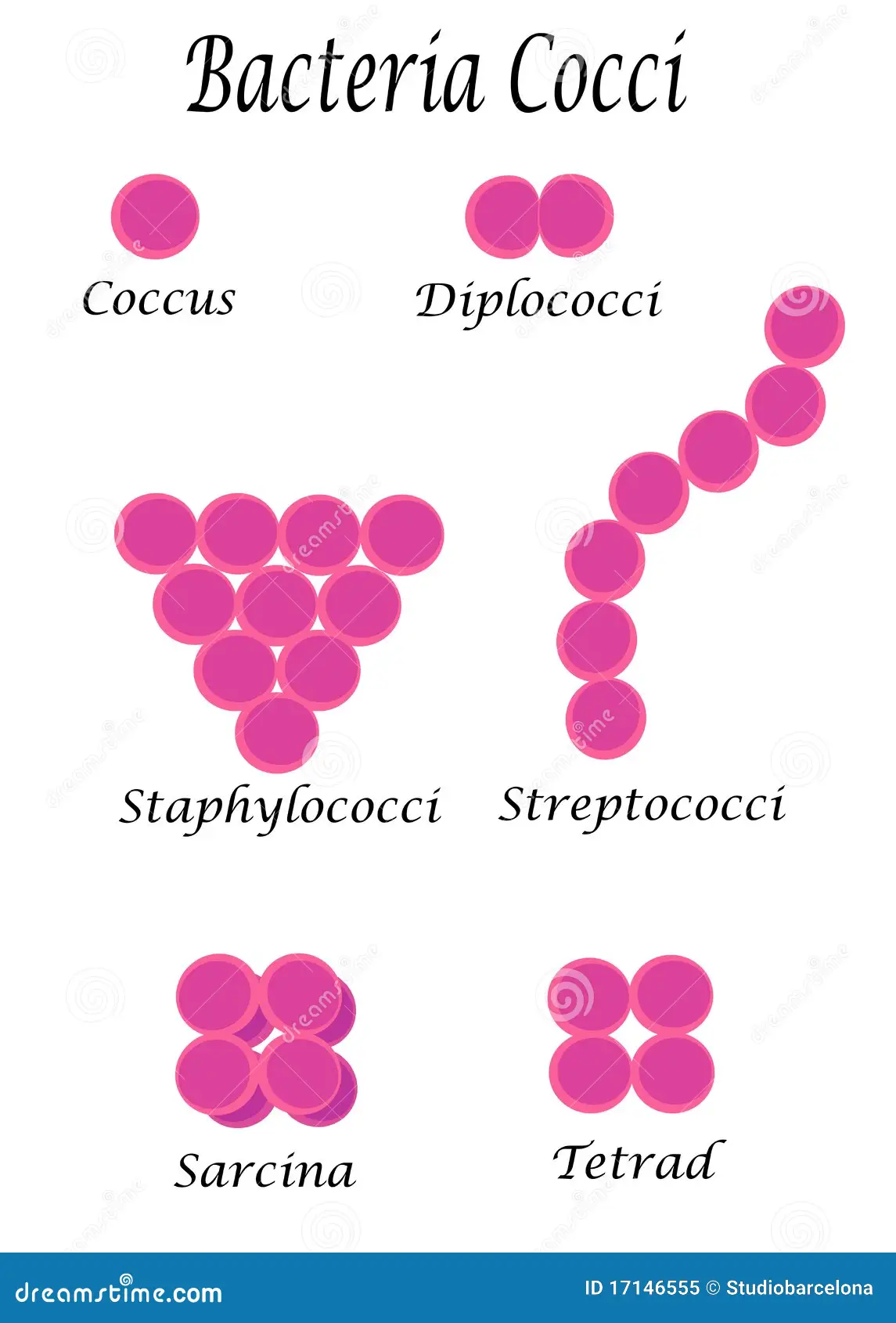
Cell Shapes: What does “bacillus” mean?
Rod-shaped.
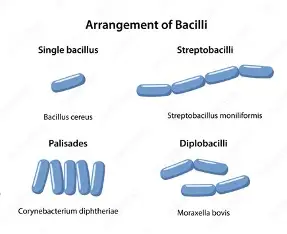
Cell Shapes: What does “spirillum/spirochete” mean?
Spiral-shaped.
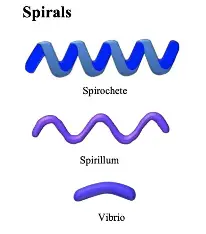
Cell Shapes: What is a pleomorphic cell?
Can change shape.
Cell Shapes: What is an example of a pleomorphic cell?
Heliobacter pylori (H. pylori).
What is binary fission?
Asexual reproduction,
process takes 1-2 hours (12-20 minutes in E.coli and 12-24 hours in Mycobacterium).
What are the steps of binary fission?
1.) Copy chromosome (usually just one).
2.) Chromosomes move to opposite ends of cell.
3.) Septum (divider) forms in middle of cell.
4.) Cell membrane and cell wall form at septum.
5.) 2 daughter cells.