Deuterostomes

0.0(0)
Studied by 1 person
call kaiCall Kai
Locked
learnLearn
examPractice Test
spaced repetitionSpaced Repetition
heart puzzleMatch
flashcardsFlashcards
GameKnowt Play
Card Sorting

1/49

encourage image

There's no tags or description

Looks like no tags are added yet.

Last updated 1:12 AM on 5/2/26
Name
Mastery
Learn
Test
Matching
Spaced
Call with Kai
Chat

No analytics yet

Send a link to your students to track their progress

50 Terms

1
New cards

What are the two main deuterostome phyla covered in this lecture?

Echinodermata (sea stars, urchins, sand dollars, sea cucumbers)

Chordata (tunicates, lancelets, and vertebrates).
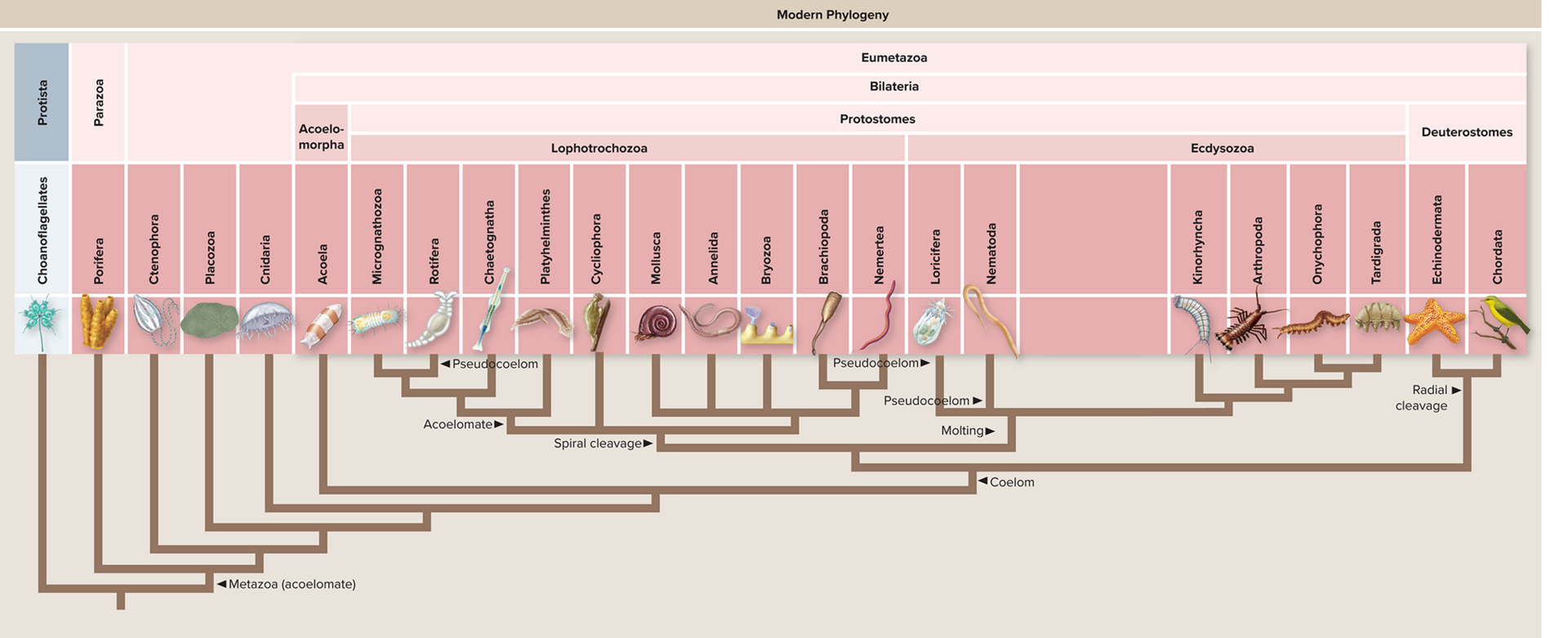
<p><strong>Echinodermata </strong>(sea stars, urchins, sand dollars, sea cucumbers) </p><p><strong>Chordata </strong>(tunicates, lancelets, and vertebrates).</p>
2
New cards

What embryonic characteristics distinguish deuterostomes from protostomes?

Deuterostomes show radial cleavage (vs. spiral), indeterminate development, and the blastopore becomes the anus (vs. mouth in protostomes).
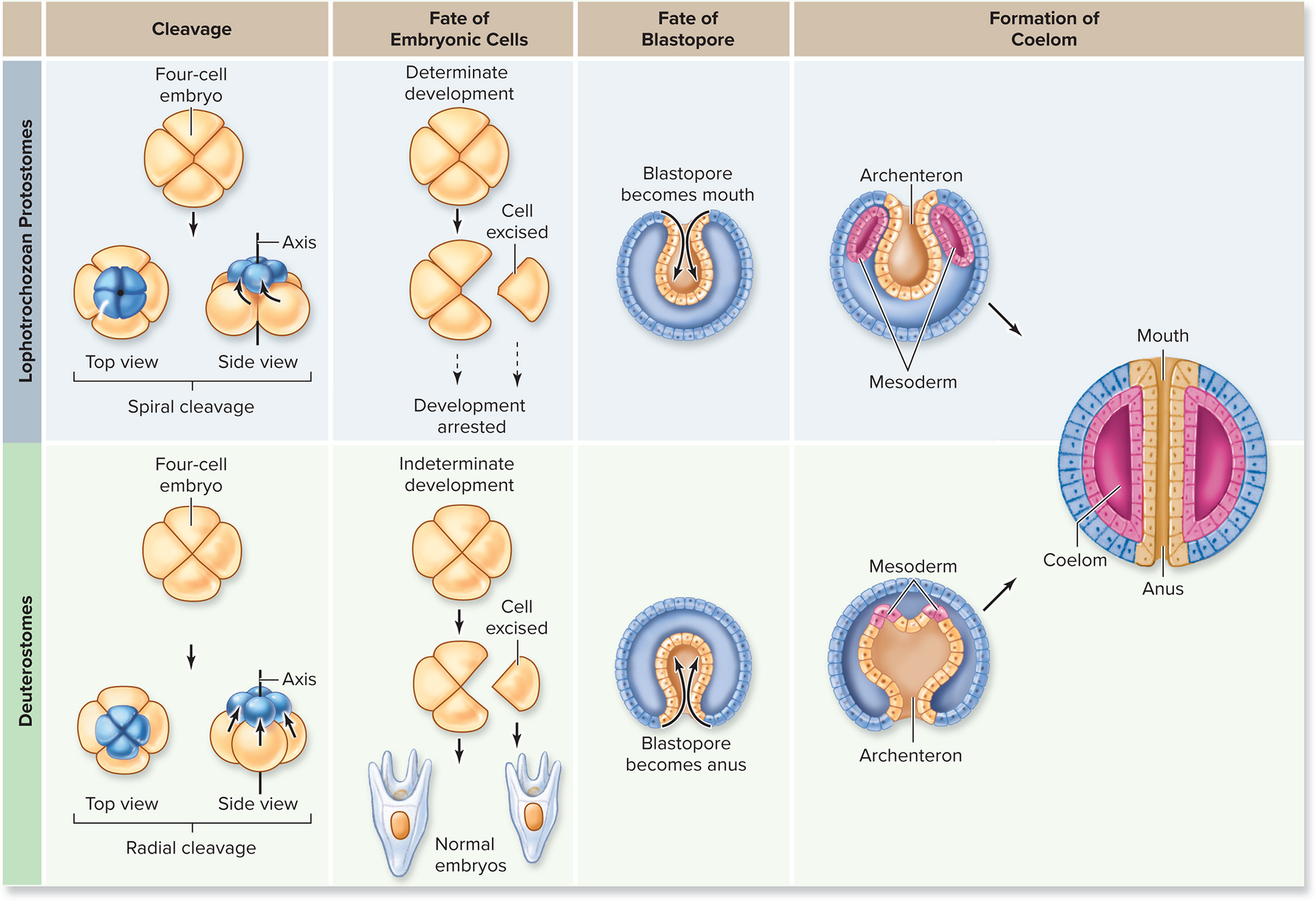
<p><strong>Deuterostomes </strong>show <u>radial cleavage</u> (vs. spiral), <u>indeterminate development</u>, and the <u>blastopore becomes the anus</u> (vs. mouth in protostomes).</p>
3
New cards

What are the four arthropod classes and a key identifying feature of each?

1) Chelicerata — pincers/fangs as appendages (spiders, scorpions, ticks, horseshoe crabs).

2) Crustacea — mandibles, two-branched appendages, antennae (crabs, shrimp, lobsters, barnacles).

3) Hexapoda — three body regions, mandibles, includes all insects.

4) Myriapoda — mandibles, one pair of antennae, many segments (centipedes, millipedes).
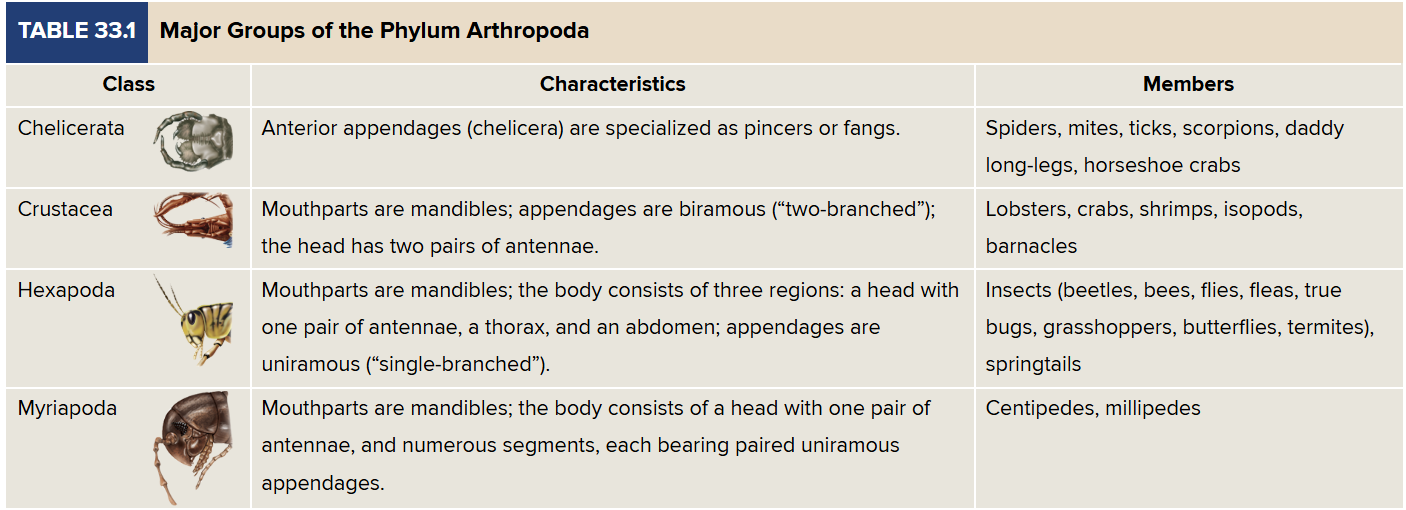
<p>1) Chelicerata — pincers/fangs as appendages (spiders, scorpions, ticks, horseshoe crabs). </p><p>2) Crustacea — mandibles, two-branched appendages, antennae (crabs, shrimp, lobsters, barnacles). </p><p>3) Hexapoda — three body regions, mandibles, includes all insects. </p><p>4) Myriapoda — mandibles, one pair of antennae, many segments (centipedes, millipedes).</p>
4
New cards

What type of symmetry do adult echinoderms display, and why is this surprising?

Most adult echinoderms are pentaradially symmetric (5-part radial). This is surprising because they are deuterostomes (a bilateral group), but echinoderm larvae are bilateral — they shift to radial symmetry as adults, likely as an adaptation to their lifestyle.
<p>Most adult echinoderms are pentaradially symmetric (5-part radial). This is surprising because they are deuterostomes (a bilateral group), but <strong>echinoderm larvae are bilateral — they shift to radial symmetry as adults</strong>, likely as an adaptation to their lifestyle.</p>
5
New cards
What is an endoskeleton, and how does it appear in echinoderms?
An endoskeleton is an internal skeleton. In echinoderms it takes the form of calcium carbonate ossicles — hardened plates beneath the skin. Unlike vertebrate bone, skin is stretched over these plates. Fused ossicles form the familiar structure of a sand dollar.
6
New cards
What is the collagenous tissue in echinoderms, and what unique property does it have?
Echinoderms have flexible collagenous tissue (in addition to rigid ossicles) that can switch between rigid and flaccid states. When rigid, it protects against predators; when flexible, it allows arms to wrap around prey like clams.
7
New cards
How do echinoderms use their ability to go rigid for defense?
They can deliberately shed an arm as a defense mechanism — making the tissue rigid and allowing it to break off cleanly. The lost arm can later regenerate, sometimes even regrowing the entire body from a single arm.
8
New cards

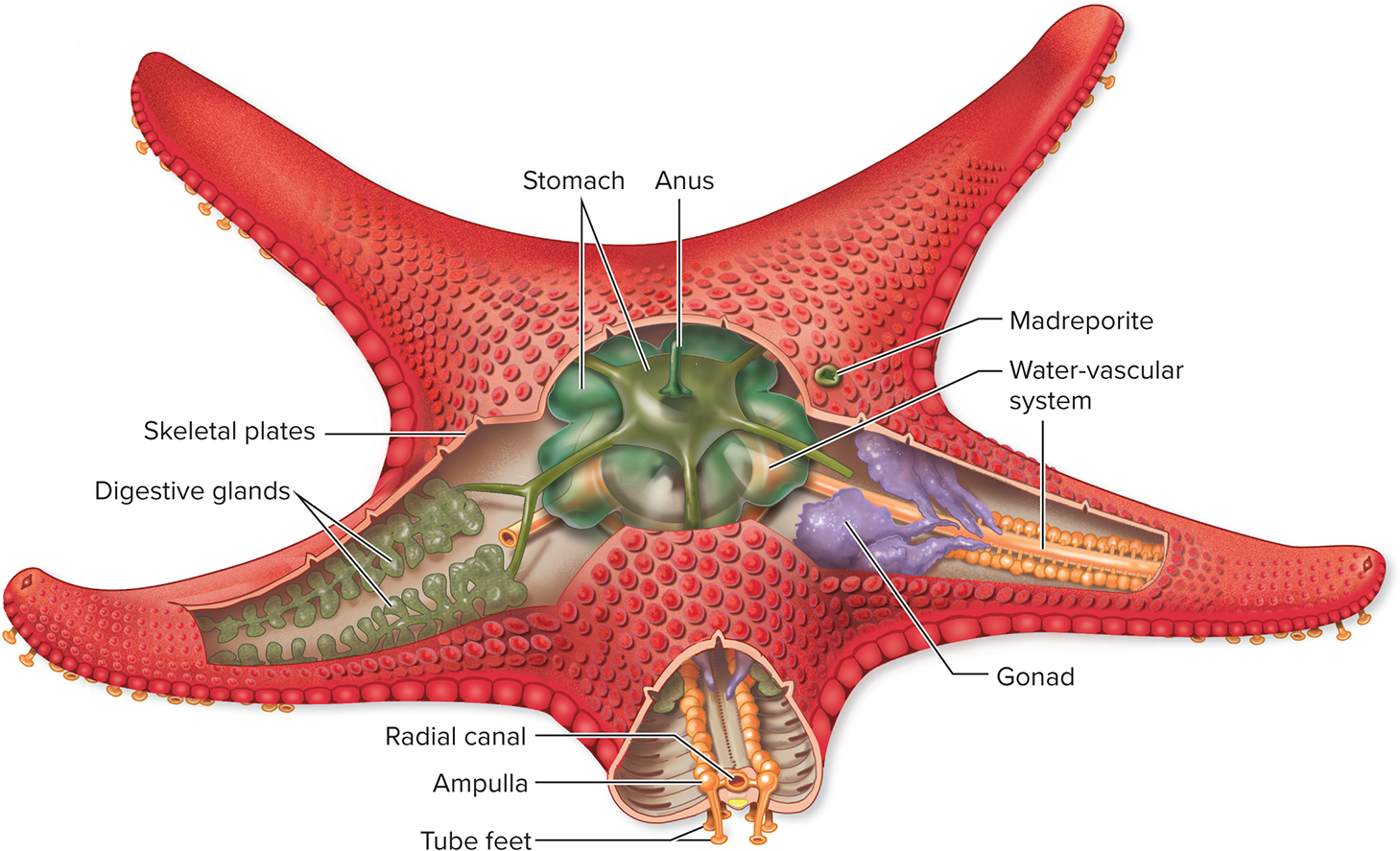
What is the water vascular system of echinoderms?

A network of water-filled canals running through the body of echinoderms. Water enters through the madreporite (a pore on the top surface) and flows into canals extending into each arm, ending in tube feet. Water pressure in this system controls movement of the tube feet.
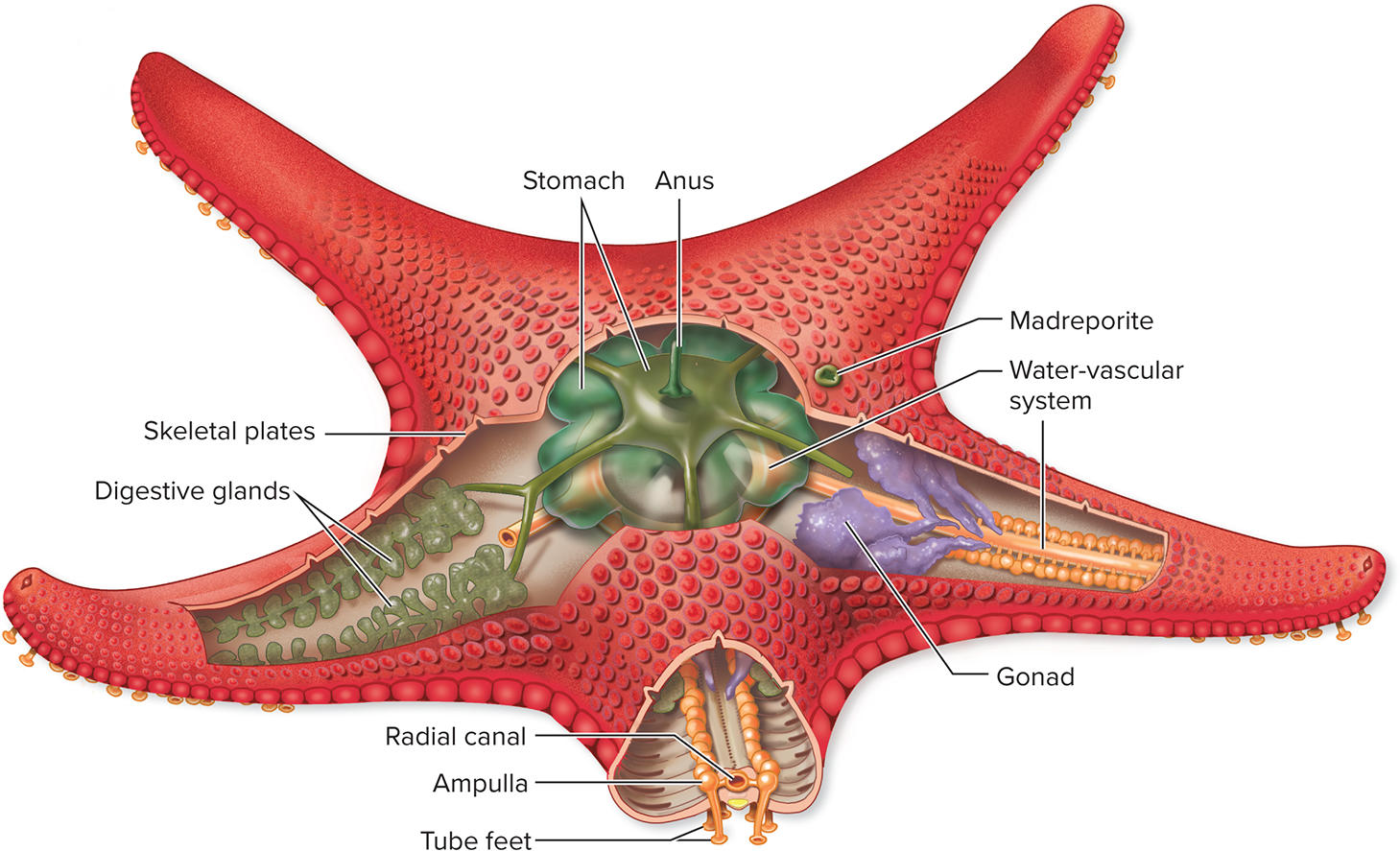
<p>A network of water-filled canals running through the body of echinoderms. Water enters through the madreporite (a pore on the top surface) and flows into canals extending into each arm, ending in tube feet. Water pressure in this system controls movement of the tube feet.</p>
9
New cards

What are tube feet, and what three functions do they serve?

Tube feet are small hydraulic appendages driven by the water vascular system. They are used for:

1) locomotion (moving across surfaces),

2) feeding (grasping prey like clams),

3) gas exchange (large surface area for oxygen diffusion in water).
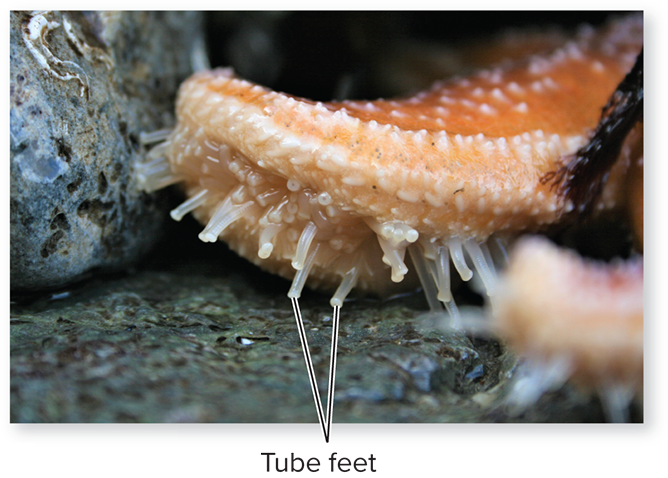
<p>Tube feet are small hydraulic appendages driven by the water vascular system. They are used for:</p><p>1) <strong>locomotion </strong>(moving across surfaces),</p><p>2) <strong>feeding </strong>(grasping prey like clams),</p><p>3) <strong>gas exchange</strong> (large surface area for oxygen diffusion in water).</p>
10
New cards

Where is the mouth and anus located on a sea star?

The mouth is on the underside (ventral surface) — facing downward toward food on the seafloor.

The anus is on the top (dorsal surface).
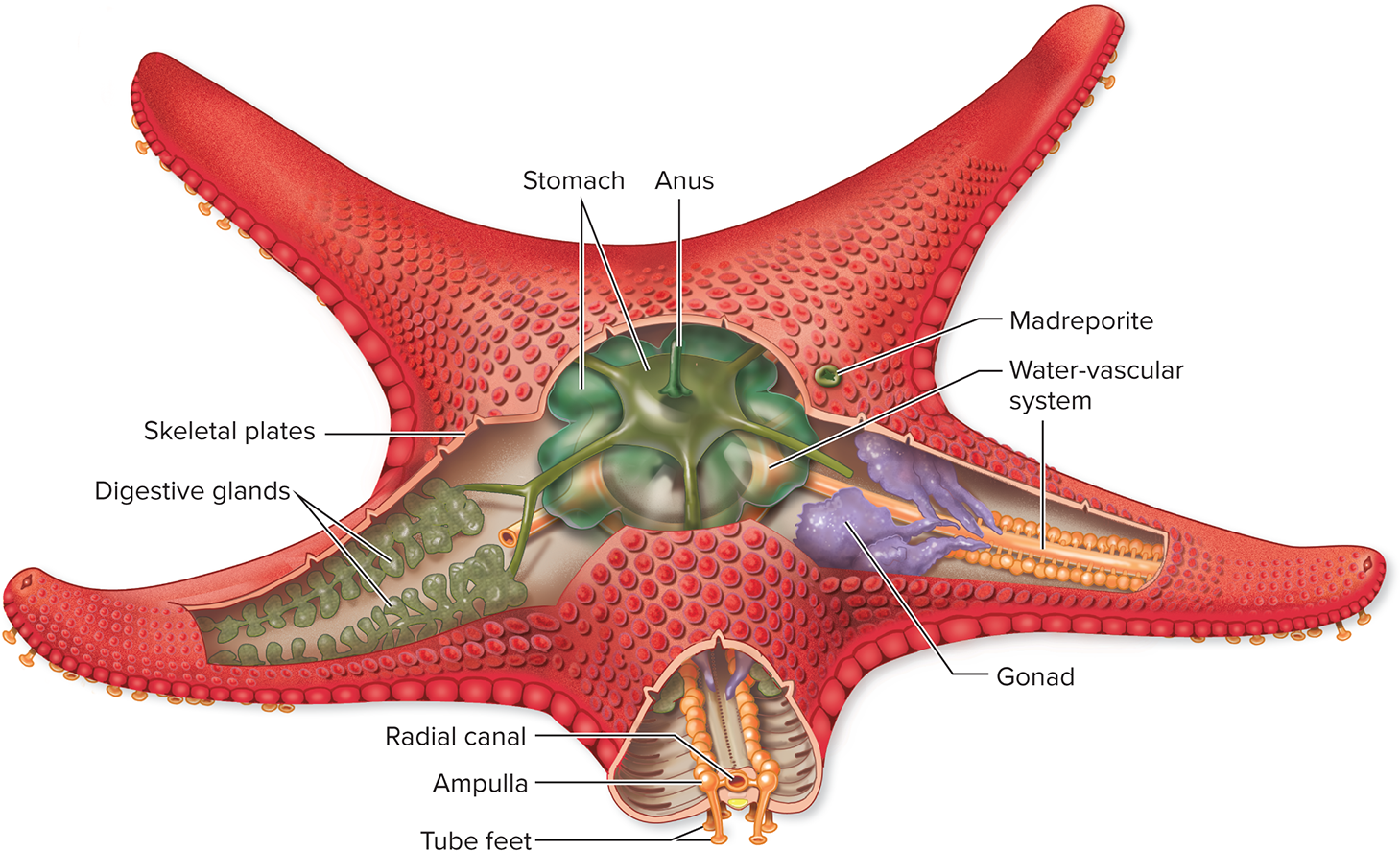
<p>The <strong>mouth </strong>is on the <u>underside </u>(ventral surface) — facing downward toward food on the seafloor.</p><p>The <strong>anus </strong>is on the <u>top </u>(dorsal surface).</p>
11
New cards

What are the four defining embryonic characteristics of all chordates?

1) Dorsal hollow nerve cord (can differentiate into brain and spinal cord).

2) Notochord (provides skeletal support).

3) Pharyngeal slits or pouches (used for suspension feeding, gas exchange, or developing into ear/head/neck structures).

4) Post-anal tail (body extends past the anus).
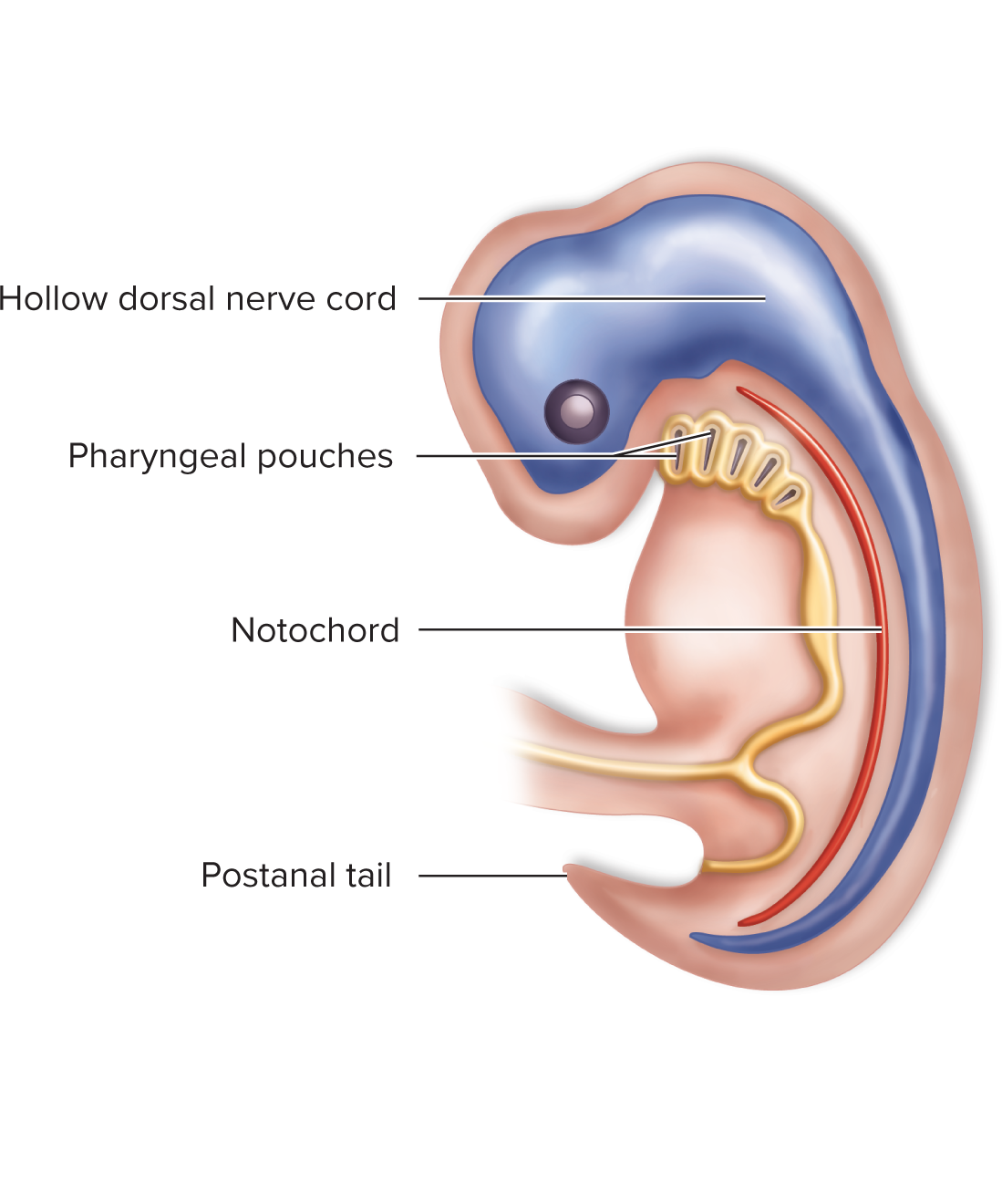
<p>1) <strong>Dorsal hollow nerve cord</strong> (can differentiate into brain and spinal cord). </p><p>2) <strong>Notochord </strong>(provides skeletal support). </p><p>3) <strong>Pharyngeal slits or pouches</strong> (used for suspension feeding, gas exchange, or developing into ear/head/neck structures). </p><p>4) <strong>Post-anal tail</strong> (body extends past the anus).</p>
12
New cards

What is the notochord, and what does it become in most vertebrates?

The notochord is a flexible rod providing skeletal support — present in all chordate embryos. In most vertebrates it is replaced by or develops into the vertebral column (backbone).
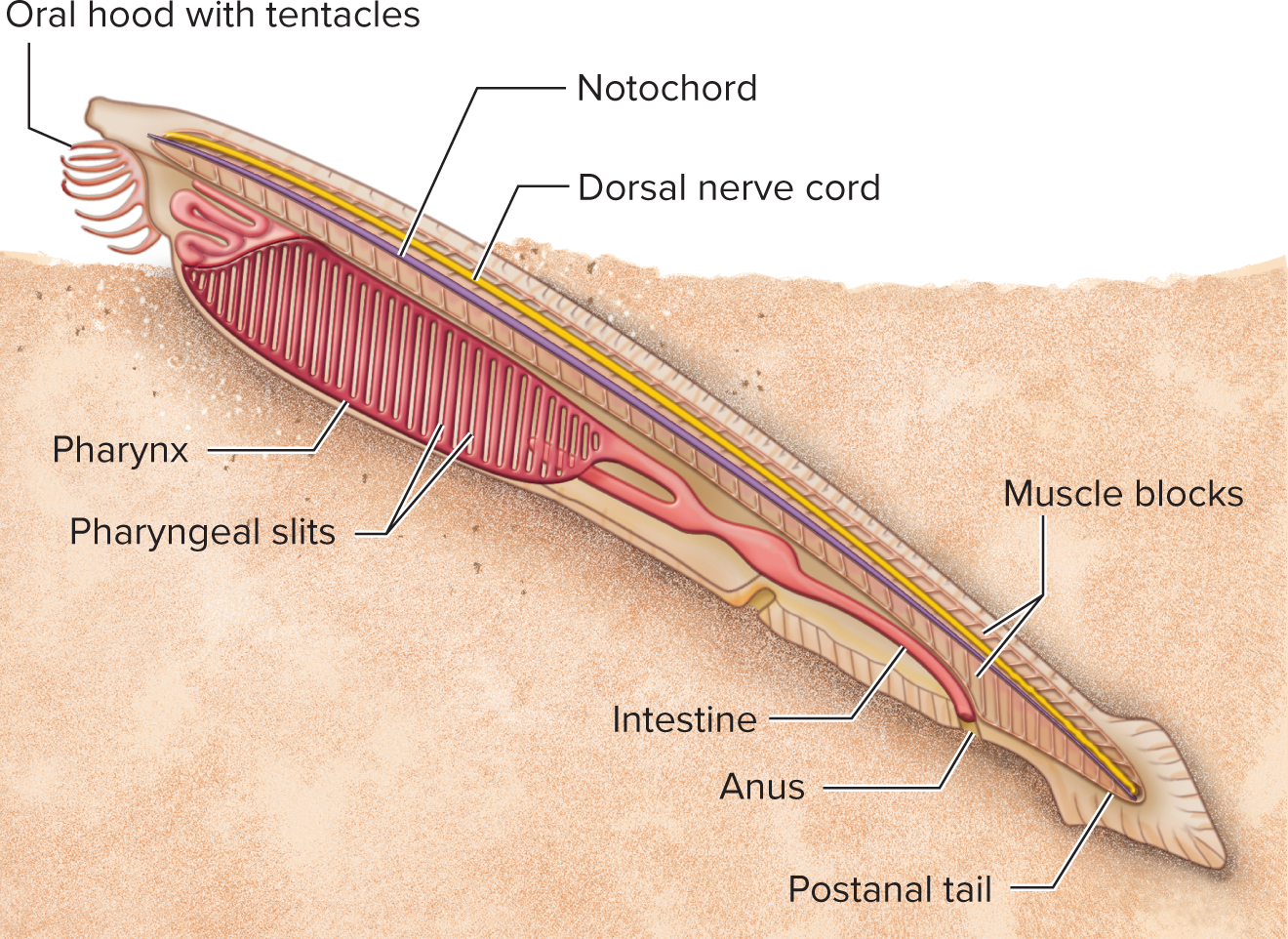
<p>The notochord is a flexible rod providing skeletal support — present in all chordate embryos. In most vertebrates it is replaced by or develops into the <strong>vertebral column (backbone</strong>).</p>
13
New cards

What are pharyngeal slits/pouches, and what do they become in different groups?

Pharyngeal slits are openings in the throat region present in all chordate embryos. Depending on the group they become:

gills (aquatic vertebrates),

structures of the ear, head, and neck (terrestrial vertebrates).

In early chordates they also aid suspension feeding.
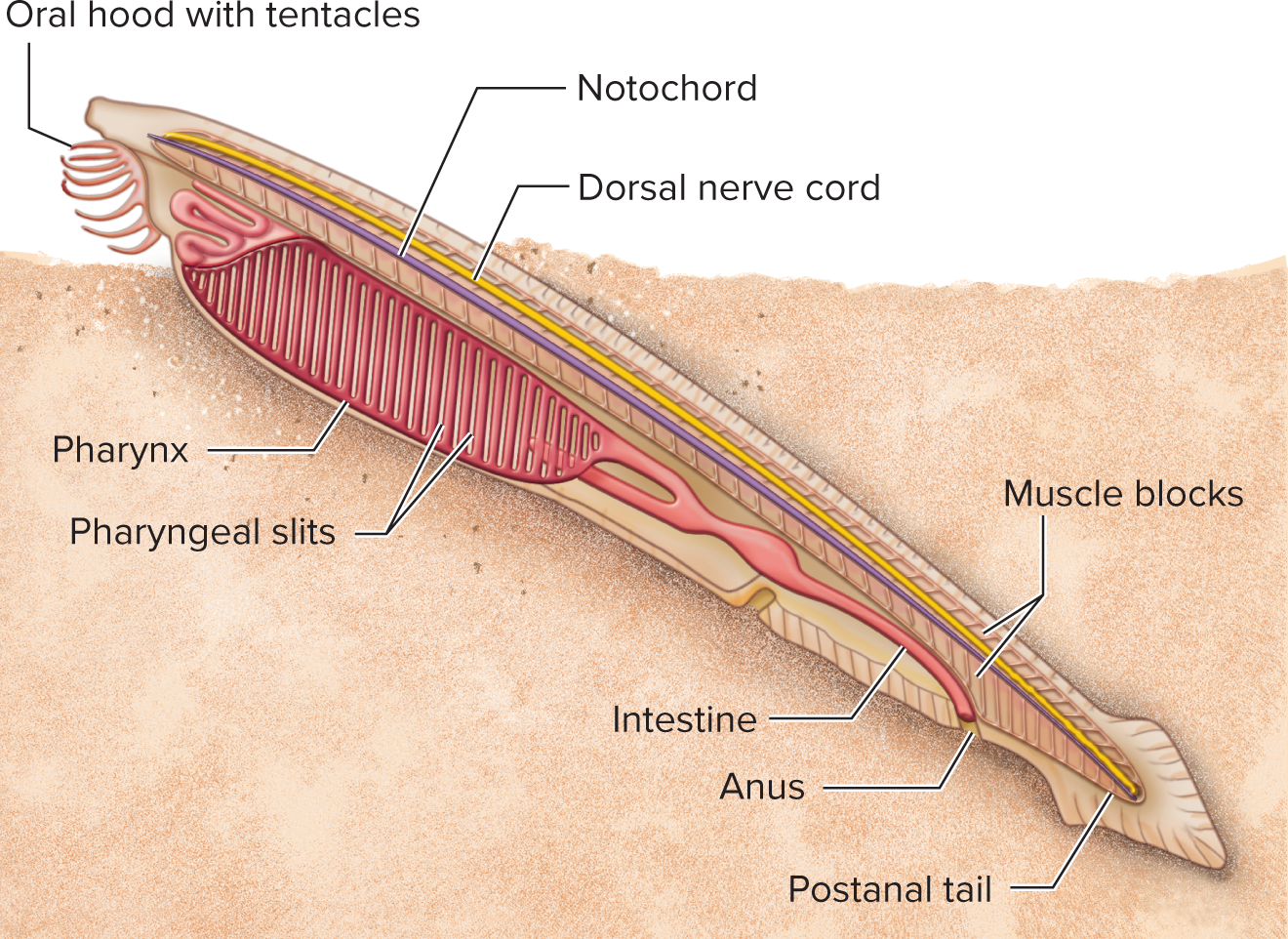
<p>Pharyngeal slits are openings in the throat region present in all chordate embryos. Depending on the group they become: </p><p><strong>gills </strong>(aquatic vertebrates), </p><p><strong>structures of the ear, head, and neck</strong> (terrestrial vertebrates).</p><p>In early chordates they also aid suspension feeding.</p>
14
New cards

What are the three subphyla of Chordata?

1) Urochordata (tunicates/sea squirts) — chordate features only in larvae.

2) Cephalochordata (lancelets) — retain all four chordate features as adults; simple, aquatic, eyeless.

3) Vertebrata — notochord replaced by vertebral column; includes fishes through mammals.

15
New cards

What makes tunicates (urochordates) unusual among chordates?

Adult tunicates look nothing like typical chordates and lack most defining features as adults. Only their larvae possess all four chordate characteristics. Adults are sessile, aquatic filter feeders.
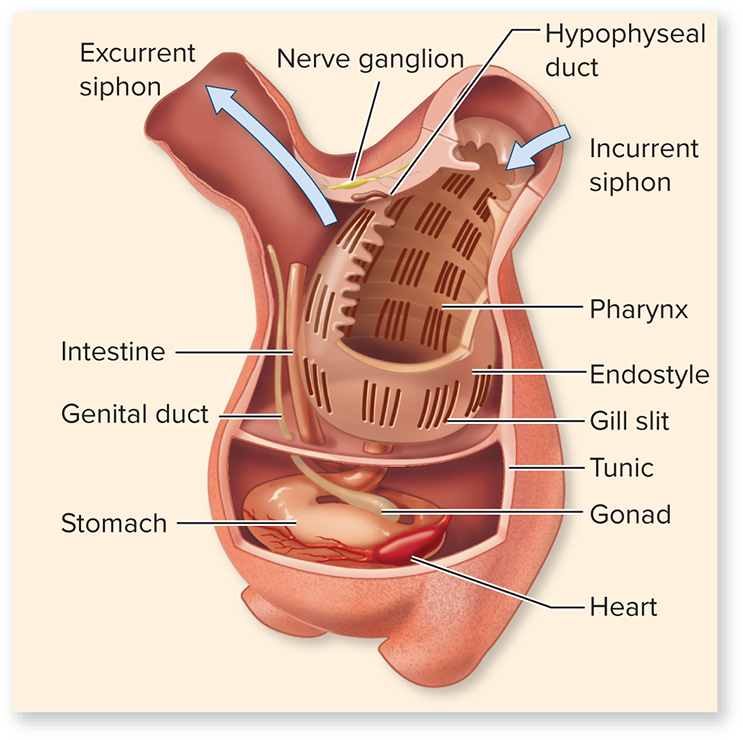
<p>Adult tunicates look nothing like typical chordates and lack most defining features as adults. Only their larvae possess all four chordate characteristics. Adults are sessile, aquatic filter feeders.</p>
16
New cards

What is a lancelet (cephalochordate), and why is it significant?

Lancelets are simple, translucent marine chordates that retain all four chordate features as adults — making them the closest model of what the ancestral chordate may have looked like. They are filter feeders that partially bury themselves and use their post-anal tail to burrow.
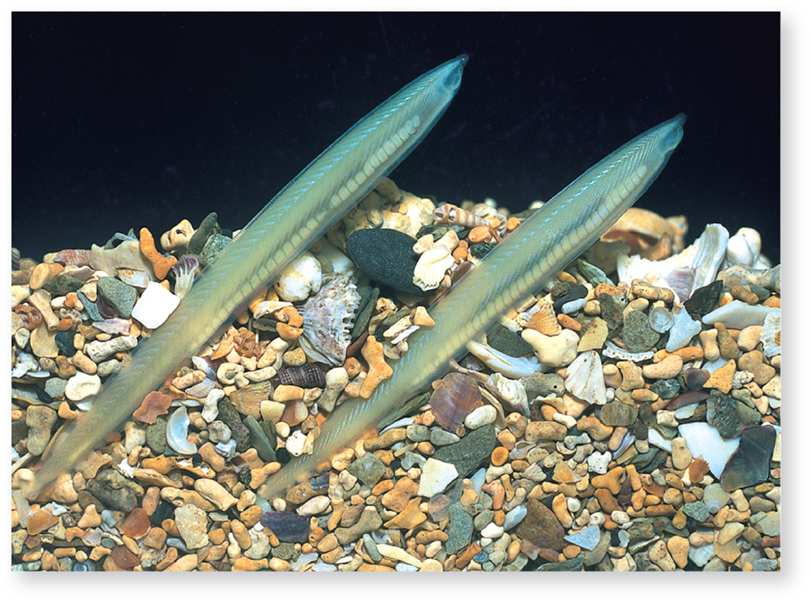
<p>Lancelets are simple, translucent marine chordates that <strong>retain all four chordate features as adults</strong> — making them the closest model of what the ancestral chordate may have looked like. They are filter feeders that partially bury themselves and use their post-anal tail to burrow.</p>
17
New cards

What key characteristics define vertebrates as a subphylum?

1) Vertebral column (notochord enclosed in bone/cartilage, protecting the nerve cord).

2) Well-developed cephalization with a skull protecting the brain.

3) Neural crest cells (embryonic cells that migrate and aid development — unique to vertebrates).

4) Well-developed organ systems within a true coelom.

5) Closed circulatory system.

6) Endoskeleton (cartilage or bone).
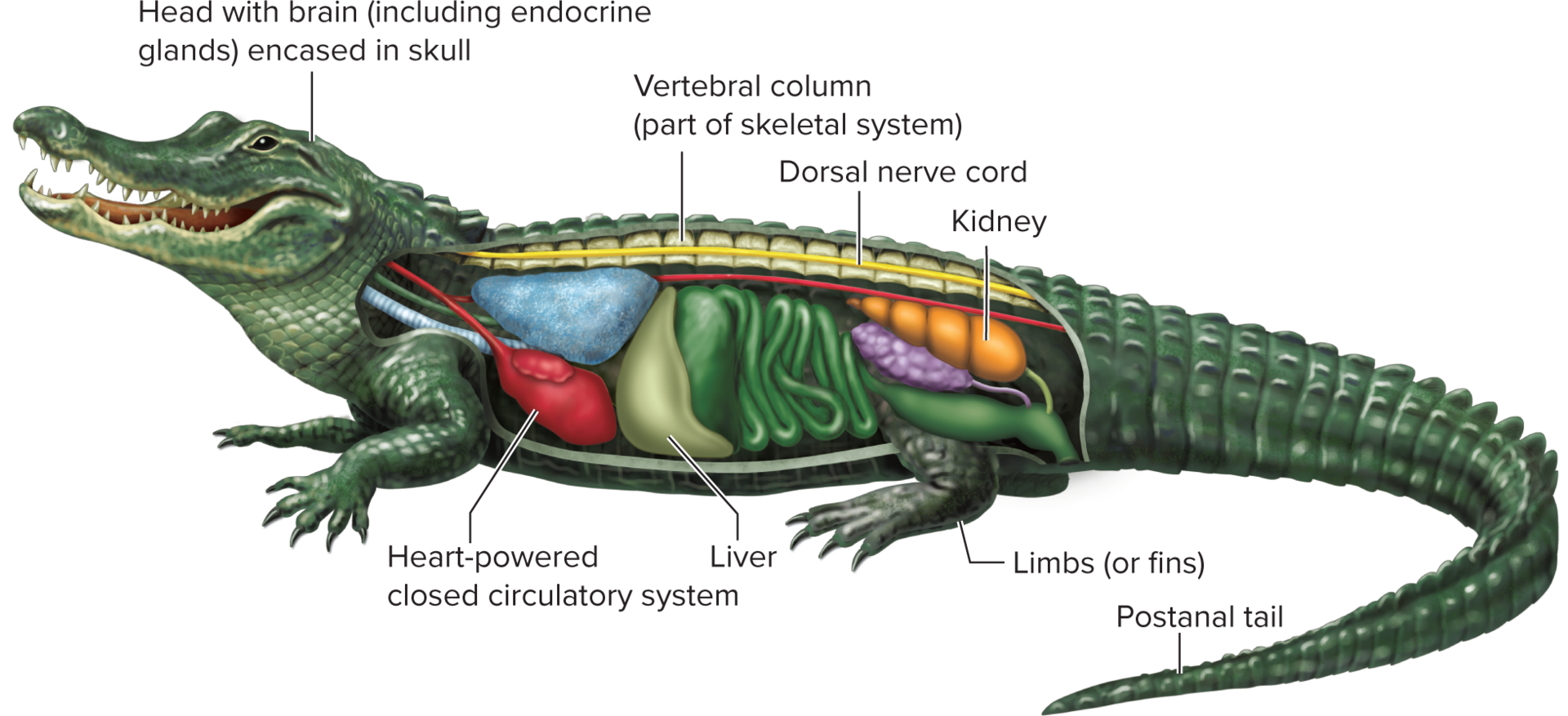
<p>1) Vertebral column (notochord enclosed in bone/cartilage, protecting the nerve cord). </p><p>2) Well-developed cephalization with a skull protecting the brain. </p><p>3) Neural crest cells (embryonic cells that migrate and aid development — unique to vertebrates). </p><p>4) Well-developed organ systems within a true coelom. </p><p>5) Closed circulatory system. </p><p>6) Endoskeleton (cartilage or bone).</p>
18
New cards

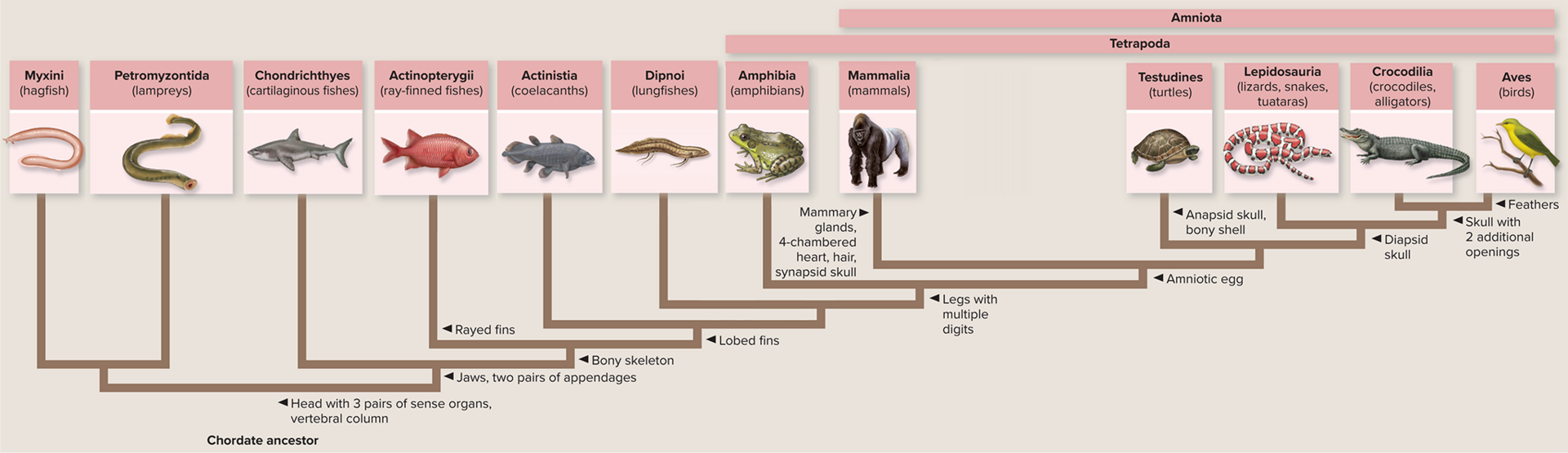
Why are "fishes" not a monophyletic group?

The term "fishes" lumps together many distinct lineages that do not all share a single common ancestor exclusive to fish — they are spread across multiple branches of the vertebrate phylogenetic tree. It is a convenient grouping for diversity, not a true clade.
<p>The term "fishes" lumps together many distinct lineages that do not all share a single common ancestor exclusive to fish — they are spread across multiple branches of the vertebrate phylogenetic tree. It is a convenient grouping for diversity, not a true clade.</p>
19
New cards
What are the key shared characteristics of fishes?
Vertebral column, jaws and paired appendages (in most), internal gills, closed circulatory system with a single-loop heart (heart → gills → body → heart), and certain nutritional requirements (essential amino acids they cannot synthesize).
20
New cards

What is the single circulatory loop of fishes?

Blood flows: heart → gills (picks up oxygen) → body tissues (delivers oxygen) → back to heart. One continuous loop — no separate pulmonary circuit as in mammals.
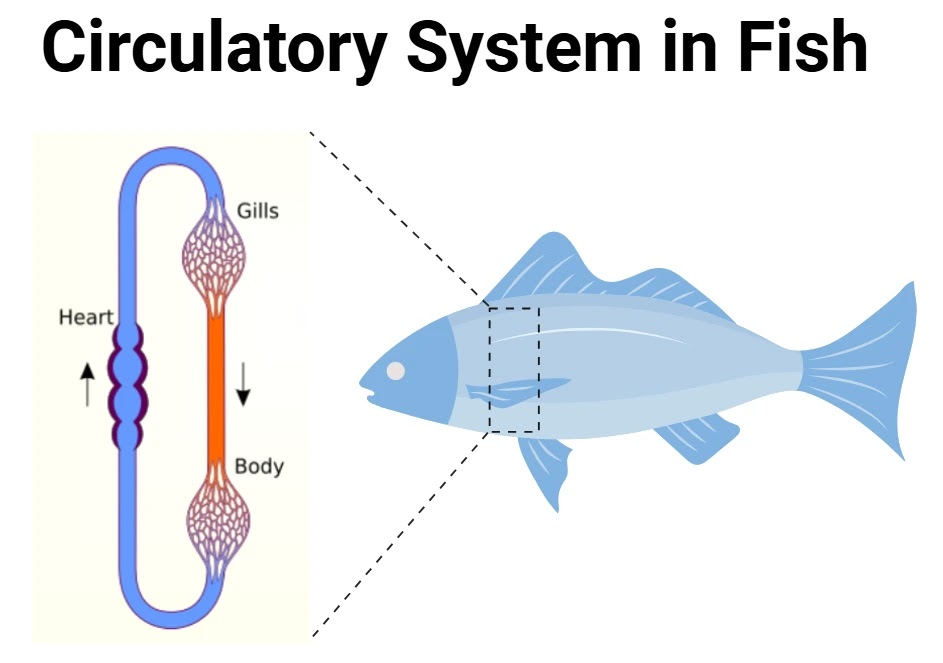
<p>Blood flows: heart → gills (picks up oxygen) → body tissues (delivers oxygen) → back to heart. One continuous loop — no separate pulmonary circuit as in mammals.</p>
21
New cards

What are jawless fishes, and what are examples?

Hagfish and lampreys are jawless fishes (agnathans). They have cartilaginous mouths with teeth but lack true hinged jaws. They represent the earliest stage of mouth evolution in vertebrates.
<p><strong>Hagfish </strong>and <strong>lampreys </strong>are jawless fishes (agnathans). They have cartilaginous mouths with teeth but lack true hinged jaws. They represent the earliest stage of mouth evolution in vertebrates.</p>
22
New cards

How did vertebrate jaws (and teeth) evolve?

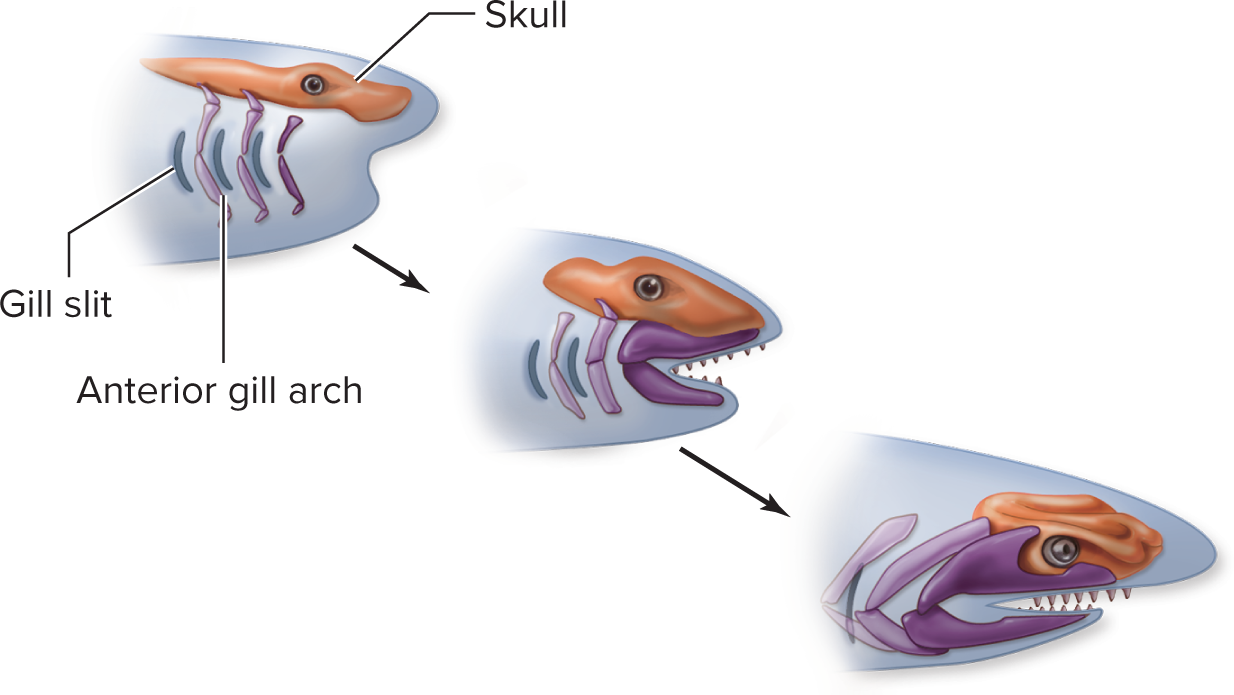
Jaws evolved from gill arches — structural supports for the gills. Over time, anterior gill arches became modified and attached to the developing mouth region, eventually forming hinged jaws with teeth. Teeth themselves evolved from modified scales (not jaw bones).
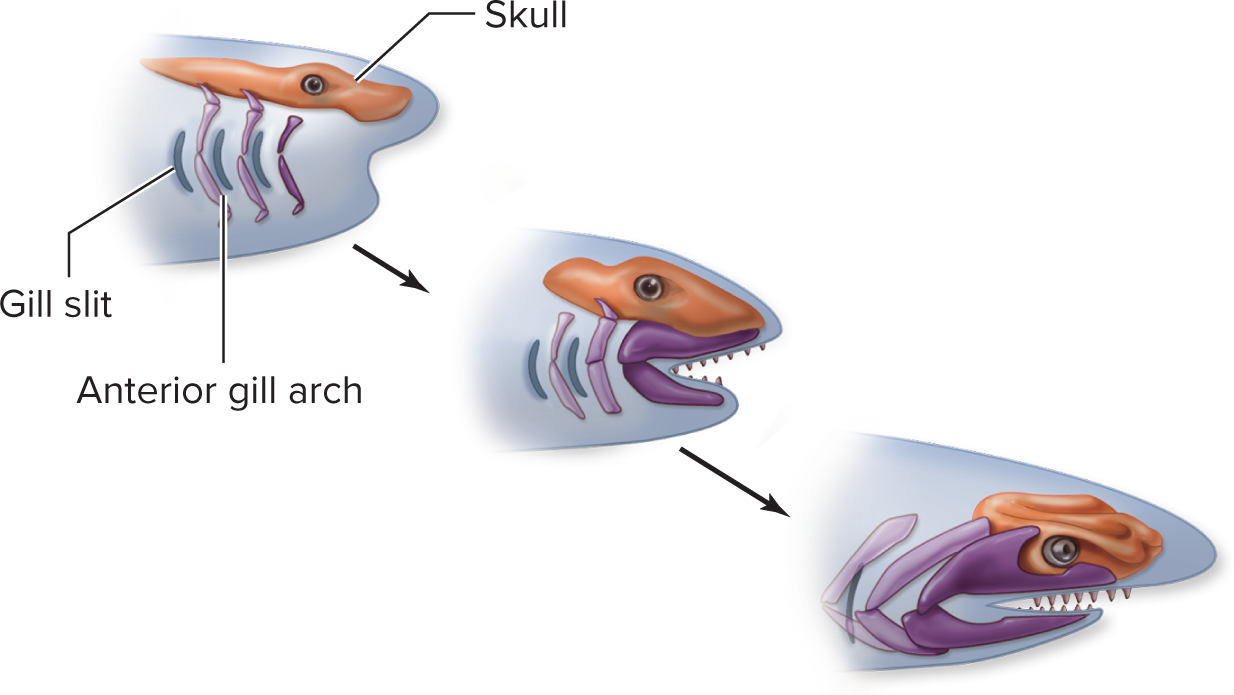
<p>Jaws evolved<strong> from gill arches</strong> — structural supports for the gills. Over time, anterior gill arches became modified and attached to the developing mouth region, eventually forming hinged jaws with teeth. <strong>Teeth themselves evolved from modified scales</strong> (not jaw bones).</p>
23
New cards

Why is the evolution of jaws and paired appendages significant for vertebrate history?

Jaws allowed vertebrates to become effective predators by grasping and processing larger prey. Paired appendages with internal bones provided the structural foundation that would later be modified into limbs — enabling the transition to land.
<p>Jaws allowed vertebrates to become effective predators by grasping and processing larger prey. Paired appendages with internal bones provided the structural foundation that would later be modified into limbs — enabling the transition to land.</p>
24
New cards

What are tetrapods, and what five characteristics define them?

Tetrapods are all vertebrates that moved onto land (amphibians, reptiles, birds, mammals). Defining features:

1) Four limbs with digits.

2) A neck allowing independent head movement.

3) Pelvic girdle fused to backbone (allows pivoting on land).

4) Lungs instead of gills.

5) Ears adapted to hear sound through air.

25
New cards
Why is fusion of the pelvic girdle to the backbone important for tetrapods?
It creates a pivot point for the body during movement, allowing each leg to move independently while the pelvis stays anchored. This is critical for effective locomotion on land, unlike the side-to-side body undulation of fish.
26
New cards
What are amphibians, approximately how many species exist, and what are examples?
Phylum Amphibia — about 7,000 species. Examples: frogs, toads, salamanders. A fourth order (Apoda) is legless — a reminder that group membership isn't always obvious from appearance.
27
New cards
Why were amphibians a major evolutionary milestone?
They were the first vertebrates to walk on land — representing the transition from aquatic to terrestrial life.
28
New cards
What major reproductive limitation do amphibians have?
Despite living on land, amphibians must return to water to reproduce. Their eggs lack a waterproof shell and must be laid in water to avoid drying out, and fertilization is typically external.
29
New cards
What two respiratory adaptations do amphibians have?
1) Lungs (their primary air-breathing organ). 2) Cutaneous respiration — supplemental gas exchange through their moist, permeable skin. This is useful for aquatic phases but limits them to moist environments.
30
New cards
What is the heart structure of amphibians, and what is its limitation?
A 3-chambered heart: 2 atria + 1 ventricle. The single ventricle allows oxygenated and deoxygenated blood to mix, reducing oxygen delivery efficiency. More efficient than a 2-chambered fish heart, but less efficient than a 4-chambered heart.
31
New cards
What are reptiles, approximately how many species exist, and what are examples?
About 10,000 species. Examples: lizards, snakes, turtles, alligators/crocodilians. They are closely related to birds (birds are their sister group on the phylogenetic tree).
32
New cards
How does reptile skin differ from amphibian skin, and why?
Reptiles have dry, scaly skin that prevents water loss. Amphibians need moist skin for cutaneous respiration — but moist skin loses water in dry conditions. Reptiles traded cutaneous respiration for the ability to live in truly dry, terrestrial environments.
33
New cards
What is the heart structure of reptiles, and how does it compare to amphibians?
Still 3-chambered, but with a more divided ventricle — the beginnings of separating oxygenated and deoxygenated blood more effectively. Not yet fully divided like the 4-chambered heart, but more efficient than the amphibian ventricle.
34
New cards
What is the amniotic egg, and why is it a key innovation?
The amniotic egg has a waterproof, leathery shell and internal membranes that protect, feed, and provide gas exchange for a developing embryo — allowing eggs to be laid on land without drying out. It also requires internal fertilization.
35
New cards

What are the four membranes of the amniotic egg and the function of each?

1) Chorion — outermost membrane just inside the shell; allows oxygen to diffuse in to the embryo.

2) Amnion — surrounds and cushions the embryo in fluid.

3) Yolk sac — stores food (nutrients) for the developing embryo

4) Allantois — stores nitrogenous waste (as uric acid) produced by the embryo.
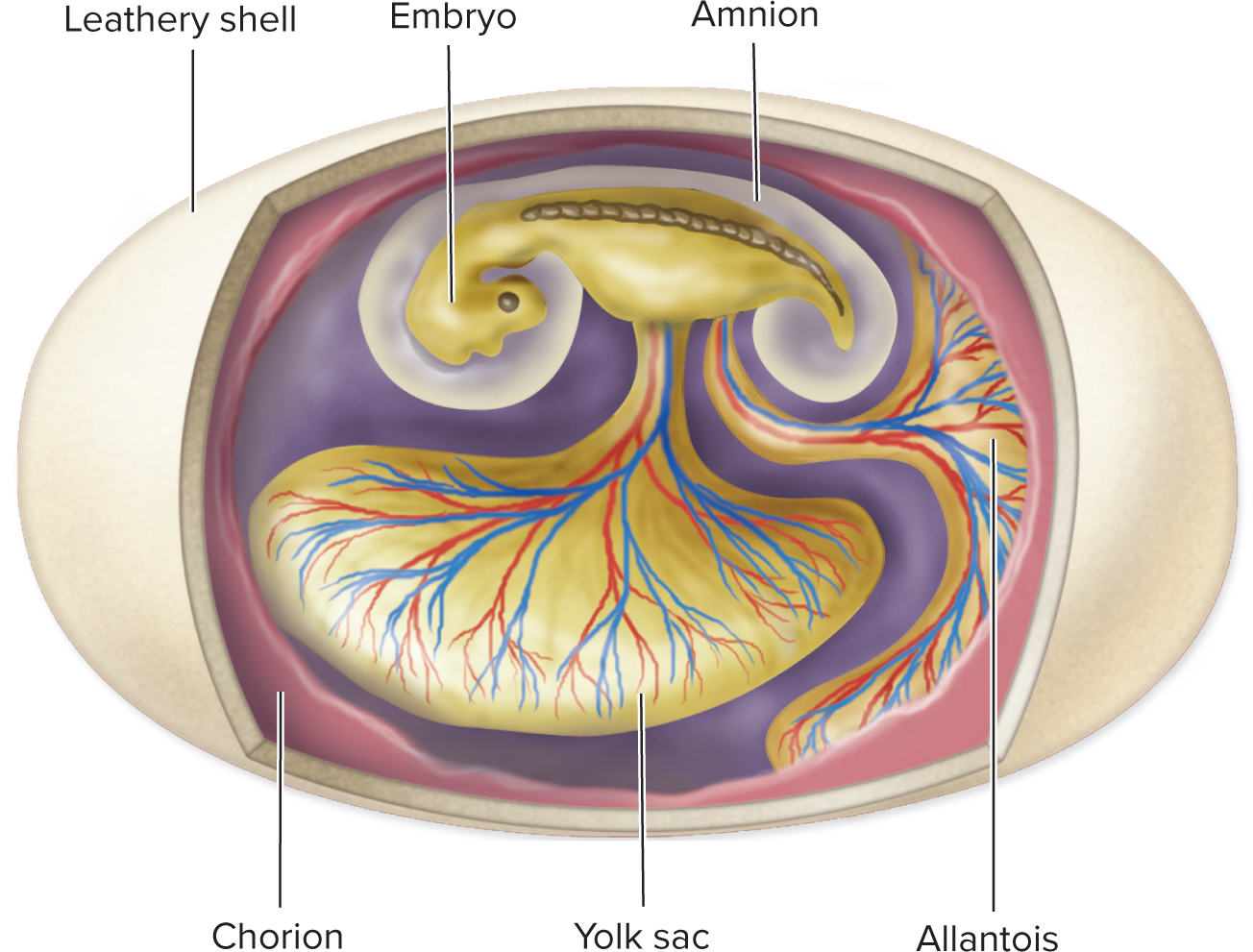
<p>1) <strong>Chorion </strong>— outermost membrane just inside the shell; allows oxygen to diffuse in to the embryo. </p><p>2) <strong>Amnion </strong>— surrounds and cushions the embryo in fluid. </p><p>3) <strong>Yolk sac</strong> — stores food (nutrients) for the developing embryo</p><p>4) <strong>Allantois </strong>— stores nitrogenous waste (as uric acid) produced by the embryo.</p>
36
New cards
Why is uric acid specifically important for embryos developing inside an amniotic egg?
The embryo must store its waste within the egg for the entire developmental period. Uric acid is ideal because it has very low toxicity and can be stored in a concentrated solid form (allantois), unlike ammonia which would poison the embryo.
37
New cards

What two features connect crocodilians and birds as sister groups?

1) Both have a 4-chambered heart (2 atria + 2 ventricles), fully separating oxygenated and deoxygenated blood.

2) Both build nests and provide parental care for their young. (Note: crocodiles care for young; alligators generally do not.)

38
New cards
What are birds and approximately how many species exist?
Class Aves — about 10,000 species. Closely related to crocodilians; together they form the Archosaur lineage.
39
New cards

What are feathers evolutionarily derived from, and what do they do structurally?

Feathers are modified scales — elongated from the reptilian ancestor's skin scales. Interlocking barbs with hooks keep the feather's smooth surface together, aiding flight by reducing drag.

40
New cards
Why do birds have hollow bones, and is weight reduction the main reason?
Hollow bones connect to the air sac system, acting as air storage for birds' highly efficient, unidirectional respiratory system. Though lighter, the main function is respiratory — birds and similar-sized mammals have comparable skeletal weights.
41
New cards
How does bird respiration work, and why is it more efficient than mammalian lungs?
Birds use a unidirectional air flow system — air flows in one direction through the lungs (aided by air sacs), so fresh, oxygen-rich air constantly replenishes the lungs with no mixing of stale exhaled air. This provides consistently high oxygen levels.
42
New cards

What does endothermy mean, and which group introduces it?

Endothermy means generating body heat internally through metabolism, maintaining a constant temperature regardless of environmental conditions. Birds are the first group in this lecture sequence to be endothermic.

43
New cards

What are the two main advantages of endothermy?

1) Ability to remain active at any environmental temperature.

2) Stamina — the ability to sustain prolonged activity (critical for birds in flight). The trade-off is a much higher food requirement to fuel the metabolism.

44
New cards
What are mammals, approximately how many species exist, and why is this group small relative to others?
Class Mammalia — about 5,000 species, one of the smaller vertebrate groups. Despite this, they include humans and dominate many terrestrial ecosystems due to endothermy, intelligence, and parental investment.
45
New cards

What are the three functions of hair in mammals?

1) Insulation — the primary function; traps heat to support endothermy.

2) Camouflage — coloration matches habitat.

3) Sensory — hair follicles detect touch; whiskers (vibrissae) are especially important sensory organs in species living in darkness.

46
New cards

What are mammary glands, and what role do they play?

Mammary glands secrete milk to nourish offspring after birth. They are the defining feature of mammals (the name Mammalia comes from them) and represent a significant parental investment in young compared to other vertebrate groups.

47
New cards
What is a placenta, and how does it change reproduction compared to the amniotic egg?
The placenta allows internal gestation — the embryo develops inside the mother rather than in an external egg. The mother's blood supply handles gas exchange, nutrient delivery, and waste removal for the embryo. Most (but not all) mammals have a placenta.
48
New cards

What membranes from the amniotic egg are retained in placental mammals, and what is absent?

Retained: chorion, amnion, and yolk sac. Absent: the allantois. Because the mother's kidneys and liver process the embryo's waste through the shared blood supply, a separate waste-storage membrane is not needed.

49
New cards

What are the three groups of mammals, and how does each reproduce?

1) Monotremes (Prototheria) — lay external eggs but nurse young with mammary glands (e.g., platypus).

2) Marsupials (Theria) — give birth to tiny live young that complete development in an external pouch (e.g., kangaroo, possum).

3) Placentals (Theria) — give birth to live, relatively well-developed young after internal gestation via the placenta.

50
New cards
What is the only North American marsupial?
The opossum (possum) is North America's only native marsupial. Most marsupials are found in Australia.



