Lecture 20. GI Infections 1
 Call Kai
 Learn
Learn Practice Test
 Spaced Repetition
 Match
Match Flashcards
 Knowt Play
1/27

There's no tags or description
Looks like no tags are added yet.
Name | Mastery | Learn | Test | Matching | Spaced | Call with Kai | Chat |
|---|
No analytics yet
Send a link to your students to track their progress
28 Terms
Diagnostic value of fecal and Gram's stain for GI microflora for GI infections
Little diagnostic value.
Gastroenteritis
Nausea, vomiting, diarrhea, and abdominal discomfort.
Diarrhea
Abnormal fluid-like fecal discharge from disease of the small intestine.
Dysentery
Inflammatory disorder of the GI tract with blood/pus in feces, fever, and cramps due to large intestine disease.
Enterocolitis
Inflammation of both the small and large intestines.
Morphology and oxygen requirement of E. coli
Facultative anaerobic Gram-negative rod.
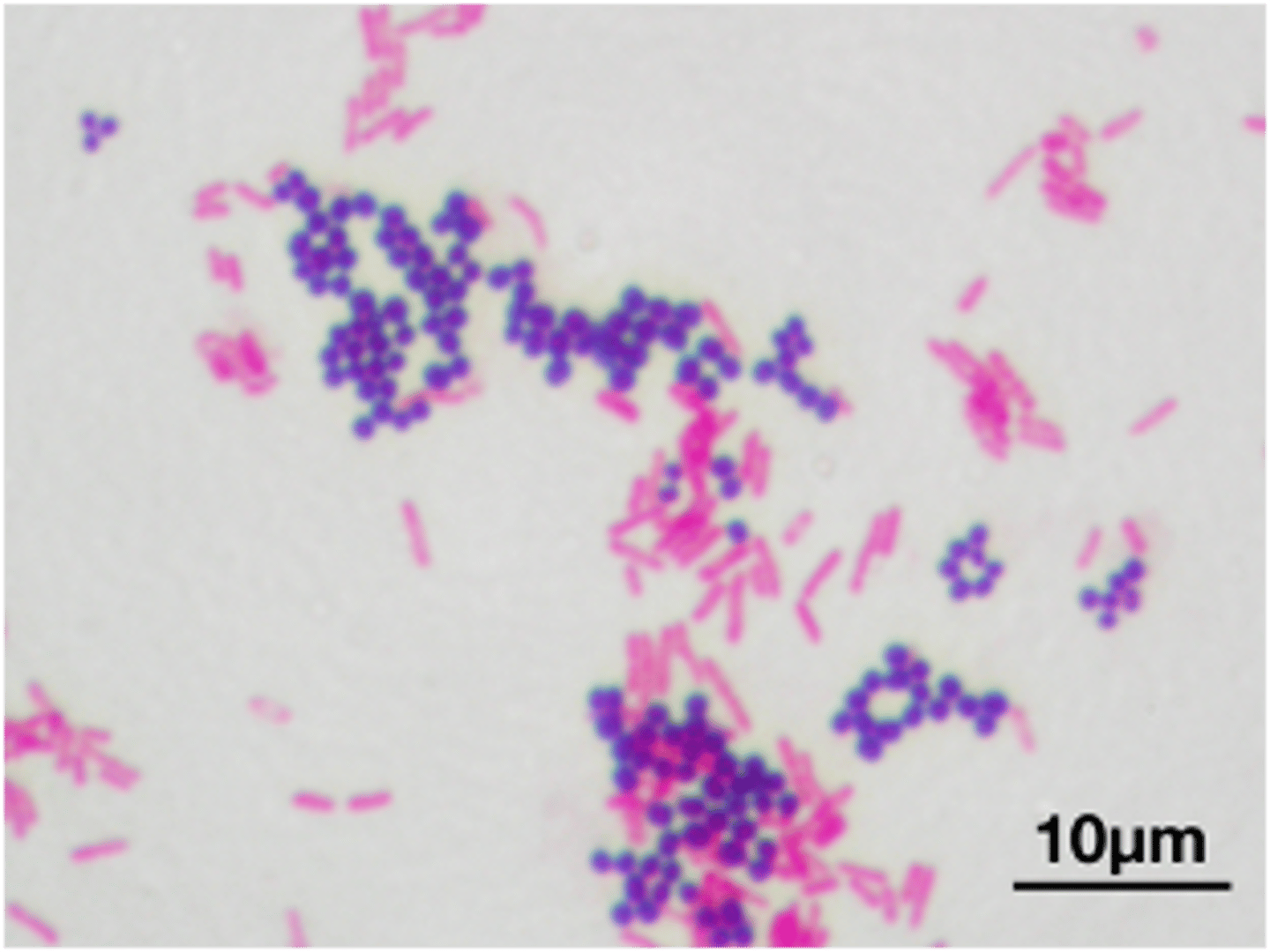
E. coli
what pathogen is indicated by the gram negative rods in this image
E. coli classification
1. Based on serology (O, H, F, K antigens)
2. pathology (ETEC, EPEC, STEC, EIEC).
ETEC infection establishment
Normal flora--> Entry via fecal-oral route → adherence to intestinal mucosa via fimbriae → toxin-mediated hyper secretion
fimbriae
what virulence factor is shown by this ETEC causing E. coli
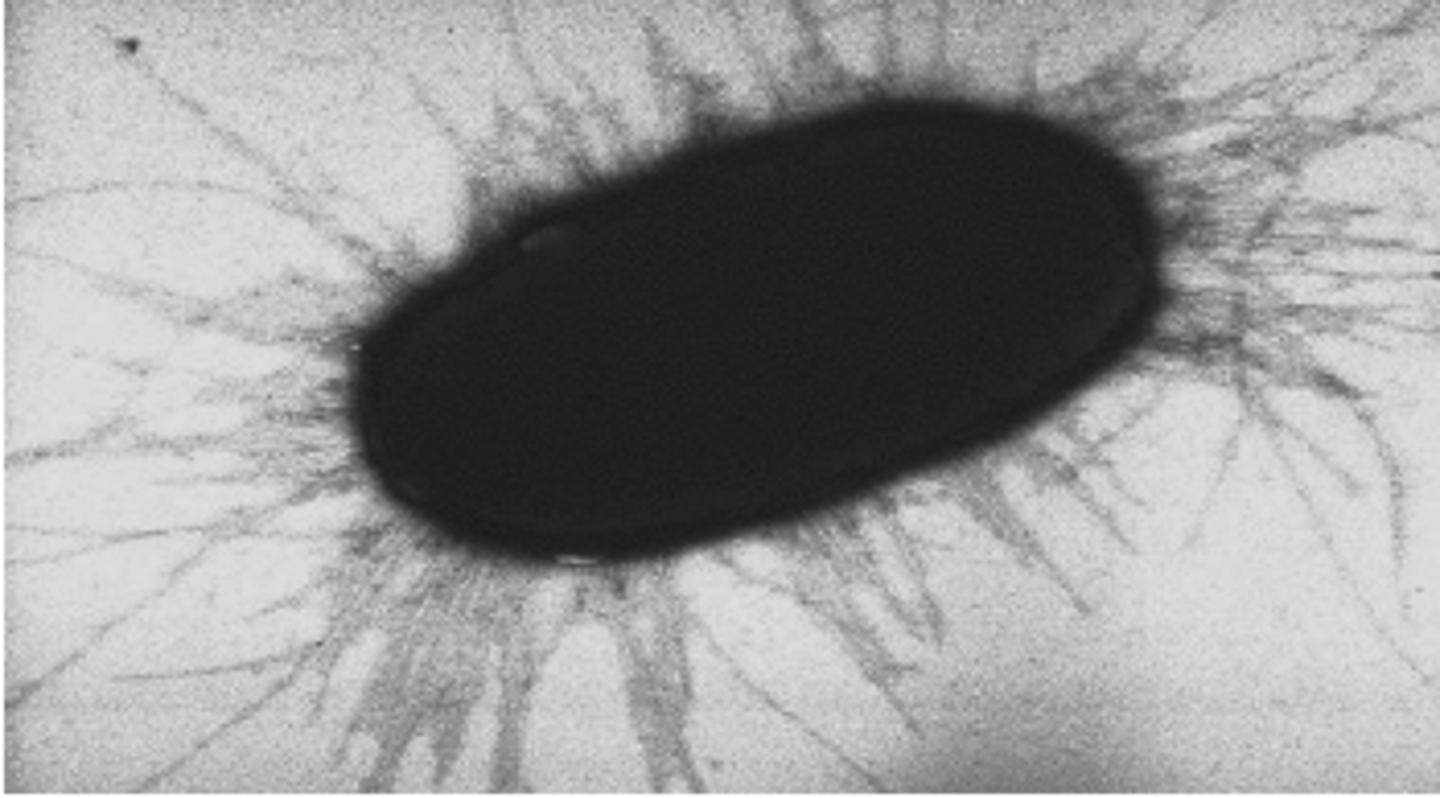
pathogenesis of ETEC
fimbriae and enterotoxin mediated pathogenicity that results in toxin mediated hypersecretion (no damage to GI epi)
Fimbrial virulence factors in ETEC
1. F5 in calves and lambs
2. F4 in pigs.
Enterotoxins produced by ETEC
1. Heat-labile (LT)
2. heat-stable (ST) toxins (Sta in calves, STb in piglets).
what leads to ETEC in neonates
They experience FPT (failure of passive transfer) and can't block fimbriae binding.
What is the result of fimbriae binding to intestinal epi and enterotoxin release
Stimulate adenylate cyclase → inhibit Na⁺/Cl⁻ uptake in villi → increase Cl⁻ secretion in crypts → ↓ absorption.
Clinical signs of ETEC infection
1. Watery/yellow-white diarrhea (calf scours)
2. dehydration
3. hypovolemic shock
4. high mortality in 3-5 days.
Diagnosis of ETEC
1. Clinical signs + history
2. Latex agglutination for fimbriae
3. multiplex PCR for virulence factors.
are fecal cultures used in ETEC diagnosis
No, unless done on fresh feces before antibiotics.
Treatment of ETEC
1. IV fluids/electrolytes
2. antibiotics for septicemia
3. immunoglobulins for FPT.
Prevention of ETEC
Sanitation, adequate colostrum, dam vaccination, oral passive monoclonal antibodies.
Virulence factors for EPEC
Pili and intimin (eae); no toxin production.
Virulence factors for STEC
Shiga toxins, fimbriae, and Stx2e toxin (especially in piglets).
Pathogenesis of EPEC/STEC
Bind to intestinal epithelium → hypersecretion + malabsorption (THERE IS CELL DAMAGE OF A/E LESIONS)
Disease associated with STEC in piglets
Edema disease (increased vascular permeability, no cell damage).
Diarrhea in EPEC/STEC infection is...
Rare.
Diagnosis of EPEC/STEC
1. PCR for Shiga toxins, 2. histology for A/E lesions.
attaching and effacing lesions (Cell damage) in the intestines is associated with what E. coli types
EPEC and STEC
Key feature of EIEC pathogenesis
Invasion of intestinal epithelial cells in humans.