Chapter 4.1: Solution Concentration and the Role of Water as a Solvent
 Call Kai
 Learn
Learn Practice Test
 Spaced Repetition
 Match
Match Flashcards
 Knowt Play
1/12

Name | Mastery | Learn | Test | Matching | Spaced | Call with Kai | Chat |
|---|
No analytics yet
Send a link to your students to track their progress
13 Terms
Solution
A homogenous mixture with a uniform composition and no visible component boundaries, consisting of a dissolved solute and dissolving solvent
Aqueous solution
A solution where water is the solvent
Concentration
The quantity of solute dissolved in a given quantity of solution
This is an intensive property, independent of volume

Molarity (M)
The most common unit of concentration, expressing moles of solute per liter of solution
Can be used as conversion factor to find other values
Requires solution (not solute) volume
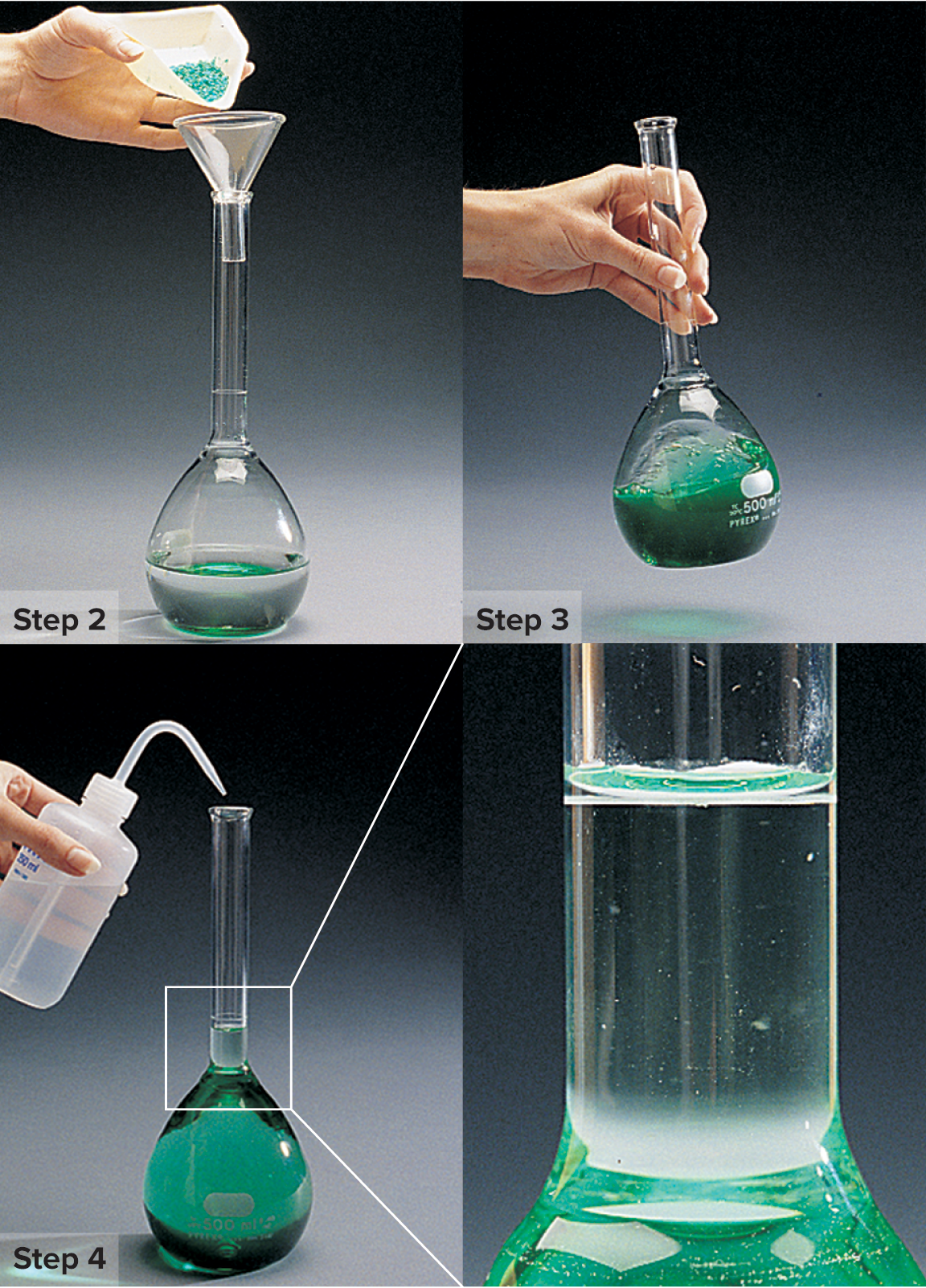
Calculate the mass of solid needed for the desired volume and molarity.
Transfer the solid to the flask, and add enough solvent (typically half of the final volume) to dissolve the entire mass of solid first.
Dissolve the solid by swirling.
Add the remaining amount of solvent needed, and mix again.
How would I prepare a solution?
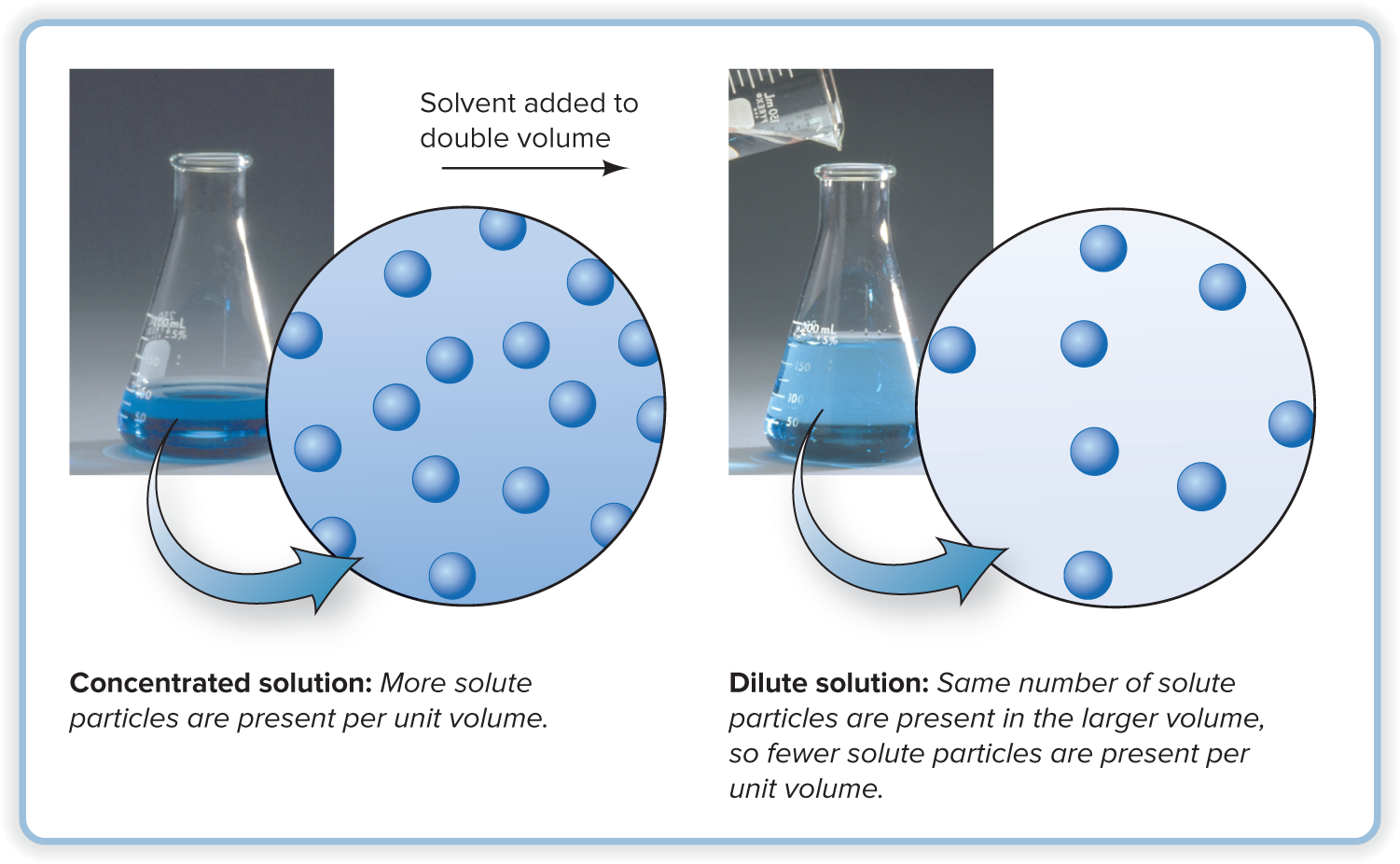
Dilution
The addition of more solvent to lower the concentration and molarity of a solution
Stock solution
A highly concentrated solution which is stored for future use in dilution
First, find the amount in moles needed in the dilute solution.
Next, find the amount of stock solution needed to obtain that same amount in moles.
Finally, add enough solvent to the calculated amount of stock solution to obtain the desired volume of the dilute solution. Check your answer with the molarity equation.
How would I prepare a dilute solution from a concentrated solution?
MconcVconc = MdilVdil = constant mol of substance
What is the equation to solve for molarities or volumes given a constant amount of substance?

Water
A polar, unevenly-charged molecule with two positive H atoms and one negative O atom that forms a bent molecular shape
These forces can break apart bonds in certain ions, should the attraction between the ions be lower than the attraction towards the water molecules
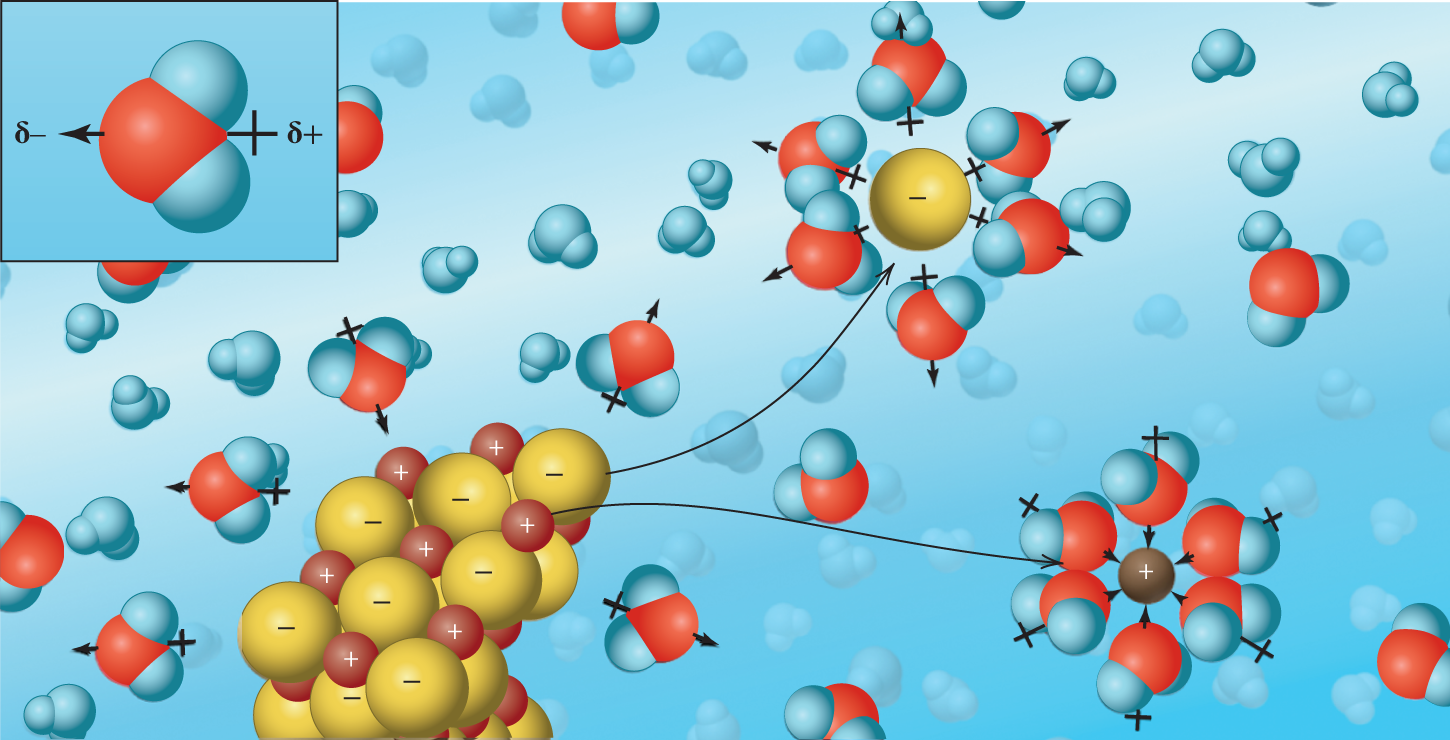
Solvation
The close surrounding of ions by solvent molecules, allowing them to move randomly in solution
This allows for a dramatic increase in conductivity due to this new available movement of charged particles
May also occur to covalent compounds, but only between molecules and not individual ions with no conductivity

Electrolyte
A substance that conducts a current when dissolved in water, as ions move towards the electrode of opposite charge
Higher ionic dissociation results in stronger variants of these, like NaCl
Nonelectrolytes
Substances that do not conduct electric current when dissolved in water
Includes many covalently-bound molecules