Pocket Prep/True Learn: NBCOT Domain 1: Assessment and Evaluation
 Call Kai
 Learn
Learn Practice Test
 Spaced Repetition
 Match
Match Flashcards
 Knowt Play
1/216

There's no tags or description
Looks like no tags are added yet.
Name | Mastery | Learn | Test | Matching | Spaced | Call with Kai | Chat |
|---|
No analytics yet
Send a link to your students to track their progress
217 Terms
Erhardt Prehension Developmental Levels
Natal: no voluntary grasp or visual attention to object
3 Months: no attempt to grasp but visually attends to obect
6 Months: raking or contacting object
7 Months: inferior-scissors grasp
8 Months: scissors grasp
9 Months: inferior pincer grasp
10-12 Months: Fine Pincer grasp
Muscles that contribute to scapular downward rotation
rhomboids, serratus anterior, latissimus dorsi
Muscles that contribute to scapular upward rotation
-serratus anterior
-upper + lower trapezius
Location of CVA: Right Middle Cerebral Artery presentation
-hemiplegia
-homonymous hemianopsia
-unilateral neglect
-impaired spatial awareness
Location of CVA: Left Middle Cerebral Artery presentation
-hemiplegia
-loss of sensation in affected limb
-homonymous hemianopsia
-aphasia
-apraxia
Location of CVA: Anterior Cerebral Artery Presentation
-hemiplegia
-incontinence
-confusion
-inability to speak
Location of CVA: Posterior Cerebral Artery Presentation
-impaired sensation in affected limb
-homonymous hemianopsia
-alexia
Volumeter
Assesses hand size in order to determine presence of edema.
Rotator Cuff Muscles (SITS)-assists with should ABD and flexion
Supraspinatus
Rotator Cuff Muscles (SITS)-assist with shoulder external rotation
infraspinatus and teres minor
Rotator Cuff Muscles (SITS)-assist with internal rotation
Subscapularis
Ecology of Human Performance
interaction between person, context and task performance
Radial Digital Grasp
-at 8-9 mo of age
-object is held between the fingers and opposed thumb
-fingers are stronger and more coordinated to support object away from palm

Mature Pincer Grasp
-12 mo of age
-isolated index finger and thumb to pick up object with increased precision
-improved finger isolation
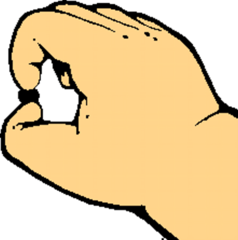
Palmar Supinate Grasp
-12-18 mo of age
-gross grasping pattern
-does not require finger movements
-writing occurs on ulnar side of hand and gross movements from elbow and shoulder
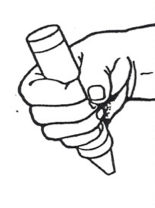
Digital Pronate Grasp
-2-3 years
-wrist rotates to aim palm of hand down
-begins to involve fingers with finger wrapping
-active movement continues from elbow and not the hand and fingers
Occupational Outcomes
planned therapy interventions including occupational performance and participation in desired occupations
-result of interventions
Occupational Profile
summary of information that describes that clients occupational history, experiences, patterns of daily living, interests, values, and needs
Occupational History
portion of occupational profile which provides information regarding the history of desired occupations and previous skills level
Occupational Performance
human actions in response to occupational engagement
GM/Mobility Developmental milestones: Ages 2-3 yrs
-rides tricycle
-catches large ball against chest
-jumps from step
-begins to hop on one foot
GM/Mobility Developmental milestones: Ages 3-4 yrs
-jumps, climbs, runs
-begins to skip and hop
-stands briefly on one foot
-alternates feet walking up stairs
-jumps from step with 2 feet
GM/Mobility Developmental milestones: Ages 4-5 years
-throws ball
-hops for long sequences
-climbs on playground equipment
-skips for long distances
-walks up and down stairs reciprocally
GM/Mobility Developmental milestones: 5-6 years
-hops well for long distance
-skips with good balance
-catches ball with two hands
-kicks with accuracy
-stands on one foot for 8-10 seconds
Glaucoma
-peripheral field losses while central vision is spared
-may have difficulty using the environmental context
-interventions should focus on use of scanning to detect items, people and obstacles
CVA-Upper Trunk Middle Cerebral Artery-Sx Presentation
-Broca aphasia: slow labored speech
-contralateral hemiplegia
-neglect
-ataxia
CVA-Distal Basilar Artery Stroke-Sx presentation
-double vision
-drooping eyelid
-bilateral weakness
Pediatric Reflexes: Rooting reflex
-Appears: birth
-Integrates: 3-4 mo
-Retention signs: sucking thumb, poor eating habits, speech challenges, swallowing and chewing deficits, oral hypersensitivity
Pediatric Reflexes: Moro Reflex
-Appears: birth
-Integrates: 2-4 mo
-Retention signs: hypersensitivty to one of sensory systems, poor reactions to sensory input, lowered immunity, fatigue, challenge with change
Pediatric Reflexes: ATNR
-Appears: birth
-Integrates: 6 mo
-Retention signs: difficulty crossing midline, poor handwriting, gait and coordination and balance issues, visual motor tracking, math and reading delays
Pediatric Reflexes: Babinski
-Appears: birth
-Integrates: 2 yrs
-Retention signs: challenges with grounding, stability, poor balance, gross motor coordination
Modified Independent
-client is completely independent
-may require extra time or adaptive equipment to complete task
Minimum Assistance
-client requires up to 25% physical or verbal assistance from one person to safely complete task
Moderate Assistance
-client requires 26% to 50% physical or verbal assistance from one person to safely complete the task
Maximal Assistance
-Client requires 51% to 75% physical or verbal assistance from one person to safely complete the task
Dependent
-client requires more that 75% assistance to complete the task
Cluster A Personality Disorders: Paranoid, schizoid, schzotypal-characteristics
-discomfort in interpersonal situations and relationships
-emotional distant
-distrustful and suspiscious
Cluster B Personality Disorders: Antisocial, borderline, histrionic, narcissistic-characteristics
-excessive unstable expression of emotions
-maladaptive interpersonal relationships
-disregard for needs of others
Cluster C Personality Disorders: Avoidant, dependent, OCD- characteristics
-anxiety
-fear or rejection
-social discomfort
-sense of helplessness
-perfectionism
-inflexibility
Reaching skills milestones
Newborn: swiping/batting at object with closed hand
4 months: hands come together at midline for bilateral reaching
6 months: unilateral reaching
Occupation Adaptation Model (OA)
1. press of mastery 2. context 3. Occupational Adaptation 4. Occupational Participation
PEOP Model
1. Person 2. Environment 3. Occupation 4. Performance
Model of Human Occupation (MOHO)
1. volition 2. habituation 3. performance capacity 4. environment
Canadian Model of Occupational Performance and Engagement (CMOP-E)
1. Person 2. Environment 3. Occupation
De Quervain's Tenosynovitis
pain and swelling along the radial styloid of the wrist
-positive finkelstein's test
Dupuytren's Disease
-thickening of the fascia in the palm
-flexion contractures in the fingers as it progresses
Skier's Thumb
injury to the ulnar collateral ligament of thumb
Regulating behaviors milestones
-Early infancy: quiets when picked up
-6-12 mo: learns to self soothe
-12-18 mo: enjoy messy play
-18-24 mo: solitary activities
Summary of Functional Motor Performance of Children with Cerebral Palsy
Level I: child walks without limitations
Level II: child walks with limitations
Level III: child walks with handheld mobility device
Level IV: use methods of mobility that require physical assistance
Level V: child is transported to locations in manual wheelchair
Attentional Switching
to transfer focus between tasks, not completed simultaneously
Divided attention
concentrating on more than one activity at the same time
Sustained attention
ability to maintain focus on task when environmental distractions are present
Pediatric GM milestones
Muscle that performs elbow flexion when forearm is positioned in neutral
brachioradialis
Muscle that completes elbow flexion with supination
biceps
Muscle that completes elbow flexion with pronation
brachialis
Cranial Nerve I
Olfactory nerve smell
Cranial Nerve II
Optic Nerve providing vision
Cranial Nerve III
Oculomotor nerve, opening and moving your eyes and adjusting pupil width
Cranial Nerve IV
Trochlear nerve, looking down and moving eyes toward nose or away from it
-cranial nerve IV palsy most common in pediatric population, infants with torticollis
Cranial Nerve V
Trigeminal nerve, provide sensations in eyes, most of face and inside mouth. Allows you to chew food
Cranial Nerve VI
Abducens Nerve, Moving eyes from left to right
Cranial nerve palsy- double vision, strabismus
Cranial Nerve VII
Facial nerve, control several facial muscles to make facial expressions and provide sense of taste in part of tongue
Bell's palsy
Cranial Nerve VIII
Vestibulocochlear nerve, provide sense of hearing and balance
Cranial Nerve IX
Glossopharyngeal, taste sensations to part of tongue, control muscles for swallowing, plays a role in blood pressure and saliva
Cranial Nerve X
Vagus Nerve, regulate several automatic body functions, digestion, BP, HR, breathing, mood,
-Main nerve of parasympathetic nervous system
Cranial Nerve XI
Accessory nerve, control shoulder and neck movement
Cranial Nerve XII
control tongue movement, speaking eating and swallowing
MMT Grade: 0/zero
no tension palpated
MMT Grade: 1/trace
tension palpated in muscle, but no motion occurs
MMT Grade: 2-/poor minus
less than full ROM in gravity eliminated
MMT Grade: 2/Poor
Full ROM in gravity eliminated
MMT Grade: 3-/Fair minus
Less than full ROM against gravity
MMT Grade: 3/Fair
Full ROM, no resistance
MMT Grade: 3+/Fair Plus
Full ROM, minimal resistance
MMT Grade: 4-/Good Minus
Full ROM, less than moderate resistance
MMT Grade: 4/Good
Full ROM, moderate resistance
MMT Grade: 5/Normal
Full ROM, Maximal resistance
MET Values: 1.5-2
-functional transfers
-performing self care while seated
-walking 1 mph
MET Values: 2-3
-take seated sponge bath or warm bath
-dressing/undressing
-avoid a lot of overhead movements
-dusting
-washing dishes
MET Values: 3-4
-take a standing warm shower
-bowel movement
-climbing stairs
-making bed
-Most household chores: sweeping, mopping
MET Values: 4-5
-have a HOT standing shower
-changing bed linen
-bowel movement on bed pan
-raking and weeding
-gardening
MET Values: 5-6
-sexual activity can begin
-shoveling and digging
MET Values: 6-7
-brisk walking 5mi/hr
MET Values: 7-8
-jogging
MET Values: 8-9
-running 5.5 mi/hr
MET Values: 10
-fast running 6 mi/hr
Neurodevelopmental Intervention Approach
-restoration of function through identifying and correcting underlying impairments that interfere with movement
-regaining normal movement and postural control
-proximal to distal patterns
Sensory Integration Intervention Approach
-assumes behaviors, emotions, perceptions are regulated by brain mechanisms
-sensory modulation is essential in sensory responsiveness
Cognitive Behavioral Intervention Approach
-address coping strategies for chronic conditions
Rehabilitative Intervention Approach
-focus on adaptation, compensation, and environmental modification to promote engagement and participation
Pediatric Reflex: Spinal Galant Reflex
Appears: birth
Integrates: 3-9 mo
Retention signs: poor attention to task, poor bladder control, poor motor coordination, slouched posture, cause scoliosis
Pediatric Reflex: Landau Reflex
Appears: 4-5 mo
Integrates: 1 year
Retention signs: poor posture, low tone, challenges, overall delays in motor development
Pediatric Reflex: Stepping Reflex
Appears: Birth
Integrates: 2-3 mo
Retention Signs: delayed walking or motor development
Pediatric Reflex: Traction
Appears: Birth
Integrates: 2-5 mo
Retention signs: limited head control, difficulty holding on to caregivers
Pediatric Reflex: Tonic Labyrinthine Reflex (TLR)
Appears: birth
Integrates: 6 mo
Retention signs: poor posture, weak muscle tone, stif or jerky movements
Palmar Grasp
-4-6 mo
-early grasp pattern where object is stabilized against palm with fingers curled around object
-thumb does not oppose
Immature Pincer grasp
-9 mo
-isolation of fingers and thumb opposition to grasp object
-may utilize raking pattern to pick up object
Radial Palmar grasp
-6-7 mo
-thumb becomes more involved
-object stabilized against palm
-fingers and thumb support object
-improving precision with grasping
Full Thickness Burns: Considerations and tx
-all laters of skin affected
-burn area is usally painless due to nerve damage
-skin grafts required
-severe scarring and contractures