Chapter 5: The Structure and Function of Large Biological Molecules
 Call Kai
 Learn
Learn Practice Test
 Spaced Repetition
 Match
Match Flashcards
 Knowt Play
1/39

Earn XP
Description and Tags
Vocabulary flashcards covering the key terms, definitions, and concepts of biological macromolecules from Chapter 5.
Name | Mastery | Learn | Test | Matching | Spaced | Call with Kai | Chat |
|---|
No analytics yet
Send a link to your students to track their progress
40 Terms
Macromolecules
Large molecules composed of thousands of covalently connected atoms.
Polymer
A long molecule consisting of many similar building blocks called monomers.
Monomer
Small building-block molecules that covalently link together to form a polymer.
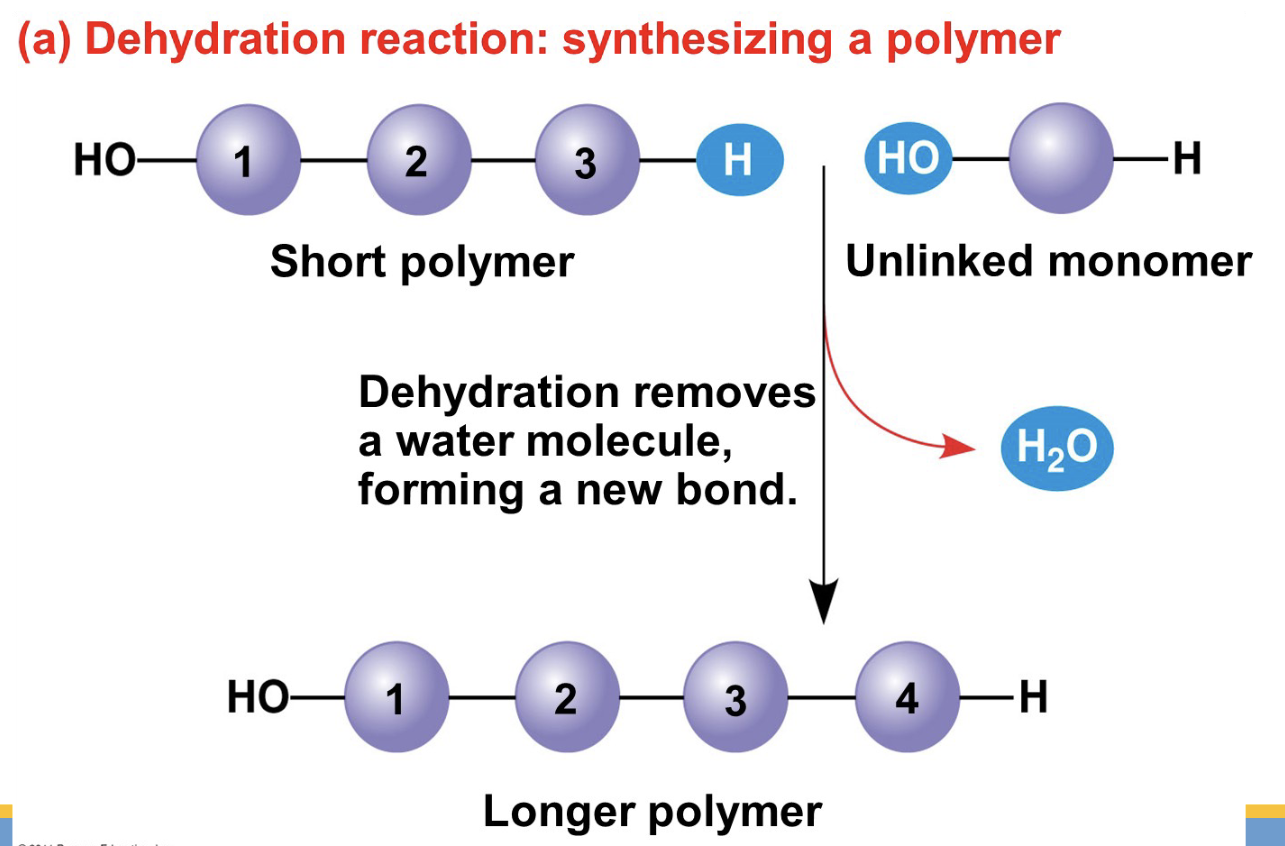
Dehydration synthesis
A chemical reaction in which two monomers bond together through the loss of a water molecule.
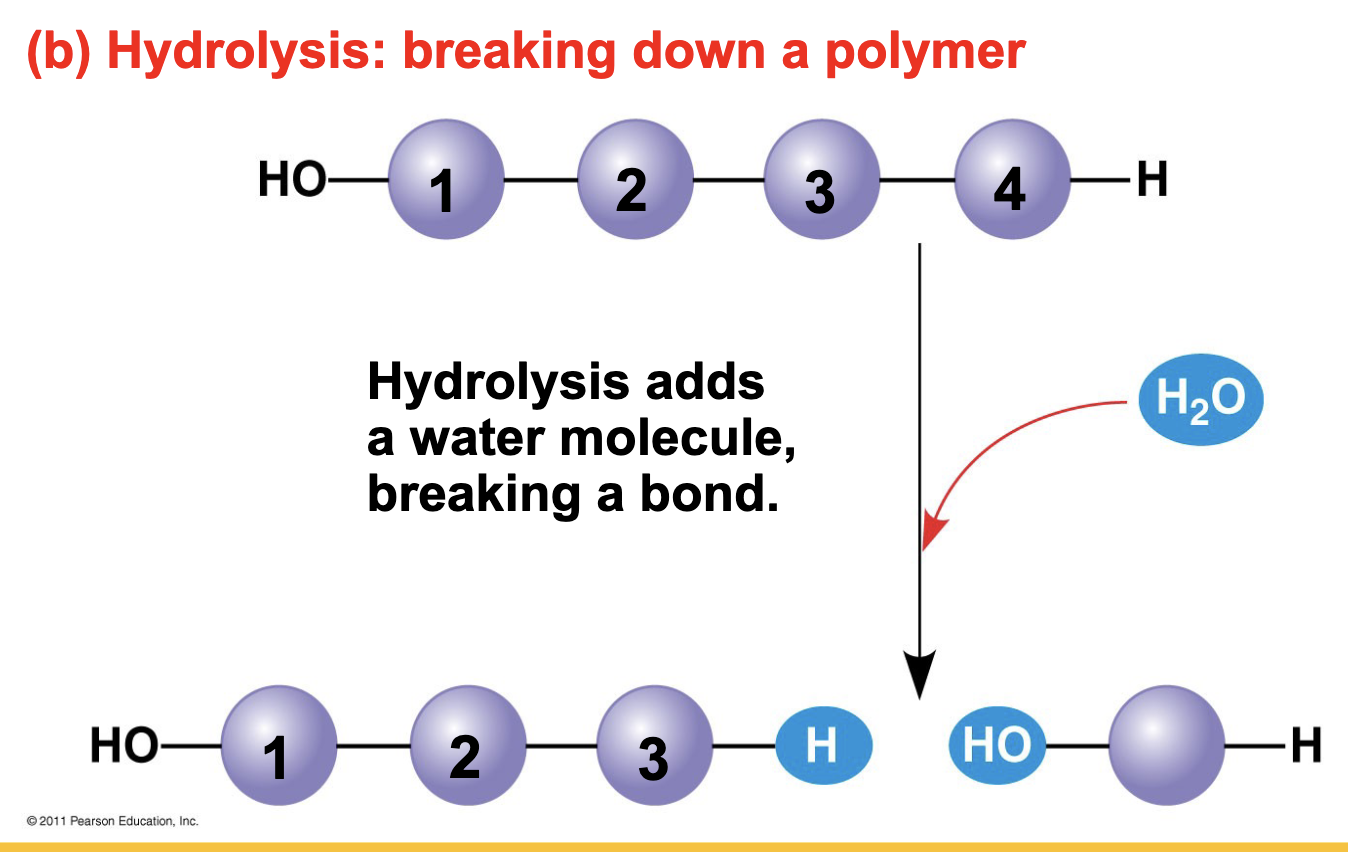
Hydrolysis
A process that disassembles polymers into monomers by adding a water molecule to break a chemical bond.
Monosaccharides
The simplest carbohydrates, or single sugars, which serve as a major fuel for cells and raw material for building molecules.
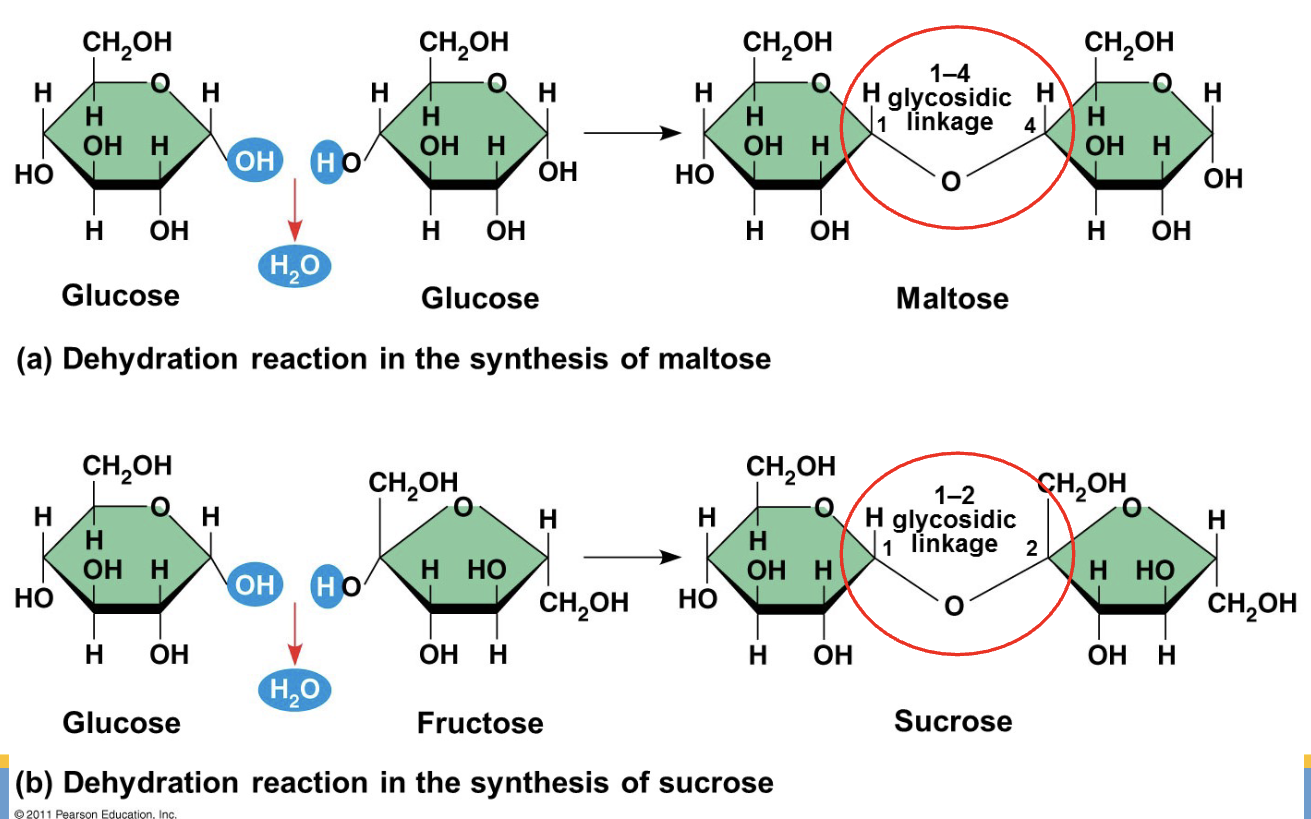
Glycosidic linkage
A covalent bond formed between two monosaccharides by a dehydration reaction.
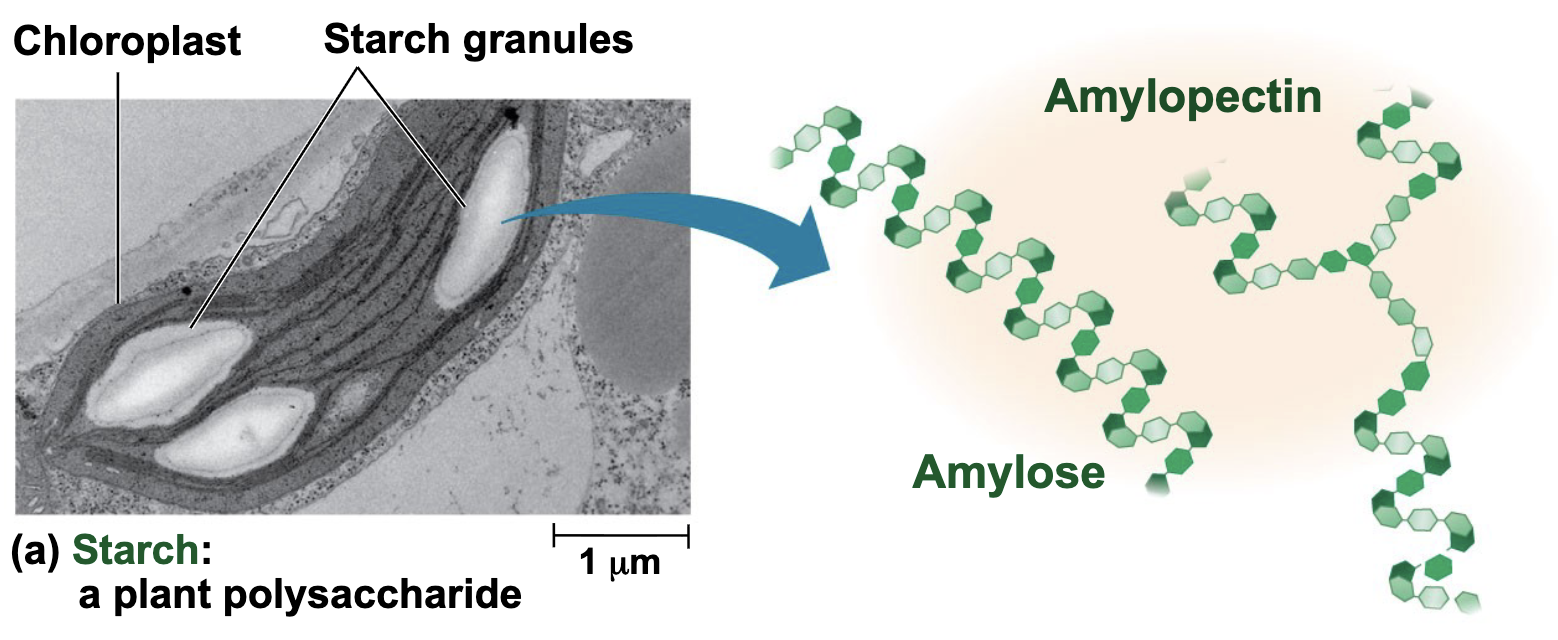
Starch
A storage polysaccharide of plants consisting entirely of glucose monomers, stored as granules within chloroplasts and other plastids.
Amylose
The simplest form of starch.
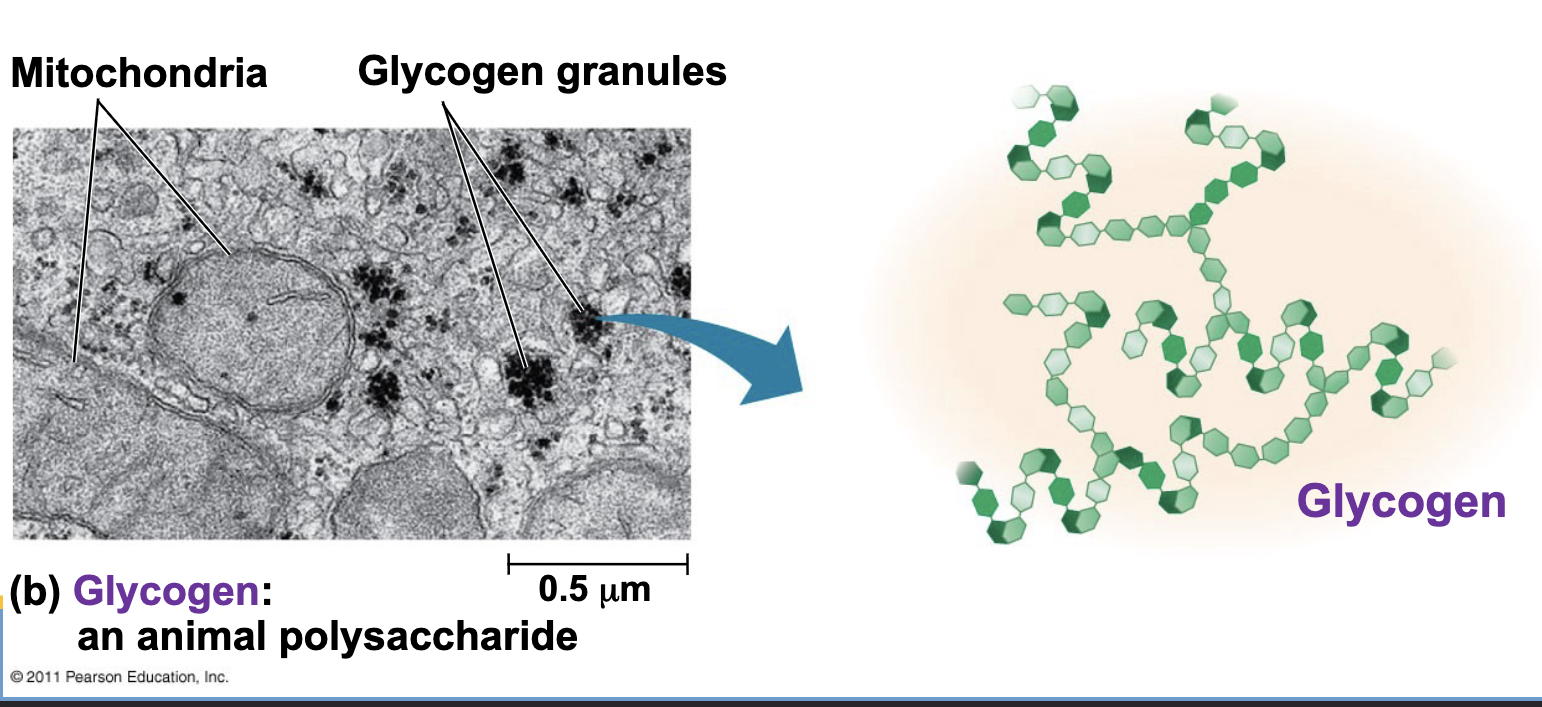
Glycogen
A storage polysaccharide in animals, stored mainly in liver and muscle cells.
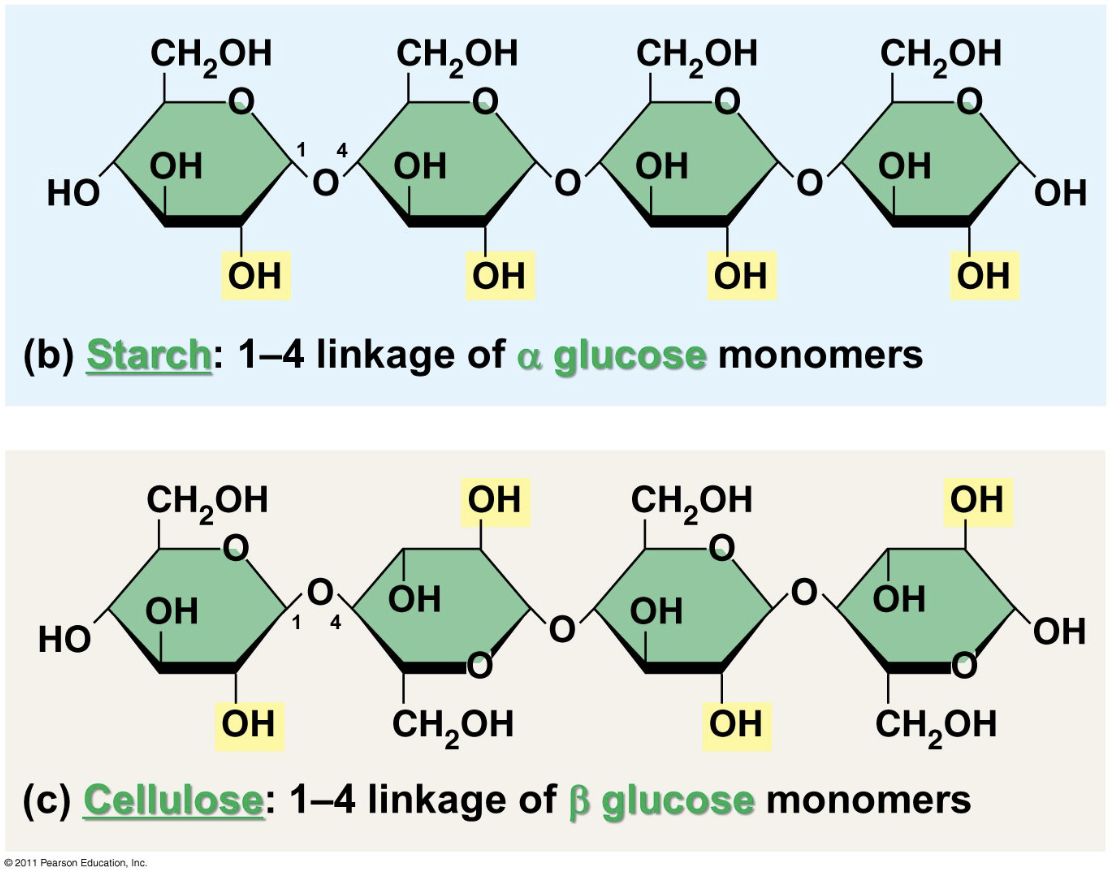
Cellulose
A structural polysaccharide that is a major component of plant cell walls, composed of glucose monomers joined by β linkages.
Chitin
An animal structural polysaccharide found in the exoskeleton of arthropods and cell walls of fungi, containing a nitrogen-containing appendage.

Lipids
A diverse group of hydrophobic molecules consisting mostly of hydrocarbons that form non-polar covalent bonds and do not form polymers. Most important Lipids: Fats, Phospholipids & steroids
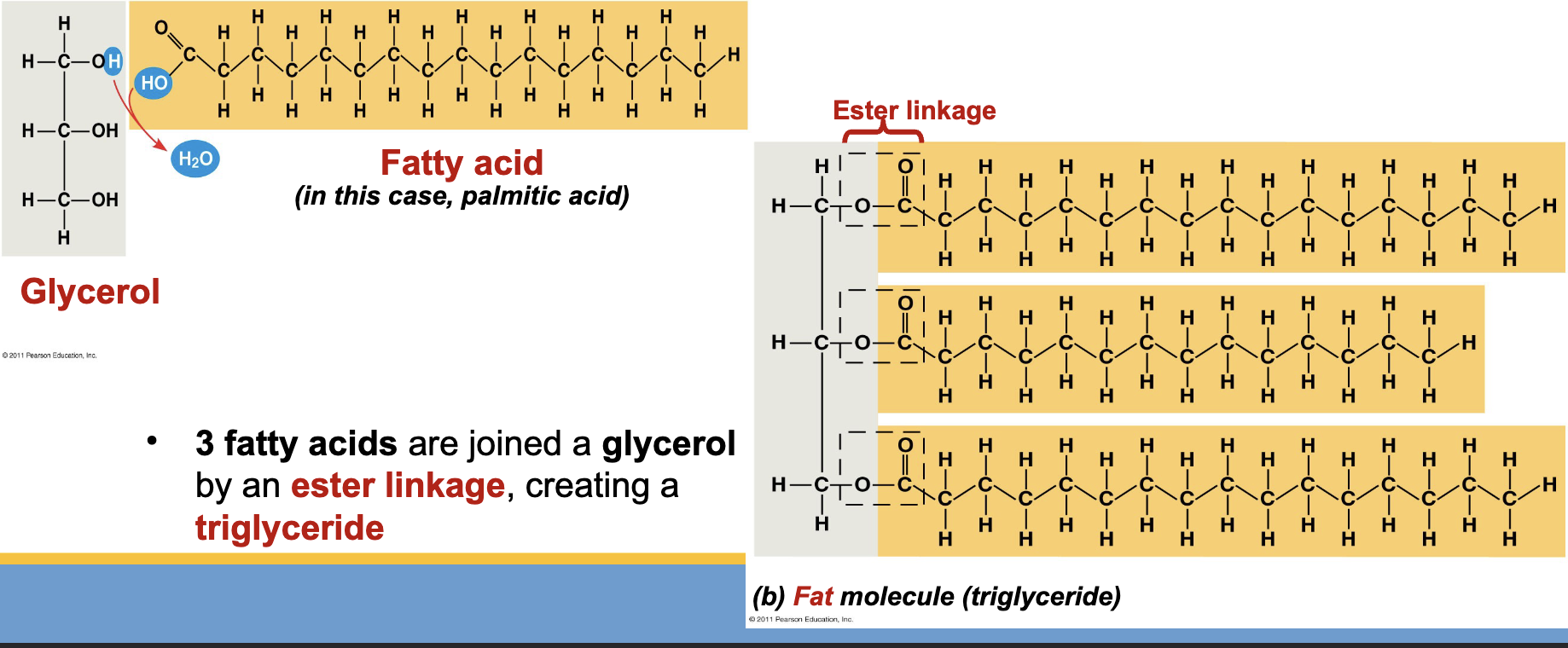
Triglyceride
A fat molecule constructed from three fatty acids joined to a glycerol molecule by ester linkages.
Ester linkage
The covalent bond joining a fatty acid to a glycerol molecule in a fat.
Saturated fatty acid
A fatty acid that has no double bonds and contains the maximum number of hydrogen atoms possible. (Normally solid at room temp.)

Unsaturated fatty acid
A fatty acid containing one or more double bonds, resulting in fewer hydrogen atoms and a more flexible molecule. (Normally liquid at room temp.)

Hydrogenation
An industrial process that adds hydrogen to liquid vegetable oils to make them more solid, creating artificial trans fats.
Phospholipid
A lipid molecule composed of two hydrophobic fatty acid tails and a hydrophilic head containing a phosphate group attached to glycerol.
Steroids
Lipids characterized by a carbon skeleton consisting of four fused rings.
Cholesterol
An important steroid component in animal cell membranes from which sex hormones like estrogen and testosterone are derived.
Enzymes
Proteins that act as catalysts to selectively accelerate chemical reactions repeatedly without being consumed.
Polypeptides
Unbranched polymers built from a set of 20 amino acids.
Protein
A biologically functional molecule consisting of one or more polypeptides precisely twisted, folded, and coiled into a unique shape. Made of amino acids
Amino acids
Organic molecules containing carboxyl and amino groups that differ in their properties due to variable side chains called R groups.
Peptide bond
The covalent bond formed between amino acids via a dehydration reaction to build a polypeptide chain.
Primary structure
The unique linear sequence of amino acids in a protein, determined by gene coding.
Secondary structure
The coils (\text{\textalpha} helix) and folds (\text{\textbeta} pleated sheet) in a polypeptide chain resulting from hydrogen bonds between repeating constituents of the polypeptide backbone.
Tertiary structure
The overall 3D shape of a protein determined by interactions among various R groups, including hydrogen bonds, ionic bonds, hydrophobic interactions, van der Waals forces, and disulfide bridges.
Quaternary structure
The structural level resulting when two or more polypeptide chains associate to form one functional macromolecule.
Denaturation
The process in which a protein loses its native structure due to environmental factors like high temperature, pH, or salt concentration, becoming biologically inactive.
Genes
Units of inheritance composed of unique sequences of nucleotides that contain instructions for protein synthesis.
Nucleotide
The monomer of nucleic acids, consisting of a nitrogenous base, a pentose sugar, and one or more phosphate groups.
Phosphodiester bond
The covalent bond joining nucleotides between the -OH group on the 3′C of one nucleotide and the phosphate group on the 5′C of the next.
Complementary base pairing
The specific hydrogen bonding between nitrogenous bases in nucleic acids (adenine with thymine or uracil, and guanine with cytosine).
Adenosine Triphosphate (ATP)
A molecule composed of ribose sugar, adenine nitrogenous base, and three phosphate groups that serves as the main energy coupling mediator in cells.
Disaccharide
formed when a dehydration
reaction joins 2 monosaccharides
Polysaccharides
Polymers with Alpha form glucose are helical (storage: ex. starch, humans can digest)
Polymers with Beta form glucose are straight (structure humans cannot digest)-every other glucose is flipped making it harder to breakdown
Fats: 2 types of of smaller molecules
Glycerol: 3-carbon alcohol with a –OH attached to each
carbon
Fatty acids: consists of a -COOH group attached to a long
carbon skeleton