Ms G Final SG
 Call Kai
 Learn
Learn Practice Test
 Spaced Repetition
 Match
Match Flashcards
 Knowt Play
1/64

There's no tags or description
Looks like no tags are added yet.
Name | Mastery | Learn | Test | Matching | Spaced | Call with Kai | Chat |
|---|
No analytics yet
Send a link to your students to track their progress
65 Terms
Identify the five P’s of Labor
_______________ — fetus/placenta — fetal size, lie, presentation, attitude, and position affect passage through the pelvis.
_______________ — maternal pelvis and soft tissues. A roomy pelvis and soft-tissue relaxation favor vaginal birth.
_______________ — uterine contractions (primary powers) cause dilation/effacement; maternal pushing (secondary powers) helps expel the fetus.
_______________ — maternal position can improve comfort, pelvic diameter, fetal descent, and uteroplacental perfusion. Upright/side-lying positions are often helpful.
_______________ — anxiety, fear, support, coping, and previous experiences can influence catecholamines, pain, and labor progress.
Passenger — fetus/placenta — fetal size, lie, presentation, attitude, and position affect passage through the pelvis.
Passageway — maternal pelvis and soft tissues. A roomy pelvis and soft-tissue relaxation favor vaginal birth.
Powers — uterine contractions (primary powers) cause dilation/effacement; maternal pushing (secondary powers) helps expel the fetus.
Position — maternal position can improve comfort, pelvic diameter, fetal descent, and uteroplacental perfusion. Upright/side-lying positions are often helpful.
Psyche — anxiety, fear, support, coping, and previous experiences can influence catecholamines, pain, and labor progress.
What nursing interventions can increase uteroplacental blood flow?
reposition to a lateral position (left side)
stop/reduce oxytocin if tachysystole (too many contractions) ro a concerning tracing (late or prolonged decelations) is present
give an IV fluid bolus
correct maternal hypotension
What is uterine tachysystole, and why can it be dangerous to the fetus?
≥ 5 contractions in 10 minutes, averaged over 30 minutes
Too much oxytocin → contractions too frequent → ↓ placental blood flow → ↓ fetal oxygen → concerning FHR changes
Why should a pregnant patient avoid prolonged supine positioning?
the gravid uterus can compress the vena cava → decrease venous return/cardiac output and reduced uteroplacental blood flow
What is the fastest first intervention for a nonreassuring fetal heart rate?
maternal repositioning
How are contraction frequency, duration, intensity, and resting tone assessed?
frequency — beginning of one contraction to beginning of the next
durection — beginning to end of one contraction
intensity — palpate measured during a contraction wth an intraurterine pressure catheter (IUPC)
resting tone — palpate between contractions
What makes contractions effective for labor progression?
regular, stronger, longer
closer together
produce progressive cervical dilation/effacement
fetal descent
What behaviors are expected during latent/early labor?
usually excited, talkative, able to cope and interact; often welcomes teaching and support.
How does behavior typically change during active labor?
PT becomes more serious and inwardly focused; concentration increases, talking decreases, and coping support becomes more important.
What behaviors are common during transition?
intense focus, irritability, restlessness, shaking, nausea/vomiting, feeling out of control, and statements such as “I can’t do this.”
Why might a patient saying “I can’t do this” indicate that birth is getting closer?
“I can’t do this” → think TRANSITION → 8–10 cm → approaching complete dilation → birth is getting closer.
How to determine fetal position?
Where the back of the baby’s heaf (occipitus) is facing
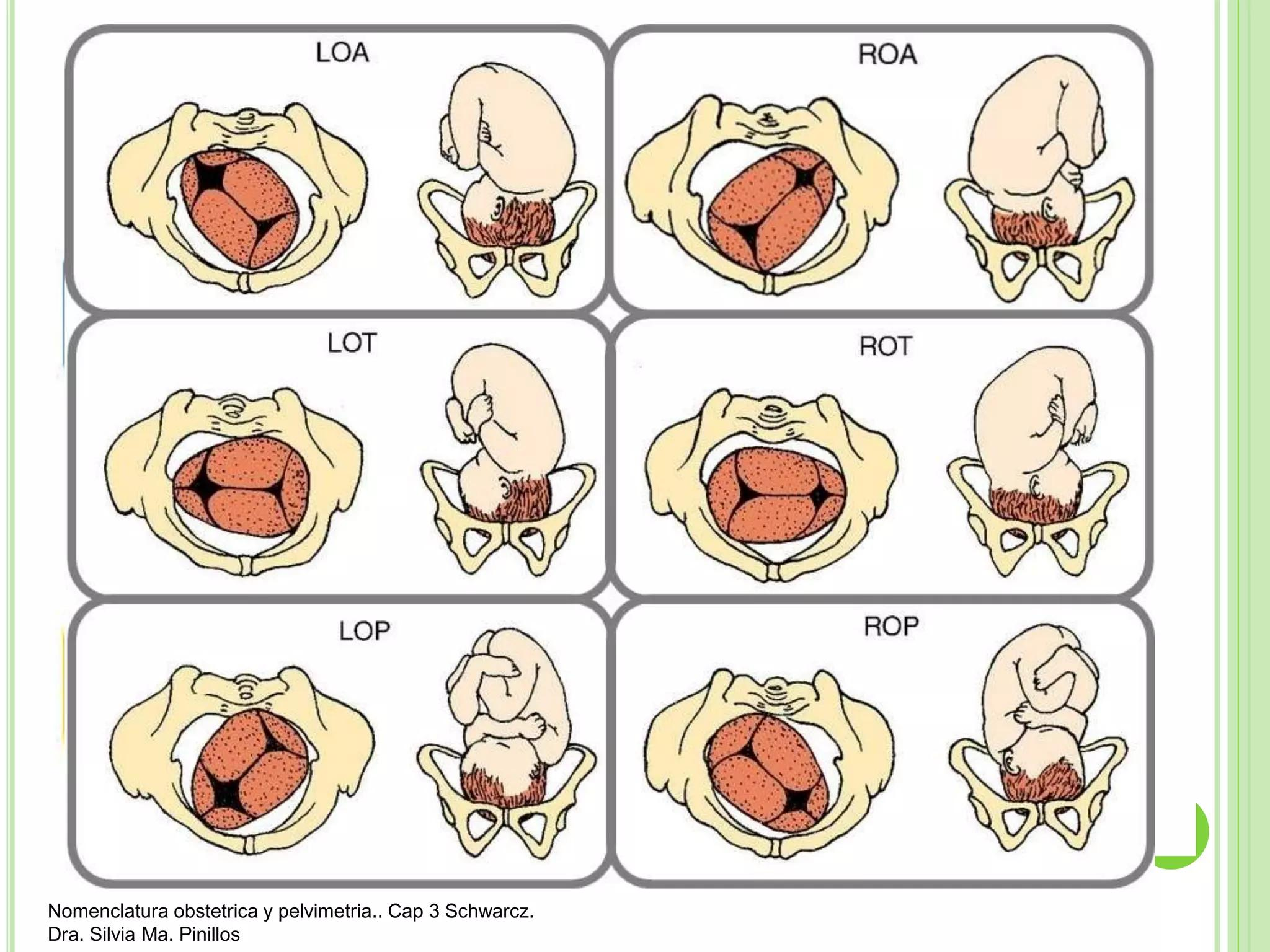
Which fetal positions are generally most favorable for vaginal birth?
Occiput anterior (OA) positions are the most favorable.
LOA AND ROA
What fetal position is commonly associated with back labor?
Occiput Posterior (OP)
The back of the baby's head (occiput) is toward mom's back, which can put pressure on the mother's sacrum during contractions → intense lower-back pain.
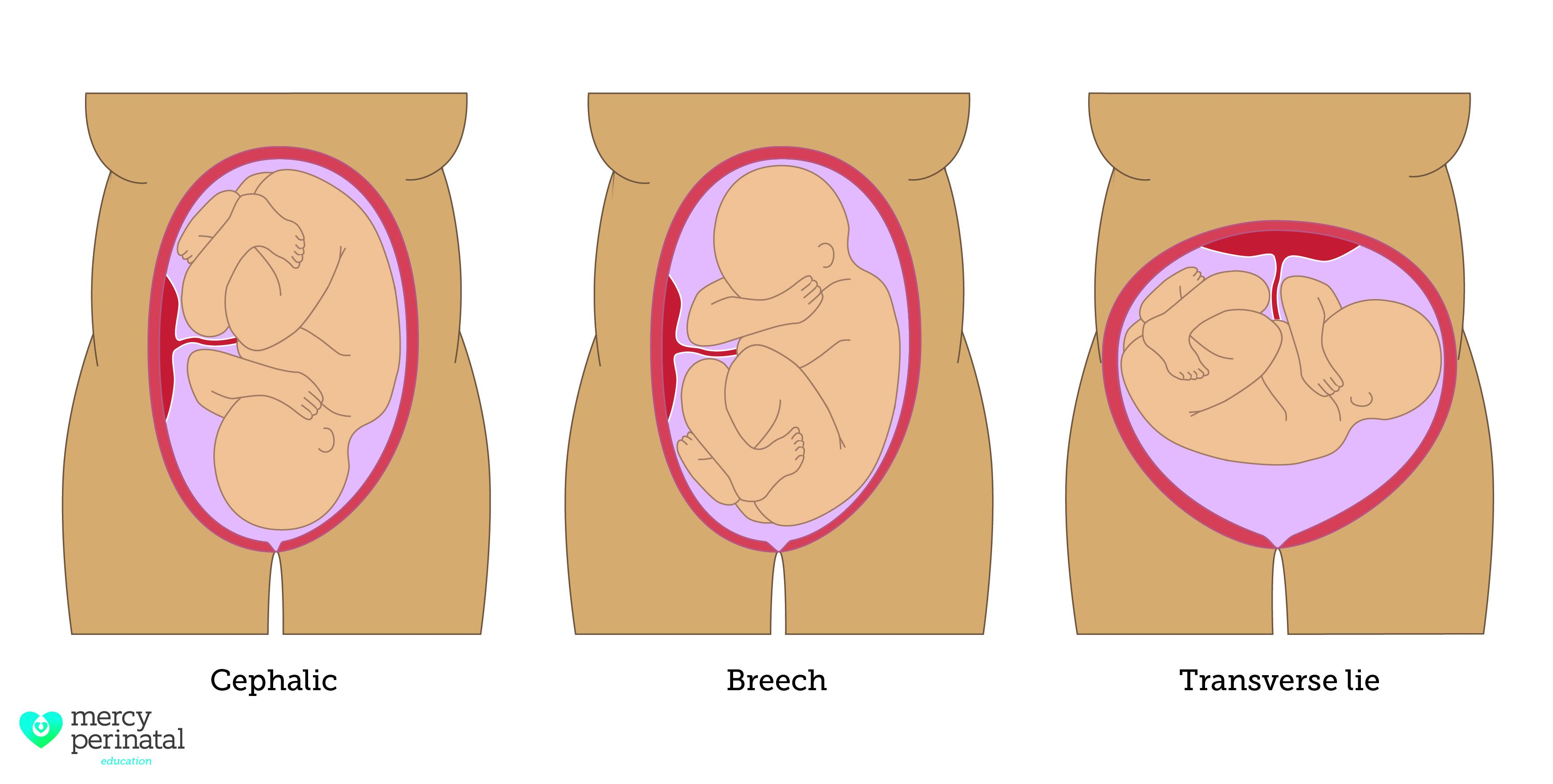
What are the major fetal presentations?
cephalic/vertex — head
breech — buttocks/feet
shoulder — shoulder
What is the normal fetal heart rate baseline?
110-160 bpm
Which type of variability is considered reassuring?
accelerations
What do fetal heart rate accelerations generally indicate?
adequate fetal oxygenation at that moment.
What causes early decelerations, and what should the nurse do?
fetal head compressions — gradual/mirror contractions
What causes variable decelerations, and what is the nurse’s first intervention?
abrupt
usually caused by umbilical cord compression
Reposition the mother first
What causes late decelerations, and what nursing interventions are indicated?
begin after the contraction starts and recover after it ends
indicate uteroplacental insufficiency
Reposition laterally, stop oxytocin, give IV fluid bolus/correct hypotension, and notify the provider if unresolved.
How do Category I, II, and III fetal heart rate tracings differ?
Category I: reassuring.
Category II: indeterminate and requires evaluation/continued surveillance.
Category III: abnormal (e.g., absent variability with recurrent late/variable decels or bradycardia, or sinusoidal pattern) and requires prompt corrective actions and preparation for expedited birth if unresolved.
Why is betamethasone given when preterm birth is anticipated?
Antenatal corticosteroid used when preterm birth is expected to accelerate fetal lung maturation and reduce neonatal respiratory complications.
What is a common betamethasone dosing regimen?
12 mg IM every 24 hours for 2 doses.
Does betamethasone stop preterm labor?
It does NOT stop labor. It helps prepare the fetus for possible preterm birth.
What maternal laboratory value should be monitored closely after betamethasone?
Monitor maternal glucose closely, especially with diabetes, because corticosteroids can increase blood glucose.
Why is magnesium sulfate given to a patient with severe preeclampsia or eclampsia?
for seizure prophylaxis/treatment — it is NOT an antihypertensive.
Why might magnesium sulfate be given when very preterm birth is anticipated?
for fetal neuroprotection when very preterm birth is anticipated; historically it has also been used for uterine relaxation
↓ risk of cerebral palsy
What assessments are essential while a patient is receiving magnesium sulfate?
respiratory rate, deep tendon reflexes, urine output, level of consciousness, and serum magnesium when indicated.
What are signs of magnesium sulfate toxicity?
absent/decreased DTRs (deep tendonr reflexes), respiratory depression, oliguria, and increasing lethargy.
What medication is the antidote for magnesium sulfate toxicity?
calcium gluconate
What is the definition of preterm labor?
regular uterine contractions with cervical change occurring before 37 completed weeks of gestation.
. What does a negative fetal fibronectin result suggest
Fetal fibronectin (fFN) may help estimate risk of preterm birth in symptomatic patients
A NEGATIVE result is especially useful because it suggests birth is unlikely in the near term
a positive result is less predictive by itself.
Why is cervical length measured in a patient at risk for preterm birth?
Transvaginal cervical-length ultrasound may be used:
a shorter cervix is associated with increased risk of preterm birth.
What findings should the nurse assess when preterm labor is suspected?
• Assess contraction pattern, cervical change, vaginal bleeding/fluid, infection symptoms, and fetal status.
What is PPROM?
Preterm Prelabor Rupture of Membranes before 37 weeks and before labor begins
What major complication should the nurse monitor for after PPROM?
Infection is a major associated risk/complication
a history of prior PPROM/preterm birth also increases recurrence risk.
What maternal and fetal findings can indicate infection or chorioamnionitis?
Mom: maternal temperature, pulse, uterine tenderness, foul-smelling/purulent fluid
Fetus: fetal tachycardia, contraction pattern, and fetal status
What should the nurse assess immediately after rupture of membranes?
assess fetal heart rate promptly because cord prolapse/compression can occur.
What signs and symptoms of preterm labor should a pregnant patient report?
Report regular/frequent contractions, menstrual-like cramps, pelvic pressure, low dull backache, abdominal cramping, change/increase in vaginal discharge, vaginal bleeding, or leaking fluid.
Can preterm contractions occur without severe pain?
Yes; Do not wait for severe pain, preterm contractions may be mild.
What is the overall goal of antepartum fetal testing?
Identify fetuses at risk for hypoxia or fetal death while avoiding unnecessary intervention.
What are common methods used to assess fetal well-being before birth?
include fetal movement counting, nonstress test (NST), biophysical profile (BPP), contraction stress testing, and Doppler studies when indicated.
What prenatal supplements should be taken and why?
folic acid — neural tube development
iron — RBC/hemoglobin production
Which pregnant patients should receive RhoGAM?
Given to an Rh-negative, unsensitized pregnant patient to prevent formation of anti-D antibodies after exposure to Rh-positive fetal red blood cells.
When is RhoGAM routinely administered during pregnancy and postpartum?
around 28 weeks
within 72 hours after birth if the newborn is Rh-positive.
What events can require an additional dose of RhoGAM?
May be indicated after events with possible fetomaternal blood mixing: miscarriage/abortion, ectopic pregnancy, abdominal trauma, amniocentesis/CVS, antepartum bleeding, or external cephalic version.
Is Rhogam to protect mother or baby?
protect her current/future Rh-positive babies.
Some of the baby's Rh+ blood can enter mom's bloodstream. Mom's immune system may recognize it as foreign and start making anti-Rh antibodies. This is called sensitization.
RhoGAM prevents mom from becoming sensitized.
The antibodies mom makes can cross the placenta during a future Rh-positive pregnancy and destroy the baby's RBCs → hemolytic disease of the fetus/newborn.
What five components are evaluated in a biophysical profile?
Fetal breathing movements
Fetal body movements — gross movements
Fetal muscle tone — flexion/extension
Amniotic fluid volume
Nonstress test (NST) — fetal heart rate reactivity
What does a BPP score of 8–10 generally indicate?
generally reassuring when amniotic fluid is adequate
What can a low BPP score indicate?
possible fetal compromise and may prompt delivery depending on gestational age/clinical context
What does NIPT/cell-free DNA screening evaluate?
Maternal blood screening that analyzes placental cell-free DNA and can screen for common fetal chromosomal abnormalities (such as trisomy 21, 18, and 13)
Is NIPT a screening or diagnostic test?
It is a SCREENING test, not diagnostic.
What should occur after a positive/high-risk NIPT result?
A positive/high-risk result requires counseling and confirmation with diagnostic testing such as CVS or amniocentesis.
What complications can occur with amniocentesis or CVS?
pregnancy loss, bleeding, infection, rupture/leakage of membranes, and fetomaternal blood mixing.
What are the four T’s of postpartum hemorrhage?
• Tone: uterine atony — most common cause. Boggy uterus = massage the fundus and address bladder distention; uterotonics are commonly required.
• Trauma: lacerations, hematoma, uterine inversion/rupture. Think trauma when bleeding continues despite a firm uterus.
• Tissue: retained placental fragments prevent effective uterine contraction.
• Thrombin: coagulation disorder/DIC.
What is the most common cause of postpartum hemorrhage?
uterine atony → boggy uterus
What should the nurse suspect when heavy bleeding occurs with a firm uterus?
Trauma — lacerations, hematoma, uterine inversion/rupture
What is the first-line uterotonic for uterine atony?
Oxytocin (Pitocin)
Which PPH medication is contraindicated in hypertension or preeclampsia?
Methylergonovine (Methergine): contracts uterus; AVOID with hypertension/preeclampsia because it can raise blood pressure.
Which PPH medication is contraindicated in asthma?
Carboprost (Hemabate): prostaglandin that contracts uterus; AVOID with asthma because it can cause bronchospasm.
What is misoprostol used for in postpartum hemorrhage?