Lecture-11 Cell signaling GPCR, RTK and TGF signaling

0.0(0)
Studied by 0 people
call kaiCall Kai
Locked
learnLearn
examPractice Test
spaced repetitionSpaced Repetition
heart puzzleMatch
flashcardsFlashcards
GameKnowt Play
Card Sorting

1/103

encourage image

There's no tags or description

Looks like no tags are added yet.

Last updated 6:59 PM on 7/21/26
Name
Mastery
Learn
Test
Matching
Spaced
Call with Kai
Chat

No analytics yet

Send a link to your students to track their progress

104 Terms

1
New cards

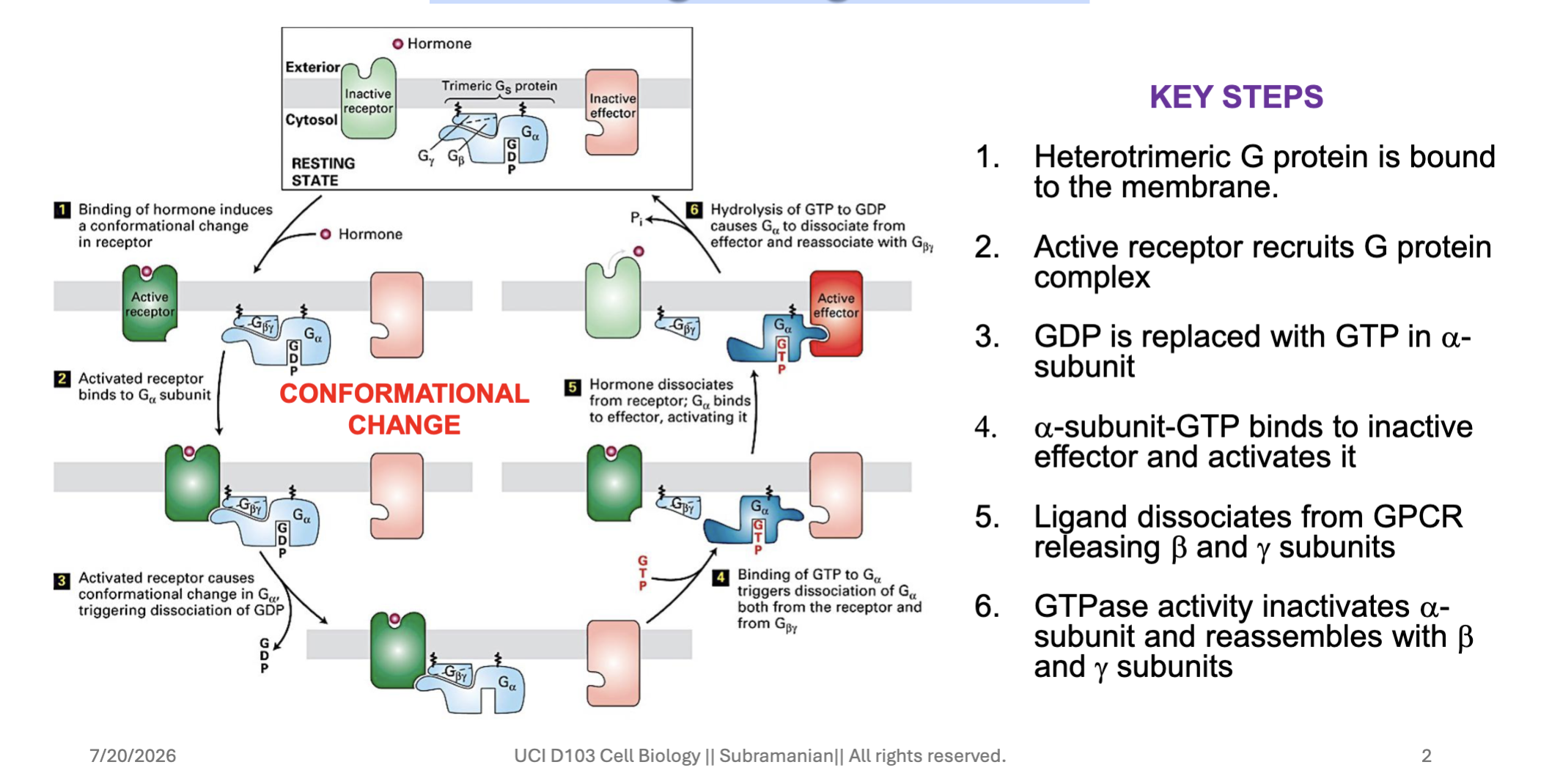
GPCR signaling cascade

2
New cards

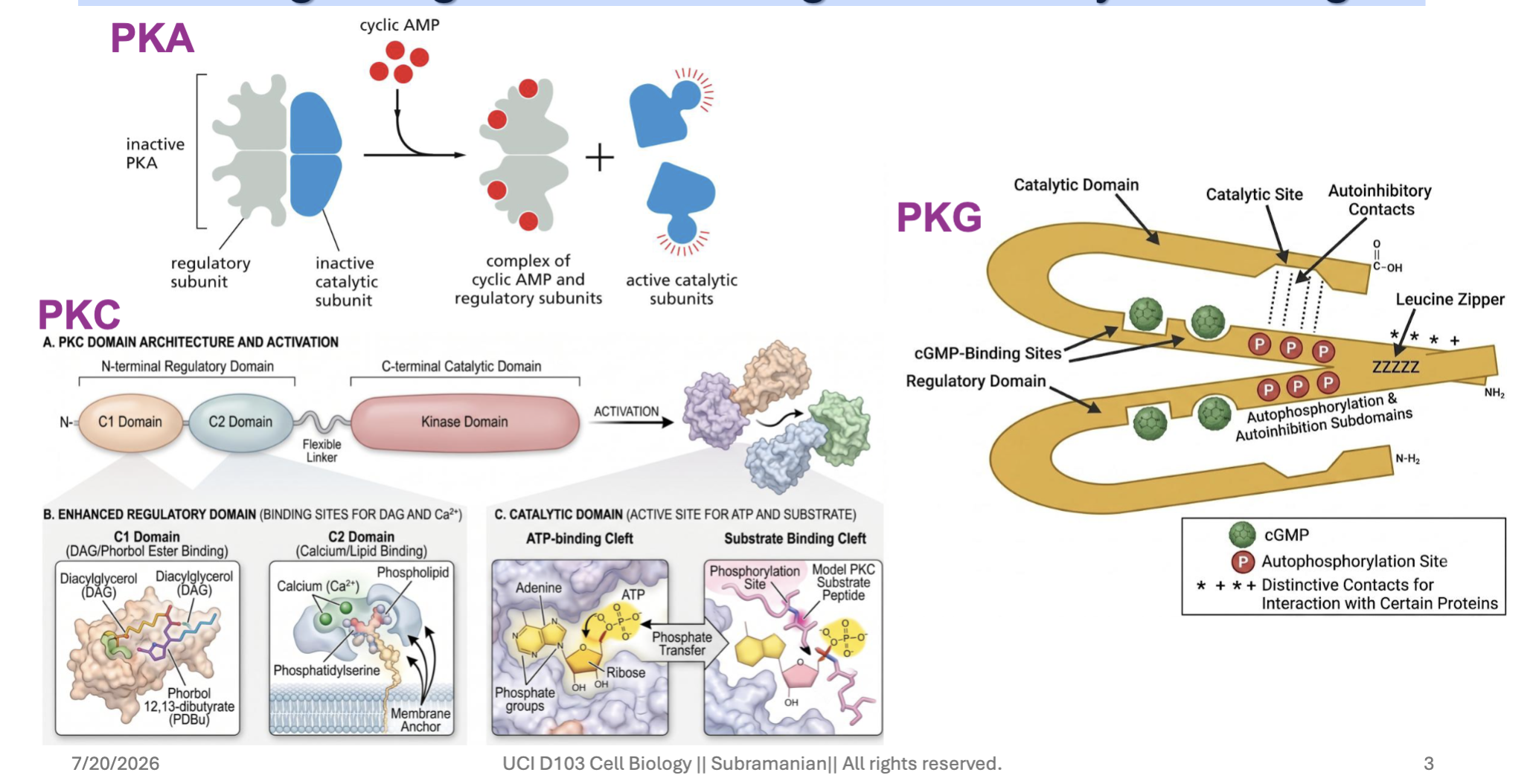
GPCR signaling execute through secondary messengers
3
New cards

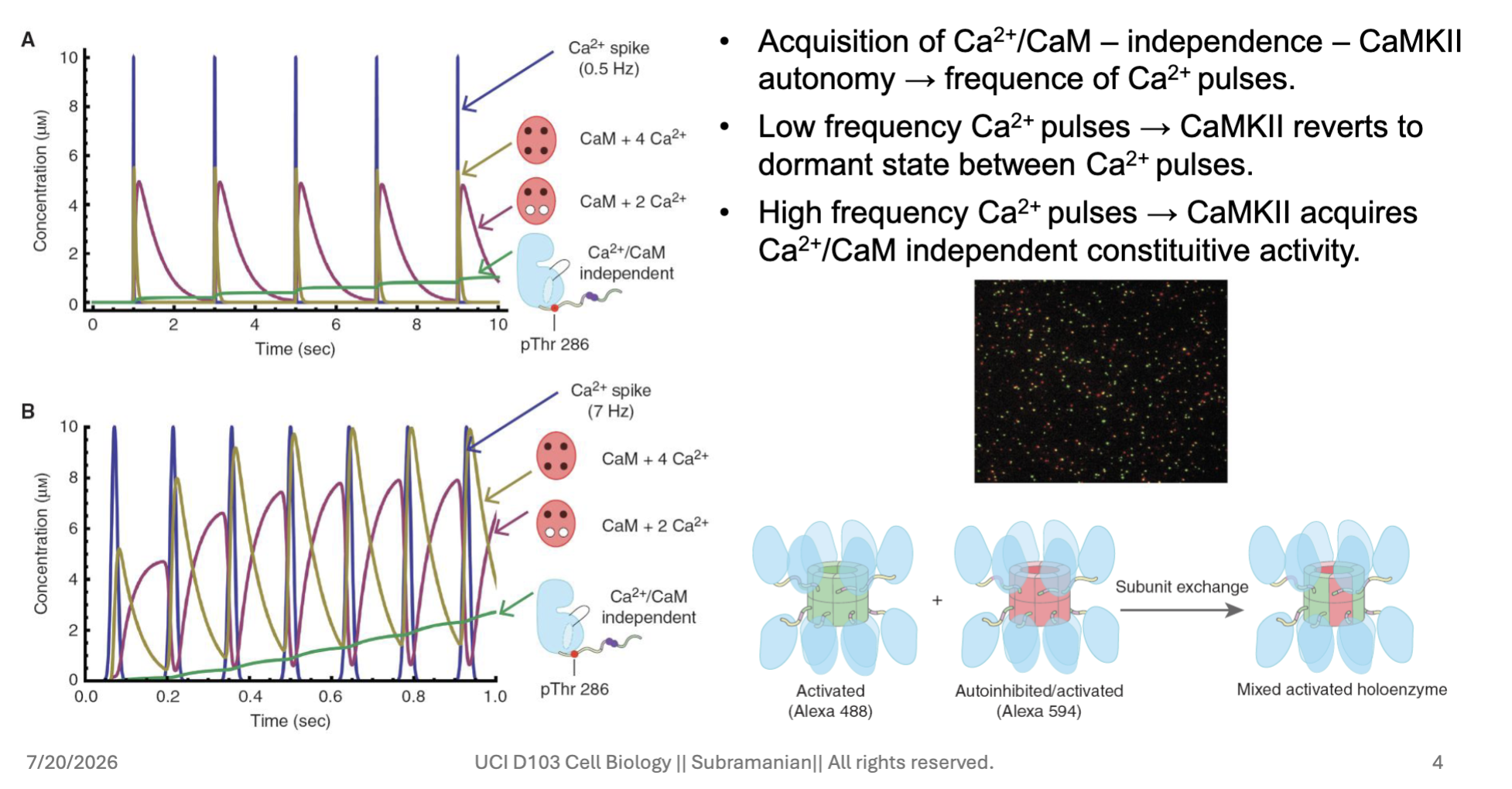
Calmodulin Kinase – a molecular memory device
4
New cards

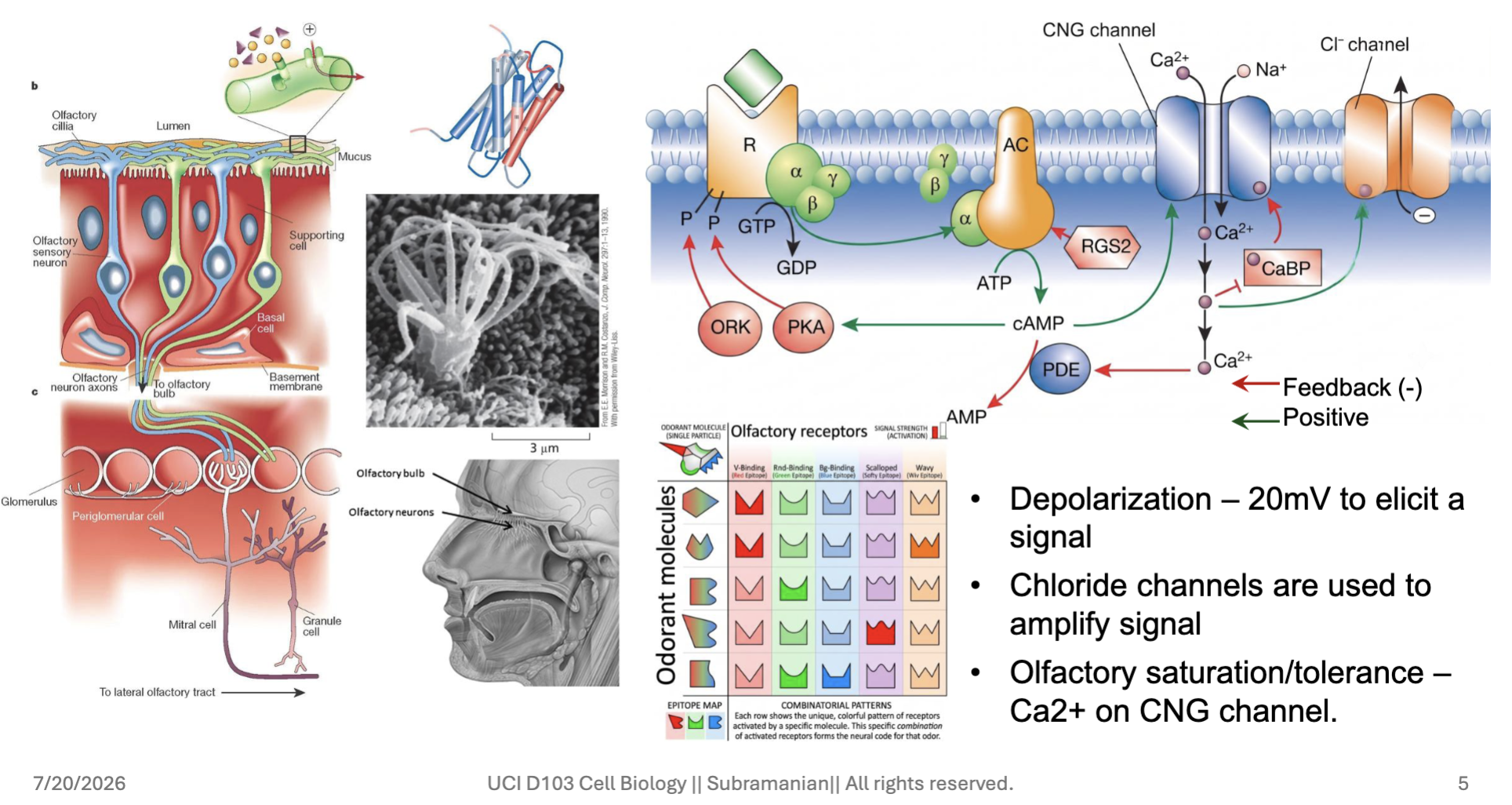
Olfactory signaling system

5
New cards

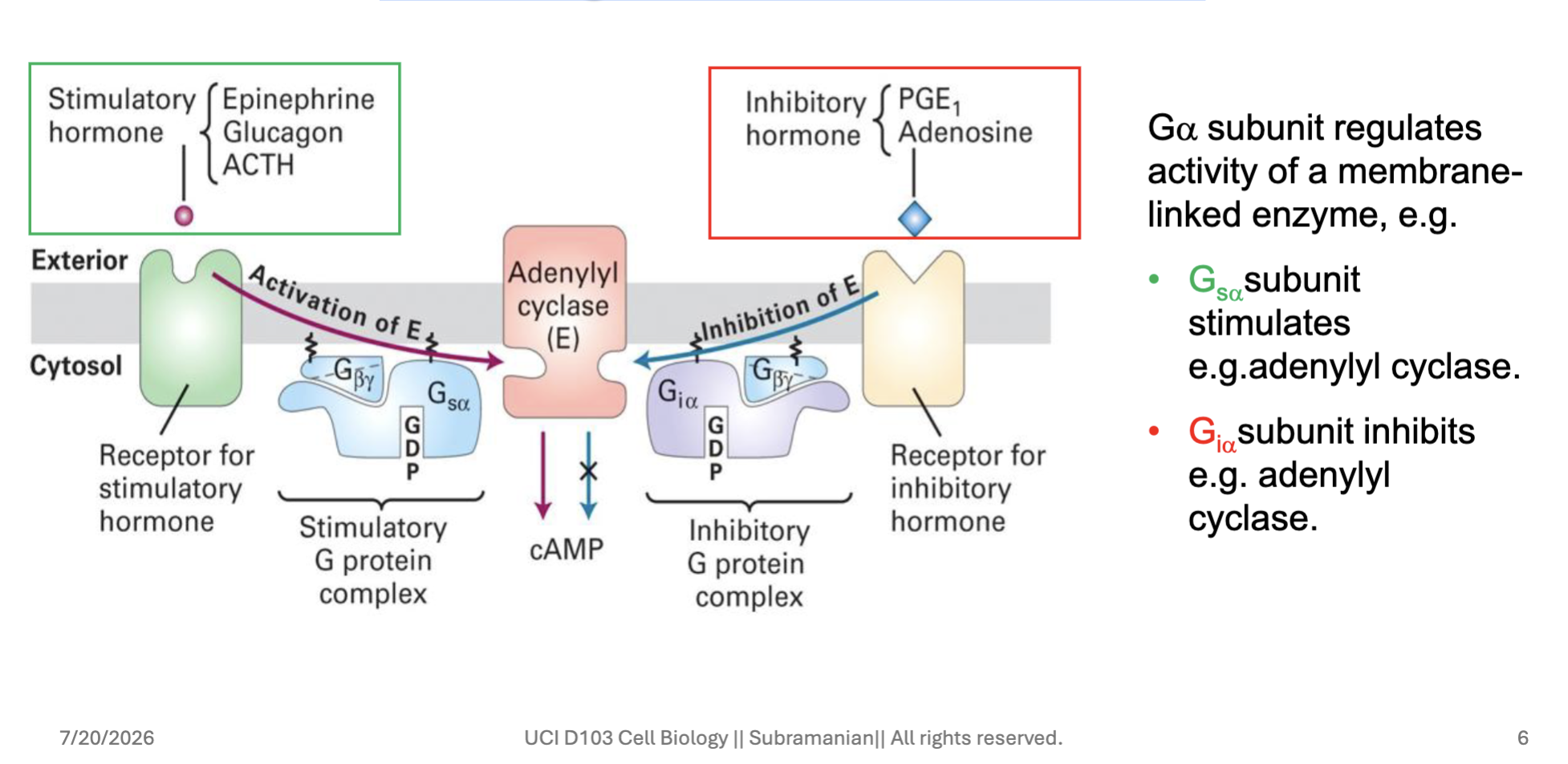
GPCRs can associate with same effector

leading to different results
knowt flashcard image

6
New cards

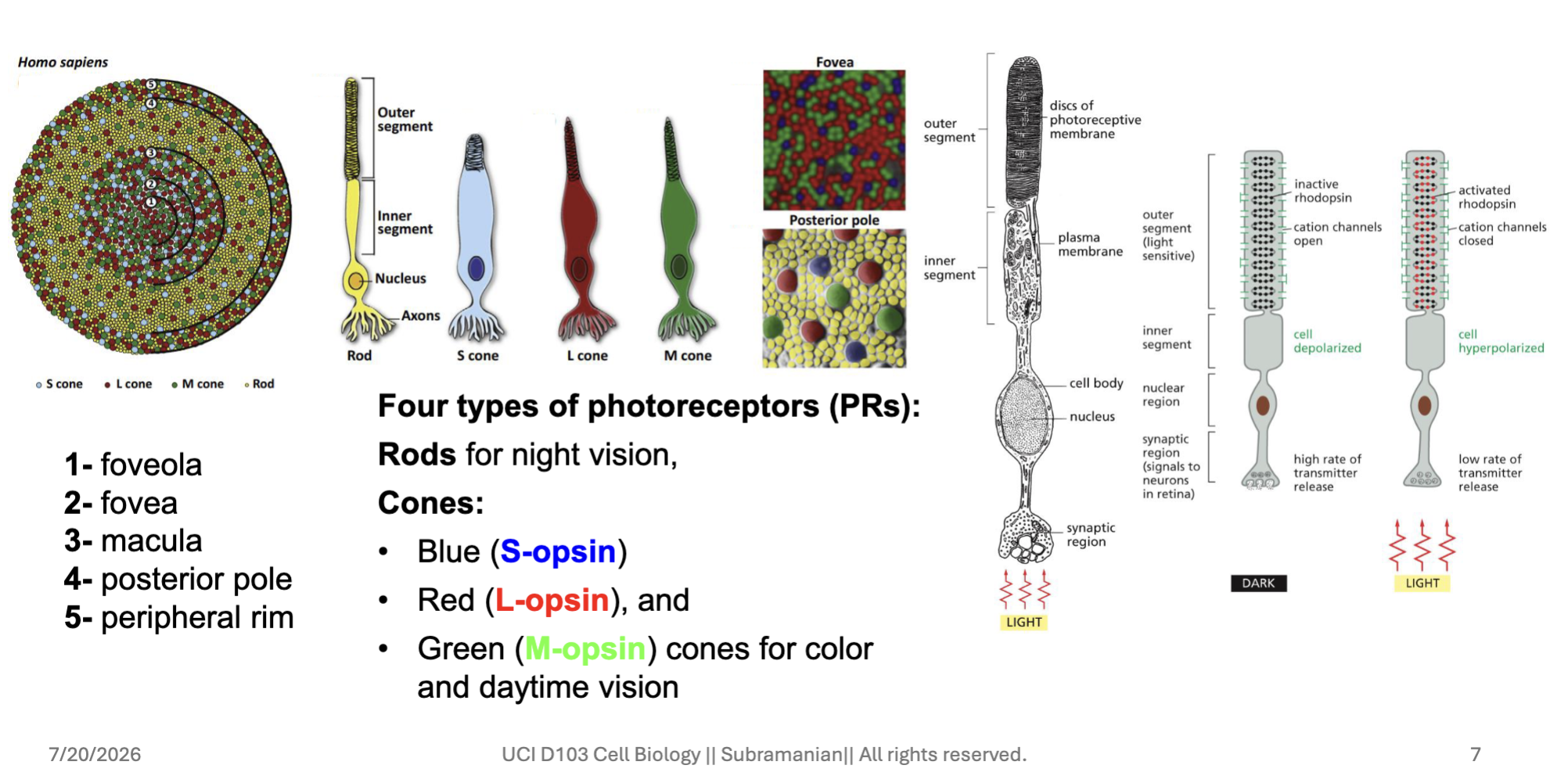
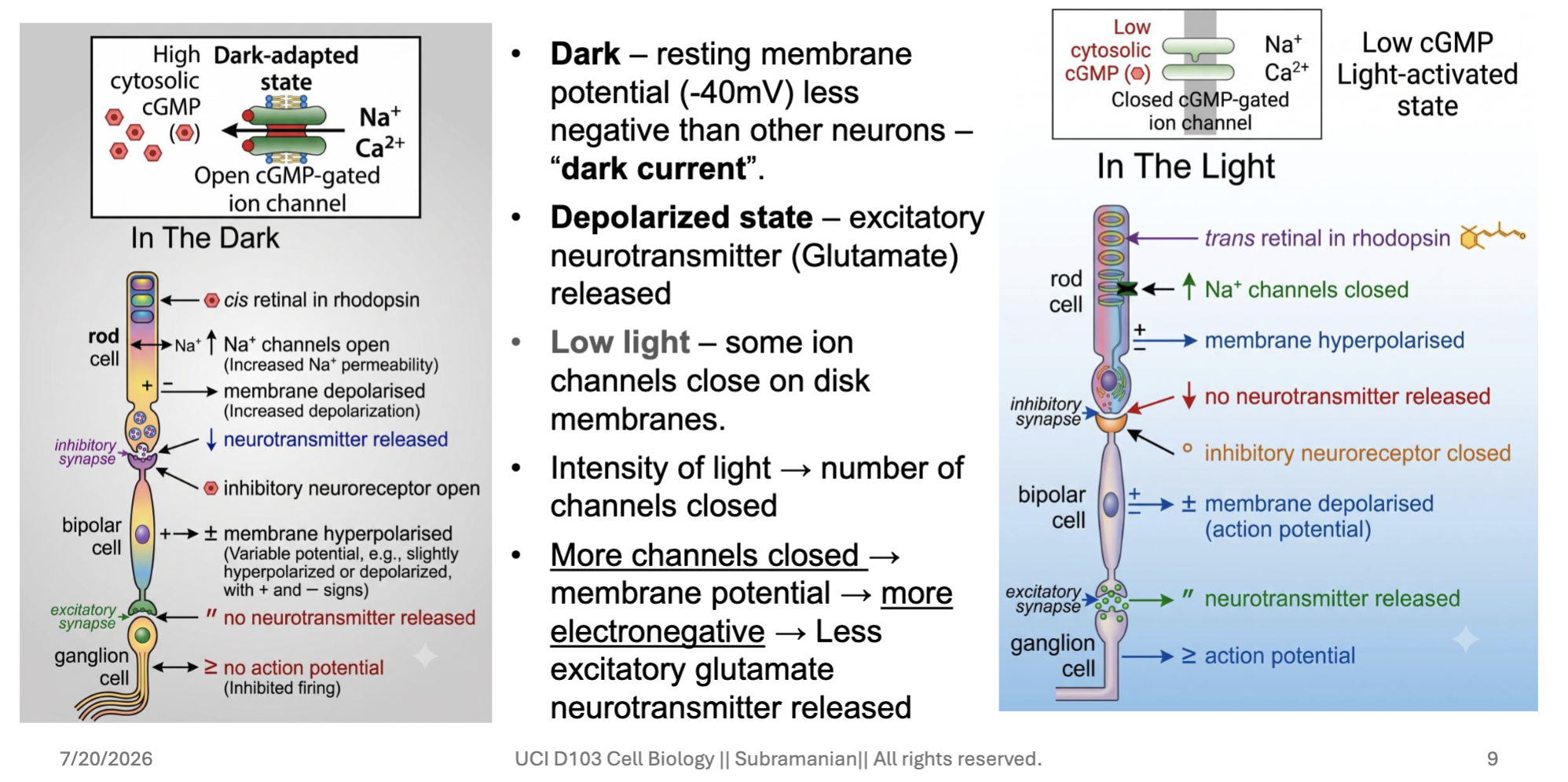
GPCR (Gi) signaling in photoreceptor system

7
New cards

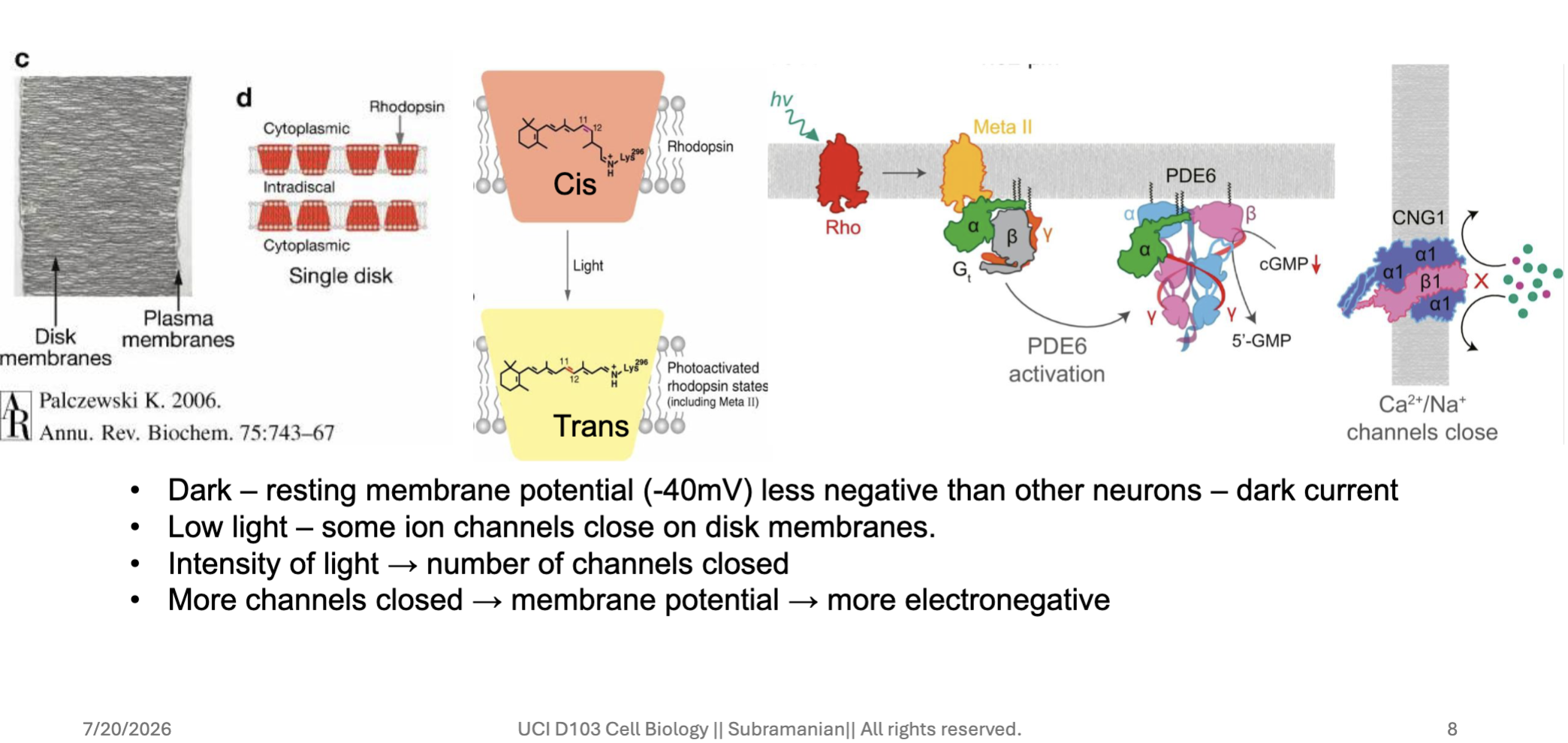
GPCR (Gi) signaling in photoreceptor system

knowt flashcard image

8
New cards

GPCR (Gi) signaling in photoreceptor system

knowt flashcard image

9
New cards

GPCRs control various aspects of life
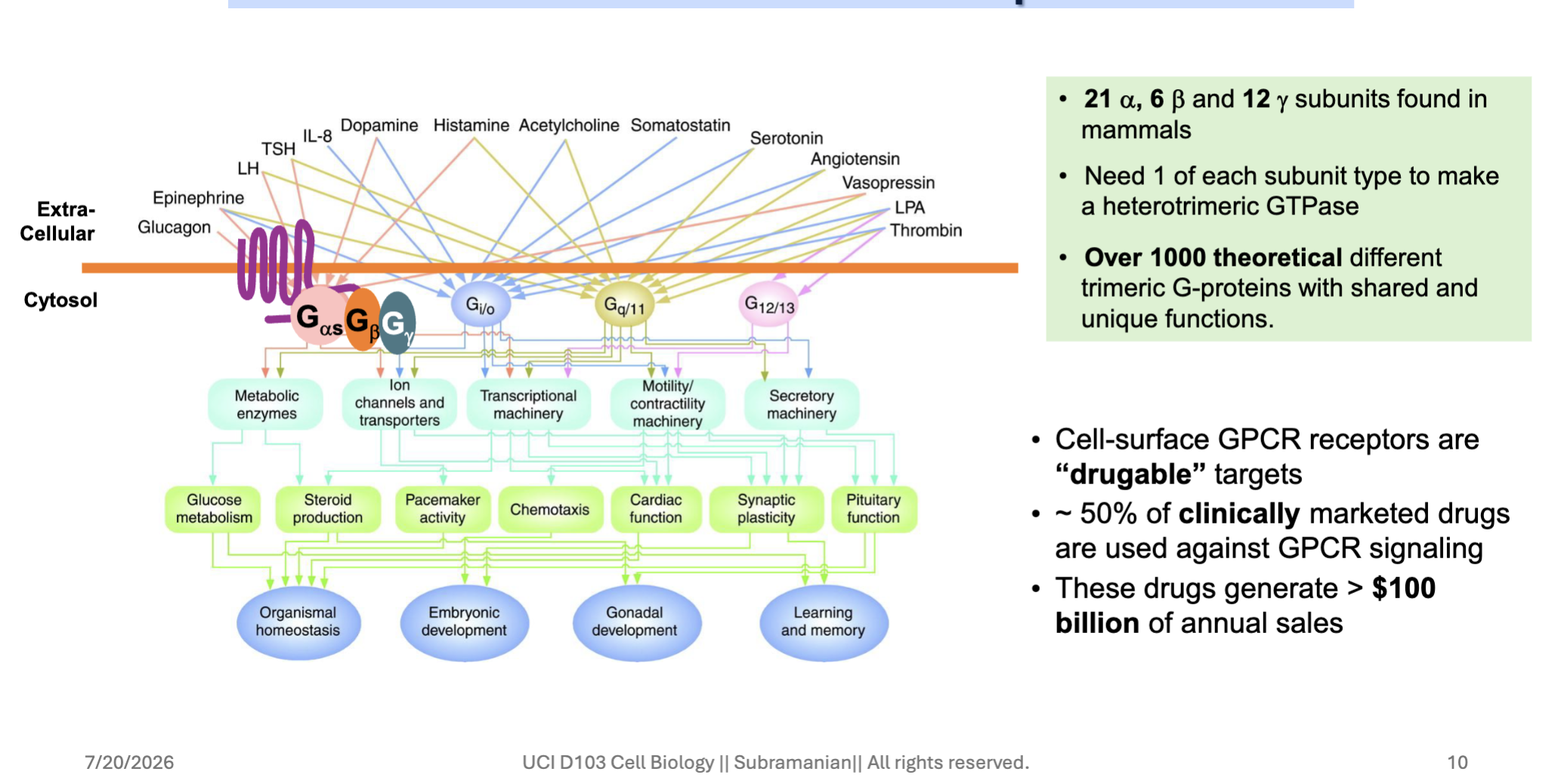
knowt flashcard image

10
New cards

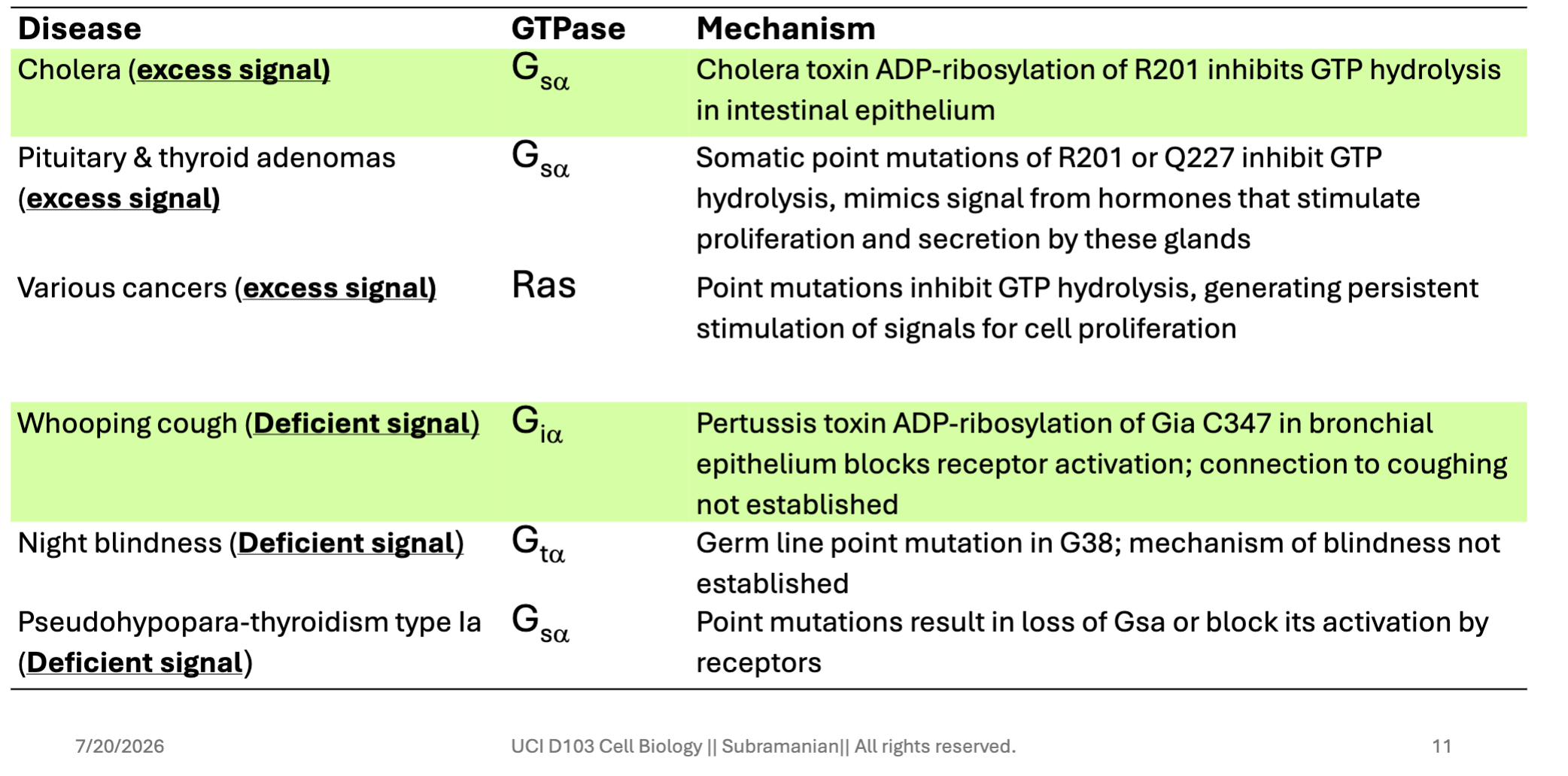
GPCRs in disease

11
New cards

Signaling through cell

surface enzyme-coupled receptors
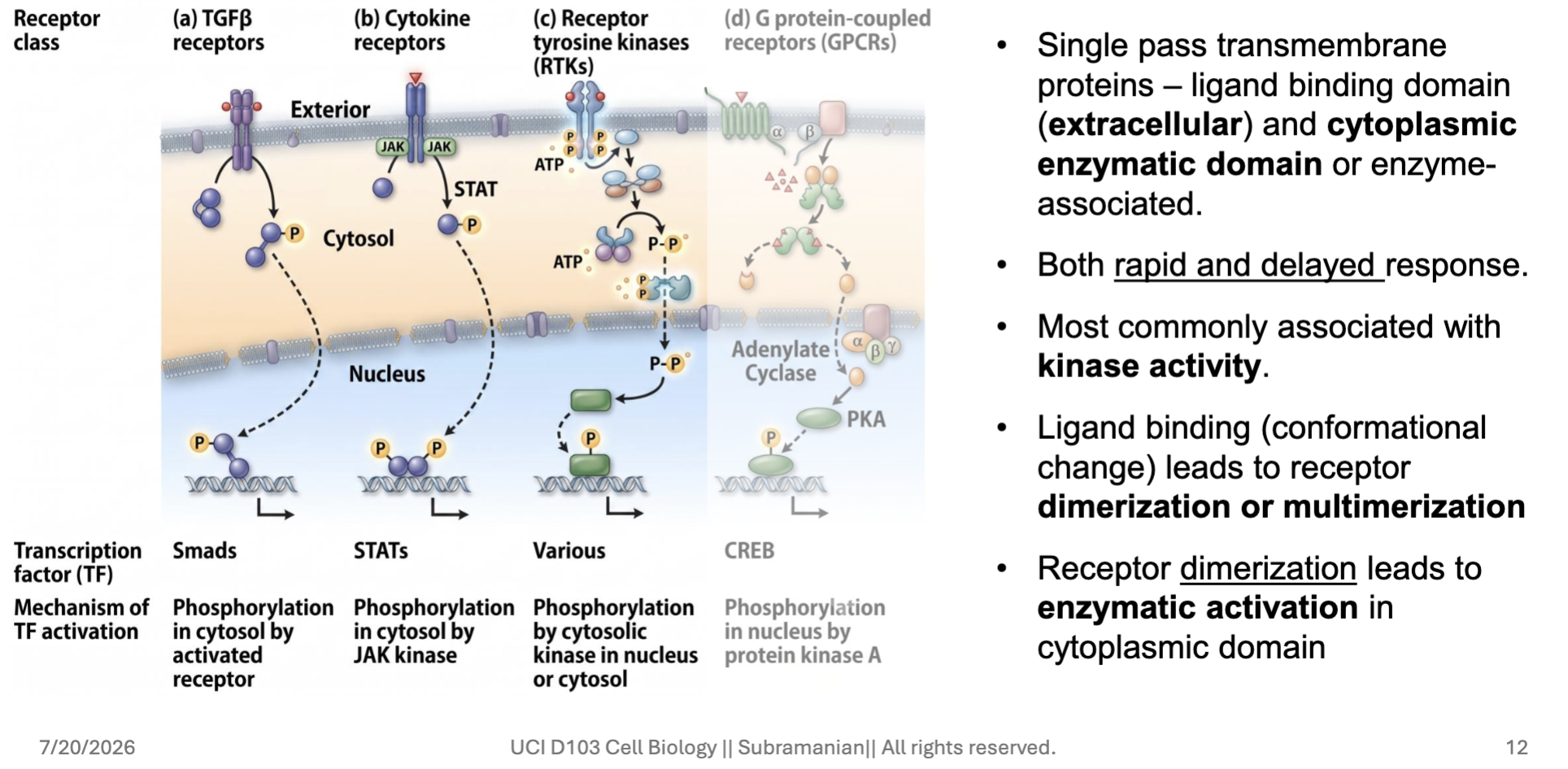
12
New cards

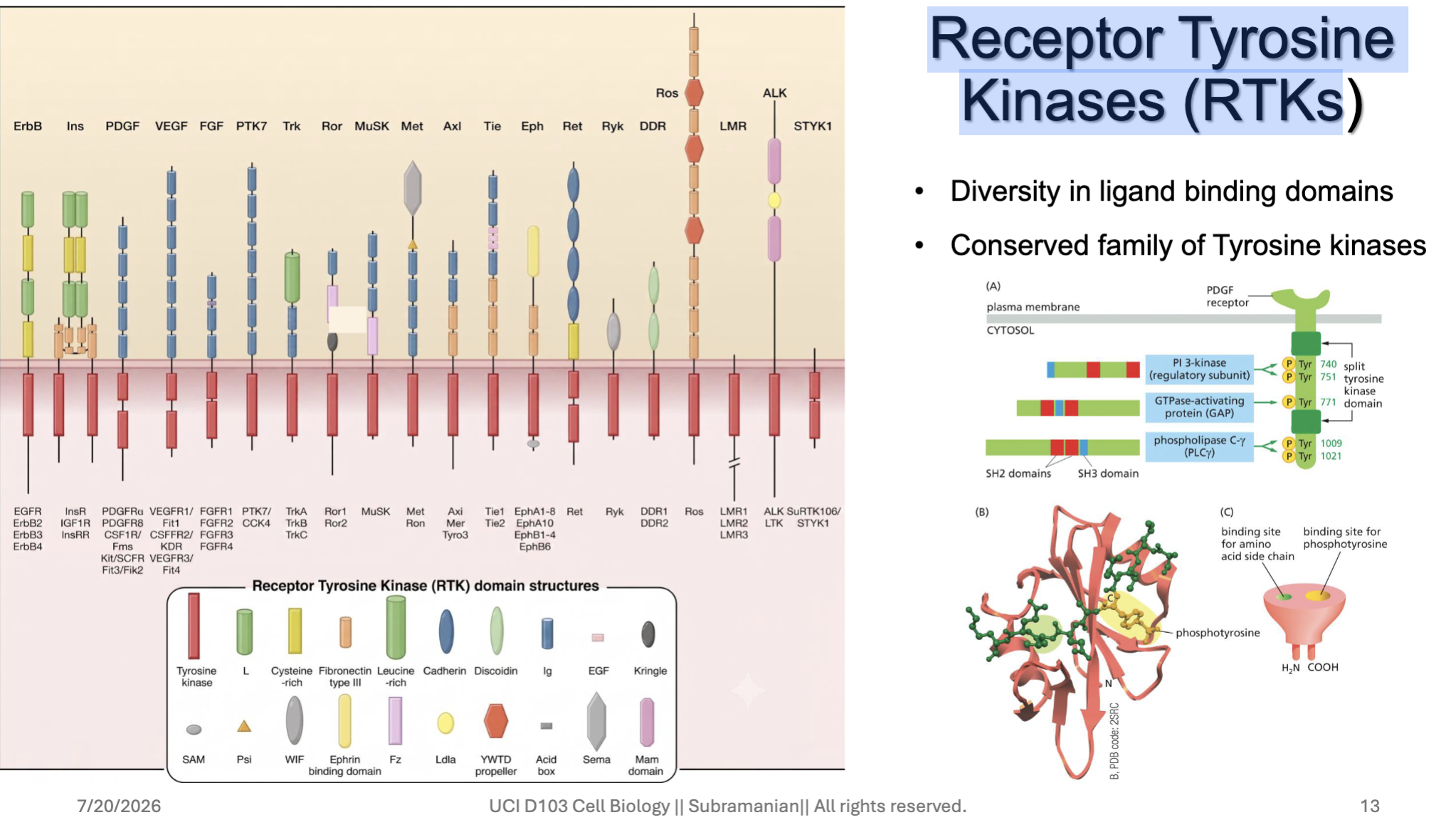
Receptor Tyrosine

Kinases (RTKs)

13
New cards

Activation of RTKs through dimerization
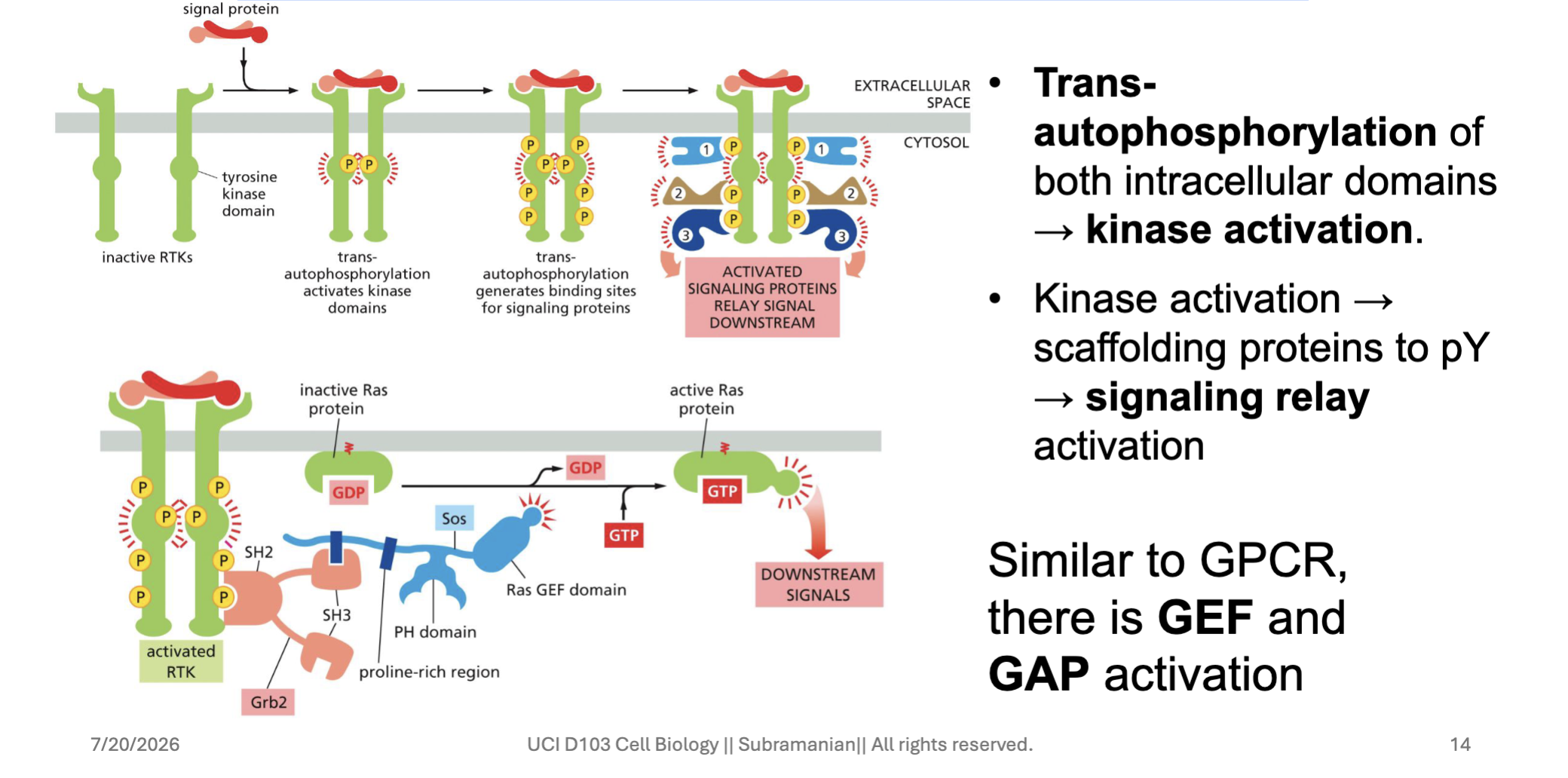
14
New cards

Activation of RTKs through dimerization
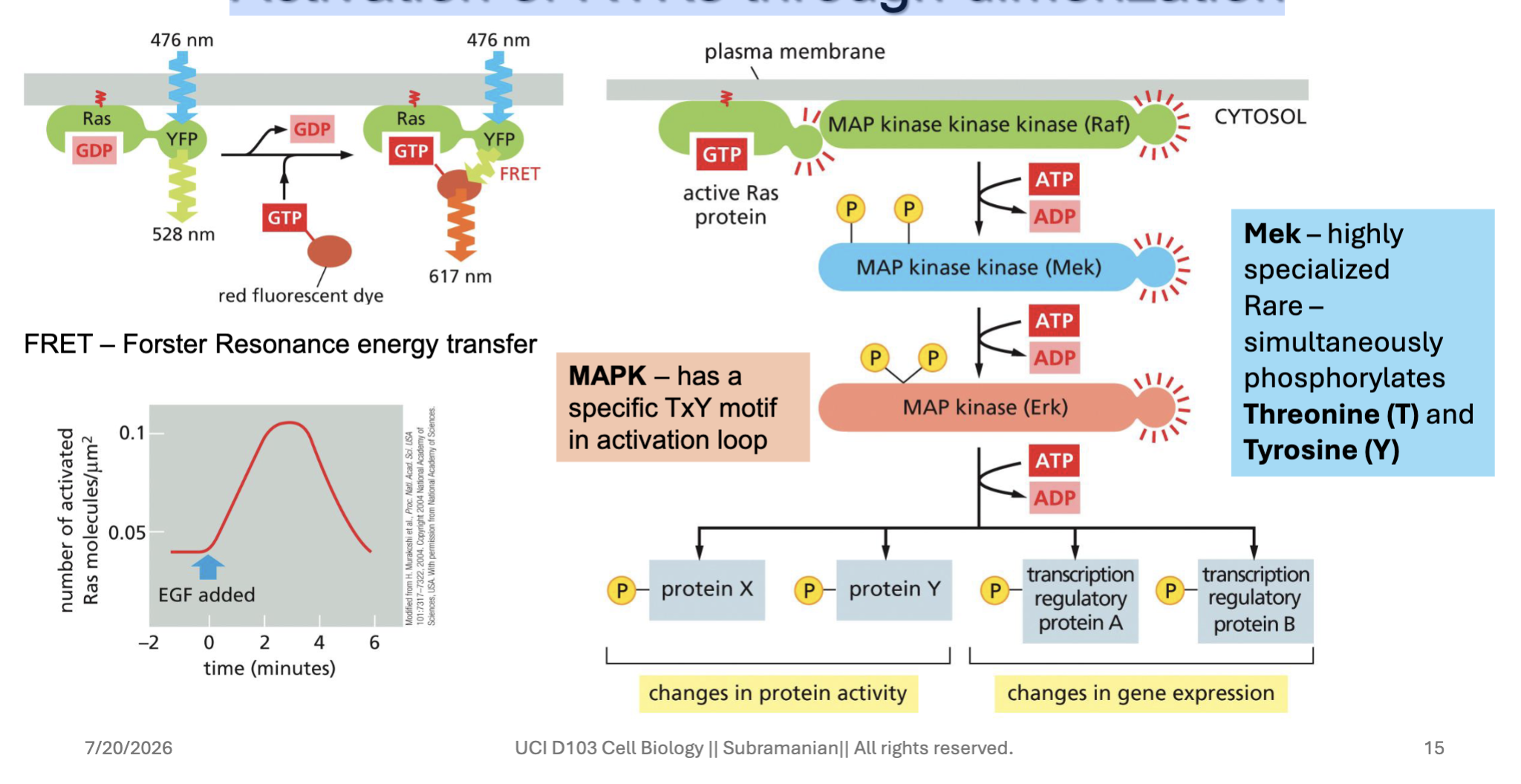
knowt flashcard image

15
New cards

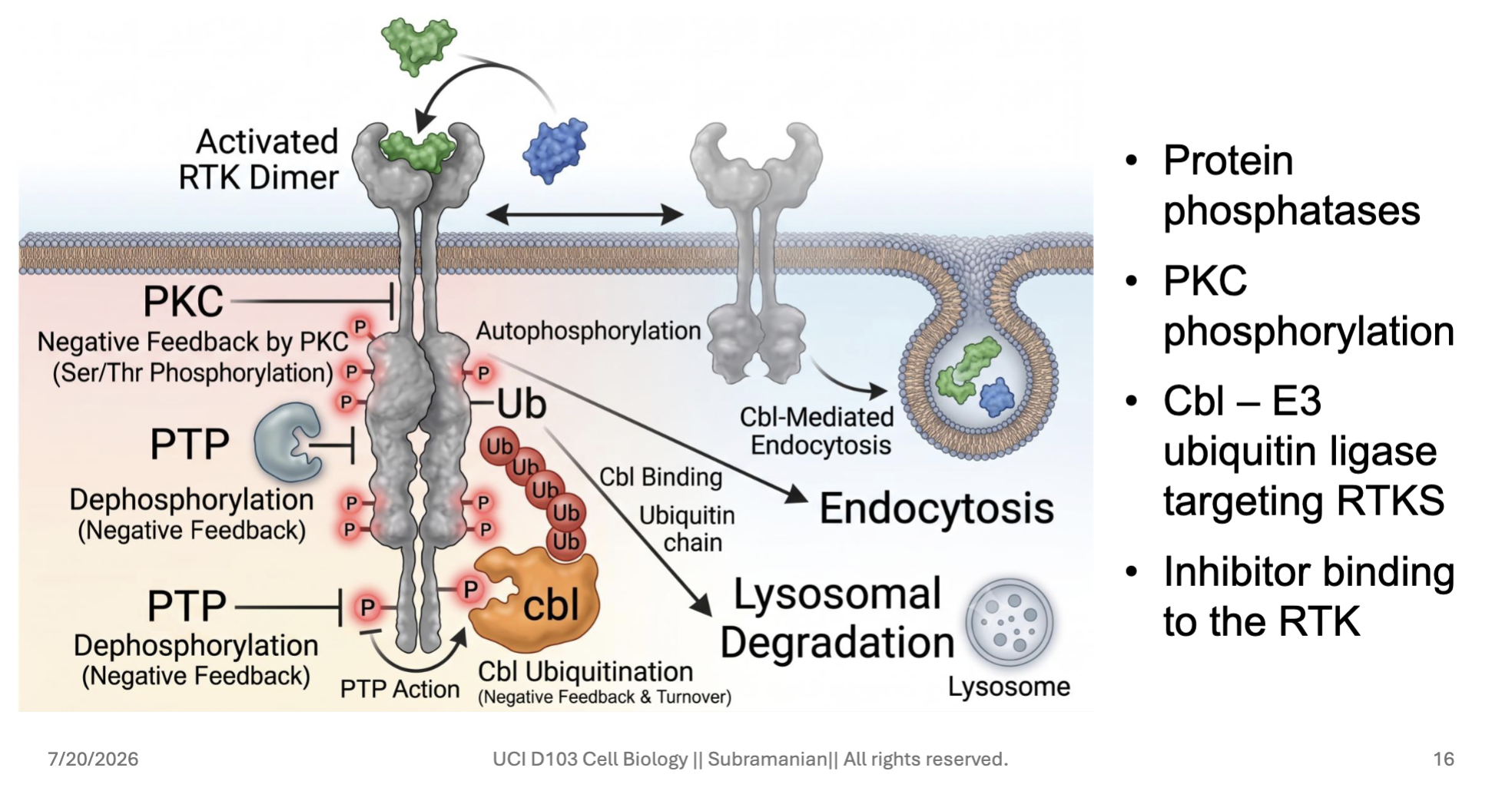
Downregulation of RTK signaling

16
New cards

Activation of RTKs through dimerization
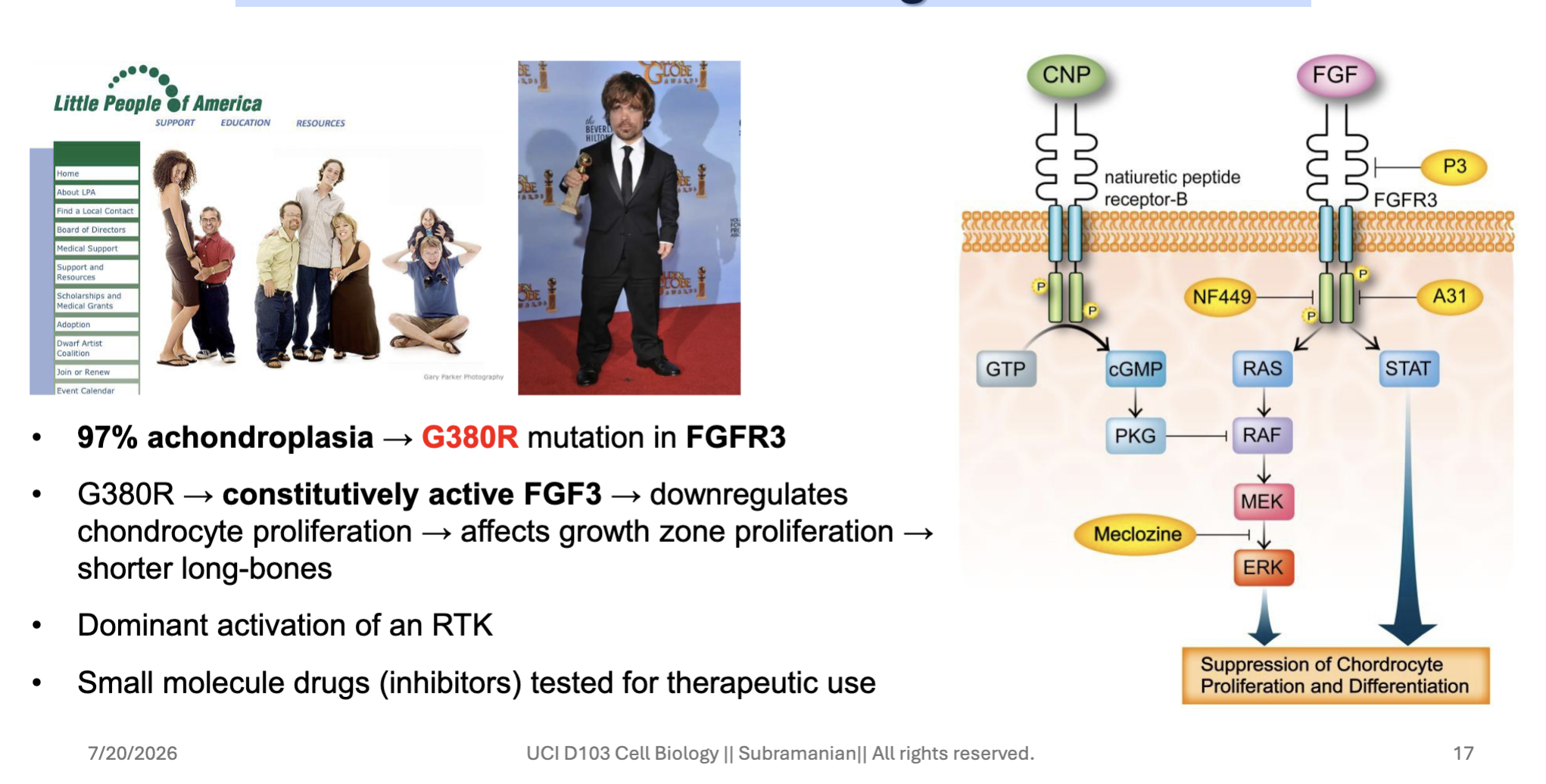
17
New cards

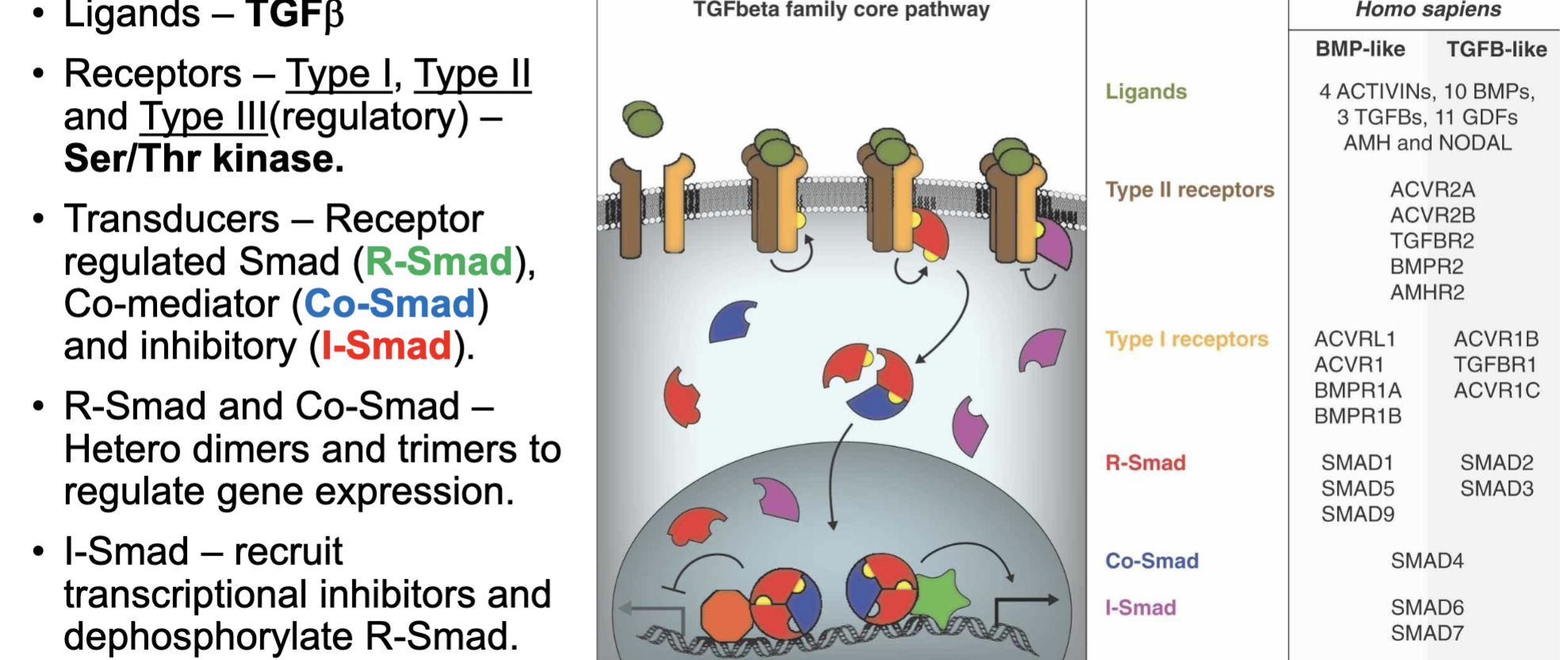
Transforming Growth Factor (TGF)-beta

signaling pathway
knowt flashcard image

18
New cards

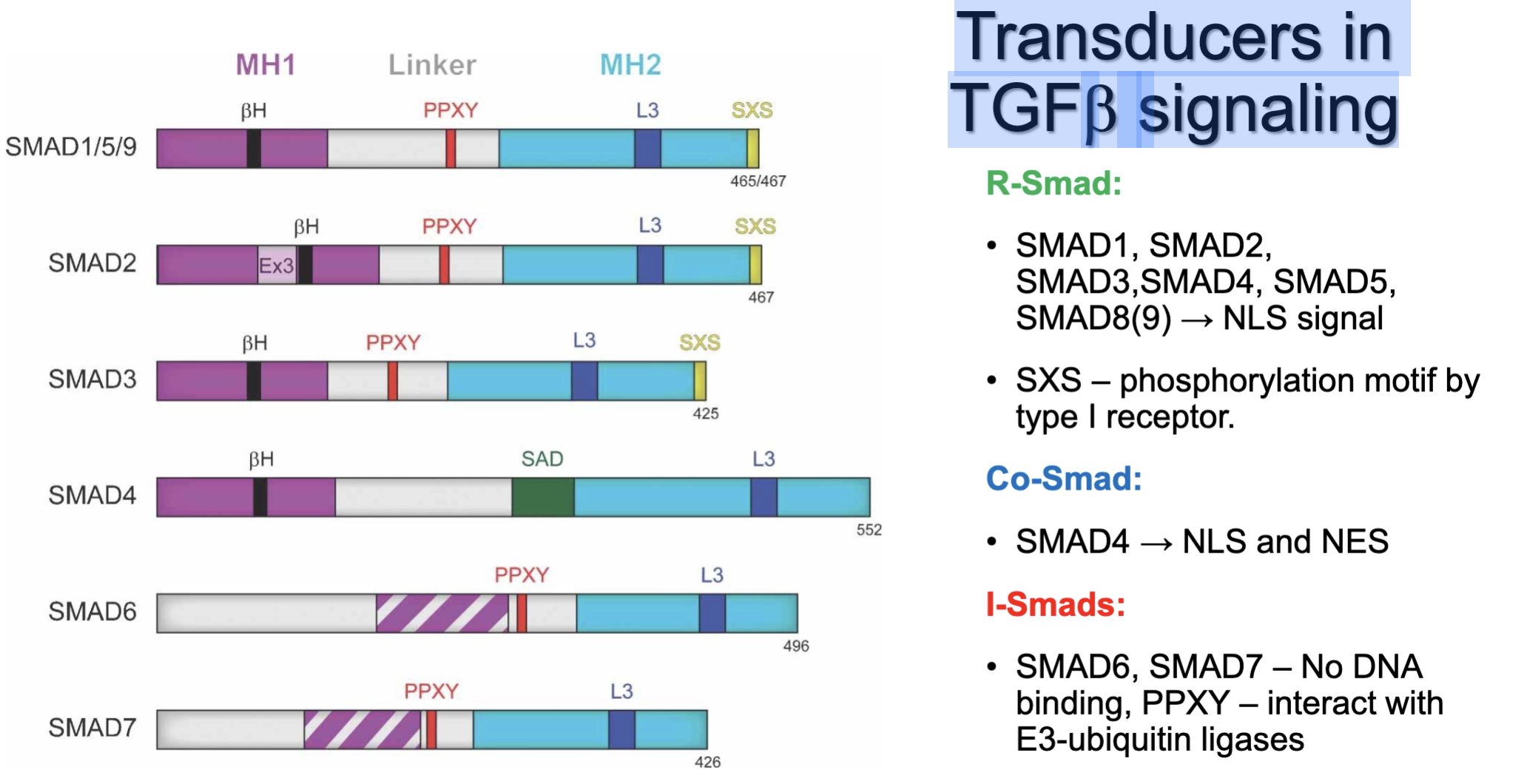
Transducers in

TGF signaling

19
New cards

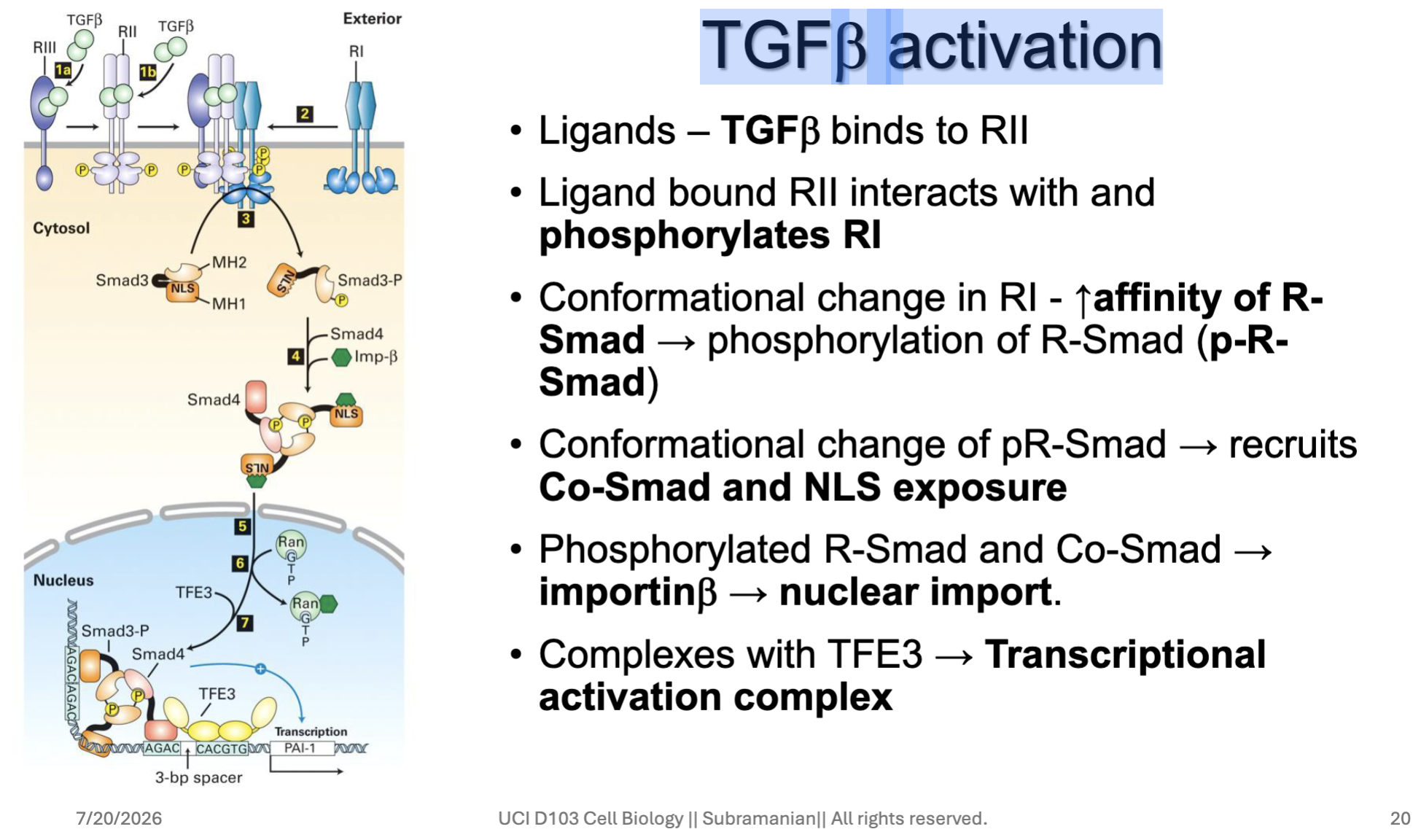
TGF activation

knowt flashcard image

20
New cards

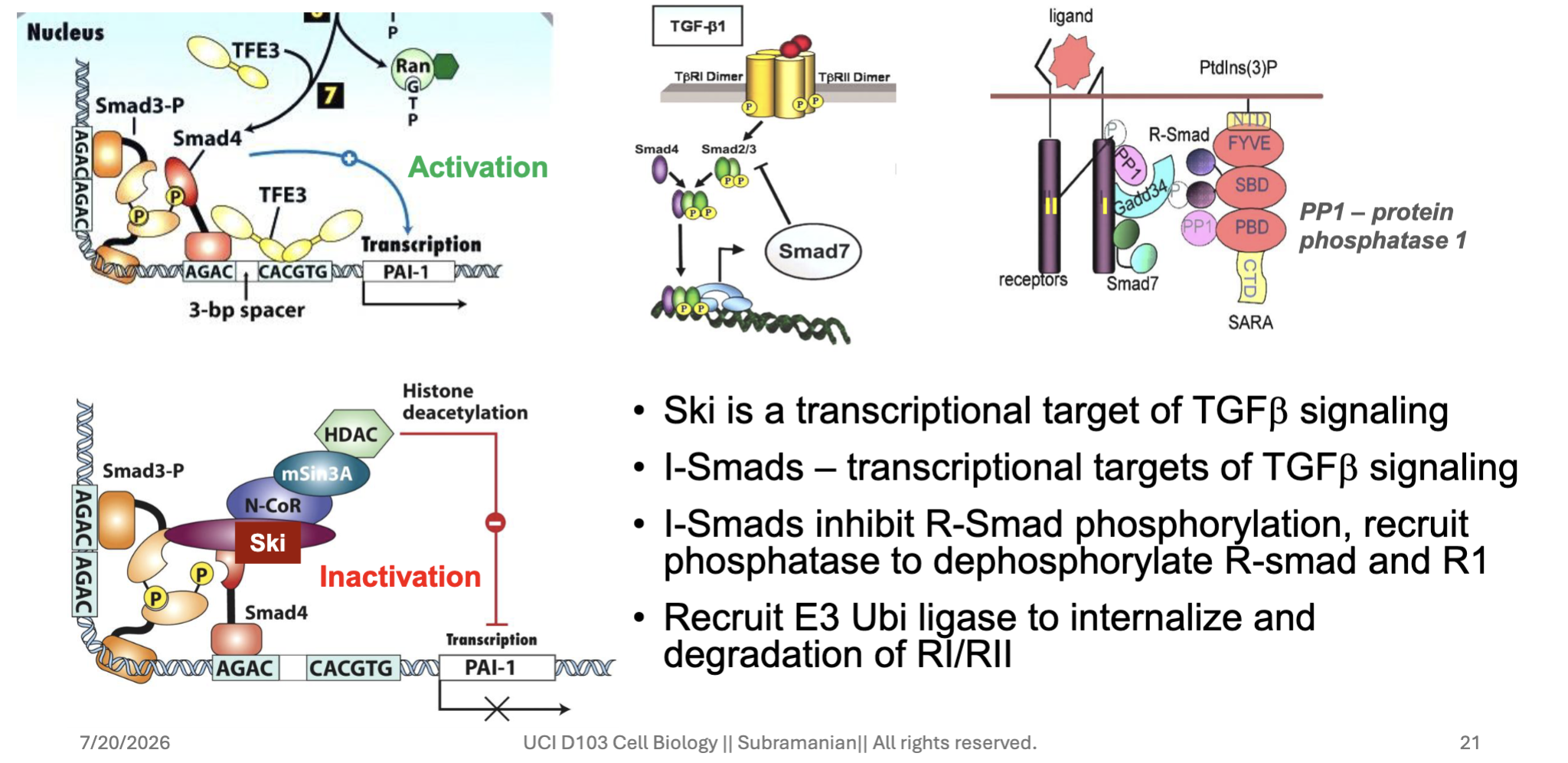
Control of TGF signaling

knowt flashcard image

21
New cards

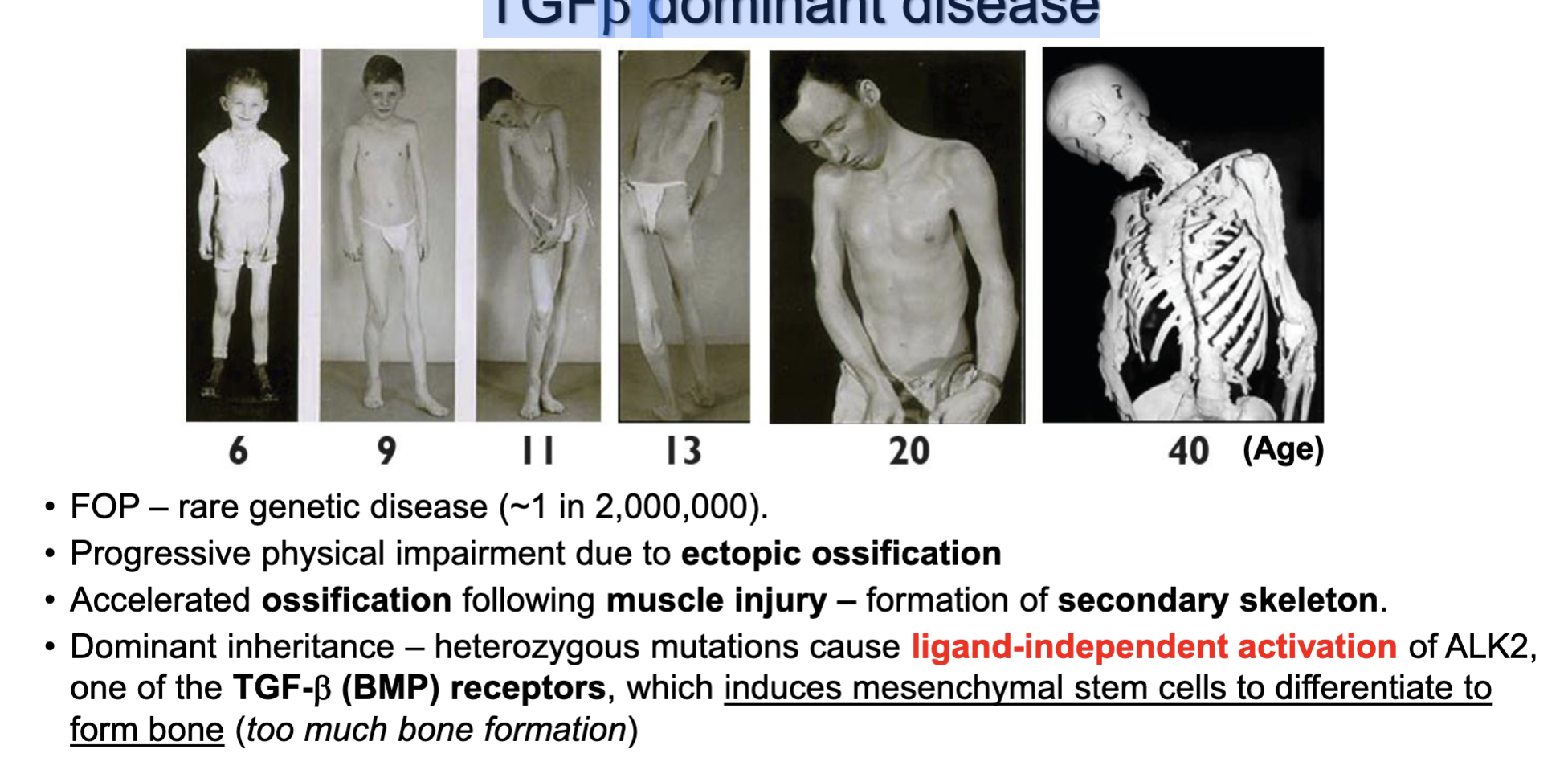
Fibrodysplasia Ossificans Progressiva (FOP)

TGF dominant disease

knowt flashcard image

22
New cards
Which specific protein function is responsible for exchanging GDP for GTP in the $G_{\alpha}$ subunit?
Guanine nucleotide exchange factor (GEF) function.
23
New cards
What structural change occurs in a GPCR immediately after a ligand binds?
It undergoes a conformational change where the helices move to allow G-protein interaction.
24
New cards
In the GPCR cycle, what triggers the $G_{\alpha}$ subunit to dissociate from the $\beta\gamma$ complex?
The exchange of GDP for GTP on the $G_{\alpha}$ subunit.
25
New cards
What event causes the $G_{\alpha}$ subunit to re-associate with the $\beta\gamma$ trimeric complex?
The hydrolysis of GTP back to GDP by the $G_{\alpha}$ subunit.
26
New cards
Which part of the signaling pathway is considered unique to GPCRs compared to other pathways?
The cycle of how the trimeric G-proteins ($\alpha$, $\beta$, $\gamma$) function.
27
New cards
How does the physical structure of Protein Kinase A (PKA) differ from PKC and PKG regarding its units?
PKA exists as physically separate regulatory and catalytic units after post-processing.
28
New cards
What secondary messenger binds to the regulatory unit of PKA to release the catalytic units?
Cyclic AMP ($cAMP$).
29
New cards
In Protein Kinase C (PKC), how are the catalytic and regulatory units connected?
They are connected by a flexible linker.
30
New cards
Which two secondary effectors are required to activate Protein Kinase C (PKC)?
Calcium ($Ca^{2+}$) and diacylglycerol ($DAG$).
31
New cards
What specific molecule binds to Protein Kinase G (PKG) to release its catalytic domain for activity?
Cyclic GMP ($cGMP$).
32
New cards
Why is Protein Kinase C (PKC) typically localized just under the cell membrane?
It is anchored via its phosphatidyl serine domain and interactions with diacylglycerol.
33
New cards
What is the primary difference between the proteins Calmodulin and Calmodulin-mediated kinase ($CaMKII$)?
They are two distinct and different proteins.
34
New cards
At what minimum number of bound calcium ions does Calmodulin become active?
Two calcium ions.
35
New cards
How does binding four calcium ions instead of two affect Calmodulin's activity?
It remains active for a longer period of time.
36
New cards
According to the cooperative binding model, how do calcium ions typically dissociate from Calmodulin?
They dissociate in pairs (two at a time).
37
New cards
What state of Calmodulin (2-bound or 4-bound) is more prevalent during high-frequency calcium pulsing in neurons?
The 4-bound state.
38
New cards
Once Calmodulin-mediated kinase is phosphorylated at its specific residues, what is required to maintain its activity?
Nothing; it remains active by itself until dephosphorylated by phosphatases.
39
New cards
In the olfactory system, what type of receptor recognizes odorant molecules?
G-protein coupled receptors (GPCRs).
40
New cards
Which enzyme is activated by the $G_{\alpha}$ subunit in olfactory signaling to produce $cAMP$?
Adenylate cyclase.
41
New cards
What is the function of the chloride channel in olfactory neurons?
It amplifies the depolarization signal by pushing chloride ions out of the cell.
42
New cards
How does calcium contribute to olfactory adaptation or tolerance?
It activates phosphodiesterase (PDE) to downregulate $cAMP$ levels.
43
New cards
What determines the specific smell identified by the brain despite having only about 1,000 types of receptors?
The combinatorial signaling and arrangement of triggered receptors in millions of neurons.
44
New cards
In the human eye, what is the primary role of rod cells?
Sensing the brightness or amplitude of light (on/off).
45
New cards
What is the conformation of retinal in Rhodopsin when it is in the dark?
The 11-cis form.
46
New cards
What conformational change occurs in Rhodopsin when it is hit by light?
It converts from the cis form to the trans form.
47
New cards
Which specific phosphodiesterase is activated in the photoreceptor signaling pathway?
Phosphodiesterase 6 (PDE6).
48
New cards
What happens to the $cGMP$ concentration in a rod cell when light activates Rhodopsin?
The $cGMP$ concentration decreases as it is hydrolyzed to $GMP$.
49
New cards
How does the rod cell membrane potential change in response to light?
It becomes hyper-polarized as sodium/calcium channels close.
50
New cards
In the dark, what neurotransmitter is constantly released by rod cells?
Glutamate.
51
New cards
Why is the photoreceptor signaling pathway considered an 'inhibitory circuit'?
Light stops the firing of the photoreceptor, which then allows the bipolar cell to signal.
52
New cards
Which disease involves the cholera toxin inhibiting the GTPase activity of a specific $G_{\alpha}$ subunit?
Cholera.
53
New cards
Regarding Receptor Tyrosine Kinases (RTKs), which domain is highly conserved among different types?
The intracellular enzymatic (tyrosine kinase) domain.
54
New cards
What is the first physical step in the activation of Receptor Tyrosine Kinases (RTKs) upon ligand binding?
Dimerization of the receptors.
55
New cards
Define the term 'transphosphorylation' in the context of RTK activation.
Each receptor in a dimer phosphorylates the tyrosine residues of its partner.
56
New cards
What two features do $SH2$ domains recognize to ensure specific binding to an RTK?
A phosphotyrosine residue and a specific adjacent amino acid side chain.
57
New cards
In the RTK pathway, what is the role of the SOS protein?
It acts as a RAS-GEF to activate RAS by exchanging GDP for GTP.
58
New cards
What laboratory technique uses energy transfer between fluorophores to study the proximity or activation of proteins like RAS?
FRET (Forster Resonance Energy Transfer).
59
New cards
List the three kinases in the MAPK cascade in their order of activation.
RAF (MAPKKK), MEK (MAPKK), and ERK (MAPK).
60
New cards
Why is MEK (MAP Kinase Kinase) considered a rare type of phosphorylase?
It is a dual-specificity kinase that phosphorylates both threonine and tyrosine residues.
61
New cards
Which protein is responsible for marking RTKs for degradation in the lysosome via ubiquitination?
CBL (an E3 ubiquitin ligase).
62
New cards
How do Protein Tyrosine Phosphatases (PTPs) regulate RTK signaling?
They dephosphorylate the receptor to prevent transducer recruitment.
63
New cards
What is the specific genetic mutation responsible for 97% of Achondroplasia cases?
The $G380R$ mutation in the $FGFR3$ gene.
64
New cards
What is the physiological effect of constitutive $FGFR3$ signaling in Achondroplasia?
It inhibits the proliferation of chondrocytes in bone growth zones.
65
New cards
What type of enzymatic activity is characteristic of $TGF-\beta$ receptors?
Serine/threonine kinase activity.
66
New cards
The term 'SMAD' is a portmanteau derived from which two biological model organisms?
$Drosophila$ (Mad) and $C.\ elegans$ (Sma).
67
New cards
Which class of SMAD proteins is directly phosphorylated by the $TGF-\beta$ Type I receptor?
Receptor-regulated SMADs (R-SMADs).
68
New cards
What is the primary role of SMAD4 in the $TGF-\beta$ pathway?
It acts as a Co-SMAD, forming a complex with R-SMADs to enter the nucleus.
69
New cards
What structural motif at the C-terminus of R-SMADs is the target of receptor phosphorylation?
The $SSXS$ motif.
70
New cards
How is the Nuclear Localization Signal (NLS) in R-SMADs made accessible for transport?
It is revealed through a conformational change triggered by phosphorylation.
71
New cards
Which SMAD class lacks a DNA-binding domain and functions to downregulate signaling?
Inhibitory SMADs (I-SMADs).
72
New cards
In the $TGF-\beta$ pathway, how do Inhibitory SMADs (e.g., SMAD 7) typically work?
They recruit phosphatases or E3 ubiquitin ligases to the receptor complex.
73
New cards
What is the function of the Ski protein in $TGF-\beta$ regulation?
It binds the transcription complex and recruits Histone Deacetylases (H-DACs) to stop transcription.
74
New cards
What characterizes the pathology of Fibrodysplasia Ossificans Progressiva (FOP)?
Soft tissues like muscle and skin are progressively converted into bone.
75
New cards
In FOP, what is the nature of the $ALK2$ receptor activation?
It is ligand-independent, often triggered by inflammation or injury.
76
New cards
Concept: $G_{\alpha}$ subunit
Definition: The GTPase component of a heterotrimeric G-protein that hydrolyzes GTP to GDP to terminate signaling.
77
New cards
Concept: Phosphodiesterase (PDE)
Definition: An enzyme that breaks the cyclic bond in secondary messengers like $cAMP$ or $cGMP$, converting them to $AMP$ or $GMP$.
78
New cards
Term: Chondrocyte
Definition: Cells found in cartilage that are responsible for proliferation and hypertrophy during long bone growth.
79
New cards
What secondary messenger is used in olfactory signaling to open sodium/calcium channels?
Cyclic AMP ($cAMP$).
80
New cards
In the visual system, $cGMP$ levels are _____ in the dark, keeping ion channels open.
High
81
New cards
The $TGF-\beta$ Type II receptor activates the pathway by _____ the Type I receptor.
Phosphorylating
82
New cards
Which R-SMAD is specifically mentioned as a common target in $TGF-\beta$ signaling?
SMAD3.
83
New cards
What specific signal allows the R-SMAD/Co-SMAD complex to exit the cytoplasm and enter the nucleus?
The revealed Nuclear Localization Signal (NLS).
84
New cards
Which protein kinase has its regulatory and catalytic units linked by a flexible chain that is released by $cGMP$?
Protein Kinase G (PKG).
85
New cards
What is the primary difference in the target of PKA versus an RTK?
PKA targets serine/threonine residues, while RTKs target tyrosine residues.
86
New cards
In olfactory signaling, why is the internal concentration of chloride ions unique?
The neuronal cytoplasm has a higher concentration of chloride than the external environment.
87
New cards
How does the brain 'learn' according to the theory involving $CaMKII$?
By sensing the frequency and duration of calcium spikes to maintain kinase activity.
88
New cards
Which enzyme converts $cGMP$ to $GMP$ in the rod cell disk membrane?
Phosphodiesterase 6 (PDE6).
89
New cards
What is the purpose of the ridges in the olfactory epithelium?
To increase surface area for odorant molecules to interact with receptors.
90
New cards
In GPCR signaling, $G_{\beta}$ and $G_{\gamma}$ subunits are known to have their own _____ functions, though not detailed in this lecture.
Signaling
91
New cards
What determines the specificity of an RTK's extracellular domain?
The specific ligand it is evolved to bind.
92
New cards
Which kinase in the MAPK cascade directly phosphorylates transcription factors or other target proteins?
ERK (also known as MAP Kinase).
93
New cards
How does $TGF-\beta$ signaling typically end for a specific R-SMAD protein?
It is dephosphorylated or degraded via ubiquitination to stop transcription.
94
New cards
The $PPXY$ motif in I-SMADs is used to recruit _____.
E3 ubiquitin ligases
95
New cards
Which SMAD protein possesses both an NLS and an NES (Nuclear Export Signal)?
SMAD4 (Co-SMAD).
96
New cards
In the $RAS/MAPK$ pathway, the 'M' in MAPK stands for _____.
Mitogen
97
New cards
Under what lighting condition is a rod cell considered to be in its 'dark state'?
When $cGMP$ levels are high and ion channels are open.
98
New cards
What is the common result of activating the MAPK pathway regarding cell behavior?
Stimulation of cell proliferation.
99
New cards
A single olfactory neuron expresses exactly _____ set of olfactory receptors.
One
100
New cards
Which GPCR-related disease is characterized by a persistent inhibitory signal that manifests as a cough?
Whooping cough (Pertussis).