Plant ID Ferns

0.0(0)
Studied by 0 people
call kaiCall Kai
Locked
learnLearn
examPractice Test
spaced repetitionSpaced Repetition
heart puzzleMatch
flashcardsFlashcards
GameKnowt Play
Card Sorting

1/14

encourage image

There's no tags or description

Looks like no tags are added yet.

Last updated 11:16 PM on 7/22/26
Name
Mastery
Learn
Test
Matching
Spaced
Call with Kai
Chat

No analytics yet

Send a link to your students to track their progress

15 Terms
1
New cards
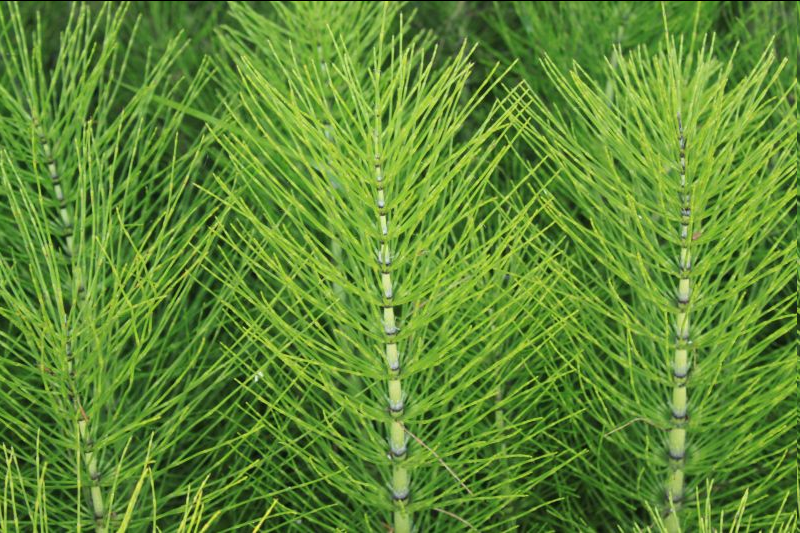
<p><span style="font-family: &quot;Open Sans&quot;; font-size: large;"><strong><u>Equisetum arvense - Common horsetail</u></strong></span></p>

Equisetum arvense - Common horsetail

A perennial plant in the family Equisetaceae, commonly found in wet, sandy, or disturbed areas. It is characterized by its jointed stems and whorls of scale-like leaves. It reproduces through spores produced in strobili at the tips of its stems, and it has a rough texture due to the presence of silica.
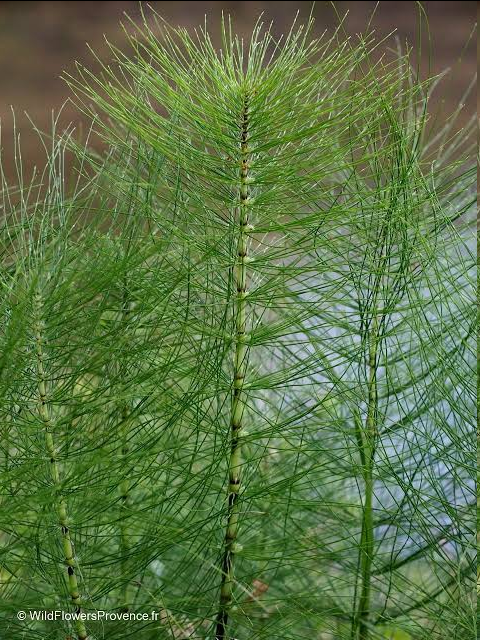
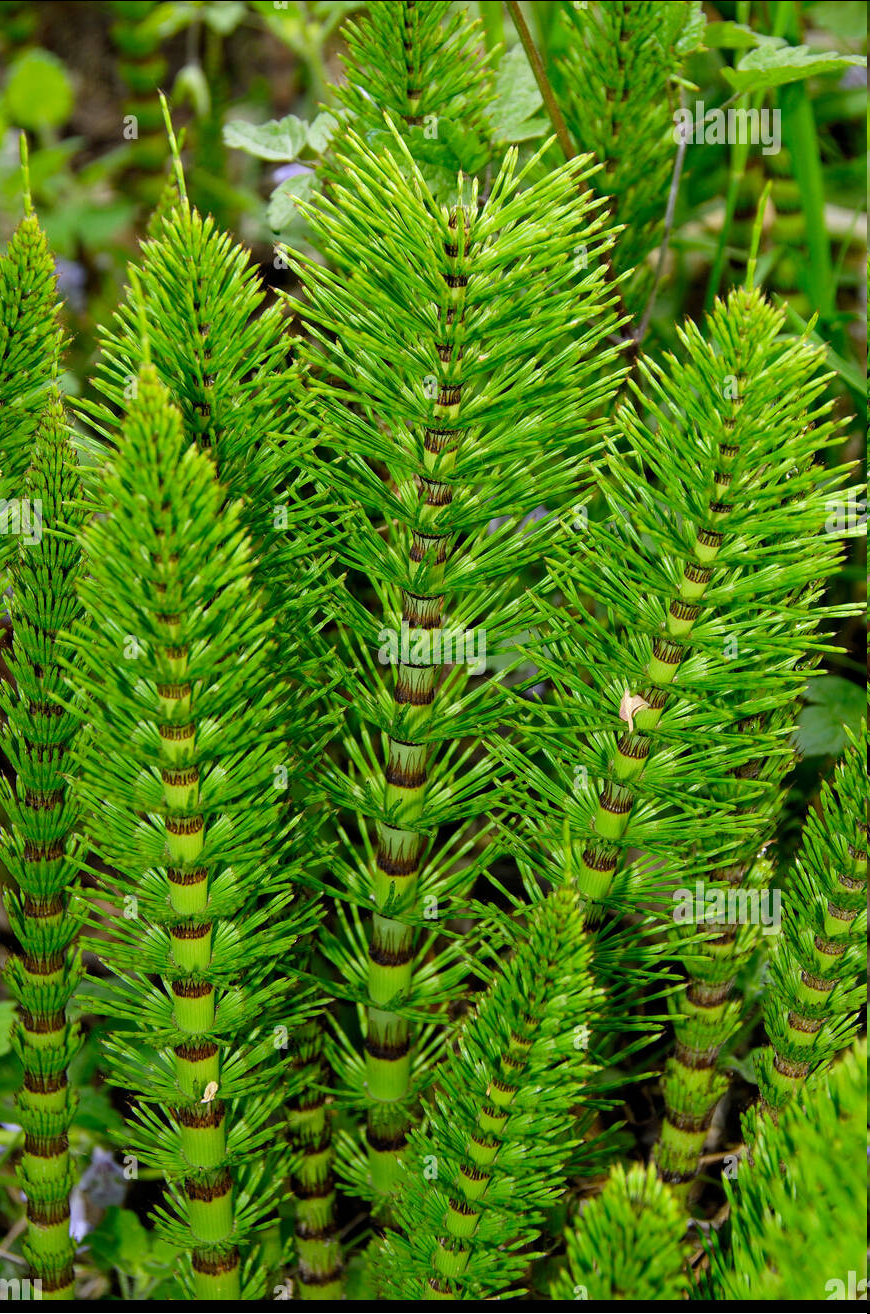
<p>A perennial plant in the family Equisetaceae, commonly found in wet, sandy, or disturbed areas. It is characterized by its jointed stems and whorls of scale-like leaves. It reproduces through spores produced in strobili at the tips of its stems, and it has a rough texture due to the presence of silica.</p>
2
New cards
<p><span style="font-family: &quot;Open Sans&quot;; font-size: large;"><strong><u>Equisetum telmateia - Great horsetail</u></strong></span></p>

Equisetum telmateia - Great horsetail

A large perennial plant in the Equisetaceae family, commonly found in moist habitats. It features robust, jointed stems and is characterized by its distinctive tall size and extensive rhizome system. This species reproduces through spores and can grow up to 2 meters tall, often forming dense colonies in wetlands and along riverbanks.
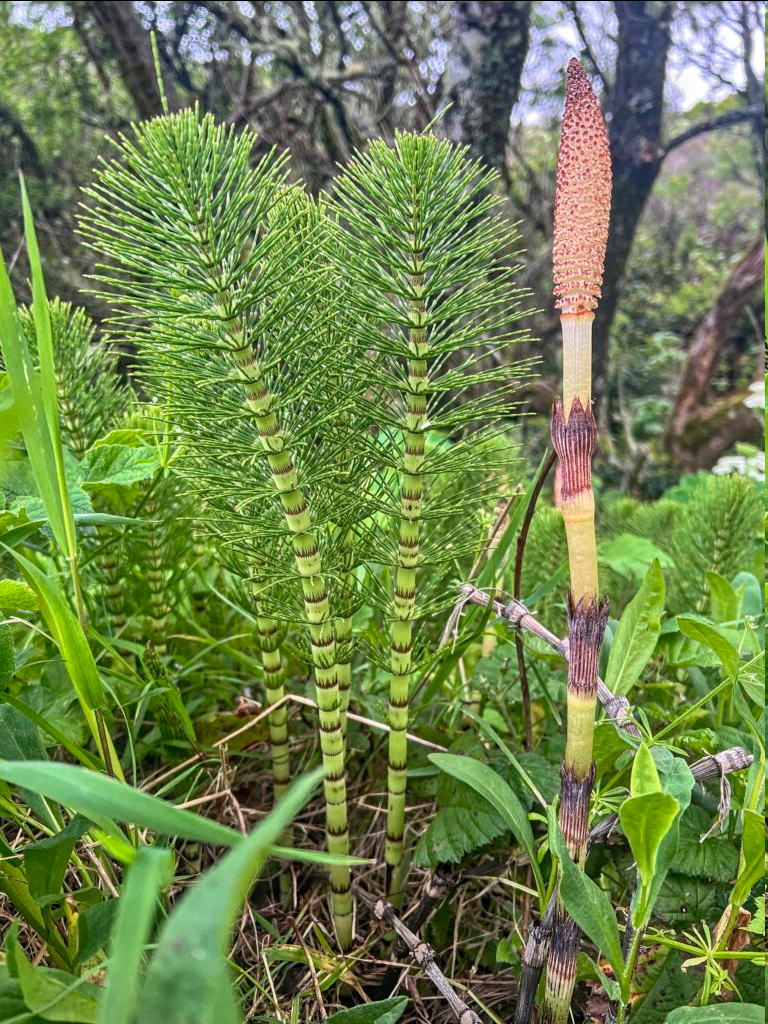
<p>A large perennial plant in the Equisetaceae family, commonly found in moist habitats. It features robust, jointed stems and is characterized by its distinctive tall size and extensive rhizome system. This species reproduces through spores and can grow up to 2 meters tall, often forming dense colonies in wetlands and along riverbanks. </p>
3
New cards
<p><span style="font-family: &quot;Open Sans&quot;; font-size: large;"><strong><u>Gymnocarpium dryopteris - Oak fern</u></strong></span></p>

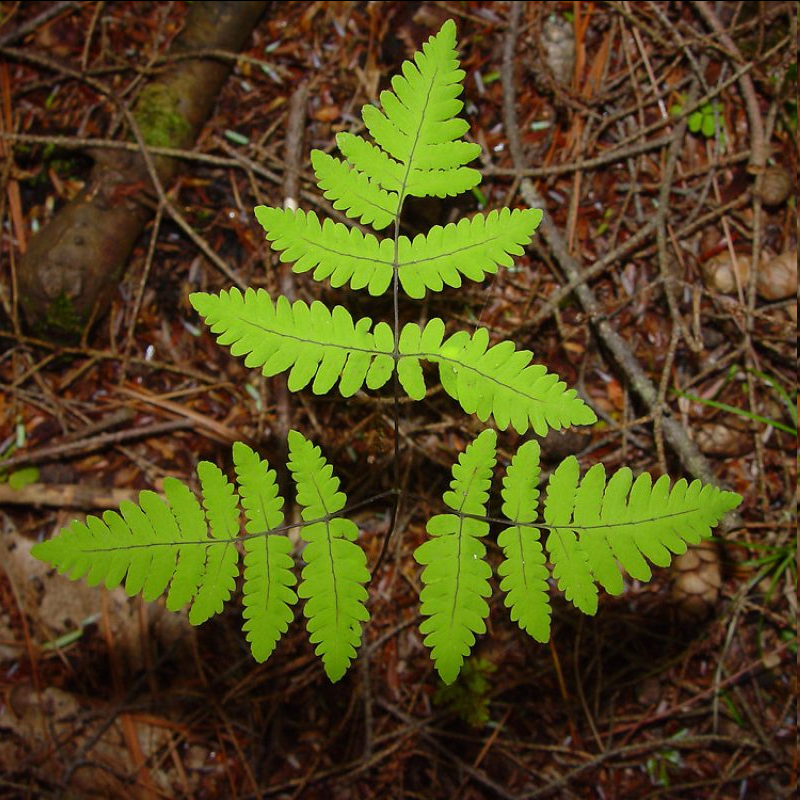
Gymnocarpium dryopteris - Oak fern

A perennial fern in the family Dryopteridaceae, commonly found in wooded areas and on well-drained, acidic soils. It is characterized by its finely divided fronds that resemble lace and can grow up to 50 cm tall. 3 frond structure.
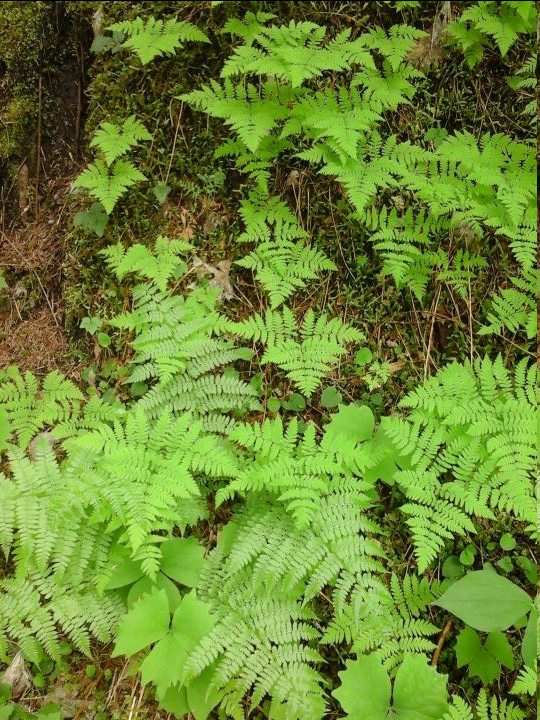
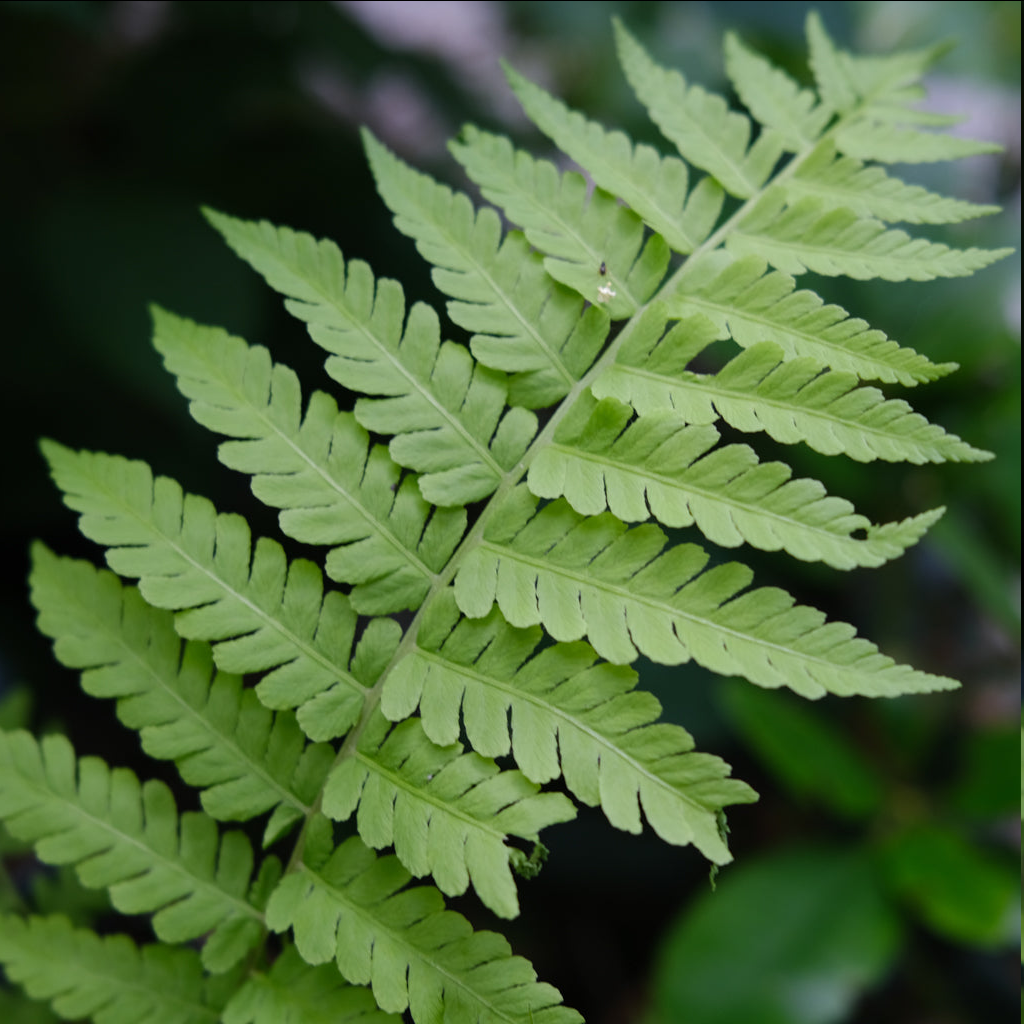
<p>A perennial fern in the family Dryopteridaceae, commonly found in wooded areas and on well-drained, acidic soils. It is characterized by its finely divided fronds that resemble lace and can grow up to 50 cm tall. 3 frond structure.</p>
4
New cards
<p><span style="font-family: &quot;Open Sans&quot;;">Matteuccia struthiopteris - Ostrich fern</span></p>

Matteuccia struthiopteris - Ostrich fern

A perennial fern belonging to the family Onocleaceae, commonly found in moist, shaded areas. It is characterized by its large, feathery fronds that can grow up to 2 meters tall, giving it a distinctive appearance.
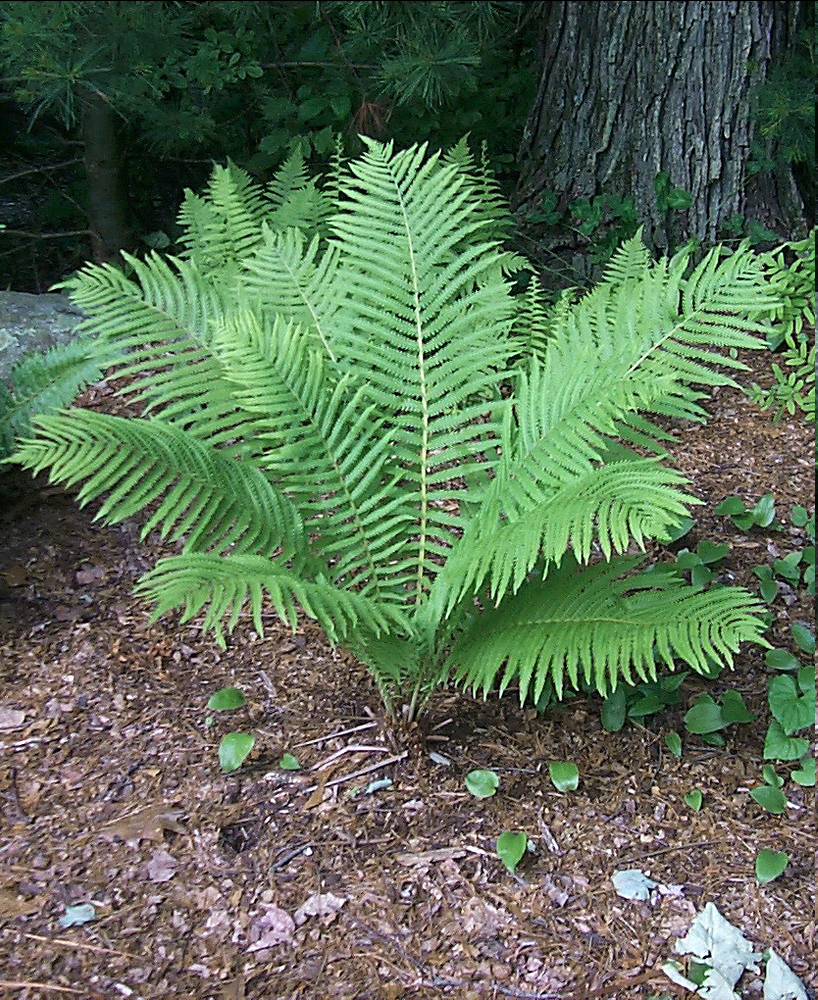
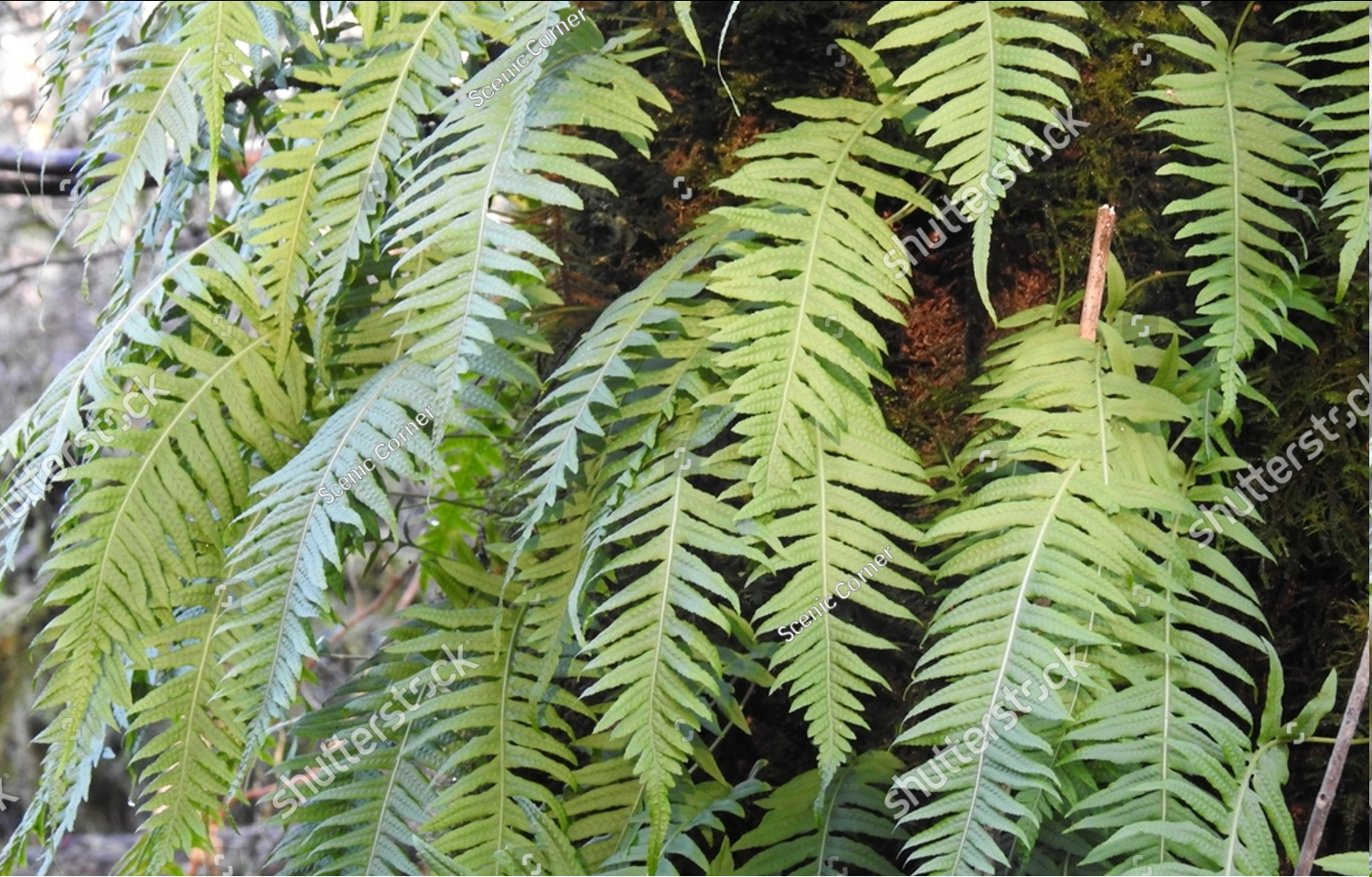
<p></p><p>A perennial fern belonging to the family Onocleaceae, commonly found in moist, shaded areas. It is characterized by its large, feathery fronds that can grow up to 2 meters tall, giving it a distinctive appearance.</p>
5
New cards
<p><span style="font-family: &quot;Open Sans&quot;;">Polypodium glycyrrhiza - Licorice fern</span></p>

Polypodium glycyrrhiza - Licorice fern

This fern features long, slender fronds that can grow up to 60 cm tall, and its leaves are typically deeply lobe
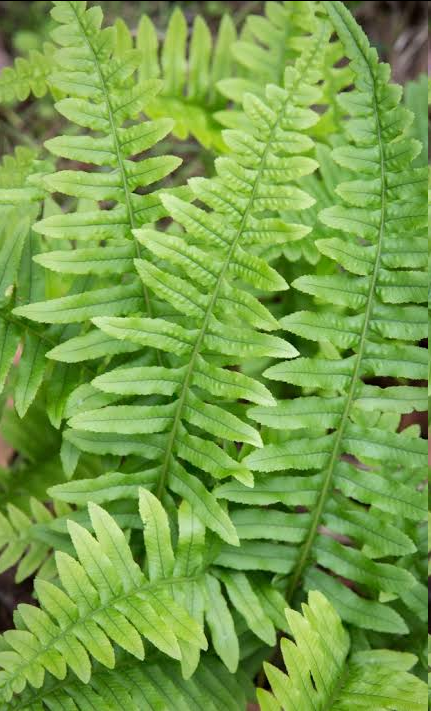
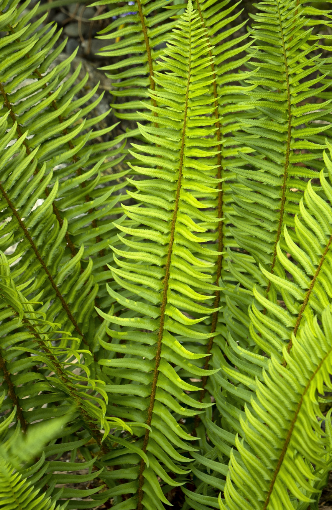
<p>This fern features long, slender fronds that can grow up to 60 cm tall, and its leaves are typically deeply lobe</p>
6
New cards
<p><span style="font-family: &quot;Open Sans&quot;;">Polystichum munitum - Sword fern</span></p>

Polystichum munitum - Sword fern

This perennial fern is part of the Dryopteridaceae family and is commonly found in temperate regions, particularly in moist, shaded forest understories. It is characterized by its tall, arching fronds that can reach up to 1.5 meters in length. The fronds have a distinctive sword-like shape, with a glossy green appearance.
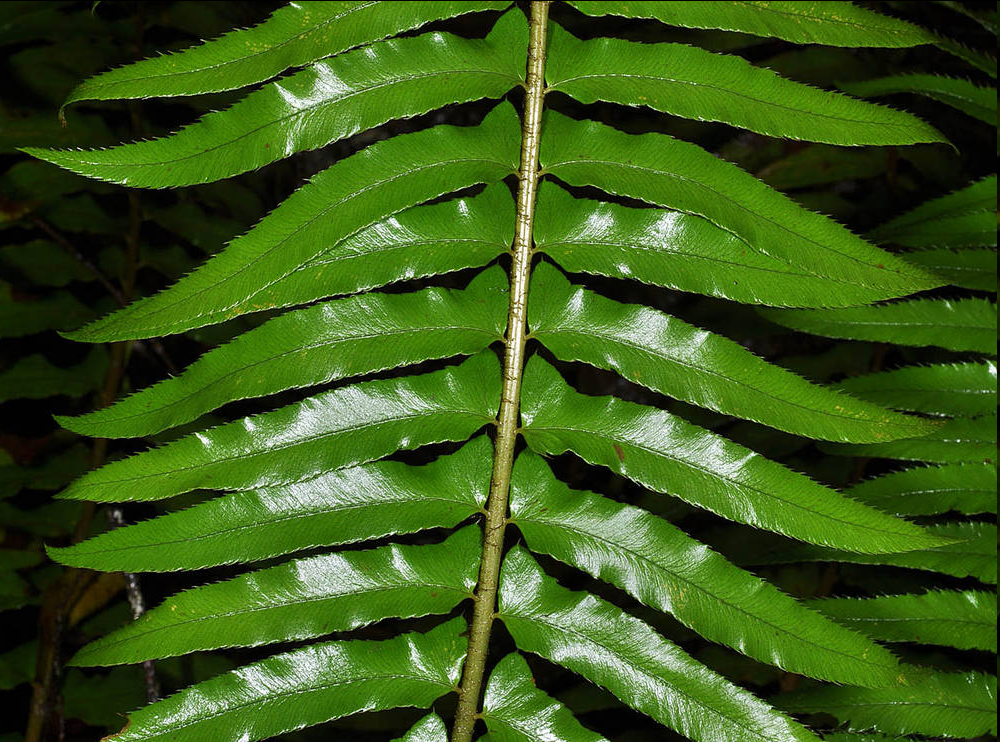
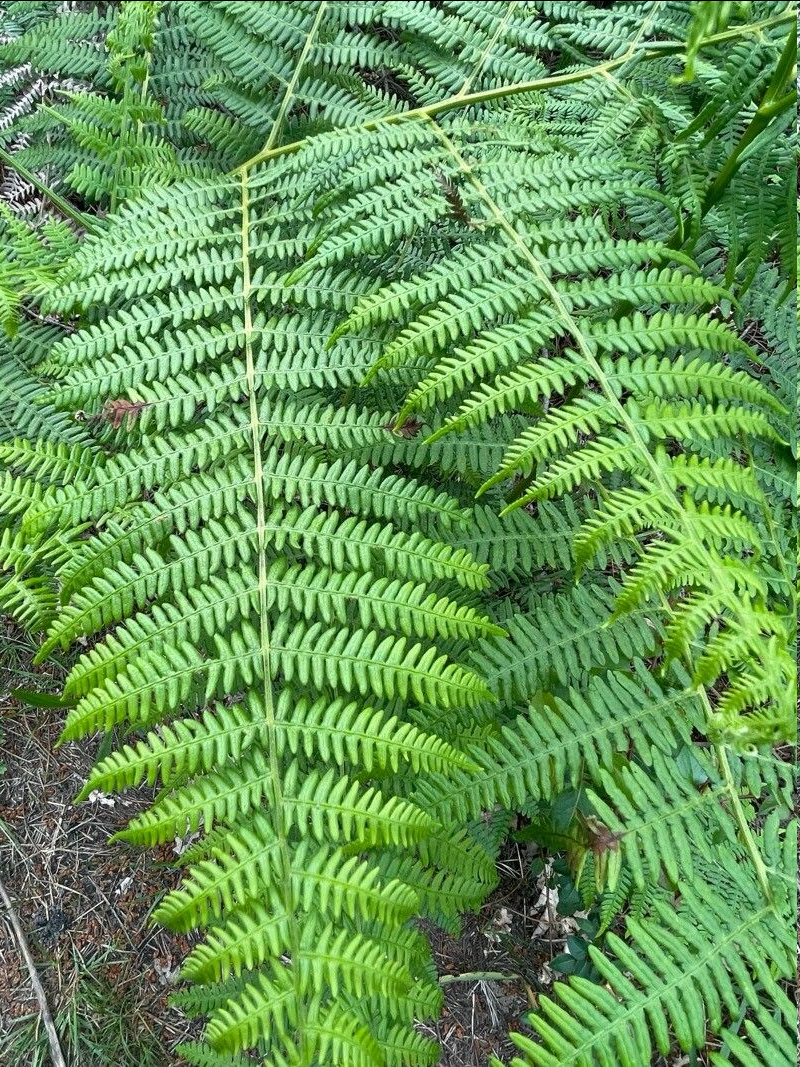
<p>This perennial fern is part of the Dryopteridaceae family and is commonly found in temperate regions, particularly in moist, shaded forest understories. It is characterized by its tall, arching fronds that can reach up to 1.5 meters in length. The fronds have a distinctive sword-like shape, with a glossy green appearance.</p>
7
New cards
<p><span style="font-family: &quot;Open Sans&quot;;">Pteridium aquilinum - Bracken fern</span></p>

Pteridium aquilinum - Bracken fern

A widespread perennial fern found in a variety of habitats, particularly in temperate and subtropical regions. This species is notable for its large, triangular fronds that can reach up to 2 meters in height and have a distinctive, feathery texture. The leaves are composed of numerous smaller leaflets arranged in a pattern that resembles a hand.
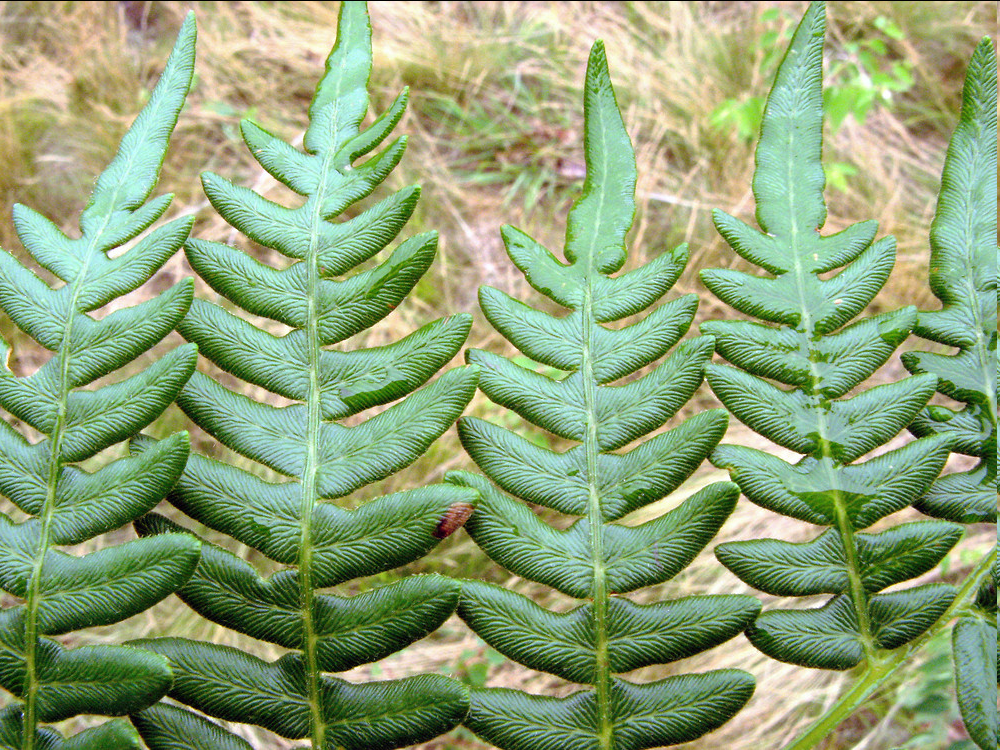
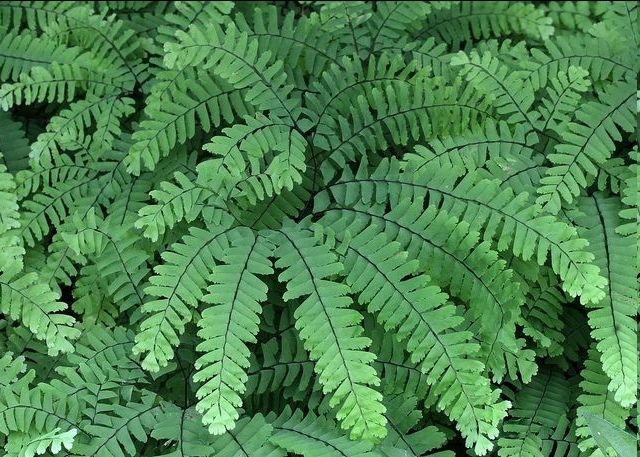
<p>A widespread perennial fern found in a variety of habitats, particularly in temperate and subtropical regions. This species is notable for its large, triangular fronds that can reach up to 2 meters in height and have a distinctive, feathery texture. The leaves are composed of numerous smaller leaflets arranged in a pattern that resembles a hand. </p>
8
New cards
<p>Adiantum pedatum- Northern Maidenhair</p>

Adiantum pedatum- Northern Maidenhair

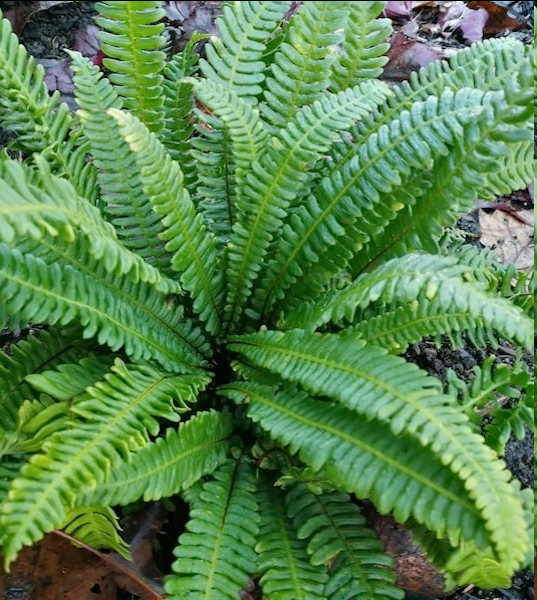
The fine textured fronds stand up to 2 feet high with an overall delicate appearance. The stems are black or dark purple, usually hairless and occasionally covered with whitish bloom. The frond divides into two blades each with 2 – 9 leaflets (pinnae) arranged in a shape commonly described as horse-shoe, semi-circle, or C-shaped. The closest leaflets to the main stem are the largest and become progressively shorter as they approach the tip.
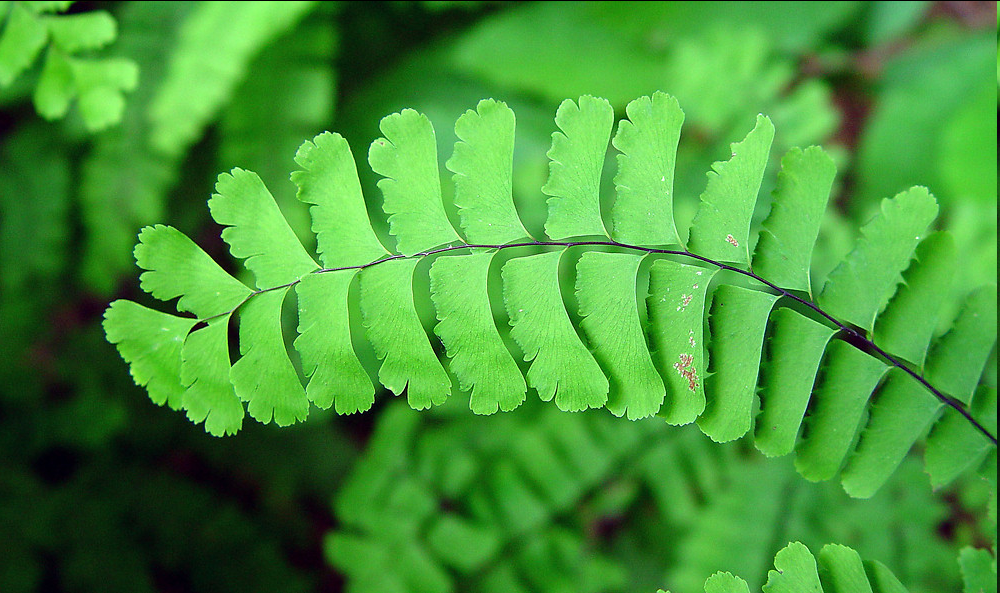
<p>The fine textured fronds stand up to 2 feet high with an overall delicate appearance. The stems are black or dark purple, usually hairless and occasionally covered with whitish bloom. The frond divides into two blades each with 2 – 9 leaflets (pinnae) arranged in a shape commonly described as horse-shoe, semi-circle, or C-shaped. The closest leaflets to the main stem are the largest and become progressively shorter as they approach the tip.</p>
9
New cards
<p><span style="font-family: &quot;Open Sans&quot;; font-size: large;"><strong><u>Struthiopteris spicant - Deer fern</u></strong></span></p>

Struthiopteris spicant - Deer fern

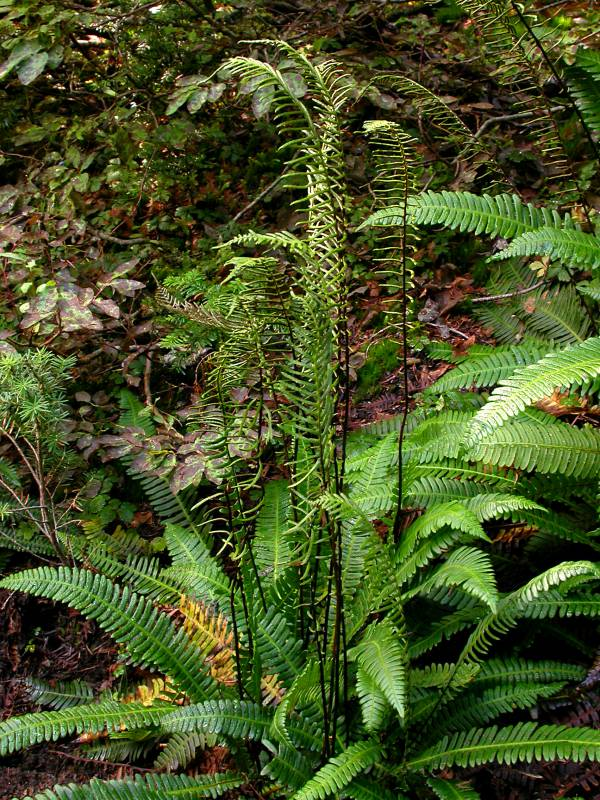
a resilient, evergreen Pacific Northwest native that thrives in damp, shaded forest understories. A key identifying feature is its dimorphic fronds—it produces flat, dark-green sterile leaves that hug the ground, and stiff, much taller, vertical fertile leaves in the center for spore release.
<p>a resilient, evergreen Pacific Northwest native that thrives in damp, shaded forest understories. A key identifying feature is its dimorphic fronds—it produces flat, dark-green sterile leaves that hug the ground, and stiff, much taller, vertical fertile leaves in the center for spore release.</p>
10
New cards
<p><span style="font-family: &quot;Open Sans&quot;; font-size: large;"><strong><u>Cystopteris fragilis - Fragile fern</u></strong></span></p>

Cystopteris fragilis - Fragile fern

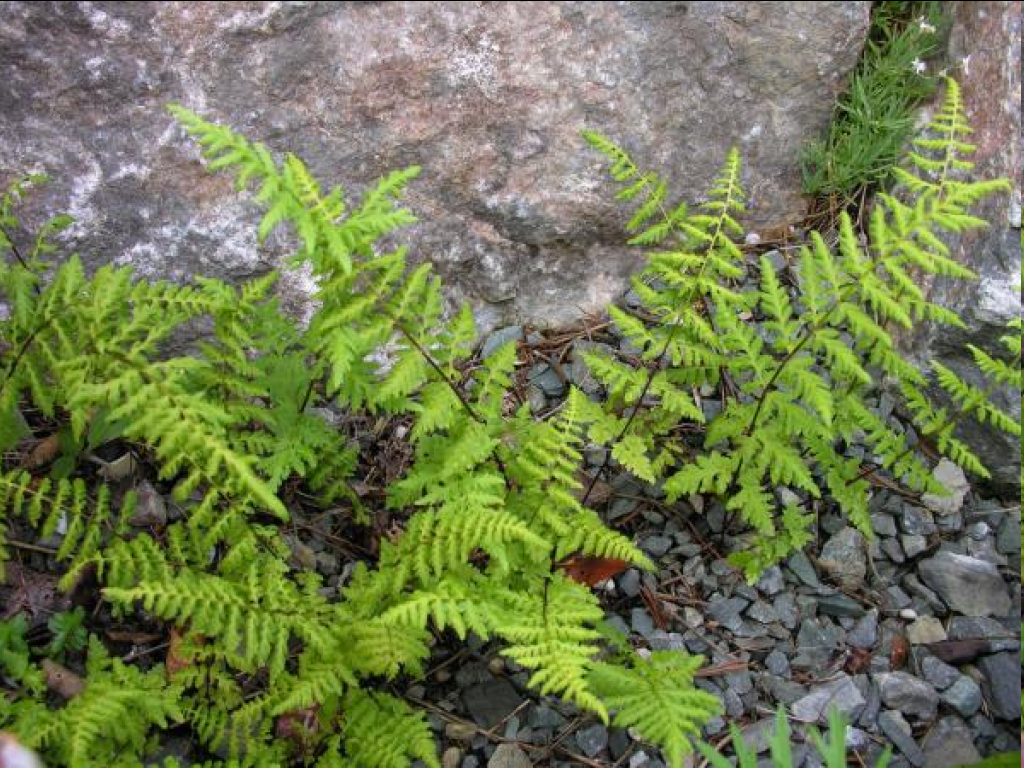
The subject plant is a small, deciduous, rock-dwelling species with a worldwide distribution, found in shady crevices, cliffs, and talus slopes. It has delicate, lacy, triangular-lanceolate fronds measuring roughly 10 cm to 40 cm in length. Its stalks are noticeably brittle and easily break.
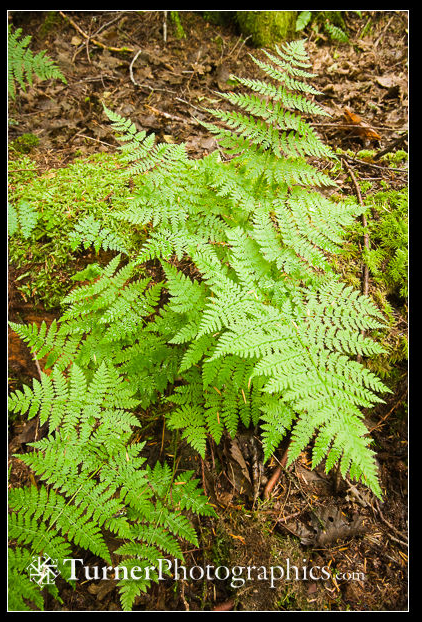
<p><span>The subject plant is a small, deciduous, rock-dwelling species with a worldwide distribution, found in shady crevices, cliffs, and talus slopes</span>. It has delicate, lacy, triangular-lanceolate fronds measuring roughly 10 cm to 40 cm in length. Its stalks are noticeably brittle and easily break.</p>
11
New cards
<p><span style="font-family: &quot;Open Sans&quot;; font-size: large;"><strong><u>Dryopteris expansa - Spiny Wood fern</u></strong></span></p>

Dryopteris expansa - Spiny Wood fern

This northern forest perennial produces clusters of delicate, broadly triangular fronds that taper to a fine point. The leafy blades are intricately divided into lacy, three-part leaflets. Its lower stalks are distinctly covered in thin, chaffy, brown or golden-orange scales
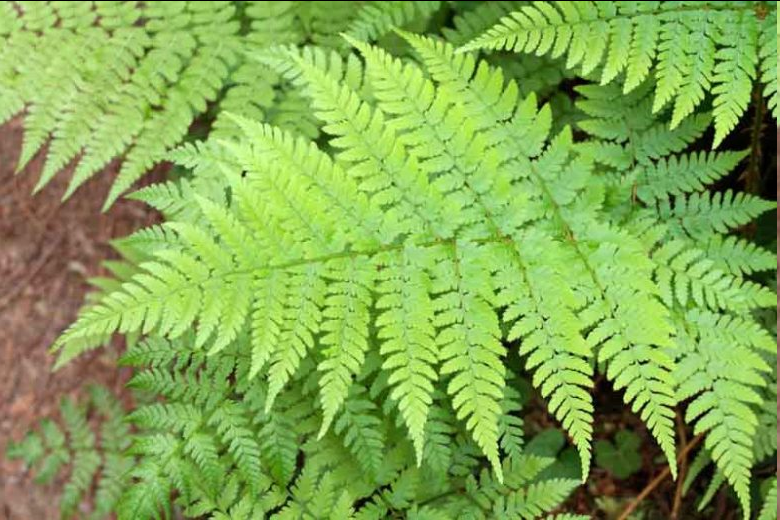
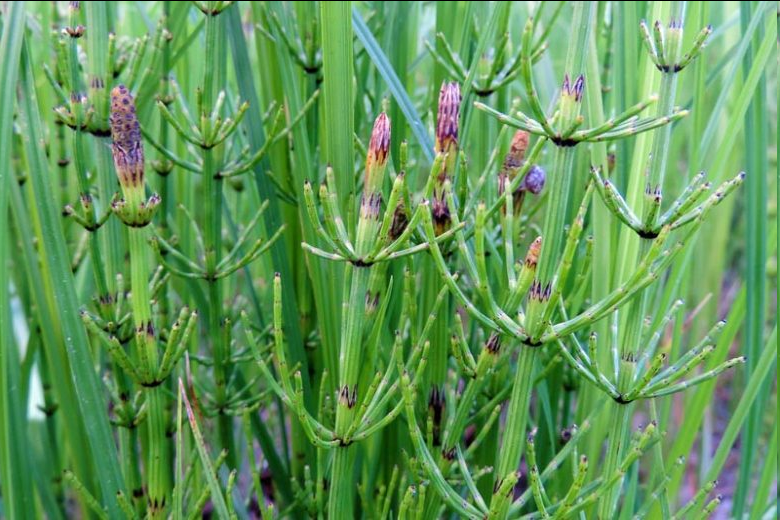
<p>This northern forest perennial produces clusters of delicate, broadly triangular fronds that taper to a fine point. The leafy blades are intricately divided into lacy, three-part leaflets. Its lower stalks are distinctly covered in thin, chaffy, brown or golden-orange scales</p>
12
New cards
<p>Equisetum fluviatile (Water Horsetail)</p>

Equisetum fluviatile (Water Horsetail)

an ancient, perennial wetland plant known for its bamboo-like, hollow green stems. It thrives in shallow waters, marshes, and lake margins across the temperate Northern Hemisphere. The plant is particularly recognizable by the very large central cavity that takes up the majority of the stem's diameter, making the stalk easily compressible when squeezed
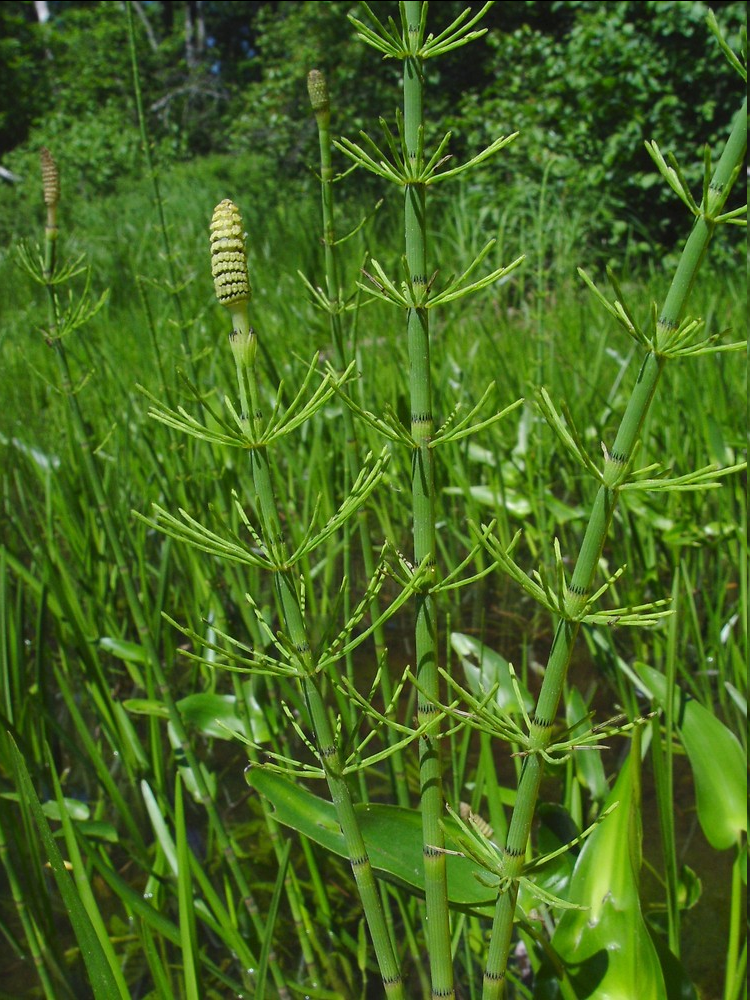
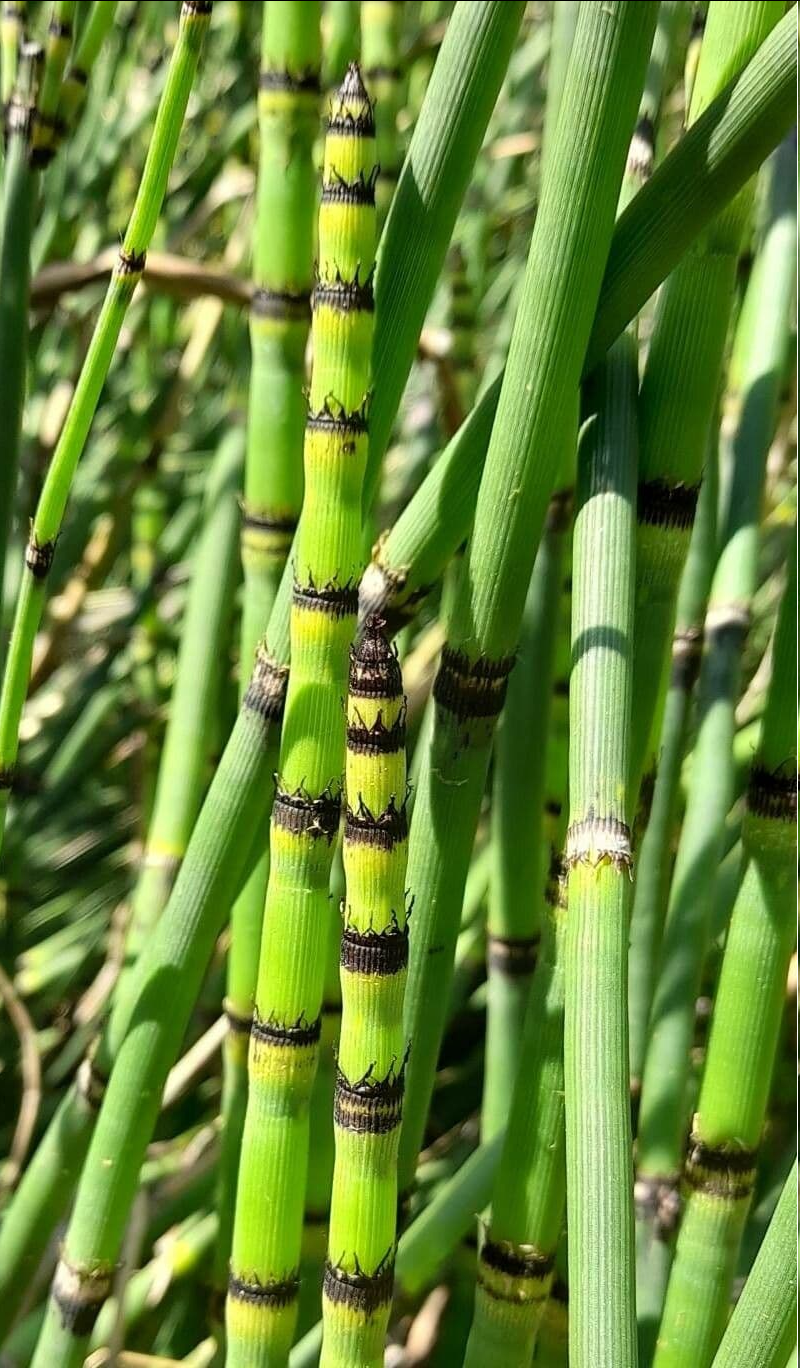
<p>an ancient, perennial wetland plant known for its bamboo-like, hollow green stems. It thrives in shallow waters, marshes, and lake margins across the temperate Northern Hemisphere. The plant is particularly recognizable by the very large central cavity that takes up the majority of the stem's diameter, making the stalk easily compressible when squeezed</p>
13
New cards
<p><span style="font-family: &quot;Open Sans&quot;; font-size: large;"><strong><u>Equisetum hyemale - Scouring rush</u></strong></span></p>

Equisetum hyemale - Scouring rush

This plant is a primitive, evergreen perennial fern ally that thrives in moist to wet environments, spreading aggressively via deep rhizomes. It features rigid, hollow, bamboo-like green stems separated by black or ash-gray nodes. The stems are highly abrasive due to high silica content.
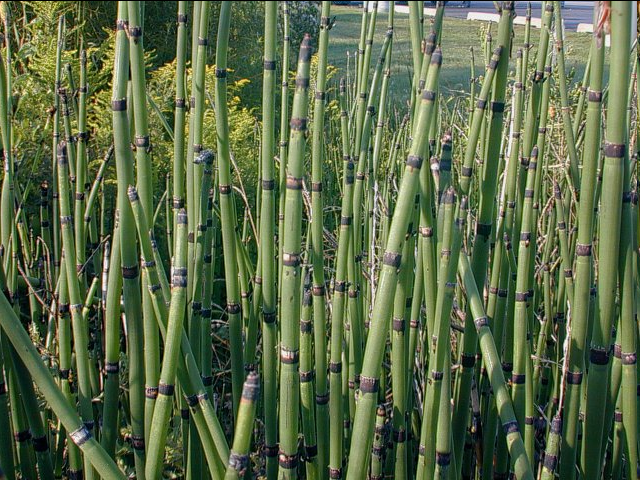
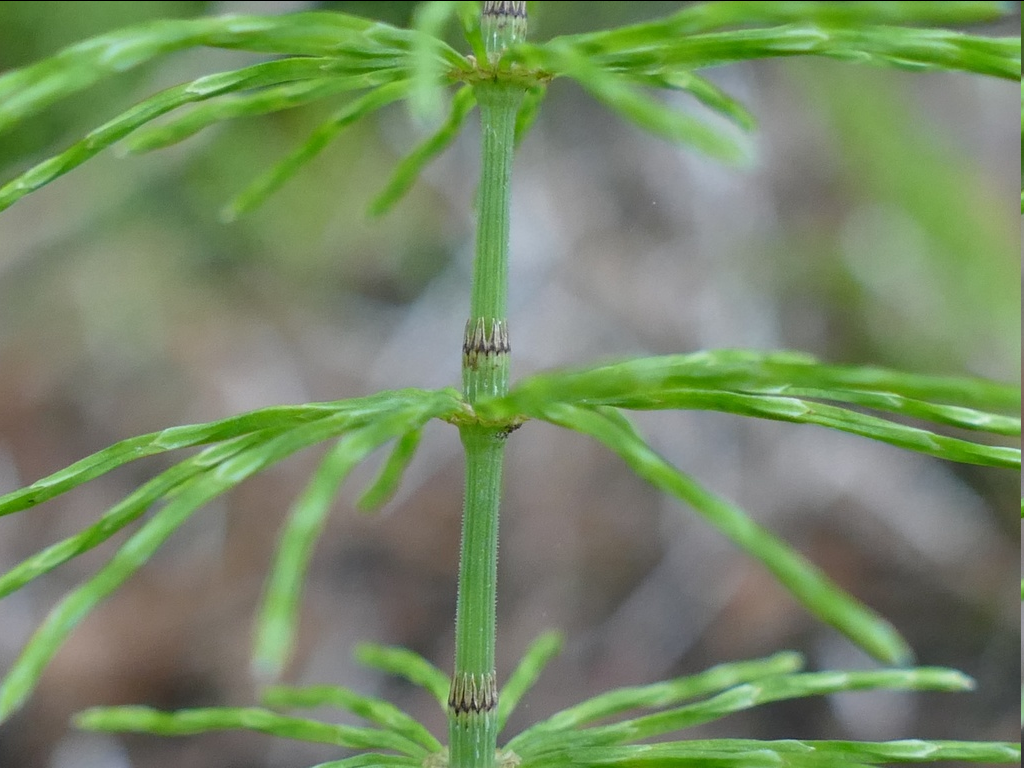
<p><span>This plant is a primitive, evergreen perennial fern ally that thrives in moist to wet environments, spreading aggressively via deep rhizomes</span>. It features rigid, hollow, bamboo-like green stems separated by black or ash-gray nodes. The stems are highly abrasive due to high silica content.</p>
14
New cards
<p><span style="font-family: &quot;Open Sans&quot;; font-size: large;"><strong><u>Equisetum pratense - Meadow Horsetail</u></strong></span></p>

Equisetum pratense - Meadow Horsetail

An ancient, spore-bearing perennial, this plant features slender, jointed, hollow main stems. Sterile stalks reach up to 50 cm in height and produce delicate, horizontal to drooping branches with three or four teeth on the sheaths. It thrives in damp, shaded habitats like forest edges and streambanks.
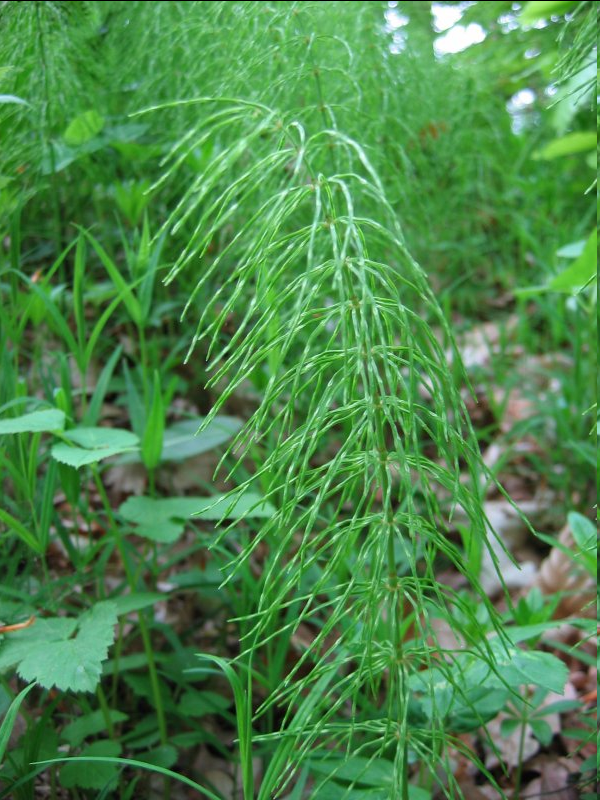
<p><span>An ancient, spore-bearing perennial</span>, this plant features slender, jointed, hollow main stems. Sterile stalks reach up to 50 cm in height and produce delicate, horizontal to drooping branches with three or four teeth on the sheaths. It thrives in damp, shaded habitats like forest edges and streambanks.</p>
15
New cards
<p><span style="font-family: &quot;Open Sans&quot;;">Athyrium filix-femina - Lady fern</span></p>

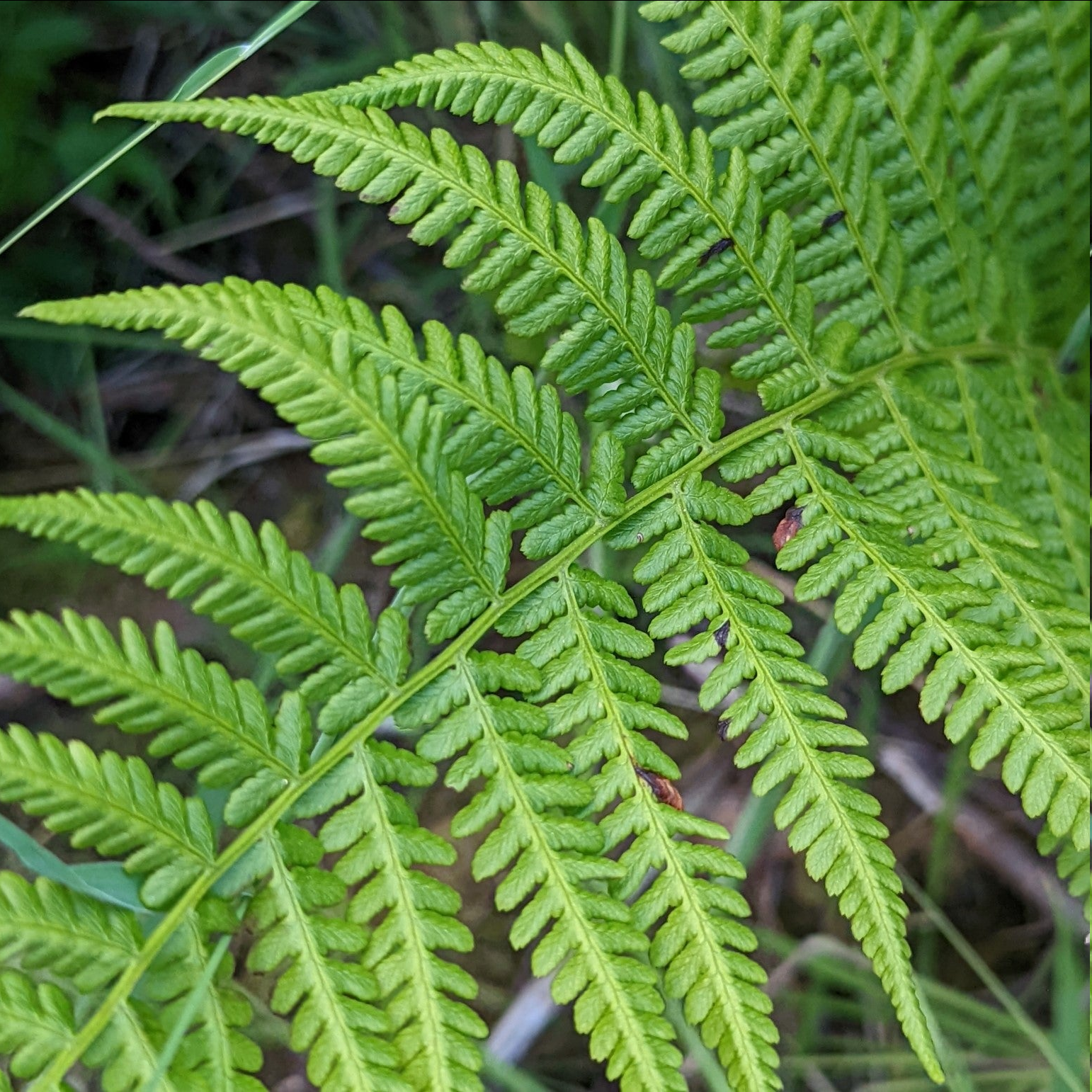
Athyrium filix-femina - Lady fern

This plant is a large, deciduous, perennial fern that forms dense, shuttlecock-like clumps. It features bright yellow-green, lacy, arching fronds that can grow up to 90 cm tall and taper at both ends. Its stalks range from green to reddish-purple, and its undersides uniquely contain curved or horseshoe-shaped spore clusters. [1, 2, 3, 4, 5, 6]

<p>This plant is a large, deciduous, perennial fern that forms dense, shuttlecock-like clumps. It features bright yellow-green, lacy, arching fronds that can grow up to 90 cm tall and taper at both ends. Its stalks range from green to reddish-purple, and its undersides uniquely contain curved or horseshoe-shaped spore clusters. [1, 2, 3, 4, 5, 6]</p>



