Health Systems and Basic Economics
 Call Kai
 Learn
Learn Practice Test
 Spaced Repetition
 Match
Match Flashcards
 Knowt Play
1/33

Earn XP
Description and Tags
Week 4
Name | Mastery | Learn | Test | Matching | Spaced | Call with Kai | Chat |
|---|
No analytics yet
Send a link to your students to track their progress
34 Terms
health system
people, institutions and resources, arranged together in accordance with establish policies, to improve the health of the population they serve
Primary purpose: to promote, restore, and/or maintain health
a ‘good health system’
delivers quality service to all people, when and where they need them
robust financing mechanism
a well-trained and adequately paid workforce
reliable information on which to base decisions and policies
infrastructure: well-maintained facilities and logistics to deliver quality medicines and technologies
Functions of Health Care Systems
Financing: How is health care paid for?
Funding: the way provinces and territories’ health plans pay the provider for care
Delivery: the method used to provide health care to the public
Canadian Health System
A decentralized, universal, publicly funded health system called Canadian Medicare.
roles and responsibilities shared between provincial, territorial and federal governments
Funded and administered by the country’s 13 provinces and territories
each has own insurance plan, and each receives cash assistance from the federal government on a per-capita basis. Benefits and delivery approaches vary.
Canada Health Act
Canadians have reasonable access to medically necessary hospital, physician and diagnostic services without paying out of pocket.
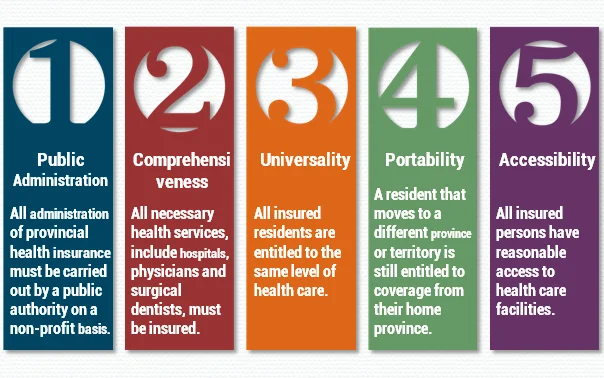
Private Health Insurance
Covers services excluded from public reimbursement, such as vision and dental care, prescription drugs, rehabilitation services and home care
Roles and Responsibilities of the Federal Government
Contributes funding support to provinces and territories through the Canada Health Transfer
Support care delivery for health services to specific groups: e.g. Members of the Canadian Forces, First Nations/Inuit, living on reserves, inmates in federal institutions, refugee clamants
Sets and administers national standards for the health care system through the CHA
Funding
Main form for physicians is fee-for-service, where they are paid separately for each service they provide
Hospitals and public health are funded with global budgets (lump-sum payment)
Community services are funded on a fee-for-services basis or by fees per day
Health Care Funding for Indigenous Communities
Services for Indigenous peoples are provided through FPT governments and third-party organizations
Health programs and services for on-reserve Indigenous peoples are funded and delivered through the First Nations Inuit Health Branch (FNIHB) of Indigenous Services Canada (ISC)
Basic framework of Services
Primary health care services
Secondary “ “ “ (hospitals, LTC, community health)
Additional health services (prescription drugs, vision, dental, counselling, PT/OT) — these may be part of primary/secondary services, but they are typically not included in public insurance and are paid through private insurance
Service Classifications
public health services/prevention services
home and community care services
hospital care services, continuing care and rehab
Romanow Report
11 key recommendations:
sustaining service, needs and resources, new governance
sustaining Medicare
more comprehensive use of information management and technology
investing in health care providers
primary health care and prevention
improving access and ensuring quality
rural and remote communities
home care services
prescription drug
Aboriginal health
globalization
Kirby Report
explored ways to expand publicly funded health services and privatization
scarcity
resources exist in finite quantities, and consumption demand is greater than existing resources
choice
decisions are made about which resources to produce and consume among options
preference
individual and societal values and preferences influence the decisions that are made
cost
(For the provider), the total amount incurred in providing a service, including procedures, therapies, and medications. The actual cost is typically lower than the price paid
price
(also fee, rate, Tariff) Financial amount that a purchaser (i.e. health insurer) or individual pays to a provider to deliver a service
Direct Costs
health professionals (fees)
hospital costs
medication costs
supplies and equipment
cost of treating side effects and complications
Indirect Costs
lost productivity (patient and caregiver)
caregiver/family burden (physical and emotional)
lost time at unpaid work (caregiver)
cost to the employer to hire and retain a replacement worker
childcare costs
transportation
cost effectiveness
The resources used to provide care services are scarce. Decisions about the services to be provided and who will receive these services usually have resources and cost implications
→ about whether you are achieving the best outcomes for what you are paying
cost efficiency
focuses on using the least amount of resources to achieve a goal
avoiding waste (including waste of equipment, supplies, and people) or using healthcare resources to get the best value for the money
focus on input verses value
value in healthcare
measured by the health outcomes achieved, not the volume of services delivered, and shifting focus from volume to value is a central challenge.
Budgeting: Transparency
a budget must align with the strategic directions and goals of the organization
Budgeting: Accountability
every manager must understand what’s included in their budget so they can be accountable
Budgeting: Sustainability
we need to be able to plan for times of financial constraint, find ways to be more effective and efficient, and plan for the long term
budgets
a financial plan for income (revenue) and expenditures (amount of money spent) in a one year period
monitored monthly for variance - differences between the project and actual costs
operating budgets
account for income and expenses associated with day-to-day activity within a department or organization (e.g. equipment, supplies, staffing, and other indirect costs such as maintenance costs)
capital budgets
account for the purchase of major capital items such as physical plant (infrastructure, buildings, etc) and equipment (e.g., C scan; smart infusion pumps) that provide long-term value over several years
budget preparation
demographics
regulatory influences
strategic plans
department scope of service & goals
history
budget development
revenue — income generated through a variety of means
expenses — determined by identifying the costs associated with the delivery of service; resources used by an organization to deliver services that may include labour, supplies, equipment, space, utilities, and miscellaneous items
practices to decrease HR costs
efficient recruitment
managing people; employee engagement:
ensure the right skill mix (RNs, LPNs, HCAs) to care for our patient
assess workload
absentees & work-life balance
manage disruptive behaviour
practices to decrease drug costs
medication reconciliation on admission
drug utilization and stewardship
antimicrobial stewardship
practices to decrease supply costs
consider cost of dressing and the frequency of changing the dressings, choosing the most appropriate product
consider what supplies are brought into patient rooms — many are discarded at discharge. treatments might change and result in the waste of products
be cognizant of wastage in case of emergencies
take only what you need from the stock room