ANS and Visceral Reflexes Outline
 Studied by 0 people
 Call Kai
 Learn
Learn Practice Test
 Spaced Repetition
 Match
Match Flashcards
 Knowt Play
1/37

There's no tags or description
Looks like no tags are added yet.
Name | Mastery | Learn | Test | Matching | Spaced |
|---|
No study sessions yet.
38 Terms
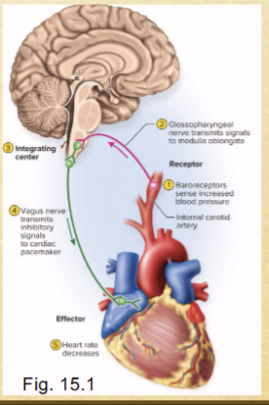
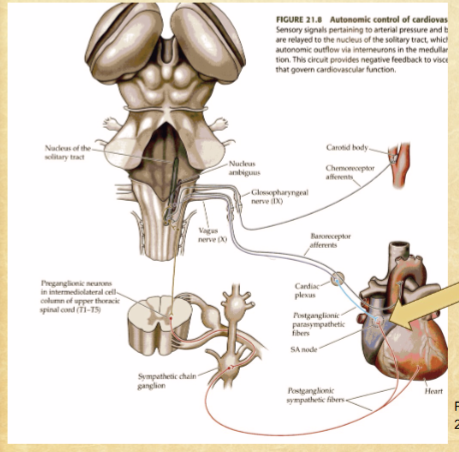
visceral reflex arc example (high BP)
detected by stretch receptors
carried by afferent neuron to CNS
response via efferent to heart
heart slows and BP lowers
homeostasis (negative feedback)
ANS controls
glands, cardiac muscle, and smooth muscle
sympathetic division of ANS prepares body for energy
consumption; exercise, trauma, “fight or flight”
increases HR, BP, etc.
parasympathetic division of ANS prepares body for energy
restoration
digestion and waste elimination
“rest and digest”
sympathetic tone
keeps BV partially constricted, maintains BP
parasympathetic tone
maintains smooth muscle tone in intestines
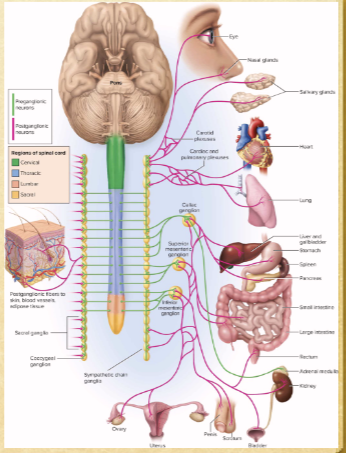
autonomic nervous system has 2 motor neurons explain these and what it effects and S vs P
preganglionic neuron is myelinated and is much longer in parasympathetic system
postganglionic neuron is unmyelinated and effects smooth and cardiac muscle and glands
Preganglionic neurons exit SpC from (sympathetic)
thoracic or lumbar regions
each chain ganglion in sympathetic division are connected to spinal nerve by 2 branches called (describe these rami)
communicating rami
preganglionic fibers: myelinated fibers enter ganglion via white communicating ramus
postganglionic fibers: unmyelinated fibers leave ganglion via gray communicating ramus
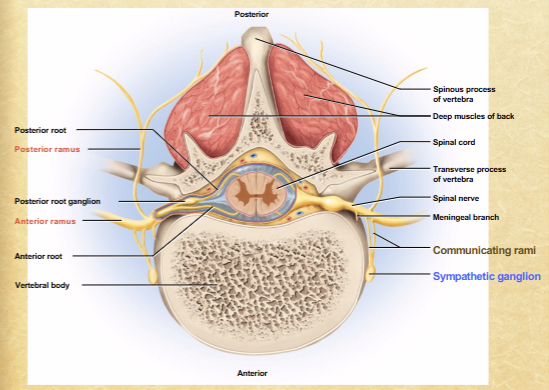
nerve fibers leave sympathetic chain (spinal nerve route)
(synapses right away)
effectors: sweat glands, piloerector muscles, BVs of skin and skeletal muscles
nerve fibers leave sympathetic chain (sympathetic nerve route)
(travels up the chain and synapses higher up)
effector: iris, heart, lungs, esophagus, and thoracic BVs
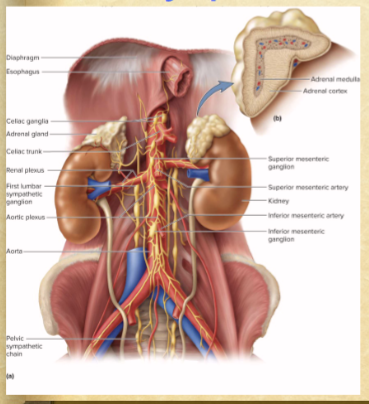
nerve fibers leave sympathetic chain (splanchnic nerve route)
(passes through chain and synapses on collateral ganglion)
effectors: liver, spleen, adrenal glands, stomach, kidney, etc.
paired adrenal glands include
adrenal cortex- secretes steroid hormones
adrenal medulla- like sympathetic ganglion
modified postganglionic neurons
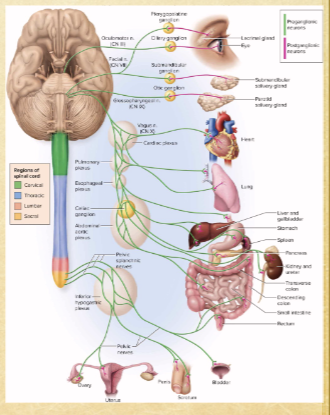
Parasympathetic division comes from… and travel in…
brainstem and sacral regions of SpC and fibers travel in cranial and sacral nerves
origin of long preganglionic neurons in parasympathetic division
midbrain, pons, and medulla (brainstem)
parasympathetic cranial nerves include what 4?
oculomotor nerve
narrows pupil, focuses lens
facial nerve
tear, nasal, and salivary glands
glossopharyngeal nerve
parotid salivary gland
vagus nerve
viscera
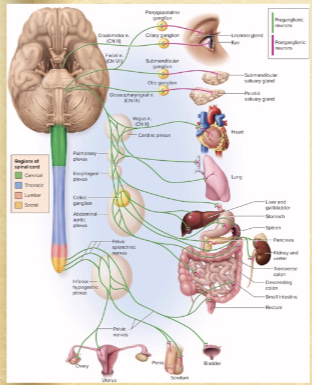
parasympathetic fibers from S2-S4 most form pelvic nerves on target organs like
distal colon, rectum, urinary bladder, reproducing organs
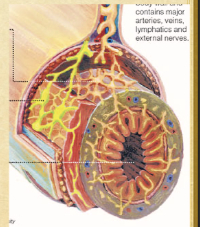
enteric nervous system
3rd autonomic system
innervates smooth muscle and glands
has own ganglia and reflex arcs
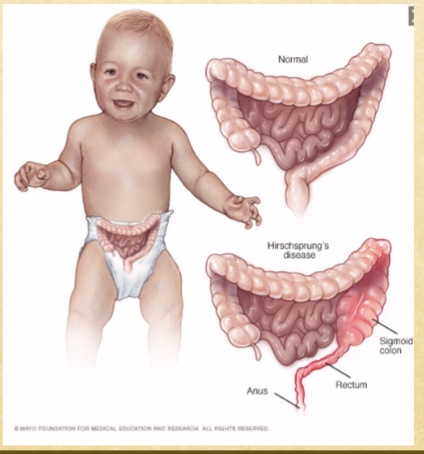
megacolon (Hirschsprung’s)
massive dilation of bowel accompanied by abdominal distension and chronic constipation
2 types of cholinergic receptors (for ACh)
nicotinic receptors- on all ANS postganglionic neurons, adrenal medulla, neuromuscular junctions
muscarinic receptors- cardiac and smooth muscle, gland cells
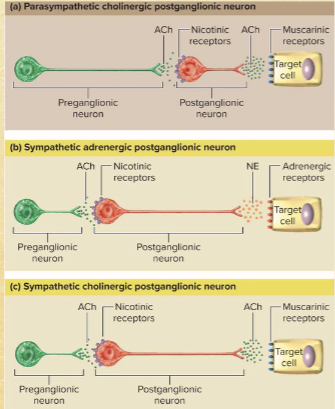
NE secreted by nearly all
sympathetic postganglionic neurons
2 types of adrenergic receptors (for NE)
alpha-adrenergic receptors: two subclasses different second messenger systems
beta-adrenergic receptors: two subclasses cAMP second messenger system
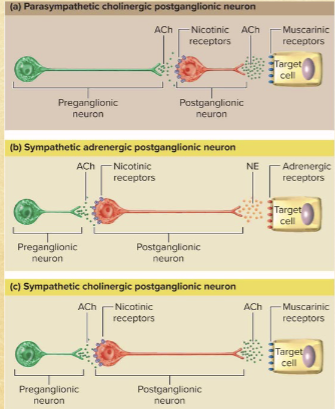
NE only released by
sympathetic division
ACh released by
both S and P
sympathetic effects tend to last…. than parasympathetic
longer
NE by sympathetics persists in synapse and much passes into bloodstream
ACh released by parasympathetics broken down quickly and synapse
dual innervation
most viscera innervated by BOTH sympathetic and parasympathetic divisions
antagonistic effect: oppose each other
cooperative effects: act on different effectors- produce unified overall effect
antagonistic effects- same effector cells
HR: increase (sym) or decreases (para)
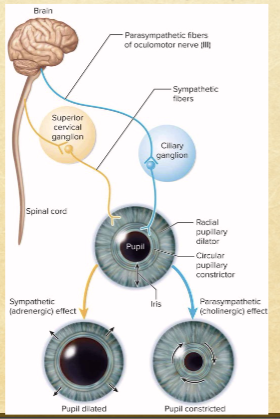
antagonistic effects- different cells
pupillary dilator muscle (sym) dilates pupil
constrictor pupilae (para) constricts pupil
cooperative effects act on different effectors to produce unified effect
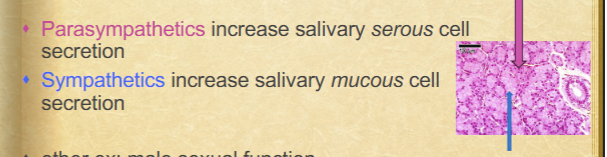
parasympathetics: increase salivary serous cell secretion
sympathetics: increase salivary mucous cell secretion
control without dual innervation (some effectors receive only sympathetic fibers)
adrenal medulla, arrector pili muscles, sweat glands, many BVs
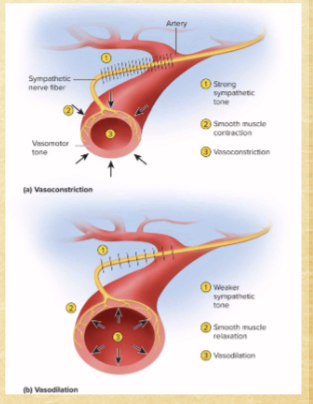
ex: regulation of BP, routes of blood flow
increasing firing frequency (sympathetic vasomotor tone)
vasoconstriction
decrease firing frequency (sympathetic vasomotor tone)
vasodilation
sympathetic can exert opposite effects on target organ through BVs examples (without dual innervation)
vasoconstrict BVs to skin (minimize bleeding)
prioritize BVs to skeletal muscles and heart (like running away from bear)
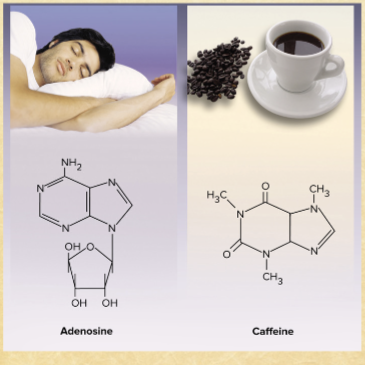
drugs and nervous system can influence ANS (caffeine)
caffeine competes with adenosine receptors because they have similar molecular structures so it combats sleep!
how cerebral cortex influences ANS
anger, fear, anxiety
how hypothalamus influences ANS
visceral motor control- hunger, thirst, s3x
how midbrain, pons, medulla oblongata influences ANS
cardiac and vasomotor control, salivation, swallowing, sweating, bladder, etc.
brain can inhibit consciously
if SpC damaged, smooth muscle of bowel and bladder reverts to autonomic control