anatomy and physiology 1
 Call Kai
 Learn
Learn Practice Test
 Spaced Repetition
 Match
Match Flashcards
 Knowt Play
1/244

There's no tags or description
Looks like no tags are added yet.
Name | Mastery | Learn | Test | Matching | Spaced | Call with Kai | Chat |
|---|
No analytics yet
Send a link to your students to track their progress
245 Terms
Anatomy is the study of?
the study of body structures
Physiology is the study of?
The study of how the body functions
The human body is organized by?
simplest to most complex
a cell is?
the basic structural and functional unit of life
cells work together to form tissues
A tissue is
Groups of similar cells working together to perform a specific function
what are organs
two or more tissue types working together (heart,stomach,brain,lungs)
Organ system are?
Multiple organs working together (digestive system,nervous system,cardiovascular system)
An organism?
the entire living human
C-C-T-O-O-O stands for?
chemical, cellular, tissue, organ, organ system, organize organisms
cell membrane
controls what enters and leaves the cell
Nucleus
Contained DNA, controls activity
Cytoplasm
area inside the cell membrane, but outside the nucleus, where many cell activities occur
Mitochondria
produces energy (ATP)
Ribosomes
makes proteins
what are the 4 primary types of tissues
Epithelial tissue
connective tissue
muscle tissue
nervous tissue
Epithelial tissue
Found on the outside of the body (skin) and on the inside of organs and body structures (digestive tract, blood vessels, etc)
Connective tissue
supports and connects other tissues (bone,blood,fat,tendons & ligaments, cartilage)
Muscle tissue
Main function: Movement
what are the three types of muscle tissue
Skeletal muscle
Cardiac Muscle
Smooth muscle
whats does skeletal muscle do?
moves your body
what does Cardiac Muscle do?
Makes the heart beat
what does smooth muscle do?
Moves things through the organs
Nervous tissue
Main function: communication and control. Found mainly in the Brain,spinal cord and nerves
how many major organ systems are there?
11
integumentary
protects the body
Skeletal
support and protection
Muscular
movement
Nervous
Fast communication and control
endocrine
hormones and regulation
cardiovascular
transports blood
Lymphatic/immune
fights infection and returns fluid
respiratory
brings in oxygen and removes Co2
Digestive
breaks down food and absorbs nutrients
urinary
removes waste and regulates fluids
reproductive
produce sex cells and allows reproduction

anatomical position
the standard position when describing the body. Why? it gives everyone a standard reference point when describing where something is located
Example of anatomical position
The heart is medial to the lungs

superior
above/toward the head (the head is superior to the chest)

Inferior
Below/toward the feet (the stomach is inferior to the heart)

anterior
front of the body (the sternum is anterior to the heart)

posterior
back of the body (the spine is posterior to the heart

medial
toward the middle of the body( the nose was medial to the eyes)

Lateral
away from the middle/toward the side(the ears are lateral to the eyes)

proximal
closer to where a limb attaches to the body (the elbow is proximal to the wrist )

distal
farther from where a limb attaches to the body (the fingers are distal to the elbow)
superficial
closer to the surface of the body (the skin is superficial to the muscle)
deep
farther from the surface of the body (the muscles are deep to the skin)

Sagittal plane
Divides the body into left and right portions
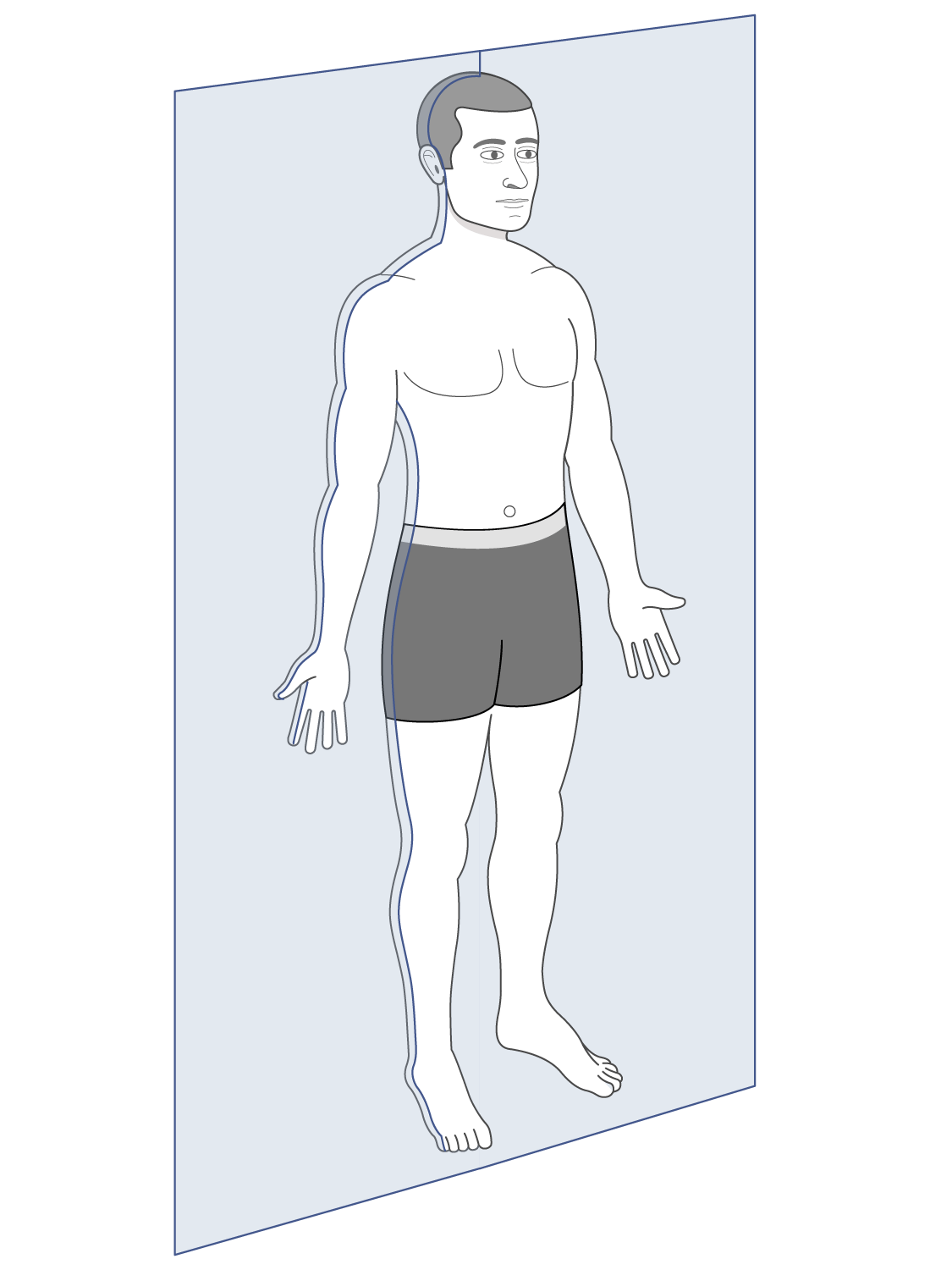
Frontal (coronal) plane
divides the body into front and back portions

Transverse plane
divides the body into upper and lower portions
what is a body cavity
A body cavity is a sace inside the body the contains and protects internal organs
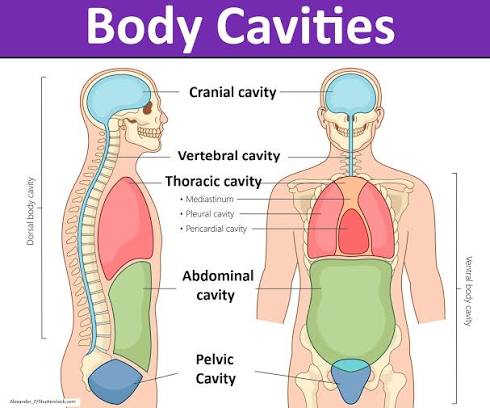
what are the two major body cavities
dorsal and ventral
What does the Dorsal body cavity contain
Located toward the back of the body. Contains the cranial cavity (brain) and Vertebral cavity (spinal cord)
the ventral body cavity is
located toward the front of the body and contains mot of the bodys organs
the ventral is divided into?
thoracic cavity —> heart and lungs
abdominopelvic cavity —→ digestion, urinary, and reproductive organs
The adominal cavity is further divide into
abdominal cavity
pelvic cavity
The Head and neck is divided into 3 regions
Cranial → skull/brain area
Facial → face
cervical → neck
The trunk of the body is divided into what 4 regions
Thoracic → chest
Abdominal → abdominal/belly
Pelvic → pelvis
Dorsal → back
what are the 4 regions of the upper limbs
Brachial → upper arm
Antebrachial → forearm
Carpal → wrist
Manual → hand
what are the 5 regions of the lower limbs
femoral → thigh
Patellar → front of knee
Crural → lower leg
Tarsal → ankle
Pedal→ foot
what are the main functions of the skeletal system?
Supports the body, protects internal organs, helps with movement, stores minerals, and produce blood cells
what does the skeletal system store?
minerals, especially calcium
what does the skeletal system produce
blood cells
what are the major parts of the skeletal system?
bones, cartilage, joints, and ligaments
what does the skull protects?
the brain
what does the rib cage support and protect?
the heart and lungs
what does the spine support and protect?
it supports the body and protects the spinal cord
how does the skeletal system help with movement
bones provide framework that muscles pull on to create movement
what are the main functions of the muscular system?
Produces movement, maintains posture, produces body heat, and moves substances through the body
how does the muscular system help maintain posture?
muscles contract to keep the body in position
how does the muscular system produce body heat?
muscle contractions generate heat
how does the muscular system move substances through the body?
muscle contractions move substances such as food through the digestive tract
what are the 3 major types of muscle ?
skeletal, cardiac, and smooth muscle
what is skeletal muscle?
muscle attached to bones that allows voluntary movement
what does voluntary mean?
you consciously control the movement
where is cardiac muscle found?
in the heart
what does cardiac muscle do?
pumps blood through the body
where is smooth muscle found?
in the wall of organs and blood vessels
what does smooth muscle do?
moves substances through organs and blood vessels
how do the skeletal and muscular systems work together?
bones provide support/framework, while muscle contract and pull on bones to produce movement
which system is responsible for producing movement Skeletal or muscular
both work together, but the muscular system provides the force and the skeletal muscle provides the framework
what is the main function of the nervous system?
it controls and coordinates the body
what does the nervous system do with information it recives
it processes the information
what does the nervous system respond to?
stimuli
how does the nervous system help with movement
it controls movement by sending signals to muscles
what are the 3 major parts of the nervous system
brain, spinal cord, and nerves
what does the brain do?
processes information and controls the body
what does the spinal cord do?
carries messages between the brain and the body
what do nerves do?
carry signals throughout the body
how does the nervous system communicate?
using electrical signals and chemical signals
what is a stimulus?
a change in the environment that the nervous system detects and responds to
what detects a stimulus
sensory nerves
after sensory nerves detect a stimulus, where does the message travel?
to the spinal cord and/ or the brain
what happens after the nervous system receives the message
it processes the information and produces a response
what happens when you touch soemthing hot?
sensory nerves detect it→message travels to the spinal cord/brain → nervous system processes it → muscles respond → you pull your hand away
when you touch something hot, what detects the heat?
sensory nerves
what produces the response of pulling your hand away
muscles responding to nervous system signals
what is the basic job of the nervous system
sense → respond → respond
what carries the message toward the central nerve system (CNS)
nerves
what are the main functions of the cardiovascular system?
transports oxygen, nutrients, hormones, and waste; pumps blood; helps maintain homeostasis; and helps regulate body temp