Orgo 2 Reactions
 Call Kai
 Learn
Learn Practice Test
 Spaced Repetition
 Match
Match Flashcards
 Knowt Play
1/26

There's no tags or description
Looks like no tags are added yet.
Name | Mastery | Learn | Test | Matching | Spaced | Call with Kai | Chat |
|---|
No analytics yet
Send a link to your students to track their progress
27 Terms
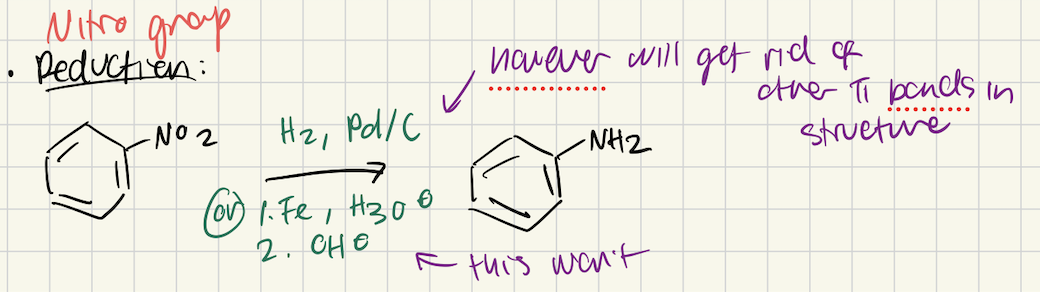
Reduction of a nitro group
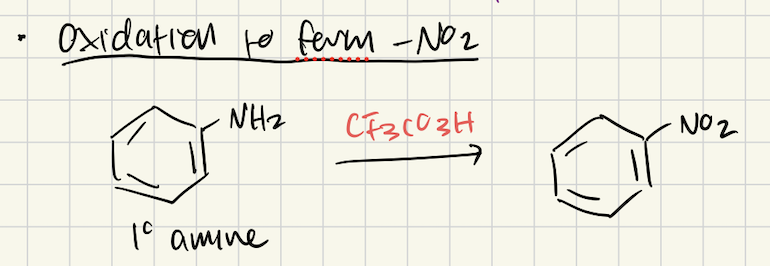
Oxidation of an amine group
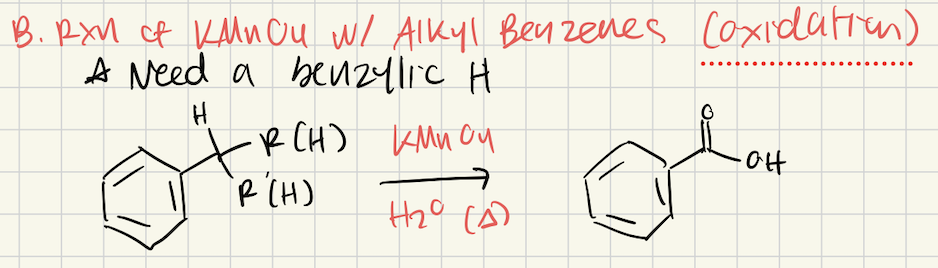
Reaction of KMnO4 with alkyl benzene
Free radical halogenation of benzylic carbons
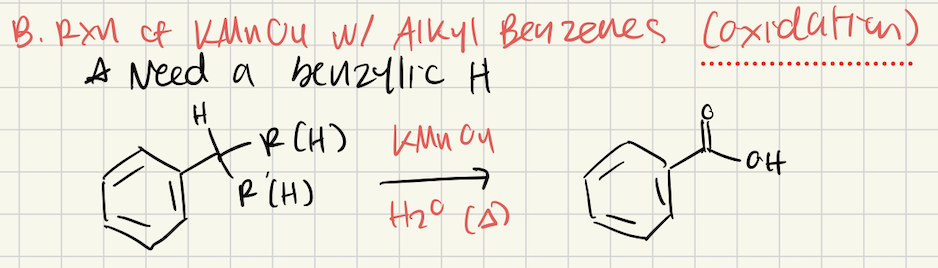
Clemmensen reaction
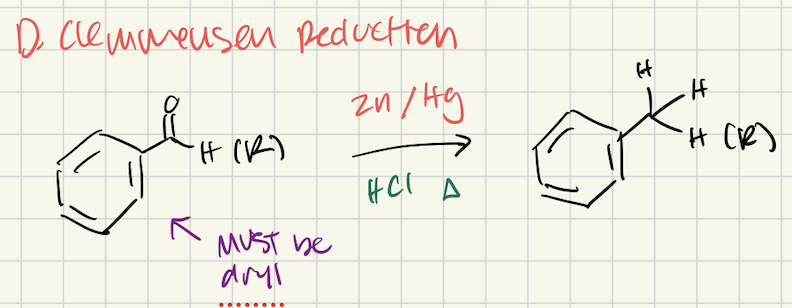
Wolff-Kishner reaction
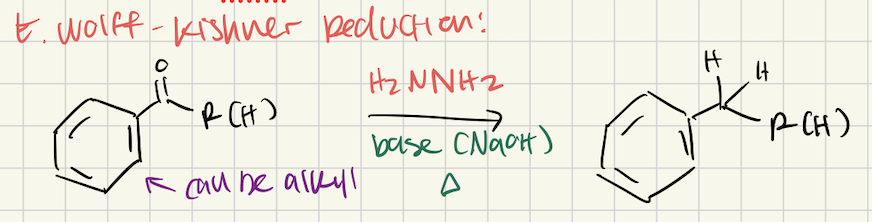
Catalytic hydrogenation of aromatic rings
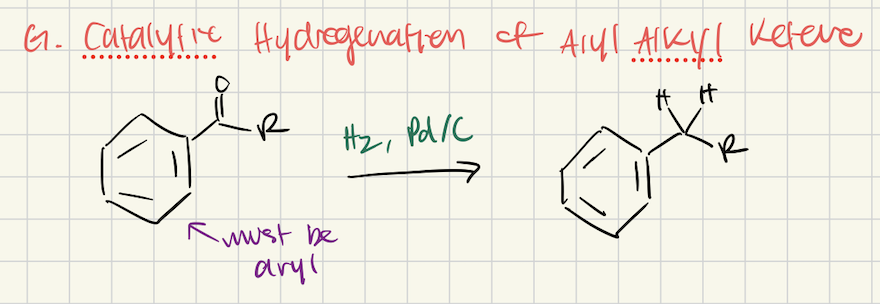
Catalytic hydrogenation of alkyl aryl ketone
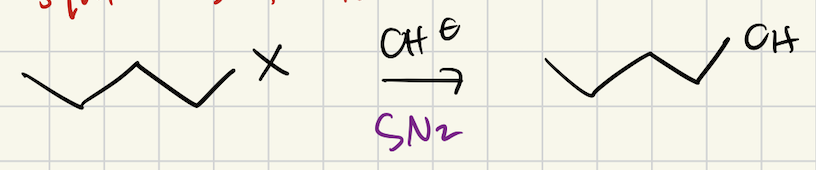
Synthesis of alcohol w/ SN2 rxn starting from alkyl halide
Anti markovnikov

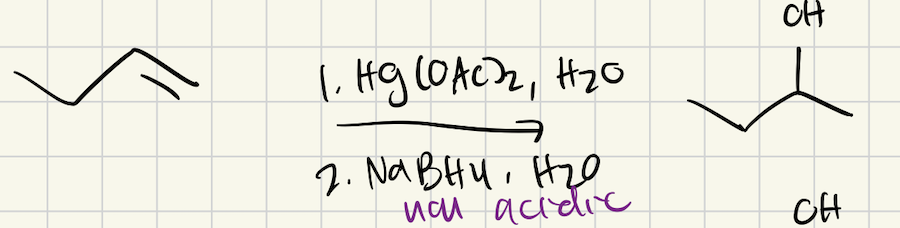
Oxymercuration-demercuration
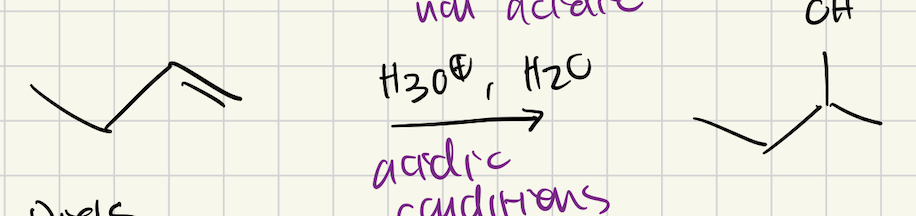
Hydration of alkene to yield alcohol
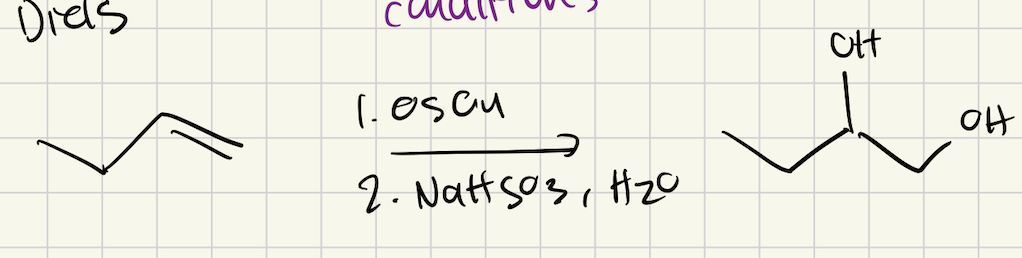
Formation of a syn diol
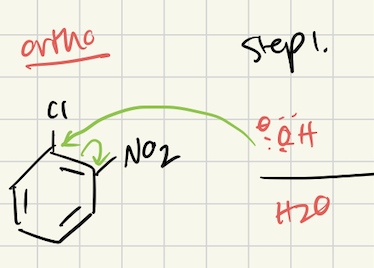
Mechanism of a nucleophilic substitution rxn
What is required?
Nucleophile attaches to the same carbon as the leaving group
There MUST be an EWG ortho or para to the leaving group to stabilize the intermediate
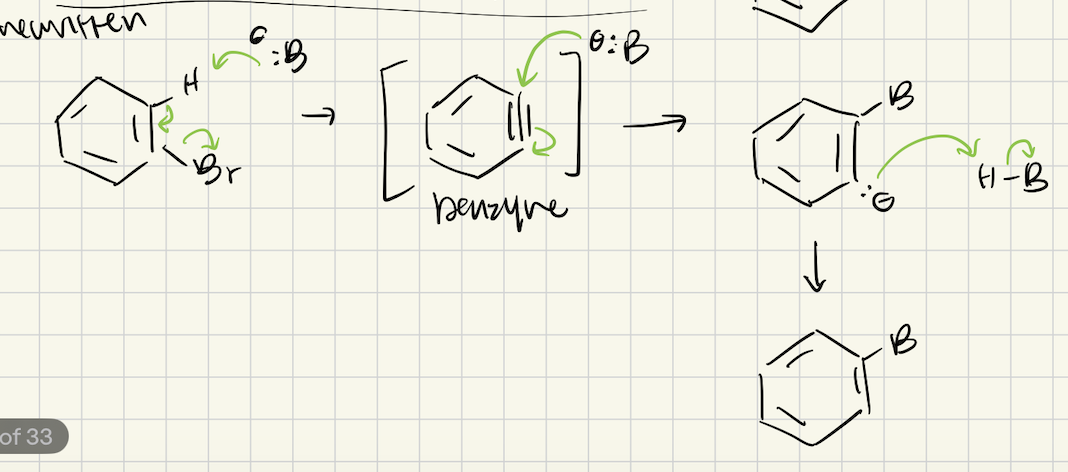
Mechanism of a benzyne intermediate formation
Requires high temp/pressure to form
Base can bond at either carbon on the end of the triple bond
Formation of Grignard reagent

Formation of organolithium reagent

Killing the Grignard
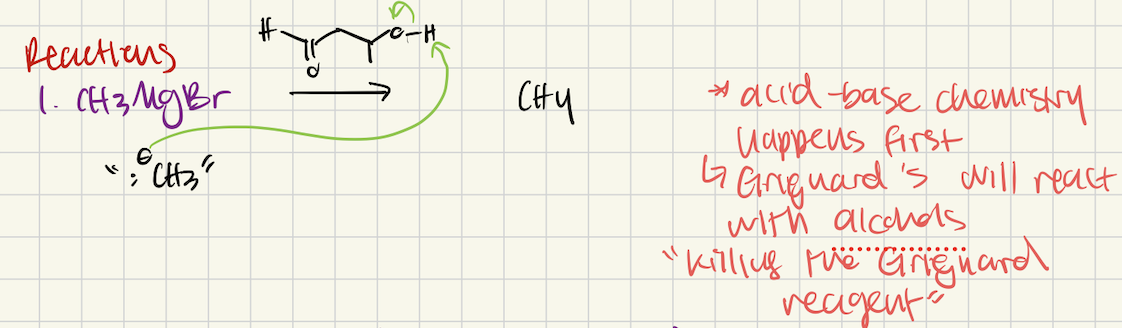
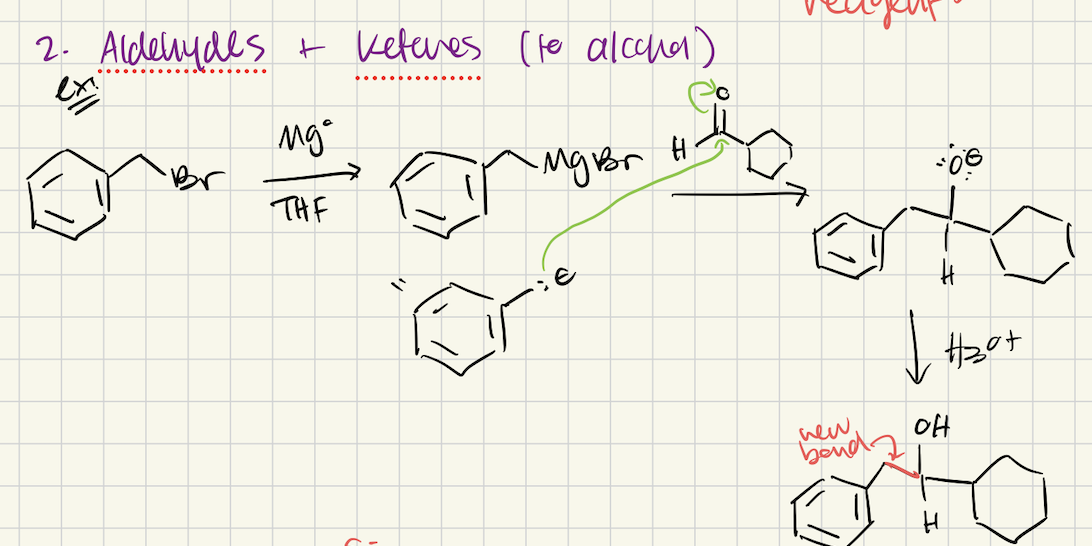
Rxn of Grignard with aldehyde or ketone (forms alcohol)
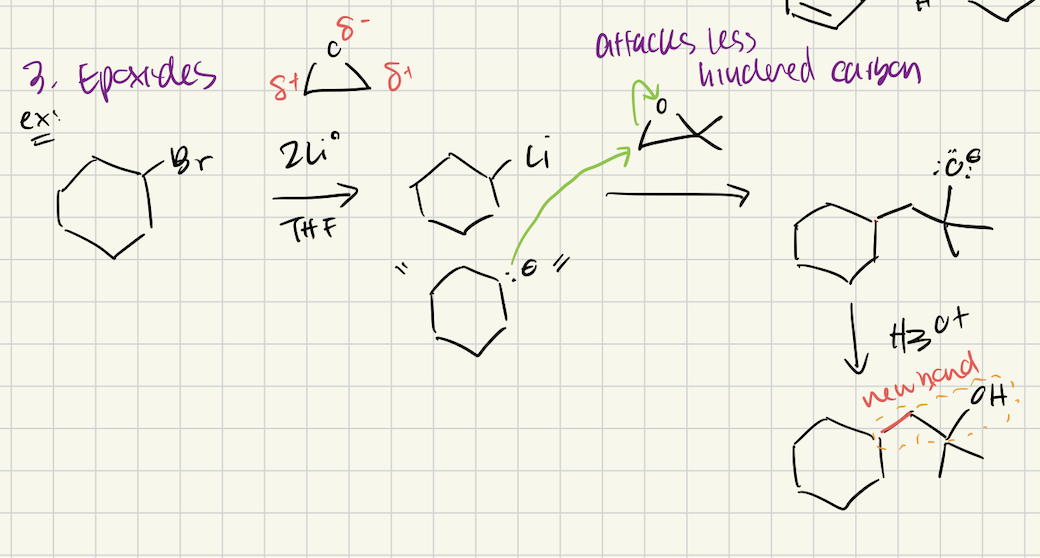
Rxn of Grignard with epoxide (forms alcohol)
Attacks less hindered carbon on epoxide
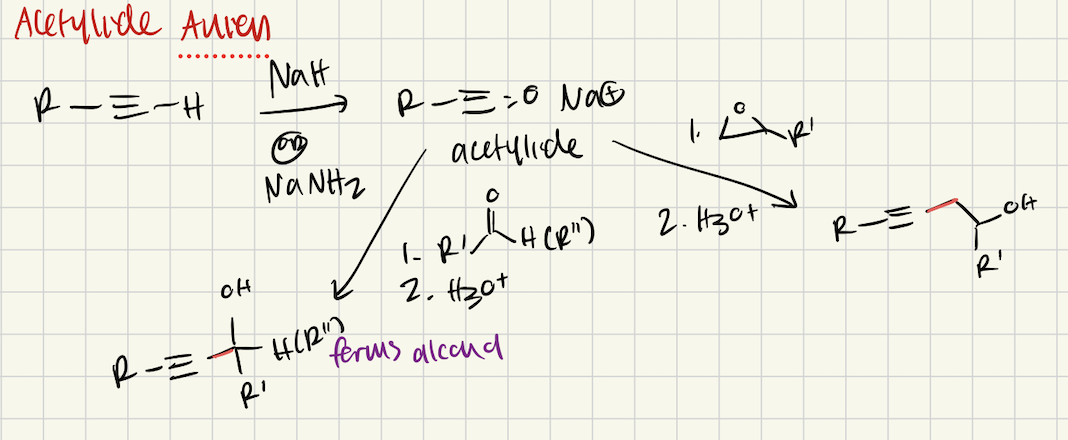
Rxn of acetylide anion with aldehyde/ketone and epoxide (forms alcohol)
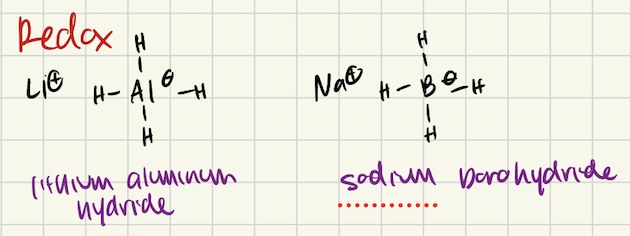
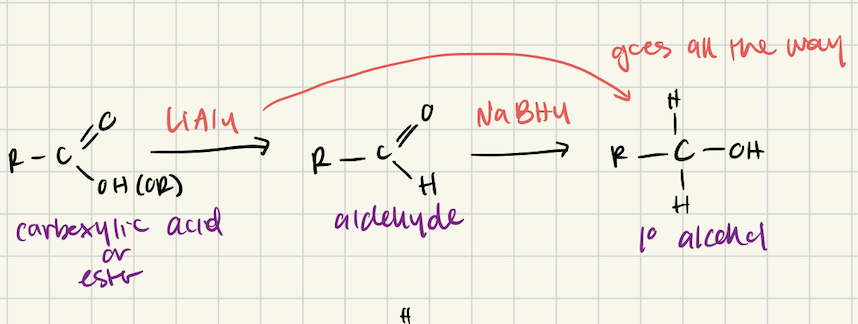
Reagents used in reduction of carboxylic acid, ester, aldehyde, or ketone to alcohol?
Lithium aluminum hydride and sodium borohydride
Pathway from carb acid/ester to primary alcohol?
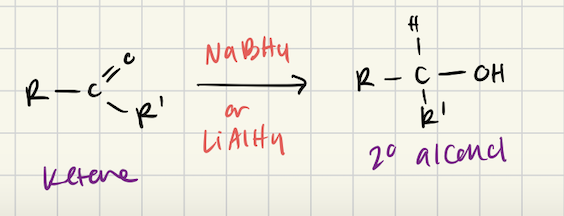
Ketone to secondary alcohol?
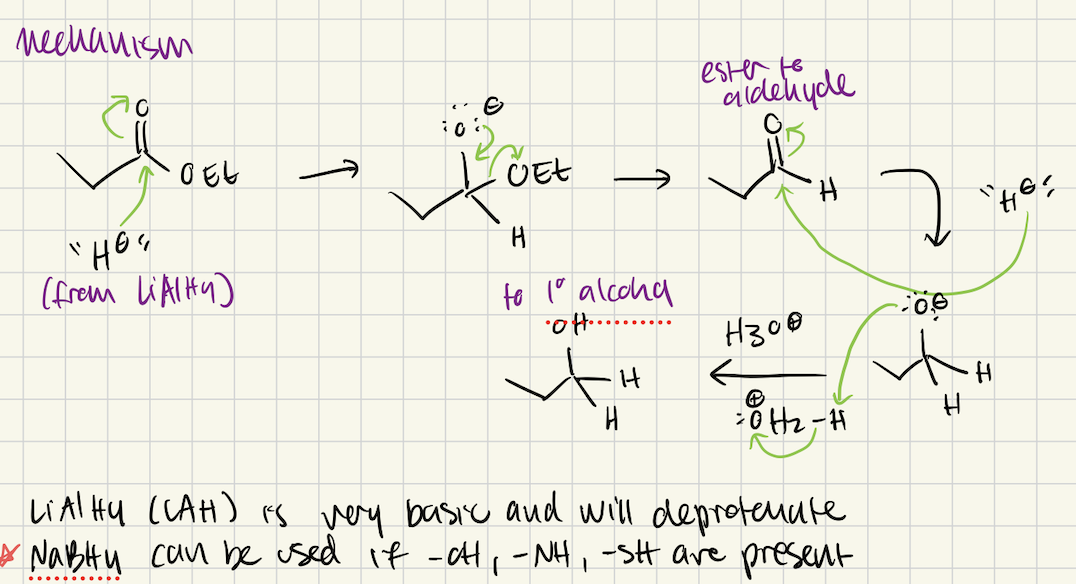
Mechanism of reduction of carb acid/ester to primary alcohol?
Same mechanism for ketone → secondary alcohol
Avoid using LiAlH4 if there is -OH, -SH, or -NH on starting compound
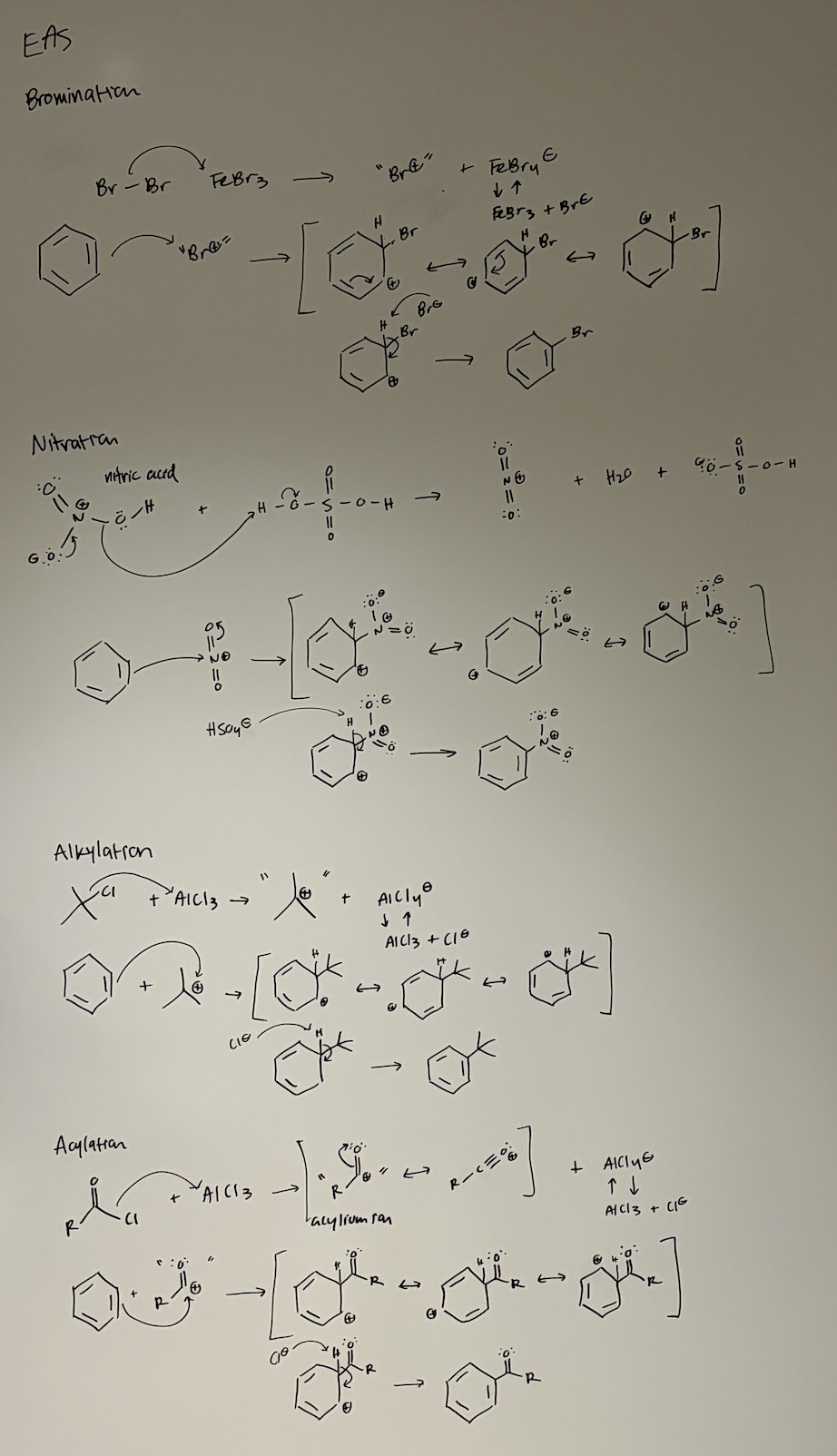
Main EAS rxns review
Bromination, nitration, alkylation, acylation
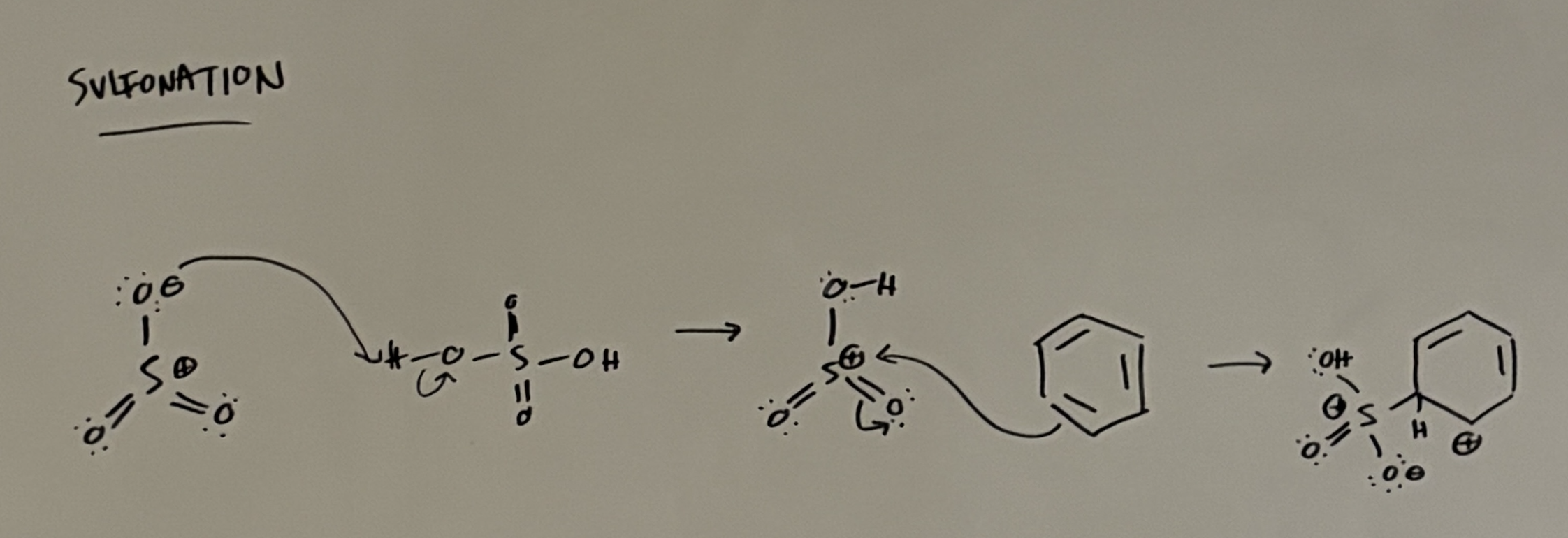
Sulfonation