Animal/Plant Cell Terminology (Chpt. 4)
 Call Kai
 Learn
Learn Practice Test
 Spaced Repetition
 Match
Match Flashcards
 Knowt Play
1/39

There's no tags or description
Looks like no tags are added yet.
Name | Mastery | Learn | Test | Matching | Spaced | Call with Kai | Chat |
|---|
No analytics yet
Send a link to your students to track their progress
40 Terms
The Cytosol
Region of a eukaryotic cell that is outside the cell organelles but inside the plasma membrane
Cytoskeleton
Network of 3 types of protein filaments (mictrotubules, intermediate, and actin), aid in shape and movement
Chromosome
In nucleus, composed of DNA and proteins (chromatin)
Nuclear Matrix
Nuclear lamina and an internal nuclear matrix. Filamentous network and organizes chromosomes
Endoplasmic Reticulum
Network of membranes that form flattened, fluid-filled tubules (or cisternae). ER membrane encloses a single compartment called the ER lumen
Rough ER
Studed with ribosomes. Involved in secretion, protein synthesis, and sorting of proteins destined for the ER, Golgi, lysosomes, vacuoles, plasma membrane, or extracellular environment. Proteins are packaged into membrane vesicles and moved to different locations. Inserts protein into ER membrane. Attaches carbs to proteins and lipids (glycosylation)
Smooth ER
Involved in metabolism (detoxification from alcohol, ethanol, etc). Carbohydrate metabolism, storage of calcium ions, lipid synthesis, and modification
Golgi Apparatus
Stack of flattened membrane - bounded compartments. Transporting, modifying, secretion, and packaging proteins and lipids
Lysosomes
Contains acid hydrolases that perform hydrolysis. Many different types of acid hydrolases to break down protein, carbs, nucleic acids, and lipids. Macromolecules are degraded
Vacuoles
Functions are extremely varied, and they differ among cell types and environmental conditions. Mainly used for storage and waste disposal
Central Vacuoles
In plants, storage and support
Contractile Vacuoles
In protists for expelling excess water
Phagocytic Vacuoles
In protists and white blood cells, used for degradation
Peroxisomes
Catalyze certain reactions that break down molecules by removing hydrogen or adding oxygen
Glysosomes
In plant seeds. Similar to peroxisomes. Converts fats to storage
Plasma Membrane
Boundary between the cell and the extracellular environment. Membrane transport, cell signaling, and cell adhesion. Movement of substances in and out of the cell. Double layer of phospholipids and embedded proteins
Mitochondria
Primary role is to make ATP. Inner membrane is highly folded to make projections called cristae. Intermembrane space and mitochondrial matrix. Involved in synthesis, modification, and breakdown of several types of cellular molecules
Chloroplasts
Site of photosynthesis. Found in nearly all species of plants and algae. Intermembrane space, thylakoid membrane, and Chloroplasts specialized version of plastids; derived from unspecialized proplastids
Endosymbiosis
Smaller species living inside larger species. Mitochondria developed form purple bacteria. Chloroplasts developed from cyanobacteria
Protobiant
An aggregate of prebiotically produced molecules and macromolecules. Have acquired a boundary, such as a lipid bilayer, that allows it to maintain an internal chemical environment distinct from that of its surroundings
RNA
Ribonucleic Acid. Stores info, has the capacity for self-replication, and as enzymatic function (ribosomes)
DNA
Deoxyribonucleic acid. Relieves RNA from the role of storing information, and is less likely to suffer from mutations
Prokaryotes
Simple cell structure, no nucleus
Eukaryotes
More complex cells, DNA enclosed within membrane-bound nucleus, internal membranes form organelles
Inside plasma membrane (typical bacterial cell)
Cytoplasm, nucleoid region (DNA in here), and ribosomes
Outside Plasma Membrane (typical bacterial cell)
Cell wall (support/protection), Glycocalyx (traps water, gives protection), and Appendages such as the pili (attachment) and flagella (movement)
Droplet Organelles
Cells become compartmentalized by liquid-liquid phase separation. Aggregated solutes, like protein and RNA, separate from the bulk solvent and form a droplet organelle
Nuclear Pore
Passageway for molecules to get in and out of the nucleus
Nuclear Envelope
Double membrane that encloses the nucleus
Chromatin
A complex of protein and DNA

Vacuole

Nucleus
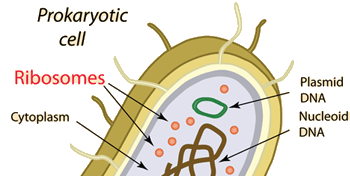
Ribosome

Smooth Endoplasmic Reticulum

Rough Endoplasmic Reticulum
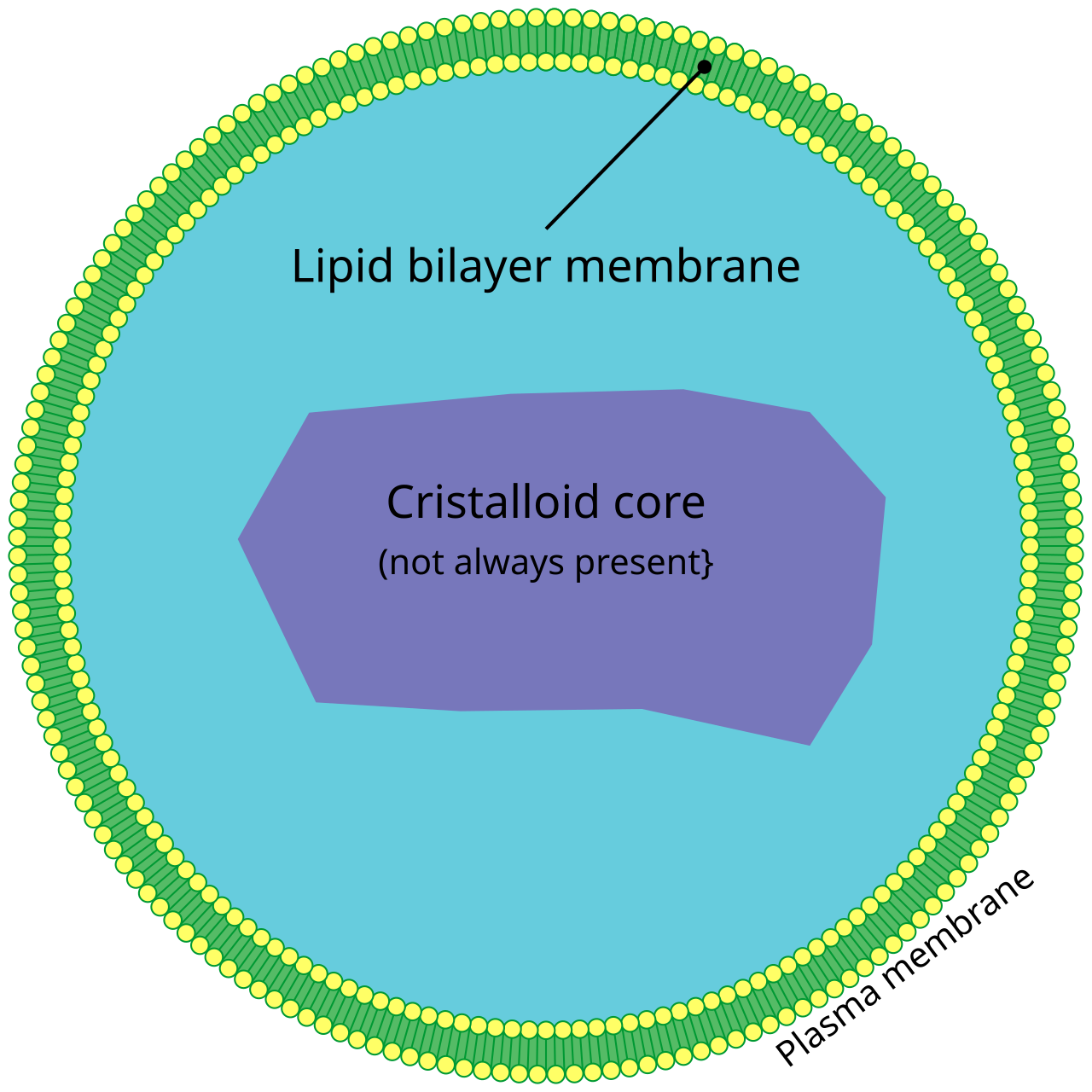
Peroxisome

Golgi Apparatus

Chloroplast
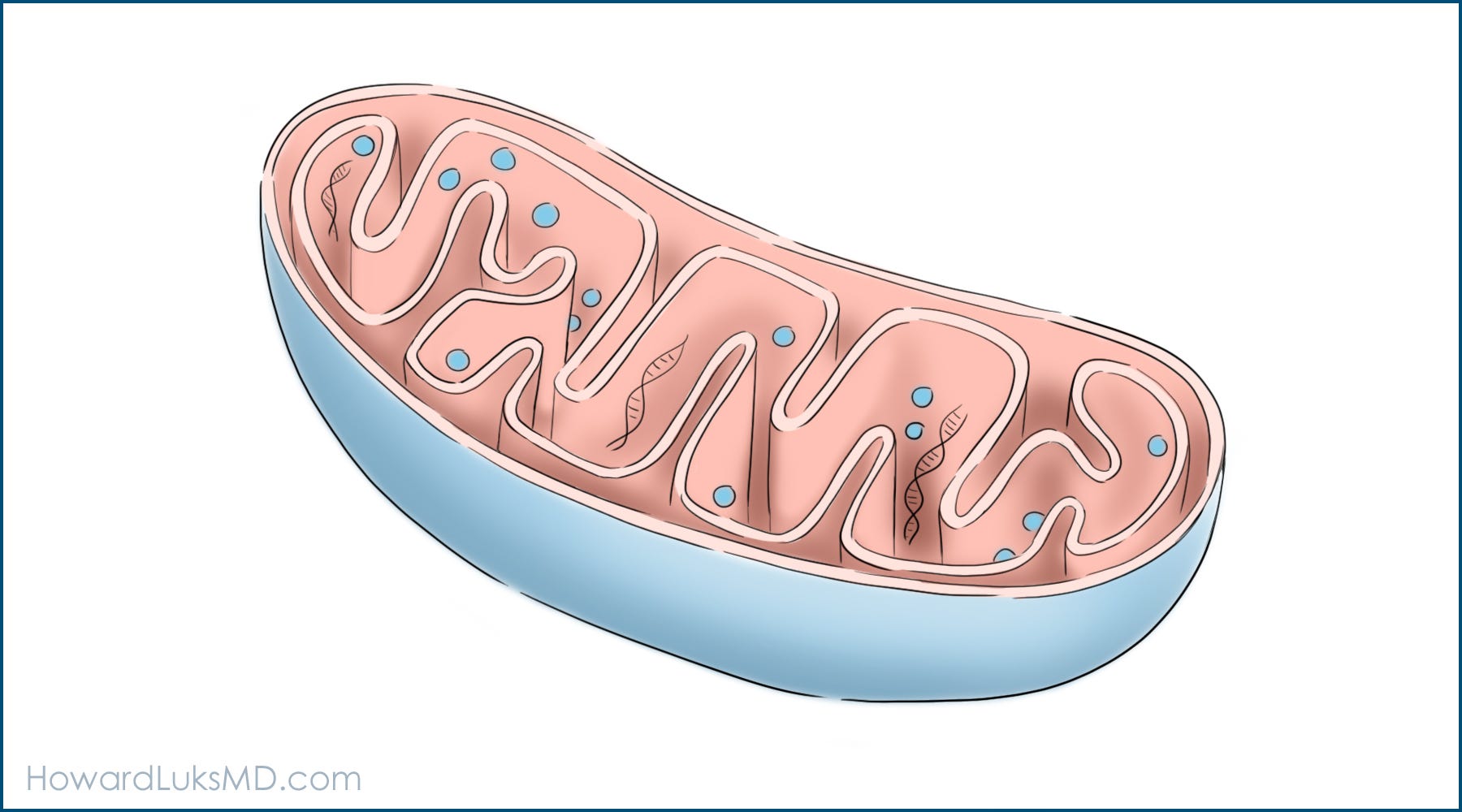
Mitochondria

Plasma Membrane