Body Organization/ Functions
 Call Kai
 Learn
Learn Practice Test
 Spaced Repetition
 Match
Match Flashcards
 Knowt Play
1/26

Earn XP
Description and Tags
CH 1
Name | Mastery | Learn | Test | Matching | Spaced | Call with Kai | Chat |
|---|
No analytics yet
Send a link to your students to track their progress
27 Terms
Levels of structural organization:
chemical
cellular
tissue
organ
system
organismal

1.Chemical Level
atoms, molecules, and organelles

Cellular level
single cell

Tissue leve
groups of similar cells
Organ level
contains 2+ types of tissues

Organ system level
organs that work closely together


Organismal level
all organ systems combined to make the whole organism
-the whole
Gross anatomy
study of large, visible structures
Regional anatomy: structures in a particular area of the body
System anatomy: looks at just one system
Surface anatomy: looks at internal structures as they relate to overlying skin (visible muscle masses or veins seen on surface)
Microscopic anatomy
study of structures too small to be seen by naked eye
Cytology: microscopic study of cells
Histology: microscopic study of tissues
Integumentary system
C: skin, hair, nails, sweat glands, oil glands
F: protects body, reg temp, eliminate waste, helps make vitamin D, detects sensations

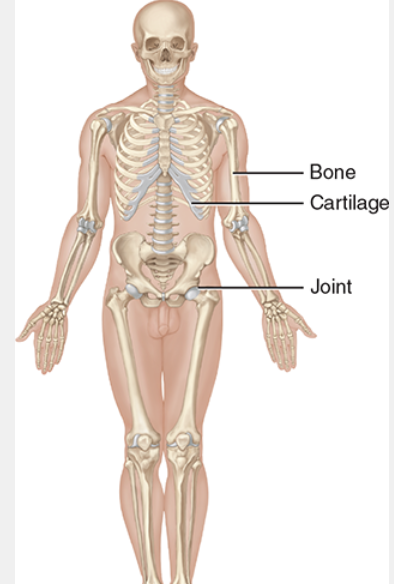
Skeletal system
C: bone and joints of the body and their cartilage
F: support and protect the body, provides surface area for muscle attachments, aids body movements, stores minerals and fats
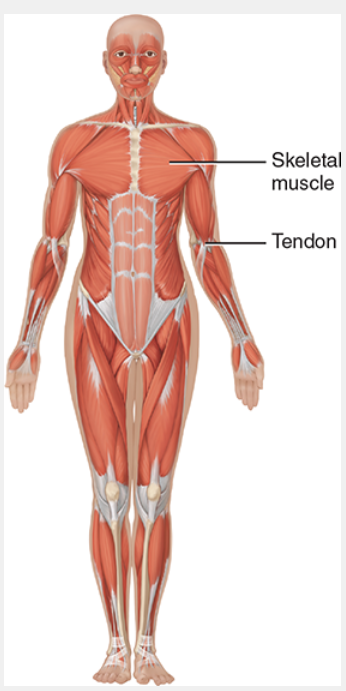
Muscular system
C: skeletal muscle tissues-usually attached to bones
F: participate in body movements, maintaining posture, producing heat
Nervous system
C: brain, spinal cord, nerves and eyes/ears(special sense organs)
F: generates action potentials to reg body activity, detects changes in body's internal/external environment, interprets changes and responds by causing muscular contraction

Endocrine system
C: hormone producing glands and hormone producing cells in several other organs
F: regulates body activity by releasing hormones

Cardiovascular system
C: blood, heart, vessels
F: heart pumps through blood vessels: blood carries oxygen and nutrients to cells and carbon dioxide and wastes away from cells and helps regulate acid-base balance, temp, water content of body fluids, helps defend again disease and repairs

Lymphatic/immune system
C: lymphatic fluid and vessels; spleen, thymus, lymph nodes, tonsils- cells that carry out immune responses
F: returns proteins and fluids to blood; carries lipids from GI tract to blood; B and T cells that protect against diseas-causing microbes

Respitory system
C: lungs and air passageways pharynx, larynx, trachea, bronchial tubes
F: transfers oxygen from inhaled air to blood and carbon dioxide from blood to exhaled air;helps regulated acid base balance of body fluids; produce sounds

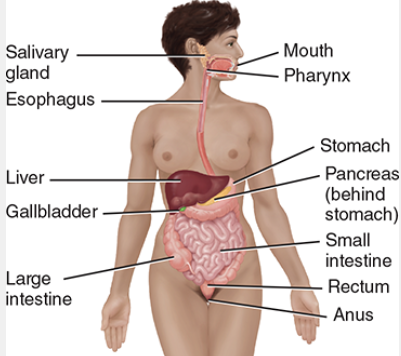
Digestive system
C: mouth, pharynx, esophagus, stomach, small large intestines, rectal
F: physical and chemical breakdown of food, absorbing nutrients, eliminating waste
Urinary system
C: kidneys, ureters, urinary bladder, urethra
F: produces stores and eliminates waste and regulates volume and chemical comp of blood; helps regulate production of red blood cells; maintains mineral balance and acid base of body fluids

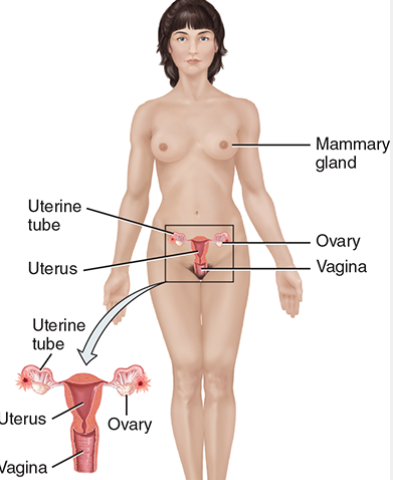
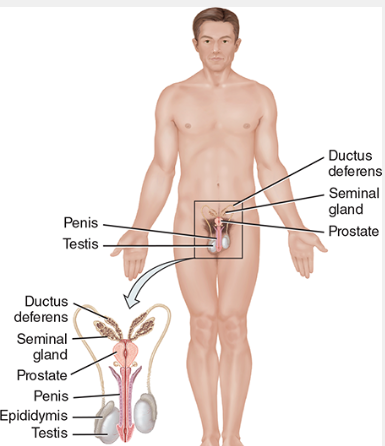
Reproductive system
C: gonads(testes in male and ovaries in females) and associated organs
F: gonads produce gametes to unite to form a few organism; release hormones that regulate reproduction and other processes
To be alive…
Metabolism
Responsiveness
Movement
Growth
Differentiation
Reproduction
Homeostasis : condition of equilibrium, or balance, in the body’s internal environment
Maintained by body’s regulatory processes
Control of homeostasis
receptor- fills the narrow spaces between cells of tissues is known as interstitial fluid
control center- sets the range or set point within which a controlled condition should be maintained, and generates output commands when they are needed
effector- receives output from the control center and produces a response
When homeostasis is disrupted, it may result in disease, disorder, or even death

Negative feedback system
reverses a change in a condition
ex: BP inc →brain signals heart/vessels → heart rate decreases + vessels dilate → BP decreases
Positive feedback system
strengthens a change in a condition
Labor contractions → cervix stretches → brain releases oxytocin → stronger contractions → more stretching → continues until birth
homeostasis
is the maintenance of relatively stable conditions in the body’s internal environment
intracellular fluid
fluid within cells
extracellular fluid
fills the narrow spaces between cells of tissues is known as interstitial fluid