BIO Ch.6-8
 Call Kai
 Learn
Learn Practice Test
 Spaced Repetition
 Match
Match Flashcards
 Knowt Play
1/19

There's no tags or description
Looks like no tags are added yet.
Name | Mastery | Learn | Test | Matching | Spaced | Call with Kai | Chat |
|---|
No analytics yet
Send a link to your students to track their progress
20 Terms
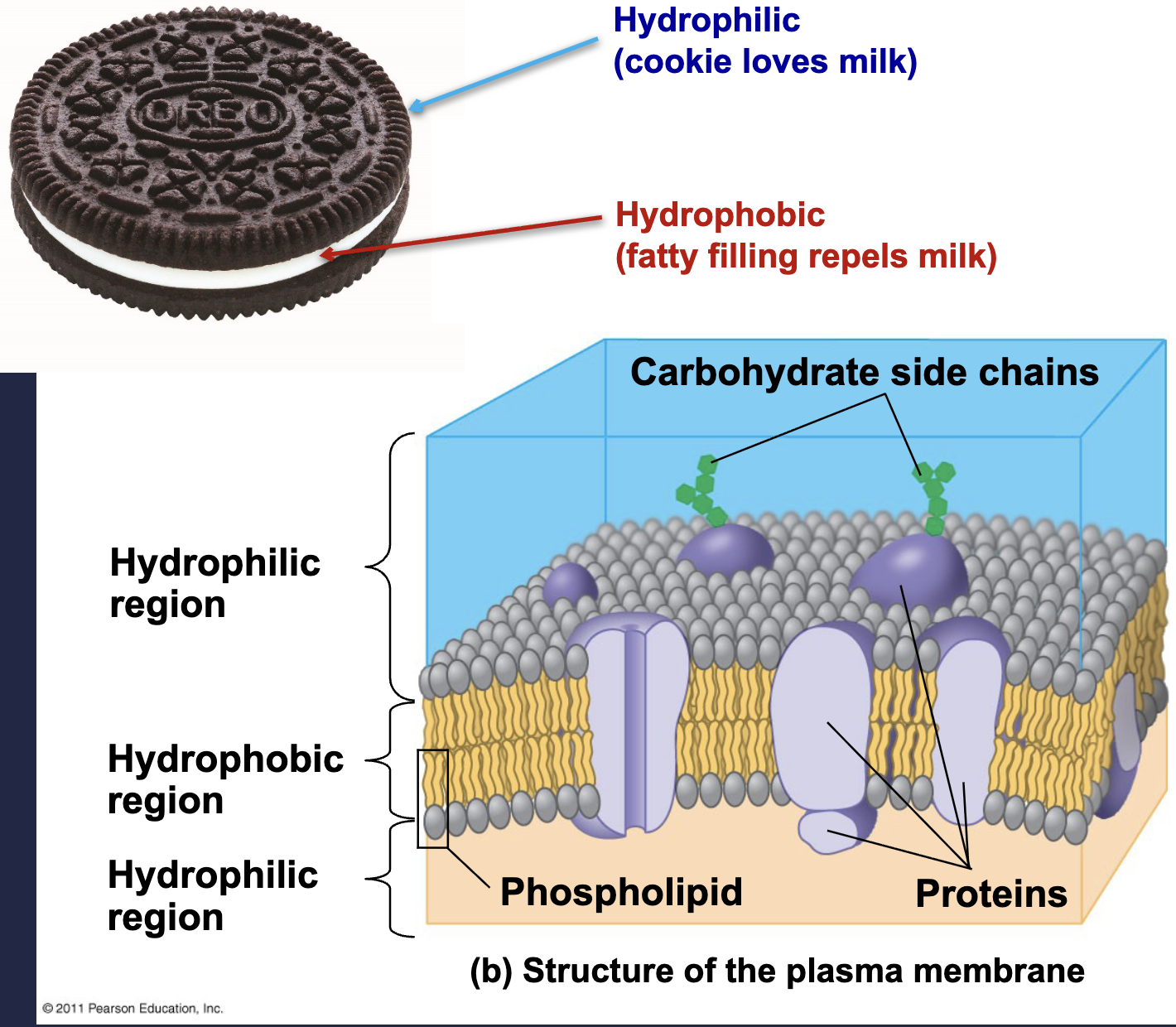
Cell/plasma membrane
Made of phospholipid bi-layer
Barrier that is selectively or semipermeable membrane that allows nutrients, waste and oxygen to supply the volume of the cell
Ribosome
-in both prokaryotic and eukaryotic cells
-not membrane bound
-uses information from DNA to make proteins
-Made of Ribosomal RNA and proteins
Makes proteins in 2 places
-1. In the Cytosol (free ribosomes)
-2. Outside of the ER or nuclear envelope (bound ribosomes)

KNOW THIS
Small cells have a greater surface area relative to volume
Ex- crushed ice is better at cooling a coke than one big ice cube
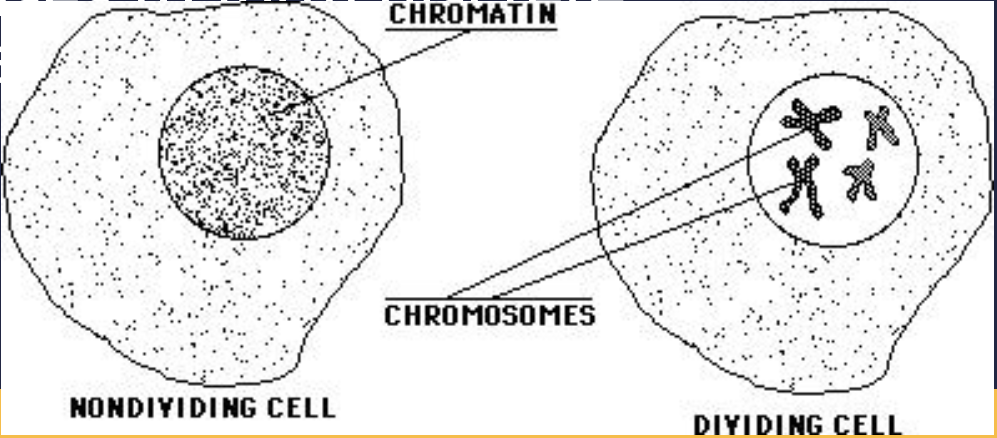
Chromatin
DNA as a loose structure
Chromatin condenses to form discrete chromosomes as a cell prepares

Chromosomes
DNA as chromosomes tight
Ex: twisting spaghetti up on a fork
Prokaryotic Cell
DNA in unbound region call: Nucleiod
No nucleus
Cytoplasm/ cytosol bound by plasma membrane

Eukaryotic cells
DNA in a nucleus that is bound by a membranous nuclear envelope
Membrane bound organelles
Cytoplasm in the region between nucleus and plasma membrane
10X bigger than prokaryotic cells

Integrins
Proteins embedded/ on the surface of the phospholipid bi-layer
Nucleus
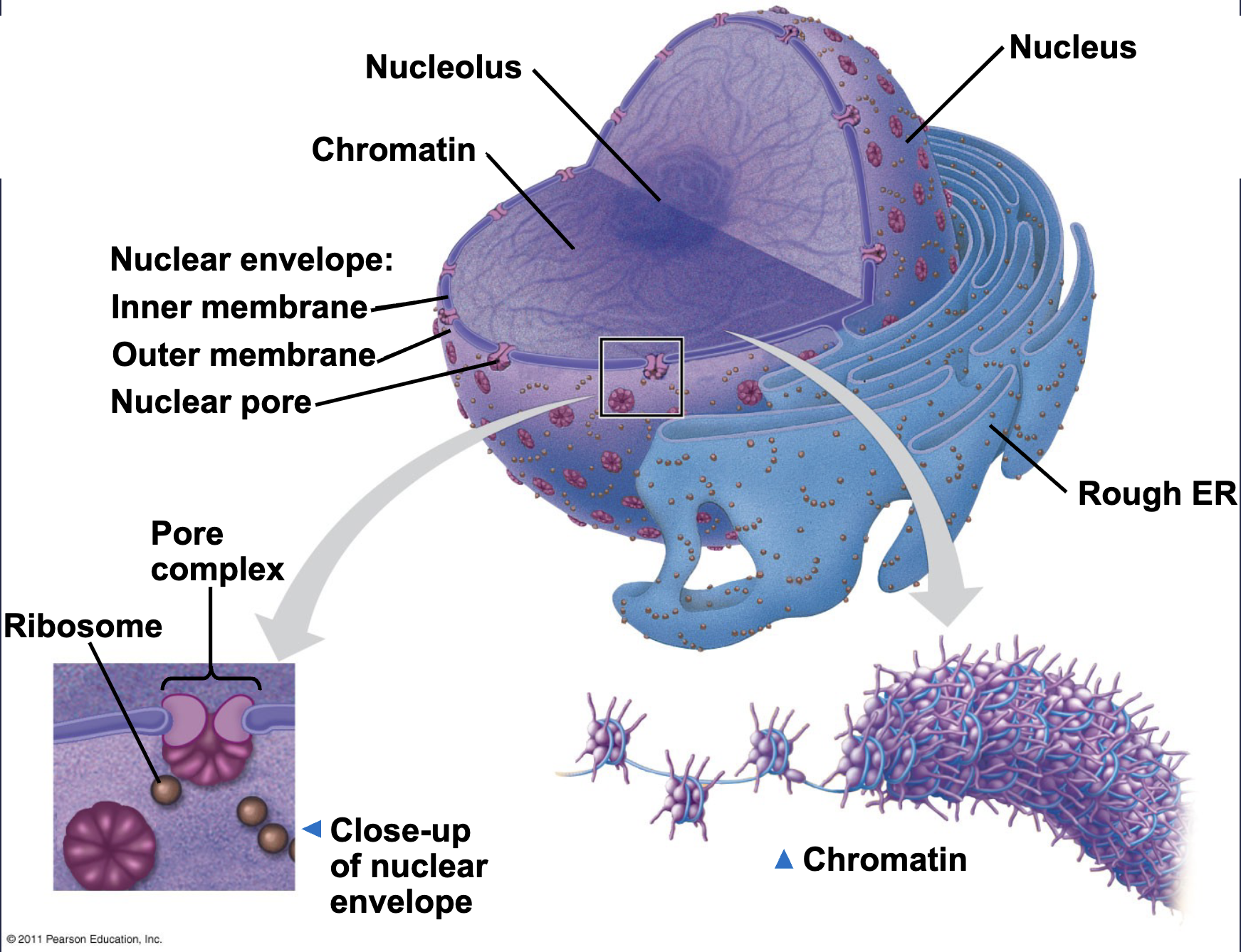
Contains most of the DNA in a eukaryotic cells
Nuclear Envelope
Enclose the nucleus separating it from the nucleus
-Nuclear membrane is a double membrane, each membrane consists of phospholipid bi-layers
-Nuclear envelope has pores that let material in and out
Nuclear Lamina
The shape of the nucleus is maintained by the nuclear lamina, which is composed of proteins

Nucleolus
is located within the nucleus and is the site of ribosomal RNA (rRNA) and ribosomal subunit synthesis
Endomembrane System
Regulates protein traffic and metabolic functions in the cell
-Components: Nuclear envelope, ER, Golgi apparatus, Lysosomes, Vacuoles, and plasma membrane
^these are continuos or connected via transport/ transfer by vesicles
Endoplasmic Reticulum
Connects to the nuclear envelope
-Smooth ER: lacks ribosomes
-Rough ER: Studded w/ ribosomes

Smooth ER Functions
Synthesizes Lipids (mainly phospholipids and steroids)
Metabolizes carbohydrates
Helps detoxify poisons and drugs (liver cells)
Stores calcium ions (muscle cells)
Rough ER
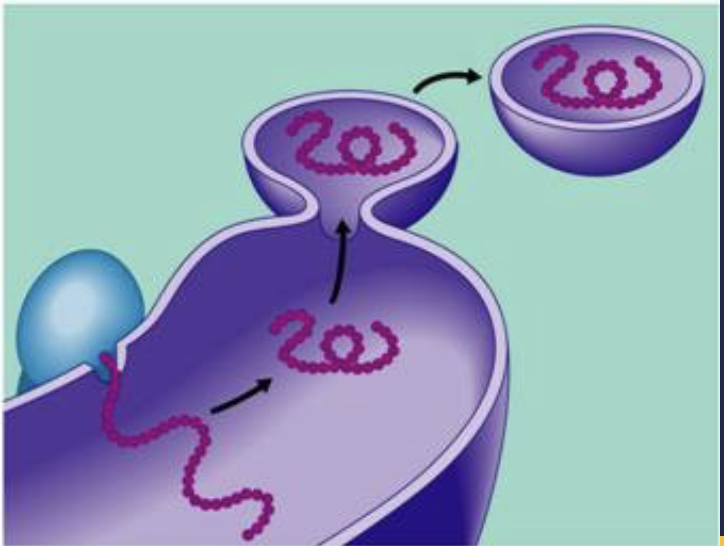
Bound ribosomes secrete glycoproteins (proteins covalently bonded to carbohydrates)
-Distributes transport vesicles, proteins surrounded by membrane(mainly secretory and membrane)
- Rough ER is the membrane factory for the cell
Golgi Apparatus: shipping and transport center
consists of flattened membranous sacs called cisternae
-Modifies products of the ER (proteins)
- Creates certain macromolecules (proteins)
-Sorts and packages materials (proteins) into transport vesicles
Cis-face: Receiving side of Golgi apparatus
Trans-Face: Shipping side of the Golgi apparatus

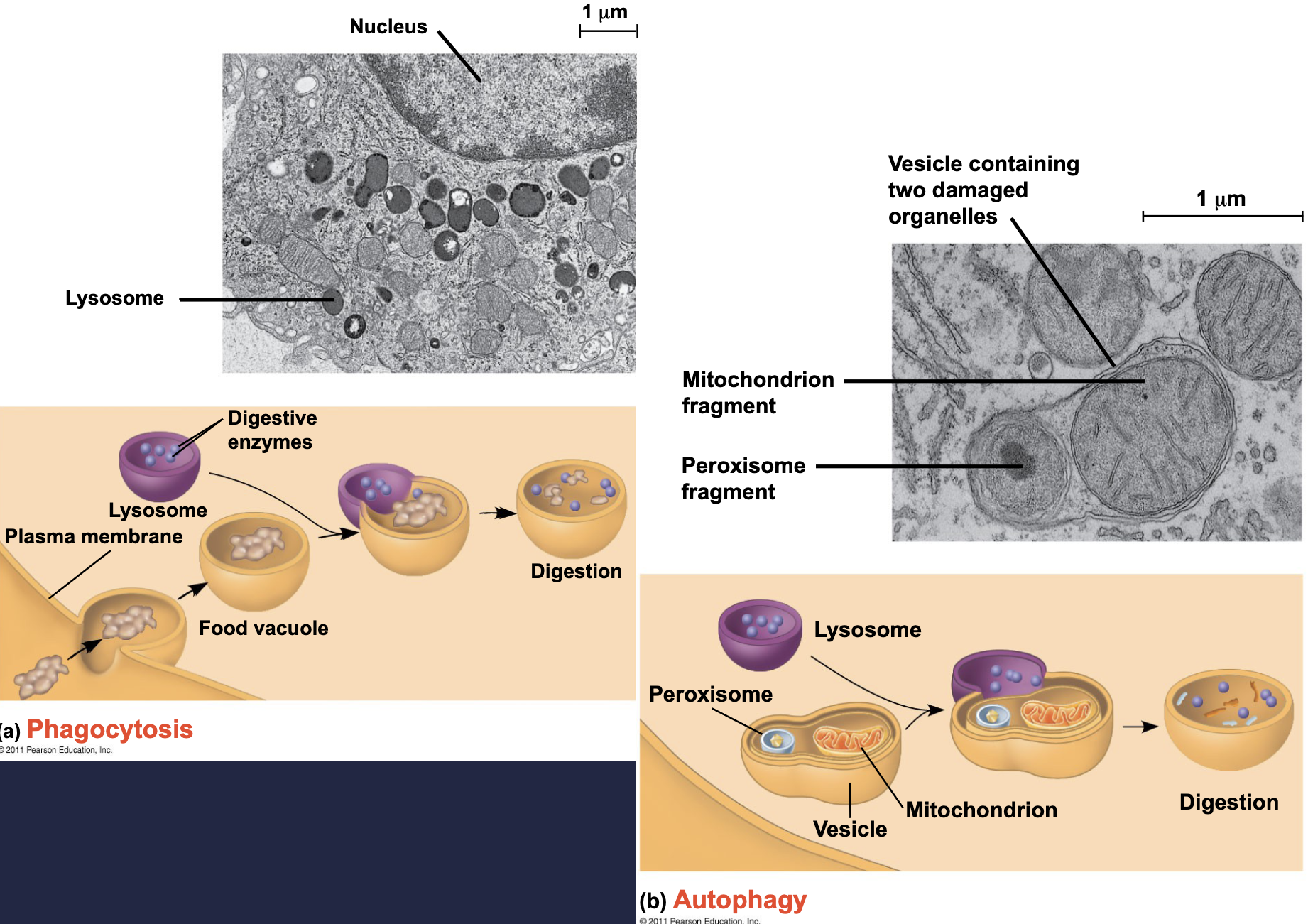
Lysosomes
Membranous sac of hydrolytic enzymes that can digest macro molecules (proteins, fats, nucleic acids, and polysaccharides)
Lysosomal enzymes work best in the acidic environment inside the lysosome
-Phagocytosis: lysosomes digest external particles
-Autophagy: lysosomes recycles cells organelles and macromolecules
Peroxisomes
-Specialized metabolic compartments bound by a membrane for getting rid of toxic substances & metabolites
1. Oxidize (break down) very long chains of fatty acids and amino acids
2. Produce hydrogen peroxide and convert it into water (using enzyme catalase)
3. Assists in detoxifying alcohols
