BIOL 4071: Lecture 2
 Call Kai
 Learn
Learn Practice Test
 Spaced Repetition
 Match
Match Flashcards
 Knowt Play
1/9

There's no tags or description
Looks like no tags are added yet.
Name | Mastery | Learn | Test | Matching | Spaced | Call with Kai | Chat |
|---|
No analytics yet
Send a link to your students to track their progress
10 Terms
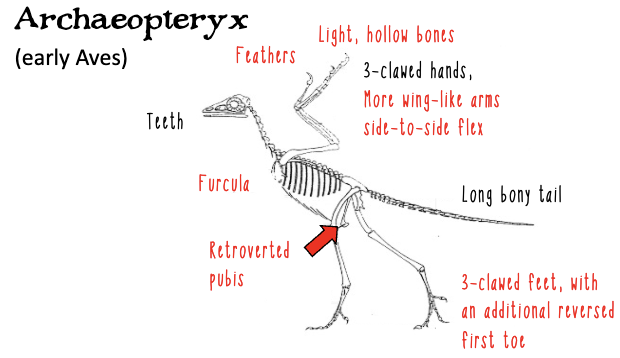
Archaopteryx
existed ~150 MYA along with other non-avian dinosaurs
Jurassic period
Compsognathus
theropod, non-avian carnivorous raptor
bird-like qualities
long neck
bipedal
three toes
feather filaments
furcula
not a bird!
short arms, not wings
teeth
forward pointing pubis

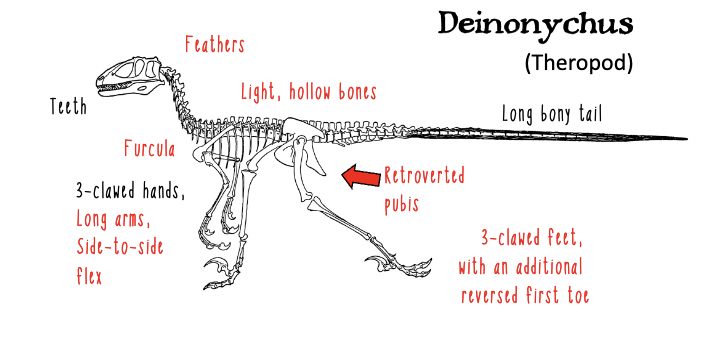
Deinonychus
feathered Theropod which had a unique joint in its hands which allowed them to move side-to-side rather than up and down, which is what allows modern birds to fold their wings
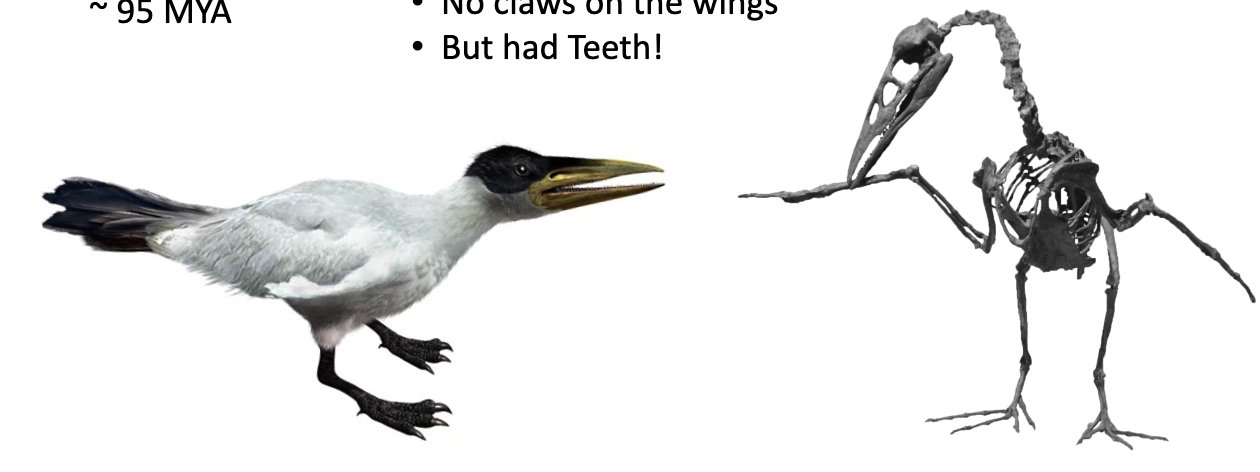
Ichthyornis
late Cretaceous
95 MYA
definitely an aquatic, gull-like bird
no claws on wings
teeth present
Hesperornis
aquatic loon-like bird
no claws on wings
teeth present

Jurassic/Cretaceous study of birds
from the analysis of jurassic/cretaceous speciments scientists began to see how birds gradually acquired their curved necks, their two-legged stance, three toes, modified arms with feathers, as well as a loss of claws and long tails
Ornithurines
group of early, Mesozoic birds (name meaning ‘bird tail’)
short tail, unlike the long bony tail of Archaeopteryx
could fly, but mostly aquatic and tended to live on the ground along shorelines, not inland forests like Archaeopteryx
did not have adaptations associated with perching, like curved foot claws, but had webbed or widened toes
still had teeth

Enantiornithines
early cretaceous ~120 MYA
preceded the Ornithurines
most diverse group of Mesozoic birds, filling the same niches that modern birds exploit
had teeth
had clawed fingers on wings
short tail (pygostyle)
curved, perching like claws on feet
similar to those of modern perching birds
looked like todays birds

Enantiornithines
“opposite birds”
early cretaceous
~120 MYA
included:
bohiaornis
longipteryx
perching, tree dwelling, clawed fingers on wings, teeth, blunt rear-ends sometimes just had 2 long ribbon like feathers
these traits indicated that Enantiornithines belonged to an earlier lineage than that of Hesperornis, Ichthyornis, and other Orniturines, but one that was lacking the long bony tails of Archaeopteryx
Confuciosornis
early cretaceous
~120 MYA
more advanced than Archaeopteryx, but had both ancestral and derived traits
clawed hands
shoulder bones could not rise above head, so wings were for gliding
breastbone with small keel
pygostyle
no teeth