PHYSICS SAC 1 - Motion
 Call Kai
 Learn
Learn Practice Test
 Spaced Repetition
 Match
Match Flashcards
 Knowt Play
1/53

There's no tags or description
Looks like no tags are added yet.
Name | Mastery | Learn | Test | Matching | Spaced | Call with Kai | Chat |
|---|
No analytics yet
Send a link to your students to track their progress
54 Terms
Scalar
Quantities concerned only with magnitude
Examples:
distance - d (m)
speed - s (m/s)
mass - m (kg)
energy - E (J) —> kinetic energy Ek, Gravitational potential Eg
Vector
Quantities that describe both magnitude and direction
Examples:
displacement - s,x (m)
velocity - ν (m/s)
weight - W (N)
force - F (N)
Momentum - ρ (kgm/s)
Distance
A measure of the length of a path taken by an object irrespective of the direction that object is travelling in
Displacement
A measure of change in position of an object taking into account both the distance and the direction from its starting position
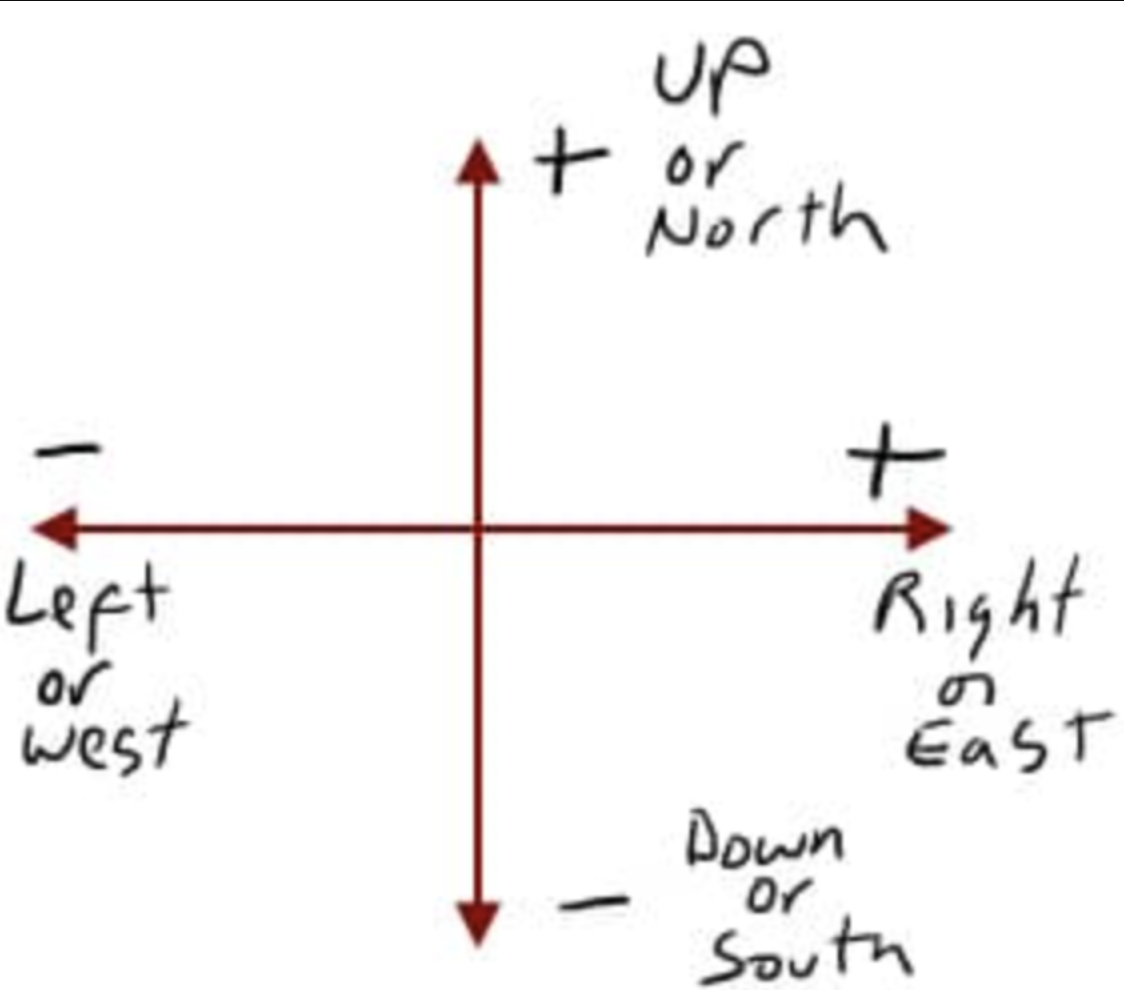
*Assign a direction as either positive of negative
Speed
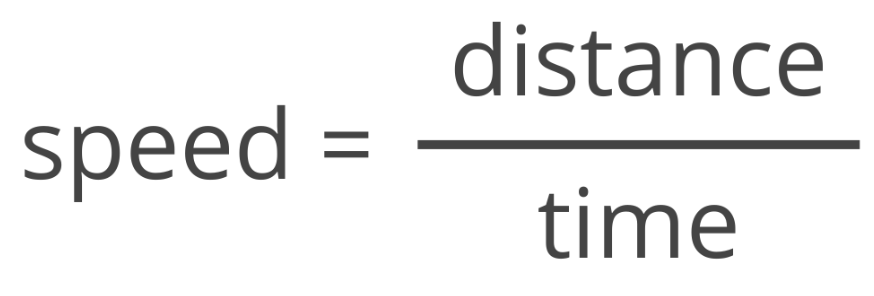
The rate at which an object covers distance (scalar)
Measure: m/s
Velocity
The rate at which an object covers displacement (vector)
Measure: m/s + direction

Speed vs Velocity
They both quantify the rate at which an object moves over time.
Velocity is a vector quantity whilst speed is a scalar quantity.
Velocity is the change in displacement with respect to time, whereas speed is the change in distance travelled with respect to time.
When an object does not change direction, the magnitudes of these two values will be the same, however when it does, they will no longer be equal.
Acceleration
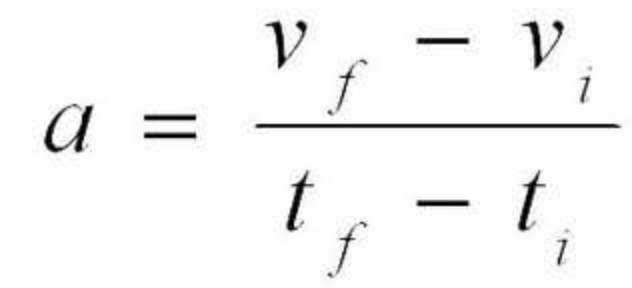
The rate of change of velocity of an object (vector)
Measure: m/s2
**Vector diagrams are useful when calculating the change in velocity to find acceleration
Vector diagram
Change in velcoty: Δv = v-u
where v = final velocity, u = initial velocity
When velocity vectors point in different directions, to subtract take opposite direction of initial velocity
Motion graphs
Velocity time graphs
Calculating distance and displacement
SUVAT
Vertical motion
Forces as vectors
Friction force
Air resistance
The normal force
Force diagrams
Calculating the net force
Newton’s First Law
Newton’s Second Law
Newton’s Third Law
Elevator forces
Inclined planes
Connected bodies
Momentum
Impulse
Torque
Equilibrium