Lab Anatomy Midterm
 Call Kai
 Learn
Learn Practice Test
 Spaced Repetition
 Match
Match Flashcards
 Knowt Play
1/15

There's no tags or description
Looks like no tags are added yet.
Name | Mastery | Learn | Test | Matching | Spaced | Call with Kai | Chat |
|---|
No analytics yet
Send a link to your students to track their progress
16 Terms
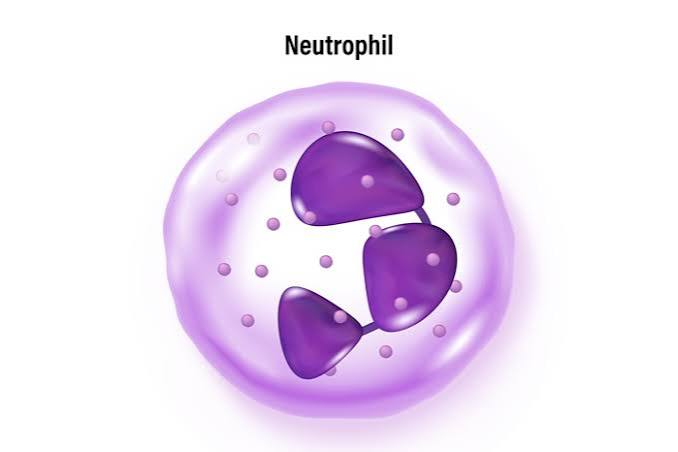
Neutrophil
Multi-lobed, pale granules
Elevated during bacterial infections
Phagocytize bacteria
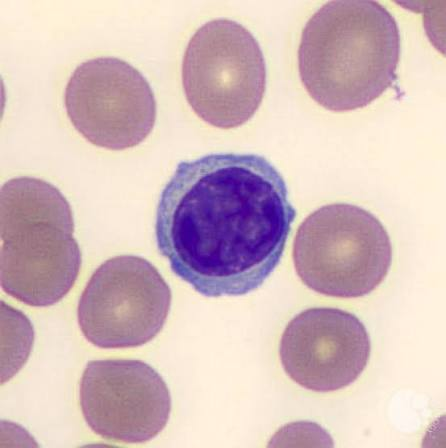
Lymphocyte
Large round nucleus, thin rim of cytoplasm
Immune response (B & T cells)
Viral infections
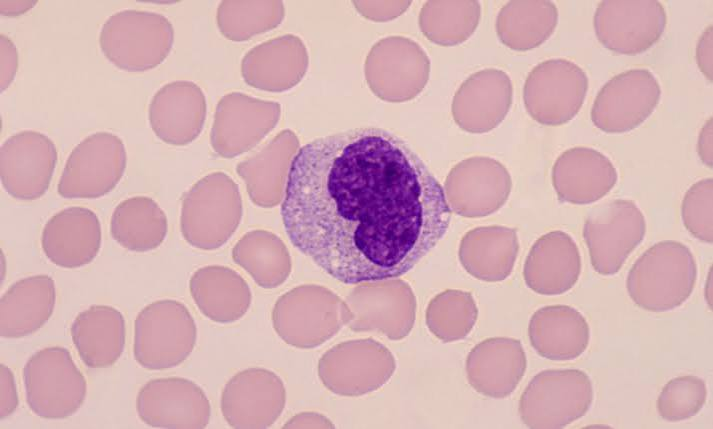
Monocyte
Largest WBC, kidney/U-shaped nucleus
Become macrophages
Chronic infections, inflammation
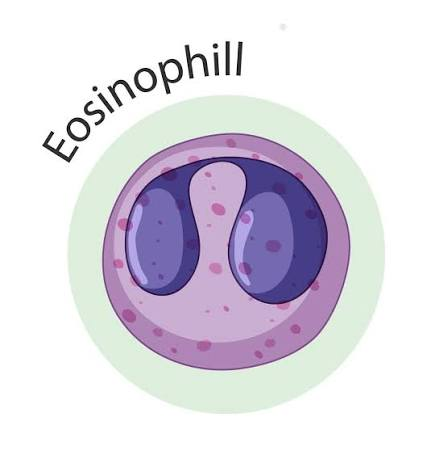
Eosinophil
Bilobed nucleus, large red/orange granules
Attack parasites; allergies
Parasites & allergies
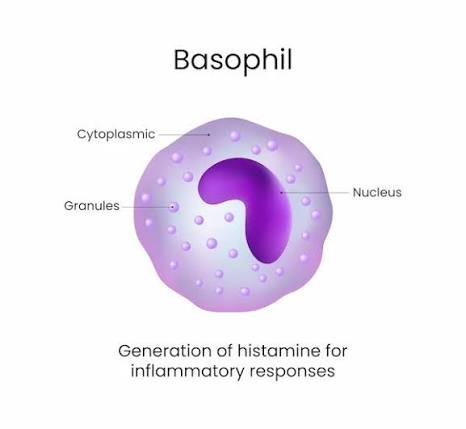
Basophil
Dark blue/purple granules cover nucleus
Release histamine & heparin
Allergic reactions
WBC Interpretation
Neutrophils | Bacterial infection |
Lymphocytes | Viral infection |
Eosinophils | Parasites or allergies |
Monocytes | Chronic infection/inflammation |
Basophils | Allergic response |
Blood type identification
Anti-A | Anti-B | Anti-Rh | Blood Type |
|---|
+ | - | - | A− |
+ | - | + | A+ |
- | + | - | B− |
- | + | + | B+ |
+ | + | - | AB− |
+ | + | + | AB+ |
- | - | - | O− |
- | - | + | O+ |
Blood Type Antigens & Antibodies
Blood Type | RBC Antigens | Plasma Antibodies |
|---|---|---|
A | A | Anti-B |
B | B | Anti-A |
AB | A & B | None |
O | None | Anti-A & Anti-B |
Rh+
Has Rh antigen
Rh-
No Rh antigen
Blood Transfusion Compatibility
Who Can Receive From Whom?
Recipient | Can Receive |
|---|---|
O− | O− only |
O+ | O+, O− |
A− | A−, O− |
A+ | A+, A−, O+, O− |
B− | B−, O− |
B+ | B+, B−, O+, O− |
AB− | AB−, A−, B−, O− |
AB+ | Everyone (Universal Recipient) |
Universal Donor
O negative
Universal Recipient
AB positive
Heart anatomy
Chambers
Right atrium
Right ventricle
Left atrium
Left ventricles
Valves
Right AV = Tricuspid
Left AV = Mitral (Bicuspid)
Pulmonary semilunar
Aortic semilunar
Great Vessels
Superior vena cava
Inferior vena cava
Pulmonary trunk
Pulmonary arteries
Pulmonary veins
Aorta
Internal Structures
Chordae tendineae
Papillary muscles
Interventricular septum
Trabeculae carneae
Coronary arteries
Coronary sinus
Cardiovascular Physiology Calculations
Pulse Pressure (PP)
Formula
PP = Systolic − Diastolic
Example
120/80
120 − 80
PP = 40 mmHg
Normal
≈40 mmHg
Mean Arterial Pressure (MAP)
Formula
MAP = Diastolic + 1/3(Pulse Pressure)
Example
120/80
Pulse Pressure = 40
MAP = 80 + 13.3
MAP = 93 mmHg
Normal MAP
70–100 mmHg
Need at least 60 mmHg for adequate organ perfusion.
ECG/EKG Identification
P Wave
Represents:
Atrial depolarization
Atria contract.
QRS Complex
Represents:
Ventricular depolarization
Ventricles contract.
(Atrial repolarization is hidden.)
T Wave
Represents:
Ventricular repolarization
Ventricles relax.
Easy sequence
P = Atria squeeze
QRS = Ventricles squeeze
T = Ventricles relax
ECG Interpretation
Tachycardia
Heart rate
>100 bpm
Characteristics
More QRS complexes
Shorter intervals
Heart beats faster.
Bradycardia
Heart rate
<60 bpm
Characteristics
Fewer QRS complexes
Longer intervals
Heart beats slower.
Blood Vessel Identification
Arteries
Aorta
Pulmonary trunk
Pulmonary arteries
Coronary arteries
Common carotid
Subclavian
Brachial
Radial
Ulnar
Renal
Common iliac
Femoral
Popliteal
Anterior tibial
Posterior tibial
Dorsalis pedis
Veins
Superior vena cava
Inferior vena cava
Pulmonary veins
Jugular
Subclavian
Brachiocephalic
Axillary
Cephalic
Basilic
Median cubital
Renal
Hepatic portal vein
Common iliac
Femoral
Great saphenous
Small saphenous
Popliteal
Anterior tibial
Posterior tibial
Lymphatic System
Functions
Returns excess tissue fluid to blood
Absorbs dietary fats
Immune defense
Filters pathogens
Produces lymphocytes
Flow of Lymph Through a Lymph Node
Afferent lymphatic vessels
↓
Subcapsular sinus
↓
Trabecular sinuses
↓
Medullary sinuses
↓
Efferent lymphatic vessel
Remember:
Afferent = Arrives
Efferent = Exits