Biology Chapter 2 - The Chemical Context of Life
 Call Kai
 Learn
Learn Practice Test
 Spaced Repetition
 Match
Match Flashcards
 Knowt Play
1/88

There's no tags or description
Looks like no tags are added yet.
Name | Mastery | Learn | Test | Matching | Spaced | Call with Kai | Chat |
|---|
No analytics yet
Send a link to your students to track their progress
89 Terms
Matter
Anything that takes up space and has mass.
Element
A substance that cannot be broken down into other substances by chemical reactions.
Compound
Combination of two or more elements.
Essential Elements
The 20-25% of the 92 natural elements that are required for life.
Trace Elements
Elements required by an organism in only minute quantities.
Atom
The smallest unit of matter that retains the properties of an element.
Subatomic Particles
Particles that make up atoms.
Neutrons
Subatomic particles with no electrical charge.
Protons
Subatomic particles with a positive electrical charge.
Electrons
Subatomic particles with a negative electrical charge.
Atomic Number
The number of protons in an atom's nucleus.
Mass Number
The sum of protons and neutrons in an atom's nucleus.
Atomic Mass
The total mass of an atom, roughly equal to the mass number.
Where do electrons dwell?
Orbit the nucleus in a cloud
What do protons and neutrons form?
Atomic nucleus
What is the unit of atomic mass?
amu(atomic mass unit) or Dalton
Isotopes
Atoms of the same element with the same number of protons but different numbers of neutrons.
FILL: All atoms of an element have the same number of ______ but may differ in number of _______
Protons, neutrons
Radioactive Isotopes
Isotopes that decay spontaneously, emitting particles and energy.
Radiometric Dating
A method used to determine the age of a fossil or rock based on the ratio of isotopes and their half-lives.
What is radiometric dating measured in?
Half-lives, which is the time it takes for half of the radioactivity to decay
Energy
The capacity to cause change.
Potential Energy
The energy that matter has due to its location or structure.
Electron Shell
The specific energy level of electrons around the nucleus of an atom.
Valence Electrons
The electrons in an atom's outermost shell that determine its chemical behavior.
Covalent Bond
A chemical bond is formed by sharing one or more valence electrons between atoms.
Molecule
Two or more atoms bonded together by covalent bonds.
Bonding Capacity (Valence)
The number of covalent bonds an atom can form, based on the number of electrons it needs to fill its valence shell.
Electronegativity
A measure of an atom’s attraction to electrons
Polar Covalent Bond
A bond in which electrons are shared unequally between atoms, resulting in partial positive and negative charges.
Nonpolar Covalent Bond
A bond in which electrons are shared equally between atoms.
Ionic Bond
A bond formed through the attraction between a positively charged ion (cation) and a negatively charged ion (anion).
Ion
A charged atom or molecule that has gained or lost electrons.
Cation
A positively charged ion.
Anion
A negatively charged ion.
Ionic Compound
A compound formed by ionic bonds, often referred to as salts.
Hydrogen Bond
A weak bond formed when a hydrogen atom covalently bonded to one electronegative atom is attracted to another electronegative atom.
Chemical Reaction
The process of making and breaking chemical bonds
Reactants
The starting molecules in a chemical reaction.
Products
The molecules formed as a result of a chemical reaction.
Chemical Equilibrium
The state in which the rate of the forward reaction equals the rate of the reverse reaction, resulting in stable concentrations of reactants and products.
Reversible Reaction
A reaction where the products can be converted back into reactants.
About 20-25% of the 92 natural elements are known to be essential to life. Which four of these elements make up approximately 96% of living matter?
Carbon, hydrogen, oxygen, and nitrogen
What are the other 4 important elements?
Calcium, Phosphorus, Potassium, and Sulfur
Bonds that share electrons are called ____.
covalent bonds
Two types of covalent bonds?
polar and nonpolar
2 Types of bonds?
ionic and covalent
Bonds that take electrons are called ____.
Ionic bonds
The further away you go from the center of an atom, means what?
The more energy being absorbed
The closer you go to the center of an atom, means what?
Energy being lost
The chemical behavior of an atom is determined by...
The distribution of electrons in electron shells
What does the periodic table really show you?
The electronic distribution for each element
What is the atomic number of He?
2
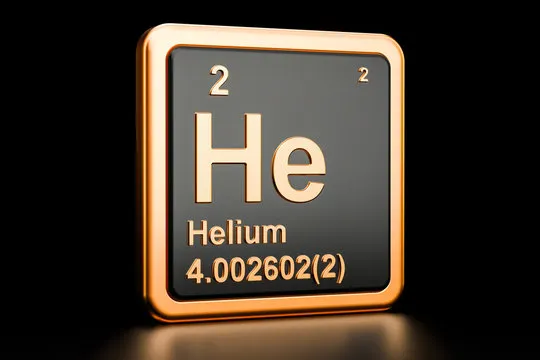
What is the atomic mass(amu) of He?
4.00
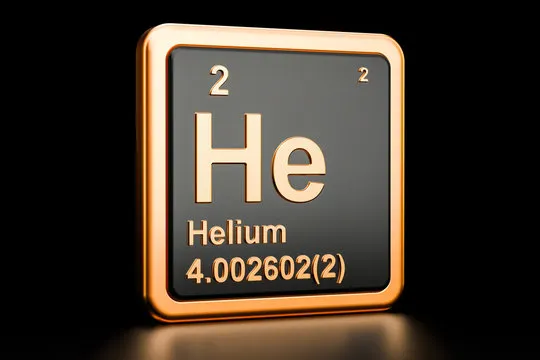
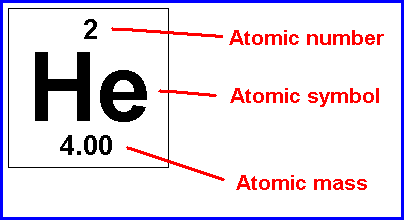
What is the atomic symbol of this element?
He
FILL: Strongest type of bonds are ________ bonds.
Covalent
FILL: A ______ covalent bond is the sharing of one pair of valence electrons
Single
FILL: A ______ covalent bond is the sharing of two pairs of valence electrons
Double
What does valence mean?
Outermost
Water's molecular formula?
H2O
Water's structural formula?
H—O—H
The more electronegative an atom is, the harder it pulls on the shared electrons...then what?
harder it pulls on the shared electrons
What is a cation?
A positively charged ion
What is an anion?
A negatively charged ion
What is the goal of covalent bonds?
to become stable by sharing electrons
What is the goal of ionic bonds?
to become stable by stealing electrons
What is the molecular glue of life?
Hydrogen bonds
What is the weakest bond?
Hydrogen bond
FILL: After the transfer of an electron, both atoms have ______
Charges
How many electrons does the first shell of a molecule have?
2 electrons
How many electrons do the last two shells have?
A max of 8 electrons each
What is photosynthesis?
Occurs ONLY in plants. The plant makes glucose from light, carbon dioxide and water
What is the photosynthesis formula?
6CO2 + 6H2O + light --> C6H12O6 + 6O2
TRUE or FALSE: Some chemical reactions are not REVERSIBLE
FALSE; ALL chemical reactions are reversible(in theory)
What indicates a reversible chemical reaction?
⇌; fx. H₂ + I₂ ⇌ 2HI
What are the results of chemical equilibrium?
Results in stable concentrations of reactants and products
Electronegativity difference in Ionic Bonds?
greater than 1.7
Electronegativity difference in Polar Covalent Bonds?
Between 0.5 - 1.7
Electronegativity difference in Nonpolar Covalent Bonds?
less than 0.5
What are intramolecular bonds?
Bonds between atoms within a molecule
What are intermolecular bonds?
Bonds between molecule
Two types of noncovalent bonds?
Ionic bonds, hydrogen bonds
What is the atomic mass number for oxygen?
Atomic mass number of oxygen is 8
C H N O P S (neutral charge)
Carbon, Hydrogen, Nitrogen, Oxygen, Phosphorus, Sulfur
C H O N (essential elements)
Carbon, Hydrogen, Oxygen, Nitrogen
When are atoms most stable?
When all of the electron orbitals in the valence shell are filled
Which of the following is broken when water evaporates?
A. hydrogen bonds
B. polar covalent bonds
C. nonpolar covalent bonds
D. ionic bonds
A. Hydrogen bonds
Which of the following correctly describes chemical equilibrium?
A. Concentrations of products are higher than the concentrations of the reactants.
B. There are equal concentrations of products and reactants while forward and reverse reactions continue.
C. There are equal concentrations of reactants and products, and the reactions have stopped.
D. Forward and reverse reactions continue with no net effect on the concentrations of the reactants and products.
D. Forward and reverse reactions continue with no net effect on the concentrations of the reactants and products.
How do you find the atomic mass?
Add the number of neutrons to the number of protons