Grnd-46 Theory of Flight 2 Aerodynamics
 Call Kai
 Learn
Learn Practice Test
 Spaced Repetition
 Match
Match Flashcards
 Knowt Play
1/26

There's no tags or description
Looks like no tags are added yet.
Name | Mastery | Learn | Test | Matching | Spaced | Call with Kai | Chat |
|---|
No analytics yet
Send a link to your students to track their progress
27 Terms
Name the major component parts of an aircraft
Fuselage, wings, engines, empennage - horizontal and vertical stabilisers
Name the control surfaces
Ailerons, flaps, rudder, elevators
Name the axes of control
Vertical, lateral, longitudinal
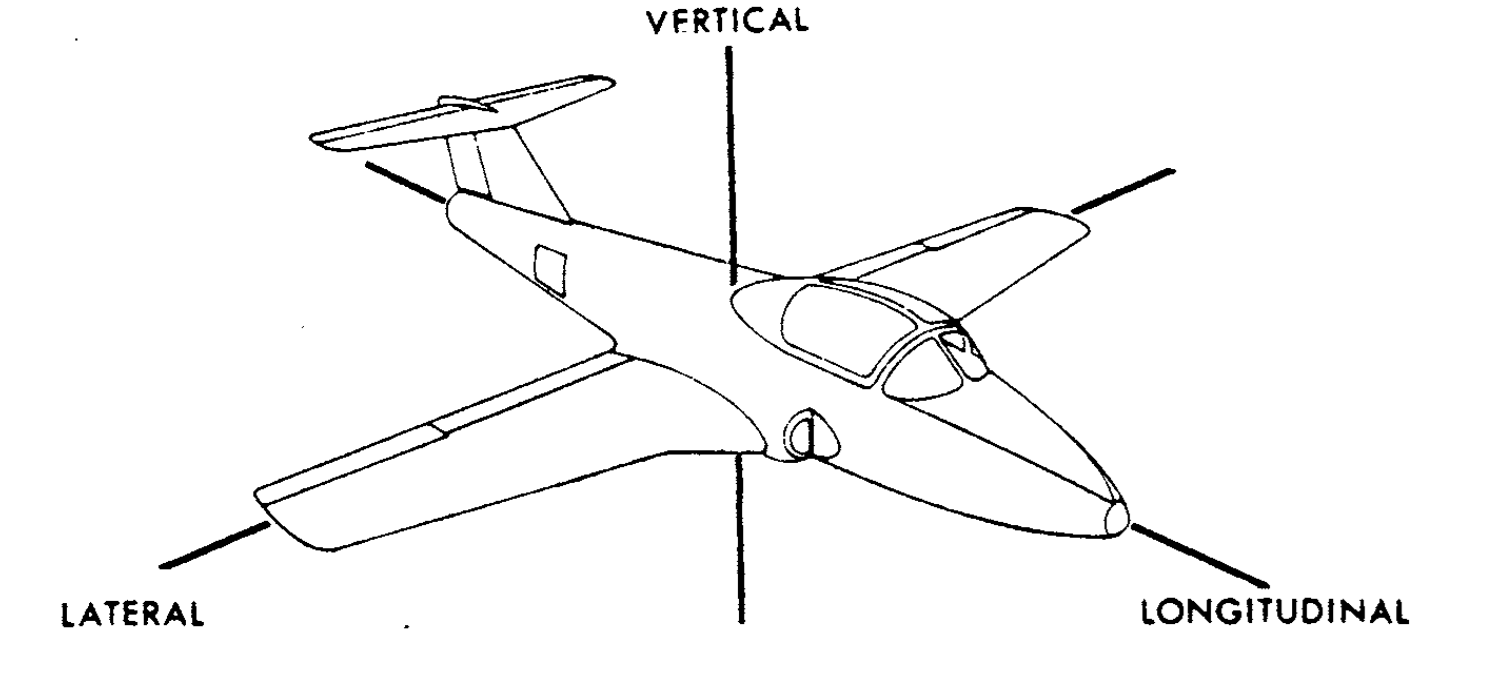
What is movement around the vertical axis?
Yaw, controlled by rudder
What is movement around the lateral axis?
Pitch, controlled by elevators
What is movement around the longitudinal axis
Roll, controlled by ailerons
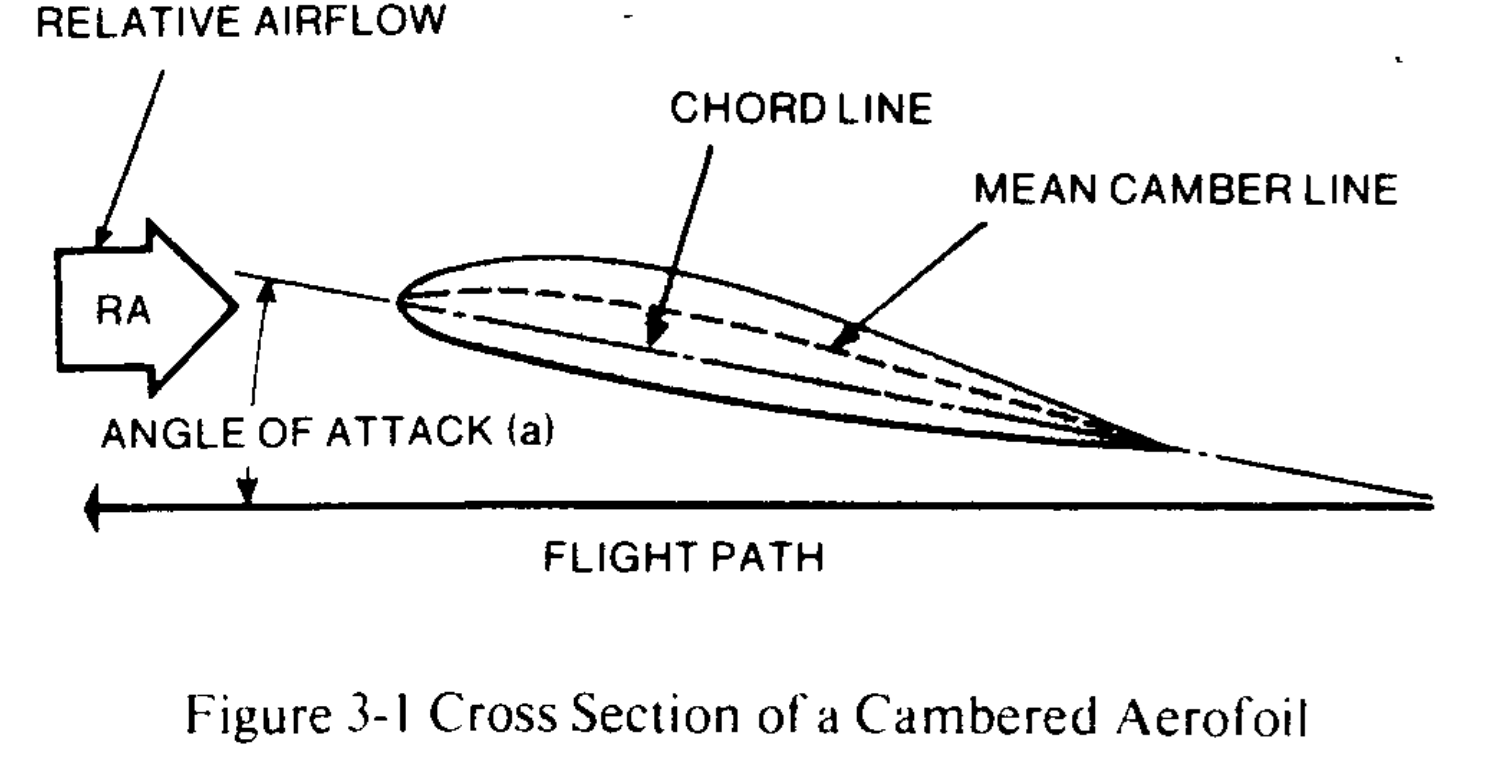
Label an airfoil
Leading edge, trailing edge, chord line, mean camber line
Where is velocity fastest on an airfoil?
Above the airfoil is fastest, below is second fastest
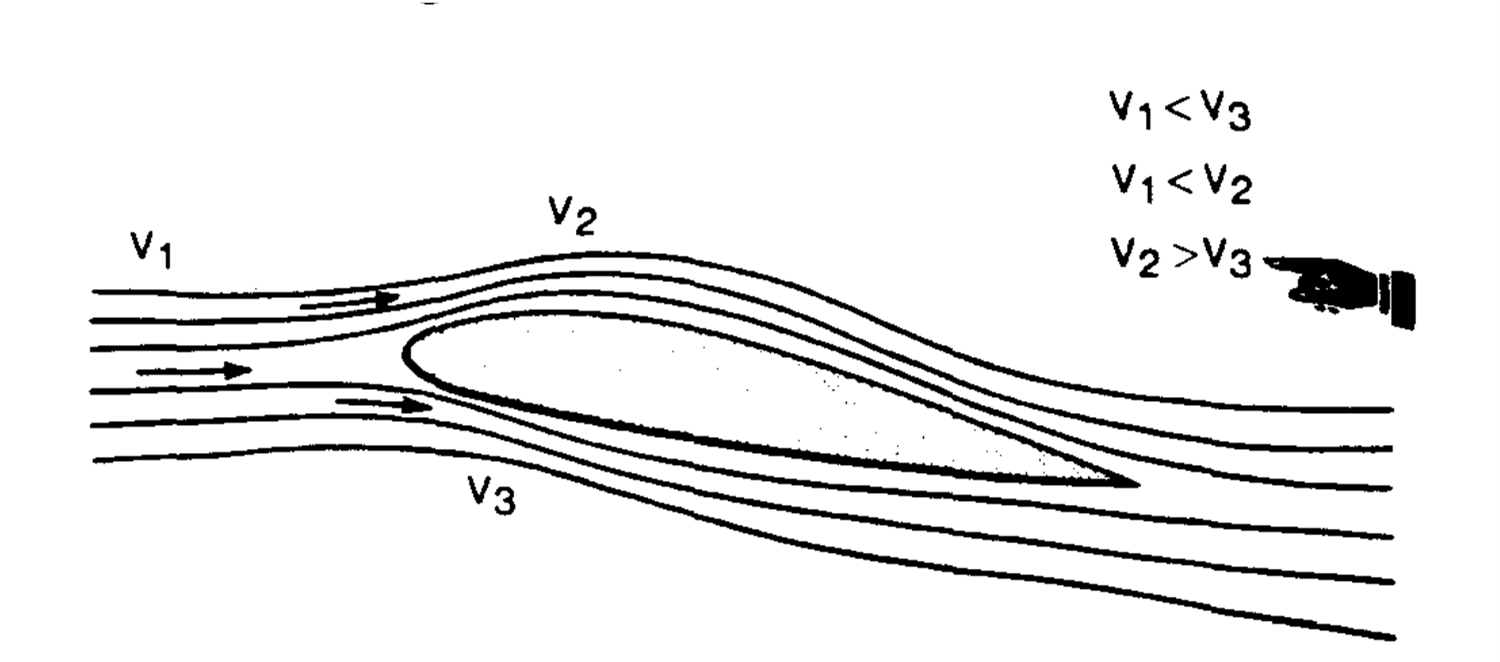
What is the relationship between velocity and pressure?
Increase velocity = increased PD and decreased PS
Lift Force (L)
Pressure distribution vectors produce a sum force perpendicular to the relative airflow (RA)
Aerodynamic Force (AF)
The total force acting on the airfoil. Changes with the AoA and velocity
AoA - Velocity Relationship
To maintain a constant lift force as an aircraft slows down, the pilot must increase the angle of attack
What happens as a stall occurs?
The lift decreases and the drag increases, there is almost always a loss of altitude and control
What are the critical phases of flight?
Takeoff and initial climb, final descent and landing
What is the boundary layer?
The thin layer of air near the surface of the wing
What is an aerodynamic stall?
A separation of the boundary layer from the upper surface of the wing - caused by excessive angle of attack
Stalling AoA
The point where the boundary layer separates has moved too far forward and the loss of the effective area of the wing is too large to be offset by any increases in the pressure differential that may occur
Stalling Speed
The speed at which, for a given set of conditions, the aircraft is at its stalling angle of attack
Stalling Speed vs Stalling AoA
Stalling AoA constant, stalling speed varies
Factors Affecting Stalling Speed
Weight, Altitude, Thrust Effect, Configuration Effect
VSTALL Weight Effect
As weight is reduced the stalling speed is decreased
VSTALL Altitude Effect
Increased altitude increases stall speed
VSTALL Thrust Effect
Angle between thrust vector and relative air flow = AoA, therefore as it is increased the stall speed decreases
VSTALL Configuration Effect
Presence of High Lift Devices obtains required lift forces at lower velocities
Two ways maximum coefficient of lift (CLMAX) can be increased
Increasing camber of airfoil, delaying boundary layer separation
Two types of high lift devices
Flaps, Boundary layer control
Two types of stall warnings
Aerodynamic warning (stall buffets, stall strips), mechanical warning systems